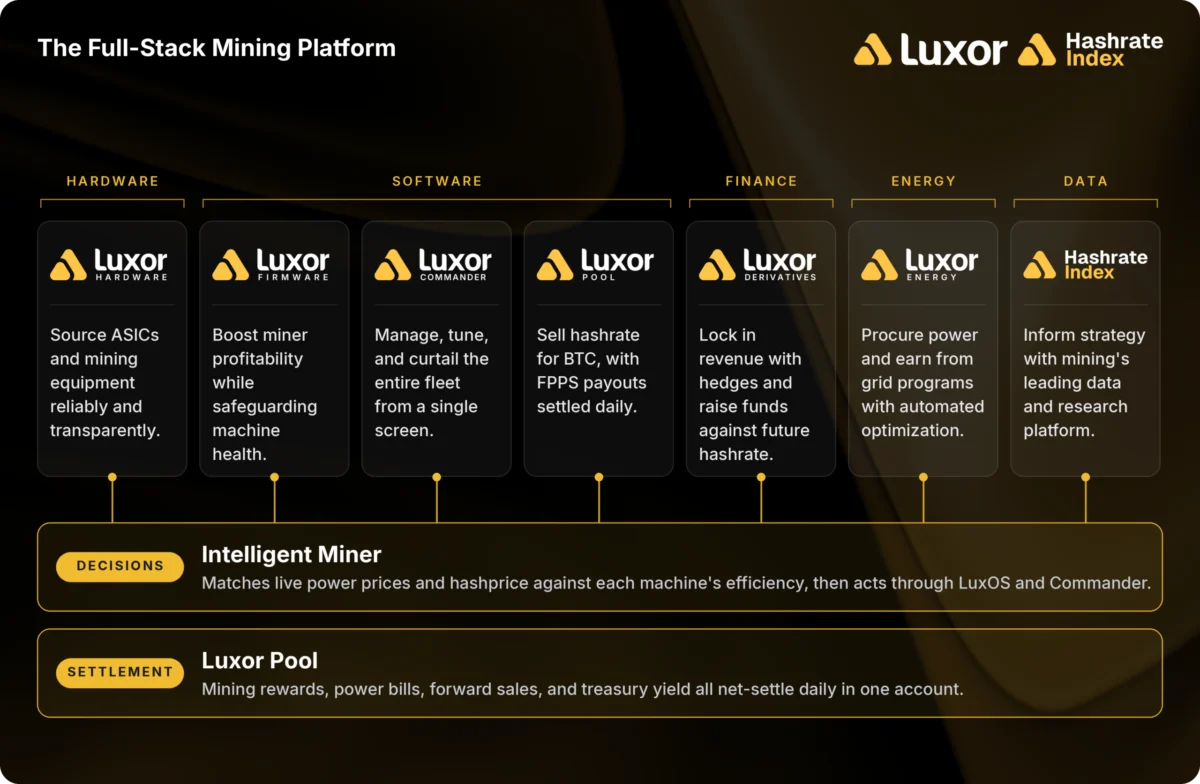
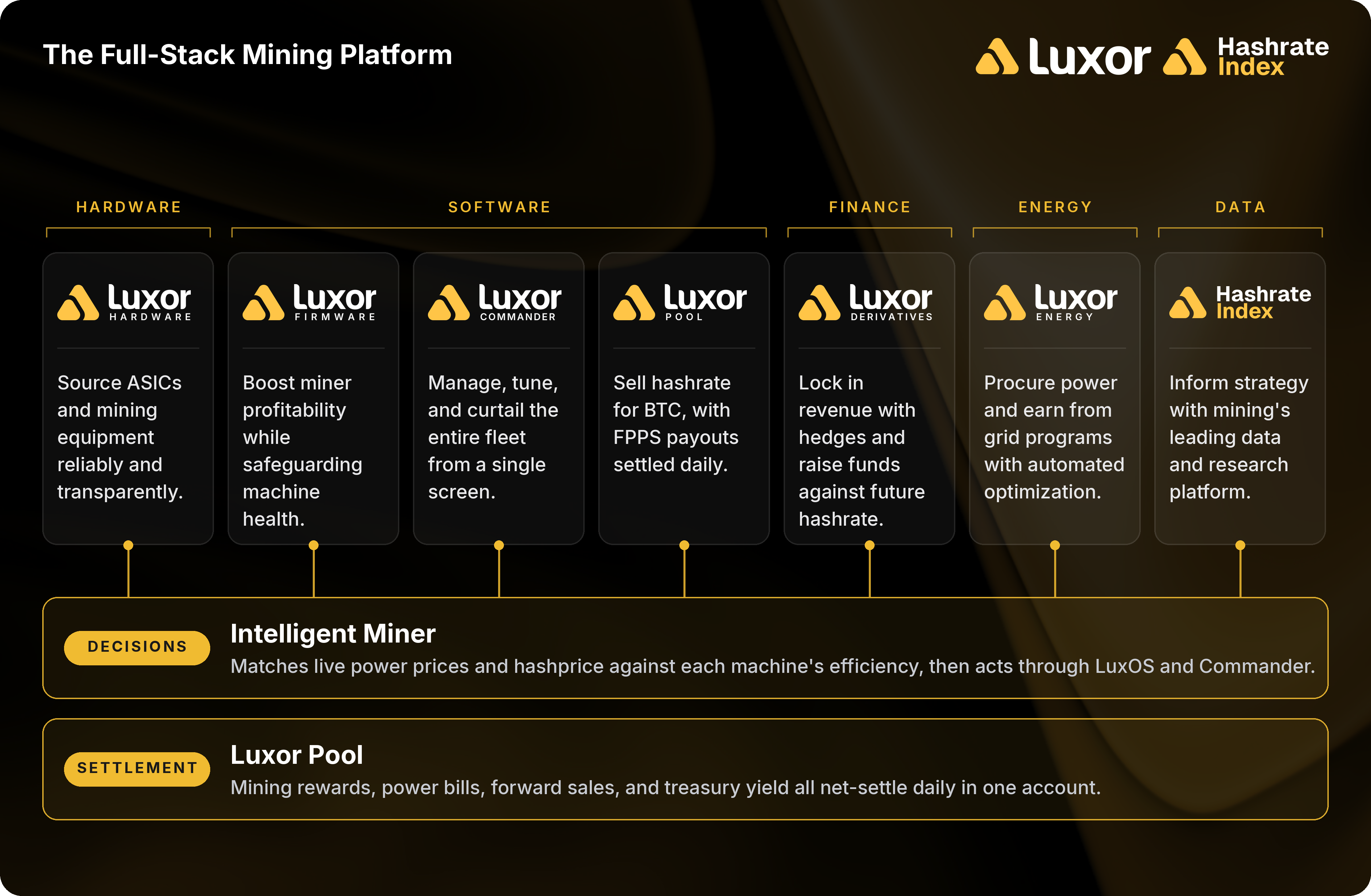
The landscape of industrial-scale Bitcoin mining is undergoing a seismic shift as operators move away from fragmented, multi-vendor infrastructures toward unified, vertically integrated platforms. Steelhead Power Company, an independent mining operator founded in 2023, serves as a primary case study for this transition. By consolidating hardware procurement, firmware optimization, fleet management, energy logistics, and financial services under a single ecosystem—Luxor Technology’s full-stack platform—Steelhead has successfully mitigated the operational "leakage" that typically plagues mining firms reliant on disconnected counterparties.
The Evolution of Industrial Mining Operations
Historically, Bitcoin miners have assembled their operations piecemeal. A typical firm might source ASIC hardware from one broker, utilize firmware from a separate developer, participate in a third-party mining pool, and manage treasury or hedging needs through yet another financial desk. This approach creates significant friction: data silos emerge, latency in response to energy price spikes occurs, and the lack of communication between the energy desk and the mining fleet often leads to suboptimal performance.
Steelhead Power Company’s operational model represents a departure from this norm. Based in Texas, the company manages industrial-scale facilities designed to withstand extreme thermal conditions, where ambient temperatures frequently exceed 40°C (104°F). To combat these environmental challenges, Steelhead has prioritized liquid-cooling architectures, specifically immersion and hydro-cooling systems. By anchoring their entire technical and financial stack to the Luxor ecosystem, Steelhead ensures that every layer—from the hardware firmware to the energy procurement agent—shares a unified data language.
A Chronology of Strategic Integration
Since its inception in 2023, Steelhead has focused on aggressive deployment of hashrate within the ERCOT (Electric Reliability Council of Texas) grid. The company’s growth trajectory has been marked by three distinct phases:
- Infrastructure Foundation (2023): Initial deployment of immersion-based mining facilities, establishing the technical baseline for liquid-cooled operations.
- Hydro-Cooling Expansion (2024): Transitioning to skid-mounted and containerized hydro-cooling systems as the primary infrastructure standard to maximize density and thermal efficiency.
- Full-Stack Consolidation (2025–2026): Integrating the entire operational lifecycle into the Luxor suite, allowing for automated curtailment, treasury yield generation, and real-time fleet adjustments based on ERCOT price signals.
This integration is not merely logistical; it is deeply financial. By utilizing Luxor’s "Intelligent Miner" agent, Steelhead has automated its response to electricity market volatility, ensuring that its fleet remains profitable even during periods of high grid demand.
Data-Driven Performance and the 4CP Strategy
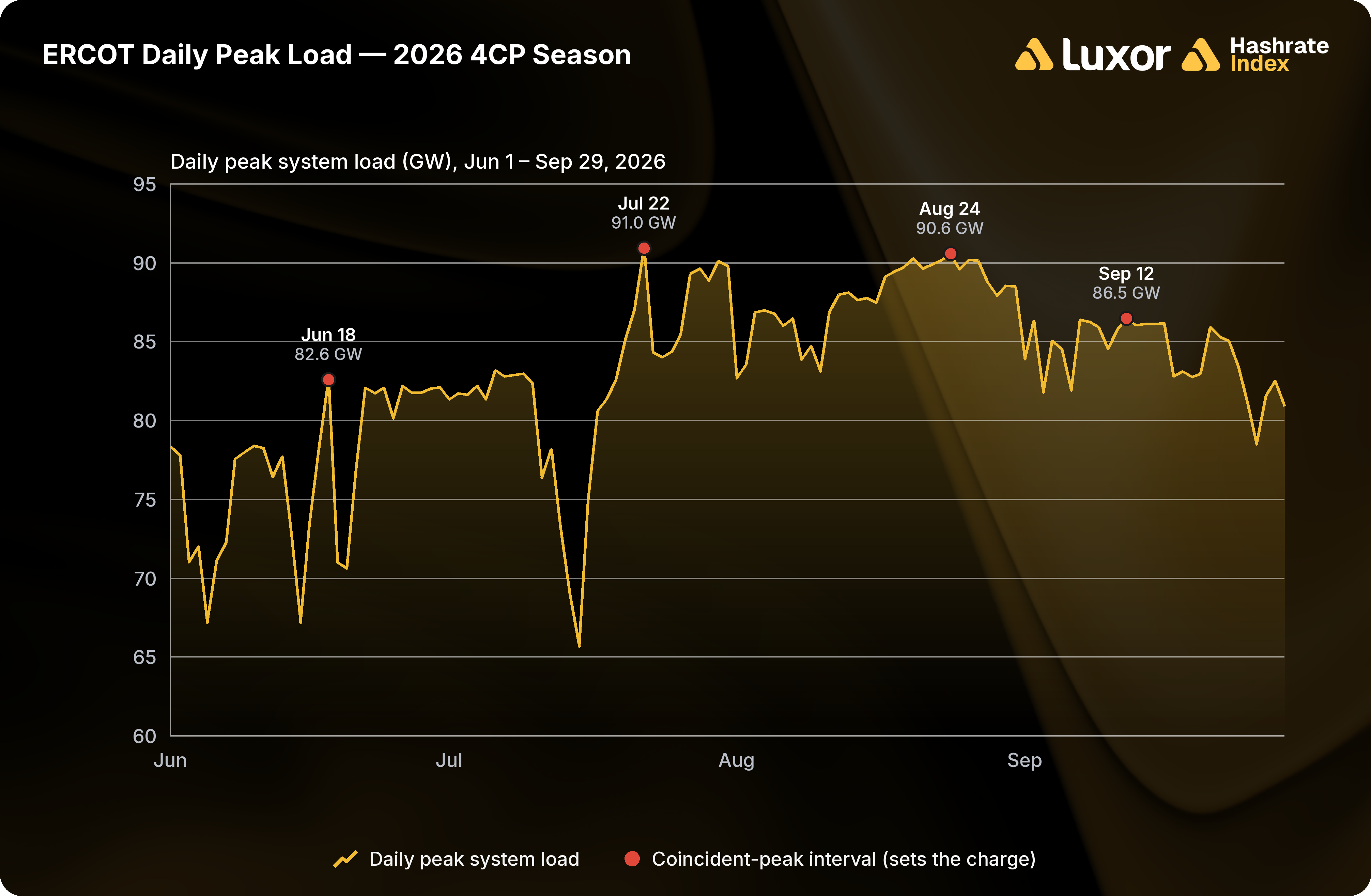
The effectiveness of Steelhead’s strategy is most visible in its management of the ERCOT 4CP (Four Coincident Peaks) transmission charges. In Texas, a significant portion of annual transmission costs is determined by a load’s consumption during the single highest system-demand interval in each of the four summer months: June, July, August, and September. Missing these peaks can result in millions of dollars in unnecessary transmission fees for the following year.
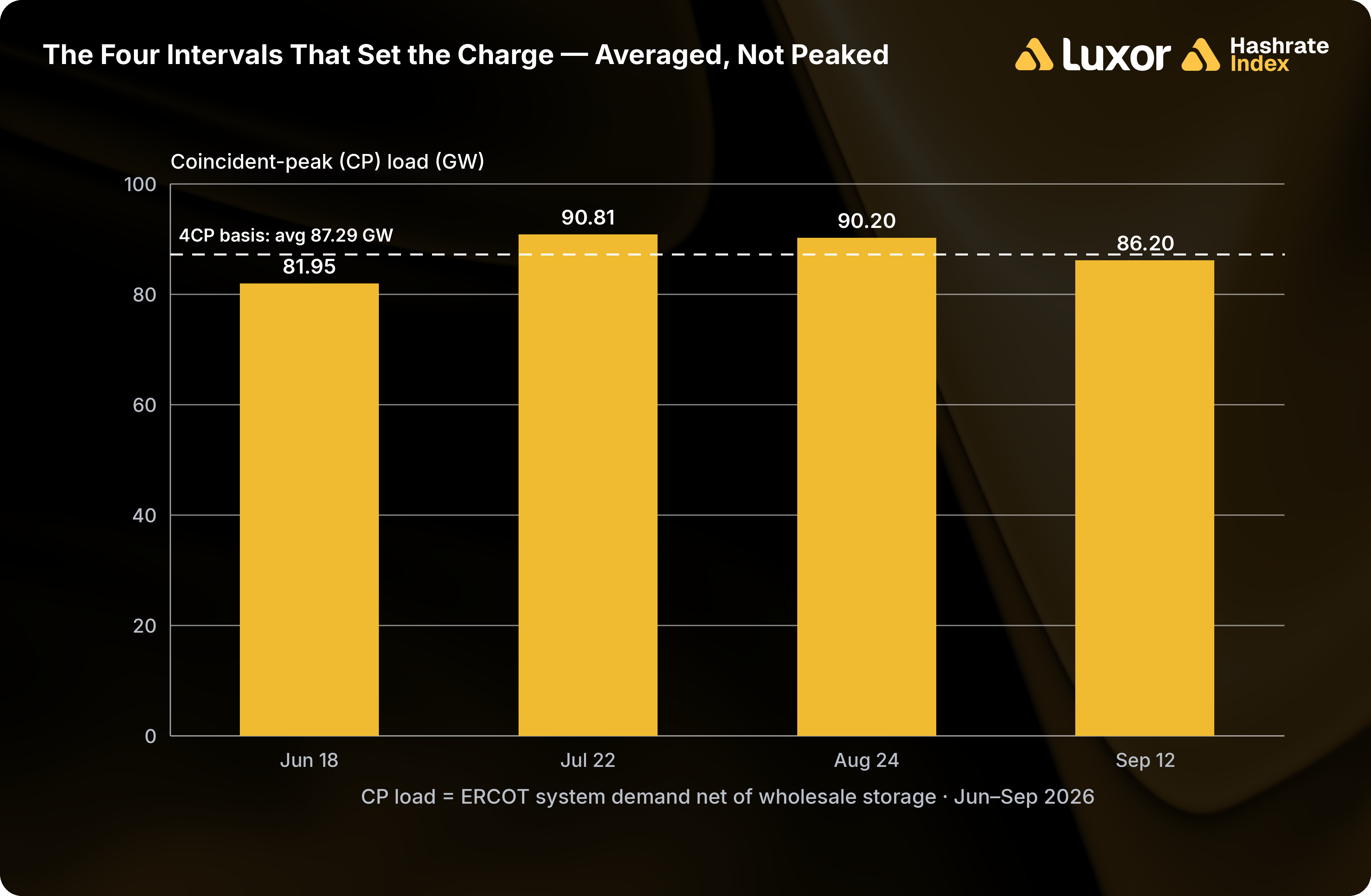
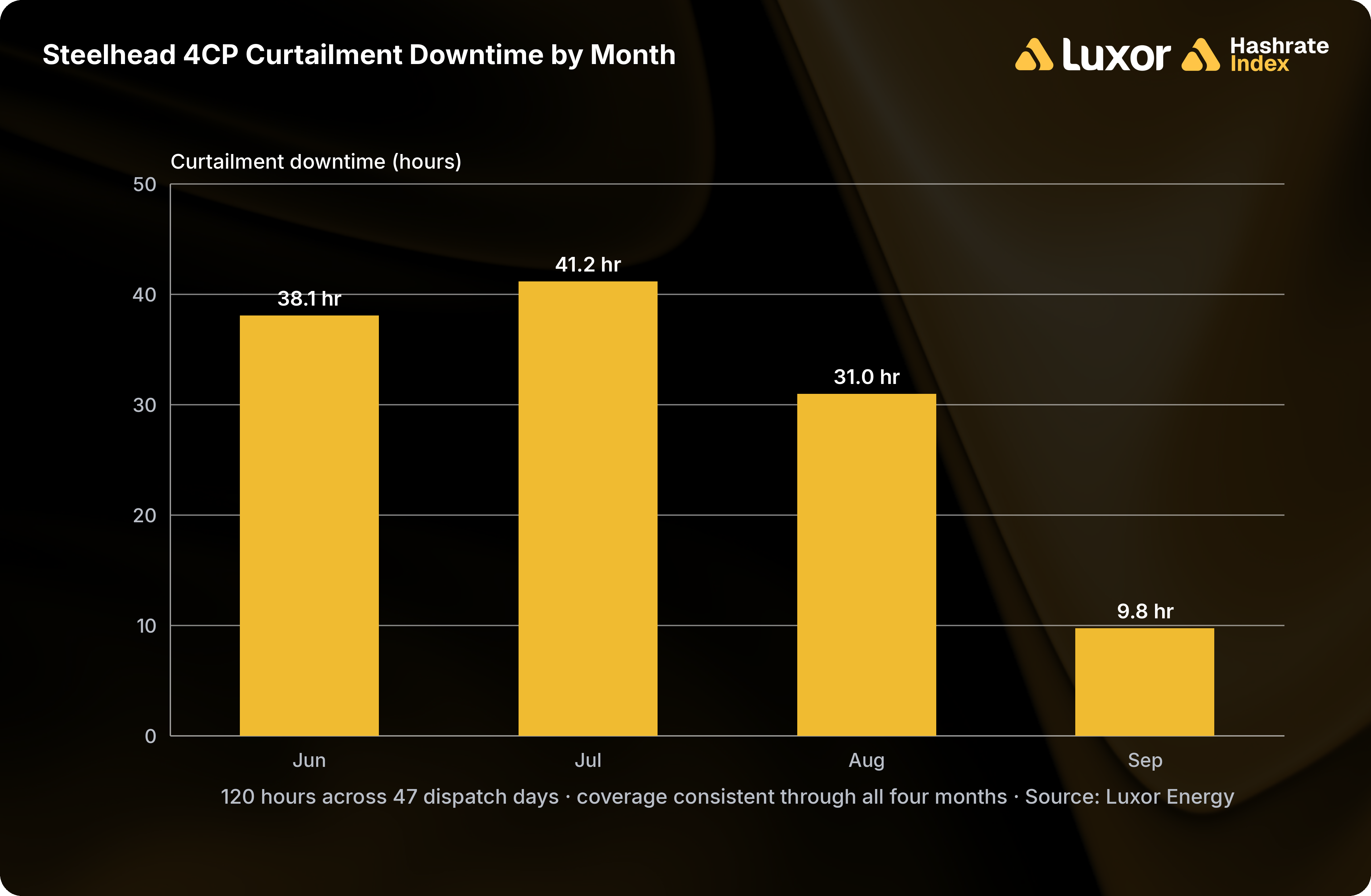
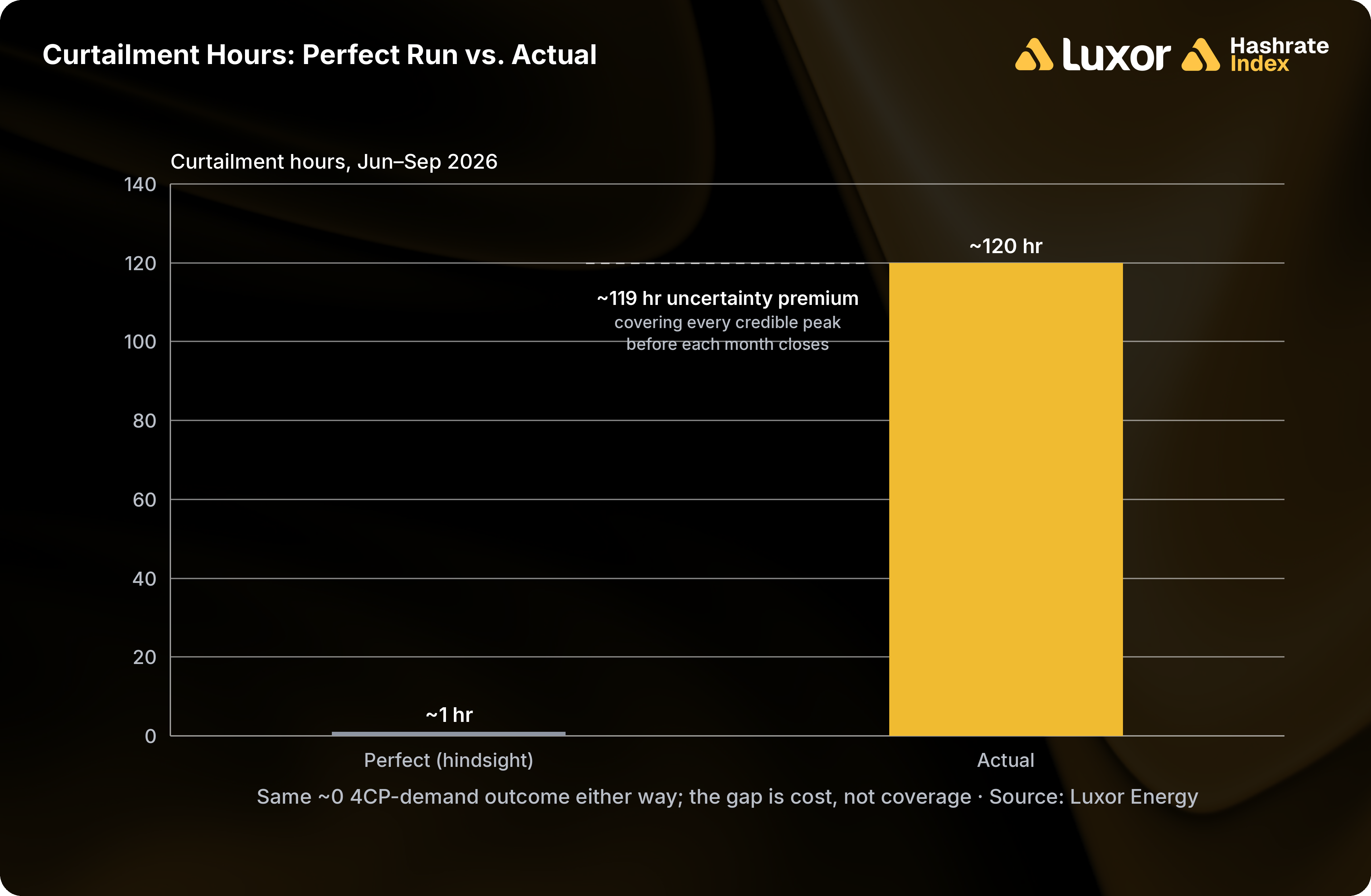
During the 2026 summer season, ERCOT recorded its four coincident-peak intervals on June 18, July 22, August 24, and September 12. Steelhead’s integration allowed the company to execute a highly disciplined curtailment strategy. By utilizing real-time telemetry from the Luxor energy desk and internal fleet management software, Steelhead logged approximately 120 hours of curtailment across 47 dispatch days. While this included "extra" downtime to ensure total coverage of every credible peak, the economic trade-off was highly favorable.
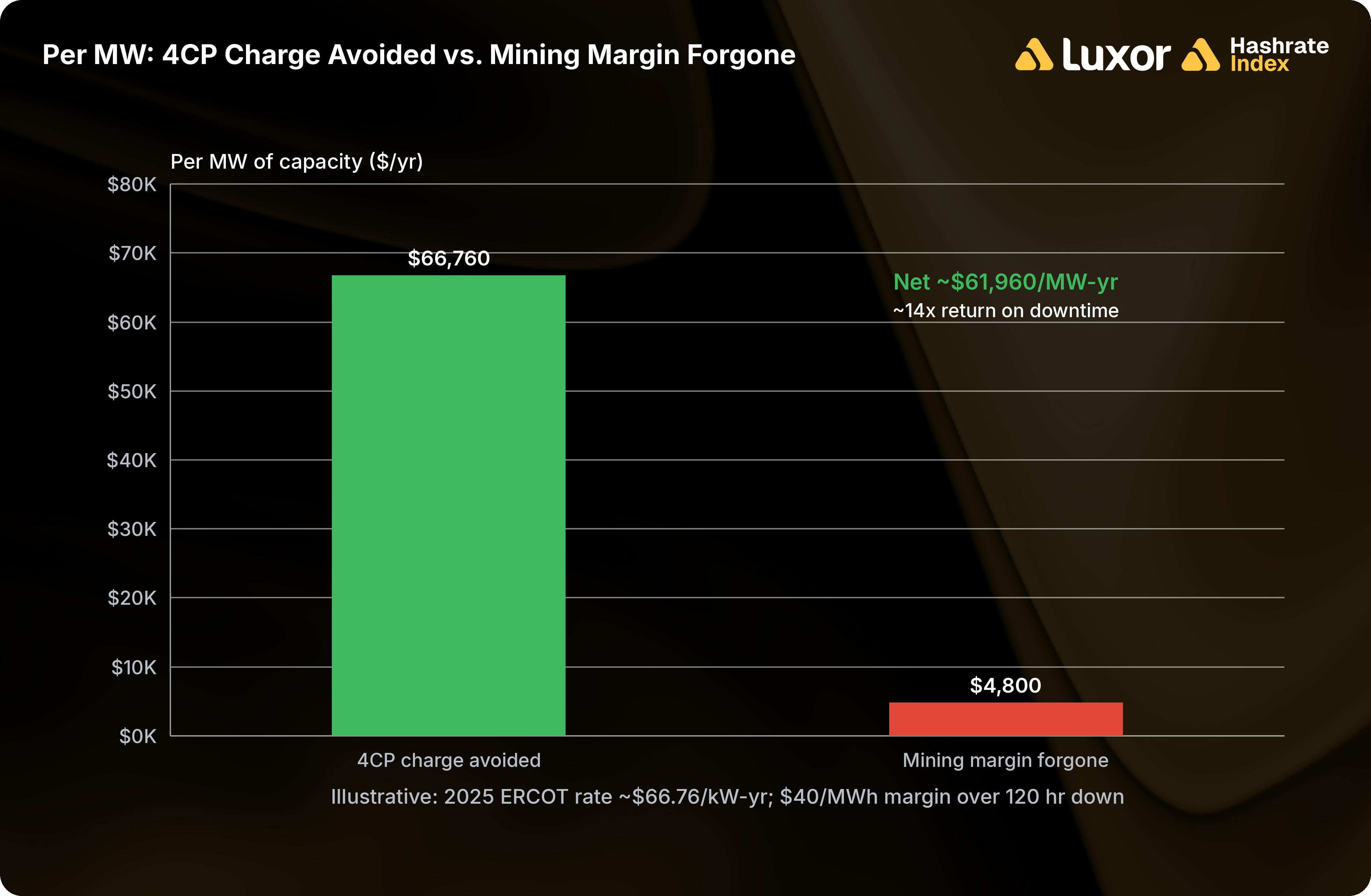
Based on 2025 ERCOT rates, each megawatt (MW) of 4CP demand avoided saves roughly $66,760 in annual transmission costs. Compared to the opportunity cost of forgone mining margins—estimated at approximately $4,800 per MW over the same period—the return on investment for this curtailment strategy stands at a ratio of approximately 14:1.
Financial Synergy and Treasury Management
Steelhead’s approach extends beyond energy management into sophisticated treasury and risk management. The company employs two parallel financial strategies: hashprice hedging and yield generation on idle assets.
By selling a portion of its future hashrate through fixed pool payouts, Steelhead effectively hedges against hashrate volatility, creating a more predictable revenue stream that enhances its credit profile. Simultaneously, the company utilizes its Bitcoin treasury to act as a liquidity provider for other miners. By pledging BTC as collateral for upfront payout programs on the Luxor Pool, Steelhead turns an otherwise stagnant asset into a yield-generating instrument. This circular financial model allows the company to reinvest profits into hardware procurement with greater velocity than operators who rely on traditional, slower-moving capital structures.
The Competitive Advantage of the Full Stack
Industry analysts have modeled the economic impact of this vertical integration. For a representative 1 MW ERCOT fleet, the "full-stack" approach—using optimized firmware, intelligent curtailment, and efficient pool settlement—is estimated to generate approximately $94,000 in additional gross margin per year compared to a peer running stock firmware on a standard 2.5% FPPS pool.
The primary drivers of this uplift include:
- Thermal Efficiency: LuxOS firmware features, such as Advanced Thermal Management (ATM) and Power Targeting, allow for lower power draw and optimized heat dissipation, critical for high-density liquid-cooled rigs.
- Operational Agility: The ability to execute fleet-wide changes via the "Commander" dashboard in minutes, rather than hours, enables the operator to respond to market signals that traditional miners might miss.
- Reduced Friction: Eliminating the administrative burden of coordinating between disparate hardware vendors, energy providers, and financial institutions reduces overhead and minimizes human error.
Official Perspective on Vertical Integration
Steven Hood, President of Steelhead Power Company, emphasizes that the primary benefit of the partnership is the ability to focus on expansion rather than vendor reconciliation. "Luxor bridges the gap between everyday operations and power procurement, management, and cost settlement in a single, vertically integrated stack," Hood stated. "This improves process flows and lets operators focus on growth rather than vendor management and revenue or cost settlement."
Mario Mojarro, an analyst at Steelhead, further highlighted the practical benefits for daily monitoring: "We run a separate subaccount per site on Luxor Pool, so each site’s production and performance are easy to monitor on their own. Payouts come daily, and we pull them into our own reporting off the API."
Broader Implications for the Mining Sector
As the Bitcoin mining industry matures, the margins for "average" operators are being squeezed by rising hashrate difficulty and the eventual decline of block subsidies. The 2026 4CP season serves as a precursor to a potential shift in grid regulation. The Public Utility Commission of Texas is currently considering a transition from a 4CP to a 12CP methodology, which would require peak avoidance to become a year-round operational discipline.
Should such a transition occur, the competitive advantage will widen significantly between those who possess the automated infrastructure to respond to grid signals and those who do not. Steelhead’s success suggests that the "full-stack" model is not just a luxury, but a requirement for long-term viability in an increasingly complex energy and compute market.
By integrating data platforms like Hashrate Index Premium with operational tools, companies are moving toward a future of "Intelligent Mining," where the physical hardware is constantly tuned by software to maximize profitability based on the underlying compute price index. As this trend continues, the traditional Bitcoin miner—once a standalone hardware operator—is evolving into a sophisticated energy and data infrastructure entity. Steelhead Power Company stands at the vanguard of this transformation, proving that in a volatile market, the most efficient operator is often the one that controls the entire chain of production.