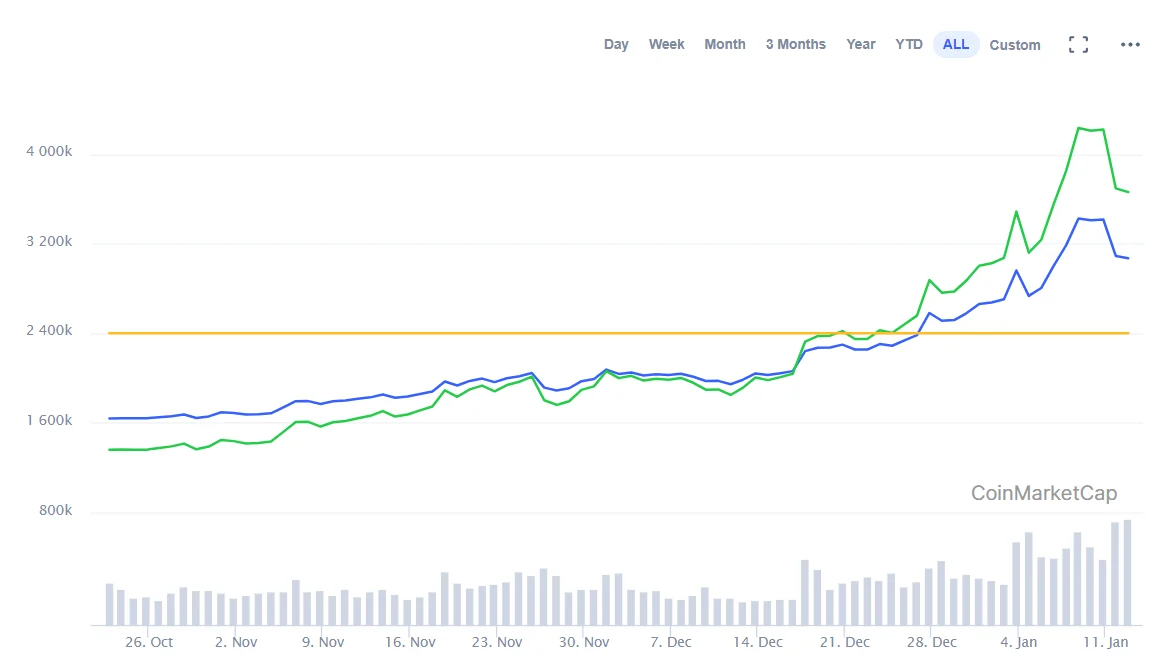
The cryptocurrency landscape has continually evolved since the inception of Bitcoin (BTC) in 2009, transitioning from an obscure cryptographic experiment into a globally recognized macroeconomic asset class. Over recent years, market participants, institutional investors, and retail traders have closely monitored Bitcoin’s unprecedented price surges, cyclical bull markets, and structural corrections. Understanding the macroeconomic forces, on-chain metrics, and exchange dynamics that govern these movements is essential for comprehending the broader implications of digital asset adoption in the global financial system.
Historical Price Trajectory and Multi-Year Valuation Trends
To fully contextualize Bitcoin’s current market position, one must analyze its historical price progression across multiple market cycles. Since its early trading days, when a single coin was valued at mere fractions of a dollar, Bitcoin has experienced massive exponential growth punctuated by severe drawdowns and volatility shocks.

Historical data reveals the dramatic scale of this appreciation:
- 2012: $3.75
- 2013: $29.30
- 2014: $526.70
- 2015: $288.40
- 2016: $476.10
- 2017: $1,303.80
- 2018: $10,721.80
- 2019: $4,042.90
- 2020: $10,274.50
- 2021: $45,235.10
- 2022: $43,193.20
- 2023: $23,143.30
- 2024: $61,198.30
- 2025: $88,943.40
- 2026: $70,243.30
This multi-year data underscores the cyclical nature of cryptocurrency valuations. Each halving event—which reduces the block reward for miners by half roughly every four years—has historically acted as a primary catalyst for supply scarcity, subsequently driving aggressive bull runs and record-breaking price discoveries.

On-Chain Metrics and Whale Accumulation Patterns
Beneath the surface of spot price fluctuations lies a complex ecosystem of on-chain activity, spearheaded by large-scale holders commonly referred to as "whales." On-chain analytics consistently demonstrate that large institutional players and high-net-worth individuals maintain distinct accumulation and distribution strategies compared to retail investors.

Recent on-chain data highlights significant behavior among large wallets. For instance, wallets holding over 1,000 BTC have historically exhibited robust accumulation phases during market consolidation periods. Conversely, smaller retail cohorts holding fraction-of-a-coin denominations often display higher sensitivity to short-term volatility, occasionally panic-selling during major pullbacks while experienced market participants buy the dip.
Market analysts note that sustained accumulation by whale addresses typically precedes supply crunches on centralized exchanges. As coins are systematically moved off exchanges and into cold storage solutions, the available liquid supply diminishes, creating a structural upward pressure on market prices when demand remains constant or increases.

Exchange Liquidity and Derivatives Market Influence
The maturation of the cryptocurrency market has been heavily influenced by the expansion of derivatives trading, leverage instruments, and institutional-grade financial products such as spot Exchange-Traded Funds (ETFs). Platforms like Binance, BTCC, and BitTrade provide deep liquidity, allowing traders to execute complex hedging and speculative strategies.

However, the proliferation of leverage introduces systemic risks. High open interest in futures and options markets frequently leads to market volatility events, where cascading liquidations can trigger rapid price corrections followed by swift recoveries. Risk management protocols implemented by major derivatives exchanges have therefore become critical for maintaining market stability and protecting participants from extreme tail risks.
Broader Impact and Economic Implications
The integration of Bitcoin into mainstream finance has fundamentally altered the relationship between digital assets and traditional macroeconomic indicators. Regulatory developments, institutional adoption by corporations and pension funds, and macroeconomic monetary policies now exert a profound influence on Bitcoin’s valuation.
As regulatory frameworks become more transparent across global jurisdictions, institutional capital continues to flow into the asset class through compliant investment vehicles. This institutionalization has tempered some of the extreme volatility seen in earlier market cycles, although significant price discovery and cyclical corrections remain defining characteristics of the digital asset economy.

Market observers emphasize that continuous education, robust risk management, and comprehensive data analysis are imperative for navigating the complexities of the cryptocurrency markets. As blockchain technology and decentralized finance continue to mature, Bitcoin’s role as a decentralized store of value and a hedge against fiat inflation will remain a focal point of global economic discourse.