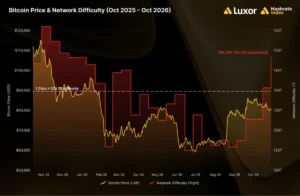
The professionalization of the Bitcoin mining industry has reached a critical juncture, necessitating a more rigorous approach to data dissemination and market intelligence. As the global network hashrate continues to hit historical peaks, the Hashrate Index Newsletter serves as a centralized hub for stakeholders, institutional investors, and infrastructure operators seeking to navigate the complexities of proof-of-work mining. By consolidating real-time metrics, energy market analysis, and regulatory updates, this communication platform bridges the gap between raw blockchain data and actionable strategic insights.
The Evolution of Mining Intelligence
In the nascent stages of the cryptocurrency industry, mining data was largely fragmented, often residing in disparate community forums or technical mining pools. However, as Bitcoin transitioned from an experimental digital asset to a core component of institutional portfolios, the requirement for sophisticated market analysis became paramount. The Hashrate Index Newsletter emerged as a response to this shift, providing a structured mechanism for industry participants to track the health of the network, the efficiency of hardware deployments, and the volatility of energy costs.
The newsletter functions as a vital conduit for information, enabling stakeholders to make informed decisions regarding capital expenditure (CapEx) and operational expenditure (OpEx). Given that Bitcoin mining has become an increasingly capital-intensive endeavor—characterized by large-scale data centers and complex power purchase agreements (PPAs)—the reliance on accurate, timely data has never been higher.
Chronology of Market Shifts
To understand the current state of the mining industry, one must look at the historical trajectory of hashrate growth and the subsequent consolidation of the sector.
- 2020-2021: The Great Migration: Following the May 2020 halving, the mining sector experienced significant upheaval as China implemented a nationwide ban on cryptocurrency mining in mid-2021. This forced a massive migration of hardware to North America, Central Asia, and parts of Europe, fundamentally changing the geographical distribution of the hashrate.
- 2022: The Bear Market and Deleveraging: The collapse of several major industry lenders and the subsequent decline in Bitcoin prices necessitated a rapid pivot toward operational efficiency. Mining firms were forced to divest hardware and restructure debt, emphasizing the need for the type of analytical rigor provided by industry newsletters.
- 2023-2024: Institutional Integration and Efficiency: The lead-up to the 2024 halving event saw a massive influx of institutional capital and the adoption of advanced liquid cooling technology. This period marked the transition from a "growth-at-all-costs" model to a focus on power-efficient, grid-responsive operations.
Supporting Data: The Metric-Driven Landscape
The efficacy of a mining operation is dictated by a handful of core metrics that the Hashrate Index monitors with high granularity. These include:
- Hashprice: Defined as the expected revenue per unit of hashrate (typically expressed as USD/PH/day). This metric is the primary indicator of mining profitability and is highly sensitive to both Bitcoin price fluctuations and the network difficulty adjustment.
- Network Hashrate: Representing the total computational power securing the Bitcoin network, this metric serves as a proxy for the security of the blockchain and the aggregate health of the hardware fleet deployed globally.
- Difficulty Adjustment: Occurring approximately every two weeks, this mechanism ensures that block production remains stable at 10-minute intervals. Understanding the trend of the difficulty adjustment is essential for forecasting operational margins.
According to industry data, the total network hashrate surpassed 600 exahashes per second (EH/s) in early 2024, representing a staggering increase from the sub-100 EH/s levels observed in 2020. This growth has been driven by the deployment of next-generation application-specific integrated circuits (ASICs) that boast higher terahash-per-watt efficiencies.
The Role of Information in Regulatory and Energy Discourse
The mining sector is currently navigating a period of intense regulatory scrutiny, particularly regarding its energy consumption and impact on local power grids. The Hashrate Index provides the necessary empirical data to counter misperceptions regarding the industry’s environmental footprint. By documenting the shift toward stranded energy sources—such as flare gas mitigation and renewable energy curtailment—the newsletter provides a factual basis for policymakers to evaluate the industry’s role in modern energy infrastructure.
Furthermore, the integration of Bitcoin mining with grid-balancing services has become a central theme in recent months. Miners are increasingly acting as "dispatchable loads," capable of scaling down operations during periods of peak grid demand. The newsletter tracks these developments, offering case studies on how mining firms collaborate with local utilities to stabilize energy markets.
Implications for Institutional Investors
For institutional investors, the primary concern is risk mitigation in a volatile asset class. The Hashrate Index Newsletter mitigates information asymmetry by offering:
- Hardware Lifecycle Analysis: Insight into the depreciation schedules of mining rigs and the secondary market valuations of older hardware.
- Energy Arbitrage Opportunities: Tracking regional variations in electricity costs, which remain the single largest expense for mining operators.
- Macro-Economic Correlations: Analyzing how interest rates and broader financial conditions impact the ability of mining firms to secure financing for expansion.
As the industry matures, the distinction between "efficient" and "inefficient" operators is widening. Those who subscribe to professional information channels are better positioned to weather the volatility inherent in proof-of-work mining.
Official Perspectives and Industry Consensus
Industry leaders have frequently noted that the democratization of high-quality data is essential for the long-term sustainability of the network. A senior analyst at a leading digital asset research firm noted that "the ability to project mining profitability over a 24-month horizon is no longer a luxury; it is a prerequisite for survival in a post-halving environment."
The consensus among market participants is that the future of mining lies in energy optimization. As margins become thinner, companies that prioritize vertical integration—owning both the power source and the mining infrastructure—are projected to outperform their competitors. The Hashrate Index plays a critical role in tracking this trend, ensuring that stakeholders remain appraised of the competitive landscape.
Broader Impact: The Future of Mining Transparency
The demand for the Hashrate Index Newsletter highlights a broader trend within the financial technology sector: the movement toward transparency and data-backed accountability. As Bitcoin mining continues to integrate with global energy grids, the industry is increasingly subjected to the same reporting standards as traditional manufacturing or utility sectors.
By providing a structured outlet for news, the Hashrate Index ensures that participants are not operating in an information vacuum. This contributes to the overall stability of the network, as better-informed participants are less likely to engage in panic selling or reckless over-leveraging. As we move further into the decade, the interplay between blockchain technology and energy infrastructure will only grow more complex, further solidifying the necessity of specialized intelligence platforms.
Conclusion
The Hashrate Index Newsletter stands at the intersection of high-frequency data, energy policy, and financial markets. By maintaining a rigorous, objective, and informative standard, it serves as a critical resource for those shaping the future of Bitcoin mining. As the industry evolves, the availability of such data will continue to be a defining factor in the success of mining operations worldwide, ensuring that the foundational security of the Bitcoin network remains robust and well-understood by those who operate within it. Investors, operators, and observers alike would be well-advised to utilize these analytical tools to navigate the challenges and opportunities that lie ahead in the global mining ecosystem.