
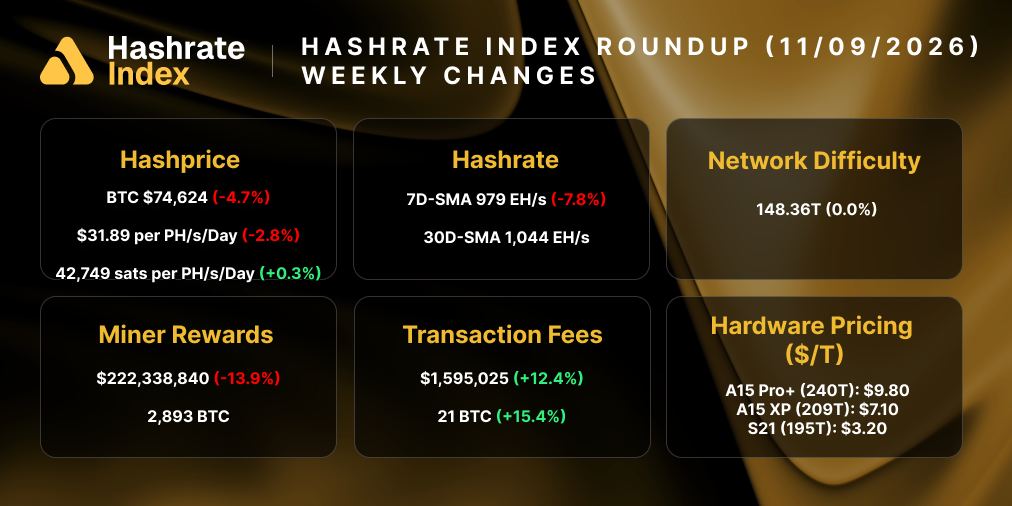
The global Bitcoin mining landscape experienced a week of notable contraction as market volatility persisted, characterized by a downward adjustment in network hashrate and a dip in the spot price of the flagship cryptocurrency. For the week ending November 9, 2026, Bitcoin saw its valuation decline by 4.7%, shifting from approximately $78,288 to $74,624. This movement reflects a broader, challenging year for miners, with year-to-date performance currently sitting at a 14.6% deficit. As the industry navigates this macroeconomic environment, the technical metrics of the Bitcoin network reveal a shifting equilibrium between operational costs and the rewards generated by securing the blockchain.
Market Performance and Financial Indicators
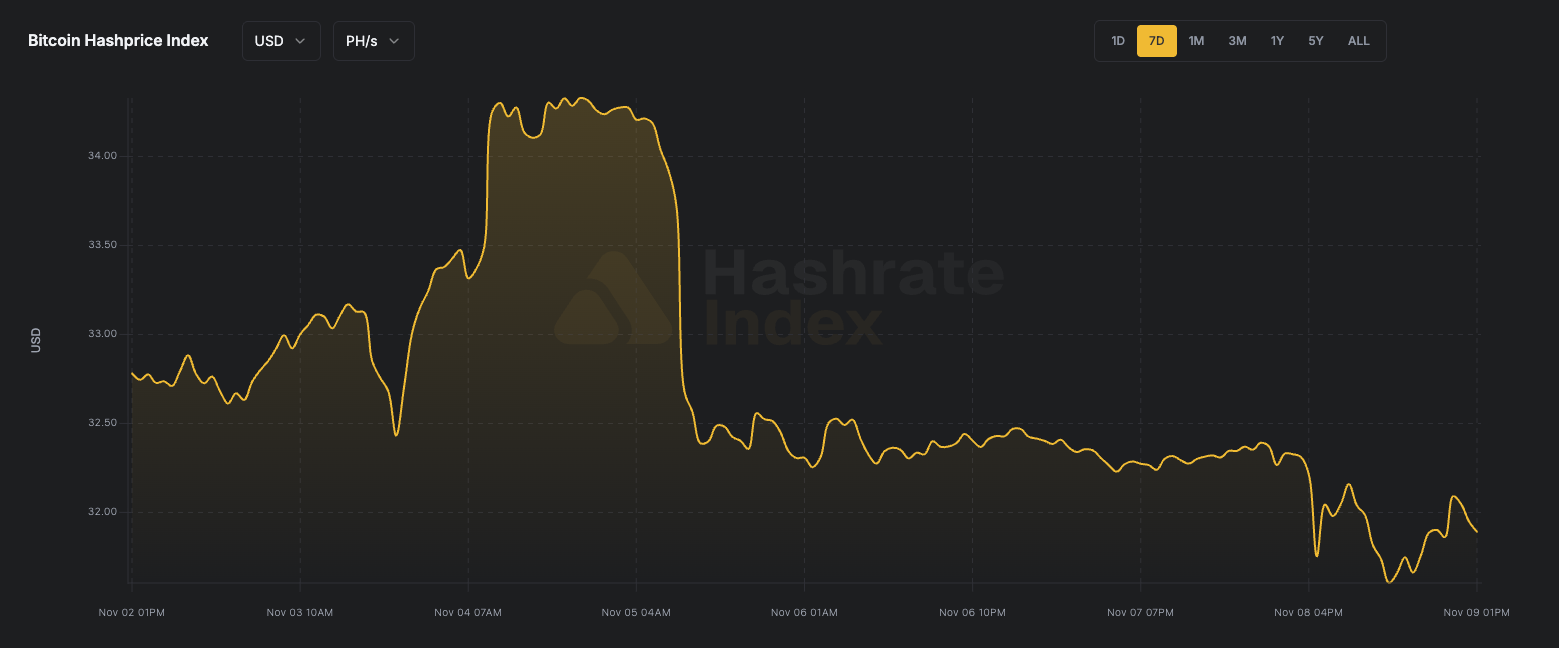
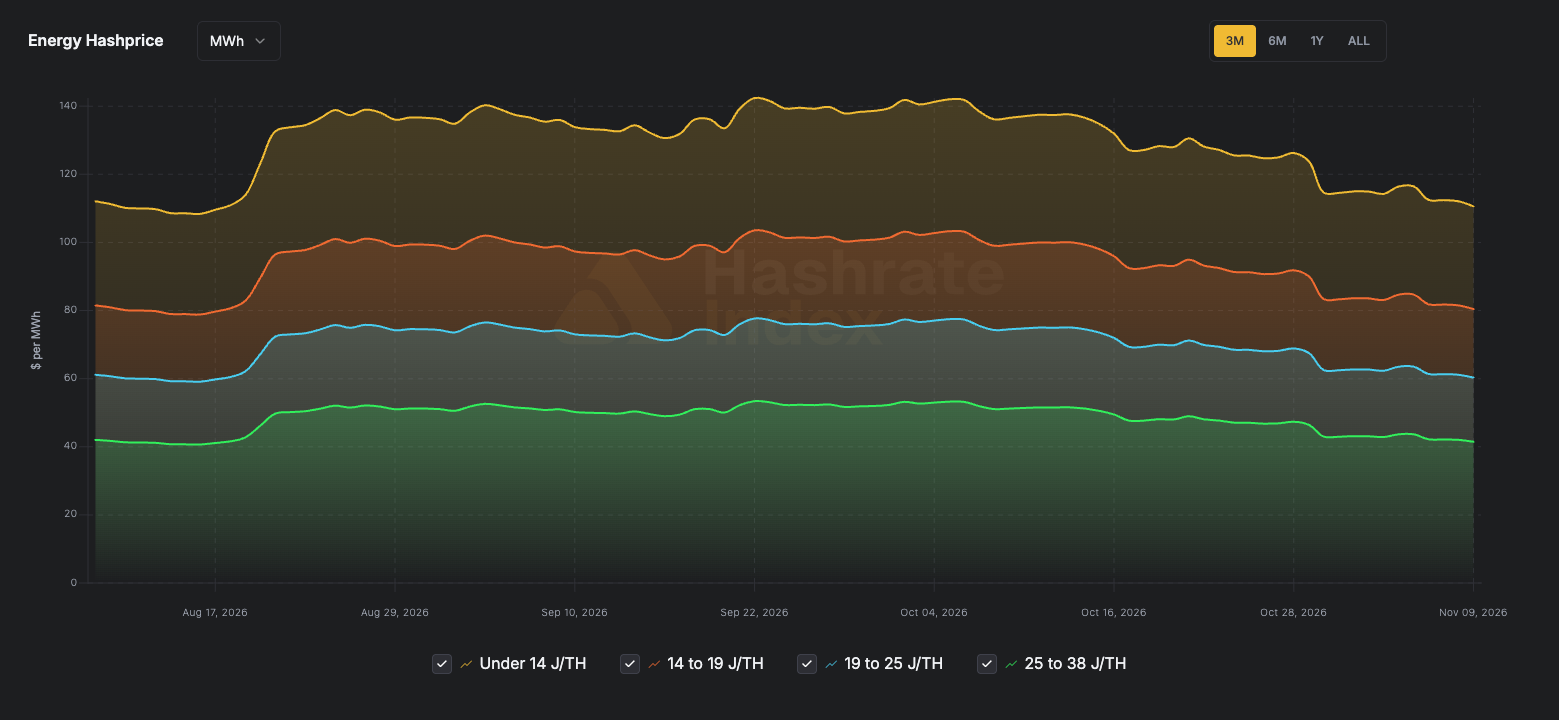
The financial health of the mining sector is intrinsically linked to the "hashprice"—the expected value of 1 petahash per second (PH/s) of computing power per day. Over the past week, the USD-denominated hashprice saw a decline of 2.8%, dropping from $32.82 to $31.89 per PH/s/Day. This contraction places significant pressure on older, less efficient hardware, forcing operators to reconsider their fleet efficiency or face potential insolvency if their power costs exceed the current revenue threshold.
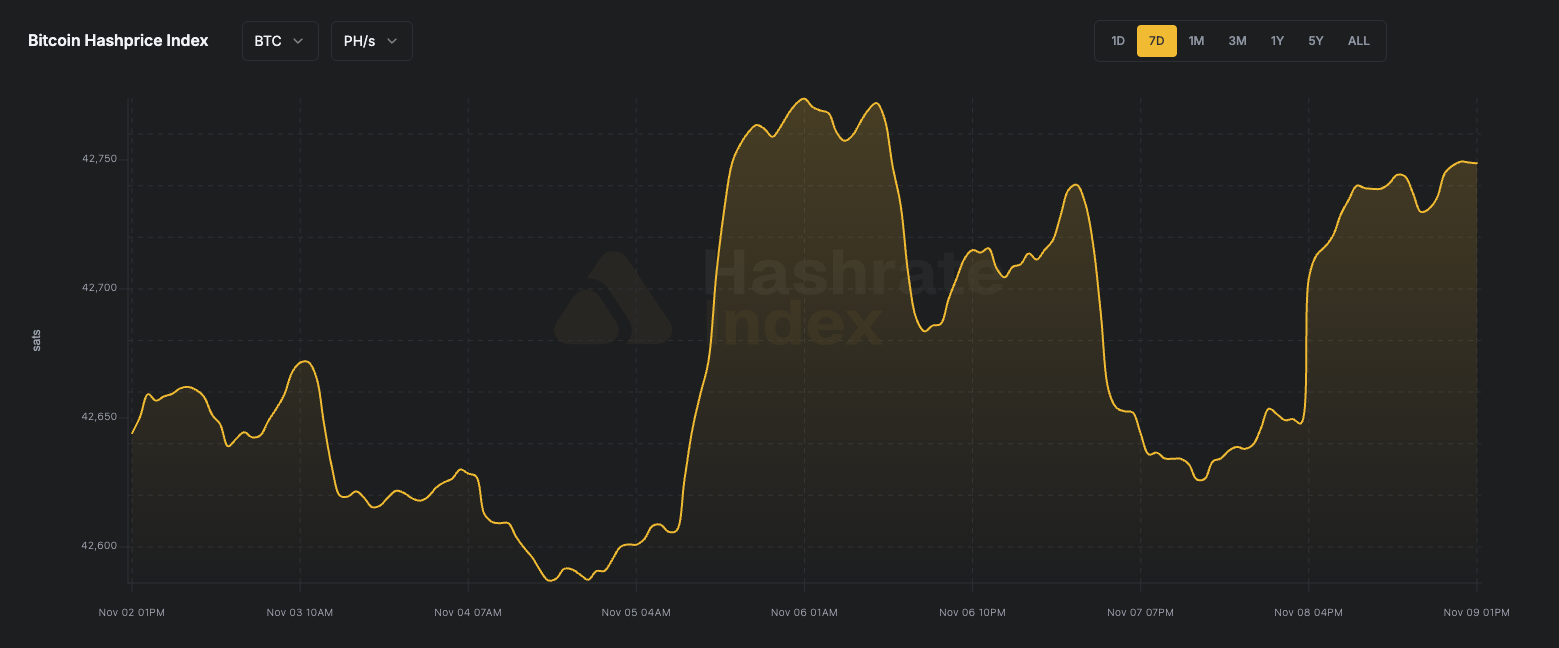
Interestingly, while the USD-denominated value fell, the BTC-denominated hashprice experienced a marginal increase of 0.3%, rising to 0.00042749 BTC per PH/s/Day. This divergence suggests that while the dollar value of mining revenue is fluctuating alongside the asset price, the fundamental reward per unit of hash remains relatively stable in native terms. However, with 30-day averages showing a 10.8% decrease in USD hashprice, mining firms are increasingly sensitive to operational overhead.
Network Hashrate and Difficulty Dynamics
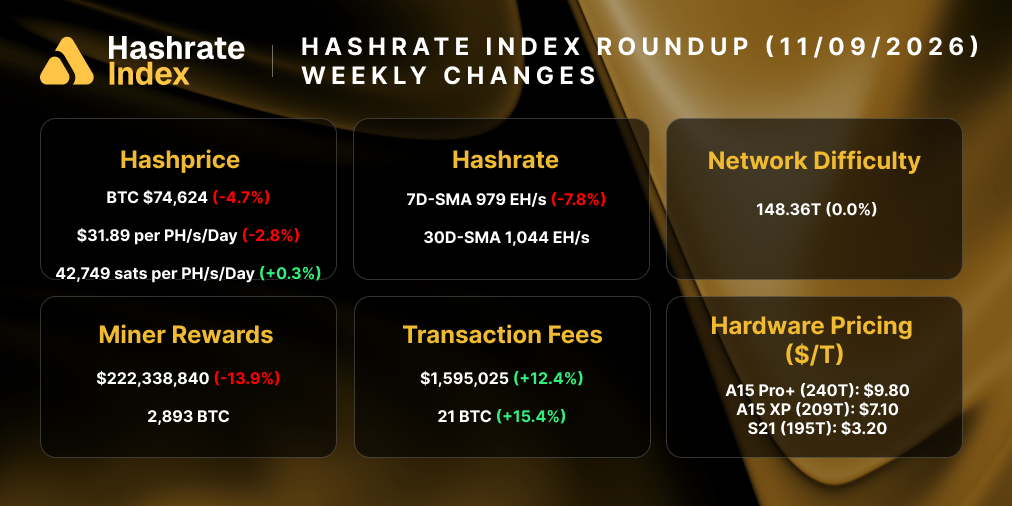
The Bitcoin network’s security, measured by its total hashrate, retreated by 7.8% over the reporting period. The 7-day simple moving average (SMA) for network hashrate fell from 1,062 EH/s to 979 EH/s. This drop is a clear indicator that some miners, particularly those operating with higher energy costs or legacy equipment, have curtailed their operations in response to the tightening margins.
The network difficulty, which dictates the computational effort required to mine a block, remained flat at 148.36T following the last adjustment on October 29. However, the current block production cycle, which has averaged 10 minutes and 41 seconds, suggests that the network is currently operating slightly slower than the targeted 10-minute interval. As a result, the next difficulty adjustment, projected for November 13, 2026, is estimated to decrease by approximately 6.5%. This downward adjustment is a self-correcting mechanism of the Bitcoin protocol, designed to incentivize miners to return to the network if block production slows down, thereby maintaining the protocol’s intended pace.
Transaction Fee Contribution
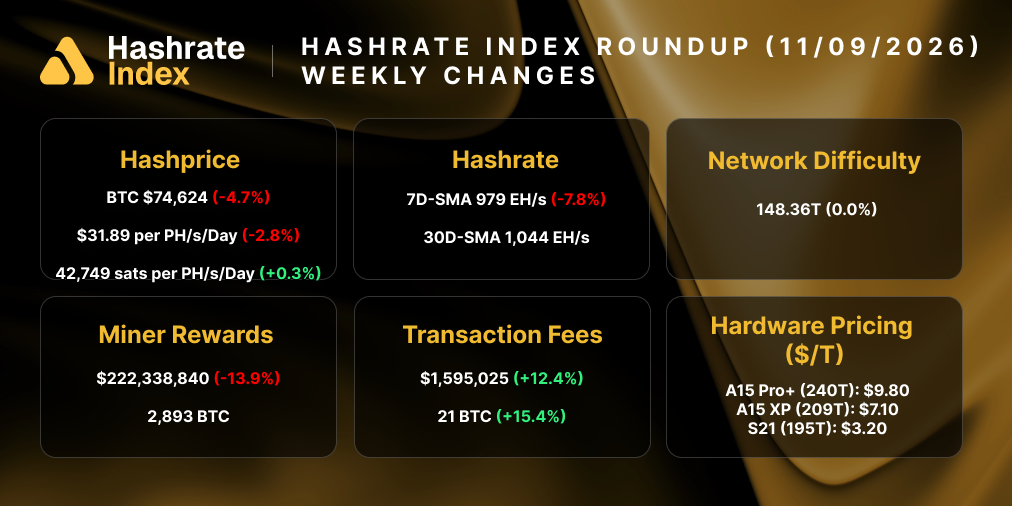
Transaction fees, which serve as a secondary incentive for miners, saw a significant uptick this week. Miners collected a total of 21 BTC—roughly $1.60 million—in transaction fees, representing a 31.3% increase compared to the previous week’s figures. While fees accounted for only 0.72% of total block rewards, the upward trend in fee revenue is a critical metric for the long-term sustainability of the mining ecosystem. As block rewards (the subsidy) continue to decrease over time via halving events, the reliance on transaction fees to maintain mining security becomes increasingly vital. The average fee per block rose to 0.0228 BTC, continuing a positive momentum that has seen 14-day and 30-day averages climb by 13.5% and 26.8%, respectively.
Mining Equities and Market Sentiment
The performance of publicly traded Bitcoin mining companies provided a mixed picture for investors. While the broader market volatility often causes mining stocks to mirror Bitcoin’s price, this week saw a divergence among individual firms. Of the eighteen major mining stocks tracked, nine saw gains, while nine suffered declines.
The volatility was particularly pronounced in companies like RIOT, which saw an impressive 48.3% gain, contrasting sharply with the 13.7% decline in ABTC. This disparity suggests that investors are becoming increasingly selective, focusing on firms with better balance sheets, lower debt-to-equity ratios, and more efficient mining fleets. Large-cap miners like IREN and CORZ maintained significant market caps, but their minor percentage changes reflect a period of consolidation within the equity markets as participants wait for clearer signals from the spot price of Bitcoin.
Broader Implications and Future Outlook
The current state of the Bitcoin mining industry underscores the transition from a period of speculative expansion to one of operational optimization. As hashprice hovers near breakeven points for many miners, the industry is seeing a renewed focus on hardware efficiency. Firms are increasingly turning to custom firmware, such as Luxor’s LuxOS, to squeeze more performance out of their S19 and S21 series rigs.
The Luxor Hashrate Forward Market provides a window into institutional expectations for the coming months. Currently, the forward market is pricing in an average hashprice of $32.69 (or 0.00043 BTC) over the next six months. This data suggests that the market expects a period of relative stability, though the inherent volatility of the crypto market remains a looming factor.
Structural Adjustments in the Mining Industry
From a structural perspective, the 7.8% drop in hashrate is not necessarily a negative sign for the network’s health; rather, it represents the market’s ability to clear out inefficient capacity. When hashprice drops below the cost of production for older machines, those machines are turned off, effectively clearing the network of "weak hands." This leads to the anticipated negative difficulty adjustment, which lowers the barrier to entry for the remaining, more efficient miners.
This cyclical process is fundamental to the robustness of Bitcoin’s Proof-of-Work (PoW) consensus mechanism. By forcing a purge of inefficient operations, the network maintains its security while adapting to changing energy costs and Bitcoin price levels. As the industry looks toward the November 13 difficulty adjustment, the focus will remain on how many miners choose to re-enter the market once the difficulty drops, and whether transaction fees can continue their growth trend to offset potential fluctuations in the block subsidy.
In summary, the week ending November 9, 2026, was characterized by defensive positioning. Miners are balancing lower network security margins against potential future profitability, while equity markets continue to reward efficiency and operational scale. As we head into mid-November, the industry remains in a state of flux, awaiting the next difficulty adjustment that will likely set the tone for the final quarter of the year. The resilience of the network, supported by the automated nature of difficulty adjustments, ensures that despite price fluctuations, the fundamental operation of Bitcoin continues unimpeded.