
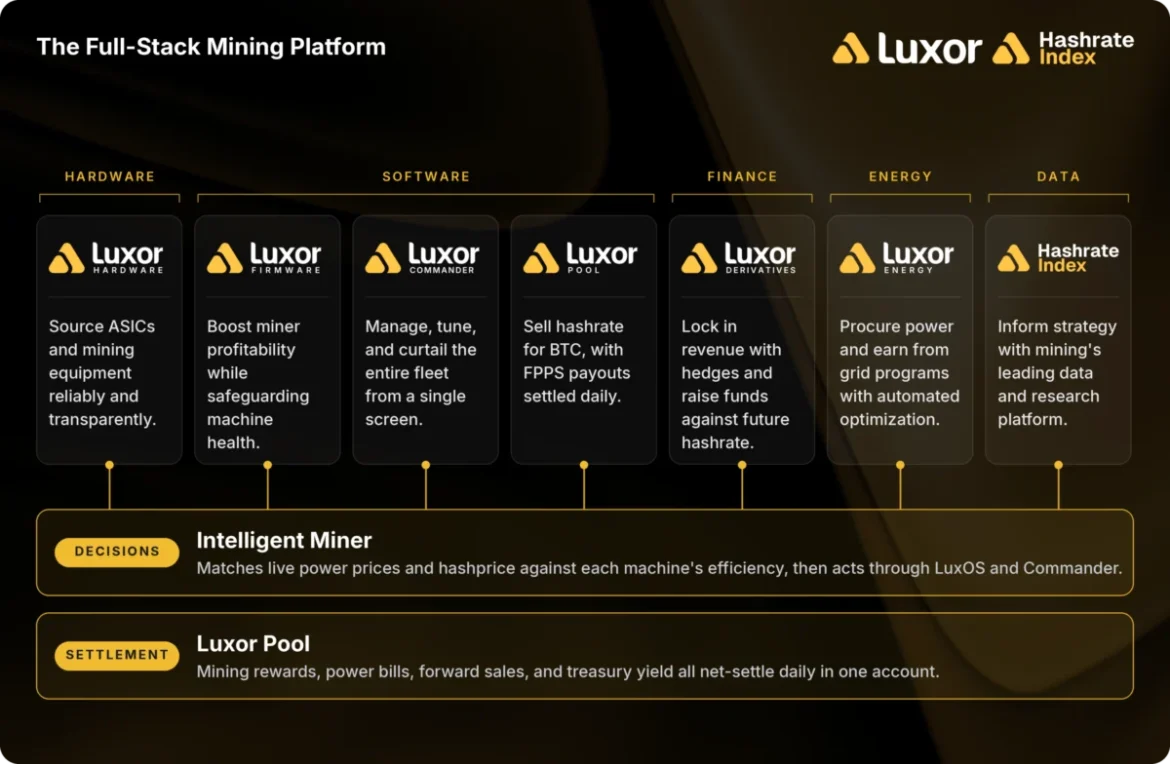
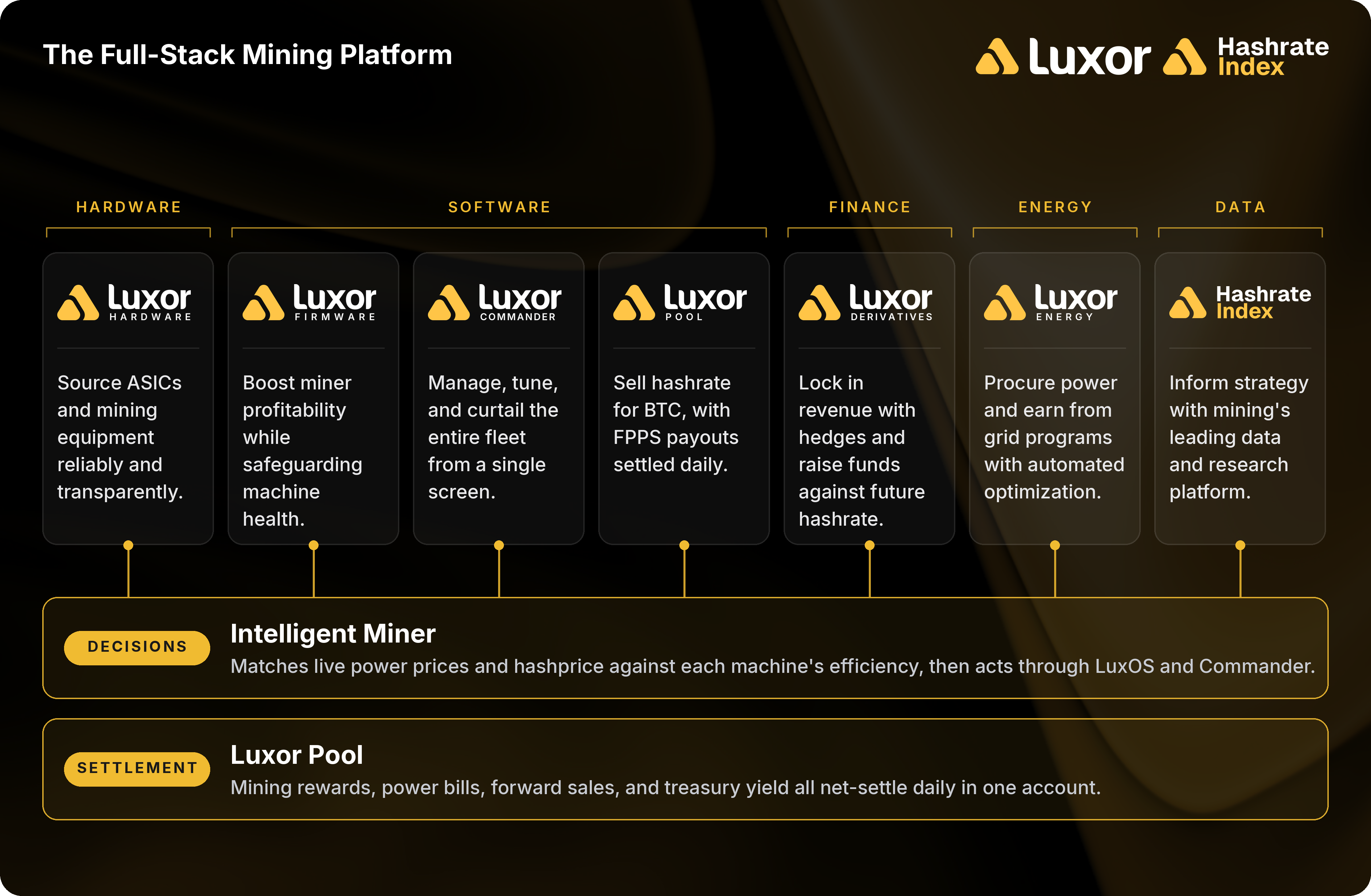
The landscape of industrial-scale Bitcoin mining is undergoing a structural transformation, shifting from a fragmented model of disparate service providers to a unified, vertically integrated ecosystem. Steelhead Power Company, an independent operator founded in 2023, has emerged as a bellwether for this transition. By consolidating hardware procurement, firmware optimization, financial hedging, and energy management into a singular platform—specifically the Luxor ecosystem—Steelhead has demonstrated how technical and financial synergy can insulate operators against the volatility inherent in the Bitcoin network.
The Evolution of Mining Infrastructure
Founded in 2023, Steelhead Power Company was established with a focus on high-efficiency, liquid-cooled infrastructure. Operating primarily in Texas, the company faces the dual challenge of extreme ambient temperatures—often exceeding 40°C (104°F)—and a highly dynamic energy market regulated by the Electric Reliability Council of Texas (ERCOT). To mitigate the thermal risks associated with high-density mining, Steelhead transitioned from initial immersion-based setups to advanced hydro-cooling architectures, utilizing both containerized and skid-mounted systems.
Traditionally, mining operators function as aggregators of distinct services. A typical firm might purchase hardware from a broker, license firmware from a third-party vendor, join a public mining pool, and manage energy procurement through a separate utility desk. This piecemeal approach creates operational "leaks"—inefficiencies in communication between hardware performance, energy usage, and financial settlement. Steelhead’s strategy represents a departure from this norm, integrating these layers so that each component communicates in real-time.
Chronology of Operational Integration
Since its inception, Steelhead has moved systematically to streamline its operations. By 2026, the company had successfully scaled its fleet across multiple manufacturers, including Bitmain, MicroBT, and Canaan, utilizing over a thousand machines. The operational timeline reflects a strategic prioritization of data-driven decision-making.
In early 2026, the company began fully utilizing the Luxor suite, which includes the LuxOS firmware, the Commander fleet management interface, and the Luxor Energy desk. The synchronization of these tools allows for automated responses to grid signals. When ERCOT issues curtailment requests or when spot power prices spike, the fleet’s management software—Intelligent Miner—automatically adjusts the power consumption of the ASICs. This avoids the manual labor and latency that typically plague large-scale mining operations, where individual units or groups of machines must be throttled by on-site technicians.
Supporting Data and Technical Performance
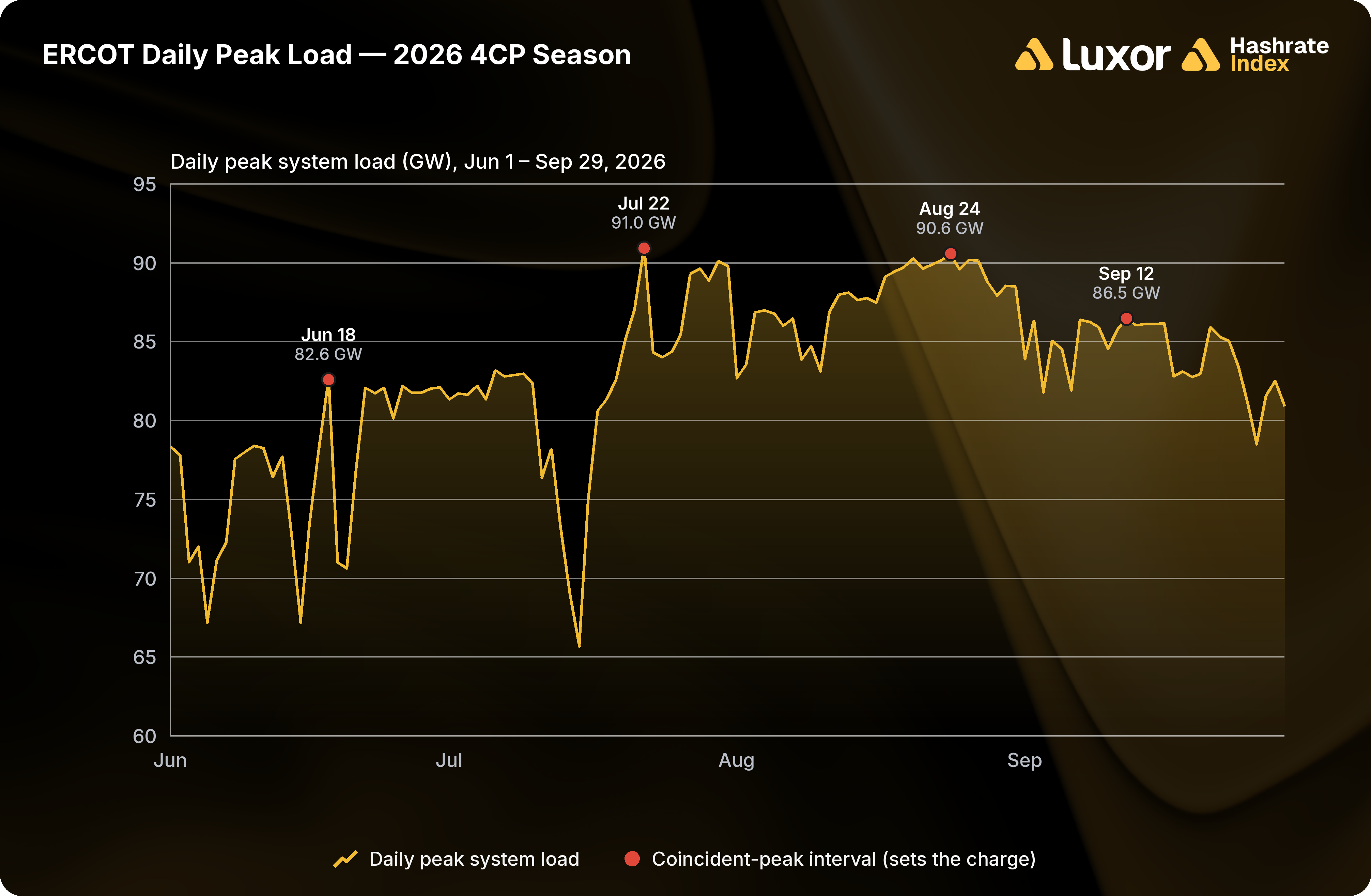
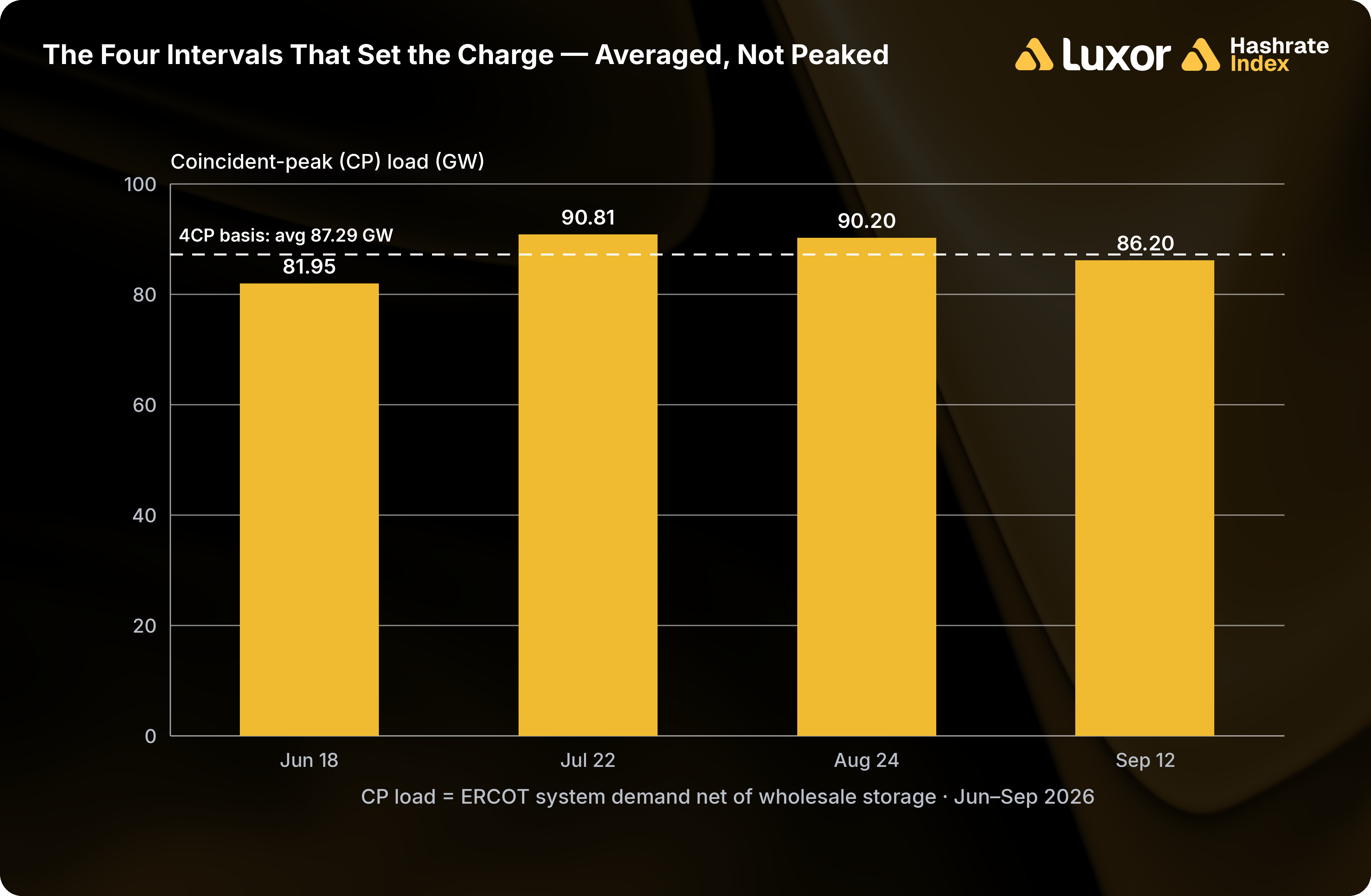
The economic efficacy of this full-stack model is best illustrated by the 2026 4CP (Four Coincident Peak) season in Texas. ERCOT determines annual transmission charges based on the four 15-minute intervals of highest system demand across the months of June, July, August, and September. Missing these peaks can result in significantly higher operational costs for the following 12 months.
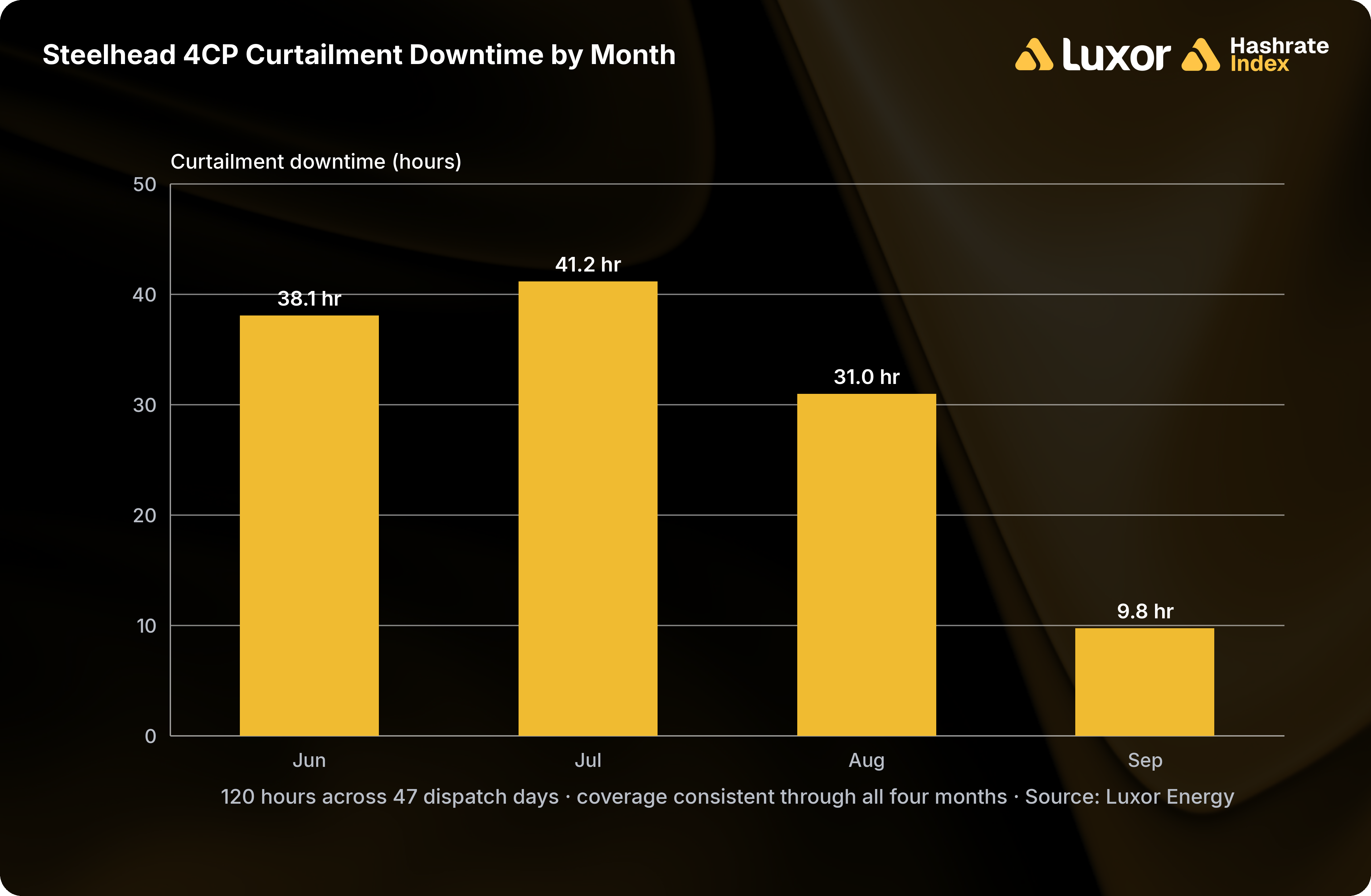
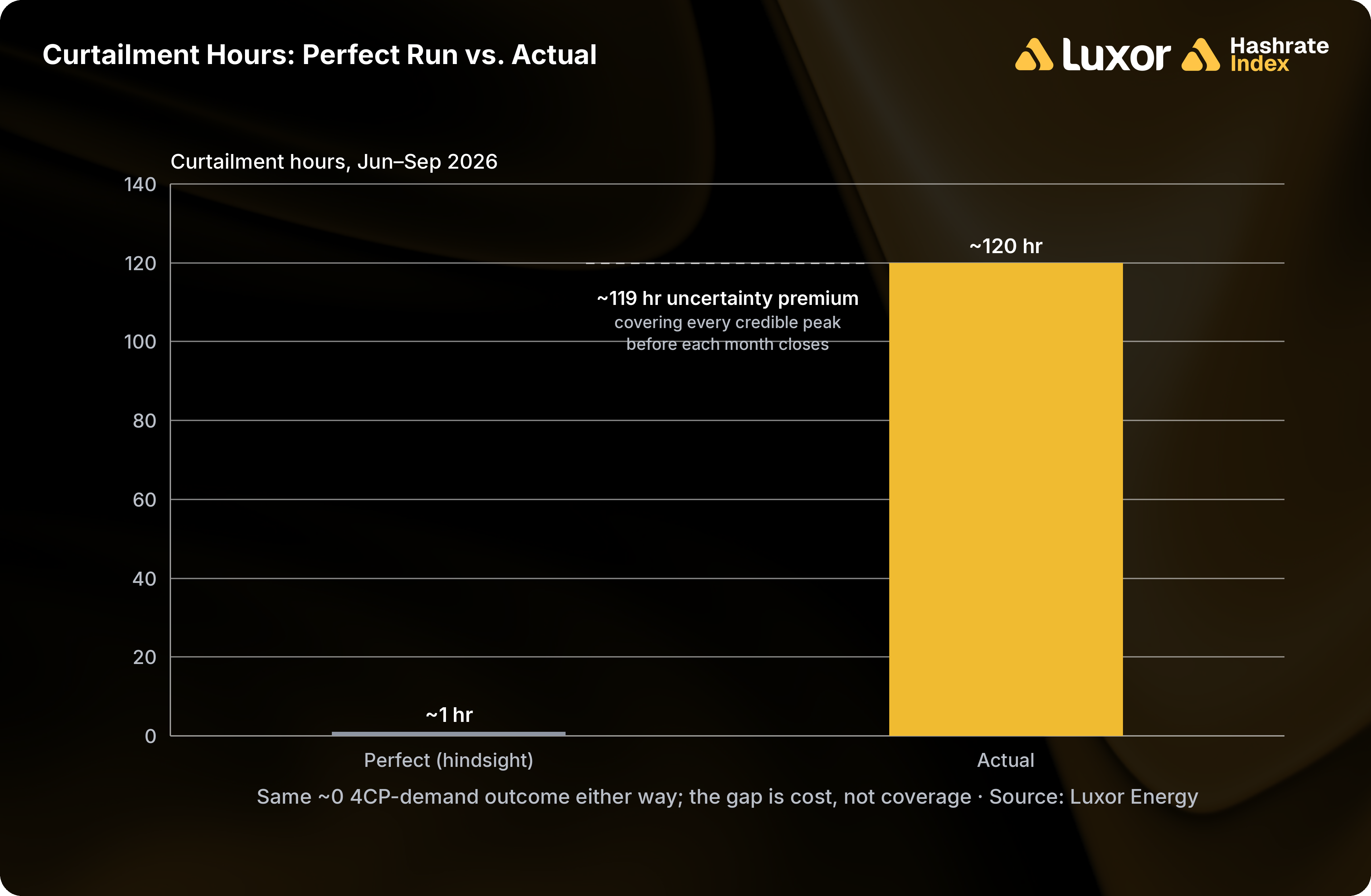
During the 2026 season, Steelhead successfully curtailed its load during all four coincident peaks: June 18 (81.95 GW), July 22 (90.81 GW), August 24 (90.20 GW), and September 12 (86.20 GW). By utilizing the Luxor Energy agent to automate the process, Steelhead logged approximately 120 hours of curtailment over 47 dispatch days. While this included "extra" hours to ensure no peak was missed, the cost-to-benefit ratio remained highly favorable. With avoided transmission charges estimated at roughly $66,760 per MW per year, the financial return on curtailment—net of lost mining margin—was substantial, effectively netting approximately $61,960 per MW annually.
Furthermore, the integration of LuxOS firmware provided a measurable efficiency gain. By utilizing Advanced Thermal Management (ATM) and Power Targeting, Steelhead was able to optimize the S21 XP-class hardware to run at a lower power draw than factory settings would allow. Independent modeling suggests that such optimizations, when paired with full-stack integration, can yield a gross margin uplift of approximately $94,000 per MW per year compared to peers operating with stock firmware and standard pool configurations.
Official Perspectives and Management Strategy
The decision to centralize operations under a single counterparty was driven by the need for scalability. Steven Hood, President of Steelhead Power Company, noted that the vertical integration provided by the Luxor platform bridges the gap between daily operations and power procurement. By removing the friction of vendor management, the company has redirected its resources toward growth and long-term capital allocation.
Mario Mojarro, an analyst at Steelhead, emphasized the importance of the financial layer, specifically regarding treasury management. By leveraging their Bitcoin holdings as collateral for liquidity provision, Steelhead transforms idle assets into a yield-generating engine. "We sell a portion of our production forward through Luxor for fixed pool payouts," Mojarro stated. "It settles on Luxor Pool along with everything else, so it isn’t a separate process on our end."
Broader Implications for the Mining Industry
The success of the Steelhead model signals a maturation of the Bitcoin mining sector. As the industry moves further away from the speculative "gold rush" phase and into an era of high-intensity competition, the margin of error has narrowed. For operators, the ability to manage energy costs, firmware efficiency, and financial risk simultaneously is no longer an optional advantage; it is becoming a requirement for survival.
The implications for the wider market are twofold. First, the move toward "Intelligent Mining"—the algorithmic control of hardware based on real-time grid and network data—is likely to become the standard. Second, the potential regulatory shift in Texas from a 4CP to a 12CP methodology suggests that peak-avoidance will evolve into a year-round operational discipline rather than a summer-only activity. This shift favors firms that have already invested in automated, software-driven curtailment systems.
Conclusion and Future Outlook
Steelhead Power Company’s operational trajectory serves as a case study for the professionalization of the Bitcoin mining industry. By treating the operation as a complex energy and computing utility rather than a simple hardware deployment, Steelhead has achieved a level of resilience that few decentralized or fragmented operators can replicate.
As the industry approaches the end of 2026, the focus for operators will likely remain on efficiency metrics such as J/TH (Joules per Terahash) and grid-responsiveness. Whether through the adoption of more advanced ASIC models or the further refinement of energy-hedging strategies, the "full-stack" approach exemplified by Steelhead is setting the benchmark for the next generation of industrial Bitcoin miners. For investors and stakeholders, the key takeaway is that the winners in this space will be those who can most effectively harmonize the disparate inputs of hardware, electricity, and financial derivatives into a single, seamless, and highly automated flow of operations.
The ongoing evolution of these systems—and the data intelligence provided by platforms like Hashrate Index—will continue to provide the framework for how Bitcoin miners interface with the broader energy market. As regulatory environments like those in Texas continue to shift, the capability to adapt at the millisecond level will be the ultimate determinant of long-term profitability in the global mining compute market.
