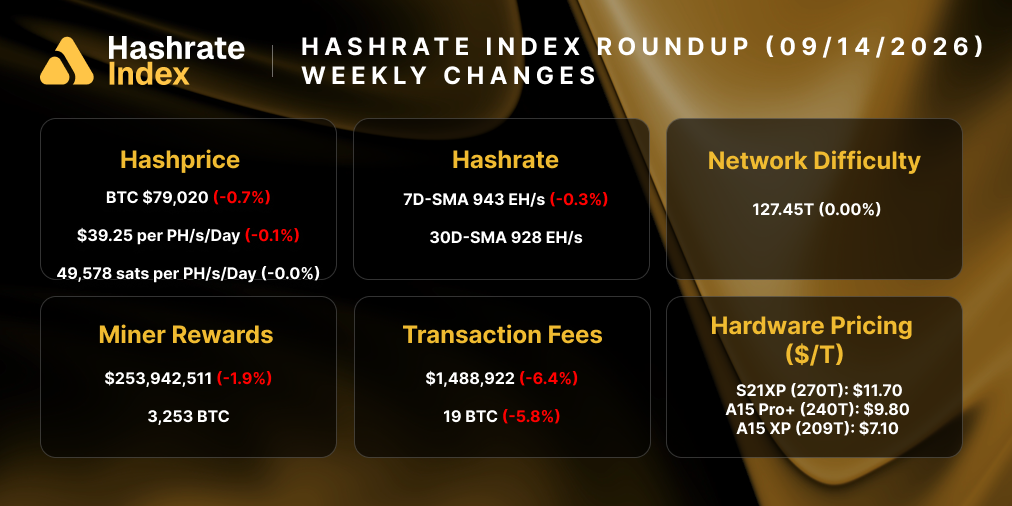
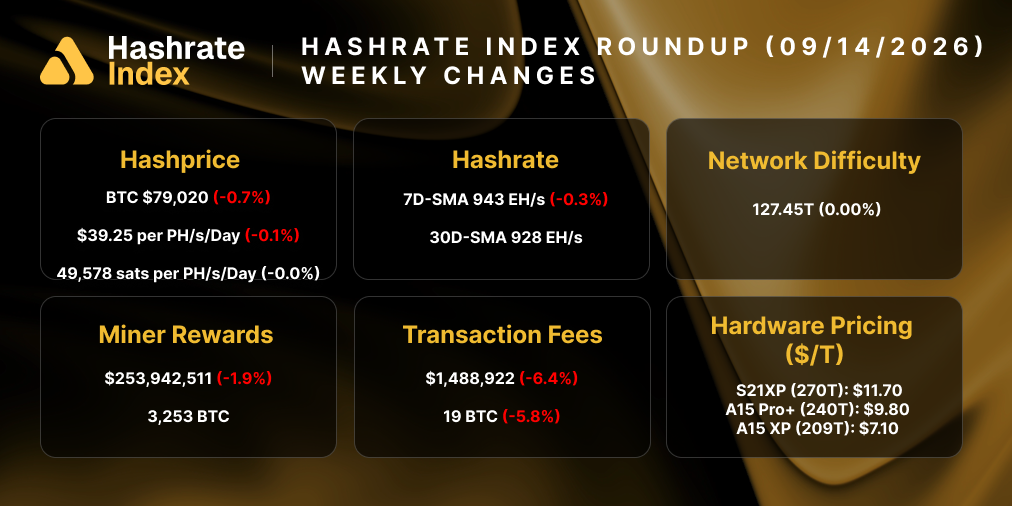
The Bitcoin mining sector experienced a period of relative stagnation during the second week of September 2026, characterized by a flatline in profitability metrics and a minor contraction in network hashrate. As of September 14, 2026, miners collectively generated approximately 3,253 BTC in block rewards, a haul valued at roughly $253 million at current market prices. This week’s performance highlights the ongoing sensitivity of mining operations to the delicate equilibrium between the asset’s spot price, network difficulty, and the diminishing contribution of transaction fees to total revenue. Transaction fees accounted for a marginal 0.59% of the total block rewards, totaling 19 BTC, or approximately $1.49 million, underscoring a trend of suppressed on-chain activity that has persisted throughout the month.
Market Price Volatility and Asset Performance
Bitcoin’s price trajectory remained subdued over the past seven days, recording a minor decline of 0.7%. Starting the week near $79,581, the asset retreated to a spot price of $79,020 by the close of the reporting period. This movement is reflective of a broader, more challenging year for the cryptocurrency, which currently sits at a year-to-date performance of -9.6%.
The futures market sentiment, as evidenced by CME data, suggests a cautious outlook among institutional investors. While the September CME futures contract holds a slight premium at $79,300 (+0.4%) and October futures show a similar trend at $79,700 (+0.9%), the November contract has dipped to $77,610, representing a -1.8% change. This backwardation or flattening of the forward curve often signals market uncertainty regarding the short-to-medium-term price action, which directly impacts the capital expenditure decisions of large-scale mining firms.
Hashprice Dynamics and Mining Economics
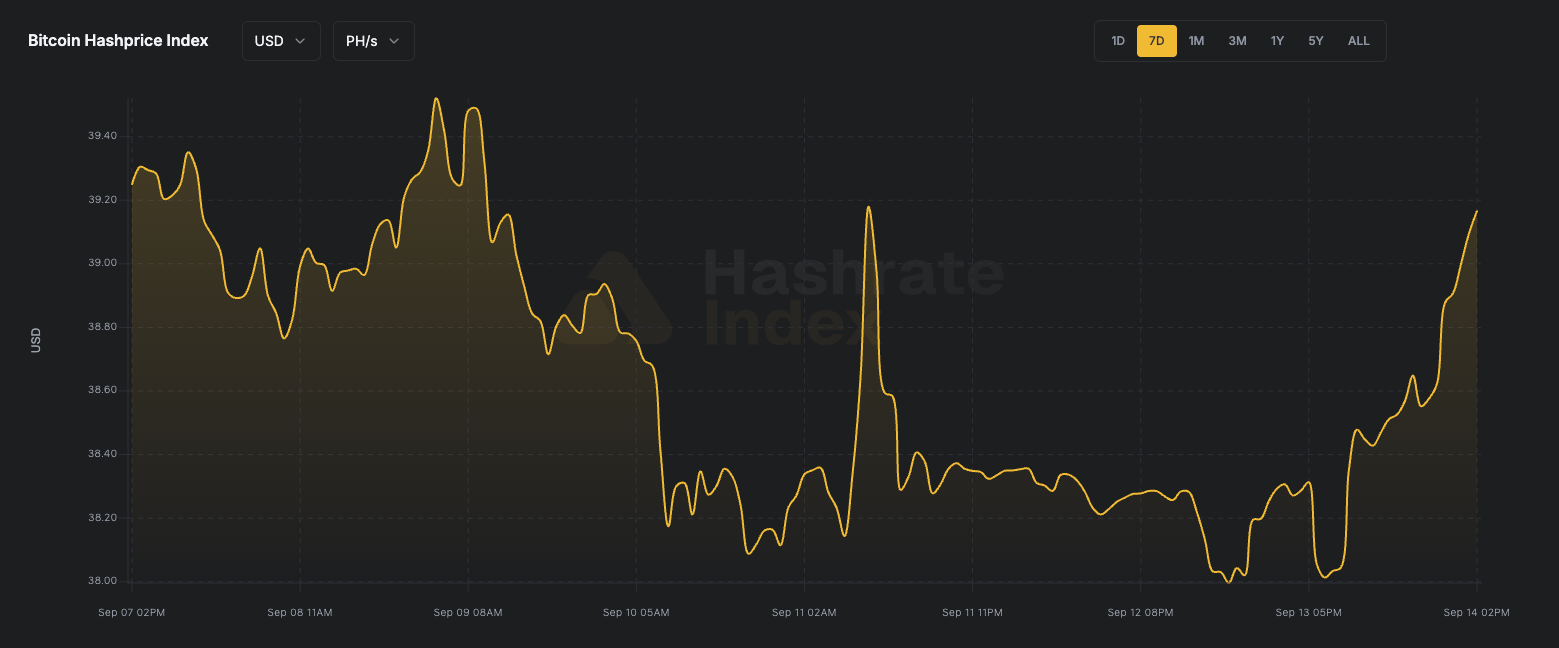
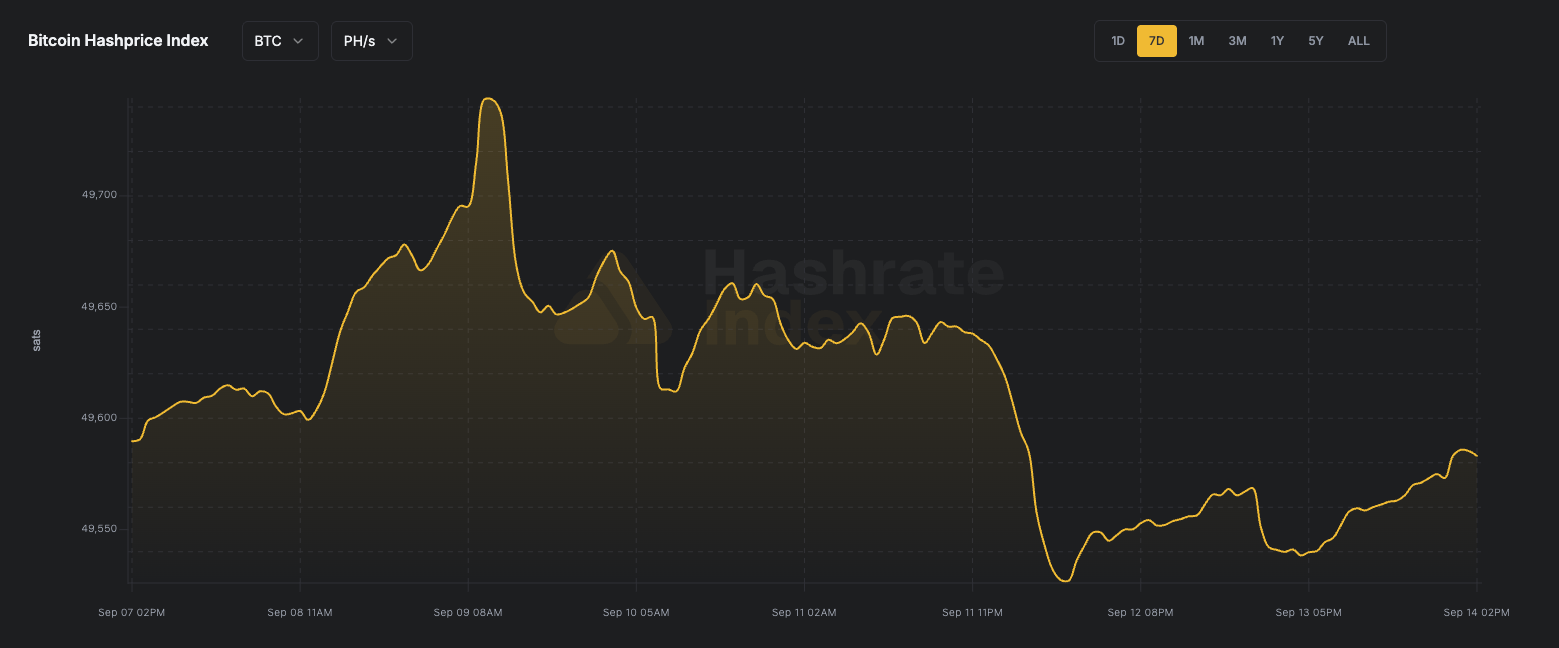
USD-denominated hashprice—the primary metric for calculating the expected revenue for one petahash per second of compute power per day—saw a negligible movement of -0.1%, shifting from $39.29 to $39.25 per PH/s/Day. When denominated in BTC, the hashprice remained virtually unchanged at 0.00049578 BTC per PH/s/Day.
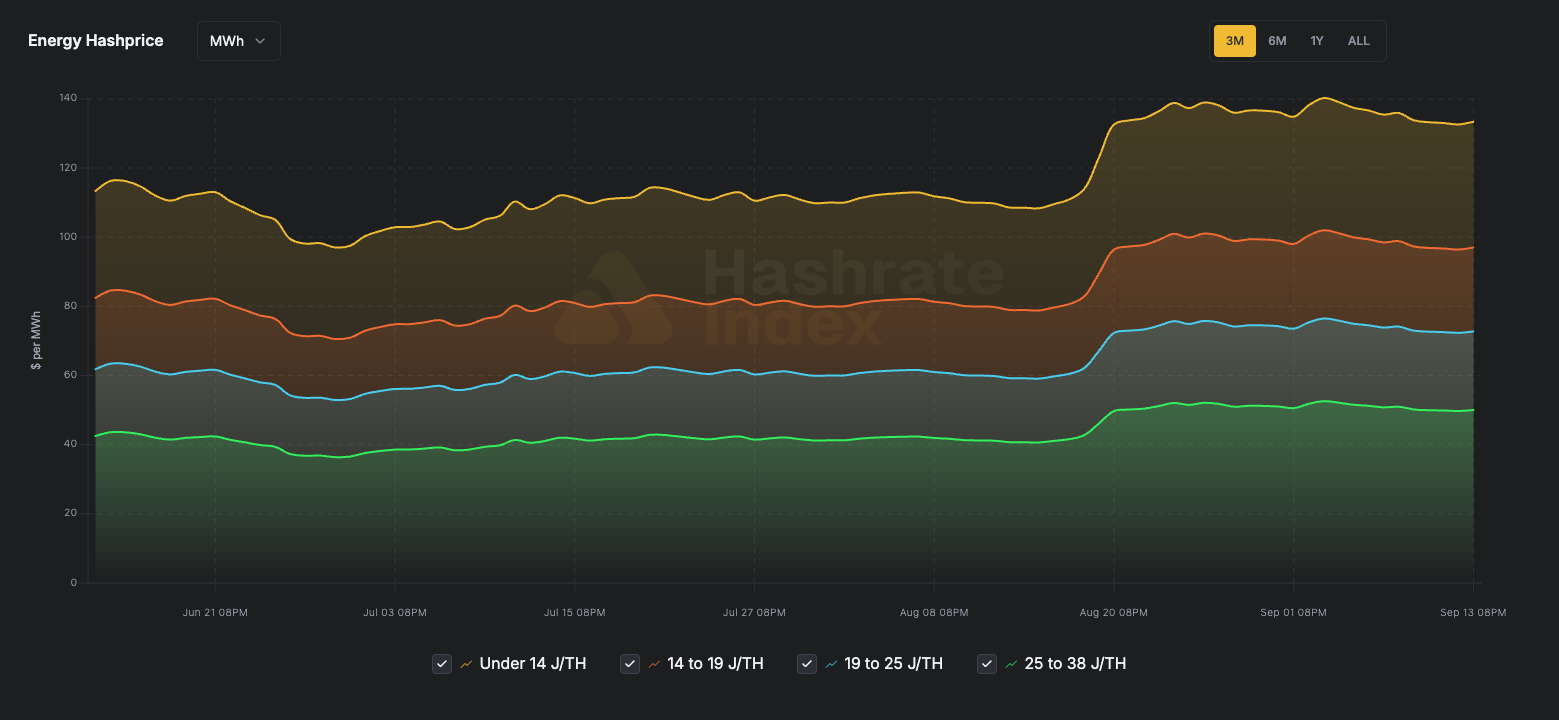
These figures are critical for operators as they determine the viability of fleet expansions and the decommissioning of legacy hardware. The marginal nature of these shifts suggests that the current mining environment is neither expanding nor aggressively contracting in terms of individual unit profitability, but rather holding steady. The 30-day average hashprice of $38.04 indicates a modest recovery of 3.2% from the deeper lows observed in late August, yet the overall economic landscape remains thin for operators with higher electricity costs or less efficient fleets.
Network Hashrate and Difficulty Adjustments
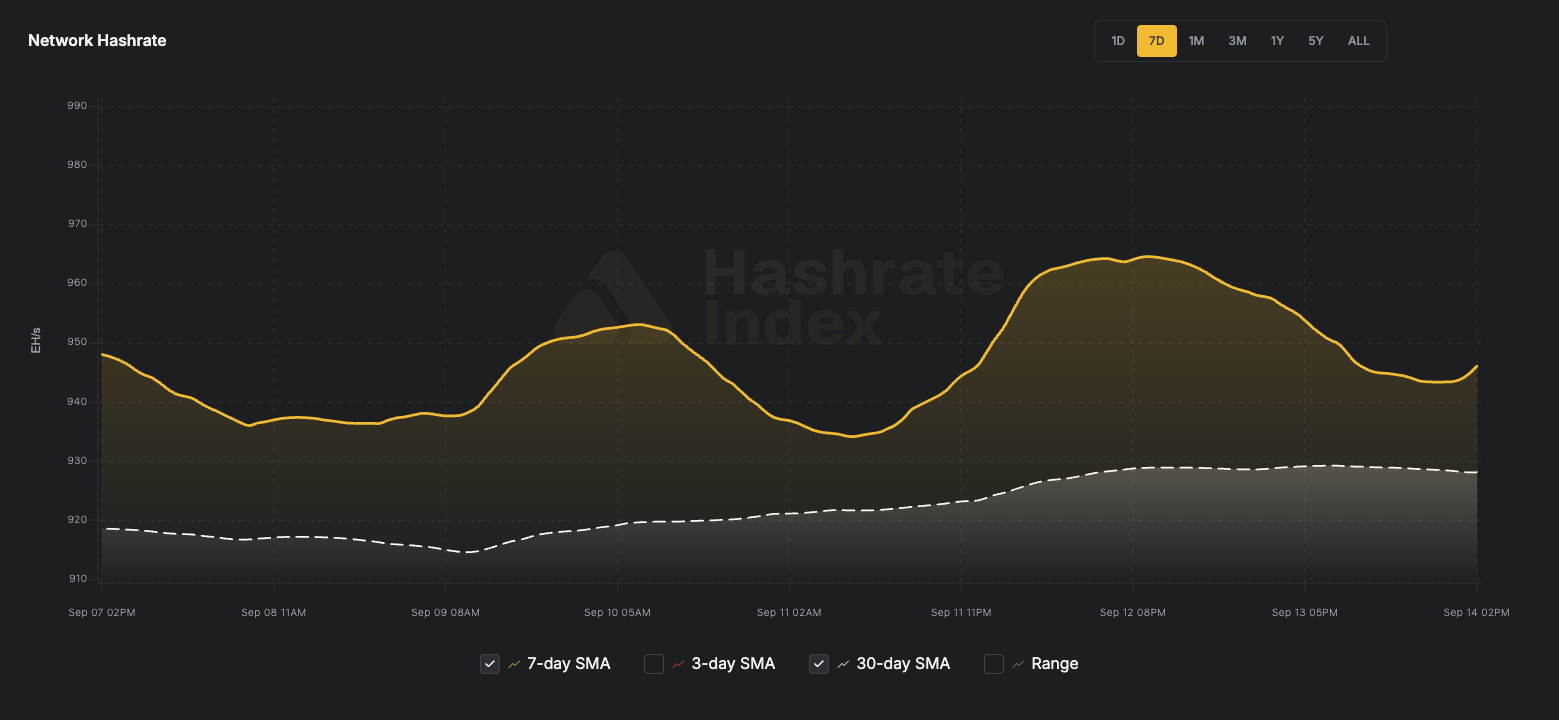
The Bitcoin network’s computational power experienced a slight reduction over the week. The 7-day simple moving average (SMA) of the network hashrate moved from 946 EH/s to 943 EH/s, representing a -0.3% decline. This follows a period of rapid growth in the sector and suggests that some marginal miners may be cycling off the network as they reach the limits of their operational efficiency.
The most recent network difficulty adjustment, which occurred on September 5, 2026, saw an upward recalibration of 1.31%, bringing the difficulty level to 127.45T. This adjustment mechanism is designed to keep block production times consistent at approximately 10 minutes. However, the current network reality shows an average block time of 9 minutes and 30 seconds, indicating that the hashrate is slightly outpacing the difficulty target. Consequently, the network is anticipating a more significant upward adjustment of approximately +5.26% on September 19, 2026. Such an increase in difficulty will further compress profit margins for miners, particularly those operating on older generation machines, unless they can secure lower energy rates or transition to more efficient hardware.
Transaction Fee Landscape
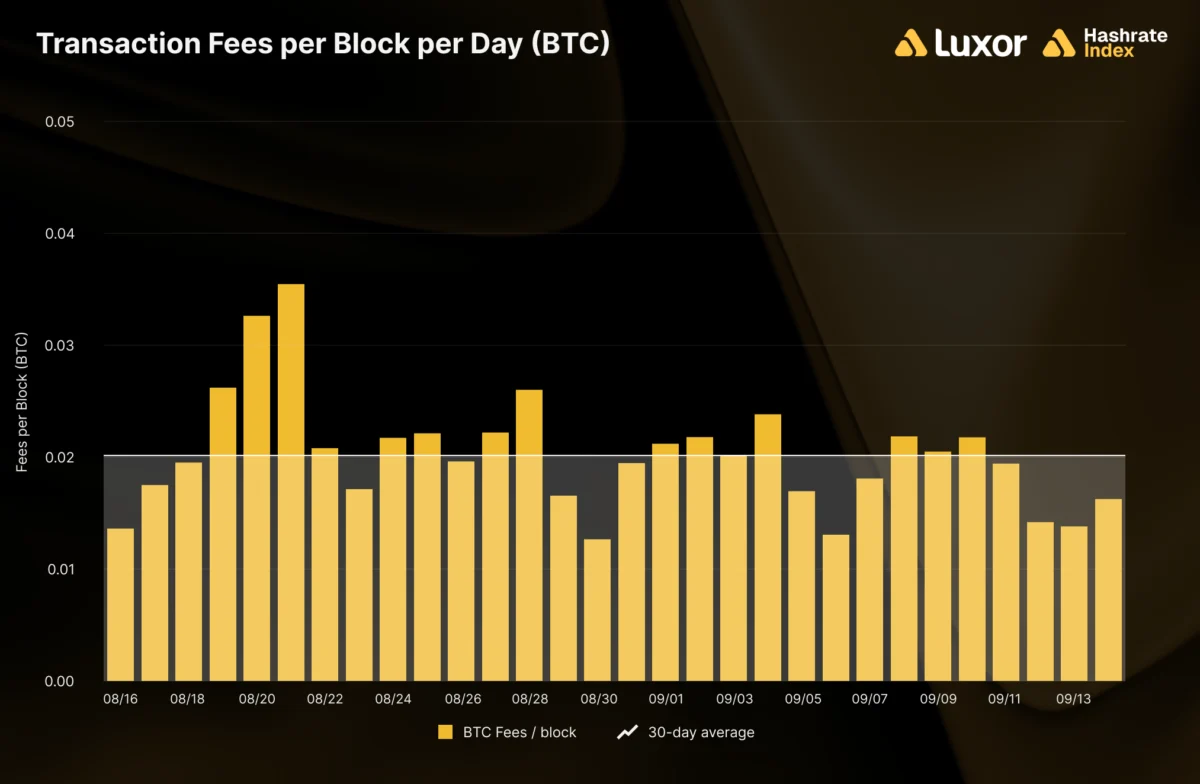
Transaction fees continue to provide a minimal buffer for mining profitability. Over the past week, miners collected an average of 0.0183 BTC per block in fees, a 5% decrease compared to the previous week’s 0.0193 BTC. This consistent decline, reflected in the 30-day average of 0.0202 BTC, points to a lack of intense demand for block space. In a post-halving environment, where block subsidies are permanently reduced, the reliance on transaction fees becomes paramount for the long-term sustainability of the network. The current lack of transactional throughput, therefore, remains a key watchpoint for industry analysts and network participants alike.
Strategic Outlook and Future Expectations
Looking toward the next six months, the Hashrate Forward Market is currently pricing in an average hashprice of $36.92 or 0.00047 BTC. This forward curve suggests that the market does not anticipate a significant breakout in mining profitability in the immediate future, prompting many firms to prioritize operational efficiency over rapid capacity growth. This environment favors firms with vertical integration—those who can control their energy costs or possess superior access to capital for purchasing next-generation mining rigs.
Mining Stock Performance and Sector Consolidation
Publicly traded Bitcoin mining companies faced significant headwinds this week. The sector saw a broad-based decline across major tickers, reflecting the cautious sentiment in the broader crypto-equity market. Companies like IREN, which holds a massive market capitalization of $17.19 billion, saw a 7.0% decline, while Marathon Digital (MARA) and Riot Platforms (RIOT) dropped 1.8% and 5.6%, respectively.
The most pronounced volatility was seen in smaller-cap entities; for instance, CANG experienced a 14.1% decline, and Cipher Mining (CIFR) fell by 14.0%. While companies like Applied Digital (ANY) bucked the trend with an 18.0% increase, the general sentiment across the board remained bearish. This stock price contraction reflects both the sensitivity of mining stocks to Bitcoin’s spot price and the broader institutional concern regarding the cost-to-revenue ratio in a post-halving world.
Broader Implications and Industry Context
The current state of the Bitcoin mining industry is one of transition. As the network approaches another difficulty adjustment, the pressure on miners to optimize their fleets has never been higher. The industry is currently moving away from the era of "growth at any cost" and toward a model of "efficiency as survival."
The persistent, albeit slight, decline in transaction fees combined with the anticipated difficulty hike suggests that only the most efficient miners—those utilizing state-of-the-art ASIC hardware and securing competitive energy contracts—will be able to maintain healthy margins. Analysts note that while the network remains resilient and secure with a hashrate nearing 950 EH/s, the financial sustainability of the mining ecosystem is increasingly dependent on broader macroeconomic factors, such as the interest rate environment and the institutional adoption of Bitcoin as a treasury asset, which could stimulate greater on-chain transaction volume and, by extension, higher fee revenue.
For now, the sector remains in a "wait-and-see" pattern. As of September 14, 2026, the data suggests that while the network remains remarkably stable, the underlying economic engine of Bitcoin mining is running lean. Stakeholders will be watching the September 19 difficulty adjustment closely, as it will serve as the next true test for the network’s hash-power equilibrium and the subsequent profitability of the global mining fleet.