In the evolving ecosystem of high-performance computing, the competition for power has become the defining metric for profitability. As of October 2026, the industrial landscape is dominated by three primary pillars: Bitcoin ASICs, Zcash (Equihash) miners, and high-end NVIDIA H100 GPU clusters. With industrial energy costs hovering at $0.08 per kilowatt-hour (kWh), the economic viability of these machines is no longer measured solely by raw performance, but by revenue generated per megawatt-hour (MWh). While the NVIDIA H100 leads in pure revenue potential when fully utilized, the Zcash-mining Antminer Z15 Pro offers a compelling alternative in terms of capital efficiency, highlighting a complex trade-off between energy throughput and hardware deployment costs.
The Economic Divergence of Compute Power
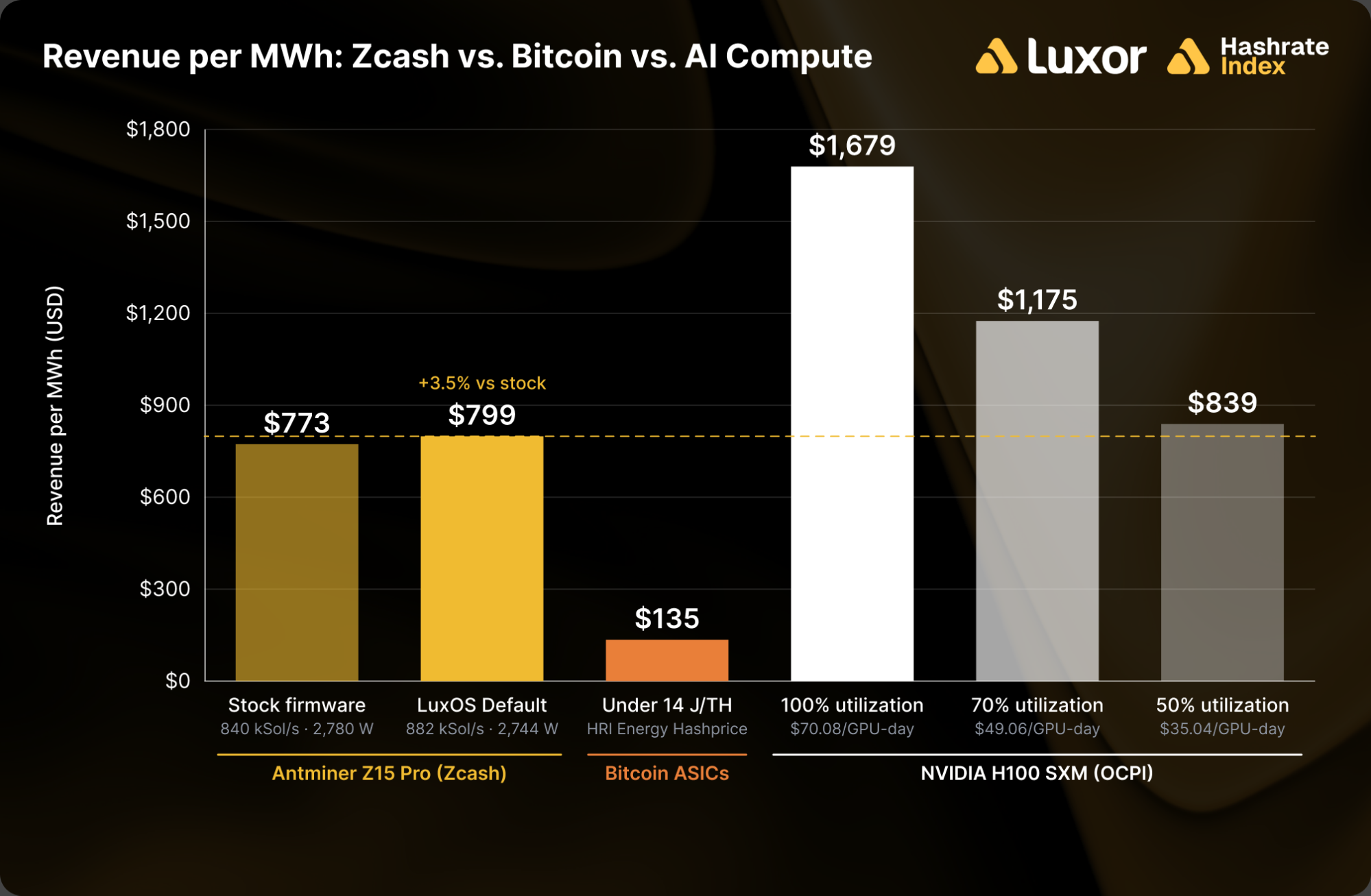
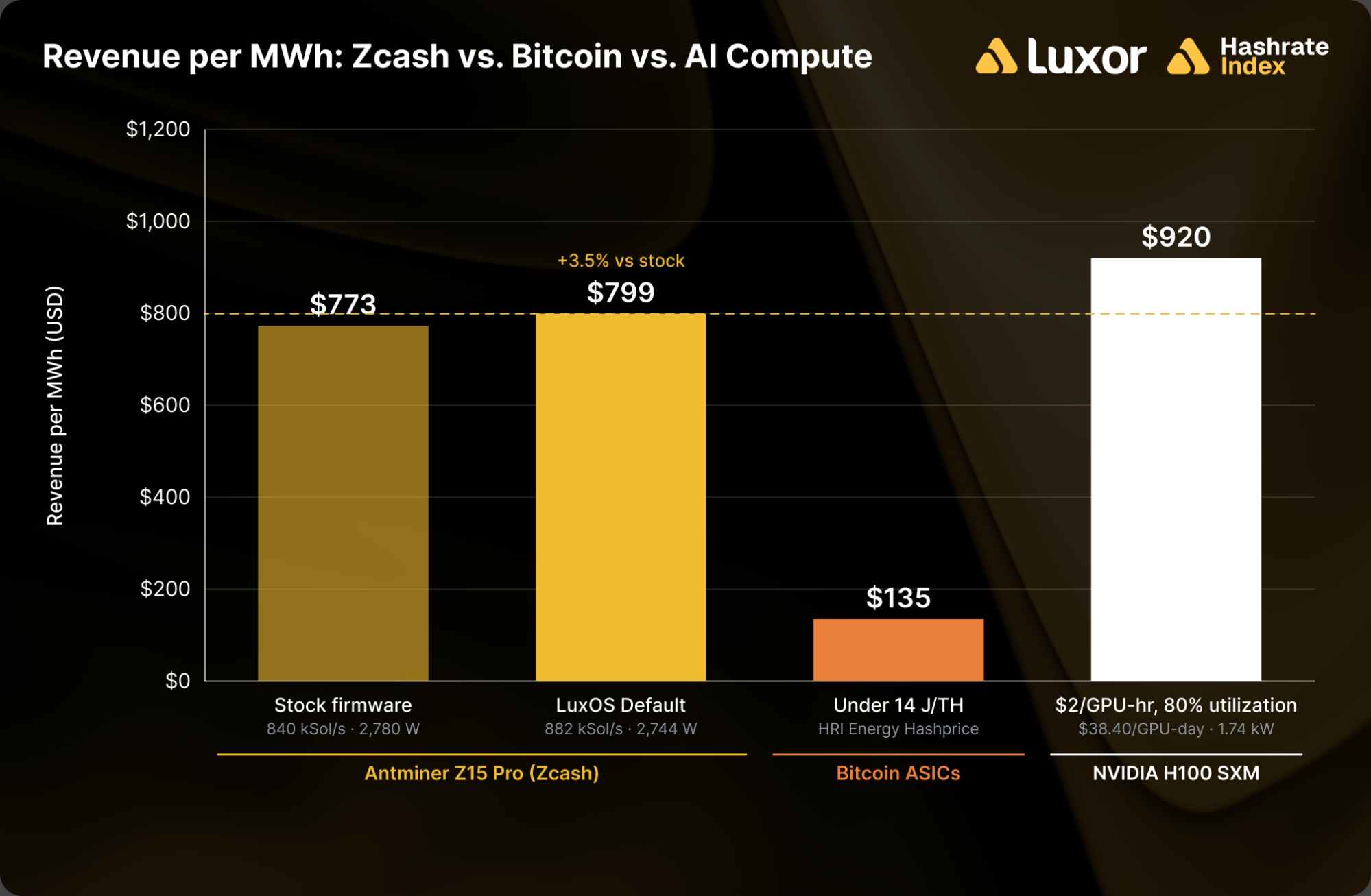
Energy serves as the common denominator for modern mining and AI data centers. When analyzed at an energy cost of $0.08/kWh, the revenue disparity between these classes of hardware becomes stark. The Antminer Z15 Pro, optimized for Zcash, generates approximately $770 in revenue per MWh. By comparison, the most efficient Bitcoin-mining ASICs, which have become increasingly refined since the 2024 halving, yield approximately $135 per MWh. The outlier remains the NVIDIA H100, which, when fully utilized, commands roughly $1,680 per MWh.
This discrepancy forces a fundamental shift in how operators approach facility management. The H100’s superior revenue-per-MWh figure is contingent upon high utilization rates—typically exceeding 70%. Should utilization drop to 50%, the revenue per MWh for the H100 plummets to roughly $839, placing it on par with the Z15 Pro. This "crossover point" suggests that while AI-driven compute offers higher ceiling potential, it carries the significant risk of under-utilization, whereas Zcash mining offers a more stable, albeit lower, floor of profitability.
Chronology of the Zcash Market Surge
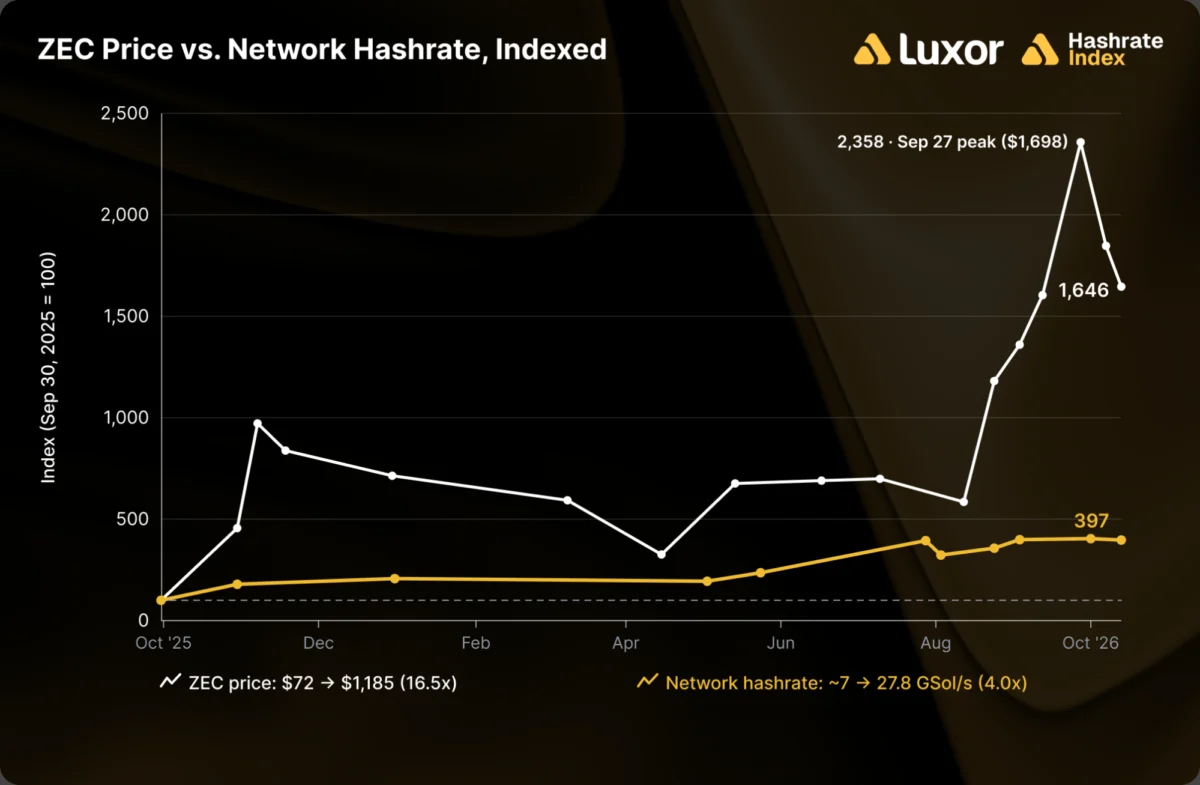
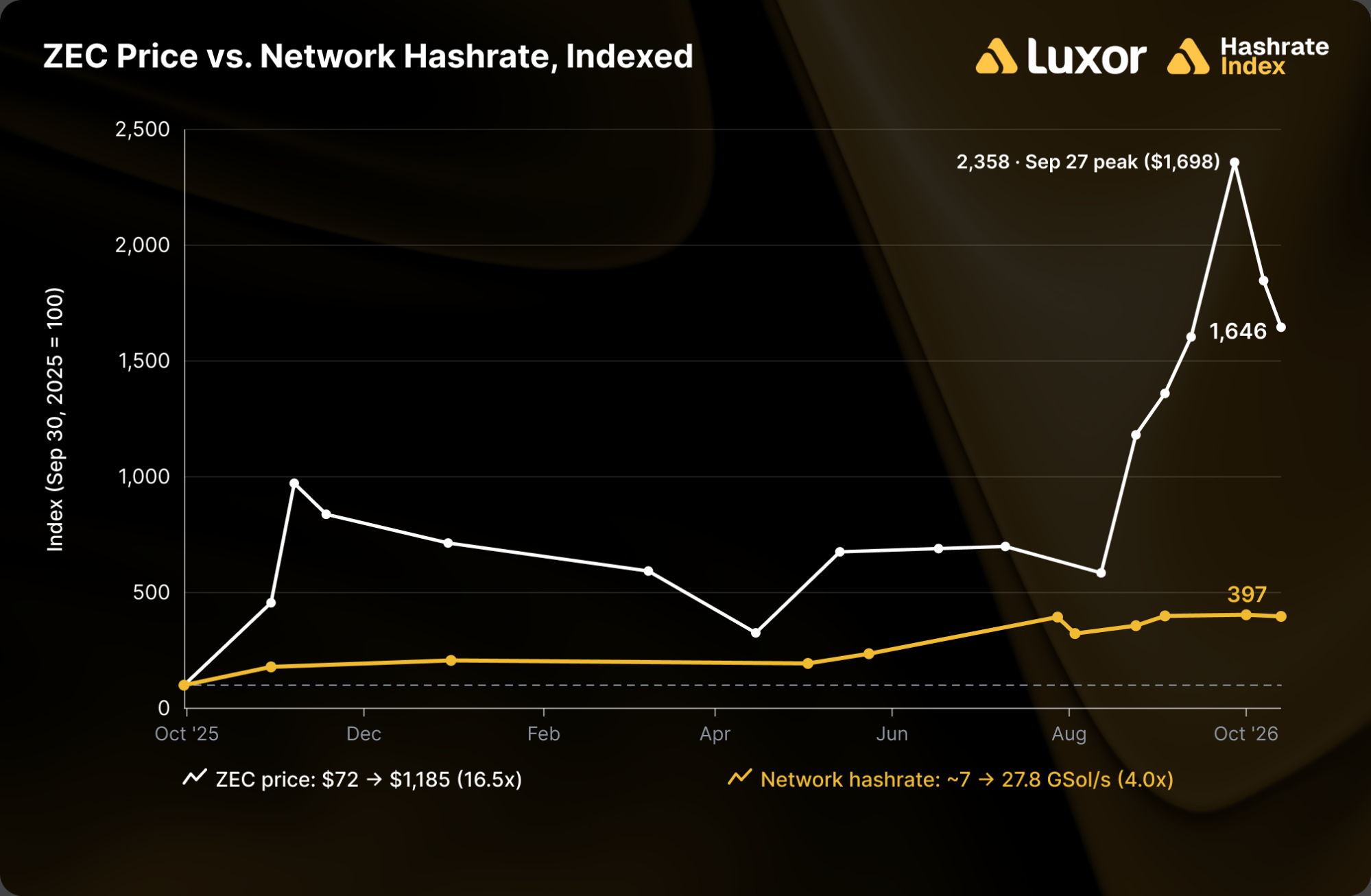
The current dominance of Zcash hardware in the mining sector is a relatively recent phenomenon, fueled by a significant market rally that began in late 2025. In September 2025, the Zcash network hashrate sat at approximately 7 GSol/s. Over the following twelve months, as the price of ZEC experienced a parabolic ascent—peaking at nearly $1,700 in late September 2026—the hashrate expanded roughly fourfold, reaching 27.8 GSol/s by mid-October 2026.
This surge created a unique supply-demand imbalance. While the network’s hashrate climbed, it consistently lagged behind the explosive growth in asset price. As a result, per-machine revenue remained relatively elevated throughout the cycle, incentivizing further investment in hardware. However, the market has since entered a consolidation phase, with ZEC prices retracting approximately 30% from their peak. Despite this, the economic incentive to mine remains robust, as the network is still far from the threshold where mining would become unprofitable for existing hardware.
Capital Intensity vs. Energy Efficiency
While the H100 excels in revenue-per-unit-of-energy, it fails to compete with ASICs when measured by capital expenditure (Capex) efficiency. Building a one-megawatt facility for Zcash mining requires roughly 360 Antminer Z15 Pro units, with a total hardware investment ranging between $3.2 million and $5.8 million.
In stark contrast, a one-megawatt deployment of H100 GPUs requires approximately 575 units. Given the current market pricing—where new H100 nodes cost between $31,000 and $40,500 per GPU—a single megawatt of AI-ready infrastructure can cost upwards of $23 million, excluding the significant costs of building a Tier-3 data center. This capital intensity creates a massive barrier to entry. For an operator seeking a return on investment (ROI) within 6 to 11 months, the Z15 Pro provides a significantly faster payback period than the H100, which requires sustained, long-term rental demand to justify its substantial upfront cost.
The Firmware Lever: Optimization in the Absence of New Hardware
A critical constraint currently facing the Equihash ecosystem is the lack of next-generation hardware. Bitmain, the dominant manufacturer of mining ASICs, is not expected to release a successor to the Z15 Pro until at least the second quarter of 2027. Consequently, the only available lever for operators to increase production capacity is through advanced firmware tuning.
The release of LuxOS firmware for the Z15 Pro in October 2026 has introduced a new dynamic to the sector. By utilizing specific overclocking profiles, operators can modulate their hashrate. Benchmarks indicate that the "Default" profile provides a 5% increase in hashrate while simultaneously reducing power consumption by 1%. This configuration is optimal, as it improves the revenue-per-MWh efficiency. However, more aggressive overclocking profiles—such as the 1Msol profile—can increase hashrate by up to 18%, though at the cost of energy efficiency. This trade-off is increasingly vital for miners who are power-constrained; for these operators, maximizing the output of existing hardware through firmware is the only viable path to expansion until 2027.
Industry Implications and Future Outlook
The "compute competition" is not a singular race but a multi-faceted challenge requiring different strategic focuses. The data indicates that the lead in the industry belongs to operators capable of maintaining uptime, regardless of the machine type. An idle GPU or an unoptimized ASIC both represent significant opportunity costs.
Market analysts observe that the integration of AI and crypto-mining infrastructure on the same site—often referred to as "mullet mining"—is becoming a standard strategy for large-scale data center operators. By balancing the high-revenue volatility of AI-rented GPUs with the consistent, capital-efficient output of Zcash-mining ASICs, operators can hedge against market fluctuations.
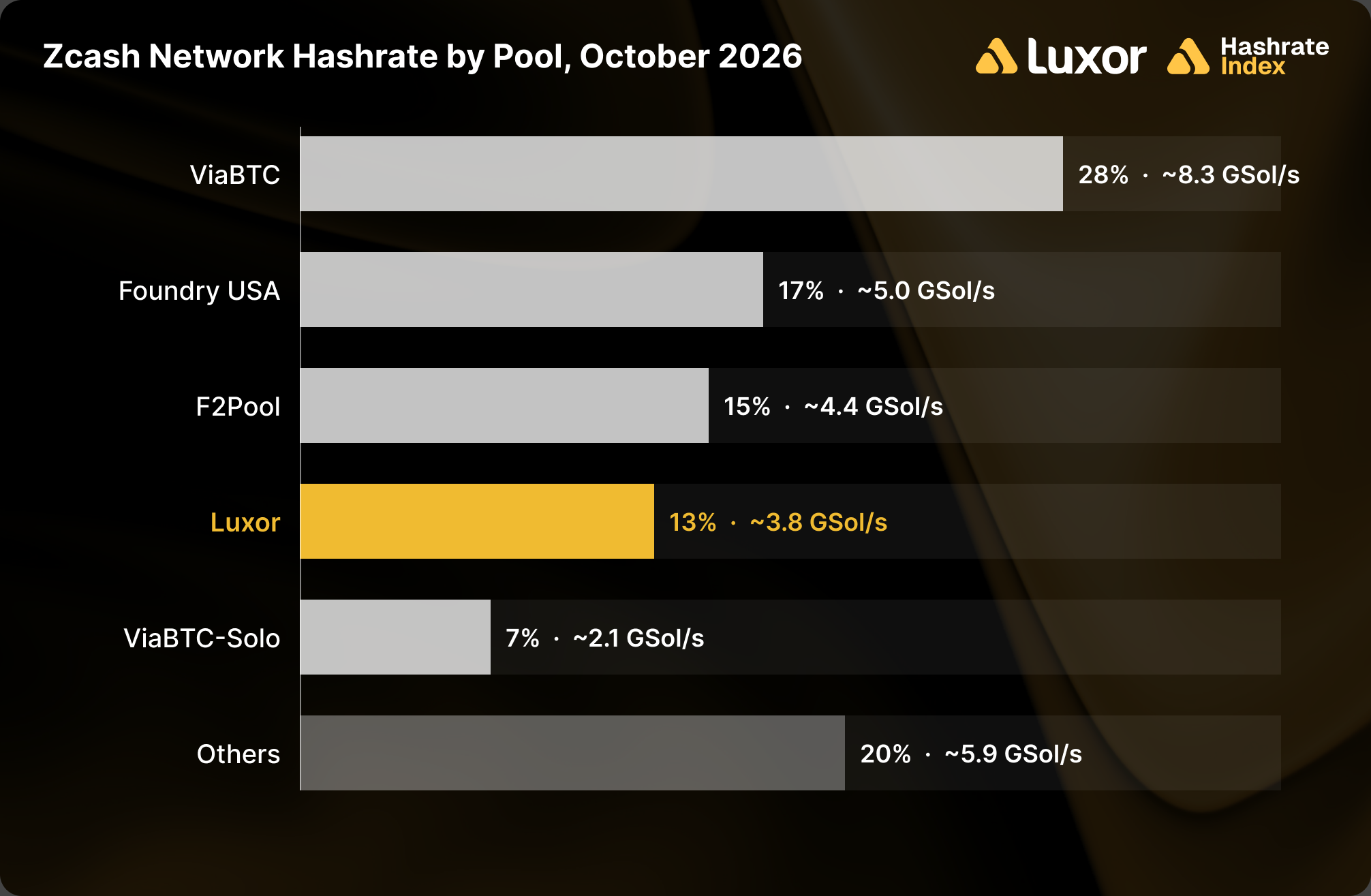
As of late 2026, the Zcash network is dominated by a few major players, with six pools controlling 80% of the network. The largest disclosed operator, Cypherpunk Technologies, holds approximately 15% of the network share. This concentration underscores the high barrier to entry for new miners, as the network hashrate continues to expand despite the cooling of the ZEC price rally.
Ultimately, the decision between deploying ASICs or GPUs hinges on an operator’s specific constraints. If the primary limitation is capital, the ASIC remains the superior choice for rapid payback. If the primary limitation is energy capacity and the operator has access to consistent AI rental demand, the H100 offers a higher ceiling for revenue generation. As the industry looks toward 2027, the focus will likely remain on firmware optimization and the efficient deployment of existing hardware in an increasingly competitive global market. The transition from Bitcoin-specific mining to a broader, hybrid compute model suggests that the future of data centers will be defined by their ability to switch between these workloads to maximize the value of every megawatt consumed.