The global trade and supply chain ecosystem is notoriously complex, relying on an intricate web of cross-border communications, customs declarations, shipping manifests, and financial settlements. Historically, this infrastructure has been bogged down by fragmented legacy systems, paper-based documentation, and a lack of real-time visibility. In recent years, distributed ledger technology (DLT) has emerged as a promising solution to these structural inefficiencies, offering tamper-resistant records and automated compliance. However, enterprise adoption of blockchain technology in logistics has long faced a formidable hurdle: the fragility of consensus networks under real-world, imperfect operational conditions.
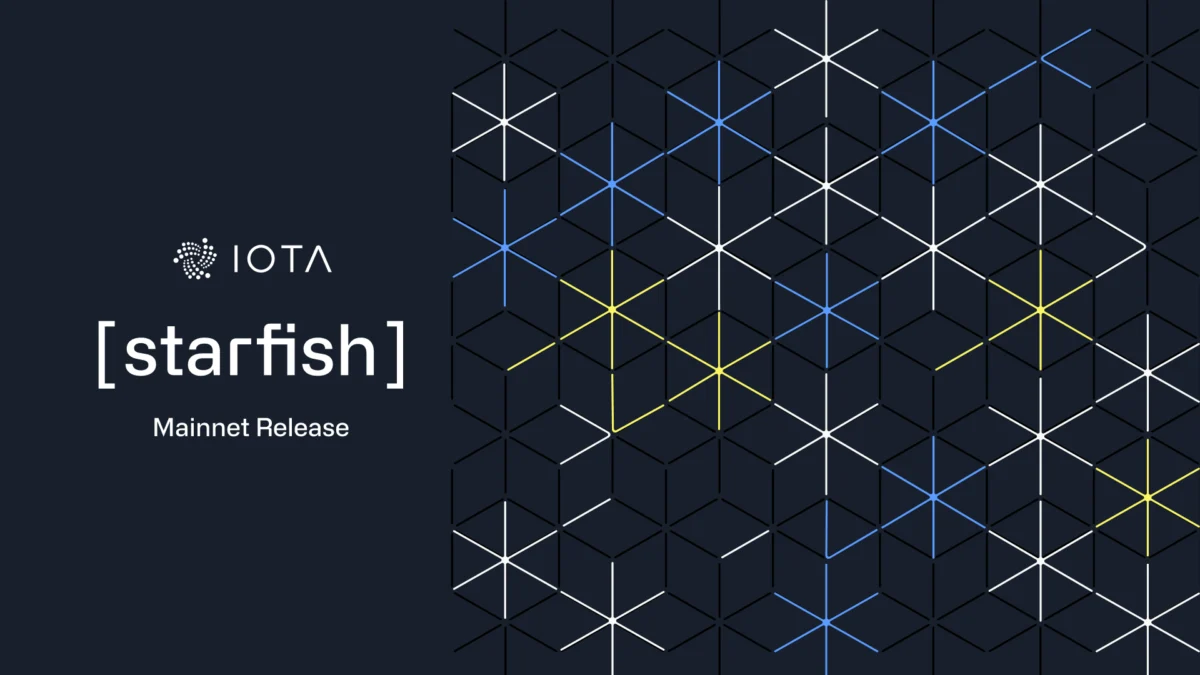
Addressing this foundational vulnerability head-on, the IOTA Foundation has officially deployed its major consensus upgrade, known as Starfish, from the testnet to the IOTA Mainnet. Representing a critical maturation milestone for the network, Starfish is engineered to provide resilient, production-grade infrastructure tailored specifically for global trade and heavily regulated environments that demand zero downtime. By fundamentally redesigning how distributed networks handle consensus progression during latency spikes, network partitions, and node dropouts, Starfish ensures that temporary local disruptions do not cascade into systemic network failures.
Understanding Blockchain Consensus and the Real-World Bottleneck
To appreciate the operational significance of the Starfish upgrade, it is necessary to examine the foundational mechanics of blockchain consensus. At its core, a consensus mechanism is the algorithmic protocol that enables a decentralized, shared digital network to agree upon the legitimacy and chronological ordering of onchain events. Rather than relying on a centralized intermediary—such as a single cloud provider, clearinghouse, or governing authority—distributed networks rely on independent network participants known as validators.
These validators perform rigorous verification tasks: they check transaction legitimacy, ensure adherence to network consensus rules, and protect the cryptographic ledger from unauthorized retroactive alterations. This collaborative process establishes a consistent, immutable record of transactions across all participating nodes. However, for a network to remain operational, this consensus process must maintain momentum even when partial connectivity, variable latency, or temporary communication dropouts occur between nodes.
Different consensus architectures make distinct compromises regarding speed, coordination overhead, and resilience, particularly when scaling to enterprise workloads. In traditional blockchain architectures, if a subset of validators experiences connectivity issues or lags behind in processing blocks, the entire network often suffers. Nodes may be forced to pause block creation while waiting to receive missing historical data from lagging peers, leading to system-wide slowdowns, frozen transactions, and unpredictable throughput.
While such performance degradation might be acceptable for experimental applications or high-risk retail crypto trading, it represents an operational disqualifier for mission-critical industrial systems. Cross-border trade networks operate across disparate legal jurisdictions, coordinate independent corporate and governmental entities that do not share a common trust anchor, and rely on digital communication channels of vastly uneven reliability. For these ecosystems, a consensus mechanism must function fluidly under chaotic, unpredictable real-world conditions.
The Imperative of Continuity in Global Trade: The TWIN Case Study
The operational demands addressed by the Starfish upgrade are vividly illustrated by initiatives such as the Trade Worldwide Information Network (TWIN). Designed as a public trade infrastructure powered by IOTA, TWIN serves a broad spectrum of stakeholders, including sovereign governments, customs authorities, maritime logistics providers, global exporters, and local importers operating across international borders.
Within the TWIN framework, vital trade documentation—ranging from certificates of origin and bills of lading to rigorous environmental and safety compliance records—is represented onchain as tokenized digital assets. The fundamental utility and legal validity of these tokenized instruments depend entirely on the underlying network’s ability to remain continuously available and maintain an unalterable, synchronized transaction history over extended periods.
Historically, corporate legal departments, state regulators, and enterprise risk officers have approached distributed ledgers with cautious skepticism precisely because of the "black swan" risk: the uncertainty of how a decentralized network behaves during unexpected operational stress, cyber incidents, or severe telecommunications outages. Prior to the introduction of architectures like Starfish, a localized server outage or transient internet cable cut in a key logistics hub could theoretically jeopardize the real-time processing of time-sensitive cargo clearances at international ports. By decoupling consensus progress from absolute node synchronization, Starfish directly mitigates these enterprise-level anxieties.
Starfish: Engineering Continuous Progress Under Disruption
The Starfish consensus upgrade introduces a paradigm shift in how the IOTA network handles operational friction. Inspired by the biological regenerative properties of its namesake marine animal—which can survive and recover from the loss of a limb without perishing—the Starfish protocol is built to ensure uninterrupted systemic function even when individual participants are temporarily unreachable, operating intermittently, or suffering from severe computational lag.
In traditional directed acyclic graph (DAG) and blockchain systems, consensus progress is strictly tethered to the collective pace of the validator set. If a minority of validators falls behind, the network frequently halts or slows down to wait for the stragglers, prioritizing uniform synchronization over continuous throughput. Starfish alters this dynamic by decoupling consensus progression from absolute validator synchronization.
Under the Starfish framework, if a validator experiences a temporary network disconnection or hardware slowdown, the rest of the network does not pause or penalize overall performance. Instead, the network continues to forge ahead consistently, processing transactions and appending blocks without interruption. Meanwhile, the lagging validator can quietly and safely catch up in the background, reintegrating into the consensus stream once its historical ledger is synchronized. This localized containment of disruption ensures that short-term hiccups do not amplify into systemic bottlenecks.
A Resilient Evolution from the Mysticeti Engine
The technical architecture of Starfish represents a direct, evolutionary leap forward from Mysticeti, a high-performance consensus engine renowned for delivering exceptionally low transaction latency under optimal network conditions. While Mysticeti excelled in controlled environments with stable, high-speed fiber-optic connectivity, it exhibited vulnerabilities under adverse or congested network states. Specifically, under Mysticeti, nodes were frequently forced to suspend block creation whenever they encountered missing ancestral blocks required to construct a complete causal history within the block DAG.
Starfish resolves this architectural limitation by discarding the rigid assumption that all network participants must march in absolute lockstep. By allowing temporary, bounded divergences in node synchronization and resolving them continuously through parallel background processes, Starfish eliminates the cascading stalls that previously plagued high-speed DAG engines.
The integration of Starfish into the IOTA Mainnet brings profound technical and operational implications:
-
Enhanced Geographic Resilience: Because the network no longer demands micro-second synchronization across all participating nodes, IOTA can seamlessly accommodate validators operating in regions with developing telecommunications infrastructure or intermittent power grids without sacrificing global throughput.
-
Predictable Application Design: Developers building decentralized applications (dApps) and enterprise systems on IOTA can design user interfaces and business logic with greater confidence, knowing that baseline network availability and performance will remain stable even during regional anomalies.
-
Minimized Operational Risk: Enterprises utilizing IOTA for supply chain tracking, digital identity verification, and tokenized asset management face significantly lower risks of transaction finality delays, smoothing regulatory compliance and auditing processes.
Broader Industry Implications and the Future of Enterprise DLT
The deployment of Starfish marks an important maturation phase not only for the IOTA ecosystem, but for the broader enterprise blockchain landscape. For years, the industry has wrestled with the classic blockchain trilemma—balancing decentralization, security, and scalability. However, as distributed ledgers transition from speculative financial networks into the foundational layers of global commerce, supply chains, and sovereign data systems, a fourth pillar has emerged as equally vital: resilience under adversarial or degraded real-world conditions.
By successfully bridging the gap between ultra-low latency and fault-tolerant continuity, IOTA’s Starfish upgrade establishes a new architectural benchmark for production-grade DLT. It demonstrates that decentralized systems can achieve the performance required for high-frequency industrial use cases without sacrificing the robustness necessary to survive real-world chaos.
As international trade continues its digital transformation, initiatives relying on resilient distributed ledgers are poised to reduce administrative friction, cut transit delays, and bring unprecedented transparency to cross-border logistics. With Starfish now live on the IOTA Mainnet, the network offers a hardened, dependable digital substrate capable of supporting the complex demands of modern global trade infrastructure. For stakeholders interested in the deep mathematical and cryptographic foundations of the protocol, the complete Starfish whitepaper remains accessible via the Cryptology ePrint Archive.