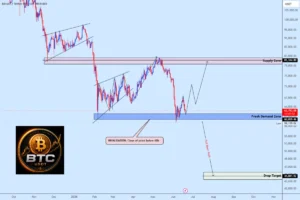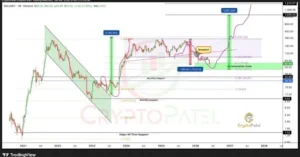
The Cardano blockchain, once championed as a top-tier contender for decentralized finance (DeFi) dominance, is currently navigating its most precarious period since inception. Following the announcement that TapTools, a foundational pillar of the network’s data analytics infrastructure, will cease operations, the ecosystem is facing a cascade of institutional skepticism and market-driven attrition. This latest blow coincides with ADA falling below the $0.20 threshold—a psychological and technical support level not breached in over five years—triggering a wave of volatility that has left stakeholders questioning the project’s long-term viability.
The crisis intensified on June 2, 2026, when the management of TapTools, a platform instrumental in providing backend data to hundreds of Cardano-native protocols, confirmed it would shutter its operations within a two-week window. The decision to wind down followed a mass exodus of key personnel, including the co-founders, the Chief Operating Officer, the Chief Technology Officer, and the lead backend developer. In a formal statement, the organization cited insurmountable financial pressures, specifically highlighting that the costs of infrastructure maintenance, sustained software development, and user support obligations had rendered the business model unsustainable in the current market environment. While the company expressed an openness to potential acquisition, the departure of its core engineering talent has cast a pall over the platform’s future.
A Timeline of Institutional Decline
The dissolution of TapTools is not an isolated incident but rather the latest point on a trajectory of contraction that has defined Cardano’s performance throughout the first half of 2026. The chain of events leading to the current sentiment began to accelerate in early 2026, marked by a series of failed initiatives and governance disputes.
In the first quarter of 2026, the Cardano community governance body moved to significantly curtail expenditures, reflecting a broader shift toward fiscal austerity. Budgetary allocations for engineering and development projects were slashed from $97.5 million in 2025 to $46.8 million for the 2026 fiscal year. This 52% reduction in funding signaled a loss of confidence from the community, directly contributing to the subsequent cancellation of the highly anticipated 2026 Cardano Summit.

Further technical delays have exacerbated the frustration. The "van Rossem" hard fork, which was positioned as a major milestone for network scalability and governance efficiency, has been repeatedly postponed to accommodate extended testing cycles. This stagnation has left the network struggling to keep pace with rapid innovations occurring on competing Layer-1 blockchains, effectively stalling the migration of high-volume DeFi applications to the Cardano mainnet.
The Quantitative Landscape: Cardano’s Shrinking Footprint
The decline of the Cardano ecosystem is reflected clearly in the quantitative data provided by industry aggregators. According to DeFiLlama, Cardano’s Total Value Locked (TVL) has withered to approximately $123.85 million. This figure places the network in a precarious position, currently ranked 28th among blockchain ecosystems.
For context, Cardano’s TVL is now significantly eclipsed by smaller or newer competitors, including Stellar, NEAR Protocol, Aptos, and Mantle. Perhaps more damning is the comparison to Ethereum, the industry benchmark, which commands a TVL of roughly $39.9 billion. This discrepancy illustrates an order-of-magnitude gap in liquidity, user adoption, and institutional trust. The price action of ADA mirrors these fundamentals; the asset’s recent slide below $0.20 represents a departure from the multi-year support levels that once defined its market structure, leading to increased selling pressure as long-term holders reassess their positions.
Hoskinson’s Warning and the Governance Vacuum
In the immediate aftermath of the TapTools announcement, Charles Hoskinson, co-founder of Cardano and Input Output Global (IOG), addressed the community in a video broadcast. Rather than offering a traditional corporate reassurance, Hoskinson provided a sobering assessment, characterizing the current climate as an inevitable "forced consolidation."
Hoskinson argued that a significant percentage of legacy Cardano projects have reached a state of "uninvestability." He pointed to the earlier collapse of JX Door as a bellwether that the community failed to address in time. Central to his critique was the failure of a proposed treasury-funded index, which he had championed as a backstop for struggling, yet viable, ecosystem projects. "I came up with the plan of an index. It did not get executed," Hoskinson stated, placing the burden of responsibility on the decentralized governance community for failing to mobilize when the capital was available.

Following his commentary, Hoskinson announced a self-imposed hiatus, a decision that drew mixed reactions. While some viewed it as a necessary step for a founder to decouple from a decentralized network, others interpreted the move as a sign of detachment at a moment when the ecosystem requires decisive leadership.
The Community Response and External Criticism
The reaction from the broader cryptocurrency industry was immediate and often harsh. Andreas Svanevik, CEO of Nansen, emerged as one of the most vocal critics of the current situation. In a social media post, Svanevik challenged the notion that the problem is a lack of current intervention, stating, "The problem is he sold Cardano as something it never was. And people believed him. Now they will all suffer the consequences together."
This sentiment captures a growing divide within the community. For years, Cardano was marketed on the premise of scientific rigor, academic peer review, and a slow, methodical approach to development. Critics now argue that this "methodical" approach resulted in a lack of agility, causing the network to miss critical windows for capturing market share during cycles of high growth. Prominent community figures, including those active on decentralized social media platforms, have echoed these frustrations, noting that the disconnect between the project’s academic vision and its actual performance in the DeFi arena has widened beyond the point of easy reconciliation.
Implications for the Second Half of 2026
As the ecosystem heads into the second half of 2026—a period Hoskinson has described as potentially the most challenging in the network’s history—several key implications have emerged:
- Forced Consolidation: The industry should expect further shutdowns of infrastructure providers and smaller DeFi protocols. Without a robust treasury-funded support mechanism, projects unable to sustain operations through internal revenue will likely exit the market, leading to a "survival of the fittest" environment that may result in a smaller, yet perhaps more resilient, core ecosystem.
- Governance Maturity Test: The current crisis serves as a stress test for Cardano’s decentralized governance model. If the community cannot organize to provide capital or strategic support for critical infrastructure, the network risks losing the remaining technical talent necessary to maintain its competitive edge.
- Institutional Skepticism: The continued decline in TVL and the lack of major, high-value protocol launches will likely keep institutional investors on the sidelines. To reverse this, Cardano will need to demonstrate not just technical reliability, but a viable economic path for decentralized applications to flourish.
- Reputational Recalibration: The Cardano brand, once synonymous with high-minded ambition, is undergoing a painful transition. The ability of the network to emerge from this period of "apocalyptic" discourse will depend entirely on whether the remaining developers can deliver the postponed hard forks and prove the utility of the network in a market that has already moved on to more liquid alternatives.
In summary, the confluence of the TapTools closure, the collapse of key project funding, and the downward trend of the ADA token suggests that Cardano is at a fundamental inflection point. The network is no longer being judged by the promises of its roadmap, but by the stark reality of its current liquidity and developer engagement. Whether this period of contraction will lead to a leaner, more effective blockchain or a long-term decline remains the defining question for the Cardano ecosystem as it moves toward the end of 2026.