In the high-stakes environment of organ transplantation, minutes and seconds dictate the boundary between life and death. When a human heart, liver, or pair of lungs becomes available for donation, a complex, high-pressure countdown begins. A harvested heart remains clinically viable outside the human body for only a matter of hours. Within that narrow temporal window, a sprawling network of medical professionals, provincial coordinators, institutional administrators, and national authorities must act in absolute, flawless synchronization. Every single authorization, medical record, and legal consent must be thoroughly verified, completely accurate, and entirely beyond dispute the very first time. In this specialized domain, a lost form, a questionable signature, or a bureaucratic delay can carry catastrophic, irreversible consequences.
To eliminate these vulnerabilities and fortify its national infrastructure, the Argentine Republic has taken a historic leap forward. Through a strategic collaboration between the national organ authority and regional technology innovators, Argentina has officially integrated its entire organ, tissue, and cell donation ecosystem onto a live, publicly verifiable decentralized digital identity system hosted on the IOTA mainnet. This sweeping technological upgrade marks a paradigm shift in how sovereign governments manage life-critical public services, replacing legacy administrative bottlenecks with cryptographic certainty, immutable document signing, and decentralized transparency.
The Anatomy of Argentina’s National Transplant Framework
At the heart of this massive logistical undertaking is the Instituto Nacional Central Único Coordinador de Ablación e Implante, universally known as INCUCAI. Established as Argentina’s central national authority for organ procurement and transplantation, INCUCAI carries the monumental responsibility of managing the national patient waiting list. The agency does not operate in a vacuum; it functions as the central nervous system connecting 24 distinct jurisdictional procurement agencies—encompassing every single Argentine province alongside the Autonomous City of Buenos Aires—as well as a vast network of public and private hospitals, surgical units, and specialized transplant centers distributed across the South American nation’s vast geographic expanse.
Coordinating life-or-death medical decisions across this decentralized national apparatus requires an administrative backbone characterized by absolute reliability, uncompromising security, and real-time interoperability. Historically, even the most advanced healthcare systems have struggled with the friction of paper-based documentation, fragmented provincial databases, and manual verification steps. Recognizing that modern challenges demand modern technological safeguards, INCUCAI embarked on an ambitious initiative to modernize its digital infrastructure by embedding decentralized identity and cryptographic notarization directly into its administrative workflow.
To engineer and deploy this sophisticated digital architecture, INCUCAI partnered with Extrimian, a leading Latin American technology company specializing in decentralized digital identity and self-sovereign identity (SSI) frameworks. Extrimian has long championed models that grant individuals and institutions direct, unmediated control over their digital identities and the specific data they choose to share. By bringing transparency, cryptographic efficiency, and strict user control to interactions across critical sectors like healthcare, education, and public administration, Extrimian positioned itself as an ideal technological partner for a government entity seeking to overhaul a nationwide health network.
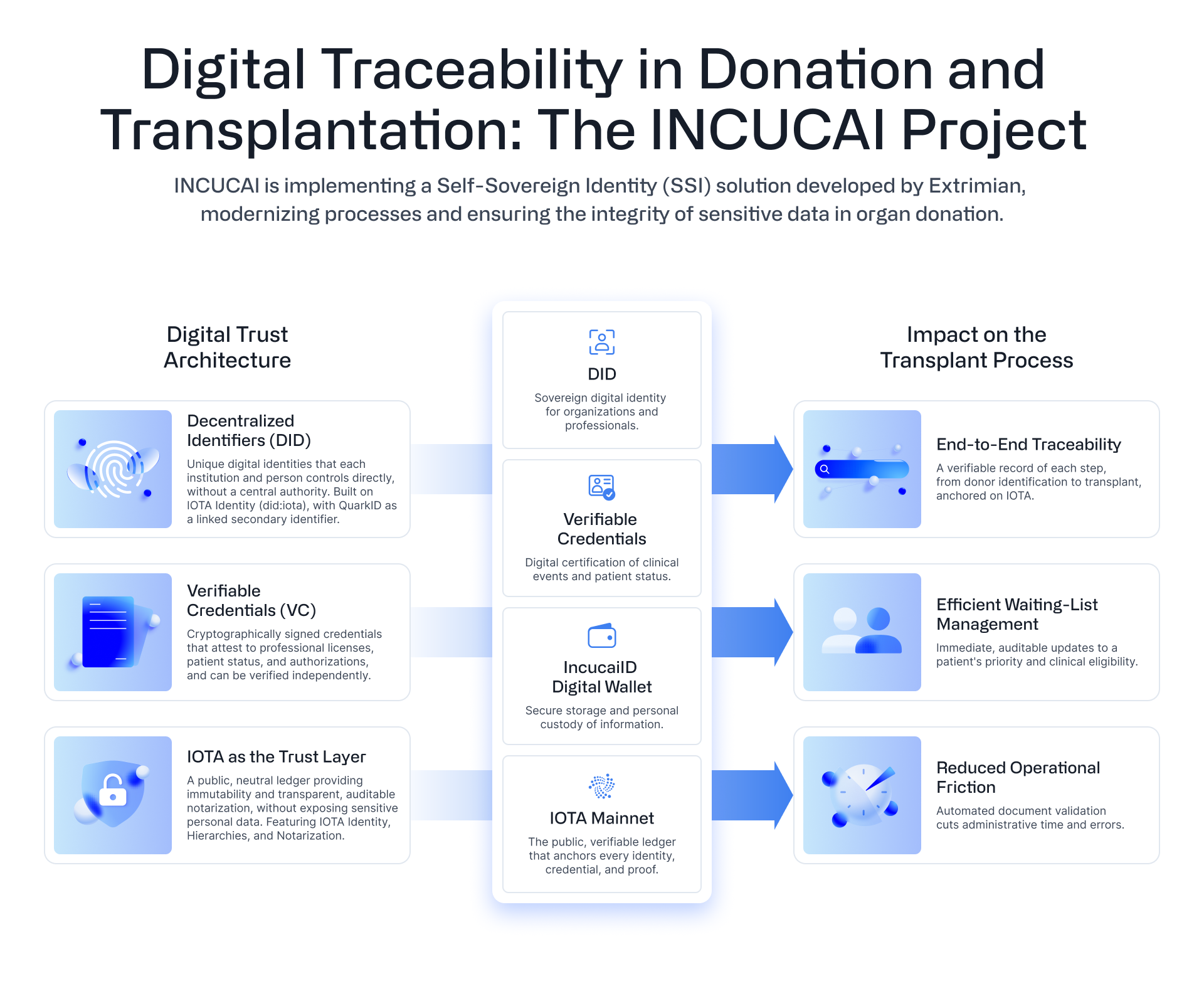
Rather than building upon a centralized database—which inherently introduces single points of failure, vulnerabilities to tampering, and a reliance on trusted intermediaries—Extrimian selected IOTA as the foundational public network for INCUCAI’s new decentralized infrastructure. IOTA provides a neutral, highly scalable, and verifiably secure ledger layer where institutional identities and document integrity can be authenticated directly by any authorized stakeholder, entirely free from corporate gatekeepers or administrative friction.
Technological Architecture and the Principle of Privacy-First Design
The technical solution deployed by Extrimian and IOTA is engineered to digitize, unify, and secure the organ transplantation workflow on a national scale. Officially launched on the IOTA mainnet, the system allows institutional identities and cryptographic proofs to be independently audited and verified by anyone with access to the public ledger, embodying the foundational cybersecurity ethos of "don’t trust, verify."
One of the most critical design considerations of this deployment is its uncompromising approach to data privacy. In a healthcare context involving sensitive medical histories, organ matching, and grieving families, data protection is paramount. To safeguard this vulnerable information, the system ensures that no patient-identifiable data or raw medical records are ever stored on the public blockchain. Instead, only cryptographic proofs—specifically cryptographic hashes of official documents and process steps—are permanently anchored to the IOTA ledger.
This cryptographic separation guarantees absolute data integrity and immutability without exposing any underlying personal details. Doctors, provincial agencies, and auditing bodies can mathematically confirm that a specific authorization, medical report, or consent form existed in a precise state at an exact moment in time, while the private details of patients and donors remain strictly confidential. The system effectively bridges the gap between public transparency and medical privacy, ensuring that trust is established through mathematics rather than institutional blind faith.
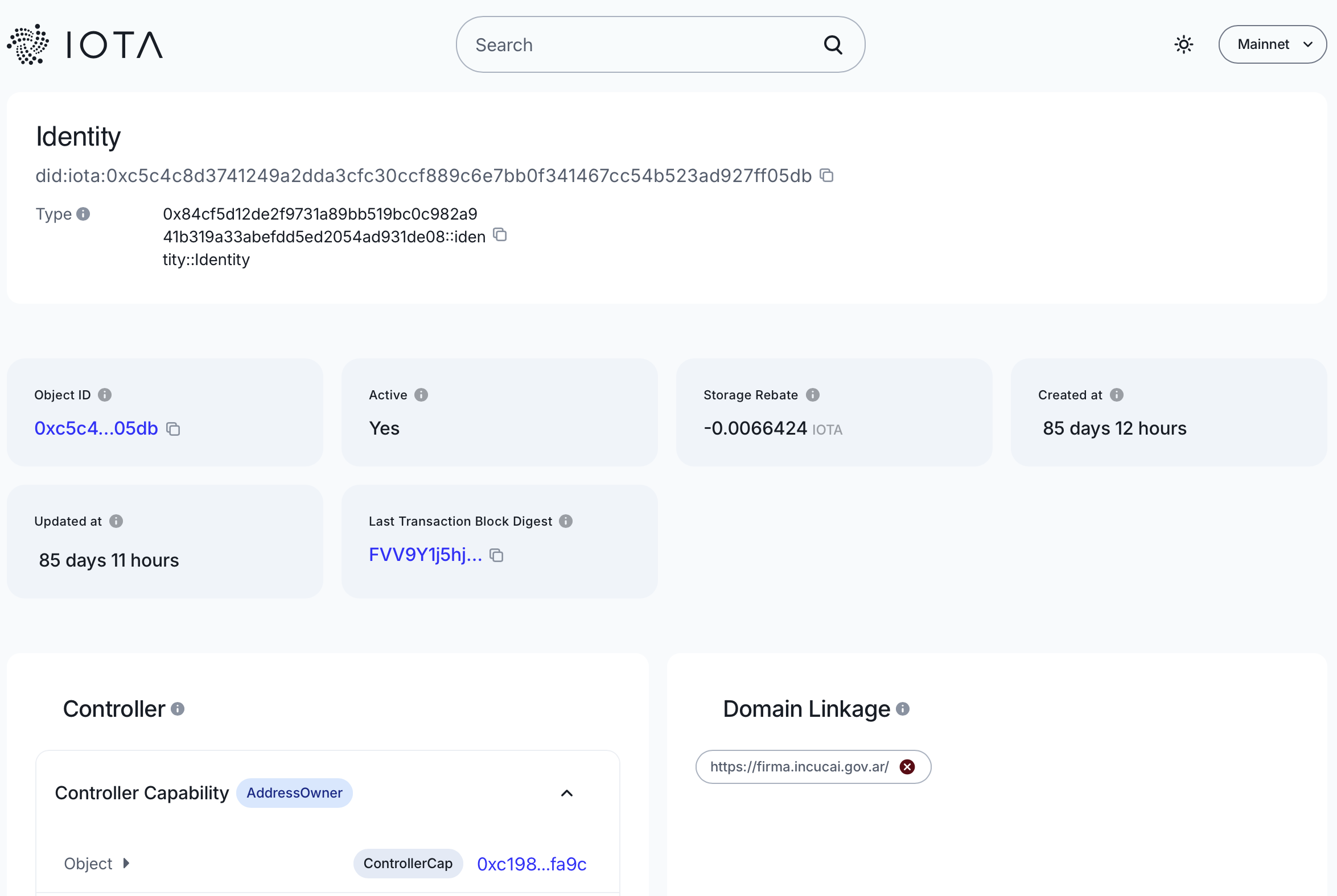
The technical framework relies heavily on open, interoperable standards. The institutional identities and verifiable credentials integrated into the platform strictly adhere to World Wide Web Consortium (W3C) specifications. Furthermore, INCUCAI’s onchain decentralized identifier (did:iota) is cryptographically bound to its official government domain. This ensures that any external observer or participating hospital can mathematically confirm that a digital signature originates from the authentic national institution rather than a malicious impostor. Crucially, components of the infrastructure are hosted on ARSAT, Argentina’s state-owned telecommunications and satellite solutions company, ensuring that critical data pathways and operational nodes remain firmly under national sovereignty and control.
Chronology of Implementation: From Policy to Mainnet Deployment
The realization of Argentina’s onchain transplant system is the culmination of meticulous planning, regulatory reform, and technical execution. The timeline of this transformation reflects a steady, deliberate march toward full national integration:
- Early Planning and Development: Extrimian and the IOTA Foundation collaborate to design a decentralized identity framework tailored to the specific legal, administrative, and security requirements of Argentina’s healthcare sector, utilizing W3C standards and integrating with state-owned infrastructure provider ARSAT.
- Regulatory Foundation (June 2026): The Argentine government publishes Resolution 199/2026 in the official national gazette (Boletín Oficial). This landmark resolution officially authorizes the implementation of electronic signatures across all donation and transplant processes managed through SINTRA (Argentina’s National Procurement and Transplant Information System) and its affiliated institutional networks.
- Mainnet Go-Live (June 10, 2026): The decentralized identity and notarization infrastructure officially goes live on the IOTA Mainnet. All 24 provincial procurement agencies are successfully onboarded onto the trust federation, enabling live cryptographic document signing and verifiable institutional identities.
- Ecosystem Rollout and Wallet Launch (Mid-2026): INCUCAI introduces IncucaiID, the official ecosystem mobile wallet available on major application stores. Healthcare professionals, administrative personnel, and patients begin receiving verifiable credentials to sign and authenticate documents digitally. Implementation initiates with the national waiting-list registration process, prioritizing heart and lung lists before expanding to other organ categories.
Official Adoption and Regulatory Milestones
The transition from conceptual framework to operational reality was formalized through Resolution 199/2026, enacted in June 2026. Published prominently in the Boletín Oficial, this resolution mandated the nationwide adoption of electronic signatures for every single administrative and medical process handled via SINTRA. The regulatory mandate was designed to inject unprecedented legal certainty, traceability, and transparency into the organ procurement pipeline, replacing cumbersome paper trails with immutable blockchain-backed evidence.
At the center of this rollout for end-users is IncucaiID, a dedicated mobile application available for download across major smartphone platforms. Through this digital wallet, authorized medical professionals and participants securely manage their verifiable credentials, verify their professional standing, and apply legally binding electronic signatures to documents tied to organ harvesting and transplantation. Every interaction executed through the wallet is cryptographically secured, generating an indelible audit trail that can be reviewed when necessary while strictly enforcing the principles of self-sovereign identity—allowing users to disclose only the precise data required for a given administrative step.
The initial rollout phase focuses specifically on the waiting-list registration process, beginning with high-acuity registries such as the heart and lung transplant lists. Over subsequent phases, the system is slated to expand to cover all remaining organ and tissue lists, ultimately absorbing the entirety of SINTRA’s documentary workflows to establish a fully paperless, frictionless national system.
Stakeholder Perspectives and Institutional Endorsements
The successful deployment of a national healthcare system onto a public distributed ledger has drawn praise from technology leaders and public health administrators alike, highlighting the tangible utility of decentralized systems in solving real-world humanitarian challenges.
Daniela Hansen Krogh, Director of Information Technology and Information Systems at INCUCAI, emphasized the profound cultural and operational importance of the upgrade: "Trust is at the heart of every organ donation and transplantation process. Our responsibility is to ensure that every decision is supported by reliable, secure, and verifiable information. By incorporating decentralized identity and cryptographic verification into our national systems, we are strengthening the integrity, traceability, and legal certainty of every critical stage, while safeguarding sensitive patient information. This initiative reflects INCUCAI’s ongoing commitment to modernizing Argentina’s transplant system through secure, transparent, and citizen-centered digital innovation."
Echoing these sentiments, Esteban Musso, Professional Services Manager and Partner at Extrimian, underscored the broader philosophical shift represented by the project: "At Extrimian, we believe that trust is the foundation of every digital transformation. By combining open standards with privacy-preserving technologies, we’ve helped build a solution that enhances traceability, security, and interoperability while respecting the privacy of every participant. Projects like this demonstrate that decentralized technologies are no longer a vision for the future—they are delivering tangible value today in critical public services."
Dominik Schiener, Co-Founder and Chairman of the IOTA Foundation, pointed to the national scale of the achievement as proof of maturity for distributed ledger technology: "This is what IOTA’s open technology can do for critical public services at national scale: real infrastructure, already coordinating decisions that save lives."
Fact-Based Analysis of Implications and Broader Impact
The integration of INCUCAI’s transplant network onto the IOTA mainnet carries significant implications that extend far beyond the borders of Argentina, offering a blueprint for how governments worldwide can modernize legacy bureaucracies without sacrificing privacy or centralization of control.
From an administrative standpoint, the elimination of physical paperwork and manual provincial verification drastically reduces the risk of human error, administrative delays, and document tampering during critical transplant windows. By anchoring cryptographic proofs to a neutral public ledger, INCUCAI establishes an unalterable chain of custody for every organ and tissue allocation. This level of verifiable transparency not only insulates the national system against potential fraud or bureaucratic negligence but also reinforces public confidence in an institution where fairness and equity are matters of life and death.
Furthermore, the project demonstrates the viability of Self-Sovereign Identity (SSI) frameworks in highly regulated public sectors. By demonstrating that robust cybersecurity, W3C standards, and state-backed telecommunications infrastructure can successfully harmonize with public distributed ledgers, Argentina has set a compelling precedent. As governments globally grapple with the demands of digital transformation, secure citizen data management, and operational resilience, the INCUCAI-Extrimian-IOTA deployment stands as a watershed moment: tangible proof that decentralized technology can actively participate in saving human lives at a national scale.