The landscape of decentralized ledger technology (DLT) has long
faced a fundamental architectural paradox: the tension between absolute synchronization and real-world network instability. Traditional blockchain infrastructures depend heavily on uniform participation, requiring distributed nodes to move in near-perfect lockstep to validate, order, and finalize transactions. When communication latency spikes, regional internet cables are severed, or localized infrastructural failures occur, these rigid networks typically suffer from system-wide slowdowns, halts, or expensive performance penalties. For decentralized finance, such delays can be costly; for critical global trade corridors, logistics networks, and regulated public infrastructure, they can be operationally catastrophic.
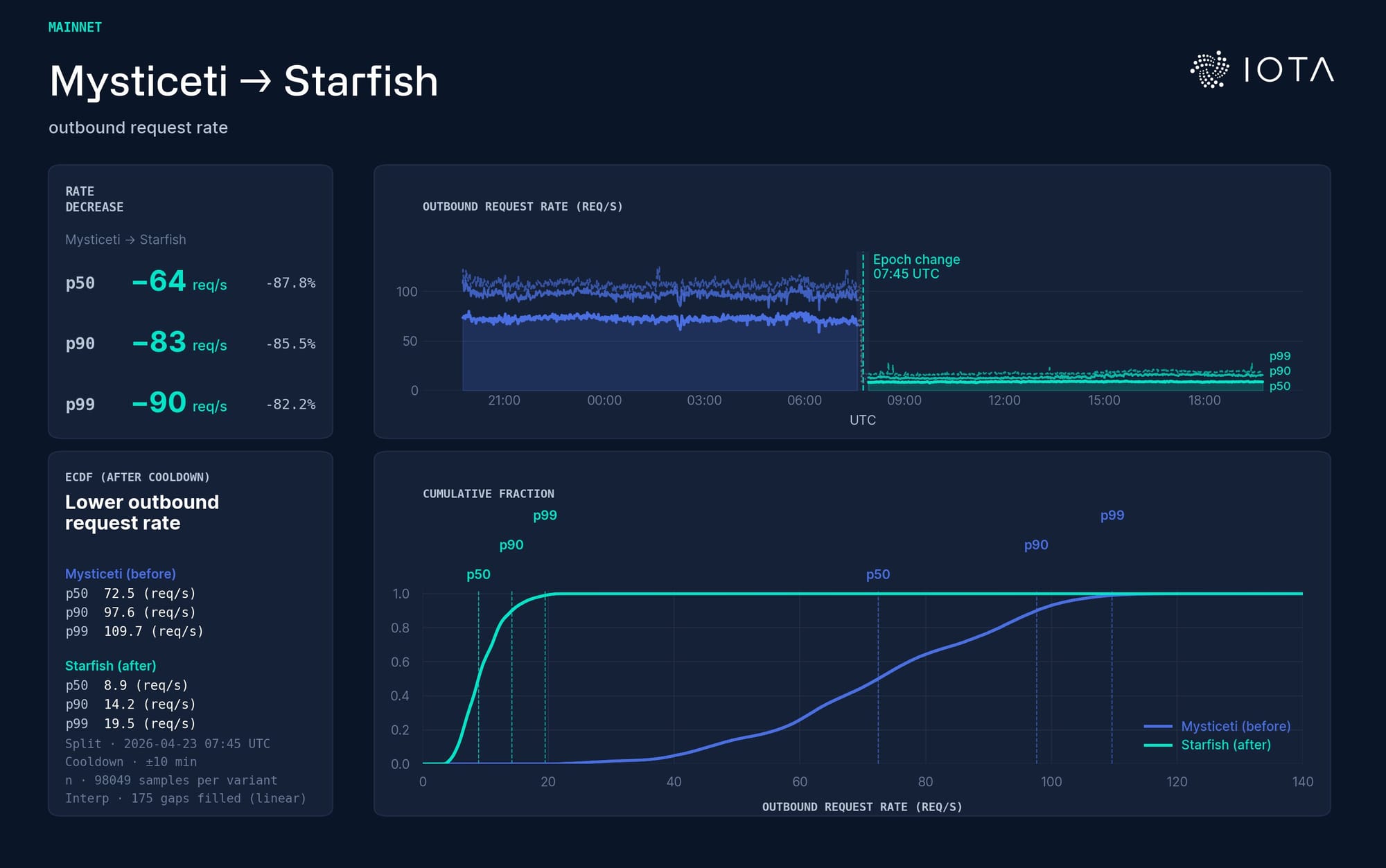
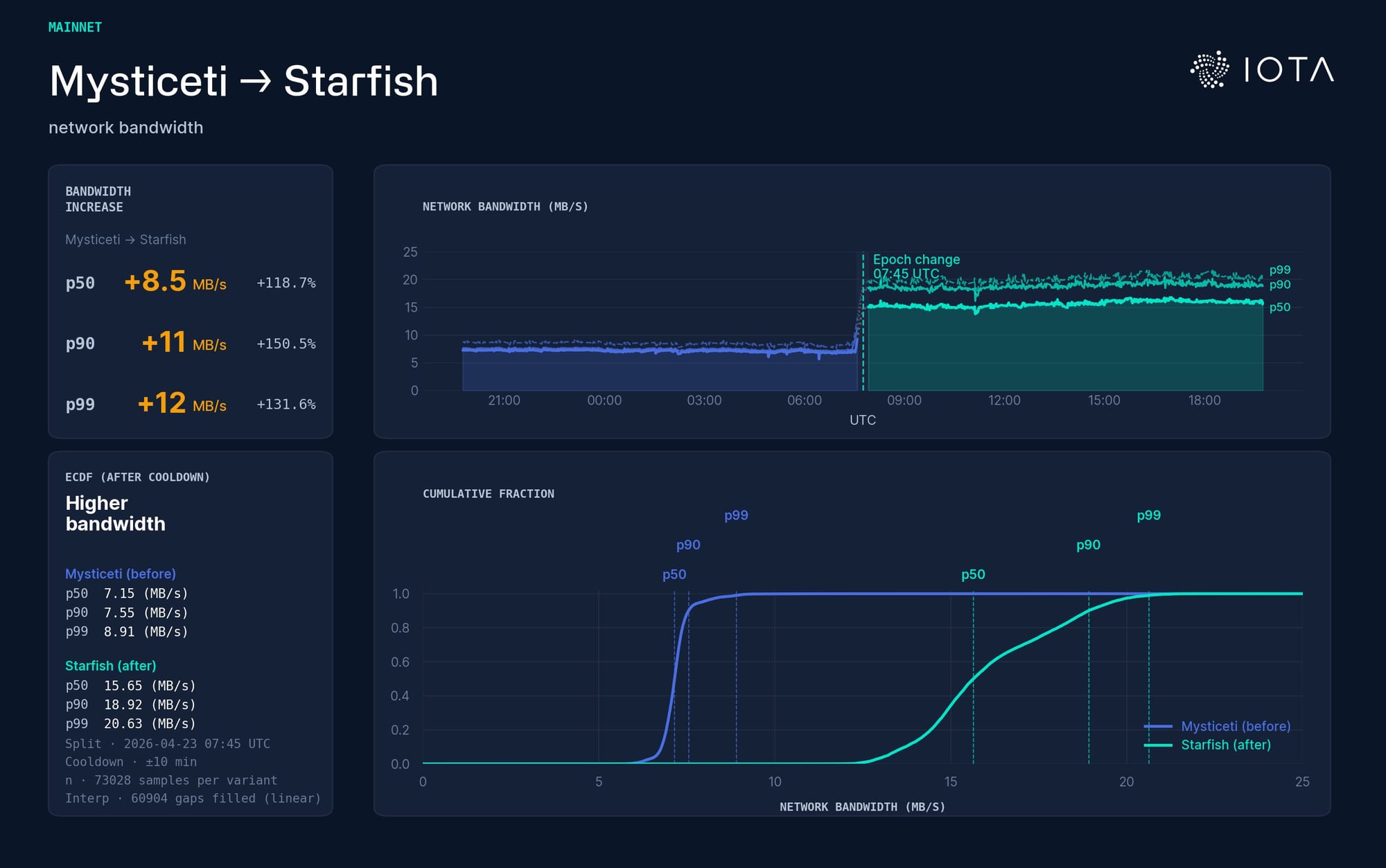
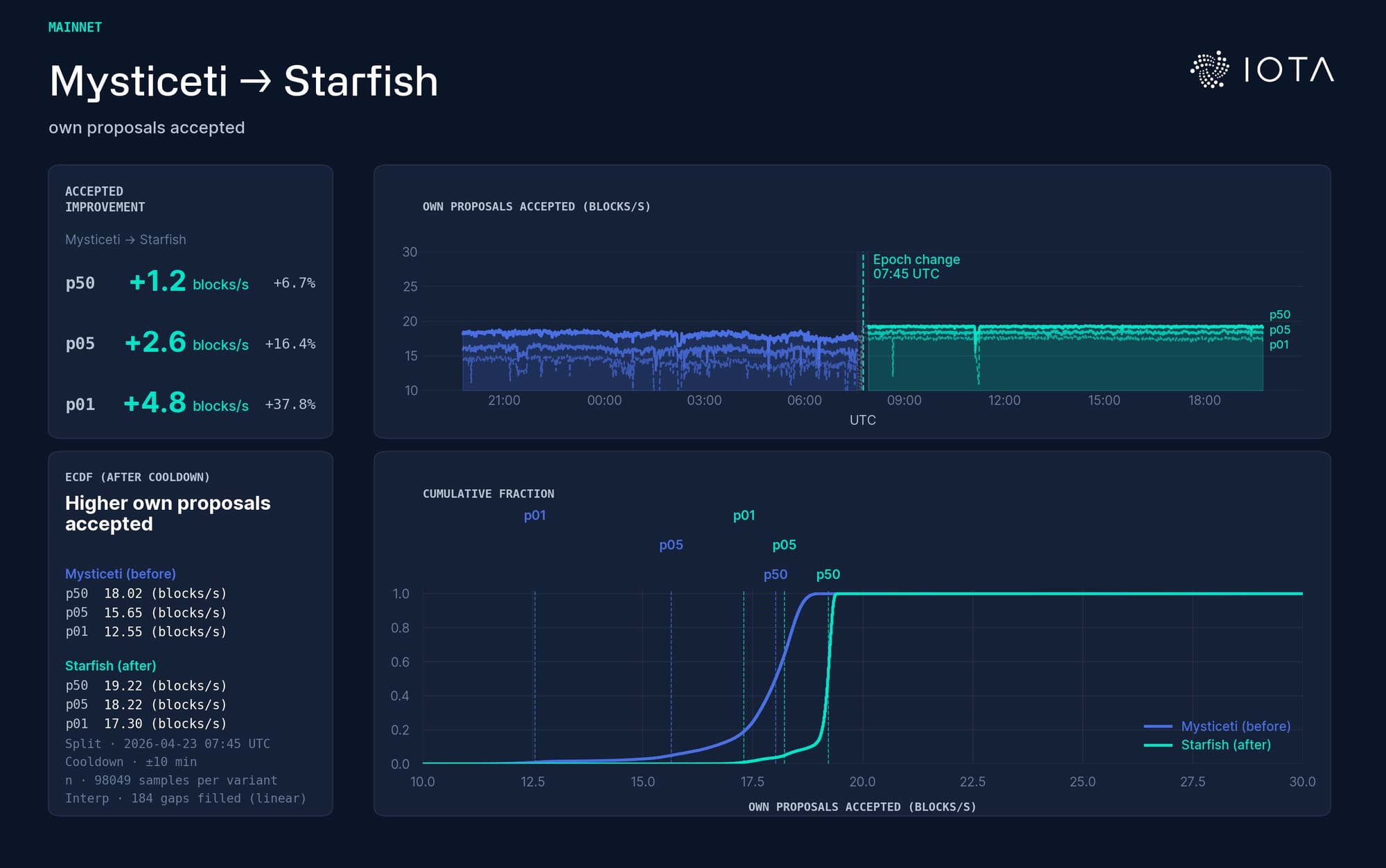
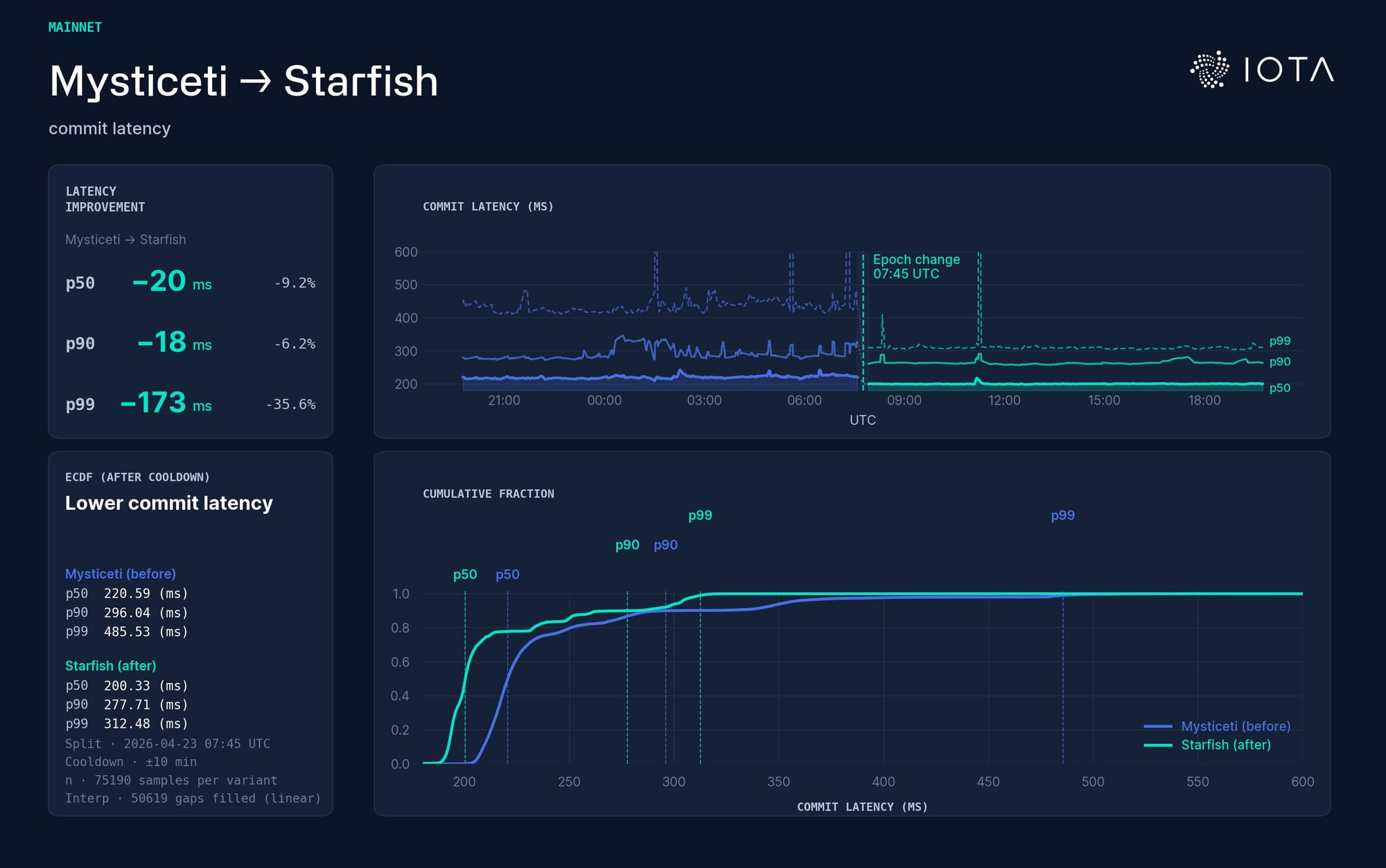
Addressing this vulnerability, the IOTA Foundation has officially deployed its major consensus upgrade, Starfish, onto the IOTA Mainnet following rigorous testing phases on the network’s testnet. Representing a significant evolutionary leap from its predecessor, Mysticeti, the Starfish upgrade fundamentally transforms how distributed nodes achieve consensus under duress. By decoupling consensus progress from absolute validator synchronization, Starfish allows the IOTA network to maintain continuous operations even when participating nodes experience severe delays, connectivity drops, or intermittent failures. Designed specifically to anchor real-world trade and regulatory systems that cannot afford a single minute of downtime, this new protocol archetype promises to bridge the gap between theoretical blockchain efficiency and the chaotic, unpredictable nature of global supply chains.
Understanding the Mechanics of Blockchain Consensus and Its Real-World Bottlenecks
To fully grasp the significance of the Starfish upgrade, one must first examine the mechanics of blockchain consensus. At its technical core, a consensus mechanism functions as the foundational trust layer of any distributed digital network. It enables multiple independent network participants—commonly referred to as validators—to reach cryptographic agreement on the legitimacy, integrity, and chronological ordering of onchain events. Instead of relying on a centralized intermediary, such as a traditional clearinghouse or legacy database operator, a decentralized validator network cross-checks transactions against strict protocol guidelines, preserving an immutable, tamper-resistant ledger of history.
However, maintaining this shared reality requires constant communication between nodes. In traditional distributed systems, if a subset of validators experiences connectivity issues or lags behind the network majority, the consensus engine often stalls. The network must either wait for the laggards to catch up or risk forking, thereby sacrificing speed for safety or vice versa. These systemic tradeoffs become exponentially more critical when distributed ledgers are deployed to manage mission-critical, enterprise-grade operations at a global scale.
Cross-border trade ecosystems, by definition, operate across fragmented regulatory jurisdictions, coordinate independent organizations that neither share a single trust anchor nor a centralized operator, and rely upon telecommunications networks with wildly varying degrees of reliability and technical maturity. In these environments, assuming perfect synchronization is a recipe for operational failure. Supply chain systems demand continuous uptime, deterministic transaction finality, and robust fault tolerance to handle unexpected network partitions, cyber incidents, or natural disasters without cascading system-wide disruptions.
The Operational Realities of Global Trade and the Role of TWIN
The deployment of Starfish is not merely an academic exercise in cryptographic optimization; it serves a direct, pragmatic purpose for real-world enterprise infrastructure. Specifically, the upgrade bolsters the Trade Worldwide Information Network (TWIN), a public trade infrastructure initiative powered by IOTA. TWIN was engineered explicitly to streamline international commerce for a diverse consortium of stakeholders, including sovereign governments, national customs agencies, third-party logistics providers, global exporters, and maritime importers.
Within the TWIN ecosystem, vital trade documents—ranging from certificates of origin and bills of lading to rigorous environmental compliance records—are represented onchain as tokenized digital assets. The fundamental utility and legal standing of these tokenized assets depend entirely on the underlying blockchain’s ability to remain continuously available and maintain an unalterable, chronologically consistent transaction history over extended periods. Historically, enterprise adoption of DLT has been hampered by executive hesitation regarding disaster recovery and system behavior during network degradation. Decision-makers in both the public and private sectors require absolute assurance that their foundational ledgers will not freeze when geopolitical tensions, regional power outages, or telecommunication failures disrupt standard data flows.
By introducing an architecture capable of absorbing these shocks locally rather than amplifying them globally, Starfish directly addresses the primary risk aversion historically exhibited by institutional adopters in the global logistics sector.
From Mysticeti to Starfish: Tracing the Evolution of IOTA’s Consensus Engine
The trajectory leading to the Starfish upgrade is rooted in IOTA’s ongoing refinement of high-performance consensus architectures. Previously, the network leveraged Mysticeti, a consensus engine lauded for delivering exceptionally low transaction latency and high throughput under optimal network conditions. Mysticeti proved highly effective when operating within stable, high-bandwidth environments. However, its architectural Achilles’ heel lay in its vulnerability to slow, congested, or adversarial network conditions.
Under Mysticeti, when individual nodes lagged behind or experienced high latency, the entire block Directed Acyclic Graph (DAG) construction process could be impacted. Nodes were often forced to suspend block creation entirely while waiting to receive "missing" causal ancestors—historical blocks required to construct a complete, unbroken lineage. This strict dependency on collective progression meant that a localized slowdown on one continent could inadvertently degrade the performance of the global network.
Recognizing these limitations, core developers and researchers at the IOTA Foundation sought a paradigm shift. Instead of treating network participants as a monolithic march that must move forward in unison, the design philosophy behind Starfish embraces asynchronous resilience. Named after its biological namesake—the common marine animal renowned for its ability to regenerate lost limbs and survive severe bodily trauma without succumbing—the Starfish protocol allows the broader network to sustain its momentum even when individual nodes are severed from the main communication stream or temporarily incapacitated.
The cryptographic foundation and formal specifications of Starfish have been rigorously peer-reviewed and documented, with the complete technical whitepaper published on the Cryptology ePrint Archive (Identifier: ePrint 2025/567). This academic rigor underscores the IOTA Foundation’s commitment to building production-grade infrastructure backed by verifiable scientific research.
Technical Analysis: How Starfish Ensures Continuous Progress Under Disruption
The core innovation of Starfish lies in its decoupling of consensus progression from individual validator synchronization. In traditional protocols, a validator that falls behind creates a bottleneck, forcing the network to pause or slow down its finality pipeline while synchronization protocols run their course. Starfish redesigns this lifecycle by isolating network lag.
When a validator experiences a temporary disconnection, high latency, or performance degradation under the Starfish protocol:
- Decoupled Progress: The main body of the validator network continues to produce blocks and achieve consensus without waiting for the lagging node to catch up.
- Local Containment: Short-term network disruptions are contained locally. Rather than propagating a ripple effect of delays across the entire DAG, the protocol absorbs the variance internally.
- Parallel Recovery: Lagging or temporarily offline nodes can execute their recovery protocols and fetch missing historical data in the background, quietly rejoining the active consensus pool once they are fully synchronized, without ever halting the broader system.
This architectural shift effectively eliminates the performance penalties traditionally associated with node heterogeneity. Whether a validator is operating on a cutting-edge server rack in a Tier-1 data center or contending with intermittent connectivity in a developing regional logistics hub, the network adapts dynamically. For application developers building on top of IOTA, this consistency dramatically reduces operational risk, simplifies error-handling logic, and ensures predictable smart contract and token execution timelines.
Broader Implications and Industry Reactions
The deployment of Starfish onto the IOTA Mainnet marks a mature maturation milestone for the foundation, shifting its primary narrative from experimental decentralized technology to battle-tested, enterprise-grade utility. Industry analysts and supply chain technology experts have noted that as global supply chains face mounting pressures from regulatory mandates, geopolitical fragmentation, and the urgent need for digitization, the demand for resilient DLT infrastructure has never been higher.
While official statements from logistics partners participating in the TWIN network praise the upgrade for mitigating historical enterprise deployment anxieties, independent software architects emphasize the broader implications for regulated financial and industrial systems. By proving that high-throughput DAG-based consensus can successfully withstand adversarial and degraded network states without sacrificing decentralization, IOTA has established a new benchmark for public utility networks.
As international trade continues its digital transformation, protocols like Starfish ensure that the underlying digital rails are as durable as the physical cargo ships and rail networks they track. By engineering resilience directly into the consensus protocol, IOTA has positioned itself not just as a ledger for digital assets, but as an indispensable foundational utility for global economic infrastructure.