In the high-stakes environment of organ transplantation, every second counts. When a donor organ becomes available, a race against time begins immediately. A human heart, for instance, remains viable outside the body for only a matter of hours. During this narrow window, a complex chain of custody must unfold seamlessly across multiple hospitals, provincial healthcare agencies, and a central national authority. Dozens of medical professionals, coordinators, and administrators must execute their duties in precise chronological order. Every medical record, authorization, and consent form must be accurate, immutable, and trusted instantly. In this critical domain, a lost document, a forged signature, or an unverified record can carry irreversible consequences.
To eliminate these vulnerabilities, Argentina has taken a pioneering step in public administration. The nation’s central authority for organ, tissue, and cell procurement and transplantation—the Instituto Nacional Central Único Coordinador de Ablación e Implante (INCUCAI)—has modernized its digital backbone. In partnership with Latin American decentralized-identity innovator Extrimian and utilizing the IOTA mainnet, INCUCAI has integrated a live, publicly verifiable digital-identity and document-signing system across its entire national network. This includes the central body and all 24 jurisdictional procurement agencies spanning Argentina’s provinces and the Autonomous City of Buenos Aires.
The Architectural Framework of Trust
The deployment relies on Self-Sovereign Identity (SSI) architecture, a model that empowers individuals and organizations with direct, cryptographic control over their digital identities and the specific data they share. Extrimian selected the IOTA network to serve as the foundational public layer for this infrastructure. IOTA provides a neutral, scalable, and cost-efficient public ledger where institutional identities and document integrity can be validated directly by any authorized stakeholder, eliminating traditional gatekeepers and administrative friction.
A critical design choice in this implementation is the absolute protection of patient privacy. No personally identifiable information (PII) or sensitive medical data is ever stored on the public blockchain. Instead, the system utilizes cryptographic hashes—unique, irreversible mathematical fingerprints—of documents and procedural steps. These hashes are anchored directly to the IOTA ledger. This methodology guarantees absolute tamper-proof verification while leaving the underlying sensitive data entirely private. Physicians, regulatory agencies, and families can cryptographically confirm that every step of the transplant pipeline occurred exactly as recorded, without exposing the deeply personal details entrusted to the medical system during times of grief and critical care.
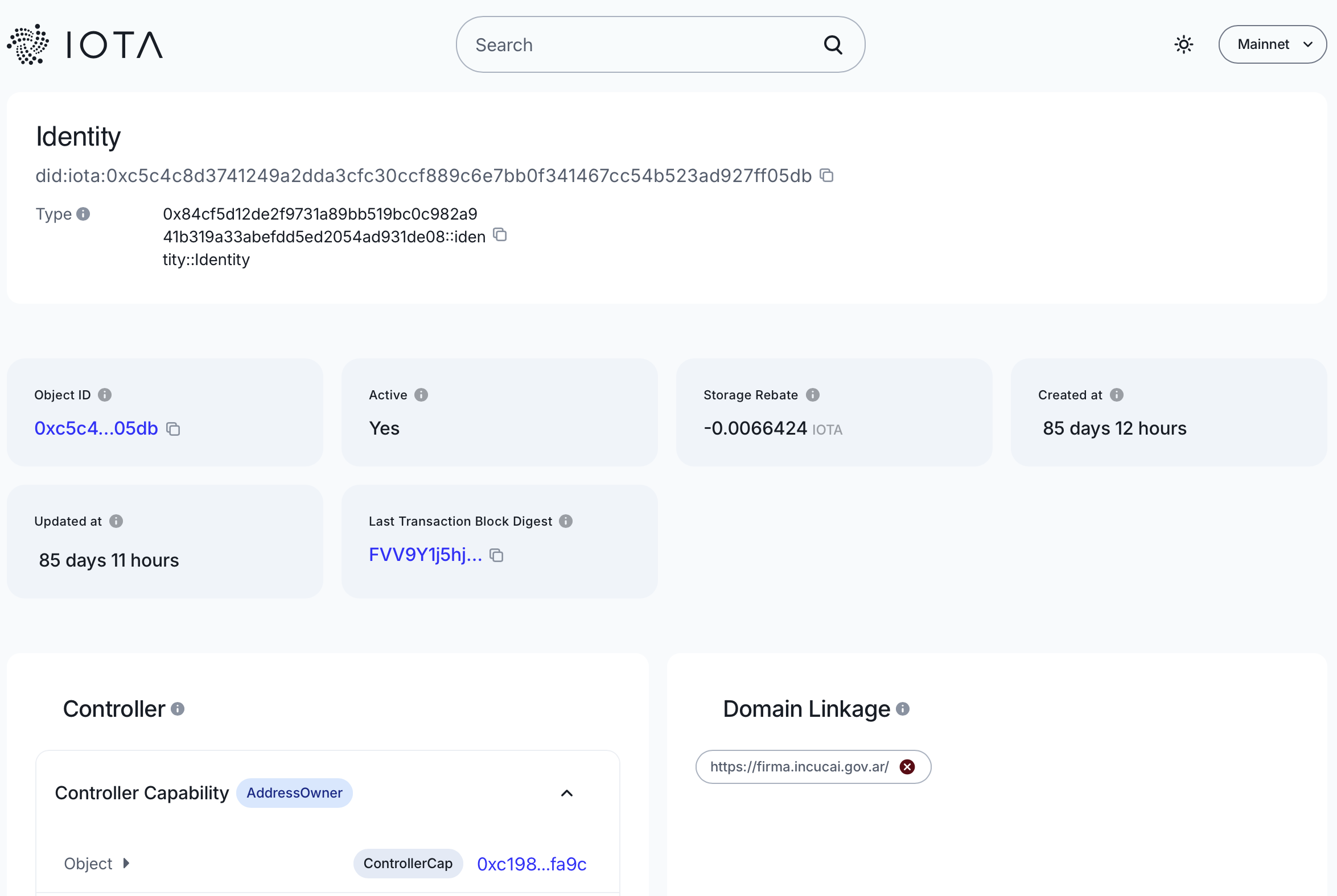
The technological stack adheres strictly to open, verifiable global standards. The identities and credentials deployed across the network comply with World Wide Web Consortium (W3C) specifications. Furthermore, INCUCAI’s onchain institutional identity is cryptographically linked to its official government domain, enabling anyone to verify that the entity executing a transaction is the authentic governmental body rather than an impostor. Portions of the operational infrastructure are hosted on ARSAT, Argentina’s state-owned telecommunications and satellite solutions company, ensuring that critical data handling remains under sovereign national control.
Chronology and Implementation Milestones
The integration of blockchain-backed decentralized identity into Argentina’s national health system represents the culmination of rigorous planning, technological development, and regulatory reform.
The timeline of adoption unfolded through several key phases:
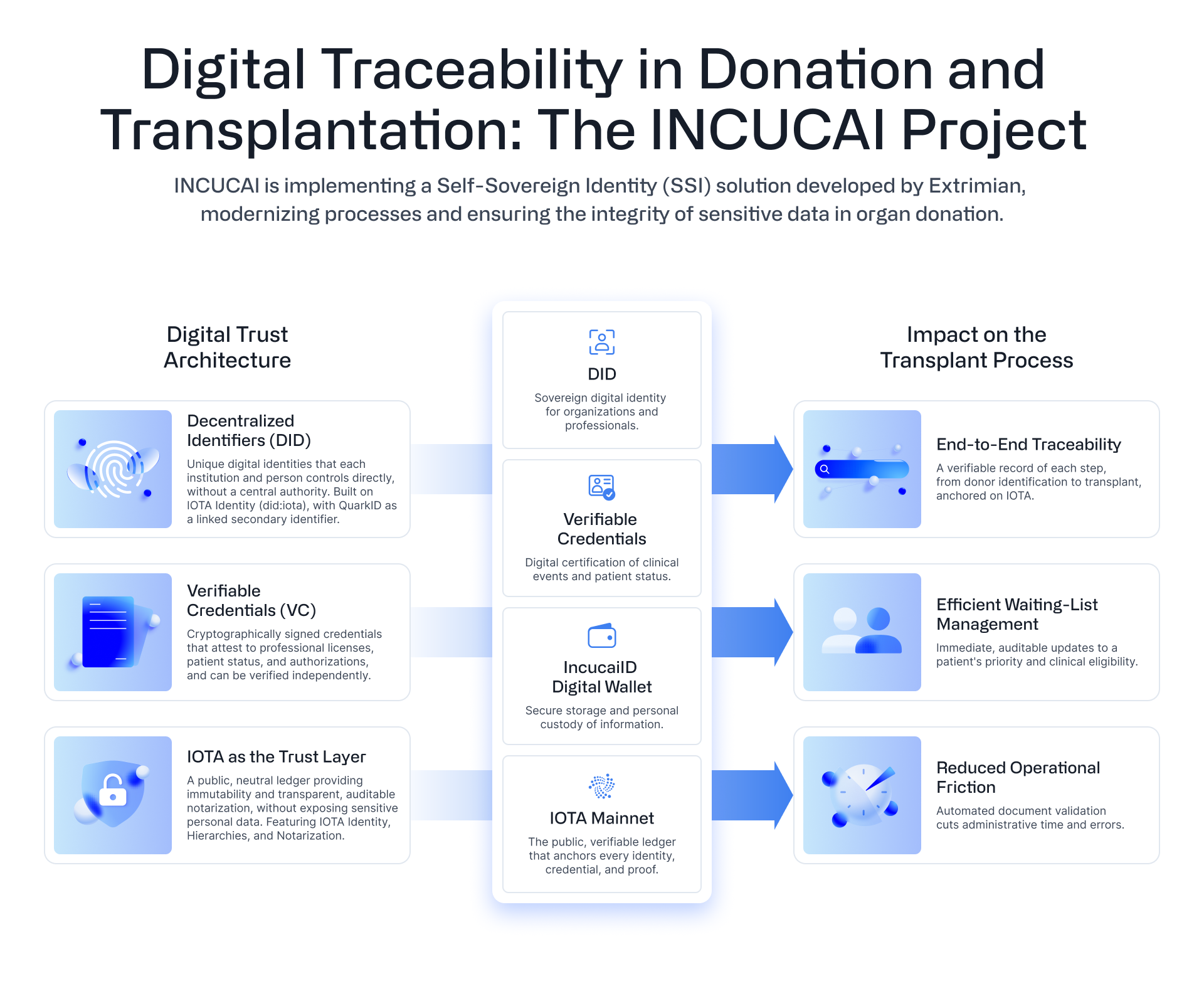
- Foundational Development: Extrimian and INCUCAI collaborated to build an interoperable, privacy-preserving infrastructure tailored to the specific legal and operational demands of Argentina’s public health sector. The framework was engineered to integrate smoothly with SINTRA (Sistema Nacional Procuración y Trasplante de Argentina), the nation’s centralized information system for organ procurement and transplantation.
- Regulatory Authorization: In June 2026, the regulatory framework caught up with technological readiness. Through Resolution 199/2026, published in the national Official Gazette (Boletín Oficial), INCUCAI officially mandated the rollout of electronic signatures across all processes managed through SINTRA and its associated networks. The resolution aimed to imbue every certification, authorization, and validation act with maximum legal certainty and immutable traceability.
- Mainnet Go-Live: On June 10, 2026, the decentralized identity and notarization system went live on the IOTA Mainnet. This deployment established live, publicly verifiable identifiers for INCUCAI and all 24 provincial procurement agencies.
- Ecosystem Rollout via IncucaiID: Alongside the backend integration, INCUCAI launched IncucaiID, an official digital wallet application available on the Apple App Store and Google Play. Designed for patients, medical professionals, and administrative personnel, the wallet allows users to hold verifiable credentials, prove identity attributes, and execute legally binding electronic signatures for donation and transplant workflows.
- Phased Clinical Integration: The transition to a paperless, blockchain-secured workflow began with waiting-list registration processes. Initial deployment focused specifically on heart and lung transplant waiting lists, with a structured roadmap designed to expand into other organ registries and comprehensive SINTRA document workflows over time.
Independent Verification and Transparency
In alignment with the foundational blockchain ethos of "don’t trust, verify," independent technical audits were conducted to validate the system’s integrity. Following the June 2026 launch, technical teams utilized public endpoints and the IOTA Explorer to independently analyze the network deployment.
The audits confirmed that all 24 provincial institutional identities successfully resolved onchain, and their corresponding federation trusts matched the recorded data. Direct queries to the IOTA ledger verified that the entities controlling each decentralized identifier matched the accredited regional authorities. Furthermore, administrative actions—such as document notarizations executed by INCUCAI’s root authority address—demonstrated high computational efficiency, requiring minimal transactional gas fees while permanently anchoring the integrity of the national transplant pipeline.
Official Statements and Leadership Perspectives
The successful deployment of this national-scale blockchain application has drawn praise from technology leaders and healthcare administrators alike, underscoring the practical viability of decentralized infrastructure in the public sector.
Daniela Hansen Krogh, Director of Information Technology and Information Systems at INCUCAI, emphasized the human and institutional dimensions of the technological upgrade. "Trust is at the heart of every organ donation and transplantation process," Krogh stated. "Our responsibility is to ensure that every decision is supported by reliable, secure, and verifiable information. By incorporating decentralized identity and cryptographic verification into our national systems, we are strengthening the integrity, traceability, and legal certainty of every critical stage, while safeguarding sensitive patient information. This initiative reflects INCUCAI’s ongoing commitment to modernizing Argentina’s transplant system through secure, transparent, and citizen-centered digital innovation."
Echoing this sentiment, Esteban Musso, Professional Services Manager and Partner at Extrimian, highlighted the broader significance of the project for enterprise and governmental blockchain adoption. "At Extrimian, we believe that trust is the foundation of every digital transformation," Musso remarked. "By combining open standards with privacy-preserving technologies, we’ve helped build a solution that enhances traceability, security, and interoperability while respecting the privacy of every participant. Projects like this demonstrate that decentralized technologies are no longer a vision for the future—they are delivering tangible value today in critical public services."
Dominik Schiener, Co-Founder and Chairman of the IOTA Foundation, pointed to the national scale of the implementation as proof of the technology’s maturity. "This is what IOTA’s open technology can do for critical public services at national scale: real infrastructure, already coordinating decisions that save lives," Schiener noted.
Broader Implications and Future Outlook
The integration of IOTA-powered decentralized identity into Argentina’s transplant apparatus signals a profound shift in how governments can leverage emerging technologies to solve complex coordination challenges. By replacing fragmented paper trails and vulnerable centralized databases with an immutable, privacy-respecting public ledger, INCUCAI has established a new benchmark for administrative transparency in healthcare.
As the implementation expands from heart and lung registries to encompass the entirety of Argentina’s organ and tissue allocation networks, the system is expected to drastically reduce bureaucratic friction, eliminate the risk of document tampering, and accelerate the response times of life-saving medical interventions. More broadly, the success of the INCUCAI-Extrimian initiative serves as a compelling case study for public sector digital transformation globally, proving that decentralized, self-sovereign infrastructure can be successfully integrated into mission-critical government operations without compromising citizen privacy or institutional sovereignty.