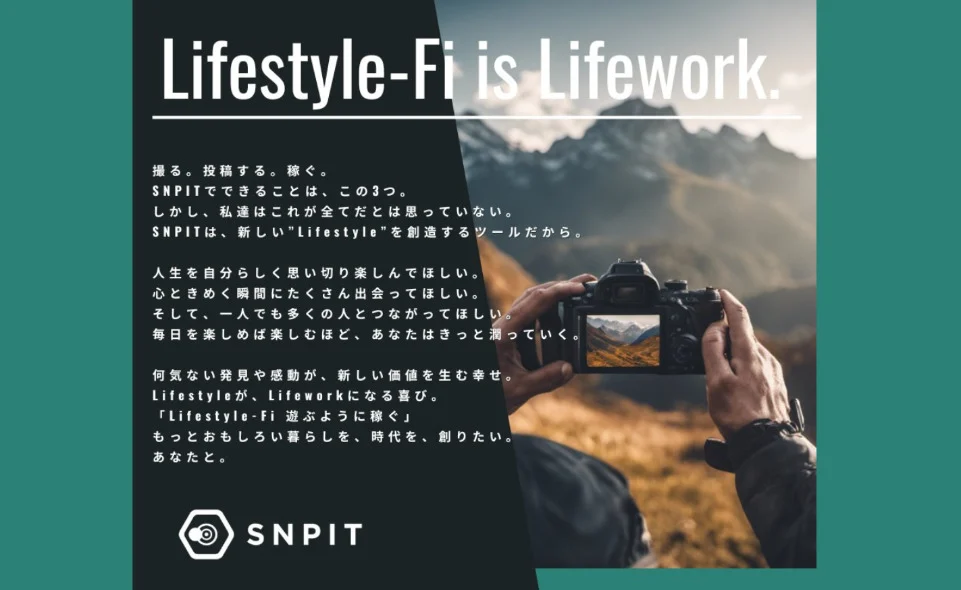
The intersection of Web3 technology and everyday digital habits has birthed an array of novel ecosystems, none quite as visually driven as SNPIT. Operating primarily on the Polygon blockchain, SNPIT has emerged as a prominent player in the GameFi and SocialFi sectors by introducing a unique "Snap-to-Earn" mechanism. By leveraging smartphone cameras and augmented reality (AR) features, the platform allows users to monetize their photography skills, transforming casual snapshots into revenue-generating digital assets. As blockchain-based applications seek wider mainstream adoption through gamification, SNPIT’s integration of mobile photography and decentralized rewards offers an intriguing model for sustainable tokenomics and user engagement.

Understanding the Core Mechanics of Snap-to-Earn
At its core, SNPIT redefines how individuals interact with mobile photography by incentivizing the quality, composition, and location of user-generated images. Traditional social media platforms have long utilized user content to drive engagement and advertising revenue without directly compensating the creators. SNPIT alters this paradigm by rewarding users with its native token, $SNPT, whenever their submitted photographs meet specific community and algorithmic criteria.

The mechanism relies heavily on Camera NFTs, which serve as the primary utility tool within the application. Similar to move-to-earn models that require specific footwear tokens to track physical activity, SNPIT requires users to acquire and upgrade Camera NFTs to maximize their earning potential. These NFTs come with varying attributes, such as durability, luck, and efficiency, which directly influence the volume of tokens a user can accumulate during a photography session. By introducing strategic depth to what would otherwise be a simple photo-sharing app, SNPIT encourages longer retention rates and a more dedicated user base.

Chronology and Platform Development
The conceptualization and rollout of SNPIT followed a deliberate trajectory designed to align with broader trends in decentralized finance (DeFi) and non-fungible token (NFT) utility. Launched initially in September 2023, the project quickly established its presence within the Polygon ecosystem due to the network’s low transaction fees, high throughput, and environmental sustainability compared to legacy proof-of-work blockchains.

During its initial phases, the development team focused on establishing robust smart contract architectures to govern Camera NFT minting, marketplace trading, and reward distribution. Early adopters were given opportunities to acquire foundational assets through strategic minting events and whitelist campaigns. As the platform matured, developers integrated advanced AR functionalities, allowing users to engage with geo-tagged environments and participate in localized photography contests. This phased rollout ensured that server loads remained manageable while the internal economy adapted to increasing user influxes.

Tokenomics and Ecosystem Sustainability
A critical challenge facing early GameFi projects has been the long-term sustainability of their tokenomics. Many play-to-earn models suffered from hyperinflationary token supply spirals, leading to rapid devaluation of reward tokens once user acquisition slowed. SNPIT has sought to mitigate these risks by implementing a multi-layered utility model for both $SNPT and its associated NFT assets.

The ecosystem relies on balanced sinks and sources. While users earn $SNPT through active participation and high-ranking photo submissions, tokens are systematically burned or required for utility functions such as:

- Repairing and leveling up Camera NFTs
- Minting new digital assets to expand operational capacity
- Participating in high-tier governance and competitive battles
Furthermore, integration with established cryptocurrency exchanges—such as BITPOINT and Bitget Wallet—provides necessary liquidity channels for participants. By anchoring token utility to in-game progression rather than pure speculation, SNPIT aims to foster a resilient economic environment that can weather broader market volatility.

Camera NFT Utility and Upgrading Systems
Camera NFTs are the bedrock of the SNPIT experience. To begin earning rewards, a user must hold at least one active Camera NFT, which functions similarly to a digital camera body equipped with specific performance parameters. These assets are categorized into different rarity tiers, ranging from standard entry-level models to high-performance units capable of yielding substantial daily token returns.

The upgrade system is designed to reward long-term engagement. Users can expend $SNPT and in-game currencies to enhance their camera’s specifications, thereby increasing their daily energy caps and improving their chances of capturing high-value photographs. Maintenance mechanics, such as repair costs tied to usage frequency, prevent resource stagnation and encourage active portfolio management. If a user neglects their equipment, degradation in performance directly impacts earning capacity, mirroring real-world photography economics.

AR Integration and Location-Based Engagement
Beyond standard digital snapshots, SNPIT distinguishes itself by incorporating augmented reality and geolocation features. Users are often prompted to capture specific landmarks, natural phenomena, or urban environments within designated geographical zones. This bridges the gap between digital rewards and physical world exploration, encouraging individuals to engage more deeply with their local surroundings.

The implementation of AR elements not only enhances user immersion but also provides potential B2B avenues, such as sponsored photography campaigns for tourism boards or commercial brands. By tying token rewards to specific real-world locations, SNPIT creates a dynamic marketing medium where users act as decentralized content creators for civic and commercial entities alike.

Market Implications and Future Outlook
The launch and subsequent development of SNPIT highlight a broader shift in the Web3 industry toward functional utility and real-world integration. By addressing the fundamental flaws of earlier GameFi cycles—such as unsustainable yields and lack of engaging gameplay loops—SNPIT provides a blueprint for how lifestyle applications can successfully incorporate blockchain elements without alienating casual users.

Analyst observations suggest that platforms bridging everyday hobbies with micro-incentives will likely capture a larger share of the mainstream demographic. However, challenges remain regarding regulatory clarity around tokenized rewards and the long-term retention of users once initial speculative interest wanes. Continuous updates to the platform’s AR capabilities, coupled with strategic exchange partnerships, will be vital in determining whether SNPIT can sustain its growth trajectory in an increasingly competitive landscape.

Ultimately, SNPIT represents a fascinating convergence of digital art, mobile technology, and decentralized finance. By turning a ubiquitous modern activity—taking pictures with a smartphone—into an economically rewarding endeavor, the platform has carved out a unique niche within the Polygon ecosystem, offering valuable insights into the future of Web3 social applications.