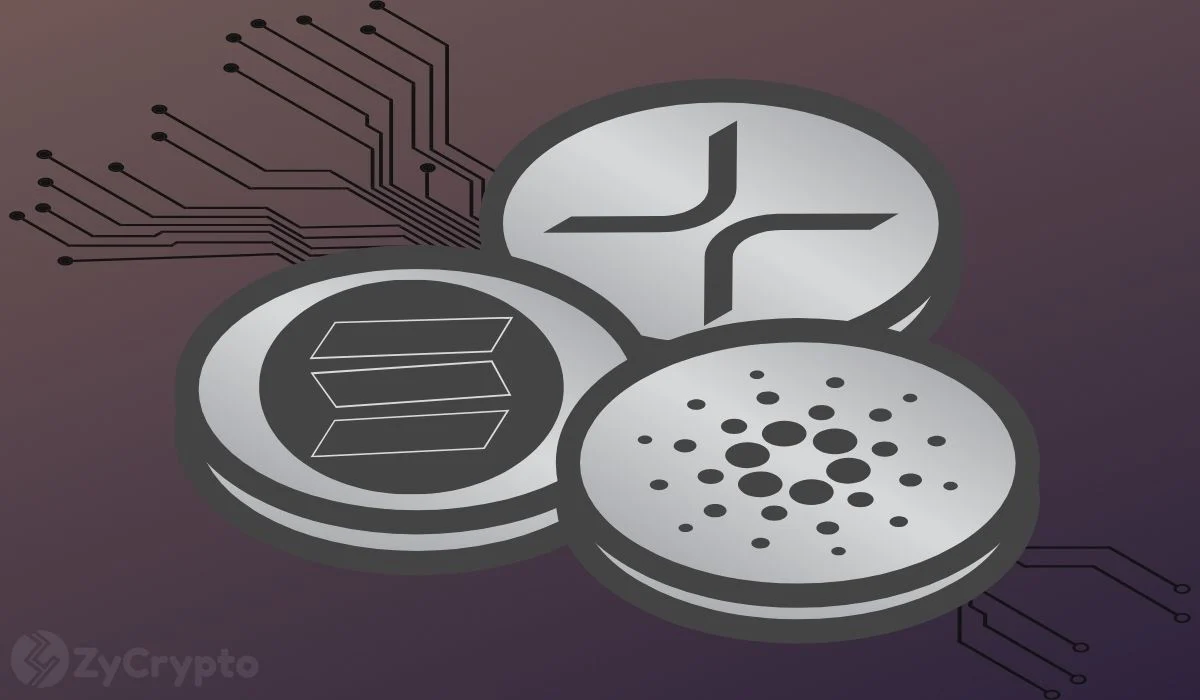
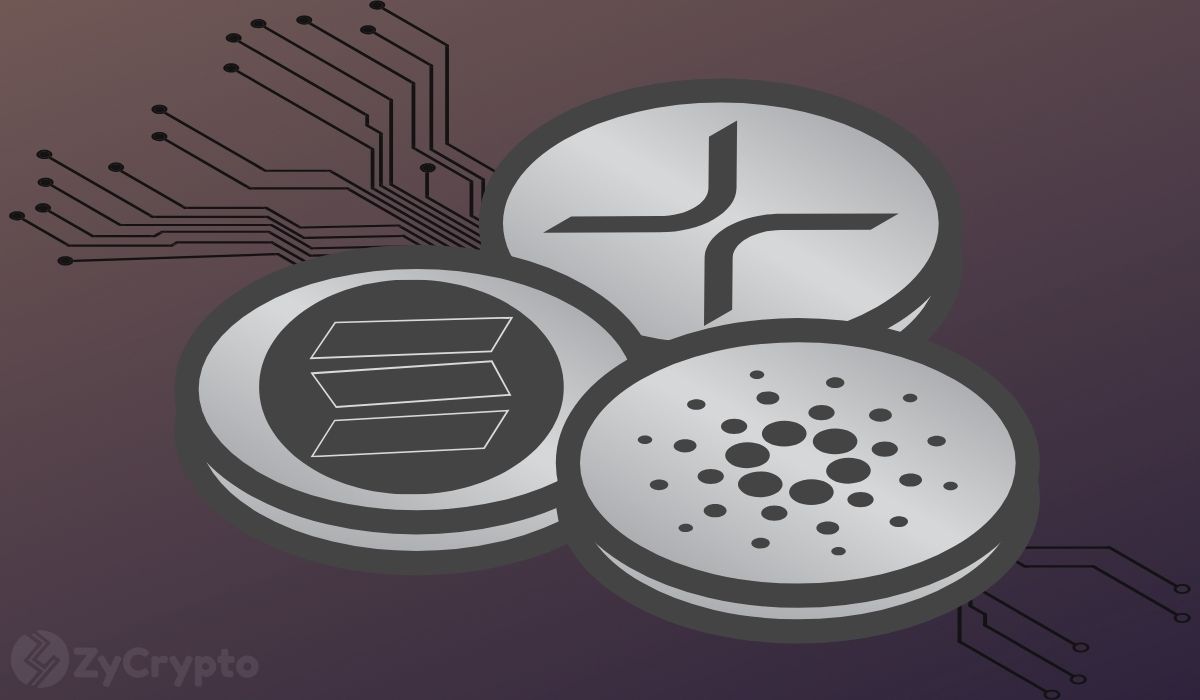
The intersection of traditional finance and the digital asset economy is entering a critical juncture, defined by both structural evolution and severe market recalibration. While retail investors and various market advocacy groups continue to lobby for the expansion of exchange-traded funds (ETFs) tracking a broader basket of altcoins—including XRP, Shiba Inu, and Cardano—institutional heavyweights like BlackRock are maintaining a distinctly measured posture. Recent market speculation regarding a potential institutional "bailout" of the lagging altcoin sector has been broadly dismissed by traditional finance strategists as a fundamental misreading of corporate asset allocation models.
As regulatory bodies prepare to review a wave of novel digital asset investment products, the underlying fundamentals of the altcoin market reveal a stark dichotomy. On one side, high-performance blockchains such as Solana are steadily embedding themselves into Wall Street’s operational pipelines. On the other, the vast majority of legacy altcoins are enduring a protracted bear cycle characterized by depressed technical metrics, fading liquidity, and a shifting paradigm that prioritizes utility and tokenized real-world assets (RWAs) over speculative trading vehicles.
Institutional Strategy Versus Retail Expectations
For months, optimism has persisted among retail market participants that major asset management firms would eventually accumulate positions in a wide array of mid-cap and large-cap altcoins, effectively putting a floor under their valuations. However, industry analysts and traditional finance insiders have consistently pushed back against this narrative.
According to market structure experts, institutional giants view the vast majority of altcoins not as viable long-term treasury assets, but rather as early-stage fundraising vehicles or speculative instruments lacking intrinsic economic linkage. Traditional financial institutions operate under strict mandates regarding risk management, regulatory clarity, and utility-driven cash flows. Consequently, firms like BlackRock have shown zero inclination to absorb the unrealized losses—or "bags"—of retail investors who purchased tokens decoupled from genuine economic productivity.
This institutional skepticism does not signal a retreat from blockchain technology altogether; rather, it highlights a profound pivot in how Wall Street intends to engage with decentralized ledgers. Market observers note that traditional finance is increasingly focusing on infrastructure modernization through distributed ledger technology (DLT) rather than the acquisition of native protocol tokens.
The Rise of Tokenized Real-World Assets and Layer-1 Dominance
Insights from crypto analytics firms indicate that the next major wave of institutional integration will likely bypass speculative secondary markets entirely. Instead, capital deployment is projected to center on the tokenization of real-world assets (RWAs)—such as U.S. Treasuries, commercial real estate, and corporate debt—issued directly on high-performance Layer-1 networks like Solana and Ethereum.
In this evolving paradigm, traditional equity and debt markets could experience structural shifts, with corporations occasionally opting to list or settle assets directly on high-throughput blockchains. Under such models, investors would hold direct cryptographic proof of ownership in yield-bearing assets rather than speculative utility tokens. This fundamental transition explains why institutional capital continues to flow selectively toward scalable infrastructure providers while ignoring the broader tail of the altcoin market.
Solana, in particular, has made measurable headway into traditional financial workflows, boasting institutional-grade validator adoption, enterprise payment integrations, and growing recognition as a settlement layer for high-frequency financial operations. This institutional validation starkly contrasts with the macroeconomic headwinds facing older, liquidity-starved tokens.
Persistent Underperformance Across Binance and Global Exchanges
While institutional players refine their digital asset strategies, retail-heavy altcoin markets are enduring a punishing winter. Market data reveals that approximately 84 percent of all altcoins listed on major digital asset exchanges, including Binance, are currently trading below their critical 200-day moving average.
This widespread technical underperformance has now persisted for nearly eight months, making it the second-longest streak of structural weakness since the turbulent market conditions of 2020. It is surpassed in duration only by the grueling ten-month bearish consolidation phase witnessed during the previous crypto winter.
Breadth indicators underscore the depth of this capital flight. CoinMarketCap’s Altcoin Season Index currently hovers at a subdued 48 out of 100, placing the market firmly within "Bitcoin Season" territory. Simultaneously, the Total 3 index—which tracks the cumulative market capitalization of all altcoins excluding Ethereum and Bitcoin—continues to register steady downward drift, reflecting capital rotation out of risk-on digital assets and into defensive positions or fiat equivalents.
Macroeconomic Pressures Weigh on Large-Cap Digital Assets
Even foundational tier-one assets have been unable to escape the broader macro-prudential pressures gripping global financial markets. Ethereum, the world’s leading smart contract platform, recently pulled back to $1,579.21, down roughly 2.54% over a rolling observation window. Analysts attribute this downward pressure to hawkish signaling from global central banks, alongside an uncharacteristic negative correlation with traditional equity benchmarks like the S&P 500.
Alternative Layer-1 and ecosystem tokens are experiencing similar technical friction. BNB recently registered a 2.57% decline following a breakdown beneath crucial multi-month support levels. Meanwhile, XRP—which remains a focal point for regulatory speculation regarding upcoming exchange-traded fund applications—has softened by 2.36% to trade at $1.04.
Cryptocurrency traders and technical analysts are now closely monitoring the psychological and structural $1.00 threshold for XRP, as a break below this key level could trigger algorithmic stop-losses across the wider remittance-focused asset category. As the broader altcoin market tests major macro support zones, the lack of immediate, organic liquidity catalysts continues to challenge the patience and conviction of even the most resilient market participants.
Regulatory Horizons: The Impending ETF Review Cycle
Adding to the complexity of the current market environment is the impending regulatory calendar overseen by the United States Securities and Exchange Commission (SEC). Asset managers have increasingly filed applications or preliminary paperwork seeking approval for exchange-traded funds tied to alternative cryptocurrencies, including XRP, Solana, Cardano, and various derivative or meme-themed assets like Shiba Inu.
The inclusion of these assets on the regulatory review table represents a critical stress test for the U.S. digital asset regulatory framework. While the successful launch of spot Bitcoin and Ethereum ETFs established a precedent for institutional investment vehicles, the SEC has historically maintained stringent criteria regarding market surveillance, custody arrangements, and the underlying classification of altcoins as securities.
Legal and regulatory scholars note that the SEC’s approach to altcoin ETFs will depend heavily on whether issuers can definitively prove adequate market depth, resistance to price manipulation, and clear jurisdictional boundaries. Should the regulatory agency greenlight these innovative financial products, it could unlock a new channel for institutional capital inflow. Conversely, a series of rejections or prolonged delays would likely reinforce the bearish sentiment currently dominating secondary altcoin markets.
Implications and Outlook for the Digital Asset Ecosystem
The convergence of strict institutional selectivity, persistent technical underperformance, and impending regulatory decisions paints a nuanced picture of the digital asset landscape. The era of speculative altcoin mania, driven predominantly by retail liquidity and unbounded optimism, is giving way to a more mature, utility-focused market structure.
For traditional finance firms, the focus is squarely on risk-adjusted yield, regulatory compliance, and technological efficiency—favoring tokenized real-world assets and scalable Layer-1 infrastructure over speculative tokens. For the broader altcoin market, surviving this prolonged consolidation phase will require more than narrative-driven hype; it demands demonstrable network adoption, sustainable economic models, and clear alignment with institutional standards. As the SEC prepares to evaluate the next wave of altcoin ETFs, the outcome will undoubtedly shape the trajectory of digital asset adoption for the remainder of the decade.