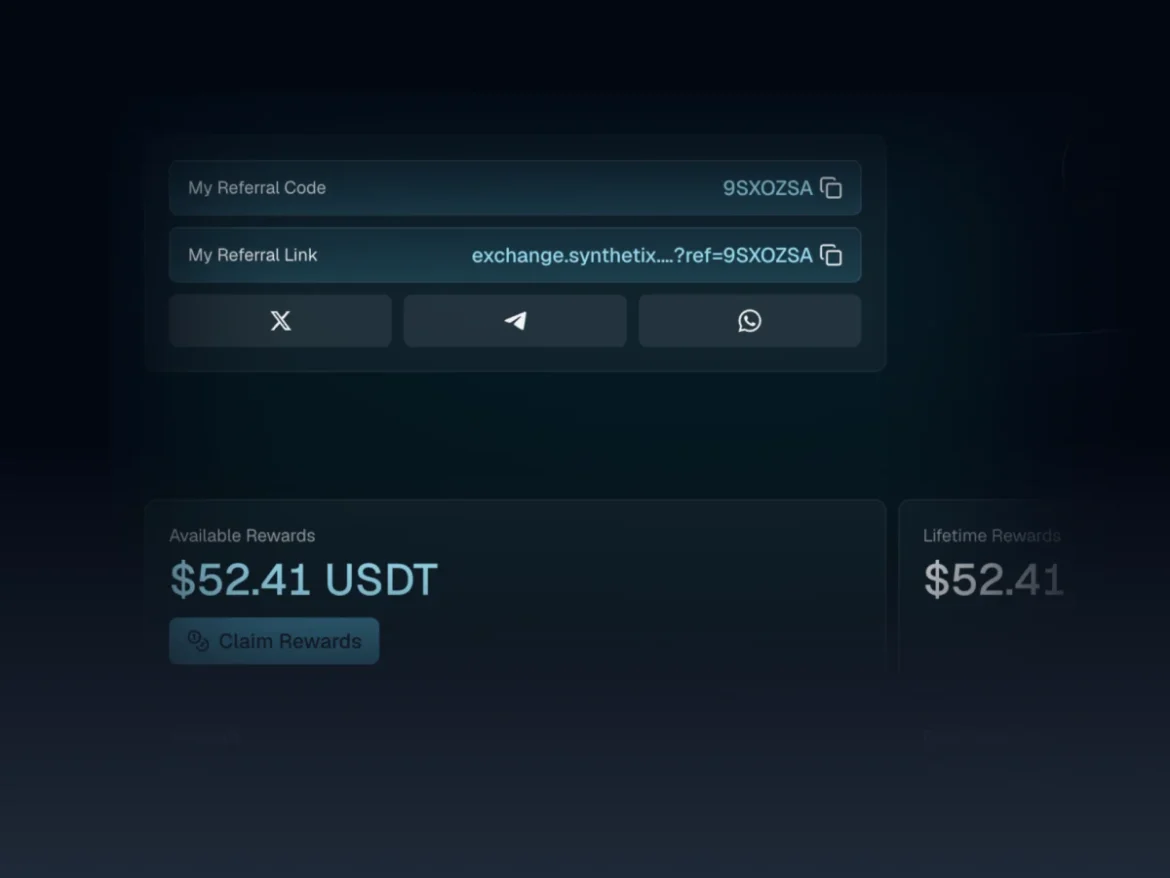
Decentralized finance (DeFi) liquidity protocol Synthetix has officially launched its highly anticipated referral program, introducing a dual-incentive structure designed to accelerate user acquisition on the Ethereum mainnet. The rollout allows existing traders and community members to generate personalized referral codes, granting them a continuous passive revenue stream equivalent to 25 percent of the trading fees generated by their referees.
The launch represents a strategic push by the protocol to deepen its market share in the decentralized perpetual futures (perps) sector. By leveraging community-driven marketing, Synthetix aims to incentivize organic growth while offering tangible financial rewards to both referrers and new market participants.
Mechanics of the Synthetix Referral Program
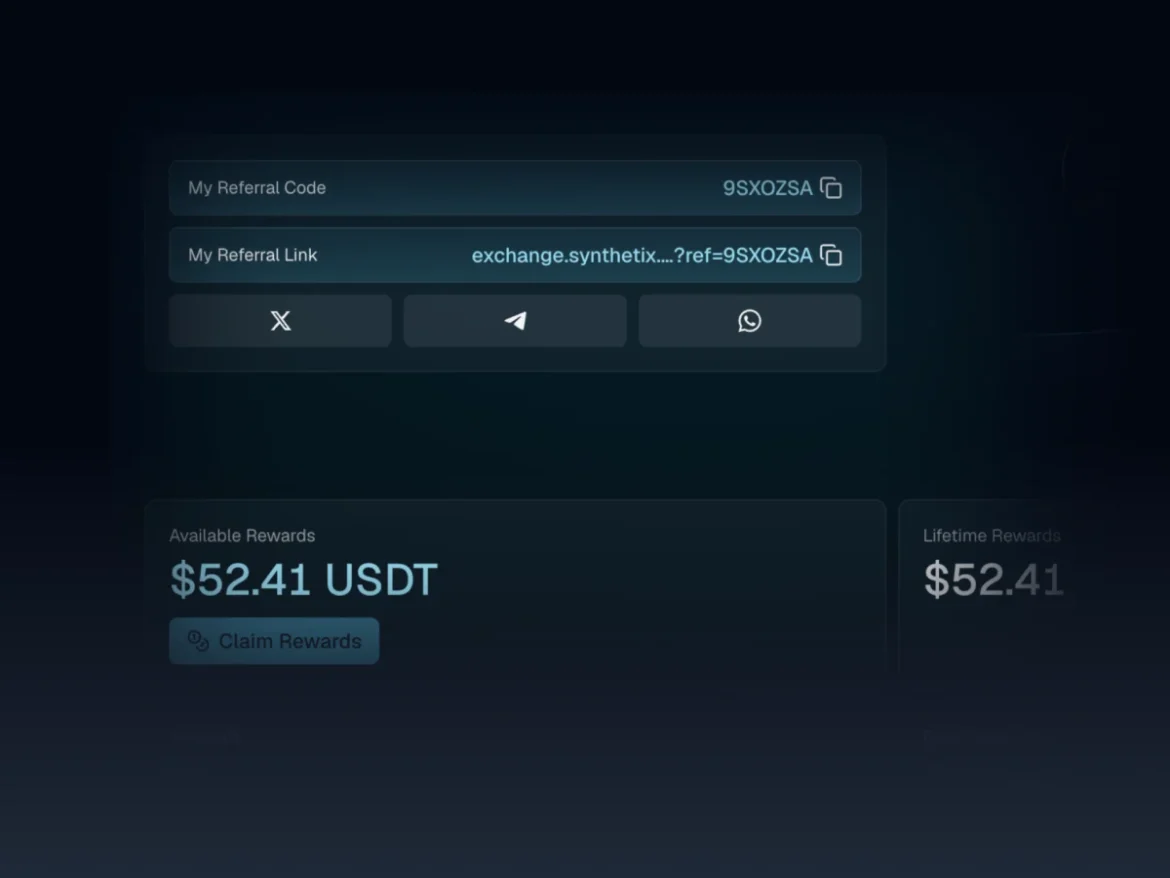
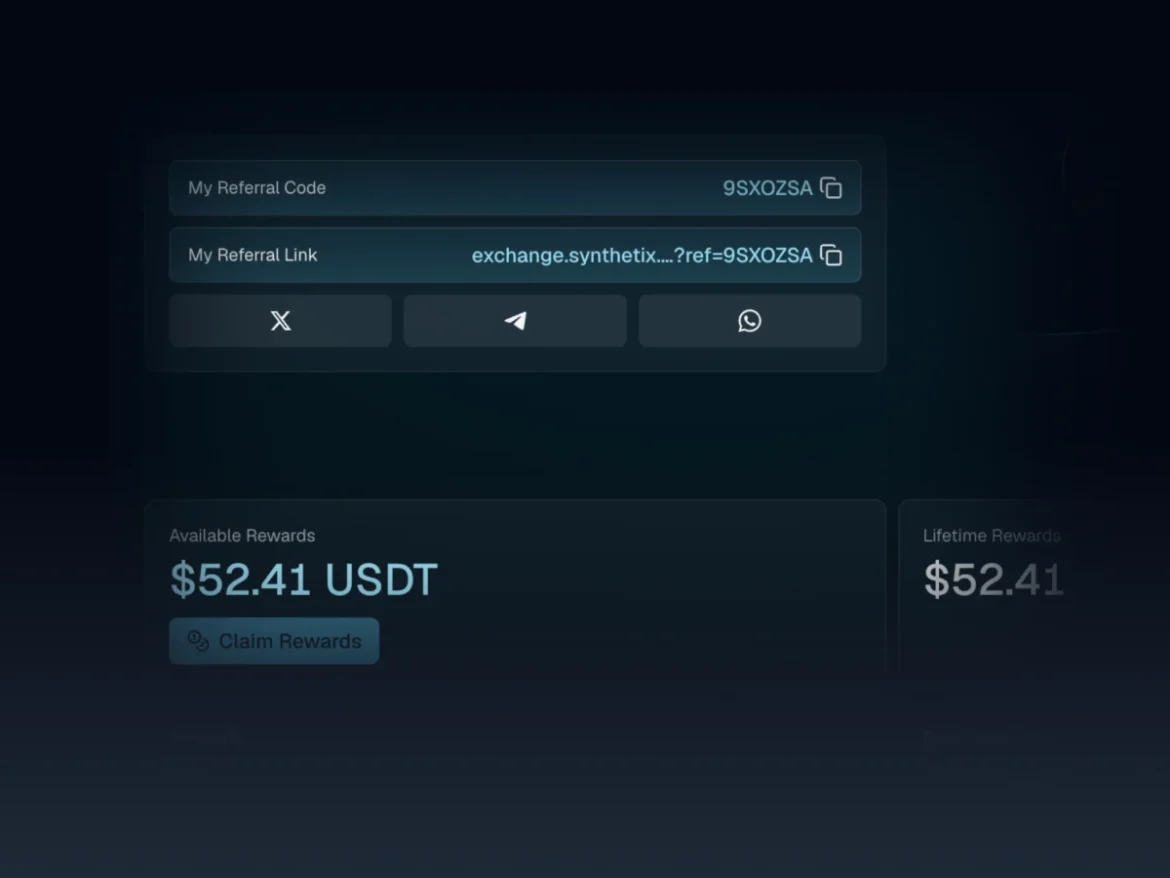
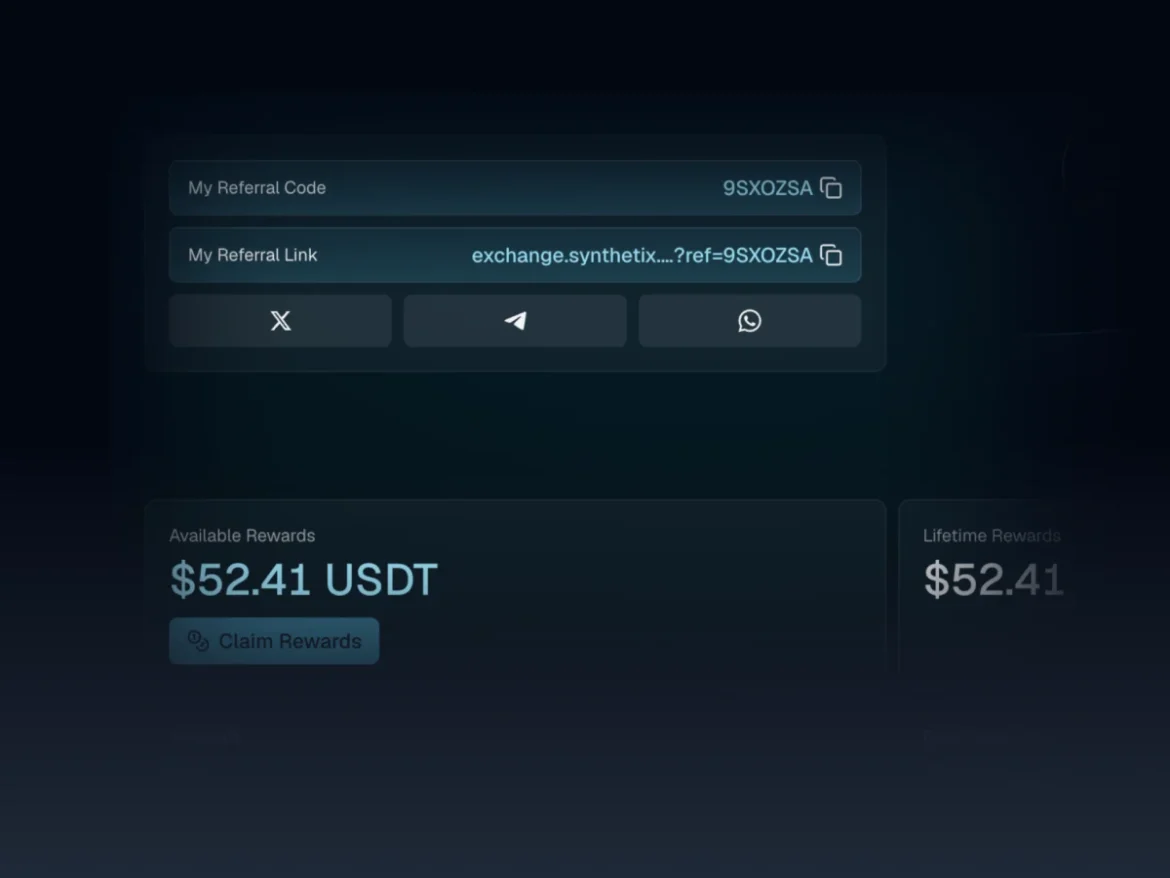
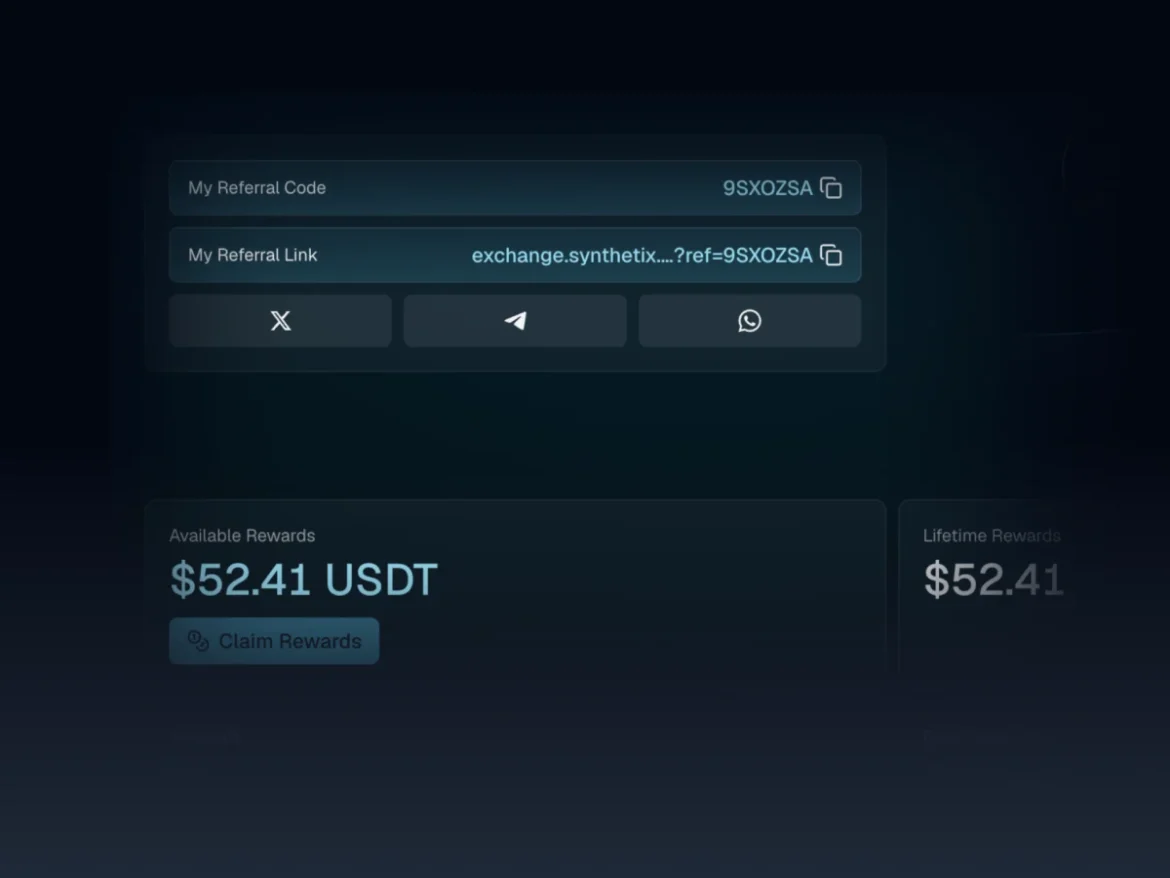
Under the newly deployed system, participants can generate unique referral links directly through the platform’s user interface. Once a new user registers using a specific code, two distinct financial mechanisms are triggered automatically:

- Referrer Earnings: The code creator receives a 25 percent cut of all trading fees accrued by the referee. These rewards accrue on a daily basis and continue indefinitely as long as the referred user maintains active trading volume on the platform.
- Referee Discounts: To lower the barrier to entry for newcomers, anyone who signs up using a valid referral code receives an automatic 5 percent discount on all trading fees. This discount is applied programmatically at the moment of account creation.
Platform developers have emphasized a critical operational constraint: referral codes must be applied strictly during the initial account creation phase. Existing accounts cannot retroactively link a referral code, making early engagement and timely sharing essential for participants looking to maximize their earning potential.
Tracking and Dashboard Integration
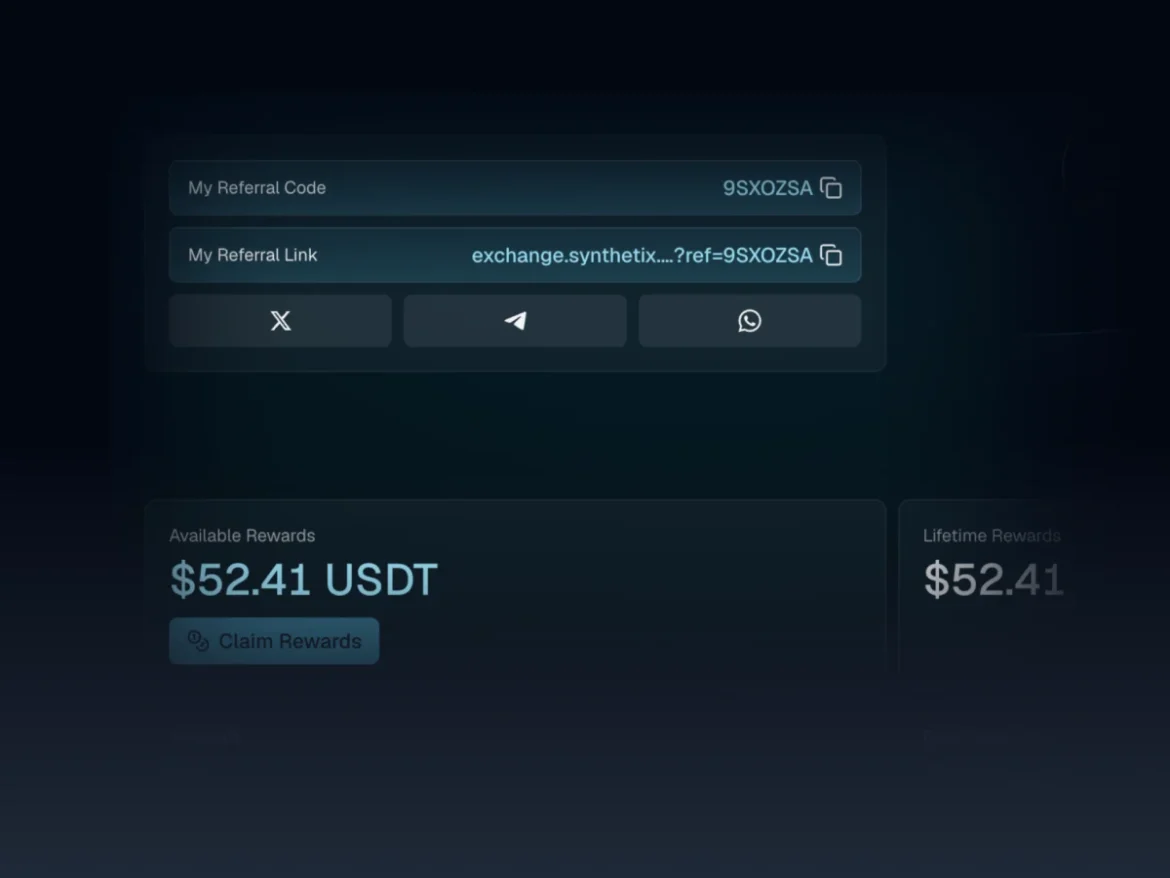
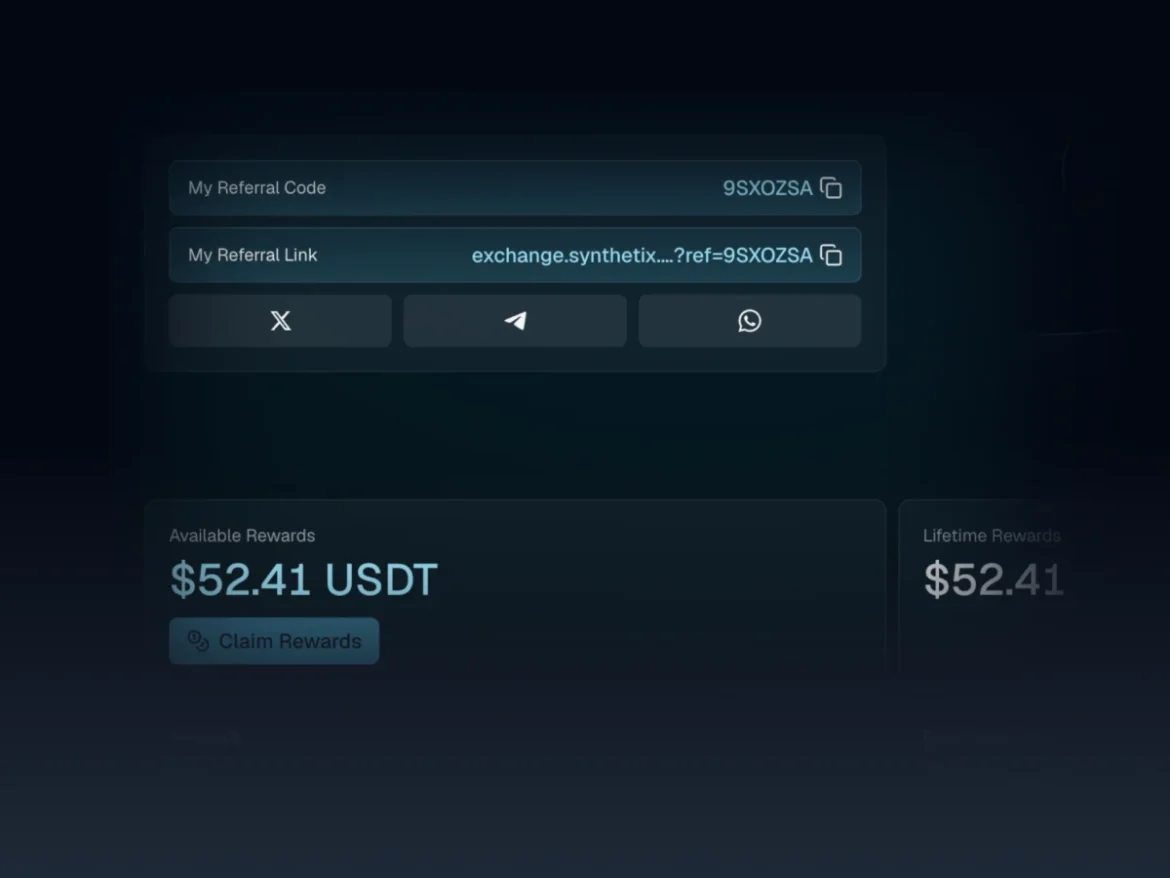
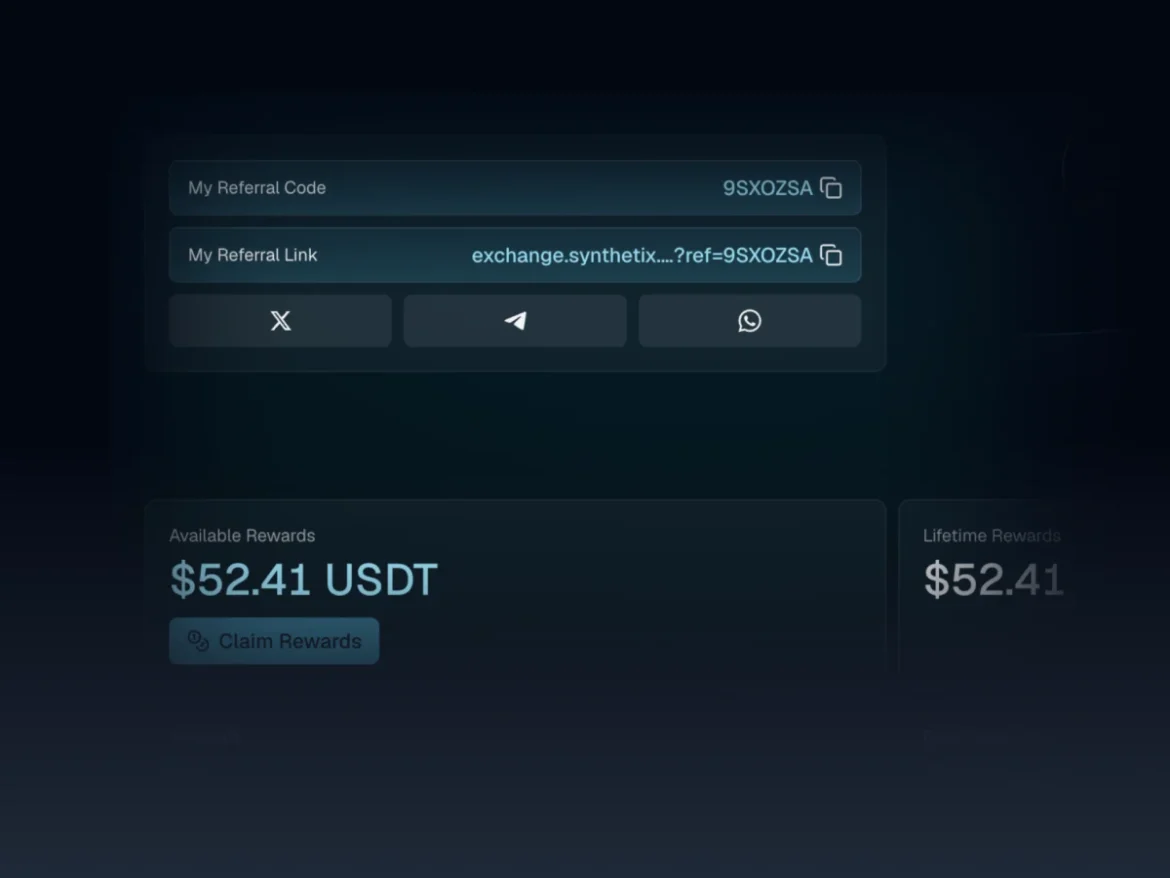
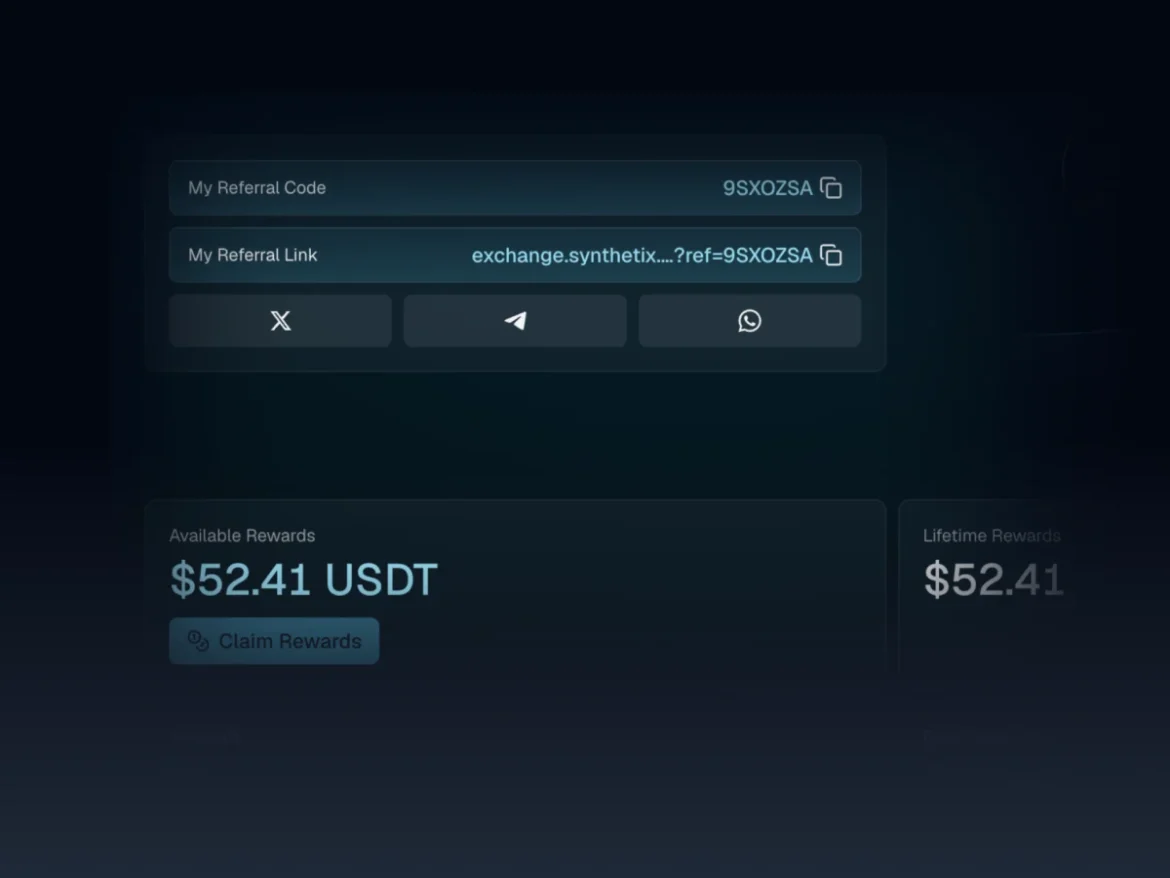
To ensure transparency and ease of use, Synthetix has embedded a dedicated referrals dashboard within the portfolio tab of its main user interface.
The dashboard provides real-time analytics, enabling users to monitor several key metrics:
- Total available rewards ready for withdrawal
- The active count of registered referees linked to their code
- Cumulative lifetime earnings generated through the program
- Total trading volume and fee generation aggregated across all referees
This data-driven approach allows community members to treat their referral network as a dynamic portfolio asset, tracking performance metrics with the same precision applied to traditional DeFi staking or yield farming.

Amplifying Earnings Through Snaxpot Integration
In addition to the standard 25 percent fee share, Synthetix has tied the referral launch into its broader ecosystem incentives, most notably the Snaxpot rewards program.
Under the Snaxpot framework, all trading fees generated across the platform automatically convert into Snaxpot Tickets. Each ticket serves as an independent entry into a rolling, weekly prize draw featuring a $500,000 top prize. Because referrers earn a percentage of fees generated by their network, the activity of referees indirectly contributes to the referrer’s volume footprint, creating a compounding incentive structure where community growth aligns directly with lottery ticket accumulation.
Background and Strategic Context
The introduction of the referral program comes at a critical juncture for the decentralized derivatives market. Competition among layer-1 and layer-2 networks to capture perpetual trading volume has intensified significantly. While many protocols have migrated to high-throughput scaling networks to cut transaction costs, Synthetix has continued to anchor a core portion of its strategy on cementing the Ethereum Mainnet as a premier, high-security venue for leveraged trading.

User acquisition models in DeFi have historically relied on aggressive liquidity mining and token emission programs, which often suffer from high user churn once token incentives diminish. By shifting toward a fee-sharing referral model, Synthetix is pivoting toward sustainable, revenue-backed growth. Users are rewarded not with inflationary governance tokens, but with a direct share of real economic yield generated by platform usage.
Industry Implications and Market Outlook
Financial analysts and DeFi researchers are closely monitoring the rollout to gauge whether sustainable, peer-to-peer referral loops can successfully rival the capital-intensive marketing campaigns common among centralized and decentralized competitors alike.
By offering a balanced value proposition—a 5 percent fee discount for the new trader coupled with a 25 percent ongoing yield for the referrer—Synthetix has engineered a self-sustaining ecosystem loop. The architecture minimizes protocol-subsidized acquisition costs while maximizing the viral coefficient of its existing user base.
As the program scales, market participants expect to see increased community-led onboarding campaigns across social media channels, governance forums, and decentralized communication hubs such as Discord and Telegram.
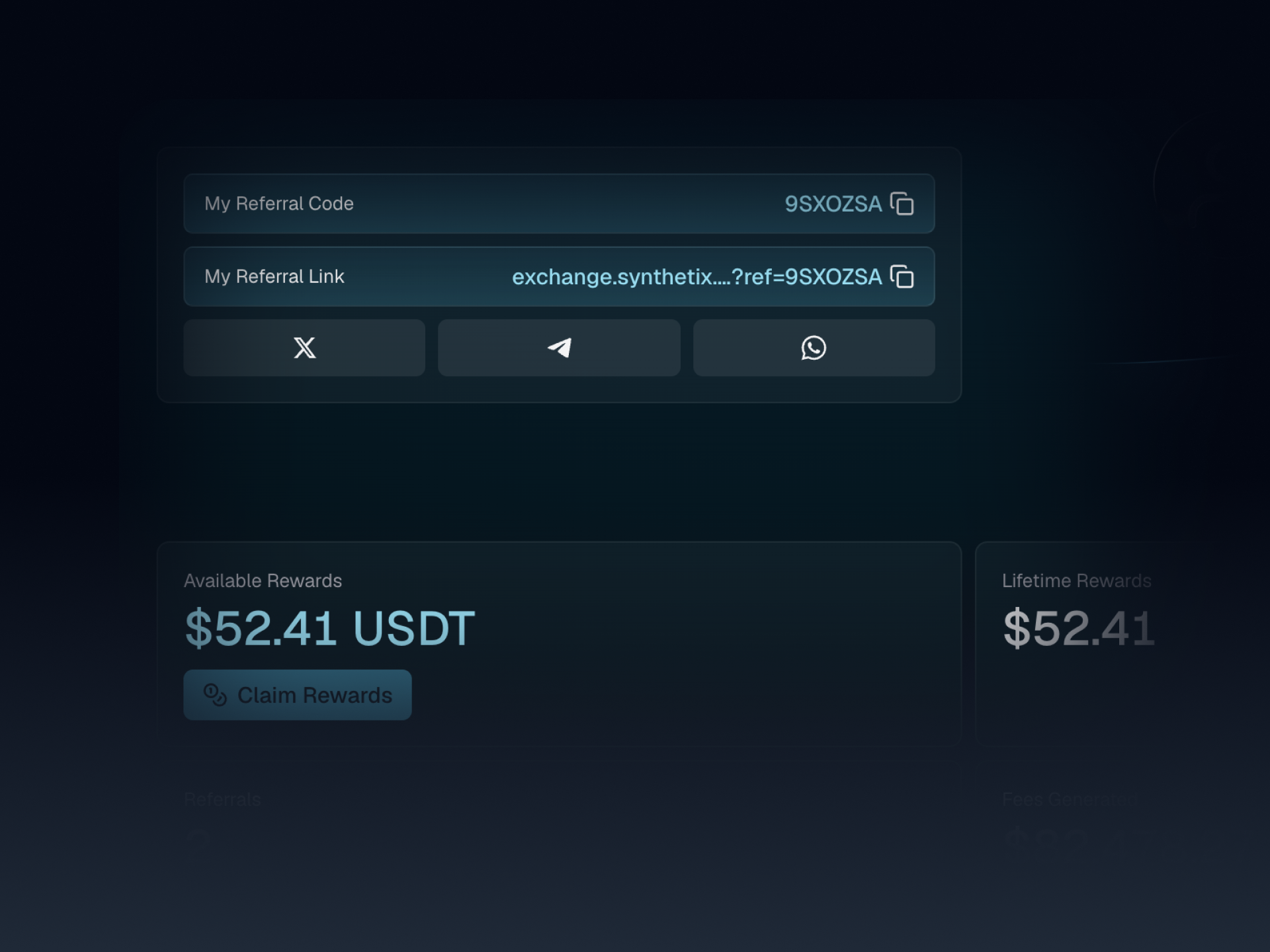
Existing users can access their personalized dashboard to begin generating codes immediately via the official Synthetix exchange portal. Further technical documentation and governance guidelines regarding the referral structure remain publicly accessible via the official Synthetix documentation repository.