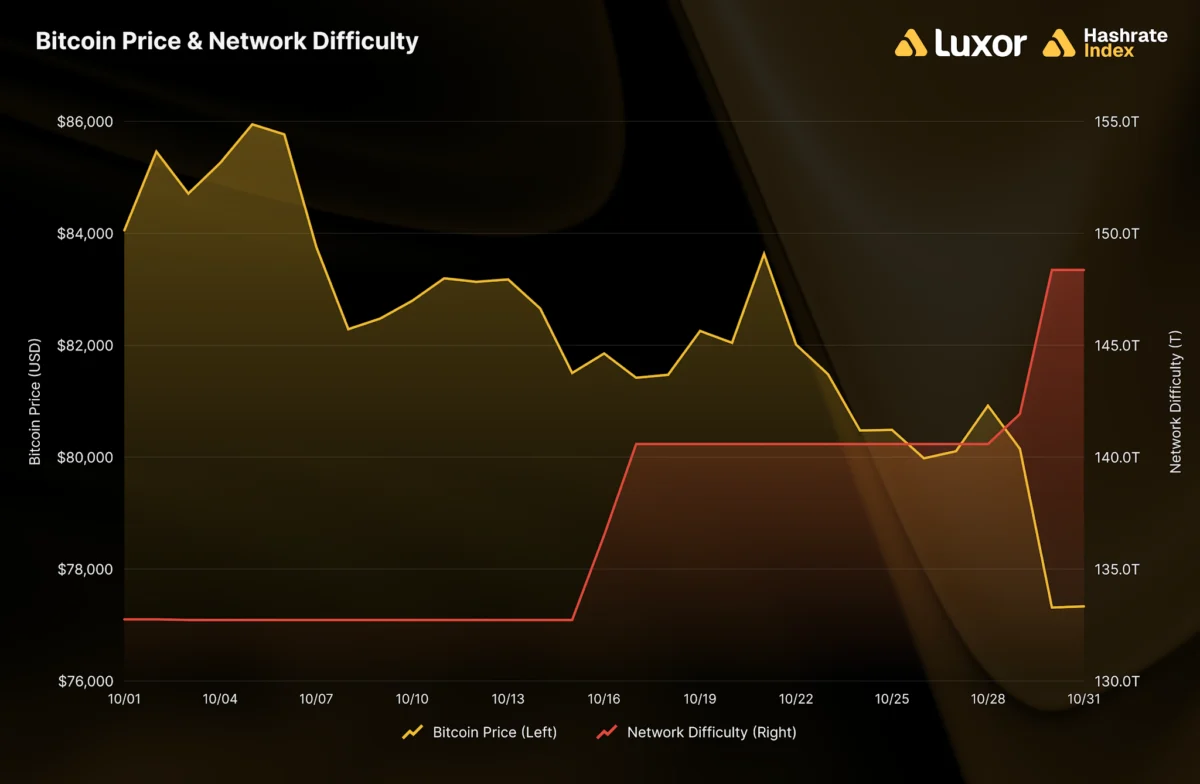
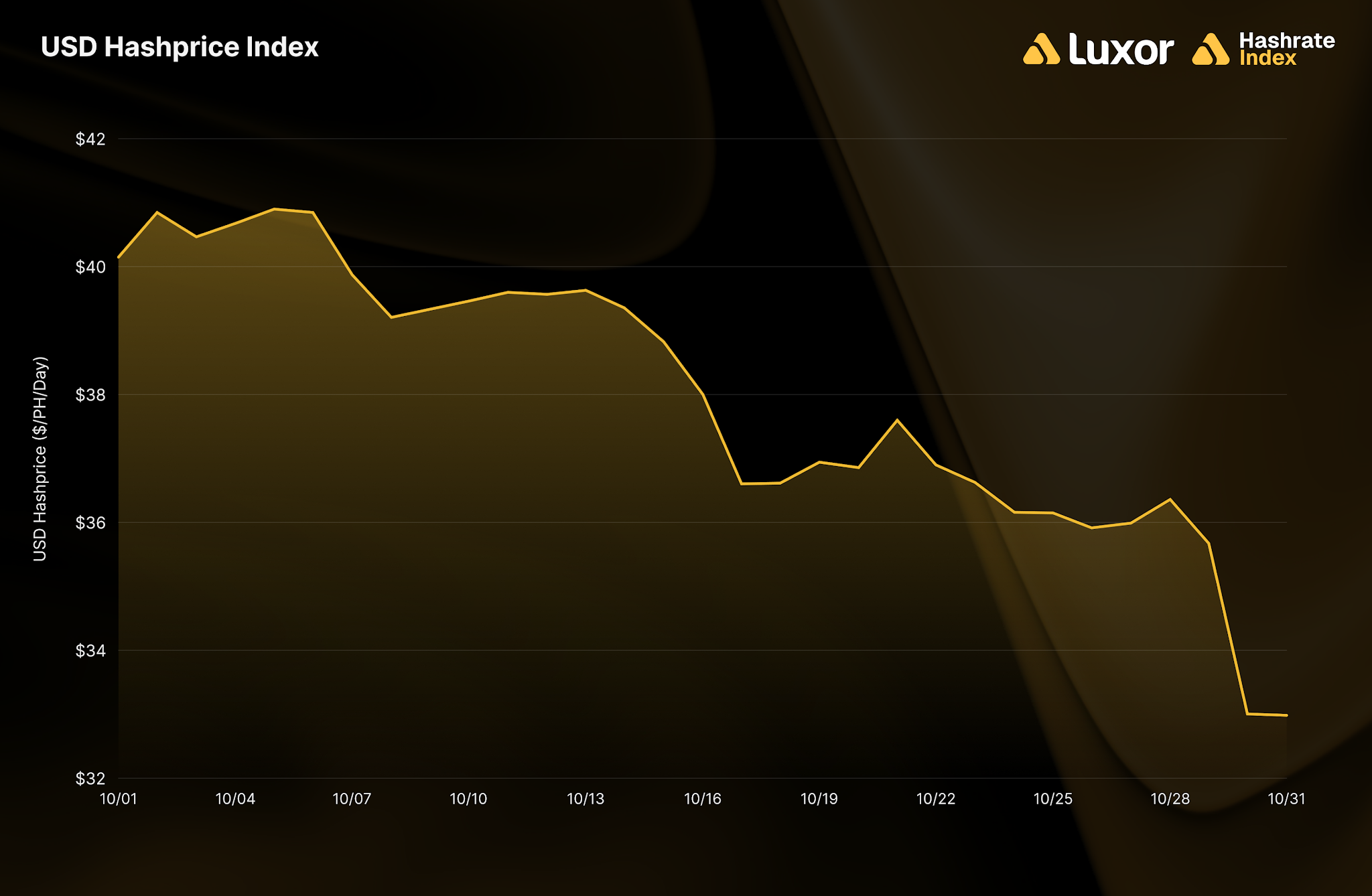
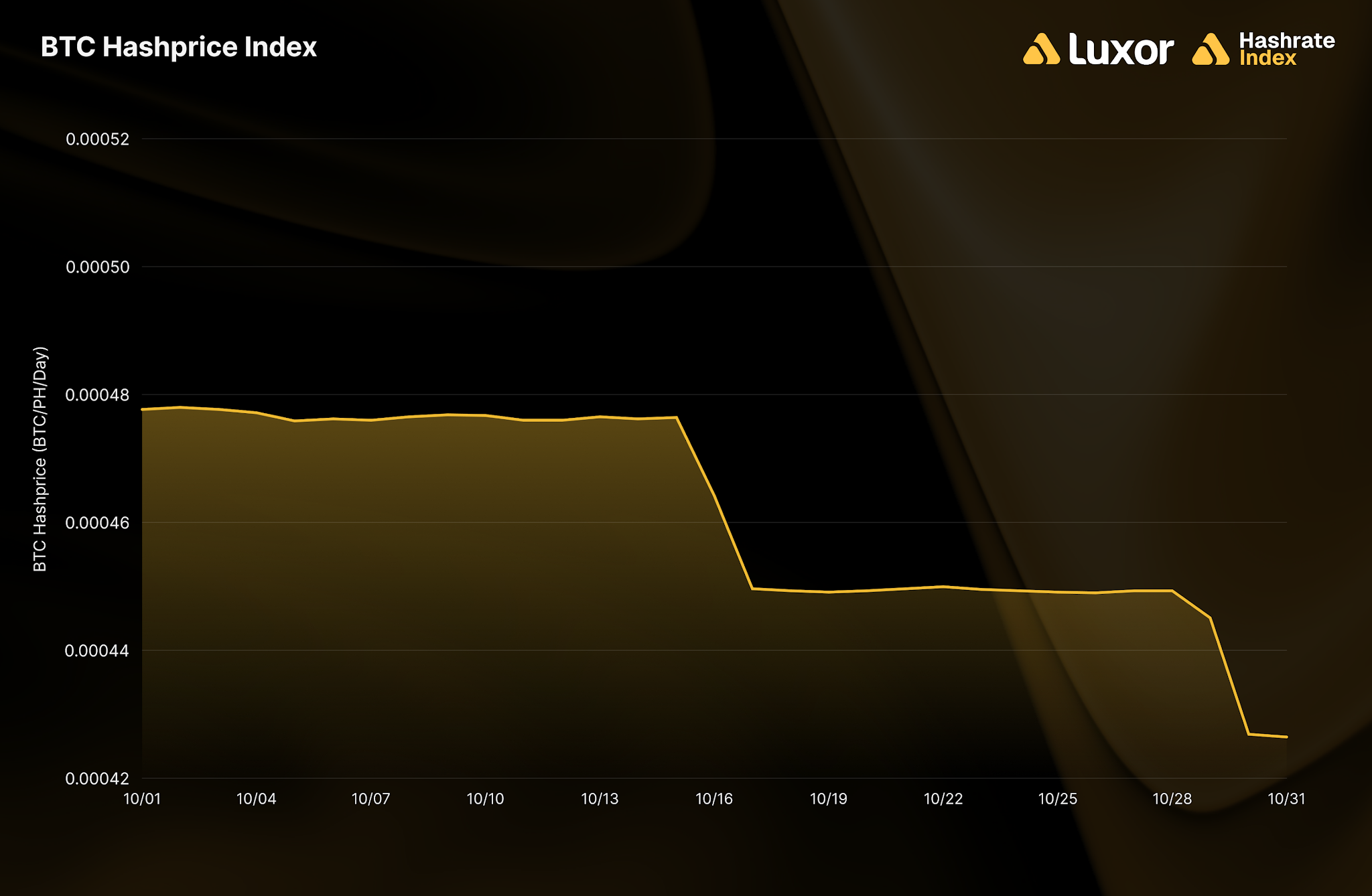
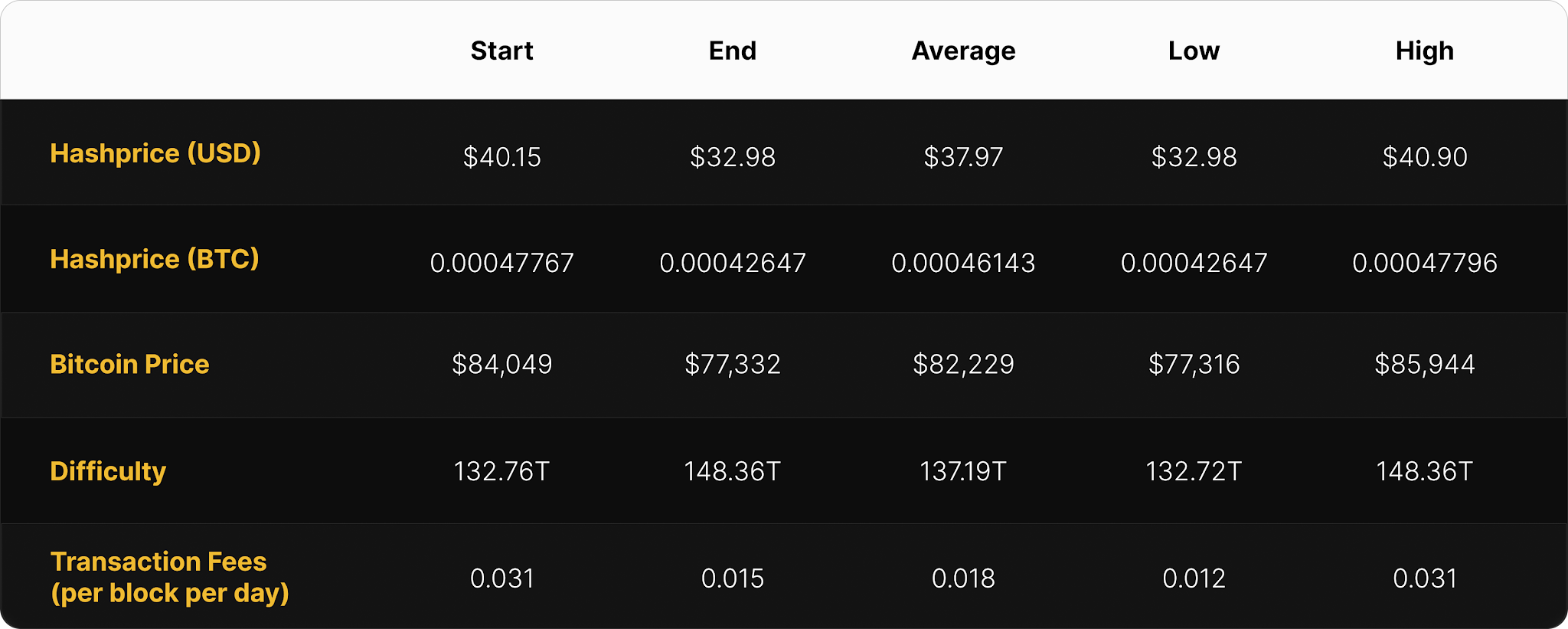
The month of October 2026 served as a harsh reality check for the global Bitcoin mining industry, characterized by a sharp contraction in hashprice and a sustained rise in network difficulty. After a relatively stable September, October saw Bitcoin’s price slide 8.0%, falling from an opening of $84,049 to a closing value of $77,332. This downward pressure on asset prices was exacerbated by a aggressive 11.76% increase in network difficulty across two major retargets, creating a "double squeeze" on miner profitability. The resulting hashprice—a critical metric representing the expected revenue per unit of hashrate—dropped to $32.98 per PH/s/day by month-end, marking the most significant dollar-denominated decline since February 2025.

The Anatomy of the October Market Contraction
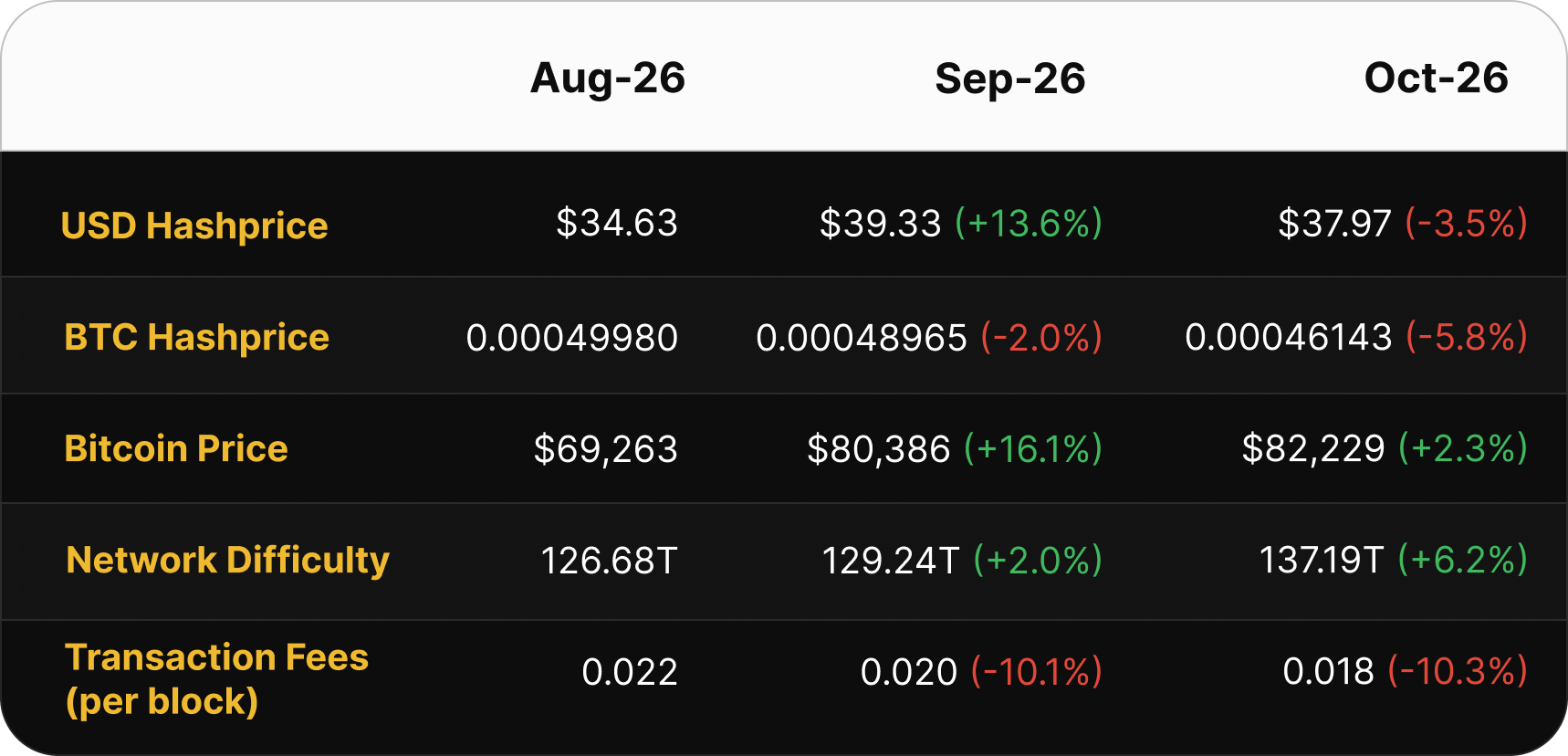
October began with lingering questions regarding whether Bitcoin would sustain its upward momentum or if the network would succumb to rising difficulty. The market received its answer in the final two weeks of the month. The monthly average hashprice of $37.97, while ostensibly mild compared to daily fluctuations, masks the severity of the drop-off experienced toward Halloween.
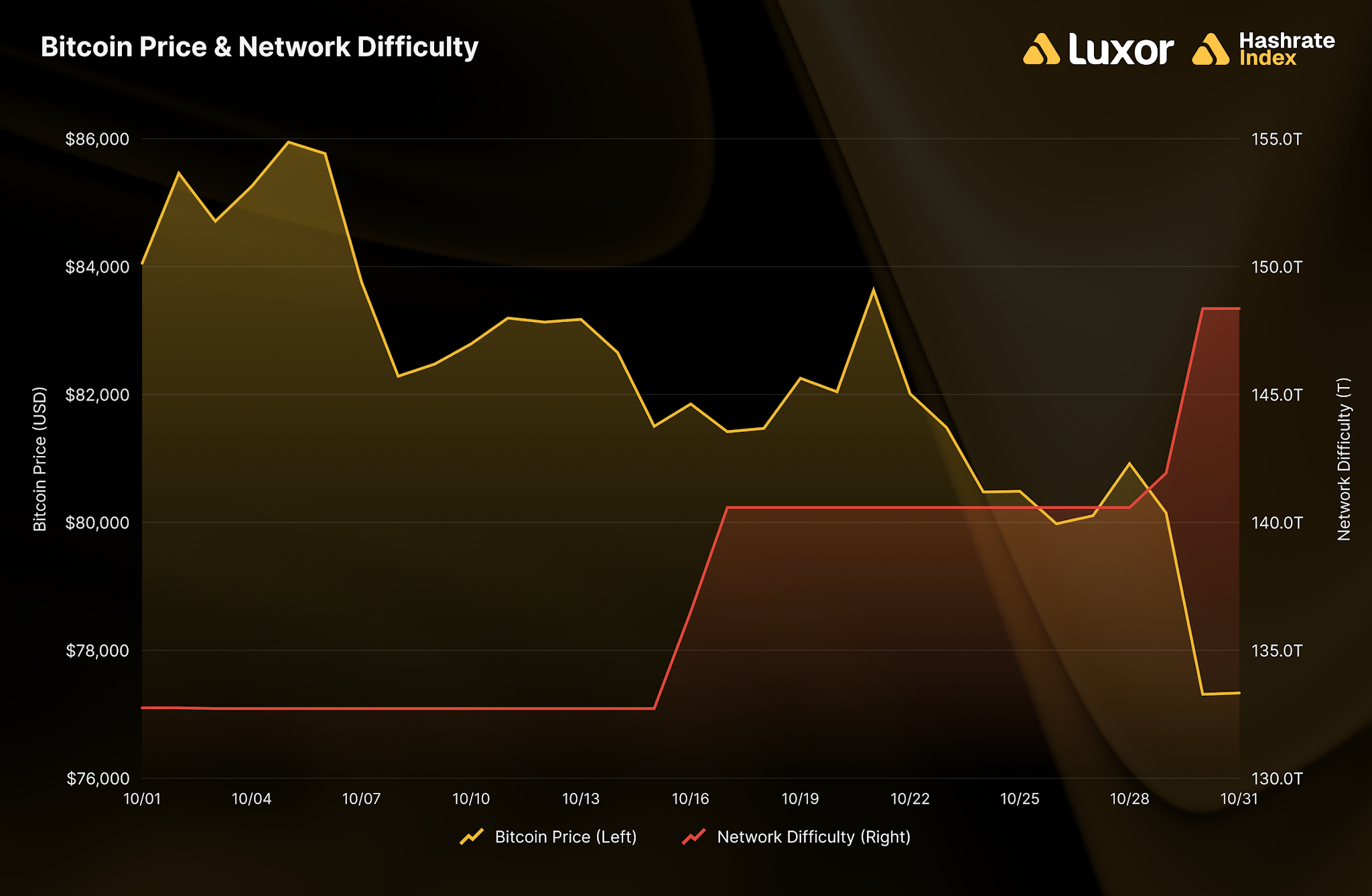
The decline unfolded in two distinct phases, both tethered to network difficulty retargets. The first occurred between October 15 and October 17, as the hashprice slipped from $38.83 to $36.60. The second, more punishing wave took place on October 29 and 30. During this period, a 3.5% single-day drop in Bitcoin’s price coincided with a significant difficulty adjustment, dragging the hashprice down to its monthly floor of $32.98.
Macroeconomic and ETF Pressures
The broader financial environment provided little cover for miners. The Federal Open Market Committee (FOMC) meeting on October 28 saw interest rates held steady at 3.75–4.00%. While the market had largely priced in this decision, the hawkish tone from the dissenting committee members—who preferred a hike—maintained a climate of caution.
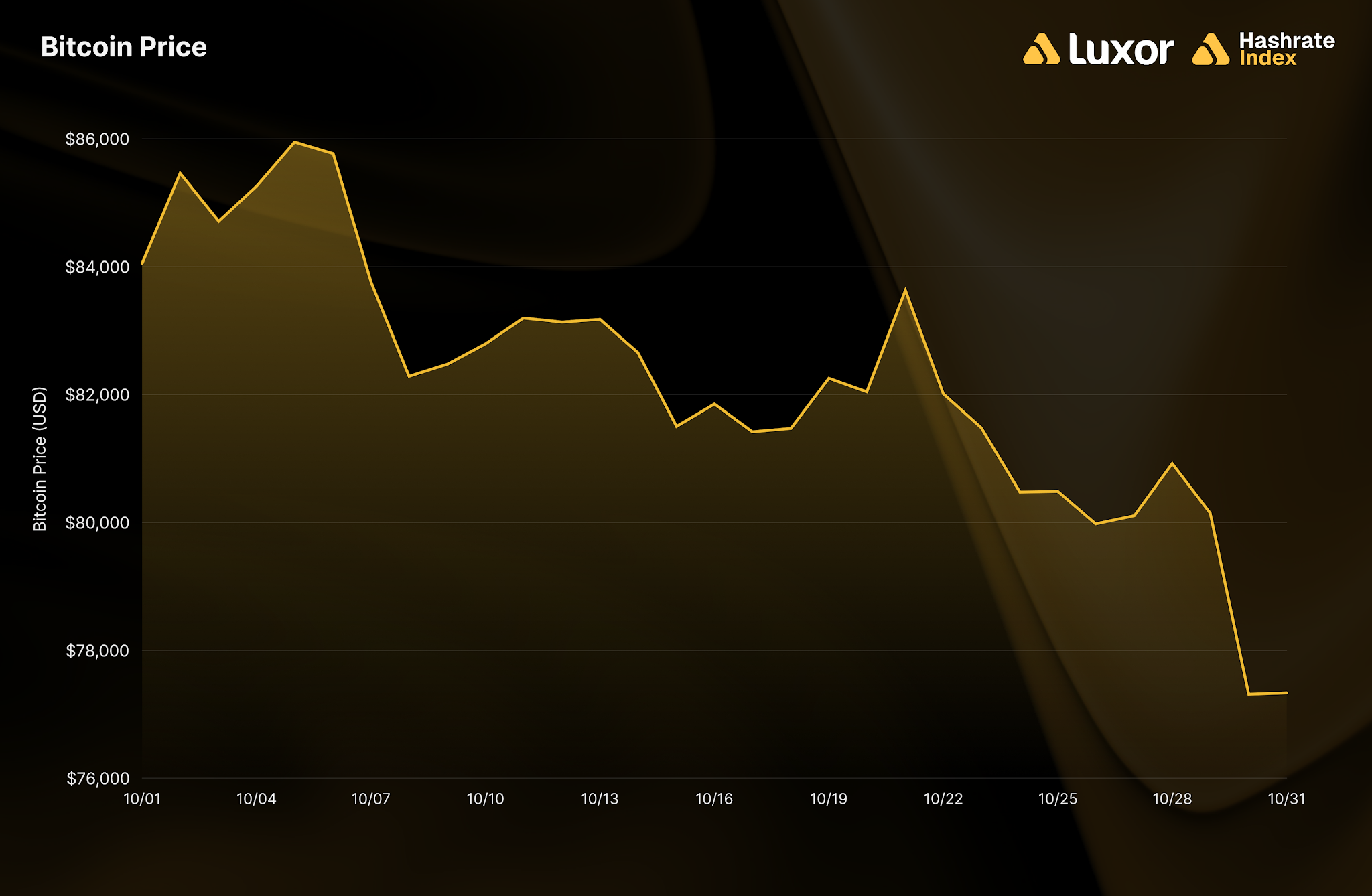
The most notable shift in institutional sentiment came from the Spot Bitcoin ETFs. After a robust summer of accumulation, including $2.65 billion in net inflows during September, October saw a sharp reversal. The sector became a net seller for the first time since June, with $515 million in outflows. The turning point was October 30, which saw a single-day outflow of $643 million, effectively wiping out the month’s gains and reducing year-to-date net flows to just $0.46 billion. This liquidity crunch in the ETF space contributed to the downward price volatility that exacerbated the mining sector’s revenue woes.
Difficulty Dynamics and Network Health
Despite the falling price of Bitcoin, the network’s computational power continued to surge, resulting in the most aggressive difficulty growth since February 2024. Difficulty averaged 137.19T, ultimately finishing at 148.36T. The back-to-back retargets of +5.92% and +5.54% on October 16 and October 29, respectively, signaled a robust, if not over-leveraged, expansion in hardware deployment.
The network hash rate surpassed the symbolic threshold of 1 exahash per second (EH/s) on October 11, reflecting the installation of newer, more efficient ASIC hardware, particularly in regions like Texas. This influx of hardware arrived just as the 4CP (Four Coincident Peaks) season in Texas concluded on September 30. Historically, Texas-based miners curtail operations during these peak demand windows to manage costs. With the season over, many operators brought their full fleets back online, adding to the global hash rate count and accelerating the rise in difficulty.
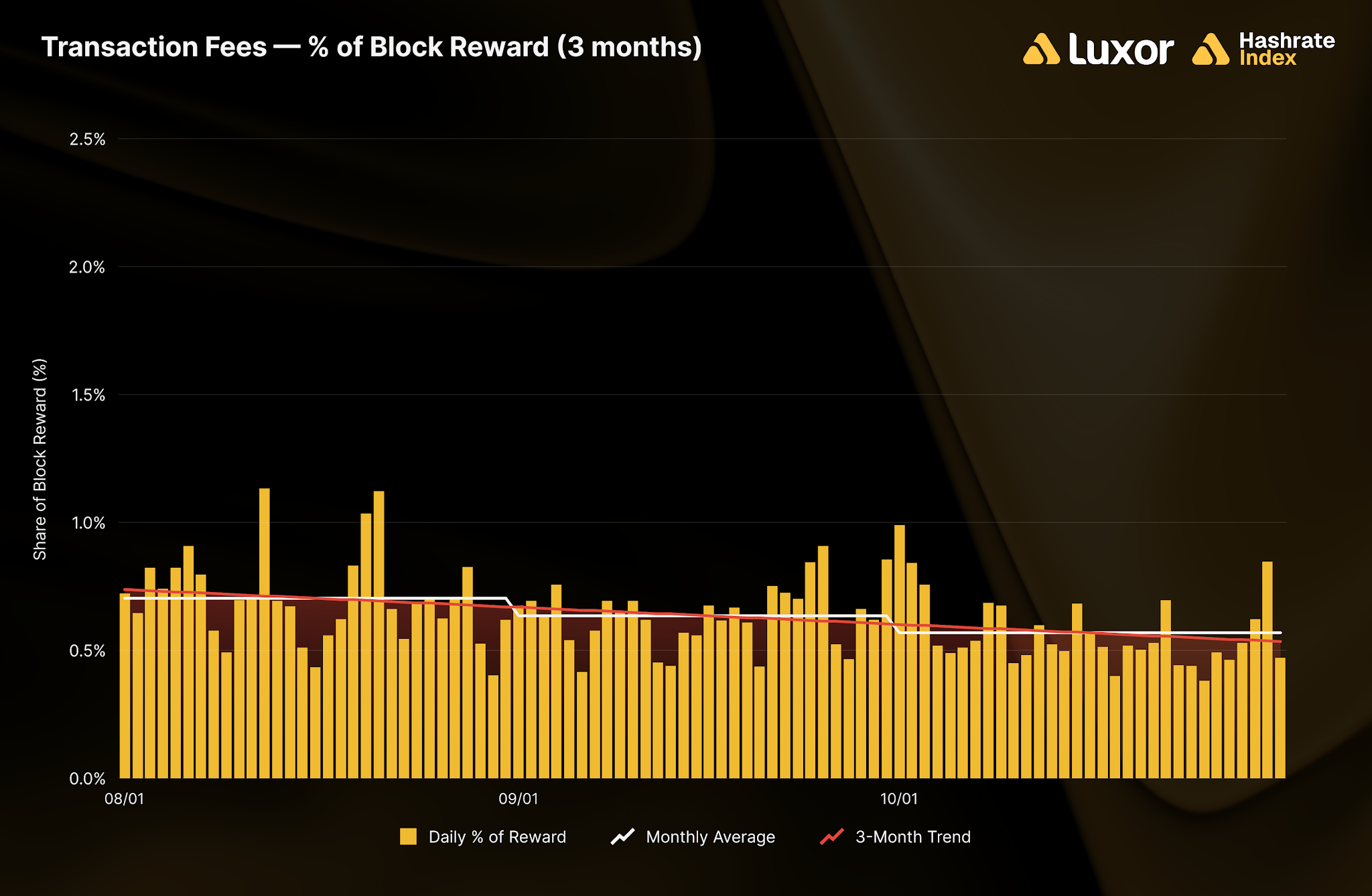
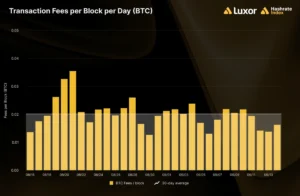
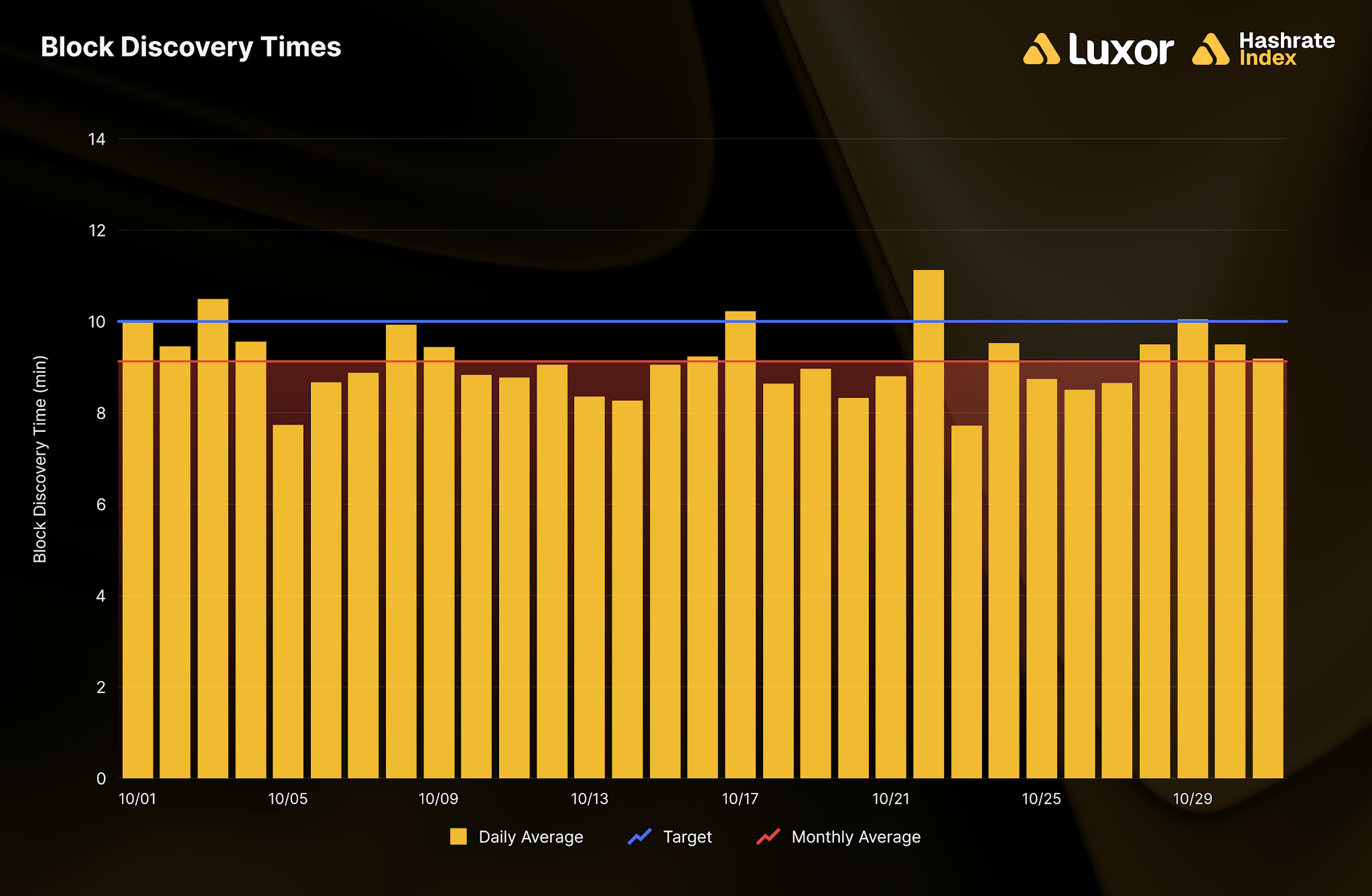
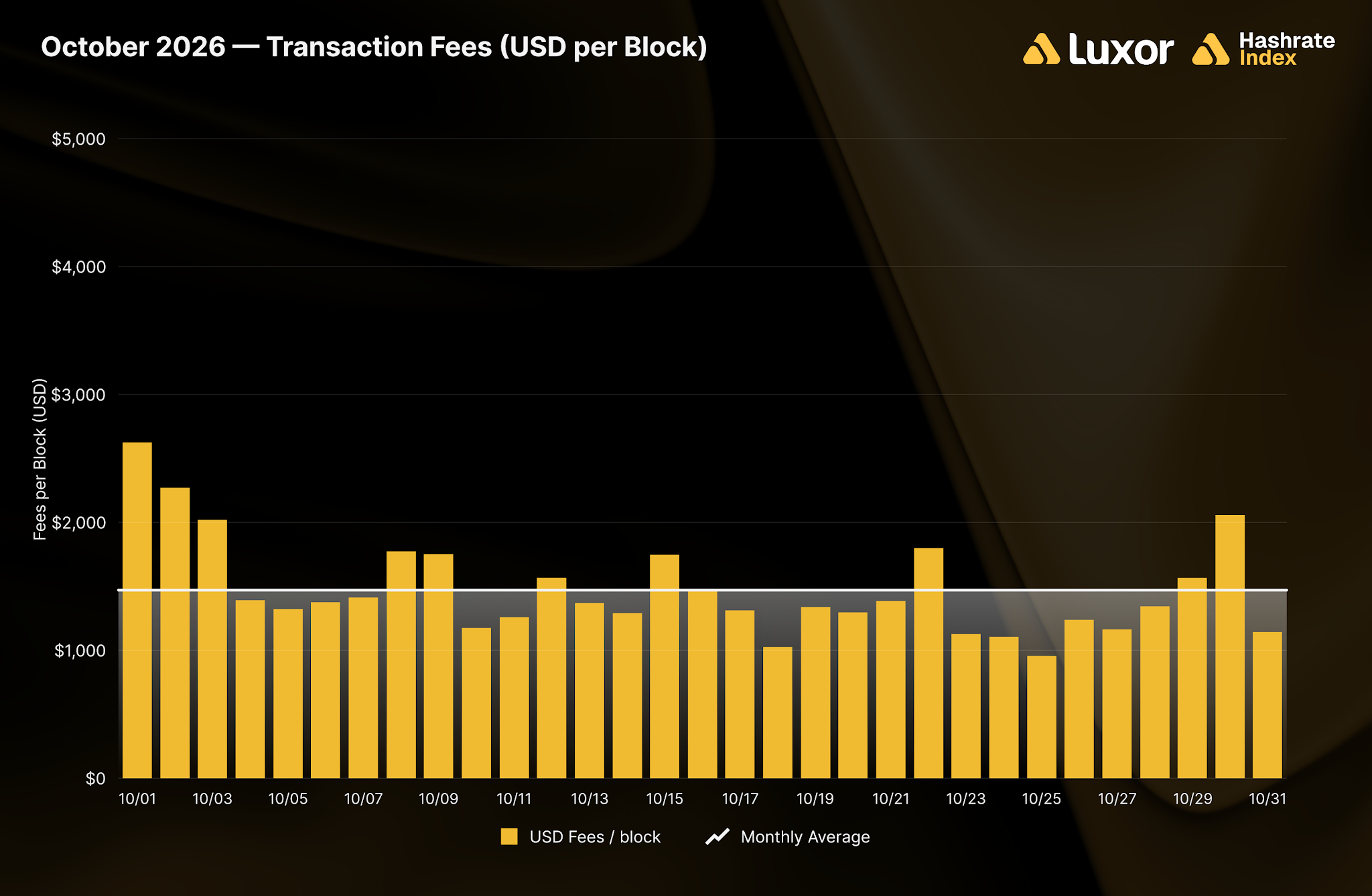
Block times averaged 9 minutes and 8 seconds, the fastest pace seen since September 2025, confirming that miners were not merely active but highly competitive in securing blocks. However, this efficiency in block discovery did not translate into increased revenue, as transaction fees fell 10.3% to 0.0179 BTC per block, marking a 16-month period where fees accounted for less than 1% of total block rewards.
Hedging Strategies and Forward Market Performance
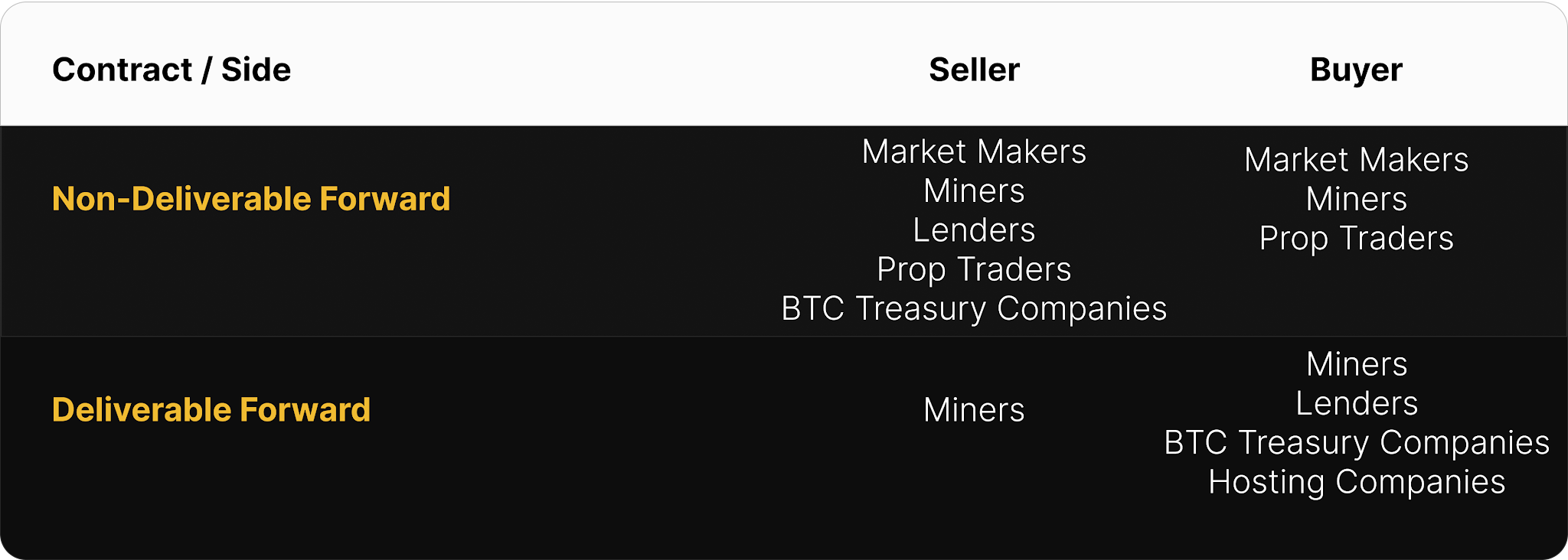
The volatility of October underscored the importance of the hashrate derivatives market. Luxor’s Non-Deliverable Hashrate Forward (NDF) and Deliverable (DF) markets saw significant activity as participants attempted to navigate the price-difficulty gap.
For miners, the primary goal was to secure financing or hedge against revenue uncertainty. Lenders, conversely, were active on the buy side, utilizing the forward market to lock in BTC-denominated yields. In October, the yield for these strategies ranged between 6% and 13% annualized.
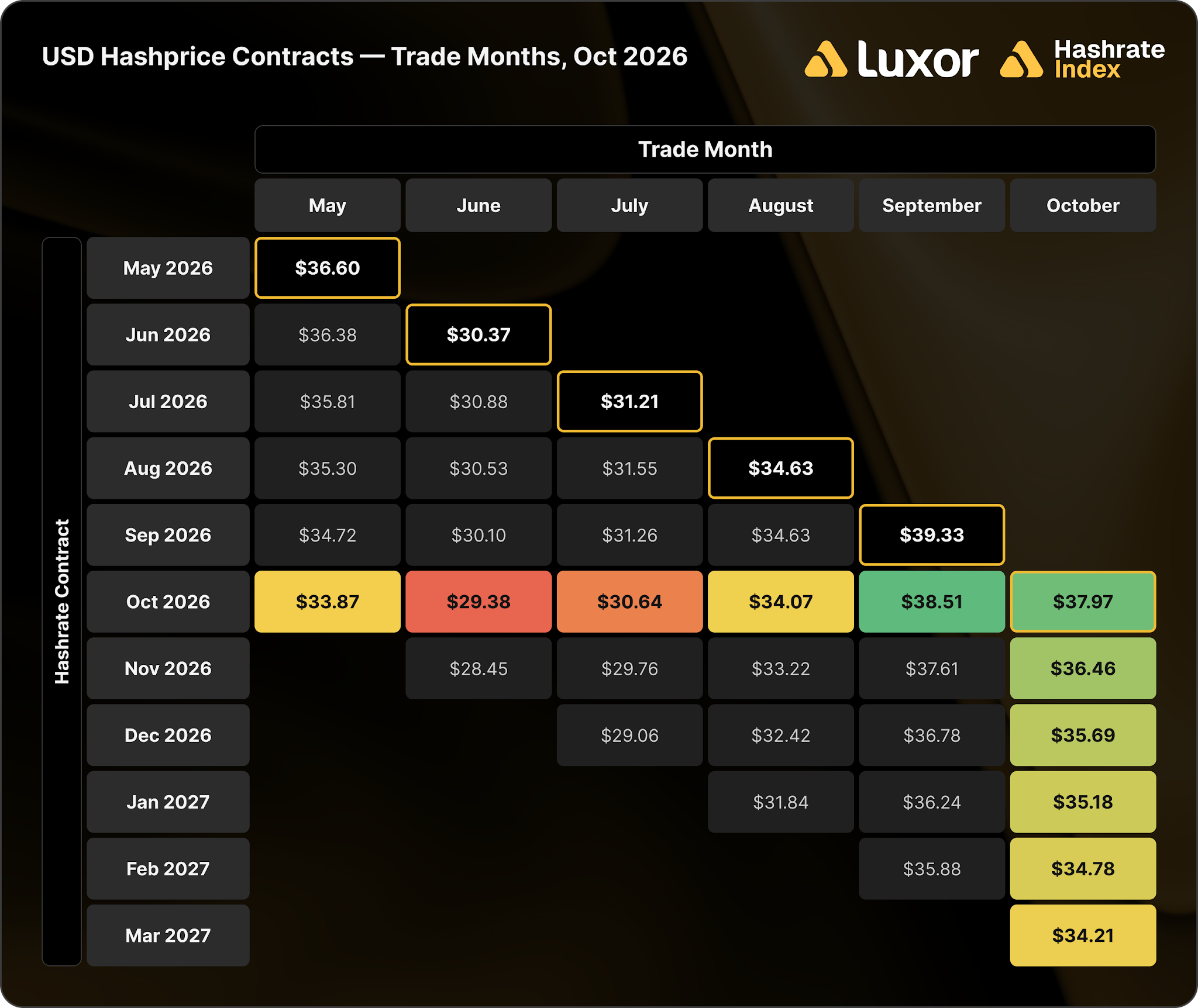
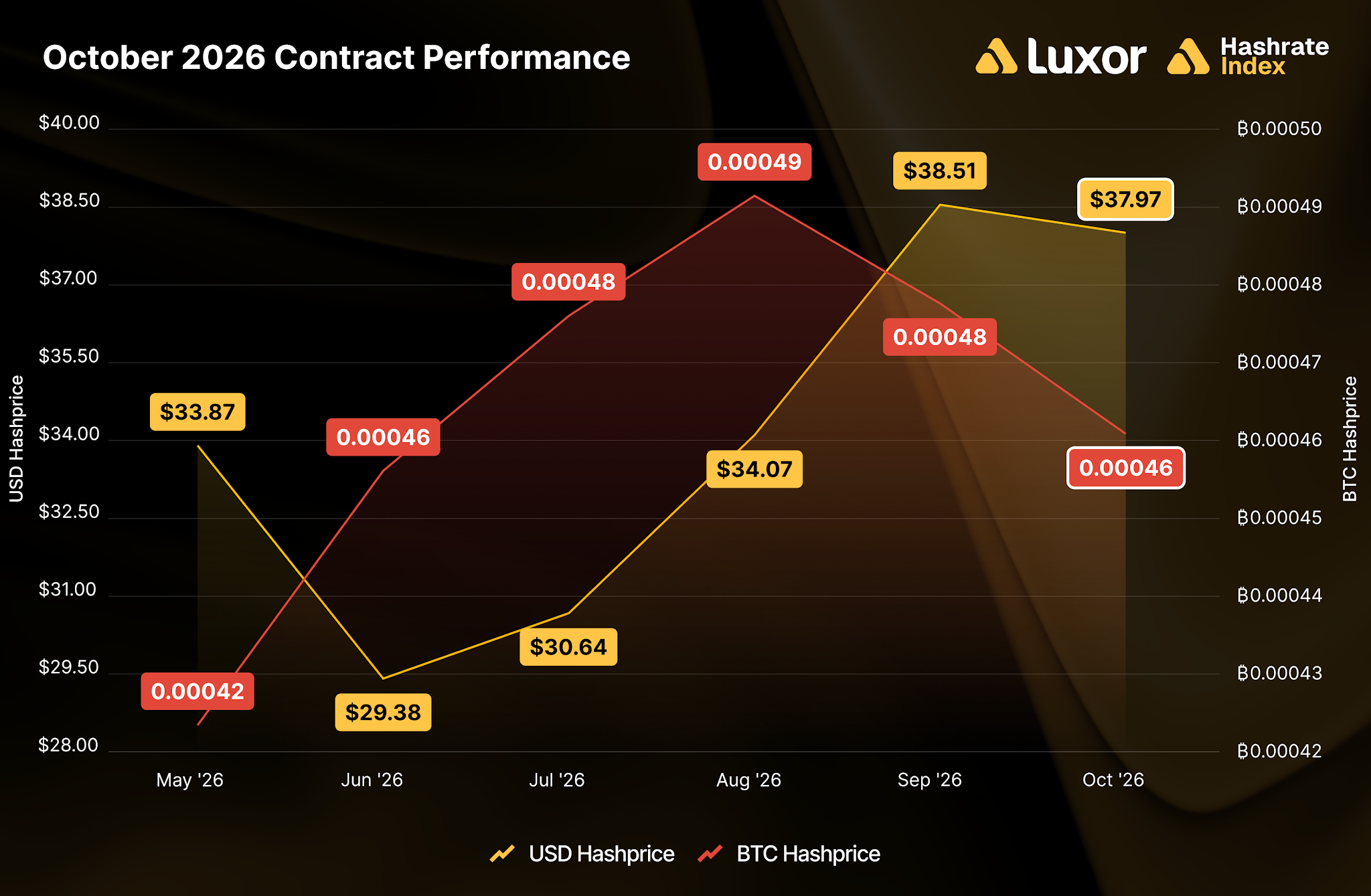
Performance data from the month reveals a clear trend: USD-denominated hedges largely failed to beat the spot market. Sellers of October USD contracts locked in rates between $29.38 and $38.51, only to see the spot market settle at $37.97. Only the one-month contract sold in September outperformed the spot price. In contrast, BTC-denominated hedges proved more resilient. The mid-curve sales—contracts executed two and three months prior—outperformed the final settlement by 6.6% and 3.3%, respectively. This suggests that the market had anticipated a certain level of difficulty growth, but the suddenness of the Bitcoin price decline caught USD-denominated hedgers off guard.
Broader Implications for Mining Economics
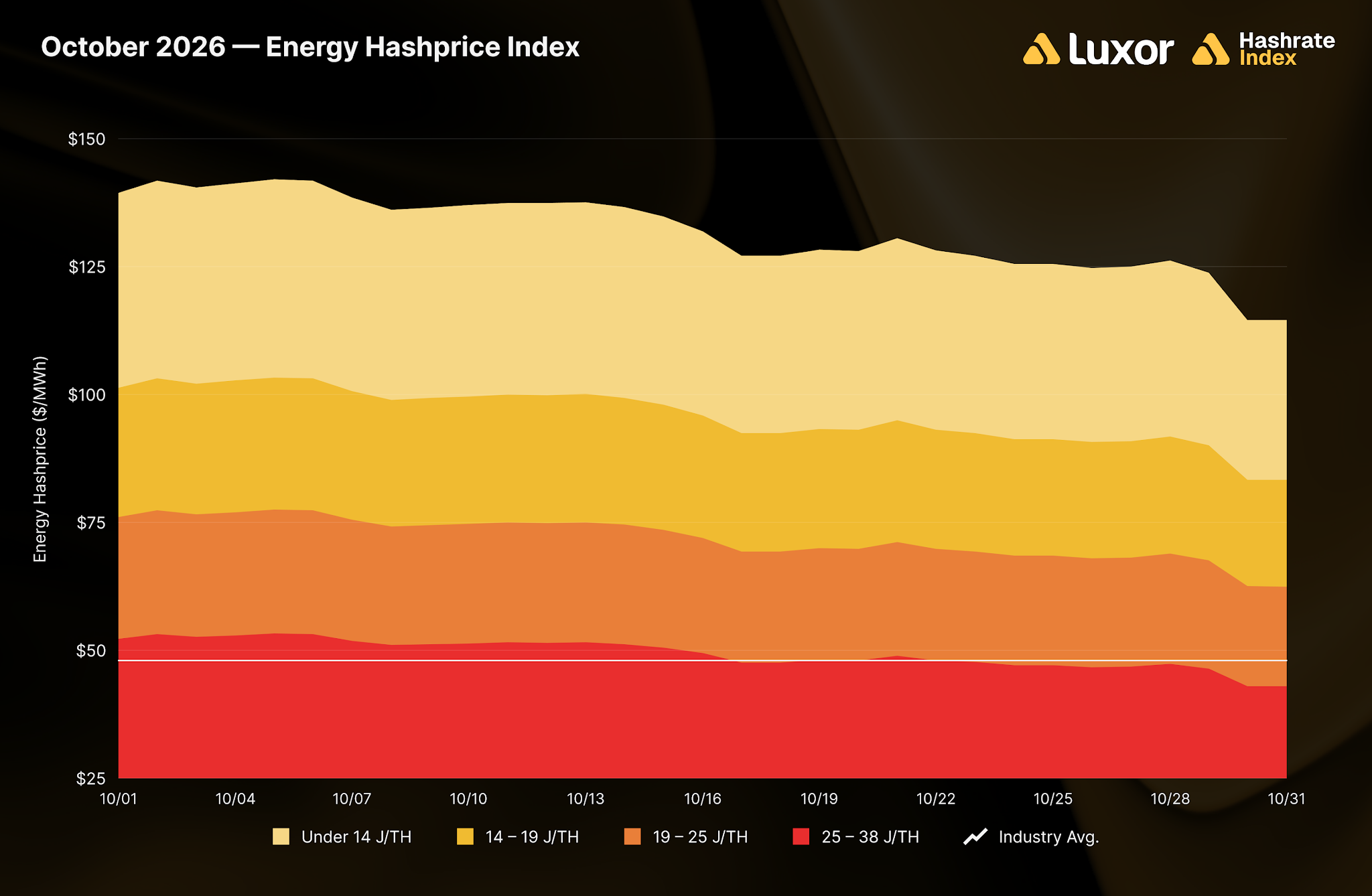
Looking ahead, the industry is entering a phase of consolidation. With the hashprice hovering around $33, the break-even point for older hardware has become increasingly untenable. Model data suggests that while the 25–38 J/TH efficiency tier can remain operational, fleets with 49 J/TH efficiency require electricity costs of $0.0278/kWh or lower to maintain profitability.
This environment favors operators with access to low-cost, long-term power purchase agreements (PPAs) and those who have modernized their fleets to the latest ASIC generations. The marginal fleet is no longer being "curtailed" by administrative or seasonal schedules; it is being "priced out" by the sheer difficulty of the network.
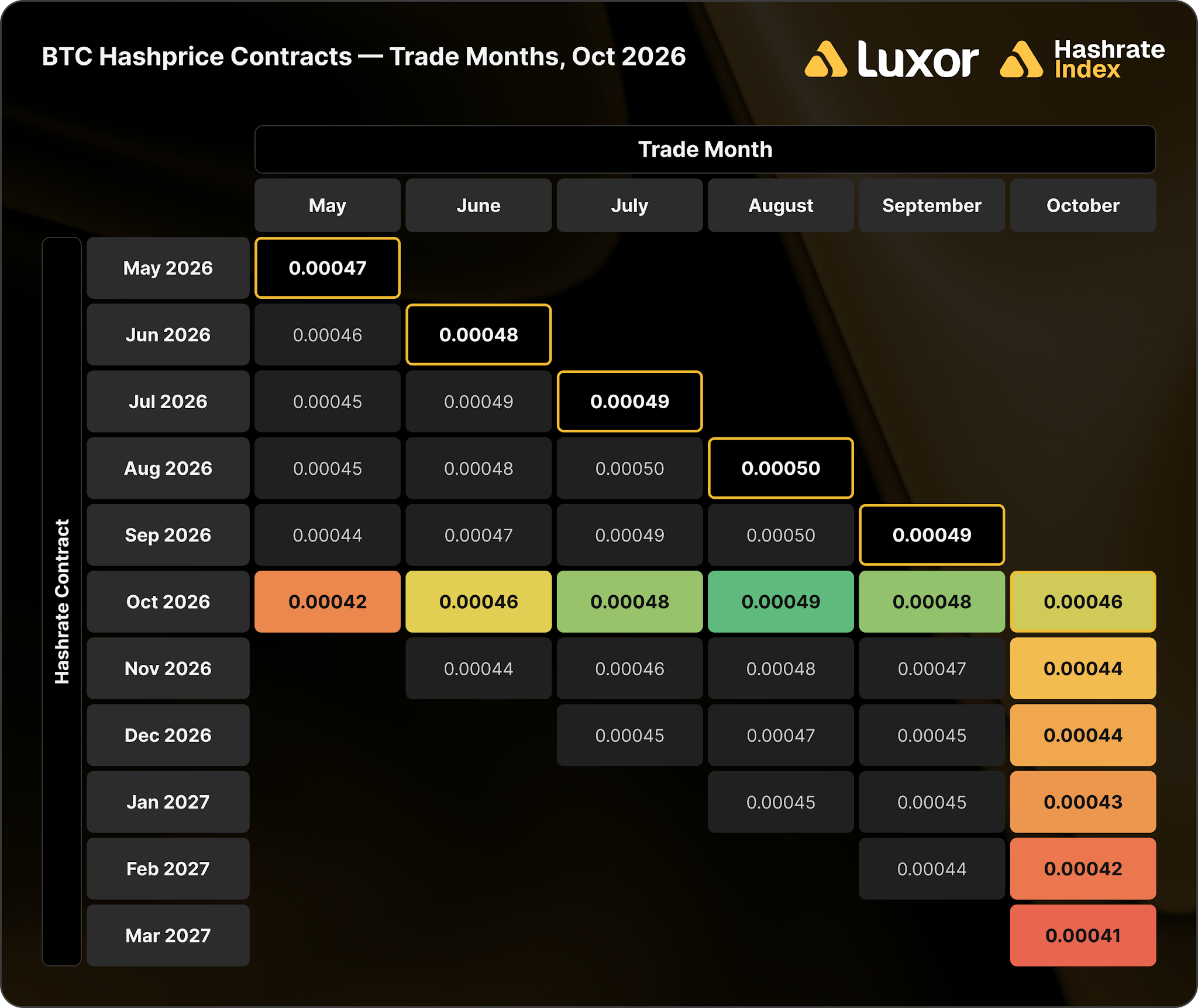
As we move toward the first quarter of 2027, the forward market is pricing in a relatively flat trajectory for hashprice, suggesting that the industry expects a period of stabilization rather than a quick recovery. The forward curve for November 2026 through March 2027 sits between $32 and $34 per PH/s/day, with no significant Bitcoin price recovery implied by the market participants.
Conclusion and Outlook
The events of October 2026 demonstrate that the Bitcoin mining sector has matured into a complex financial market where technological efficiency and capital management are as important as electricity costs. The return of curtailed hashrate, the shift in ETF liquidity, and the persistent rise in difficulty have created a challenging operating environment.
For miners, the path forward involves rigorous cost control and the strategic use of derivatives to mitigate the volatility inherent in a post-halving landscape. As the network approaches 1.1 EH/s levels, the "survival of the most efficient" remains the defining theme. Future profitability will depend less on the hope of a bull run and more on the ability to operate within the margins defined by the current difficulty regime. The upcoming months will likely see continued consolidation, as firms that cannot optimize their energy costs or hedge their revenue exposure are forced to exit the network or sell off their mining capacity to more efficient, better-capitalized players.