The United States Department of the Treasury’s Office of Foreign Assets Control announced a sweeping series of sanctions targeting a global network of North Korean state-sponsored operatives, front companies, and Russian financial facilitators. The October 28, 2026 enforcement action focuses on 10 individuals and one primary entity involved in a sprawling, highly sophisticated illicit employment scheme. According to federal authorities, these overseas technology workers infiltrate legitimate businesses worldwide, earning hundreds of millions of dollars annually. Rather than supporting independent livelihoods, these funds are systematically funneled back to Pyongyang to finance the Democratic People’s Republic of Korea’s unlawful ballistic missile and nuclear weapons programs.
This latest regulatory crackdown highlights the growing convergence of traditional white-collar employment fraud, cross-border proxy operations, and advanced cryptocurrency money laundering. Operating out of numerous countries with a heavy concentration in Russia, North Korean IT professionals have become increasingly adept at masking their true identities. By leveraging virtual private networks, stolen Western identities, proxy computer infrastructure, and generative artificial intelligence, these operatives successfully pass corporate vetting processes. Once hired, they not only generate a steady stream of capital for the regime but also pose severe insider threats to corporate data security, intellectual property, and global supply chains.
The Anatomy of North Korean IT Worker Fraud Operations
For years, the United Nations Panel of Experts and international intelligence agencies have tracked the exponential growth of North Korea’s overseas IT worker ecosystem. Independent estimates indicate that these state-directed operations generate between $250 million and $600 million every year for the regime in Pyongyang. The mechanics of the fraud are meticulously engineered: teams of programmers, engineers, and blockchain developers are deployed abroad—primarily to Russia, China, and various Southeast Asian nations—under the strict supervision of ruling party handlers.
To secure remote employment with companies in the United States, Europe, and other Western markets, these workers rely on elaborate deception. They frequently employ synthetic identities or steal the personally identifiable information of real citizens, pairing these credentials with domestic proxy setups known colloquially as "laptop farms." These physical hubs, often managed by localized accomplices in target countries, route corporate internet traffic through domestic IP addresses to make it appear as though the North Korean programmers are working locally.

In recent years, the sophistication of these operations has scaled dramatically through the adoption of artificial intelligence. Intelligence reports and blockchain forensics reveal that DPRK operatives routinely utilize generative AI models to craft flawless resumes, draft compelling cover letters, and bypass initial HR screenings. Furthermore, agents have been documented using AI-generated profile imagery and deepfake video manipulation during live remote interviews. These technological advancements have effectively lowered the barrier to entry for less-skilled operatives, allowing the regime to vastly expand its workforce while dramatically complicating detection efforts for corporate human resources departments.
The Financial Pipeline: Converting Digital Assets to Fiat Currency
While the acquisition of remote jobs provides the initial revenue stream, the conversion of digital wages into usable fiat currency represents the critical vulnerability for the North Korean regime. Because international sanctions bar North Korea from accessing the global traditional banking system, operatives rely heavily on cryptocurrencies—predominantly stablecoins and Ethereum—to transfer earnings.
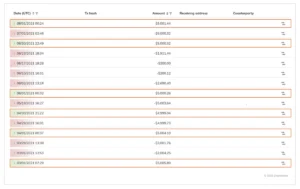
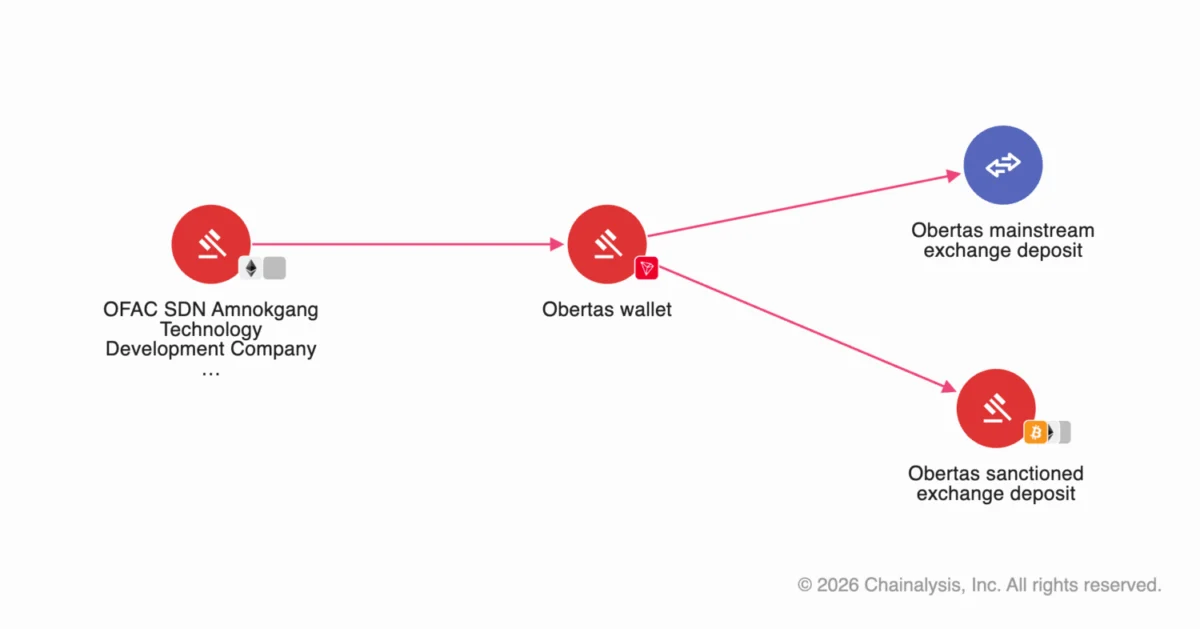
The October 28 Treasury actions zero in directly on this money laundering apparatus, targeting the vital link between North Korean handlers and Russian financial intermediaries. Among those sanctioned are Russian nationals Vitold Viktorovich Obertas and Ilya Aleksandrovich Boykov. According to the U.S. Department of the Treasury, Obertas has personally converted nearly $2 million in cryptocurrency into fiat cash for North Korean officials since early 2025, with blockchain analytics tracing his active involvement with illicit networks back to 2023.
Obertas and Boykov operated in close coordination with front companies such as Alis and Amnokang Technology Development Company—entities that have been subject to prior U.S. sanctions for managing delegations of North Korean IT workers. Investigators revealed that after workers received their bi-weekly or monthly stablecoin compensation from duped tech firms, the funds were funneled through complex multi-hop blockchain transactions. These digital assets were ultimately liquidated through sanctioned and unsanctioned cryptocurrency exchanges, including the notorious Russian platform Garantex, transforming digital code into hard cash that could be smuggled or wired to Pyongyang.
Targeting Supervisory Infrastructure and Front Companies

In addition to financial fixers, OFAC’s designation list targets key administrative personnel responsible for overseeing the day-to-day operations of IT worker delegations stationed in Russia. Kim Ki Hyok and Kim Hyo Dong, both North Korean nationals, were formally sanctioned for managing worker cells that report directly to the Chinyong Information Technology Cooperation Company. Chinyong, an umbrella organization designated by the U.S. government in 2023, acts as a primary institutional pillar for the regime’s overseas revenue generation strategy.
The enforcement action also levied sanctions against the First Financial and Technical Development Center, a Russia-based, North Korean-controlled entity. FFTDC has served as a central deployment hub for overseas programmers whose technical output directly enriches the regime. Alongside the corporate designation, OFAC sanctioned six specific Russia-based IT workers—Kim Kyong Ju, Ri Thae Chol, So Hyon Jin, Han Yu Song, Kim Sung Gwan, and Hyon Se Il—who collectively generated upwards of $750,000 for FFTDC since the beginning of 2025.
Chronology of Escalating International Enforcement
The October 2026 sanctions represent the culmination of a multi-year, whole-of-government campaign by United States authorities to dismantle the infrastructure supporting North Korea’s digital operatives. The timeline of regulatory and law enforcement milestones underscores the escalating severity of the threat:
- May 2022: The Federal Bureau of Investigation, the Department of State, and the Department of the Treasury issued a joint advisory detailing the tactics, techniques, and procedures used by North Korean IT workers, highlighting the use of VPNs, stolen identities, and remote desktop protocols.
- May 2023: OFAC announced targeted sanctions against key front companies, including the Chinyong Information Technology Cooperation Company, formally linking corporate front structures to the funding of North Korea’s weapons of mass destruction programs.
- Throughout 2024 and 2025: The U.S. Department of Justice brought indictments and secured convictions against domestic U.S. facilitators who operated illegal laptop farms, forwarding corporate-issued hardware to overseas handlers to maintain the illusion of a domestic workforce.
- March 2026: OFAC designated additional administrative entities, including Amnokgang Technology Development Company, for managing regional delegations of North Korean programmers.
- October 28, 2026: OFAC expanded its targeting framework down to the granular financial level, sanctioning individual Russian crypto-converters like Obertas and Boykov, alongside secondary front entities like FFTDC and six frontline IT operatives.
Broader Implications for Corporate Compliance and Cybersecurity
The ongoing saga of North Korean IT worker infiltration carries profound implications for corporate security, human resources, and compliance officers worldwide. Organizations that fall victim to these schemes face risks that extend far beyond financial loss or reputational damage. Security researchers have repeatedly warned that once North Korean operatives gain authorized access to corporate internal networks, they may abuse their privileges to deploy ransomware, conduct intellectual property theft, or create backdoors for future state-sponsored cyberattacks.

In response to the October 28 designations, blockchain intelligence and compliance firms have updated their monitoring suites. Designated cryptocurrency addresses, wallets linked to Obertas, Boykov, and associated front companies have been labeled within Know Your Transaction (KYT) platforms. Compliance software will now automatically trigger high-risk alerts for financial institutions and crypto exchanges interacting with these wallets, raising the cost of non-compliance for international financial service providers.
Legal and Financial Experts Weigh In
Industry analysts emphasize that traditional background checks and resume reviews are no longer sufficient to protect corporate workforces from state-sponsored infiltration. Experts recommend that human resources departments implement more rigorous, multi-factor identity verification protocols, including live, unannounced video interviews with randomized technical challenges, mandatory checks against government-issued employment verification databases, and heightened scrutiny of remote contractors utilizing suspicious networking configurations.
From a macroeconomic perspective, the reliance on cryptocurrency middlemen operating within jurisdictions like Russia demonstrates the adaptability of sanctioned states in circumventing Western financial controls. While international bodies continue to pressure foreign governments to crack down on illicit cash-out nodes and unregulated exchanges, the decentralized nature of digital assets ensures that enforcement agencies must remain perpetually vigilant.
As the international community continues to refine its defensive posture, the message to global enterprise is clear: corporate networks are increasingly viewed by rogue nation-states not merely as targets for external hacking, but as active employment agencies designed to bankroll the proliferation of nuclear weapons. Safeguarding the digital economy will require unprecedented cooperation between private sector cybersecurity teams, regulatory bodies, and international law enforcement agencies to sever the financial lifelines sustaining Pyongyang’s clandestine operations.