The legal framework governing blockchain intelligence and digital forensics achieved a historic milestone following a ruling by the U.S. Court of Appeals for the D.C. Circuit. The appellate court formally upheld the admissibility of evidence generated by Chainalysis Reactor, a premier blockchain analytics platform. This decision reinforces a lower court’s 2024 ruling that the software satisfies the stringent Daubert standard, which dictates the admissibility of expert technical and scientific testimony in U.S. federal courts.
The affirmation stems from the high-profile criminal case United States v. Sterlingov, wherein Roman Sterlingov, a dual Swedish-Russian national, was convicted and subsequently sentenced to more than 12 years in federal prison for operating "Bitcoin Fog," a notorious darknet cryptocurrency mixing service. The appellate decision not only secures the integrity of Sterlingov’s conviction but also provides a powerful judicial endorsement for blockchain analytics. As financial crimes increasingly migrate to decentralized ledgers, the ruling establishes a vital precedent for how digital forensics are evaluated, scrutinized, and accepted within the American judicial system.
The Genesis of the Case and the Bitcoin Fog Investigation
The legal battle over blockchain attribution dates back to the extensive federal investigation into Bitcoin Fog, a service that processed hundreds of millions of dollars in illicit transactions by obscuring the origins of Bitcoin linked to darknet drug markets, extortion rings, and other criminal enterprises. Operating since 2011, Bitcoin Fog became one of the longest-running and most reliable money-laundering hubs on the dark web before law enforcement dismantled its operations.
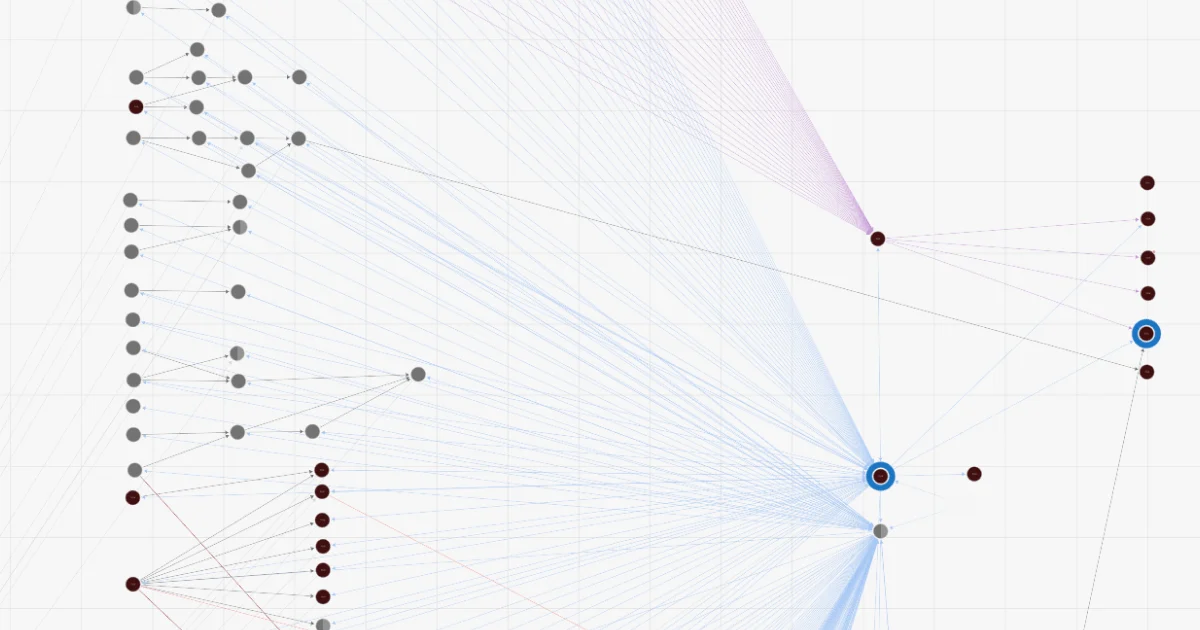
To untangle the labyrinth of anonymized transactions, federal investigators relied heavily on Chainalysis Reactor. The software enabled analysts to map the flow of funds between Bitcoin Fog and numerous prominent darknet marketplaces. Ultimately, the platform’s forensic capabilities allowed investigators to attribute over 900,000 individual Bitcoin addresses to the mixing service, directly linking the infrastructure to Sterlingov.
During the subsequent federal trial, the prosecution presented expert testimony from Federal Bureau of Investigation (FBI) Specialist Luke Scholl and Chainalysis Director of Investigations Elizabeth Bisbee. Both experts detailed Reactor’s proprietary methodologies, data validation processes, and practical applications in high-stakes criminal investigations.
Defense counsel vigorously contested the inclusion of this evidence, arguing that blockchain analytics tools are insufficiently tested, proprietary, and prone to error. Consequently, the defense moved to block the Reactor-derived data and associated expert testimony under the Daubert standard. However, the U.S. District Court rejected these objections, ruling that the software’s methodology was fundamentally sound, reliable, and widely accepted within the relevant professional community.
Navigating the Daubert Standard on Appeal
Following his conviction, Sterlingov appealed his verdict to the U.S. Court of Appeals for the D.C. Circuit, placing the evidentiary reliability of blockchain analysis at the center of his legal challenge. The core of Sterlingov’s appeal focused on assertions that Reactor’s algorithms lacked traditional peer-reviewed academic literature, possessed an unquantified error rate, and relied on proprietary clustering techniques that could not be independently audited by the defense in their entirety.
In September, the D.C. Circuit firmly rejected these arguments, upholding the District Court’s decision to admit the evidence. In its evaluation, the appellate court reviewed a comprehensive body of evidence attesting to Reactor’s performance and reliability. Crucially, the court found that the absence of traditional academic peer review is not a disqualifying factor for technologies operating within rapidly evolving, specialized niches such as blockchain forensics, provided that alternative metrics of reliability are present.
The appellate panel highlighted several pillars supporting Reactor’s reliability:
- Clustering Methodology: The software’s dual-layer approach—combining change address analysis with advanced digital fingerprinting—systematically identifies addresses exhibiting matching transactional patterns and behavioral heuristics.
- Law Enforcement and Industry Adoption: The platform’s widespread, long-term deployment across diverse federal agencies, international law enforcement bodies, and private-sector compliance departments indicates a high degree of general acceptance.
- Immaculate Practical Record: Testimony from expert witnesses Scholl and Bisbee underscored that neither could recall a single instance where a finalized Chainalysis attribution had subsequently been proven factually incorrect.
- Conservative Attribution Philosophy: The court explicitly praised Reactor’s inherently conservative design philosophy, noting that an underinclusive methodology enhances reliability by prioritizing defensible, verifiable linkages over speculative associations.
Setting a Precedent in Digital Forensics
The implications of the D.C. Circuit’s ruling extend far beyond the parameters of the Sterlingov prosecution. Chainalysis currently stands as the sole blockchain analytics platform to have been tested against, and successfully satisfied, the rigorous Daubert standard in a U.S. federal court.
Legal experts and compliance professionals note that this judicial validation provides a sturdy defensive wall against future challenges to blockchain intelligence in courtrooms across the United States. As courts increasingly grapple with complex digital evidence, the ruling establishes a clear benchmark for how software-driven forensic tools must demonstrate reliability.
Furthermore, independent academic research published in 2025 has added empirical weight to these legal findings. Granular evaluations conducted by independent researchers confirmed that Chainalysis data maintains the highest level of accuracy, the lowest false-positive rate, and the most expansive coverage within the blockchain analytics sector. These independent validations collectively reassure prosecutors, defense counsels, and regulatory bodies that forensic attribution tools are capable of withstanding the most intense judicial scrutiny.
Methodological Rigor in the Age of Scale and Artificial Intelligence
As the financial ecosystem evolves, the pressure on forensic methodologies intensifies. The consequences of administrative or analytical errors in blockchain tracking can be catastrophic, potentially misdirecting criminal investigations, freezing legitimate assets, or inflicting severe regulatory penalties on compliant financial institutions.
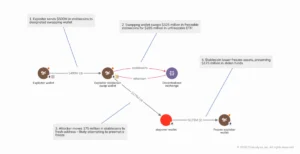
These stakes are magnified exponentially with the integration of Artificial Intelligence (AI) into financial surveillance and investigative workflows. Industry leaders emphasize that while AI can drastically accelerate analysis, it cannot rectify a fundamentally flawed underlying methodology. When a platform’s data foundation is compromised, the deployment of AI at scale serves only to amplify errors at an unprecedented velocity. Conversely, pairing advanced AI capabilities with a court-validated, highly reliable data foundation unlocks immense potential for uncovering complex financial crimes, as demonstrated by investigative responses to major cyber thefts, such as the $387 million Bitget hack.
The federal appellate court’s decision provides a definitive proof point that the underlying architecture of modern blockchain analytics is built on sound, defensible principles. For developers and compliance officers alike, the ruling serves as an independent validation of the rigorous engineering required to navigate the next generation of financial crime.
Frequently Asked Questions
What is the Daubert standard in U.S. federal courts?
The Daubert standard is a legal rule used by federal judges to determine whether expert scientific, technical, or specialized testimony is sufficiently reliable to be admitted as evidence during a trial. Judges evaluate various factors, including whether a method can be tested, its known or potential error rate, the existence of professional standards, and whether the technique enjoys general acceptance within the relevant scientific or technical community.
How did the D.C. Circuit rule regarding Chainalysis Reactor?
In September, the U.S. Court of Appeals for the D.C. Circuit upheld a lower court’s decision in United States v. Sterlingov, affirming that evidence and expert testimony derived from Chainalysis Reactor successfully meet the Daubert standard and are fully admissible at trial.
Is Chainalysis the only blockchain analytics platform to pass this legal test?
Yes. As of late 2026, Chainalysis remains the first and only blockchain analytics provider to be formally tested against and satisfy the Daubert standard in U.S. federal courts.
What factors did the court cite when determining Reactor’s reliability?
The appellate court based its decision on a holistic evaluation of the platform, noting its advanced clustering attribution methodology, extensive historical track record, widespread adoption across law enforcement agencies, and conservative design approach that favors defensible over speculative connections.
Why is this appellate decision significant for the broader tech and legal sectors?
The ruling provides crucial legal precedent confirming that established blockchain analytics can reliably withstand rigorous judicial scrutiny. As organizations increasingly deploy AI and automated tools for high-stakes compliance and investigations, having a judicially validated data foundation ensures greater confidence and accuracy across the entire digital asset ecosystem.