The staggering $6.4 billion cryptocurrency theft from Binance has sent shockwaves through the global financial ecosystem, laying bare an increasingly sophisticated threat vector perfected by state-sponsored cybercriminals from North Korea. Investigations by prominent blockchain analytics firms, including Chainalysis, have revealed that the unprecedented heist was not merely a brute-force digital assault, but the culmination of a multi-year campaign rooted in social engineering, employment fraud, and advanced malware deployment.
The incident has redefined the limits of corporate vulnerability and thrust the Democratic People’s Republic of Korea’s (DPRK) cyber warfare apparatus into an unwelcome global spotlight. By exploiting human trust and professional recruitment pipelines, North Korean threat actors bypassed traditional perimeter security controls at one of the world’s largest cryptocurrency exchanges. The fallout from the attack extends far beyond a single corporate balance sheet, highlighting critical vulnerabilities in the way modern digital enterprises recruit talent, manage cloud infrastructure, and safeguard privileged access.
The Chronology of an Infiltration: From First Contact to Internal AI Exploitation
According to initial findings released by Binance, the complex, multi-stage attack began in September. The operational timeline underscores a methodical, patient approach by DPRK actors designed to cultivate trust over weeks before deploying their payloads.
The breach commenced when a Binance engineer received an unsolicited invitation for a job interview through a legitimate professional recruitment platform. The outreach was meticulously crafted to appear genuine, mirroring standard hiring practices within the global tech sector. Over the course of two rounds of interviews, the victim interacted with individuals posing as representatives of a fictitious company.
Having successfully established a rapport and lulled the employee into a false sense of security, the attackers delivered their critical weapon: a mandatory interview assignment containing obfuscated malicious code. Once downloaded and executed on the engineer’s local machine, the file provided the hackers with their initial foothold inside the ecosystem.

Rather than stopping at the compromised workstation, the malware immediately began scanning for credentials, browser sessions, and system privileges. Leveraging the stolen credentials of the privileged employee, the attackers navigated deeper into Binance’s corporate infrastructure. In a particularly alarming escalation, the threat actors exploited unauthorized access to an internal artificial intelligence (AI) tool, using it to map the exchange’s internal architecture, locate sensitive data repositories, and orchestrate the massive extraction of funds that culminated in the historic $6.4 billion loss.
From Minor Experiments to Historic Heists: The Evolution of "Contagious Interviews"
While the sheer scale of the Binance breach is unprecedented, security researchers emphasize that the methodology was part of a well-documented and rapidly evolving playbook. For years, blockchain intelligence and cybersecurity firms have tracked what industry experts term "contagious interviews" and related malware delivery systems.
Over the 18 months preceding the Binance attack, Chainalysis investigators attributed more than $14.3 million in cumulative losses to smaller, localized DPRK-linked fake interview schemes. These earlier operations targeted a diverse array of victims, ranging from individual cryptocurrency holders and private wallet owners to decentralized autonomous organizations (DAOs) and niche protocol developers.
Though individual incidents often resulted in losses ranging from tens of thousands to a few million dollars, their true significance lay in the feedback loop they provided to the hackers. Security analysts note that across successive, smaller-scale compromises, North Korean cyber teams meticulously tested, perfected, and refined their operational methodologies. Each incremental success allowed them to test new evasion techniques, improve command-and-control (C2) resilience, and build the technical capabilities required to compromise increasingly high-value targets. Viewed through this analytical lens, the Binance heist was not an isolated event, but the polished execution of years spent hardening a dangerous social engineering framework.
Inside the DPRK’s Illicit Employment and Cybercrime Ecosystem
The fake interview tactic is only one prong of a vast, highly lucrative employment ecosystem managed by North Korea to generate hard currency for its regime in defiance of international sanctions. The DPRK’s strategy operates on two distinct fronts: manipulating job applicants via malware and infiltrating legitimate global enterprises with fraudulent IT workers.

On one side, attackers target personnel at cryptocurrency firms and financial institutions under the guise of recruitment. On the other side, thousands of North Korean IT workers—deploying stolen identities, localized virtual private networks (VPNs), and sophisticated obfuscation techniques—successfully secure remote employment at companies worldwide. Operating primarily from overseas outposts, these undercover operatives earn substantial salaries, which are routinely funneled back to support the regime’s state priorities and weapons programs.
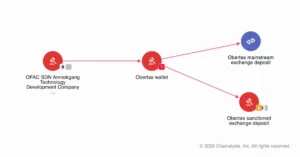
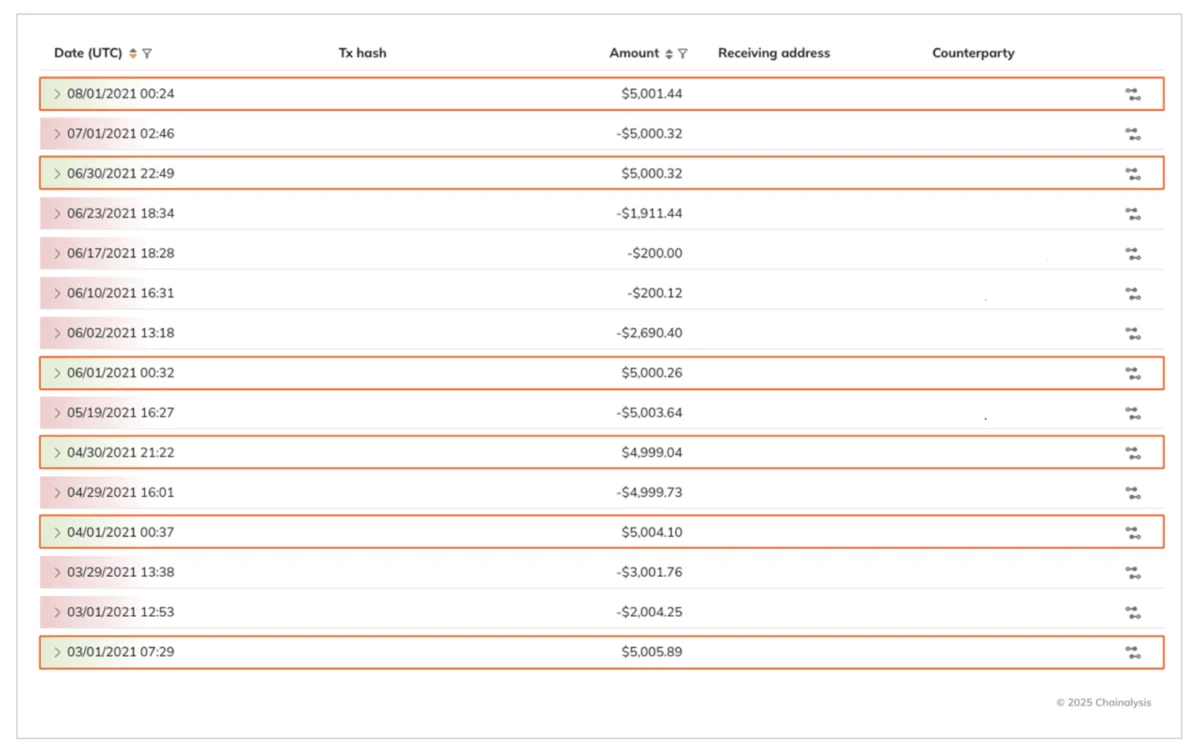
Estimates from United Nations panels indicate that the DPRK’s global illicit IT worker ecosystem generates upwards of $600 million annually. This shadow workforce frequently intersects directly with the digital asset economy. Not only do these workers attempt to embed themselves within cryptocurrency-focused companies to gain insider access, but they also rely heavily on stablecoins to receive their monthly compensation. Once paid, these funds are rapidly transferred through complex networks of international intermediaries—often involving sanctioned Russian and North Korean nationals—to launder the proceeds beyond the reach of law enforcement.
The Technological Frontier: Blockchain Dead Drops and Multi-Chain Redundancy
As cybersecurity defenses have adapted to traditional threats, North Korean hackers have correspondingly upgraded their technical infrastructure, introducing innovative methods to maintain persistent access to infected systems. Among the most concerning emerging trends is the use of public blockchains to harbor malware instructions—a technique known as Blockchain Dead Drops (BDDs) or "Etherhiding."
Research indicates a fivefold surge in blockchain-assisted cyberattacks over the past year. State-sponsored groups utilize open-weight AI models and decentralized ledgers to store command-and-control (C2) data. Because blockchain transactions are immutable and decentralized, they offer a far more resilient infrastructure than traditional centralized servers, which can be easily seized or blocked by law enforcement agencies.
Advanced on-chain analysis has revealed that DPRK actors have implemented multi-chain redundancy schemes to guarantee communication with compromised machines. For example, investigators uncovered configurations where malware queries the TRON blockchain for operational pointers. If that network is inaccessible, the malware automatically fails over to the Aptos blockchain as a secondary backup. Ultimately, both pathways direct the infected device to a specific transaction on the Binance Smart Chain (BSC), where the primary malicious payload is securely stored. This multi-layered approach ensures that even if traditional server connections are severed, infected endpoints remain under the direct control of the threat actors.
Industry Response and the Imperative for Enhanced Financial Intelligence

The unfolding Binance crisis has prompted an immediate, unified response from the global cryptocurrency community, law enforcement agencies, and blockchain intelligence firms. Industry stakeholders are racing to trace the massive volume of stolen assets as they maneuver through various wallets, mixing services, and cross-chain bridges.
Security experts emphasize that mitigating threats of this magnitude requires a paradigm shift in corporate defense strategies. Conventional perimeter security, endpoint protection, and employee awareness training—while still essential—are demonstrably insufficient when faced with persistent, well-funded nation-state actors who weaponize human psychology and the global job market.
Organizations, particularly those handling high-value digital assets, are now being urged to integrate deep blockchain intelligence into their threat intelligence programs. By monitoring on-chain movements, analyzing anomalous payment patterns to remote contractors, and scrutinizing recruitment pipelines, enterprises can better detect the early warning signs of an impending compromise.
Furthermore, international regulatory bodies are increasing pressure on cryptocurrency exchanges, peer-to-peer platforms, and recruitment agencies to tighten verification protocols. The integration of blockchain analytics into compliance frameworks is rapidly evolving from an optional security enhancement into a critical necessity for freezing illicit funds and dismantling the intermediary networks that facilitate North Korean cyber operations.
As the investigation into the Binance heist remains active, tracing the movement of the stolen billions continues to be a top priority for global investigators. While the scale of the loss is historic, the collective efforts of the cybersecurity community aim to disrupt the laundering pipeline, hold the perpetrators accountable, and establish fortified defenses against an adversary that continuously adapts to the vulnerabilities of the digital age.