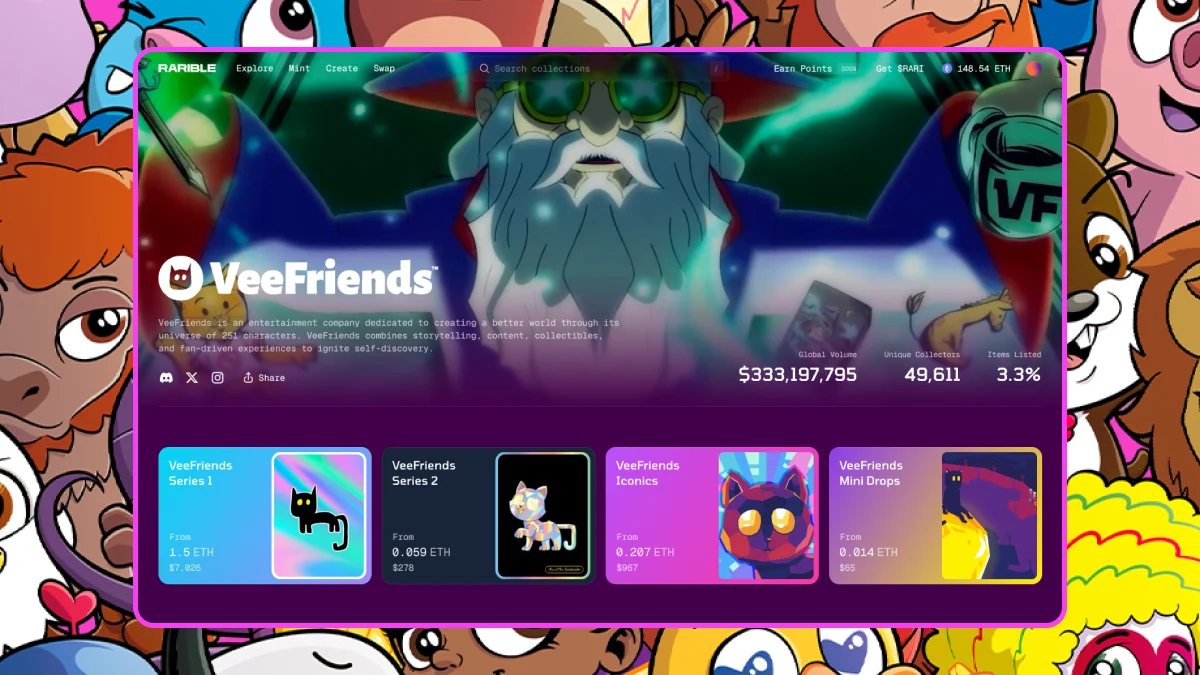
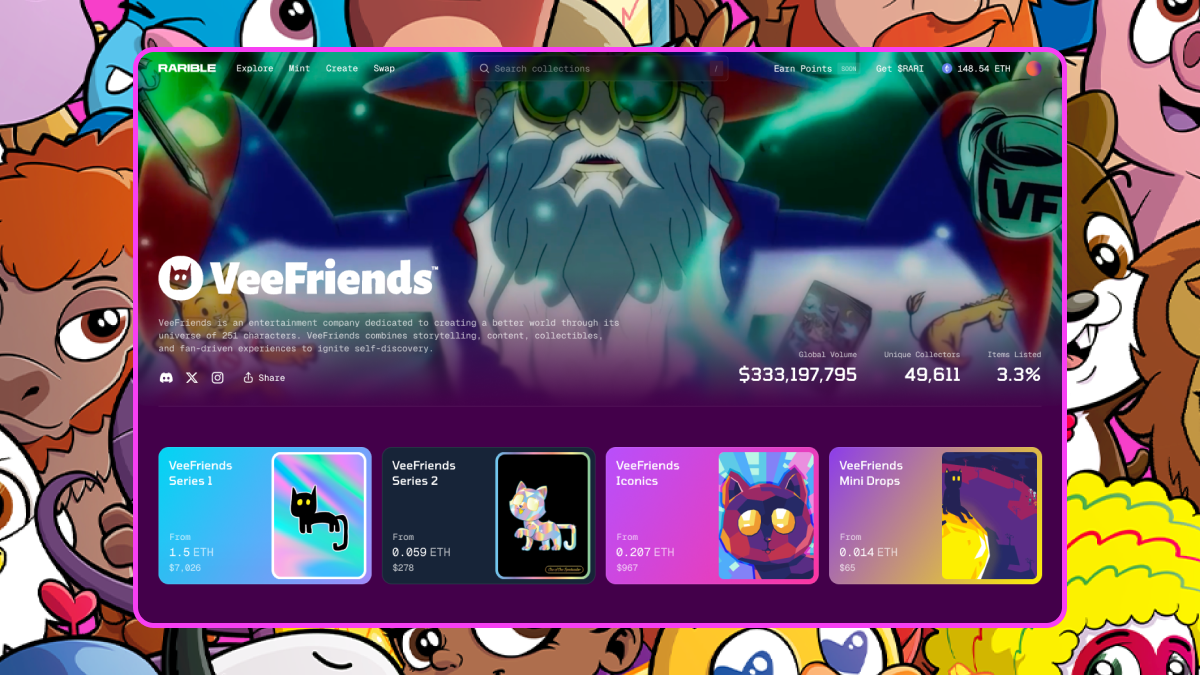
As the global retail landscape shifts toward decentralized digital infrastructure, Rarible has unveiled a transformative new feature: branded onchain storefronts. This strategic pivot marks a departure from traditional, fragmented NFT marketplace experiences, offering a centralized, immersive environment for brands to engage directly with their communities. By launching the first of these specialized hubs in partnership with VeeFriends—the iconic project founded by entrepreneur Gary Vaynerchuk—Rarible is signaling a broader industry trend where commerce and community storytelling converge on the blockchain.
The Evolution of the VeeFriends Ecosystem
To understand the significance of this launch, one must look at the trajectory of VeeFriends since its inception in 2021. What began as a collection of 250 characters designed to foster community and personal development has evolved into a multi-faceted intellectual property powerhouse. The brand spans physical merchandise, comic books, high-end animation, and exclusive real-world experiences.
By integrating these disparate elements into a singular, onchain storefront, VeeFriends is moving beyond the standard NFT marketplace model. Historically, collectors had to navigate secondary markets where the brand’s identity was often diluted by the platform’s own interface. The new storefront changes this dynamic by providing a bespoke "home base" where the aesthetic, values, and utility of the VeeFriends universe are front and center. This evolution represents a maturation of the NFT sector, where brands are reclaiming their digital real estate from generic aggregators.
Frictionless Commerce: Breaking Down Adoption Barriers
One of the most persistent criticisms of blockchain-based commerce has been the high barrier to entry for non-technical users. The "wallet friction" caused by complex private key management and gas fee calculations has long hindered mass adoption. Rarible has addressed this with a multi-layered approach to user experience (UX) in the new storefront.
The integration of the VeeFriends Wallet, powered by Privy, allows users to initiate an account using only an email address. This abstraction of the wallet creation process is a critical milestone for mainstream accessibility. Furthermore, the inclusion of Crossmint as a payment processor enables the use of traditional financial instruments, including credit cards, Apple Pay, and Google Pay. By allowing fiat-to-crypto conversion at the point of sale, Rarible is effectively mirroring the ease of conventional e-commerce giants like Amazon or Shopify.

The economic model is further incentivized through the $RARI rewards program. Supported by the RARI Foundation, this program ensures that participants are not merely consumers but stakeholders in the ecosystem. Every interaction—from browsing to purchasing—contributes to the user’s activity profile, potentially qualifying them for future governance or reward opportunities.
A New Standard for Brand-Led Retail
The broader implications of this development suggest a structural shift in digital retail. Historically, brands have been beholden to third-party marketplaces that control the customer relationship. Rarible’s new infrastructure allows for a "modular" approach, where companies can customize their storefronts to fit their specific brand narrative.
In the traditional Web2 model, a brand might use Shopify for its physical goods and a separate, decentralized platform for its digital assets. The current Rarible initiative hints at a future where these silos are dismantled. Onchain storefronts offer several distinct advantages over legacy digital commerce:
- Direct-to-Consumer (D2C) Sovereignty: By removing the intermediary, brands retain a larger share of transaction fees and maintain absolute control over their secondary market royalties.
- Persistent Identity: The storefront acts as a permanent, immutable record of the brand’s digital existence. Unlike a social media page, which is subject to the algorithms and terms of service of a centralized tech giant, an onchain storefront is censorship-resistant and persistent.
- Composable Loyalty: Because these storefronts operate on the blockchain, brands can programmatically reward holders of specific tokens or past purchasers, creating a dynamic loyalty ecosystem that is impossible to replicate in traditional web environments.
Industry Context and Strategic Timing
The launch of these storefronts comes at a pivotal time for the blockchain industry. According to market analysts, the "NFT 2.0" wave is characterized by a transition from speculative, high-volatility digital assets to utility-driven, community-focused projects. While the 2021 market was defined by the novelty of ownership, 2025 is defined by the integration of digital assets into established business models.
Rarible’s strategy appears to be one of "infrastructure-as-a-service." By moving toward the launch of the "Rarible Studio"—a dashboard that provides brands with comprehensive management tools—Rarible is positioning itself as the "Shopify of the blockchain." This is a high-stakes play to capture the market share of major consumer brands looking to enter the Web3 space without the overhead of building their own proprietary blockchain infrastructure from scratch.
The Roadmap: From VeeFriends to Global Adoption
The VeeFriends storefront is explicitly described as a "first chapter." Industry insiders suggest that the coming months will see a wave of established retail and entertainment brands migrating their digital assets onto custom-built Rarible storefronts. The ability to maintain brand consistency while utilizing the underlying security and transparency of the blockchain is a compelling value proposition for any consumer-facing company.
The introduction of Rarible Studio is expected to accelerate this process significantly. By providing a no-code interface, the studio will enable brands to upload assets, set up smart contracts, and manage their storefront layout without needing a specialized team of blockchain engineers. This move is expected to democratize access to the technology, moving it further away from the domain of crypto-natives and toward the mainstream.
Analytical Outlook
The success of this initiative will likely be measured by its retention rates and the volume of secondary transactions facilitated through these bespoke channels. If brands can successfully convert their social media followers into onchain participants via these frictionless, branded experiences, it could set a new industry standard.
However, challenges remain. The interoperability between these storefronts and other blockchain protocols, as well as the long-term regulatory climate surrounding digital assets, will dictate the pace of growth. Nevertheless, the move by Rarible to center the user experience around the brand—rather than the platform—is a necessary step in the maturation of the digital economy.

As commerce continues to migrate onchain, the "front page" of the internet is no longer just a search engine or a social media feed. It is increasingly becoming the digital storefront. With the launch of the VeeFriends hub, Rarible has provided a blueprint for how brands can exist natively in this new environment. The infrastructure is now in place; the next phase will be defined by how effectively these brands can leverage these tools to build, sustain, and reward their communities in an increasingly decentralized future.
For those tracking the intersection of culture and technology, the VeeFriends launch is a clear signal: the experimental phase of NFTs has concluded, and the era of functional, branded, onchain commerce has officially begun. The tools are available, the friction has been reduced, and the digital storefront is open for business.