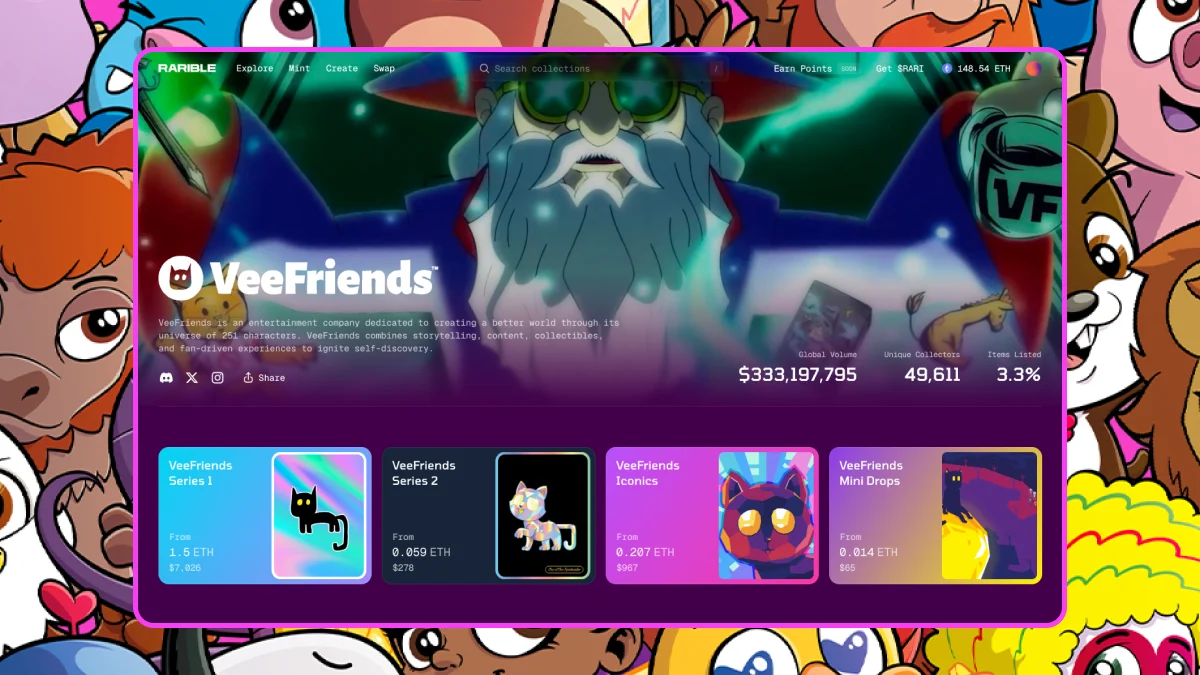
The digital commerce landscape is undergoing a fundamental transformation as blockchain technology matures from a niche experimental sector into a robust infrastructure for brand-consumer engagement. Rarible, a prominent decentralized marketplace, has officially announced the launch of its "Branded Onchain Storefronts," a strategic initiative designed to redefine how intellectual property owners interact with their communities. This rollout, inaugurated through a flagship partnership with Gary Vaynerchuk’s VeeFriends, signals a shift toward proprietary, web3-native retail environments that prioritize storytelling, direct-to-consumer access, and streamlined user experiences.
The Evolution of Digital Collectibles and Commerce
To understand the significance of this development, one must look at the timeline of digital asset adoption over the past half-decade. In 2021, the market witnessed an explosion of interest in Non-Fungible Tokens (NFTs), primarily driven by speculative interest and digital art. VeeFriends, launched by entrepreneur Gary Vaynerchuk in May 2021, distinguished itself early by tethering its assets to utility, real-world events, and character-driven storytelling. While the broader market faced volatility throughout 2022 and 2023, brands like VeeFriends maintained a consistent focus on community engagement.
The shift from generalized marketplaces—where brands were often buried among thousands of unrelated listings—to dedicated, branded storefronts represents the "second wave" of onchain commerce. By providing a curated environment, Rarible is effectively giving creators the tools to treat their digital assets as legitimate retail inventory rather than merely secondary market listings. This transition addresses a primary pain point for brands: the loss of brand identity in centralized, high-volume marketplace interfaces.
Technical Architecture and User Experience
A critical barrier to mass-market adoption of onchain retail has historically been the friction associated with digital wallets and cryptographic payments. Rarible’s new infrastructure seeks to dismantle these barriers through strategic integrations. The VeeFriends storefront, which serves as the proof-of-concept for this model, utilizes the VeeFriends Wallet powered by Privy. This allows users to authenticate via email, bypassing the complex seed-phrase management that historically alienated non-technical consumers.
Furthermore, the integration of Crossmint provides a fiat-to-crypto gateway, enabling transactions through standard payment methods such as Apple Pay, Google Pay, and traditional credit cards. From a technical perspective, this architecture bridges the gap between web2-style convenience and web3-native asset ownership. By facilitating these transactions directly on the blockchain, Rarible ensures that the history of ownership and provenance remains transparent and verifiable, while the user experience remains familiar to the average retail shopper.

The inclusion of the $RARI rewards program, facilitated by the RARI Foundation, adds an incentive layer to the platform. By rewarding activity—such as purchasing, collecting, or engaging with content—on the storefront, Rarible is formalizing a loyalty program structure that is natively programmable. This indicates a departure from traditional "points" systems toward tokenized incentives that provide tangible value to the user base.
The Strategic Value of Onchain Hubs
For major brands, the appeal of an onchain storefront lies in the concept of "disintermediation." In the legacy ecommerce model, brands often rely on third-party platforms that dictate the user experience, capture consumer data, and levy significant platform fees. Onchain storefronts provide a modular, customizable space where brands retain autonomy over their identity.
The implications for brand commerce are threefold:
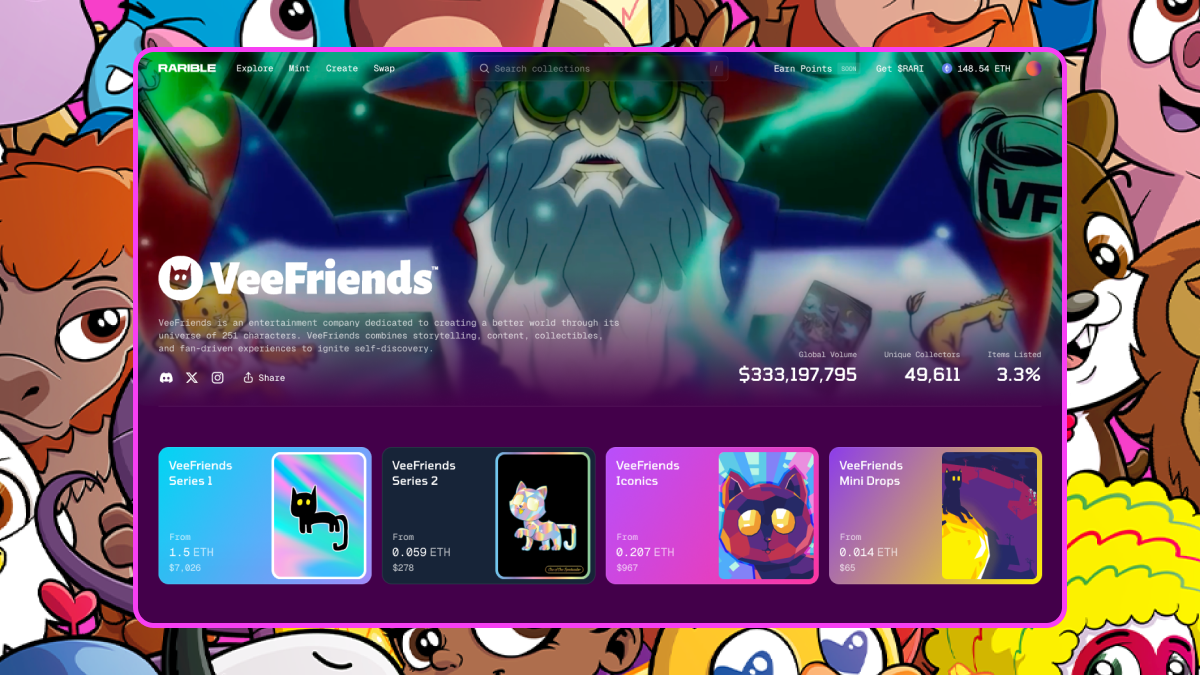
- Direct Community Connection: By centralizing assets, statistics, and storytelling in a single hub, brands can nurture a "destination" experience rather than a "transactional" one. Fans can engage with the lore and character history of the VeeFriends universe, creating a deeper psychological attachment to the assets.
- Modular Scalability: The storefront infrastructure is built to be modular. As brands grow, they can integrate new features, expand into different asset classes (such as virtual goods or event tickets), and update their UI without needing to overhaul their entire backend architecture.
- Programmable Loyalty: Because the storefront is onchain, brands can program smart contracts to automatically distribute rewards, grant access to exclusive events based on wallet holdings, or execute secondary royalty distributions, all without manual intervention.
Industry Analysis and Market Context
The move by Rarible aligns with broader trends in the retail sector, where major organizations—including Nike, Starbucks, and Adidas—have experimented with blockchain-integrated loyalty programs. However, where previous attempts often struggled to scale due to technical complexity, the current model emphasizes "onboarding abstraction."
Market analysts note that the industry is transitioning from a period of "crypto-native" development to "crypto-enabled" consumer applications. According to industry data, the demand for user-friendly, branded digital experiences has increased by nearly 40% year-over-year among mid-to-large-sized creative firms. The "Storefront" model addresses the specific need for brands to maintain high aesthetic and operational control, a necessity that was largely absent in the initial, chaotic stages of the NFT market.
By providing a "white-label" or semi-customizable interface, Rarible is positioning itself as the infrastructure layer for the next iteration of the digital economy. If successful, this model could standardize how companies issue and sell digital goods, making the process as routine as launching a web store on platforms like Shopify or WooCommerce.
Future Roadmap: The Introduction of Rarible Studio
The launch of the VeeFriends storefront is merely the initial phase of a larger rollout. The company has confirmed plans to launch "Rarible Studio," a comprehensive dashboard designed to empower brands to manage their onchain presence independently. This toolset is expected to include analytics regarding holder behavior, real-time inventory management, and tools for dynamic metadata updates.
By providing these administrative controls, Rarible is effectively transitioning from a marketplace operator to an infrastructure provider. This shift is significant; it suggests that the company anticipates a future where every brand, regardless of their native industry, will require an onchain presence. Whether it is a fashion label issuing digital twins of physical garments or a gaming company managing in-game assets, the need for a persistent, branded, and secure onchain retail space is expected to become an industry standard.
Broader Implications for Web3 Commerce
The integration of onchain storefronts marks a maturing of the ecosystem. As the novelty of the "NFT" label fades, the utility of the underlying technology—namely, verifiable ownership and programmable scarcity—is taking center stage. Brands are increasingly moving away from the "collectible" narrative toward a "commerce" narrative, where digital assets function as keys to access, status, and participation in brand ecosystems.

The success of the Rarible-VeeFriends partnership will likely be measured by the retention rates of users who onboard via the new email-based sign-in process. If this demographic demonstrates long-term engagement and repeat purchasing behavior, it will provide a template for other major consumer brands to follow. The transition from "crypto-exclusive" to "crypto-inclusive" commerce is the final bridge that must be crossed to achieve widespread adoption.
As the industry looks toward the next fiscal quarter, the focus will shift toward the onboarding of additional partners. With Rarible Studio on the horizon, the barrier to entry for enterprises seeking to establish a foothold in the onchain economy is lowering significantly. The "storefront" concept serves as the digital equivalent of a physical flagship store: it is the primary touchpoint for a brand’s most dedicated customers and a critical component of a modern, multi-channel retail strategy.
In conclusion, the launch of branded onchain storefronts by Rarible represents a sophisticated pivot in digital retail. By combining the transparency and ownership benefits of blockchain technology with the user-friendly interface design required by mainstream consumers, the company is positioning itself at the nexus of the future internet economy. As more brands recognize the value of owning their customer relationships on-chain, the storefront will likely become as essential as the website or social media presence in the modern marketing stack. The VeeFriends collaboration is the first chapter in this evolution, setting a new standard for how digital communities are built, sustained, and monetized in the era of decentralized commerce.