The Bitcoin mining sector in September 2026 served as a microcosm of the broader cryptocurrency market’s volatility, characterized by a persistent tug-of-war between rising Bitcoin prices and the unrelenting upward pressure of network difficulty. As the month drew to a close, miners faced a landscape where profitability metrics remained largely stagnant despite significant price gains for the underlying asset. This report, part of Luxor’s ongoing series on hashrate market activity, examines the key drivers of September’s performance, including the impact of legislative hurdles in Washington, shifting monetary policies from the Federal Reserve, and the conclusion of the Texas seasonal energy management cycle.
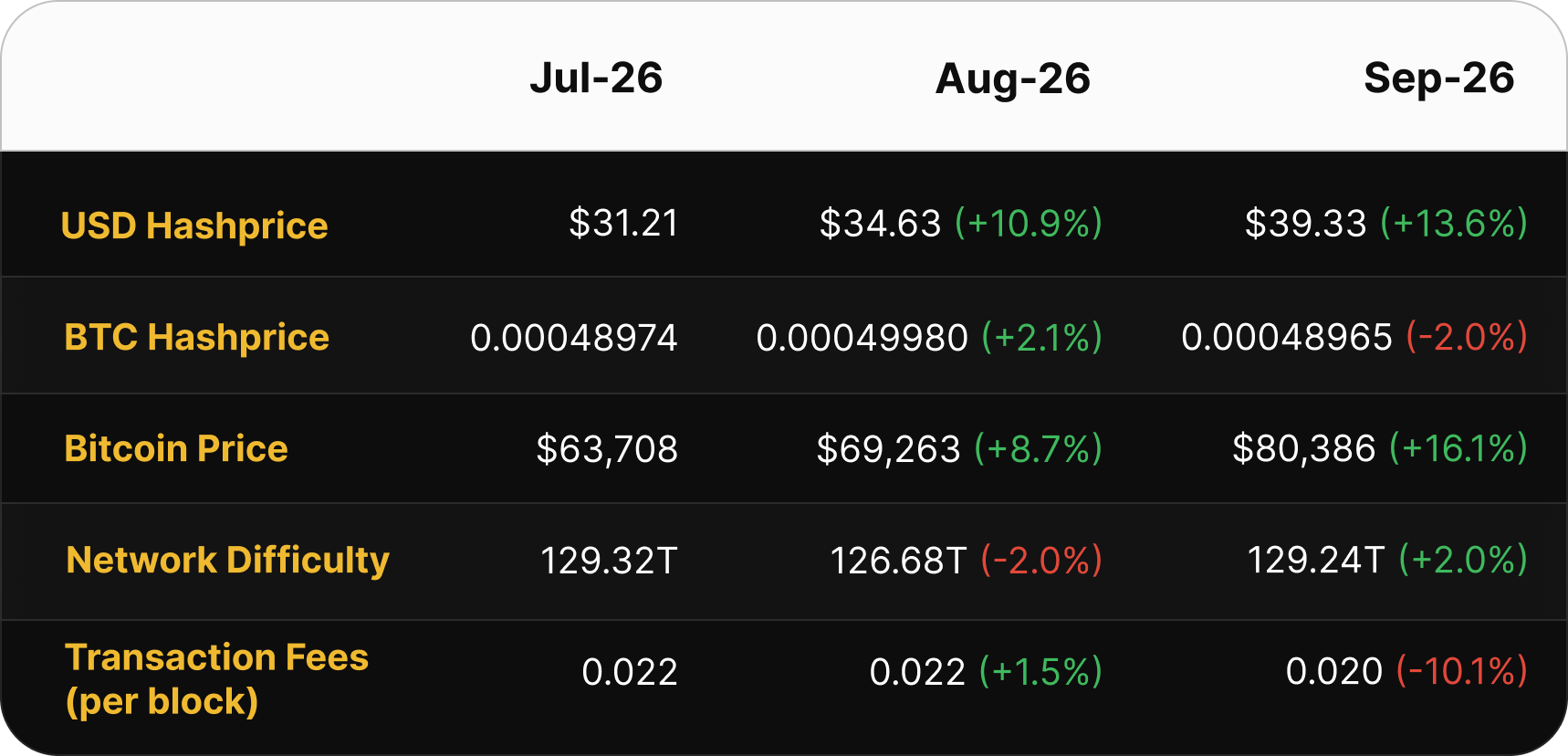
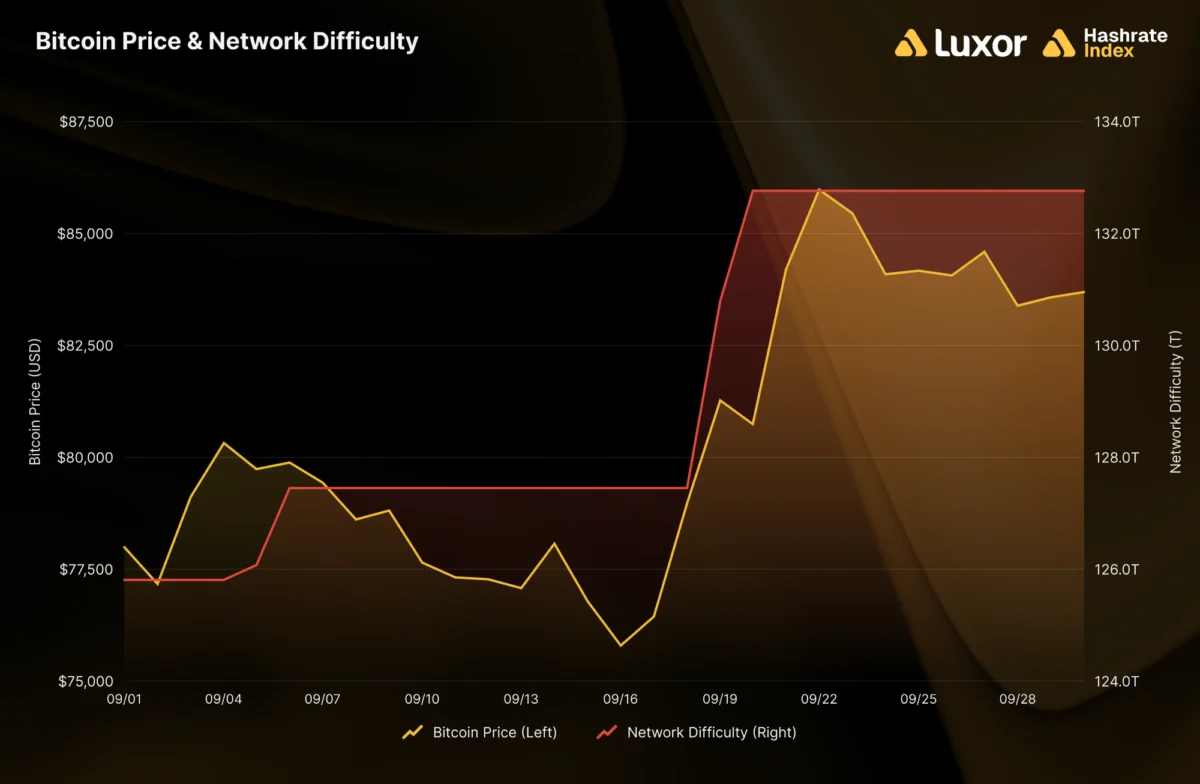
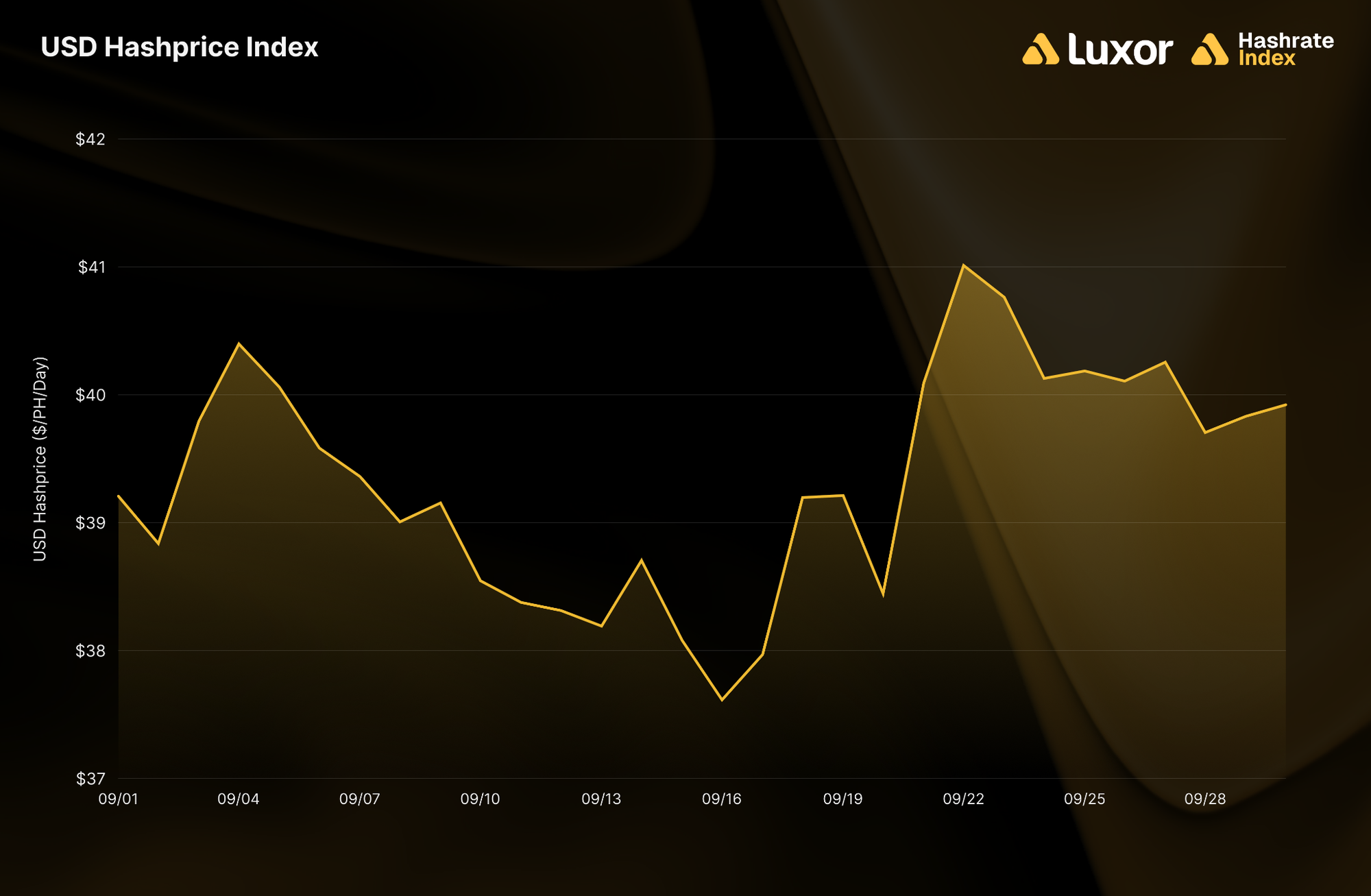
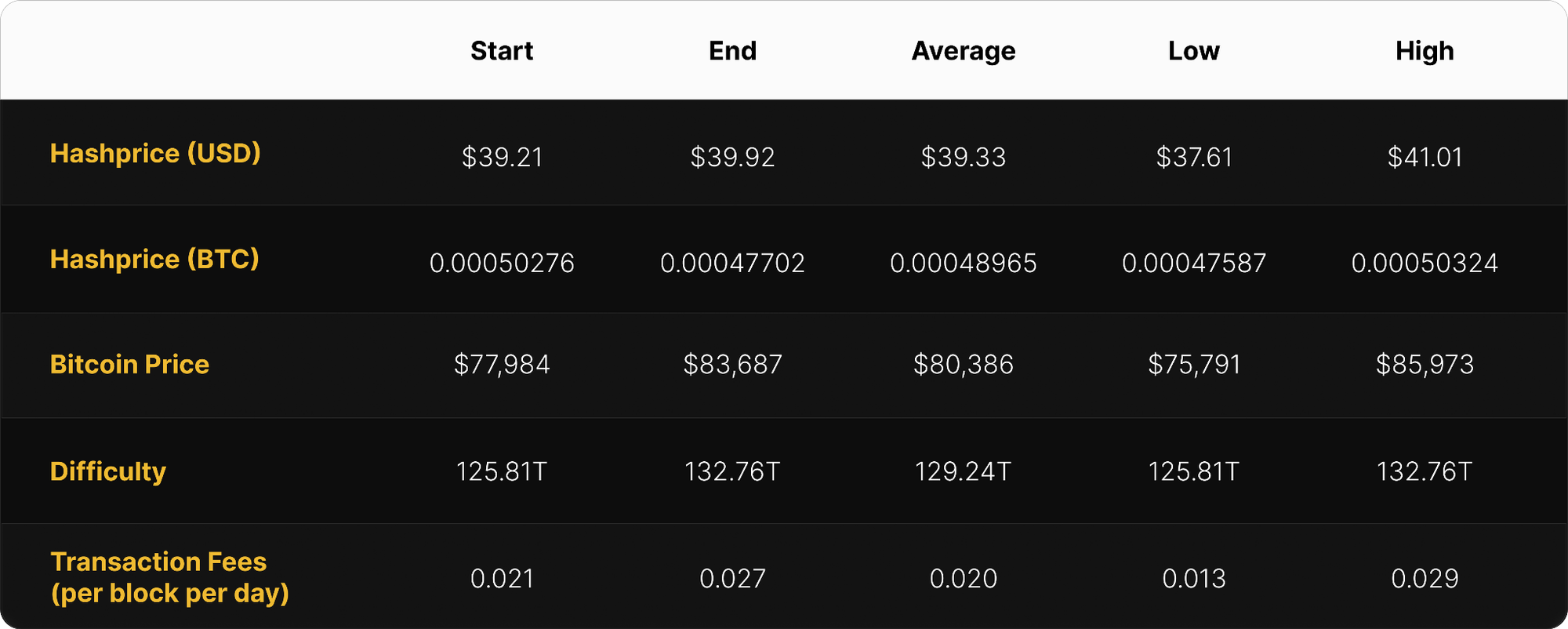
September began with a sense of cautious optimism, following a strong August that had bolstered hashprice—the daily expected revenue per petahash per second (PH/s)—by $7.70 in less than two weeks. However, the question remained whether Bitcoin’s price momentum could sustainably outpace the inevitable network difficulty adjustments that follow increased hashrate participation. The final data for September confirms that these two forces largely neutralized one another. While Bitcoin climbed 7.3% from the start of the month to its close, the network responded with two significant upward difficulty adjustments totaling 5.5%. Consequently, the USD-denominated hashprice concluded the month at $39.92, a marginal increase of just $0.71 over the opening figure of $39.21.
The Macroeconomic and Legislative Backdrop
The month was punctuated by two major events that shook investor confidence within a 24-hour window. On September 15, the United States Senate failed to invoke cloture on the Clarity Act, falling short of the required 60 votes to advance the legislation. The 41 votes against the bill signaled that comprehensive federal regulatory clarity for digital assets would likely remain elusive for the remainder of 2026. This legislative setback contributed to a sharp market reaction, with Bitcoin touching its monthly low of $75,791.
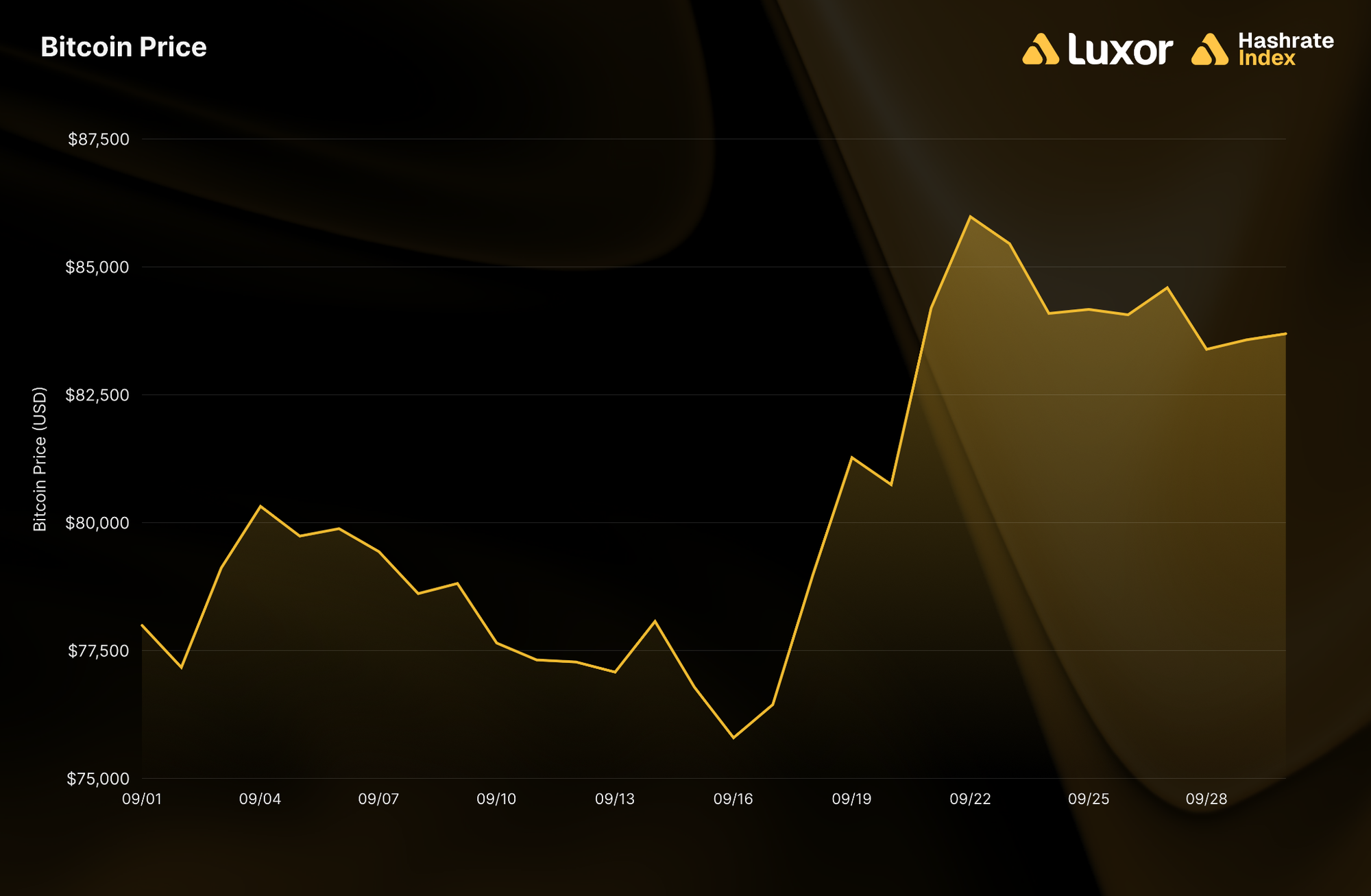
Compounding this uncertainty, the Federal Open Market Committee (FOMC) convened on September 16, delivering a unanimous decision to raise interest rates by 25 basis points to a range of 3.75%–4.00%. This move, the first rate hike since July 2023, initially pressured risk-on assets. However, the market’s resilience was on full display in the days that followed. By September 22, Bitcoin had surged to a monthly high of $85,973, representing a 13.4% gain in just six days. This rally was heavily fueled by institutional inflows; on September 21 alone, spot ETFs recorded $999 million in net inflows—the largest single-day total for the year. By the end of the month, total net inflows for September reached $2.65 billion, effectively reversing the year-to-date outflows and placing US spot-ETF holders in a profitable position for the first time since January 2026.
Network Difficulty and Operational Realities
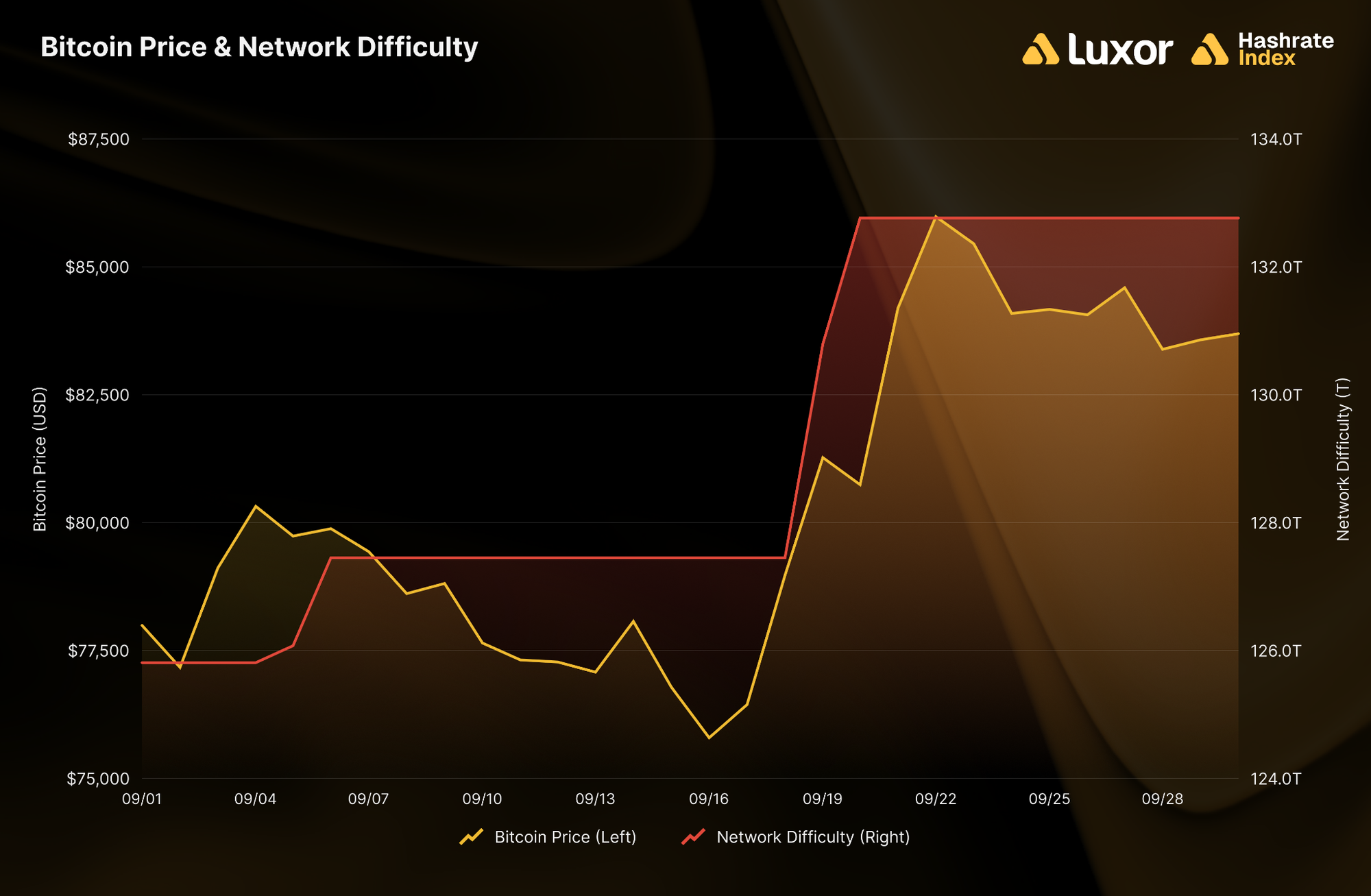
While price appreciation captured headlines, the underlying mining infrastructure saw a steady climb in competitive pressure. September saw two upward difficulty adjustments: a 1.31% increase on September 5 and a substantial 4.16% increase on September 19. The latter was the most significant single retarget since June 2026. This growth in difficulty reflects the return of massive amounts of hashrate that had been previously curtailed due to seasonal energy costs in Texas.
The conclusion of the 4CP (Four Coincident Peaks) season in the Electric Reliability Council of Texas (ERCOT) grid was a primary driver of this hashrate return. Under the 4CP program, large-scale industrial consumers, including Bitcoin miners, are incentivized to curtail operations during the four hours of peak demand across the summer months to avoid significant transmission charges. With the final peak set on September 12 at 86.49 GW, many operators moved to bring their fleets back online immediately. Luxor Energy data indicates that for flexible-load clients, the avoided transmission costs far outweighed the lost mining margins, often by a ratio of 14 to 1. This strategic downtime has been a hallmark of the 2026 summer, but with the season now concluded, the network hashrate has surged from 926 EH/s at the start of the month to 975 EH/s by month-end.
Transaction Fees and Revenue Composition
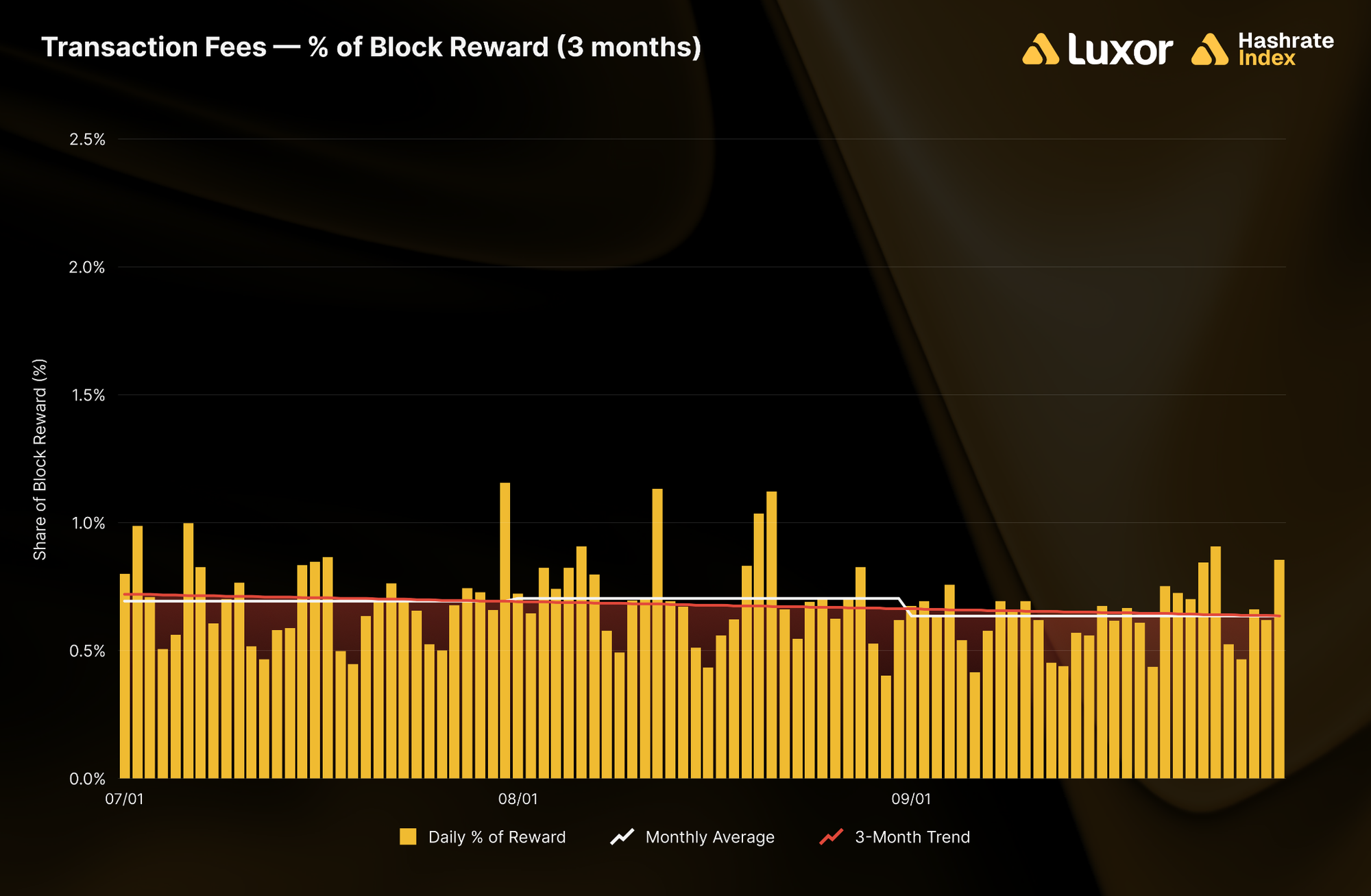
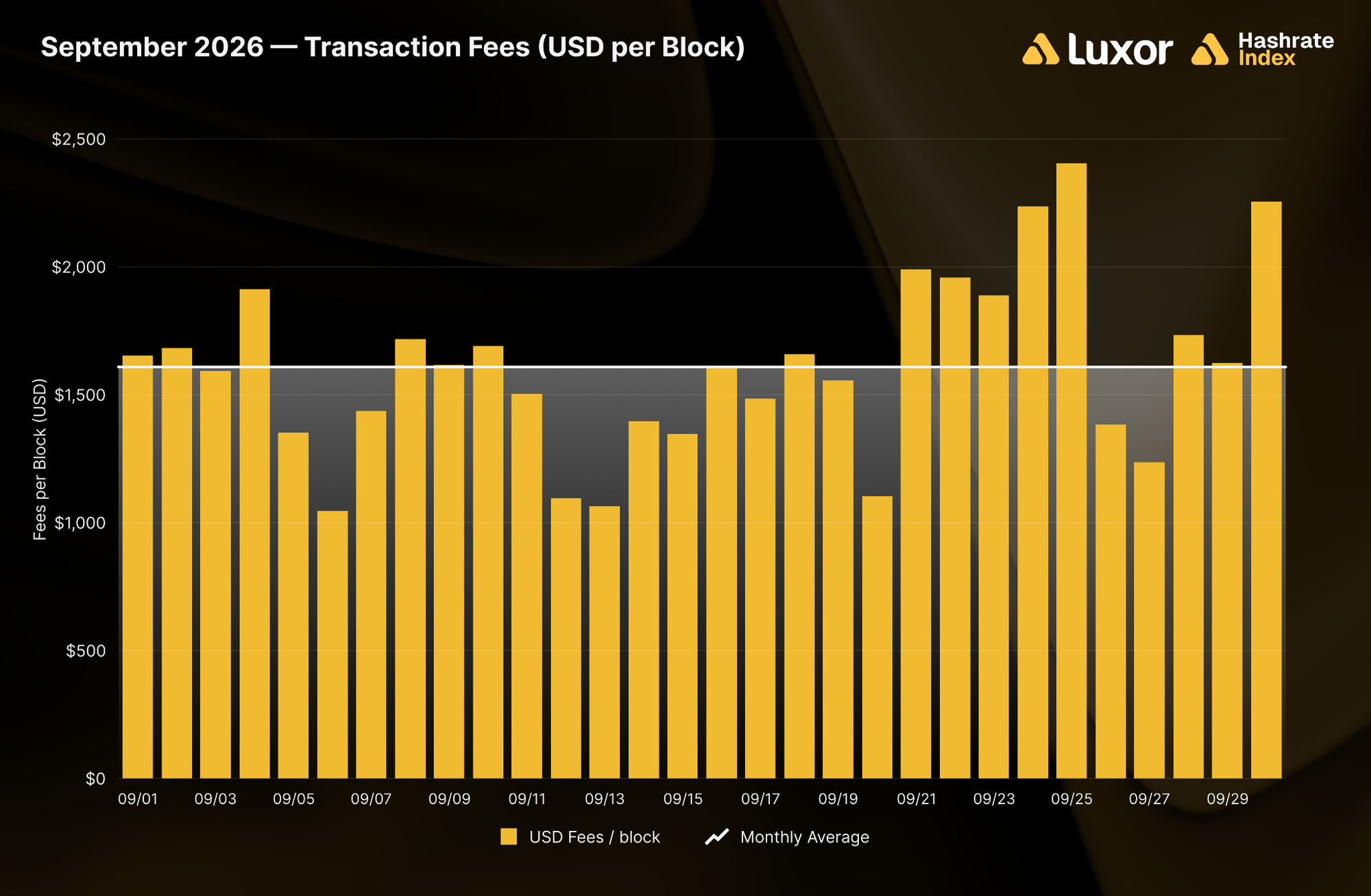
Transaction fee collection during September was relatively muted, reflecting a lack of major network congestion. Average fees fell to 0.0199 BTC per block, the lowest level observed since May 2026. For the fifteenth consecutive month, transaction fees accounted for less than 1% of total block rewards, underscoring the miners’ reliance on the block subsidy and Bitcoin’s USD price for revenue. In dollar terms, the average block earned approximately $1,607 in fees, a 4.8% increase over August, though this gain was entirely a result of Bitcoin’s price appreciation rather than increased network activity.
The Evolution of Hashrate Derivatives
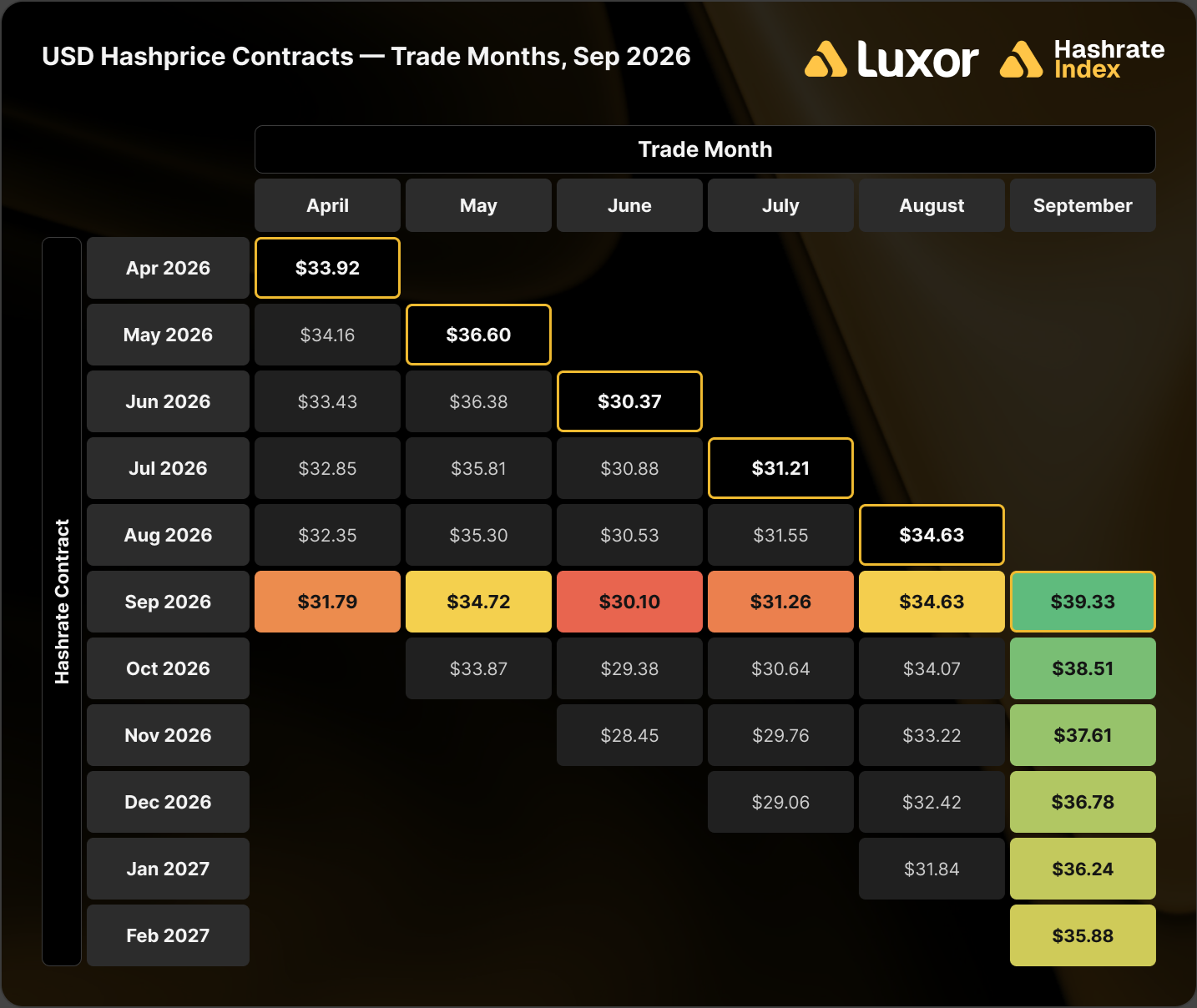
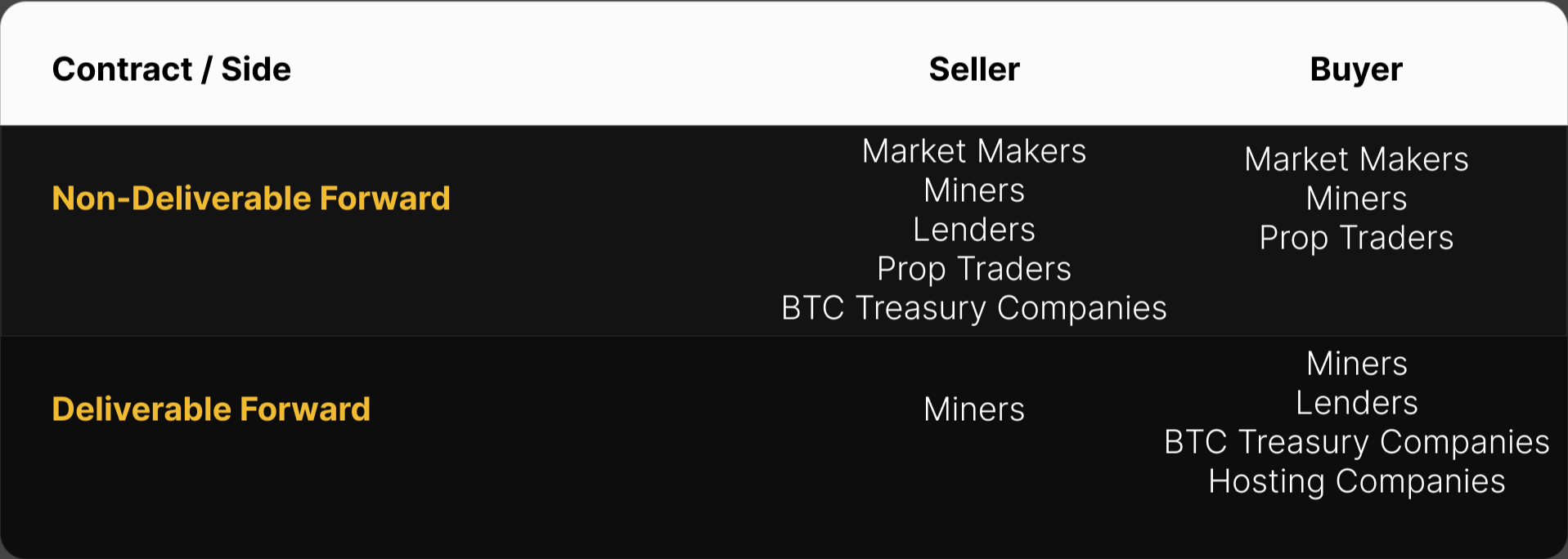
The hashrate forward market provided a unique window into how institutional participants are hedging their exposure. September was the first month since July 2025 where every dollar-denominated hedge resulted in a loss for the seller. Because spot hashprice rose faster than the forward curve anticipated, those who sold forward contracts at rates between $30.10 and $34.72 per PH/s/day were effectively locked out of the higher realized spot price of $39.33.
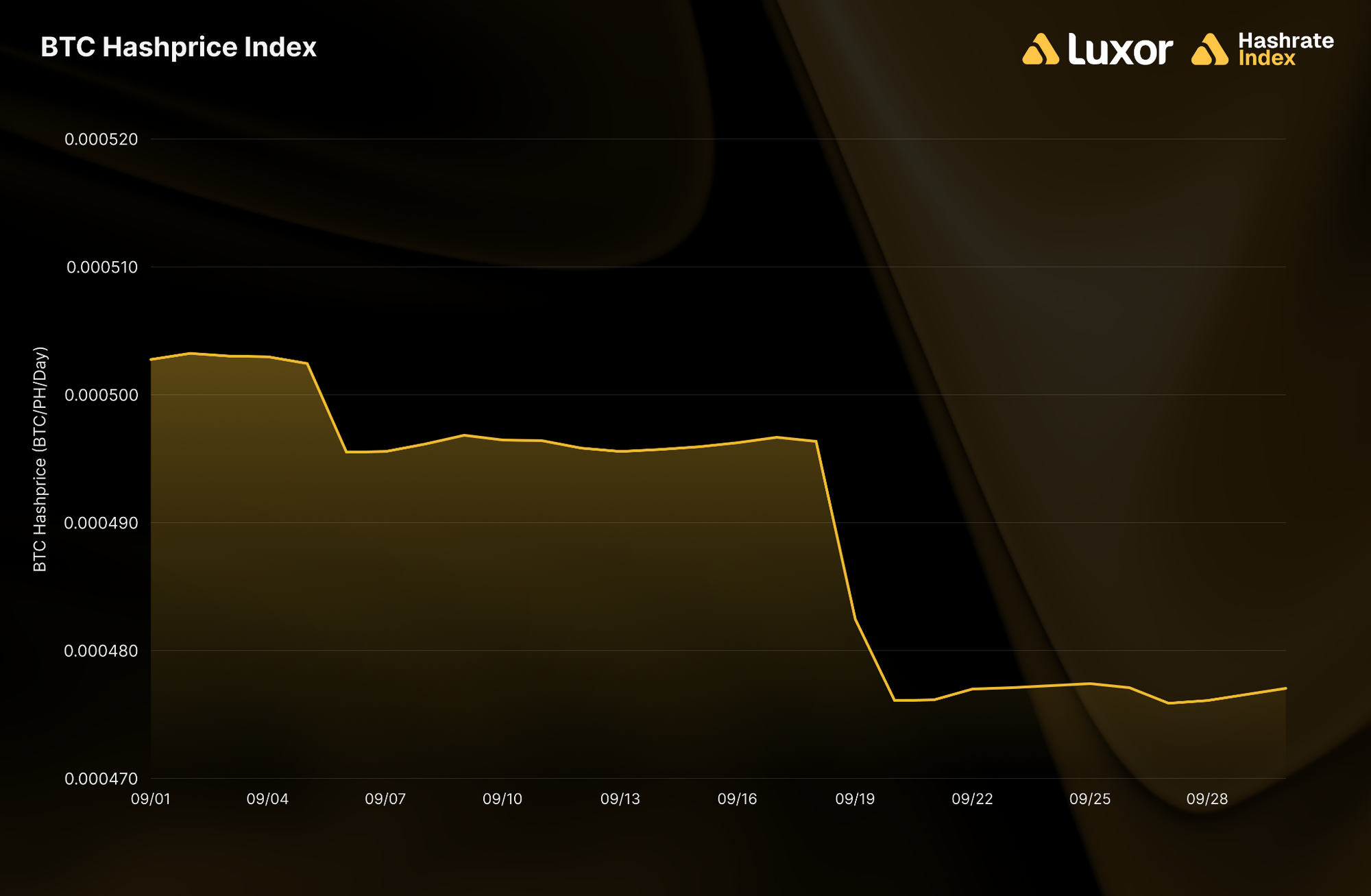
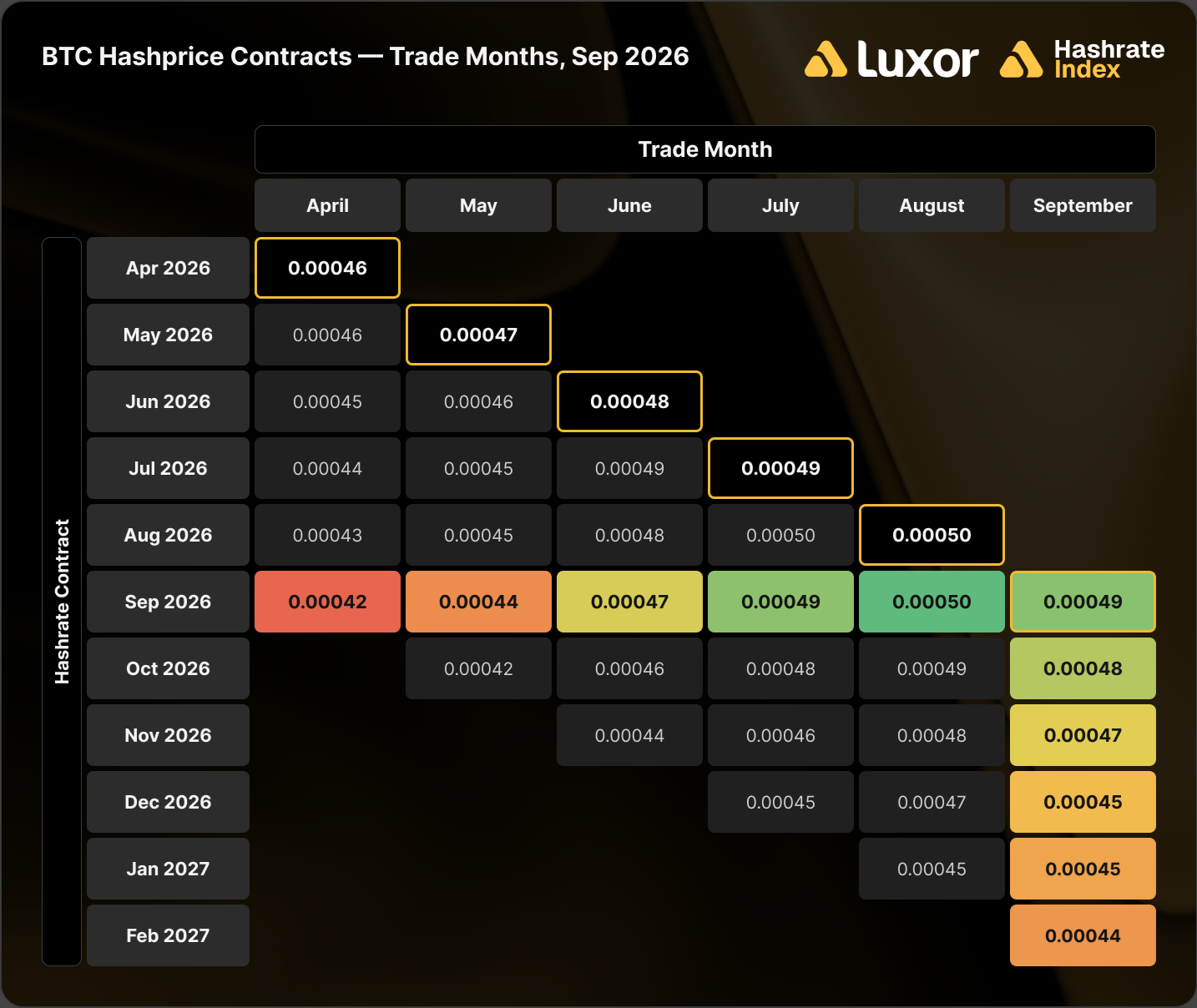
Conversely, the BTC-denominated forward market saw a break in a five-month losing streak. Sellers of the August one-month forward contract realized a profit, as the contract price of 0.00050 BTC per PH/s/day outperformed the actual settlement of 0.00049 BTC. This highlights a shift in market sentiment: from April through August, selling hashrate in BTC terms was a losing strategy as difficulty growth consistently exceeded expectations. The reversal in September suggests that the market is beginning to better account for the cyclical nature of hashrate expansion following the ERCOT summer season.
Strategic Implications for Miners
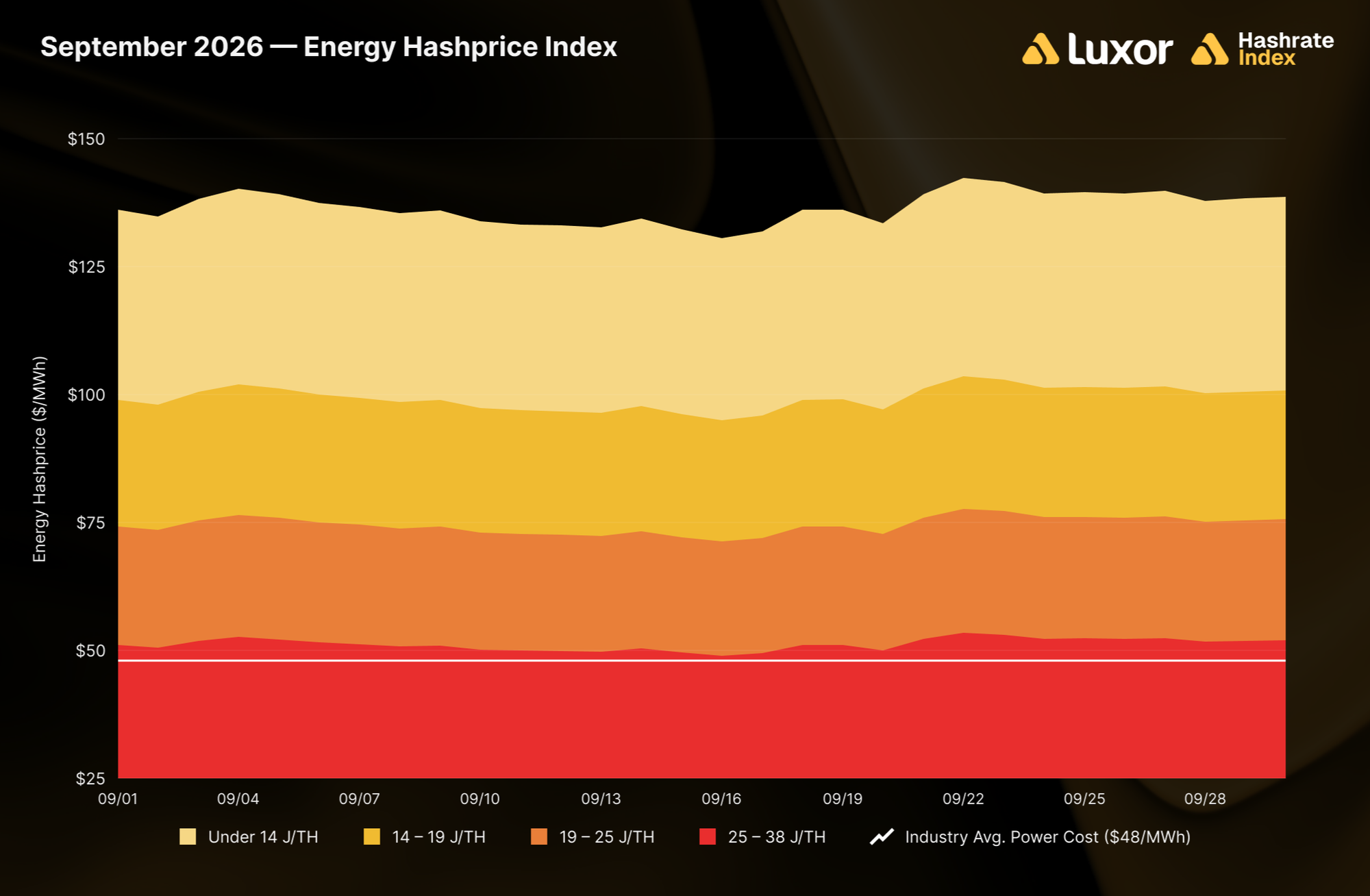
For operators, the current environment necessitates a sophisticated approach to risk management. The data from the trailing twelve months indicates that rolling USD-denominated hashprice hedges have consistently outperformed spot mining (FPPS) at every horizon. However, the margin of this outperformance is narrowing as network difficulty growth begins to stabilize.
The forward curve for the coming months, specifically October 2026 through February 2027, suggests that the market anticipates further increases in network hashrate. The implied difficulty for February 2027 is now projected to hit 147.1T, with network hashrate expected to exceed 1 ZH/s by January 2027. These figures represent an aggressive, yet plausible, outlook based on the current deployment of high-efficiency hardware.
Looking Ahead to Q4 2026
As the industry moves into the final quarter of the year, the primary catalyst for the hashprice remains the interplay between the Bitcoin price and network difficulty. With the 4CP season behind them, Texas miners are now operating at full capacity, contributing to the increased difficulty projections for October. Seasonal trends over the past four years show that October is historically a month of positive difficulty growth, often averaging around 10% across the month.
The macroeconomic calendar for October remains relatively light compared to the September volatility, with the next FOMC decision scheduled for late in the month. Market projections show a high probability of at least one more rate hike before year-end, which could serve as a headwind for the USD side of the hashprice equation. However, if spot-ETF inflows remain robust, they may provide the necessary liquidity to offset the dilutive effects of rising difficulty.
For miners, the lesson of September is clear: the market has reached a state of equilibrium where growth in efficiency and price is being rapidly cannibalized by the aggregate increase in network competition. Future profitability will depend less on the macro-environment and more on operational efficiency, energy cost management, and the tactical use of derivatives to lock in revenue certainty in an increasingly competitive landscape. As the network approaches the 1 ZH/s milestone, the ability to forecast and hedge against these difficulty-driven fluctuations will be the defining factor for institutional success in the Bitcoin mining industry.