
The global Bitcoin mining landscape entered a period of consolidation as of the week ending September 14, 2026, characterized by a stagnation in hashprice and a minor contraction in network hashrate. Miners navigated a challenging fiscal environment as the spot price of Bitcoin hovered near $79,020, representing a slight 0.7% decrease over the seven-day observation period. This plateau in price action, coupled with consistent block rewards, has left mining operators closely monitoring the impending network difficulty adjustment, which analysts project will increase by approximately 5.26% later this month.
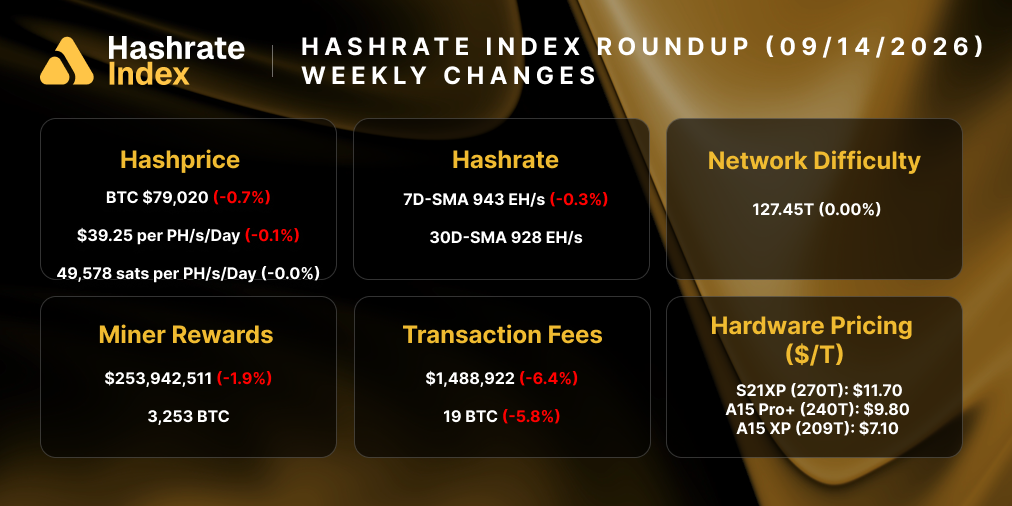
During the seven-day period, total miner revenue reached approximately 3,253 BTC, a valuation of roughly $253 million based on current market rates. Transaction fees accounted for a marginal 0.59% of these rewards, totaling 19 BTC, or approximately $1.49 million. This reliance on block subsidies over transaction fees remains a critical point of analysis for industry stakeholders, as it highlights the ongoing importance of the halving-adjusted emission schedule in maintaining miner profitability.
Chronology and Market Performance
The week commenced with Bitcoin trading at $79,581 before settling at $79,020 by the close of the reporting period. The year-to-date performance remains in negative territory at -9.6%, reflecting a broader period of price discovery and volatility within the digital asset markets. Futures contracts on the Chicago Mercantile Exchange (CME) suggest a tepid outlook for the short term, with October contracts pricing in a slight premium at $79,700, while November contracts have retracted to $77,610, indicating market anticipation of potential headwinds or a cooling-off period as the fourth quarter approaches.
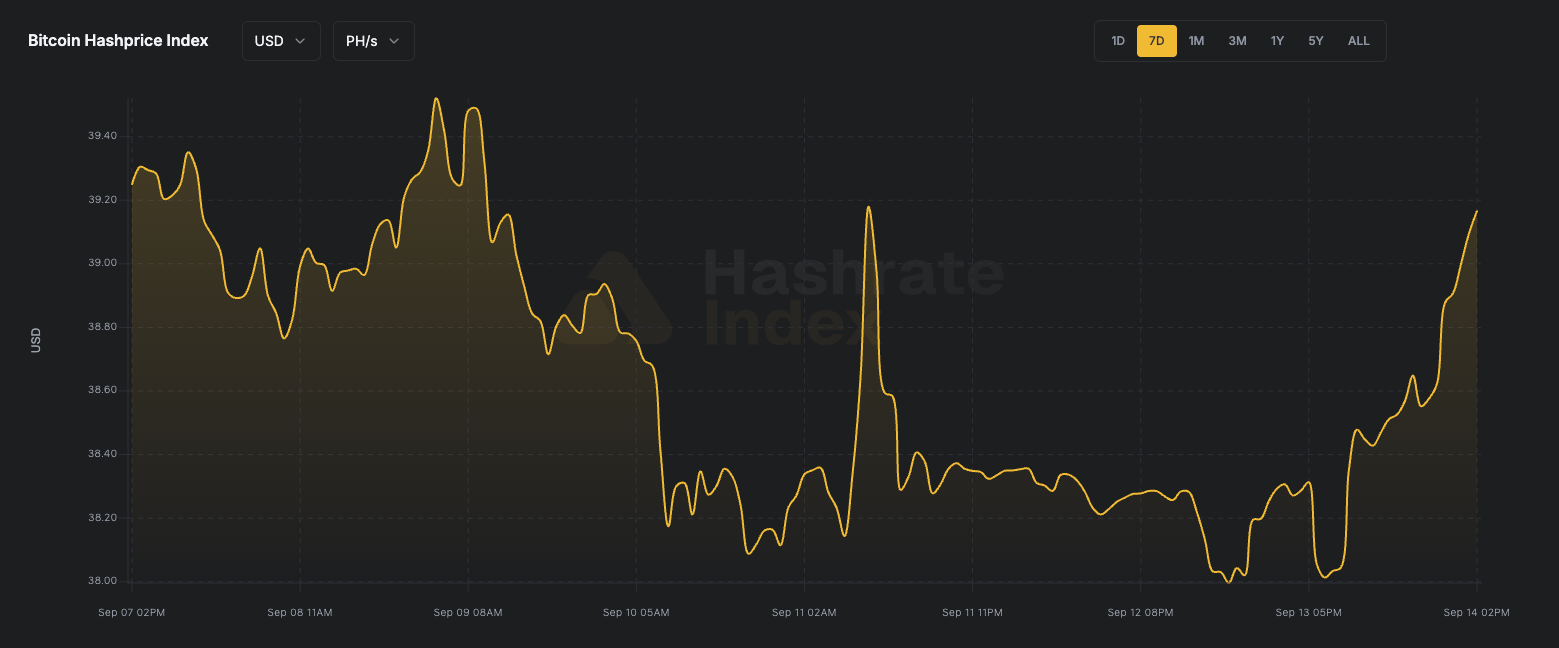
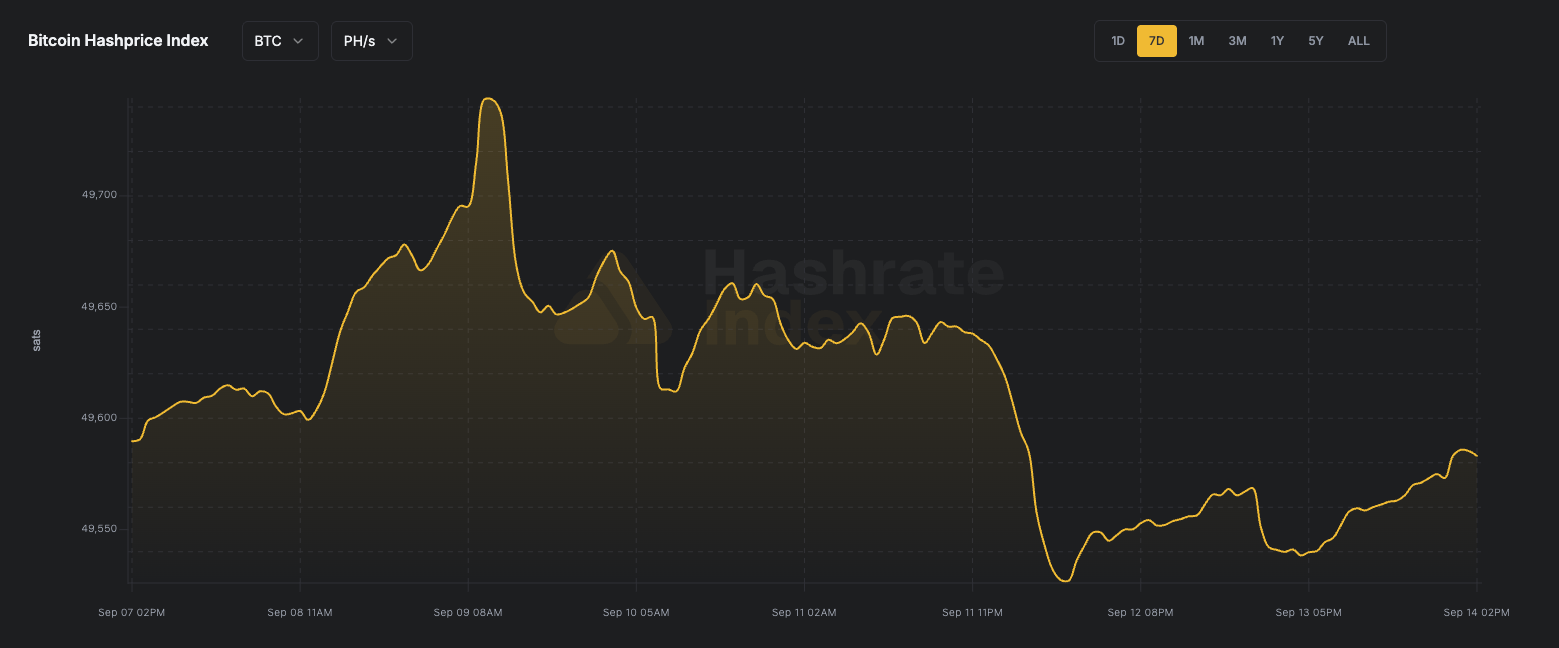
Hashprice—the primary metric for measuring the daily revenue potential of one petahash per second (PH/s) of computing power—remained nearly flat. The USD-denominated hashprice moved only -0.1%, sliding from $39.29 to $39.25 per PH/s/Day. This stability, while providing a degree of predictability for operational budgeting, underscores the lack of significant upward momentum in miner earnings. On a BTC-denominated basis, the hashprice remained essentially unchanged at 0.00049578 BTC per PH/s/Day, suggesting that the current output per unit of hardware is holding steady despite minor fluctuations in network participation.
Network Hashrate and Difficulty Adjustments
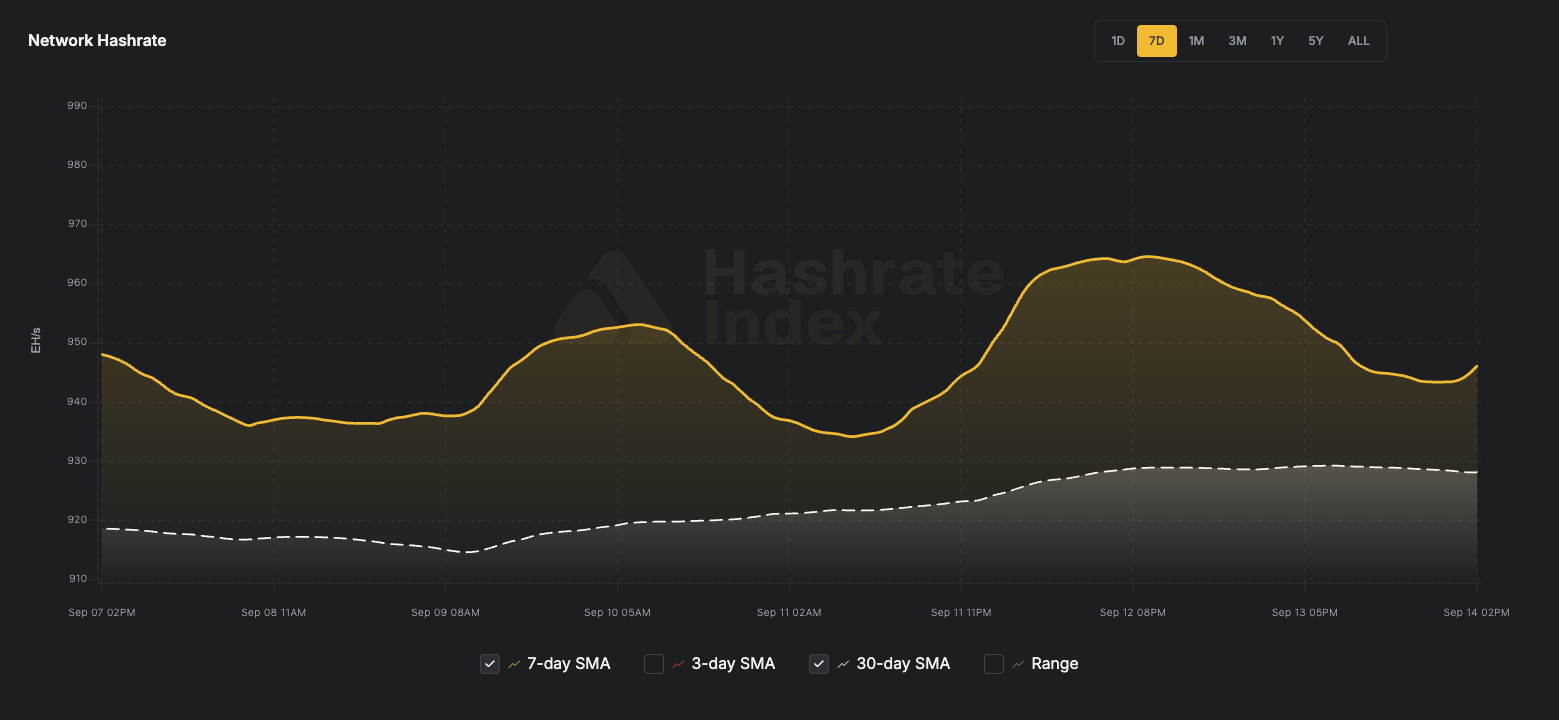
The Bitcoin network’s total hashrate, which serves as a proxy for the cumulative security and computational effort dedicated to the blockchain, saw a minor reduction of 0.3%. The seven-day simple moving average (SMA) transitioned from 946 EH/s to 943 EH/s, while the 30-day SMA currently rests at 928 EH/s. This contraction suggests a marginal shedding of less efficient mining hardware from the network, a typical response when operational costs—primarily electricity—begin to approach or exceed the diminishing returns offered by current hashprice levels.
The network is currently navigating the middle of a difficulty epoch, having processed 1,350 of the 2,016 blocks required for the next adjustment. The last major adjustment occurred on September 5, 2026, which saw a 1.31% increase in difficulty to 127.45T. With an average block time of 9 minutes and 30 seconds, the network is running slightly faster than the targeted 10-minute interval, which has prompted estimates for a 5.26% increase in difficulty during the next adjustment, slated for September 19, 2026. This anticipated rise will necessitate further efficiency gains for operators to maintain their margins.
Transaction Fee Trends
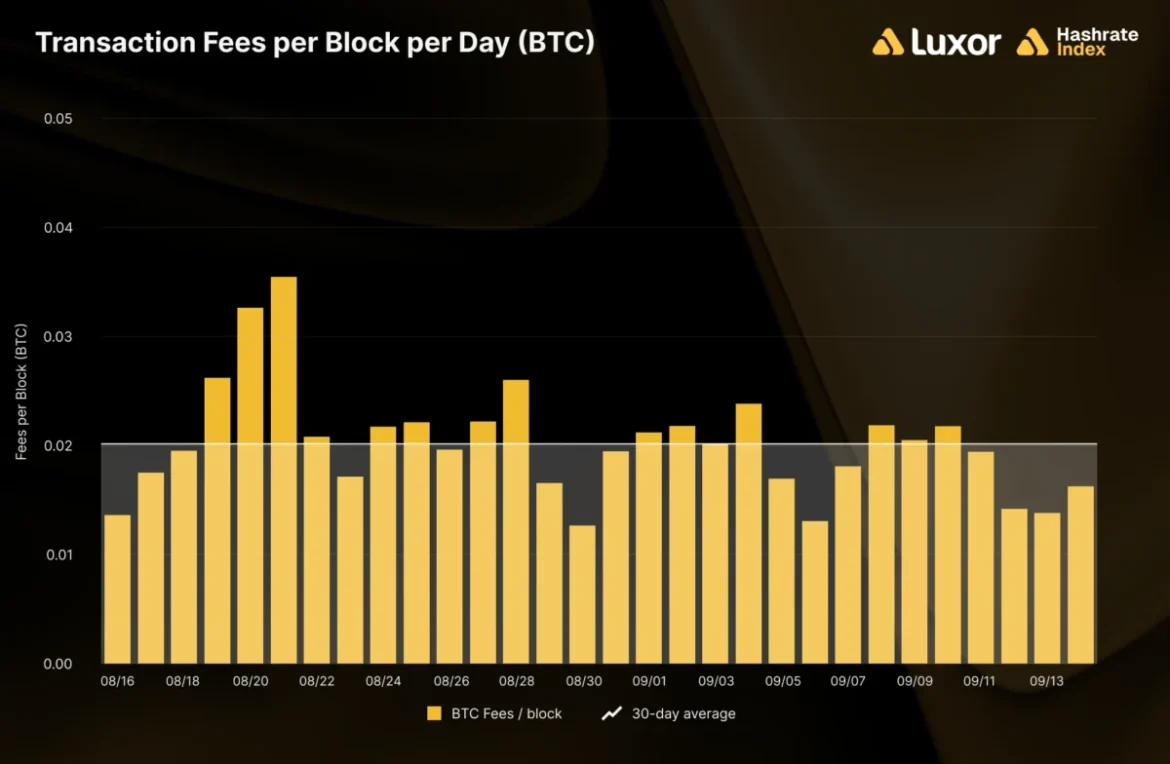
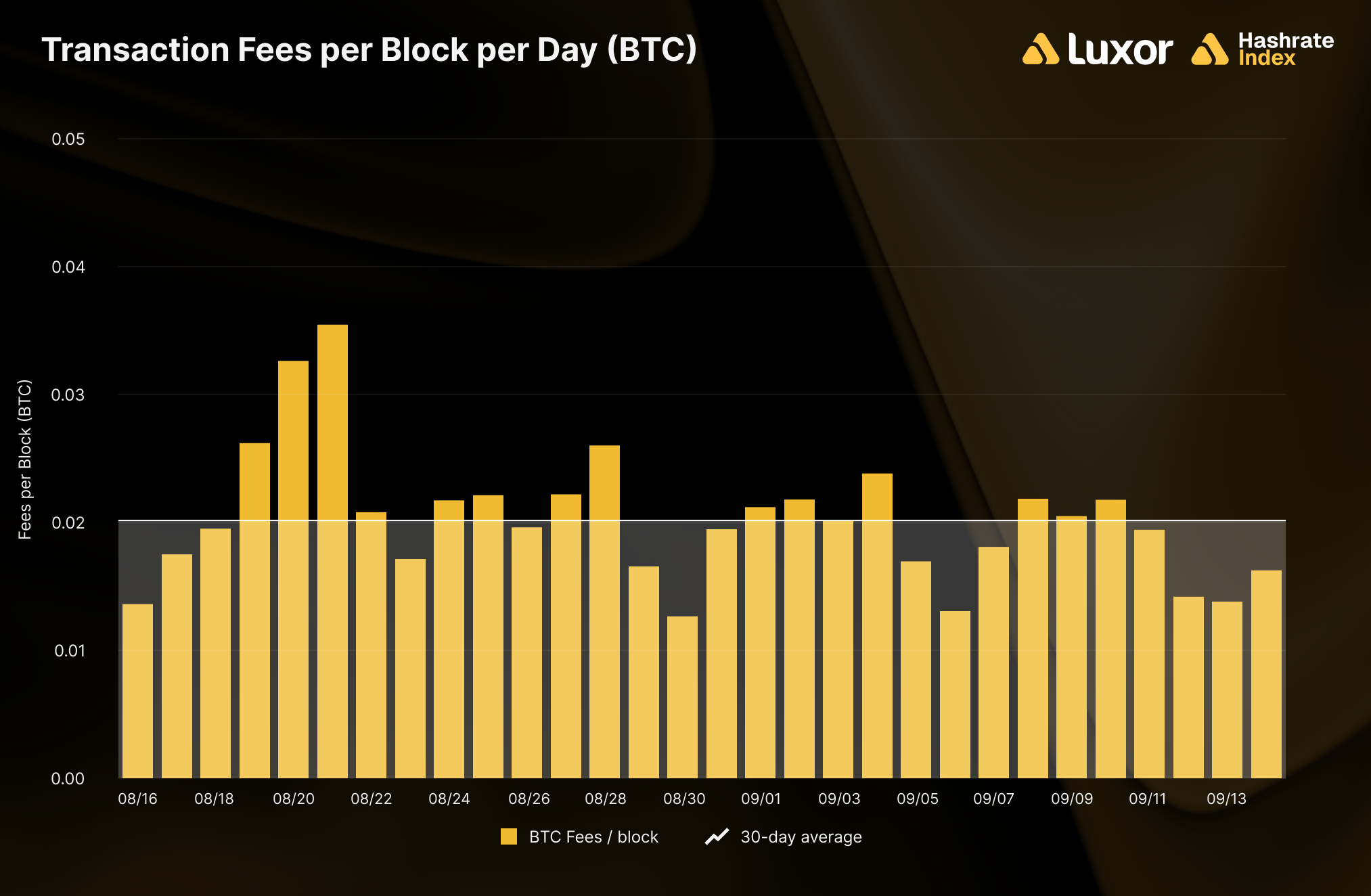
Transaction fee revenue experienced a notable dip over the past week, with an average of 0.0183 BTC collected per block per day. This represents a 5% decrease from the previous week’s average of 0.0193 BTC. Over a 30-day window, the average transaction fee per block has seen a cumulative decline of 9.6%, suggesting a period of reduced on-chain activity or a shift in the nature of transactions being processed. For mining operations, which rely on these fees to supplement the fixed block subsidy, the downward trend in fee-based revenue adds a layer of complexity to revenue forecasting.
Mining Stock Market Sentiment
The equity markets for publicly traded Bitcoin miners mirrored the broader volatility of the underlying asset. Market sentiment appeared largely bearish, with significant corrections observed across several major tickers. Iris Energy (IREN) saw a 7.0% decline, while Cipher Mining (CIFR) experienced a more pronounced drop of 14.0%. Similarly, Core Scientific (CORZ) retreated by 8.0%, and Riot Platforms (RIOT) shed 5.6%.
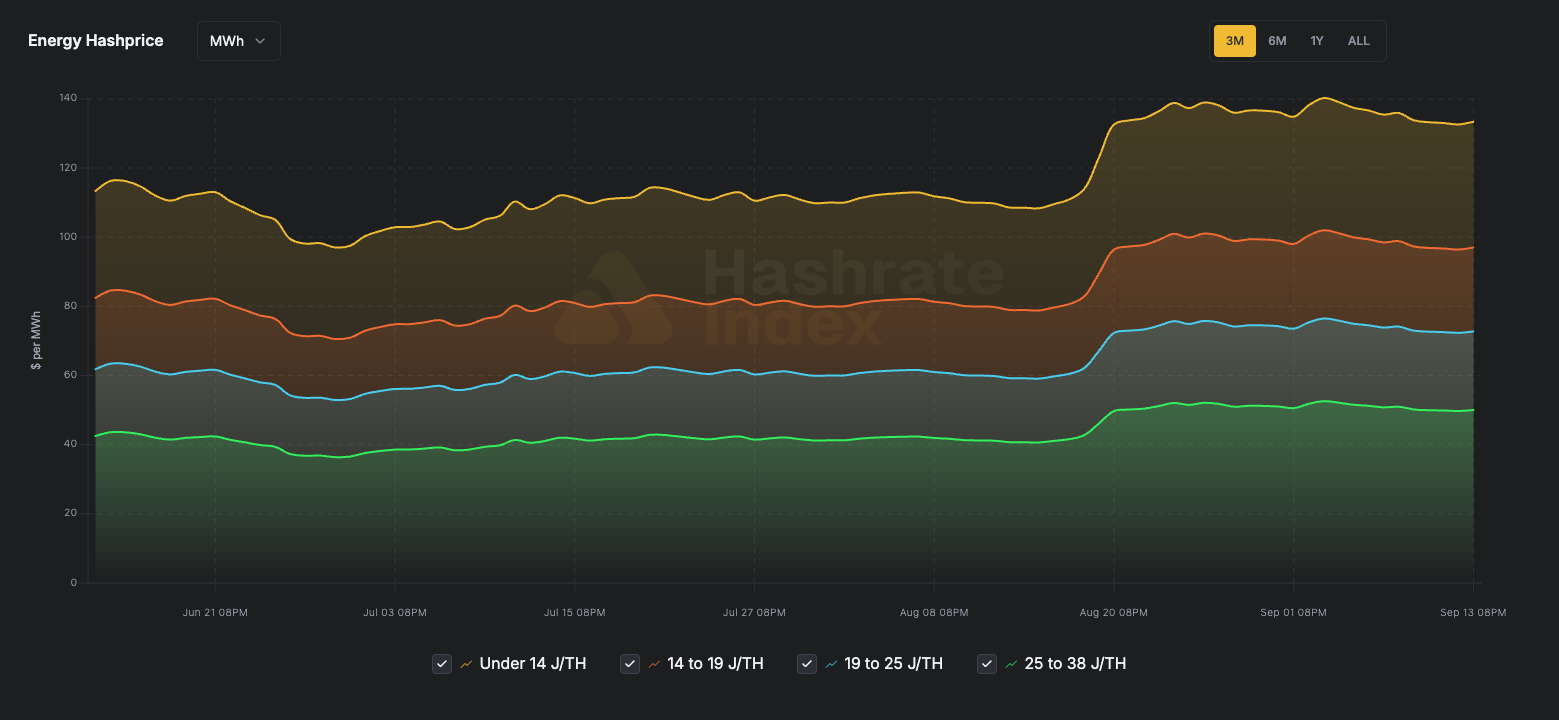
Conversely, select stocks displayed resilience. Applied Digital (ANY) bucked the trend with an 18.0% increase, and Canaan (CAN) posted a 6.3% gain. The divergence in stock performance reflects varying investor confidence in the operational efficiency, debt levels, and energy infrastructure capabilities of these specific firms. Analysts suggest that investors are increasingly scrutinizing the "energy hashprice"—the revenue generated per megawatt-hour of electricity consumed—as a key differentiator for long-term sustainability in a post-halving environment.
Implications and Future Outlook
The current data indicates that the Bitcoin mining industry is in a state of equilibrium, where the rate of hardware deployment is being tempered by the realities of electricity costs and static block rewards. The anticipated 5.26% difficulty hike will likely serve as a stress test for smaller, less efficient operations. As the network approaches the end of the year, the primary objective for large-scale miners is the optimization of fleet efficiency.

Looking toward the six-month horizon, the Luxor Hashrate Forward Market is currently pricing in an average hashprice of approximately $36.92, or 0.00047 BTC. This forward-looking data point suggests that market participants are bracing for continued pressure on profit margins. The industry’s reliance on high-efficiency, next-generation ASIC hardware continues to be the dominant strategy for maintaining competitive viability.
Industry observers note that while the network remains secure and resilient, the current environment is less forgiving than the bull cycles of previous years. For the mining sector, the focus has pivoted from rapid expansion to operational optimization. As energy prices fluctuate and the network difficulty continues to climb, the miners who can secure the lowest cost of power and leverage the most efficient computational units will be the ones best positioned to withstand the current, relatively stagnant, hashprice environment.
As of the close of business on September 14, 2026, the ecosystem remains robust, with stakeholders balancing the immediate needs of block production against the long-term goal of network decentralization. The upcoming difficulty adjustment on September 19 will be the next major indicator of network health, providing further insight into how operators are adjusting to the shifting fiscal dynamics of Bitcoin mining. With the sector waiting for a potential catalyst—whether in the form of increased transaction demand or a significant shift in Bitcoin’s price—the current stability provides a critical, albeit challenging, window for operational refinement and strategic planning.
