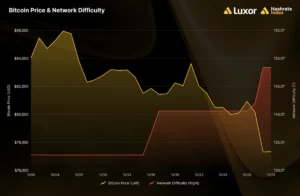
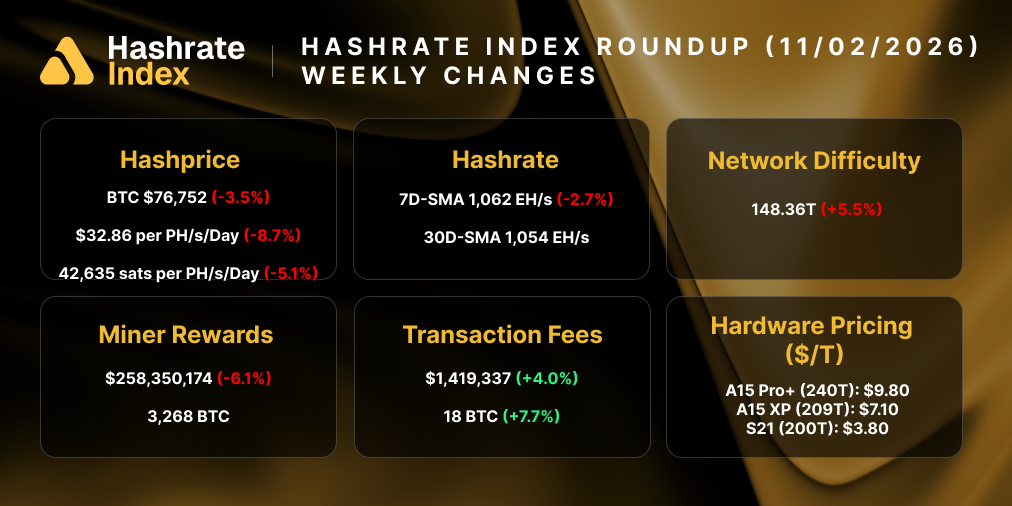
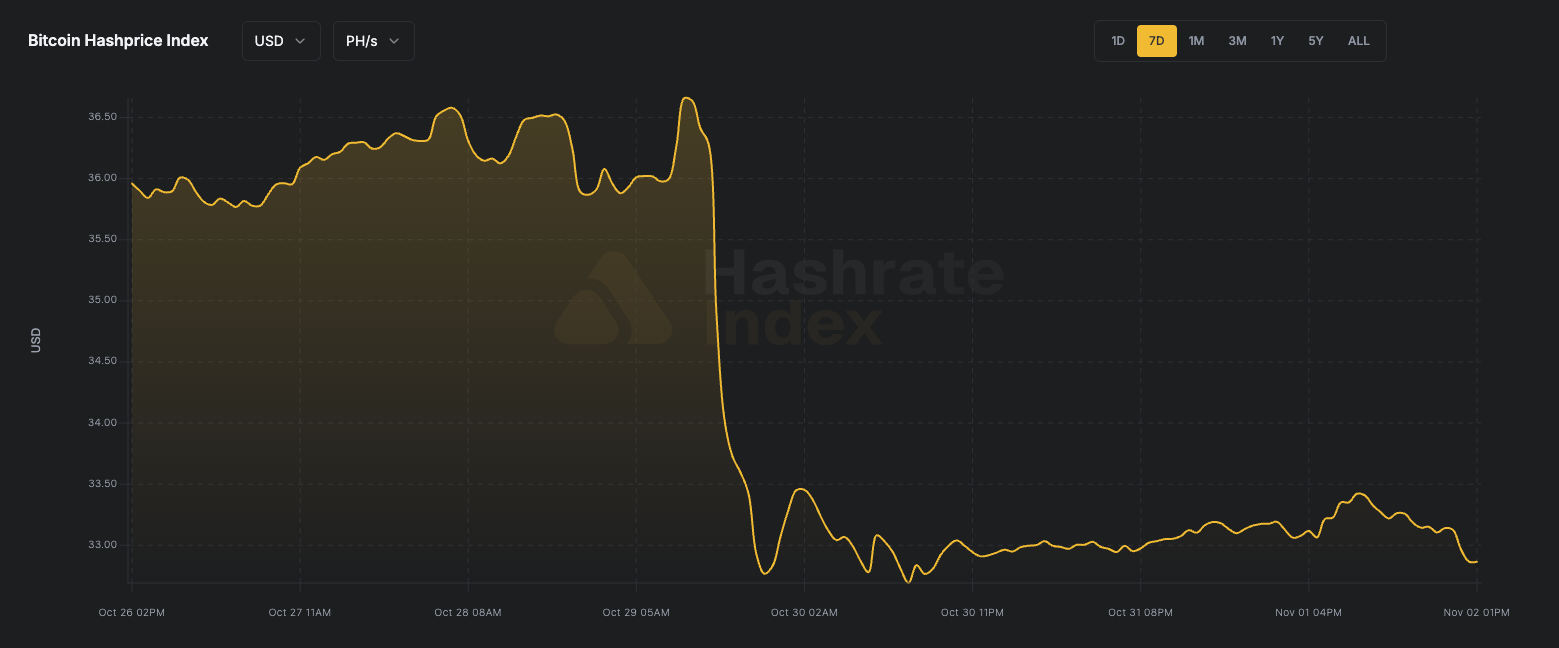
The global Bitcoin mining landscape experienced a week of significant contraction and heightened competitive pressure as of November 2, 2026. Data aggregated by Hashrate Index indicates a confluence of unfavorable macroeconomic and network-level factors, characterized by a 3.5% decline in the price of Bitcoin and an 8.7% reduction in USD-denominated hashprice. As miners grapple with the dual challenges of a depreciating asset price and a 5.5% increase in network difficulty, the industry faces an increasingly precarious operational environment that tests the resilience of even the most efficient mining fleets.
Network Dynamics and the Difficulty Adjustment
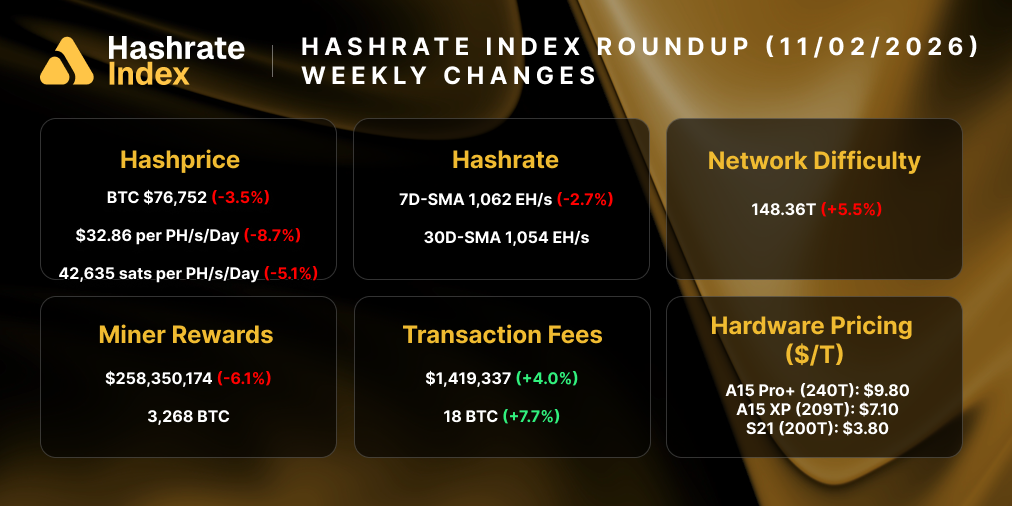
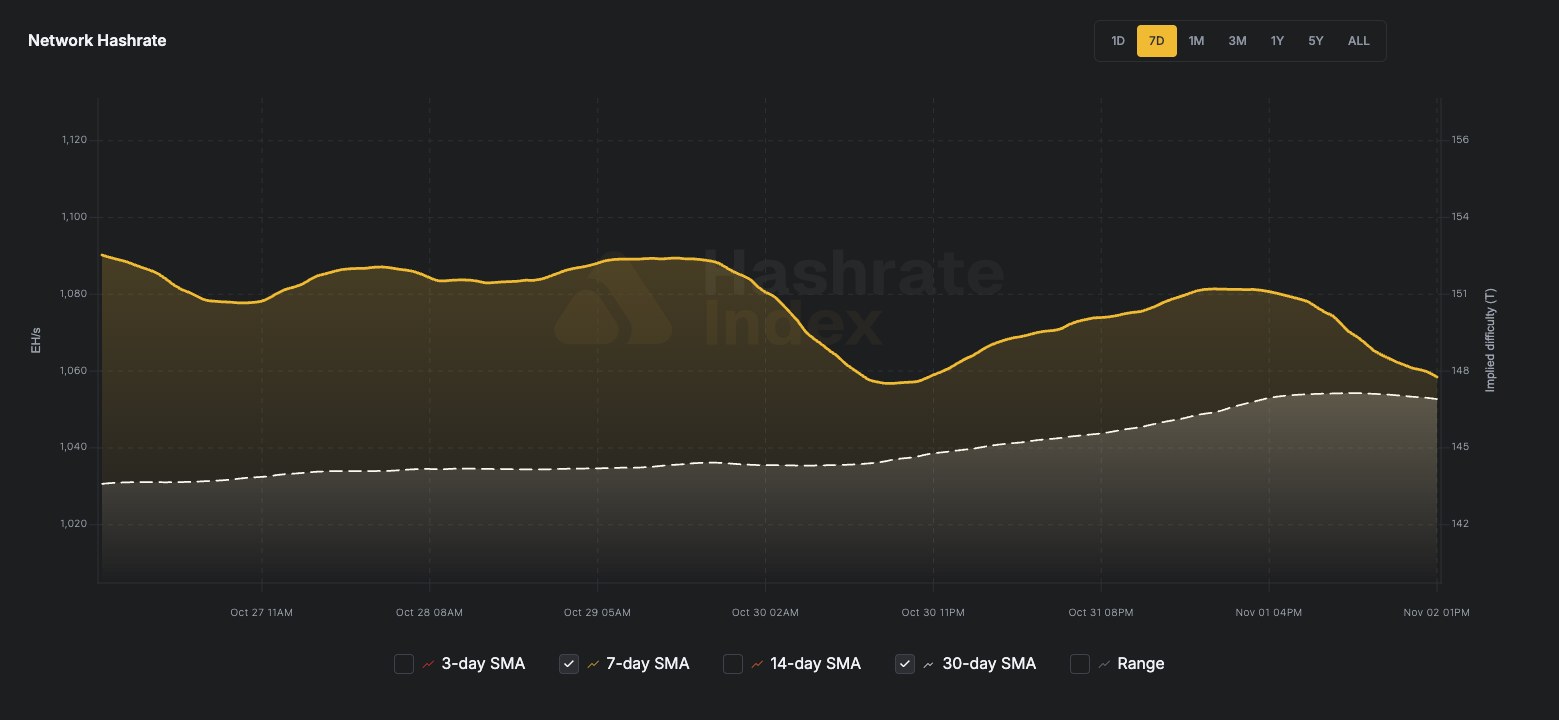
The Bitcoin network underwent a significant difficulty adjustment on October 29, 2026, which saw the difficulty climb by 5.5% to reach 148.36T. This upward adjustment represents a heightened requirement for computational power to secure the same volume of block rewards. Consequently, the network hashrate has seen a modest decline, with the seven-day simple moving average (SMA) dropping from 1,091 EH/s to 1,062 EH/s.
This decrease in hashrate suggests that older, less efficient hardware is being systematically powered down or decommissioned as operating costs outpace revenue. The current average block time of 10 minutes and 17 seconds indicates that the network is slightly underperforming relative to the ideal 10-minute target, a common occurrence following a sharp difficulty increase. Projections for the next adjustment, slated for November 13, 2026, currently estimate a 2.8% decrease, which may provide marginal relief to miners if block production remains stable.
Revenue Contraction and Hashprice Trends
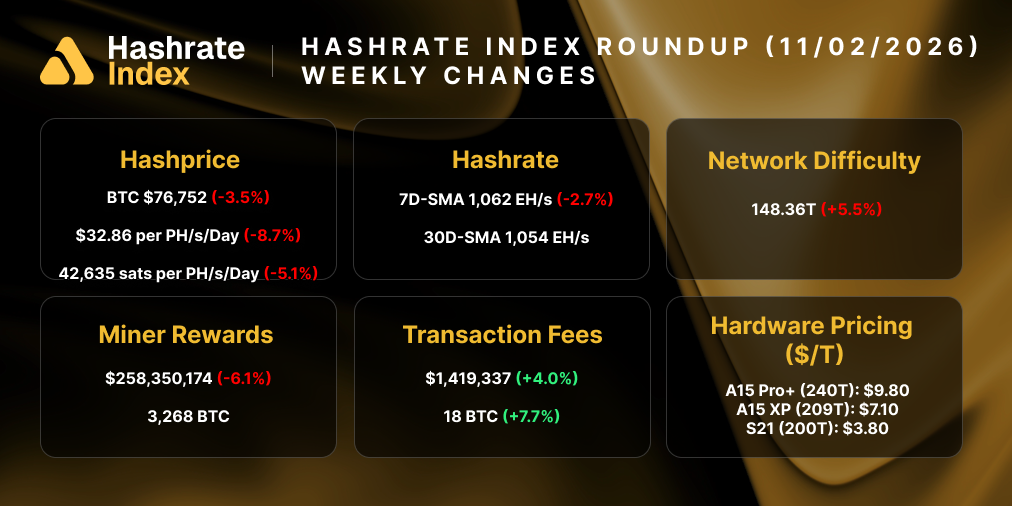
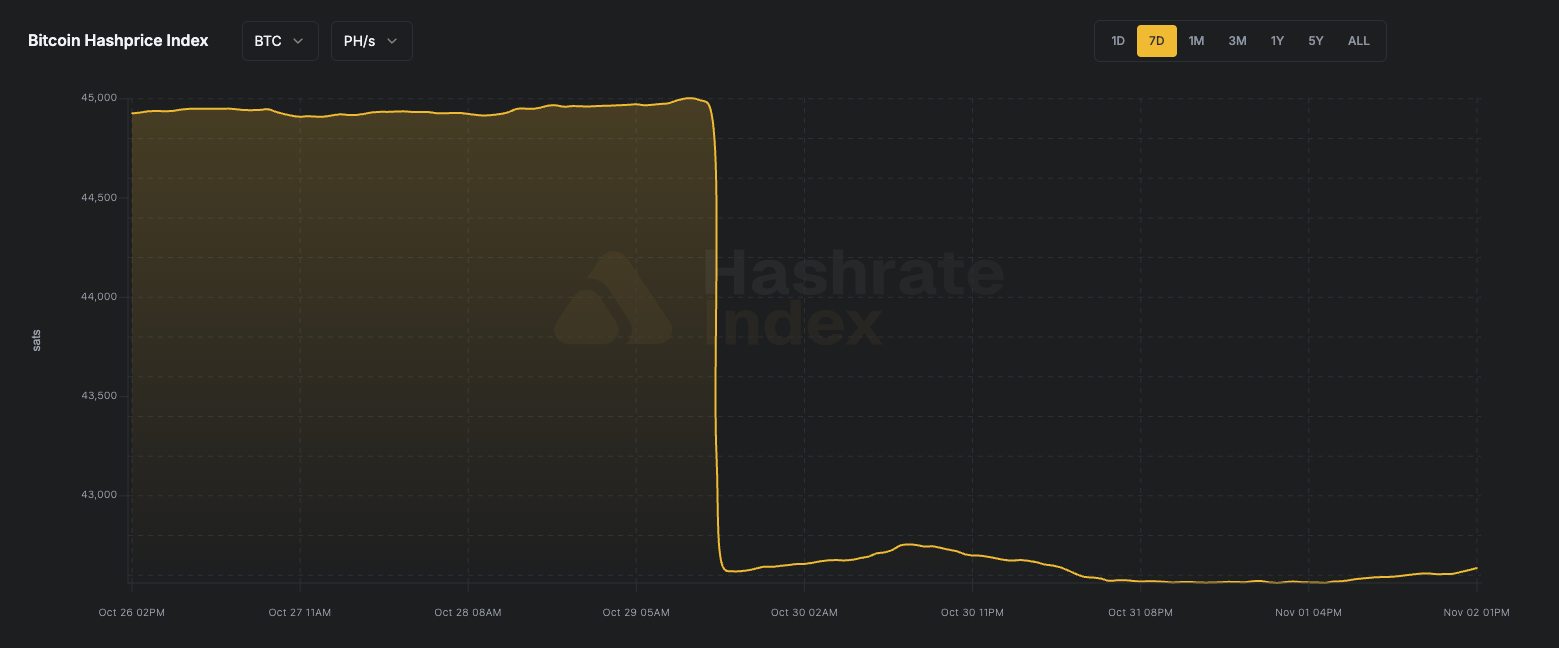
The economic engine of the mining sector—hashprice—has faced a sharp correction. The USD hashprice fell to $32.86 per PH/s/Day, down from $35.99 at the start of the week. This represents an 8.7% decline, placing immense pressure on operators whose energy costs exceed this threshold. When denominated in BTC, the hashprice fell 5.1% to 0.00042635 BTC per PH/s/Day.
Transaction fees provided a small but necessary buffer. Over the past week, miners collected approximately 3,268 BTC in total rewards, with transaction fees accounting for 18 BTC, or roughly 0.55% of the total revenue. While transaction fees saw a 17.4% increase compared to the previous week, their contribution remains relatively low compared to the subsidy provided by the block reward itself. The consistent trend of transaction fees averaging roughly 0.0183 BTC per block underscores the reliance of the industry on the underlying price of Bitcoin, as fee markets have yet to provide the consistent revenue spike required to offset lower block subsidies.
Market Performance of Publicly Traded Mining Entities
Publicly traded Bitcoin mining companies faced a broad sell-off, reflecting investor concern over tightening profit margins. Out of 18 tracked companies, 17 recorded losses for the week. The sector’s median return was -11.0%, with notable decliners including Bitdeer (BTDR), which fell 15.1%, and DMG Blockchain Solutions (DMGI), which saw a 14.3% decline.
Soluna Holdings (SLNH) stood out as a positive outlier, posting a 11.5% gain, highlighting a decoupling from the broader industry trend. Major players like Marathon Digital (MARA) and Riot Platforms (RIOT) saw declines of 5.7% and 7.2%, respectively. The widespread nature of these losses indicates a market-wide repricing of mining equities as investors factor in the lower hashprice and the potential for reduced cash flow in the upcoming quarter. The market capitalization of firms like IREN ($8.94B) and CleanSpark ($1.82B) continues to fluctuate heavily in correlation with the spot price of Bitcoin, reinforcing the beta-like behavior of mining stocks relative to the primary digital asset.
Contextualizing the Current Mining Cycle
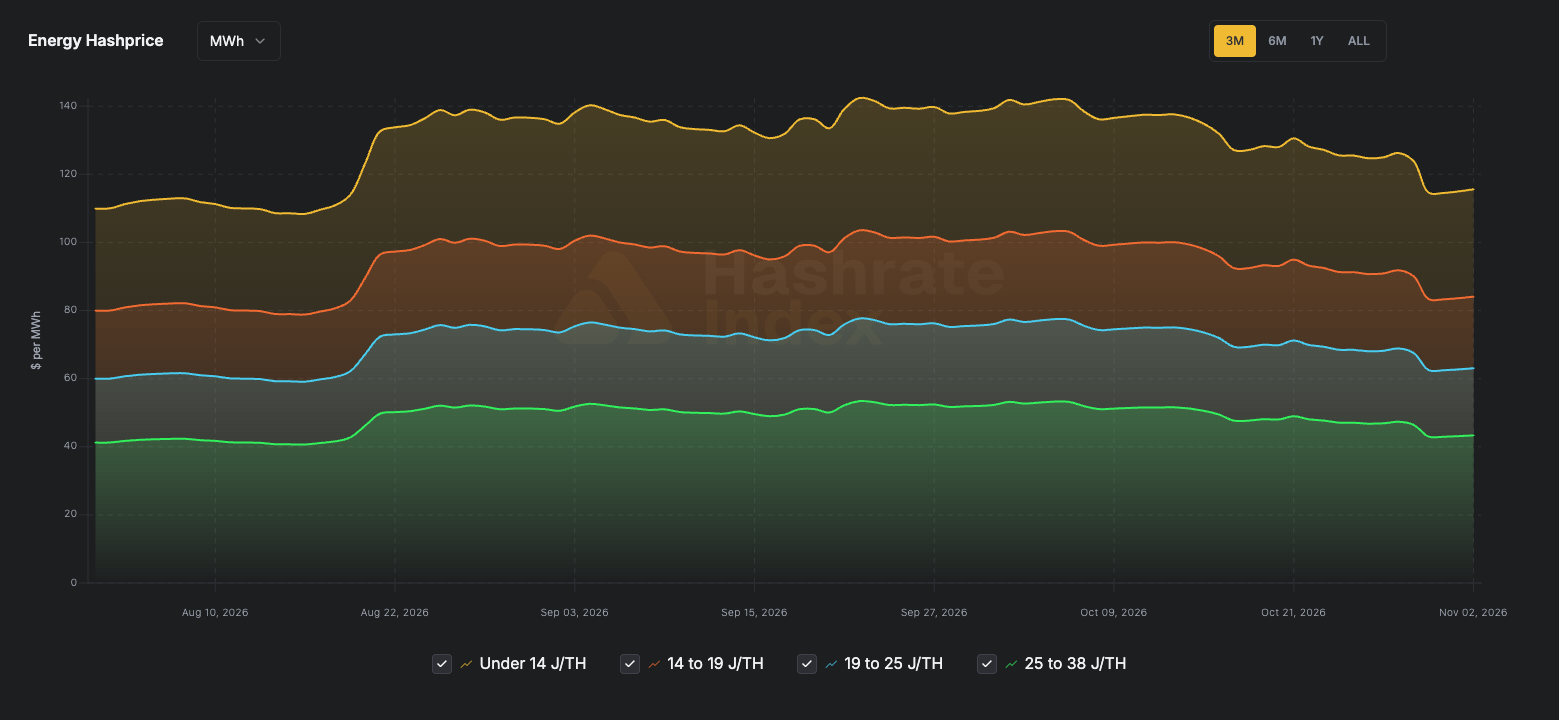
The current mining cycle is defined by the post-halving reality where efficiency is the primary determinant of survival. For miners relying on legacy equipment like the S19 series, the current hashprice of $33 per PH/s/Day is likely at or below the breakeven point, depending on individual power purchase agreements (PPAs).
In response, many operators are turning to firmware optimization, such as the implementation of custom firmware like LuxOS, to improve the hashrate and energy efficiency of their existing fleets. By overclocking or undervolting units like the S19 and S21 series, miners can potentially squeeze out higher margins even in a high-difficulty environment. However, the reliance on hardware optimization is a temporary stopgap. The broader, longer-term trend points toward a massive consolidation within the industry, as smaller, less capitalized miners struggle to maintain operations against larger, vertically integrated firms.
Forward Outlook and Market Sentiment
The Luxor Hashrate Forward Market provides a window into the industry’s expectations for the next six months. Current pricing indicates an anticipated average hashprice of $33.04 (approximately 0.00043 BTC). This suggests that the market expects a period of relative stability in the hashprice, provided that the price of Bitcoin does not face further significant downside pressure.
However, the "wait-and-see" approach currently adopted by many institutional investors regarding mining stocks suggests that the market is awaiting further clarity on the next difficulty epoch. The volatility of the last seven days is consistent with the broader macroeconomic climate, where high-risk assets remain sensitive to interest rate expectations and global liquidity shifts.
Implications of Continued Difficulty Growth
The persistence of high network difficulty, even amidst a price decline, poses a structural challenge. Usually, a drop in Bitcoin price leads to a drop in hashrate, which in turn leads to a downward difficulty adjustment. The current environment—where difficulty remains high even as profitability drops—indicates that either newer, more efficient machines are still being deployed at scale by well-capitalized firms, or that electricity costs for a significant portion of the network are low enough to keep inefficient machines online longer than historically anticipated.
As the industry moves toward the middle of November, the focus will remain on the upcoming difficulty adjustment. If the estimated -2.8% decrease materializes, it may offer a temporary reprieve for mid-tier miners. Conversely, if hashrate continues to prove resilient to price drops, the competition for the fixed supply of daily Bitcoin will continue to compress margins, further accelerating the move toward professionalized, large-scale mining operations and the potential marginalization of smaller, decentralized mining pools.
The current week’s data suggests that the Bitcoin mining sector has entered a consolidation phase. Success in this environment requires not only access to low-cost electricity but also a sophisticated approach to capital management and hardware lifecycle optimization. For stakeholders, the primary metric remains the balance between operational expenditure and the total network hashrate, as the industry continues to navigate the complexities of a post-halving, high-difficulty reality. Investors and operators alike are now closely watching the correlation between hashprice volatility and the potential for further, more significant, shifts in the global hashrate distribution.