
The landscape of industrial-scale Bitcoin mining has undergone a seismic shift over the past twenty-four months, moving away from simple uptime maximization toward a nuanced, software-driven strategy of grid integration. With the release of The Intelligent Miner, Volume II, Luxor Technology Corporation has provided a comprehensive 64-page roadmap for operators navigating this new paradigm. This report, which builds upon the firm’s initial 2025 findings, posits that the modern mining fleet is no longer merely a computing asset, but a flexible load-balancing tool capable of extracting value from the intersection of hardware performance and power market dynamics.
The Evolution of Mining Strategy
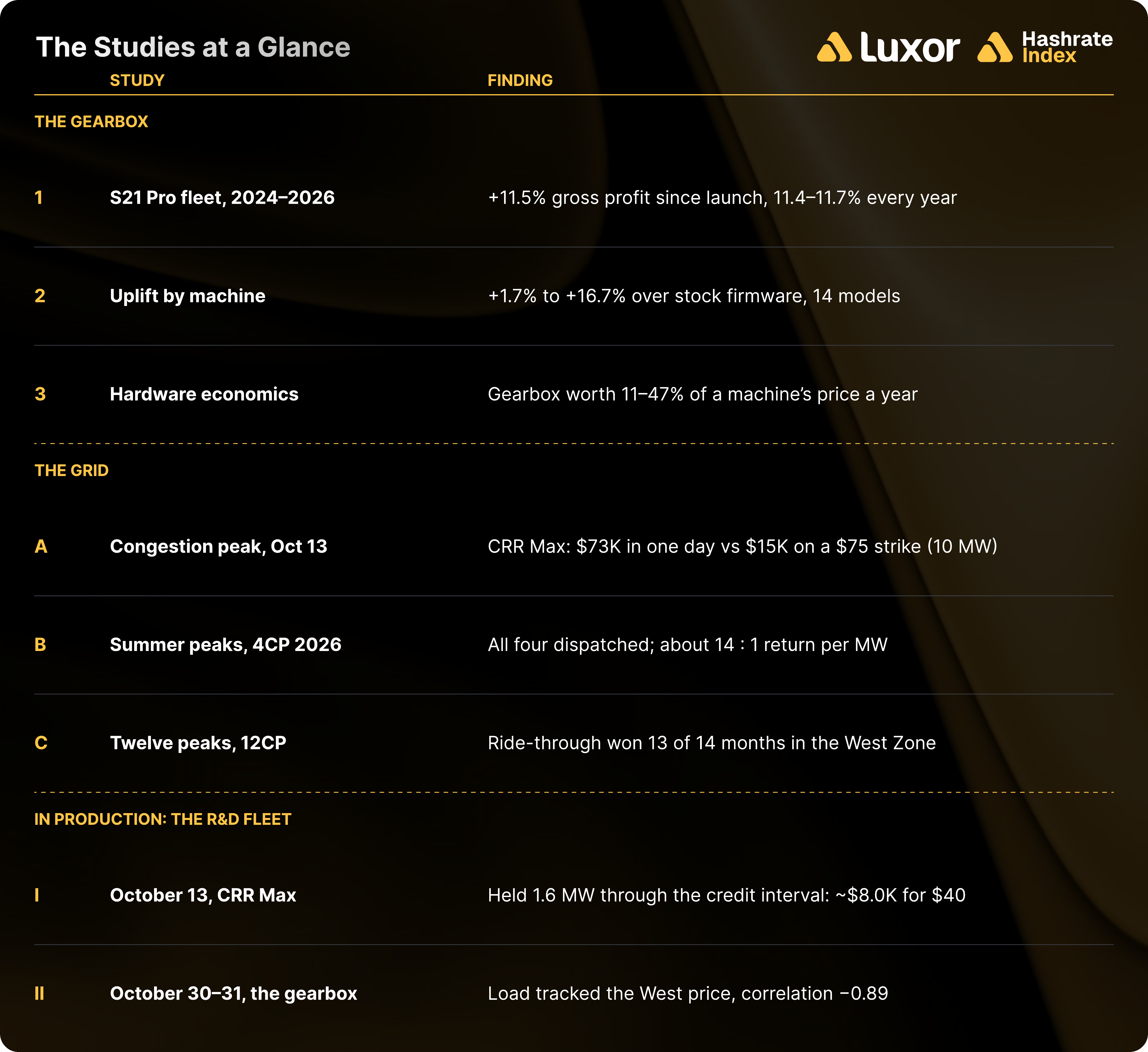
In the inaugural edition of The Intelligent Miner, researchers demonstrated that mining fleets could achieve an 8% to 14% increase in profitability by dynamically shifting operational "gears"—adjusting hash rates in response to power costs—rather than relying on a binary "on-or-off" operational model. That analysis, however, was predicated on the hardware standards of the previous cycle.
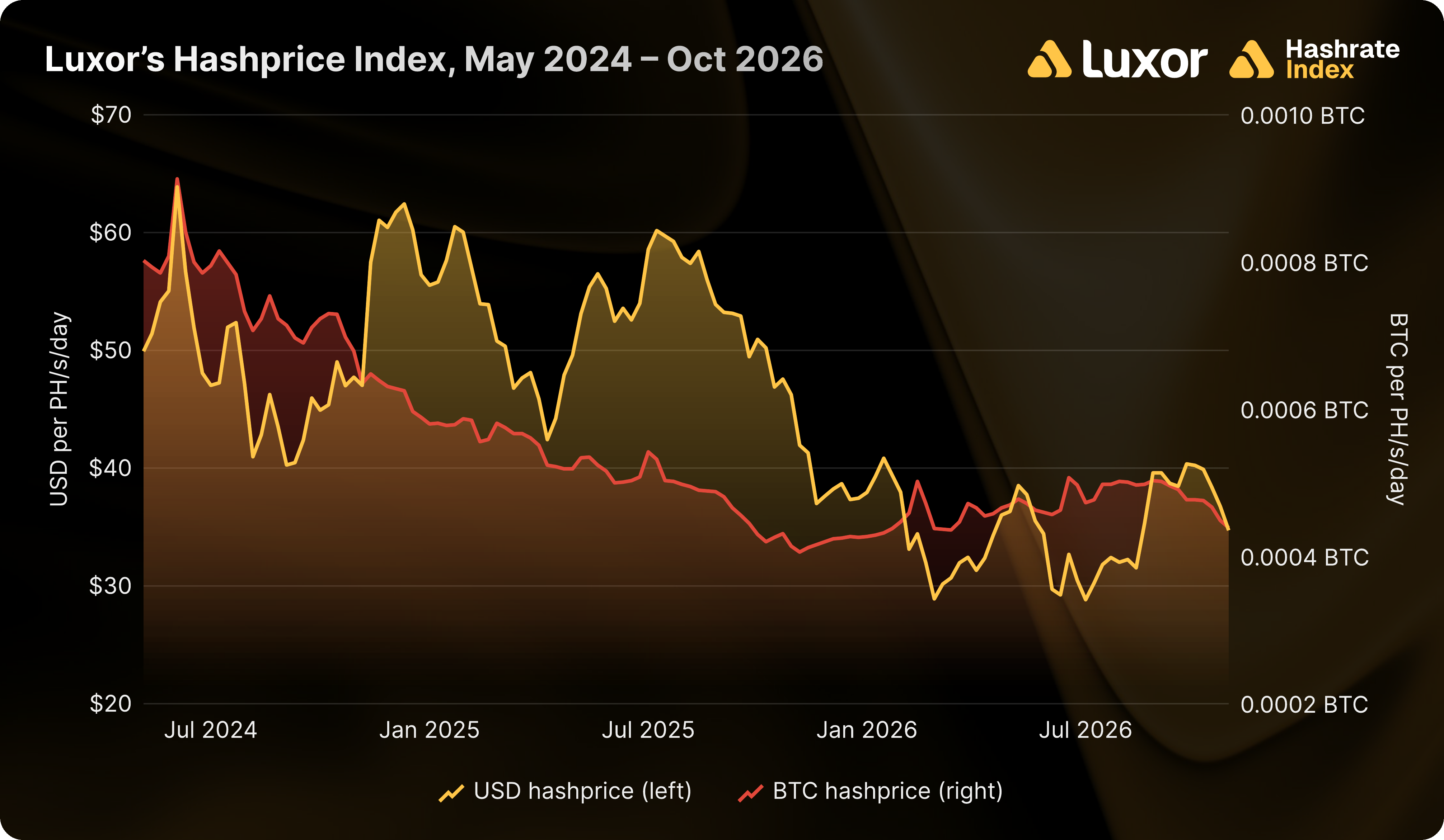
Today, the industry is defined by the S21 class of Application-Specific Integrated Circuits (ASICs). These machines offer significantly higher efficiency and density, changing the threshold at which mining becomes profitable relative to electricity costs. As of late 2026, with the hashprice averaging approximately $35 per PH/s per day, the margin profiles for these units have narrowed. Consequently, the "gearbox" of the machine—the ability to tune performance through firmware—has become the primary source of operational alpha. When combined with intelligent energy management, this creates a secondary stream of revenue that can be the difference between obsolescence and profitability.
Navigating the Modern Power Grid
The second volume of the report moves beyond the machine’s internal settings to examine the journey of a single megawatt as it traverses the infrastructure of the energy grid. As mining operations grow in scale, their interactions with regional transmission organizations (RTOs) and independent system operators (ISOs) have become increasingly sophisticated.
The study categorizes the revenue-generating potential of these operations into three distinct buckets: congestion credits, coincident-peak transmission charges, and ancillary services. Each of these financial instruments is now accessible to miners who possess the requisite software-defined infrastructure.
- Congestion Credits: These represent the value created when miners locate their operations in areas with transmission bottlenecks. By consuming power where it is otherwise "stranded" or congested, miners can effectively lower their cost basis, provided they have the analytical tools to predict these market movements.
- Coincident-Peak Transmission Charges: By strategically curtailing load during periods of peak grid demand, miners can mitigate the high transmission fees often passed down by utilities. This requires precise, real-time communication between the mining management software and the utility’s telemetry systems.
- Ancillary Services: This involves providing frequency regulation and demand response to the grid operator. By offering the ability to ramp load up or down within seconds, miners can monetize the flexibility of their electrical load, turning a cost center into a provider of grid stability.
Data-Driven Insights: A Two-Year Perspective
The report provides a granular look at the hashprice index from May 2024 through October 2026. This period, characterized by high volatility and the post-halving subsidy reduction, highlights the necessity of the "Intelligent Miner" approach. During periods where the Bitcoin network difficulty reached record highs, operators without the capability to optimize their energy consumption faced immediate margin compression.
The data confirms that firms utilizing Luxor’s full technology stack—which includes proprietary firmware, hashrate derivatives for hedging, and dedicated energy management services—were able to sustain operations during market downturns that forced less-equipped competitors to shutter. This data-driven approach allows for a "synthetic" profitability that is less reliant on the raw price of Bitcoin and more tethered to the operational efficiency of the fleet.
The Technological Stack and Operational Execution
Luxor’s approach to the "Intelligent Miner" is predicated on an integrated suite of tools. The firm’s "Commander" software serves as the central nervous system, enabling fleet managers to monitor individual ASIC performance while simultaneously interacting with energy markets.
"The transition from simple mining to energy-aware computing is the defining trend of this cycle," notes the research team. By leveraging firmware that allows for real-time voltage and frequency scaling, operators can effectively "throttle" their power consumption to match the fluctuations of the wholesale energy market. This capability is no longer an optional luxury but a fundamental requirement for any large-scale operation intending to remain competitive in a high-hashrate environment.
Implications for the Broader Energy Infrastructure
The implications of this strategy extend beyond the mining industry. As global grids grapple with the intermittency of renewable energy sources, the demand for flexible, "interruptible" loads is increasing. Bitcoin miners, by virtue of their ability to be instantly curtailed without damaging the underlying hardware, are uniquely positioned to serve as the "battery" of the future grid.
By acting as a load-balancer, miners can support the integration of more wind and solar power into the grid. When energy supply exceeds demand, the mining load provides a floor for electricity prices, ensuring that renewable projects remain viable. Conversely, when the grid is stressed, the mining load is the first to be shed, ensuring that power remains available for critical residential and commercial infrastructure. This symbiotic relationship between energy generation and compute consumption is expected to be a major theme in energy policy throughout the remainder of the decade.
Official Response and Future Outlook
Representatives from Luxor Technology Corporation have indicated that the publication of this guide is the first step in a broader educational series. Over the coming weeks, the company intends to release the content of the guide in serialized installments on the Hashrate Index platform. This effort is aimed at democratizing the technical knowledge required to manage modern mining fleets, ensuring that operators of all sizes can benefit from the optimization techniques discussed.
"The goal of this guide is to provide a standardized framework for what we call ‘Intelligent Mining,’" said an analyst involved in the project. "It is not just about having the newest machine; it is about having the intelligence to know exactly when to run that machine at full capacity and when to leverage the grid to extract additional value. We are moving toward a future where the distinction between an energy company and a mining company is increasingly blurred."
Conclusion: The Road Ahead
As the Bitcoin mining industry matures, the barrier to entry has risen. The days of plugging in machines and letting them run indefinitely are effectively over. The modern miner must be a hybrid entity: part data center operator, part financial engineer, and part energy market participant.

The insights provided in The Intelligent Miner, Volume II underscore that while hardware remains the foundation of the network, software-defined energy management is the ceiling for profitability. For stakeholders across the industry—from individual mining operators to large-scale energy firms—the message is clear: the future belongs to those who can treat their energy consumption as a variable, tradable, and highly optimized asset.
For those looking to implement these strategies, the industry now has a clear, data-backed roadmap to follow. The integration of hashrate derivatives, firmware optimization, and grid-responsive energy management represents the next evolution of the Bitcoin network, ensuring that mining remains a robust, flexible, and sustainable component of the global energy economy. As the industry continues to evolve, further research into these operational efficiencies will be critical for maintaining the network’s security and long-term economic viability.