
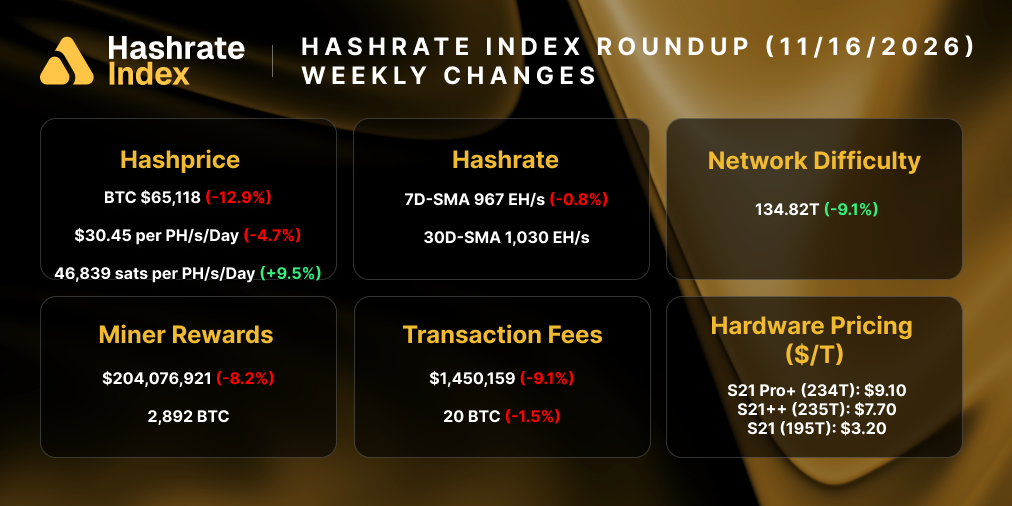
The global Bitcoin mining landscape faced a period of significant consolidation and volatility during the week ending November 16, 2026, as a sharp decline in the price of Bitcoin triggered a cascade of adjustments across mining network metrics and equity markets. The benchmark cryptocurrency saw its valuation drop by 12.9% over the seven-day window, sliding from approximately $74,725 to $65,118. This downward pressure, combined with a 9.1% reduction in network mining difficulty, has fundamentally altered the short-term profitability outlook for industrial-scale operations worldwide.
The Macro Environment and Price Correlation
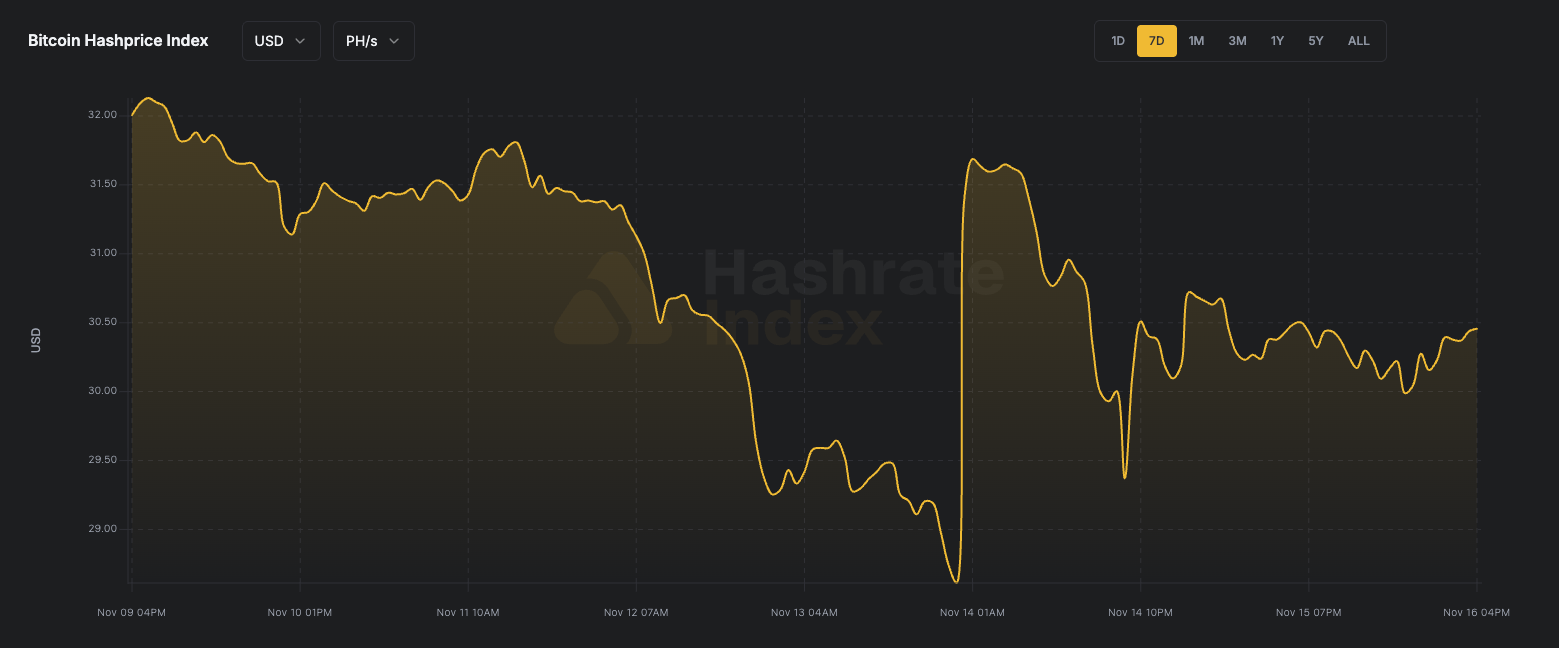
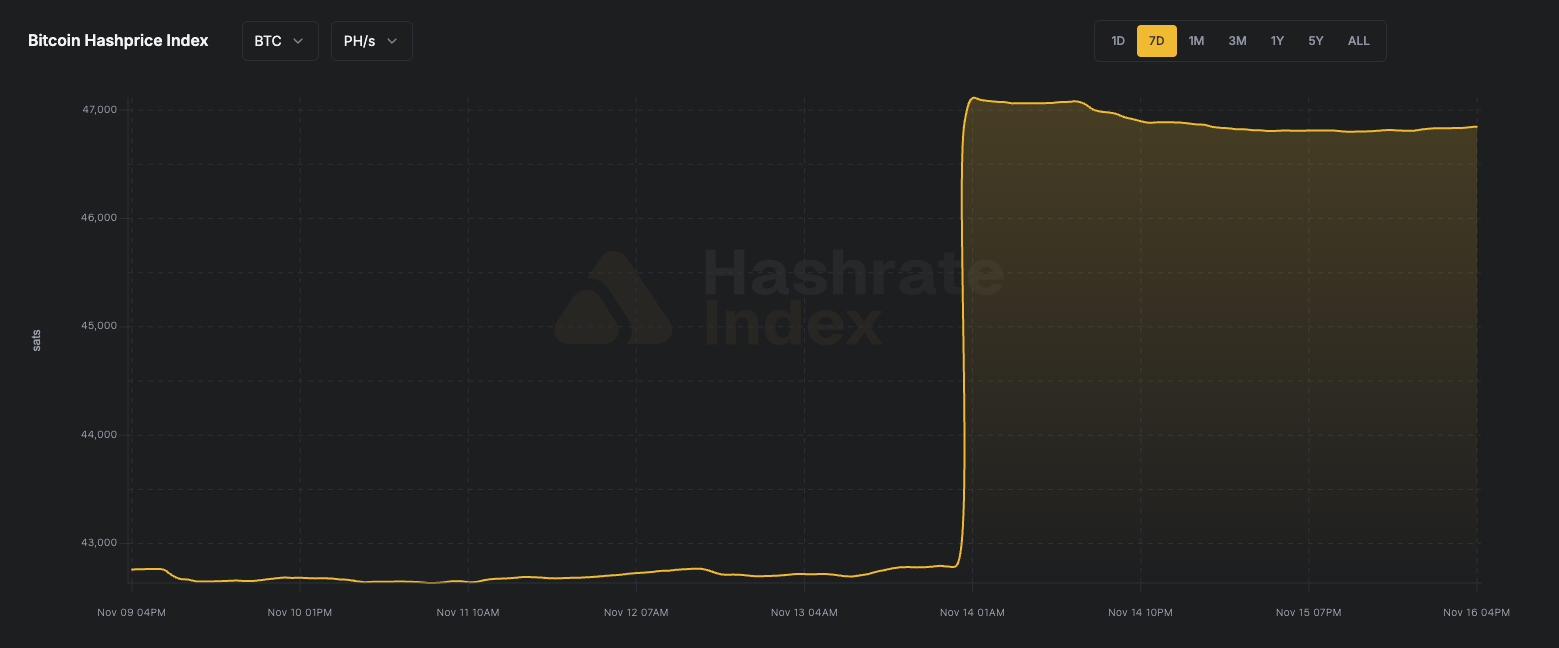
The sharp contraction in Bitcoin’s spot price has exerted immense pressure on miners, who rely on hashprice—a metric representing the expected revenue per unit of hashing power—to determine operational feasibility. During this reporting period, the USD-denominated hashprice fell by 4.7%, settling at $30.45 per PH/s/Day. This decline highlights the tightening margins for operators, particularly those relying on older-generation hardware or high-cost energy contracts.
Despite the USD-denominated revenue squeeze, Bitcoin-denominated hashprice actually experienced a 9.5% increase, rising to 0.00046839 BTC per PH/s/Day. This divergence is a technical byproduct of the difficulty adjustment mechanism; when network difficulty drops significantly—as it did on November 14, 2026, with a 9.1% correction to 134.82T—the cost of producing a single unit of hash becomes cheaper for those remaining on the network. Consequently, miners who maintained their uptime during the difficulty adjustment phase saw a temporary improvement in their BTC-denominated rewards, even as the fiat value of those rewards plummeted.
Network Dynamics and Difficulty Adjustments
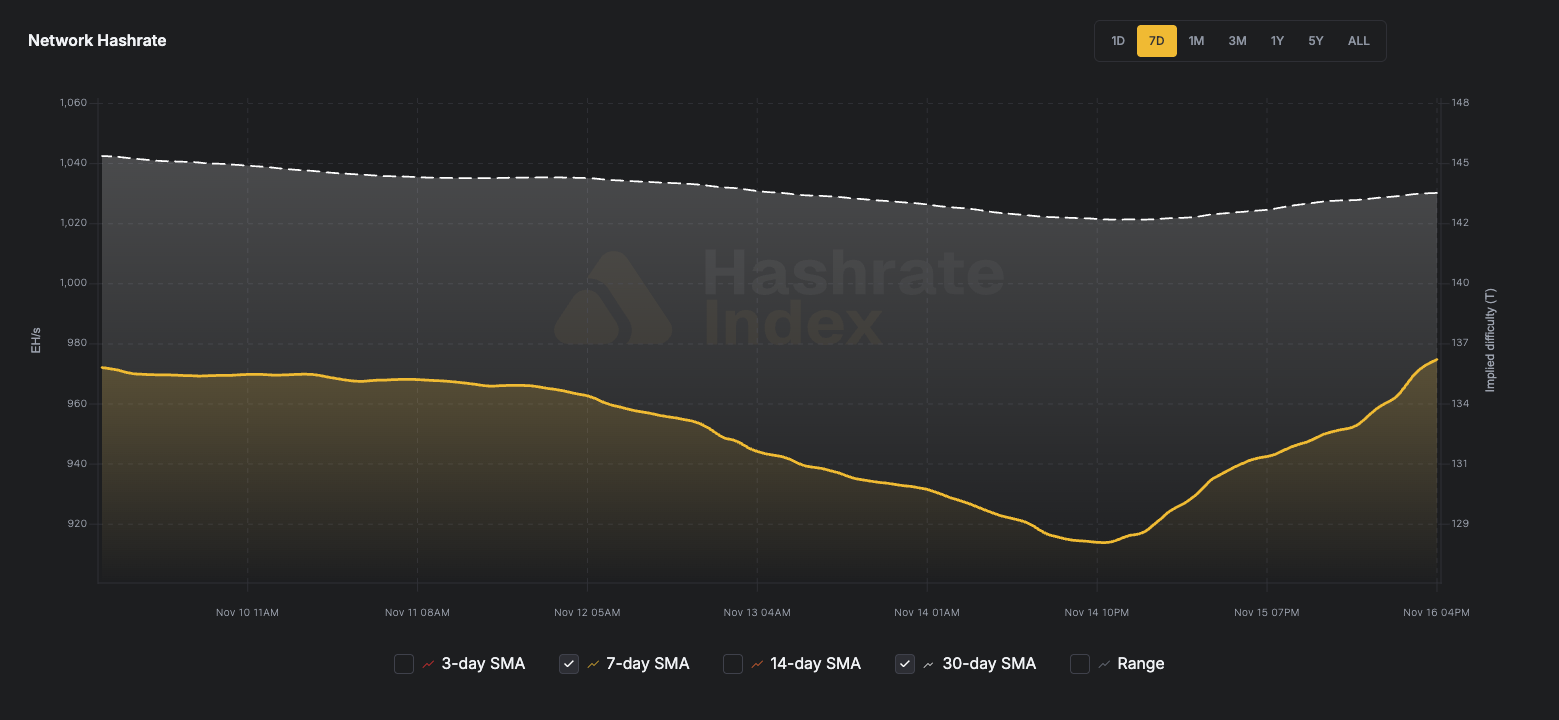
The Bitcoin network experienced a slight contraction in total hashrate, with the seven-day simple moving average (SMA) drifting from 975 EH/s to 967 EH/s. While this 0.8% decrease is marginal, it reflects a broader industry trend where operators are increasingly selective about which machines to keep online. The 30-day SMA, which sits at a more robust 1,030 EH/s, suggests that the industry is still operating at historically high levels of computational output despite the week’s price-driven volatility.
The most critical event of the week was the difficulty adjustment on November 14. Difficulty, which dictates how much computational work is required to solve a block, serves as the network’s self-regulating mechanism. The 9.1% downward adjustment was a necessary response to the exodus of less efficient rigs that became unprofitable as Bitcoin’s price moved lower earlier in the month.
Looking forward, analysts anticipate a significant rebound in network difficulty. Early estimates for the next adjustment, slated for November 26, 2026, suggest an increase of approximately 14.8%. This projected uptick indicates that while some machines were powered down, the underlying industrial capacity of the mining sector remains resilient, and the competitive environment is expected to intensify rapidly as the network recalibrates.
Transaction Fees and Revenue Composition
Miners generated a total of approximately 2,892 BTC in block rewards over the past week, with a total market value of roughly $204 million. Transaction fees, which act as a secondary revenue stream for miners, accounted for 20 BTC, or approximately $1.45 million. This represents a mere 0.71% of total block rewards, underscoring a period of relatively low network congestion and transactional activity.
While the weekly average fee per block was 0.0229 BTC—a marginal increase of 0.6% from the previous week—the broader trend over the last month shows an 18.5% increase in fee-based revenue. However, the current levels are insufficient to provide a meaningful hedge against the drop in block subsidy value. For miners, the reliance on the primary block reward remains absolute, leaving them highly sensitive to price fluctuations and the halving-adjusted subsidy levels.
Implications for Mining Equities
The equity markets mirrored the volatility seen in the mining hardware sector. Of the 18 major publicly traded Bitcoin mining companies tracked, 15 saw their share prices decline over the seven-day period. The median stock price change was -10.0%, reflecting investor apprehension regarding the compressed margins of mining operations.
Notable losers included Bitdeer (BTDR), which saw a 31.9% decline, and Canaan (CAN), which fell by 30.0%. These double-digit losses illustrate the sensitivity of mining stocks to the underlying Bitcoin price and the broader risk-off sentiment in the cryptocurrency market. Conversely, some niche operators bucked the trend; CANG experienced a 32.4% rally, highlighting the potential for volatility and speculative interest in smaller-cap mining entities. Market leaders like Riot Platforms (RIOT) and Marathon Digital (MARA) saw more moderate movements, with Riot falling 3.4% and Marathon remaining flat, suggesting that institutional investors may be viewing these established players as relative safe havens amidst the broader market turbulence.
Industry Outlook and Forward Markets
The forward market, which allows miners to hedge their future production, is currently pricing in an average hashprice of $28.01 (or 0.00043 BTC) over the next six months. This pricing reflects a cautious outlook among institutional participants who are hedging against potential further downside in Bitcoin prices while also acknowledging the potential for future difficulty increases.
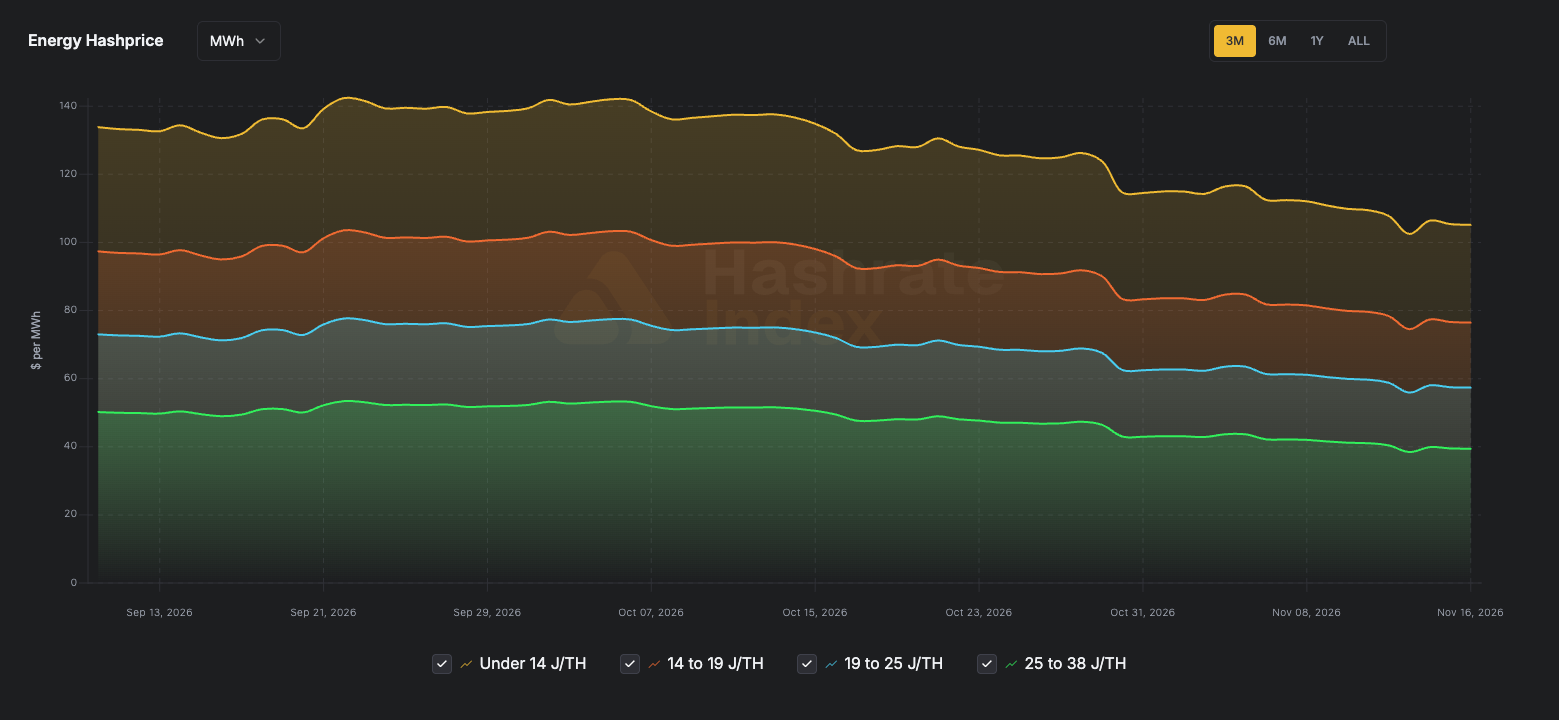
For individual operators, the current $30 per PH/s/Day hashprice threshold is a critical inflection point. At this level, many miners utilizing older infrastructure—such as the S19 series—are hovering at or below their breakeven cost. This has led to an increased focus on operational efficiency. Technologies such as custom firmware, which allow operators to optimize power consumption and hashrate output, have become essential tools for survival. Companies like Luxor, through initiatives like LuxOS, are seeing increased demand as miners look to squeeze every possible percentage point of efficiency out of their existing fleets to avoid having to shutter operations entirely.
Broader Impact and Conclusion
The events of the week ending November 16, 2026, serve as a stark reminder of the cyclical nature of the Bitcoin mining industry. The interplay between Bitcoin’s market valuation, the automated difficulty adjustment, and the capital expenditure-heavy nature of mining creates a feedback loop that rewards efficiency and penalizes debt-heavy or inefficient operations.
The 9.1% difficulty drop provided a temporary reprieve for miners, allowing them to capture a larger share of the network’s block rewards. However, with a substantial difficulty increase expected in late November, the window for these higher margins is narrowing. As we look toward the final weeks of 2026, the focus will remain on the sustainability of current mining fleets. The ability of companies to manage their energy costs, secure efficient hardware, and maintain a strong balance sheet in the face of fluctuating prices will determine which firms emerge from this period of consolidation as market leaders.
As the industry navigates these choppy waters, the transparency provided by on-chain metrics and hashprice indices remains vital. For investors and operators alike, the data from the past week confirms that while the network is robust and self-correcting, the individual profitability of miners remains inextricably linked to the volatile price action of the digital asset itself. The coming months will likely see further consolidation as the industry continues to professionalize and move toward a more energy-efficient and capital-disciplined future.