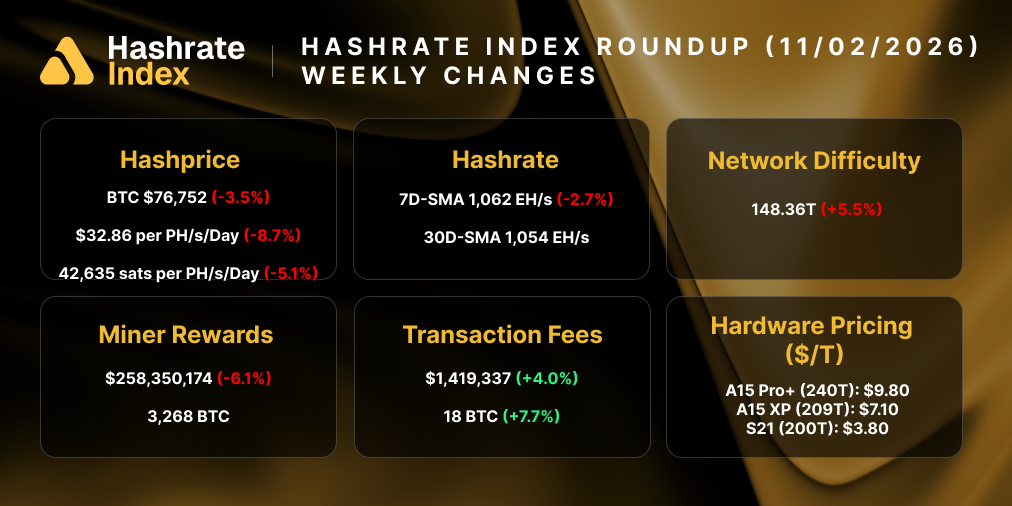
The global Bitcoin mining sector faced a challenging week ending November 2, 2026, as a confluence of declining asset prices, reduced operational efficiency, and a significant upward adjustment in network difficulty pressured profit margins across the industry. Data indicates a broad retreat in the market, with Bitcoin’s spot price retracting by 3.5% to approximately $76,752, dragging down mining profitability metrics, specifically hashprice, which fell by 8.7% over the seven-day period.
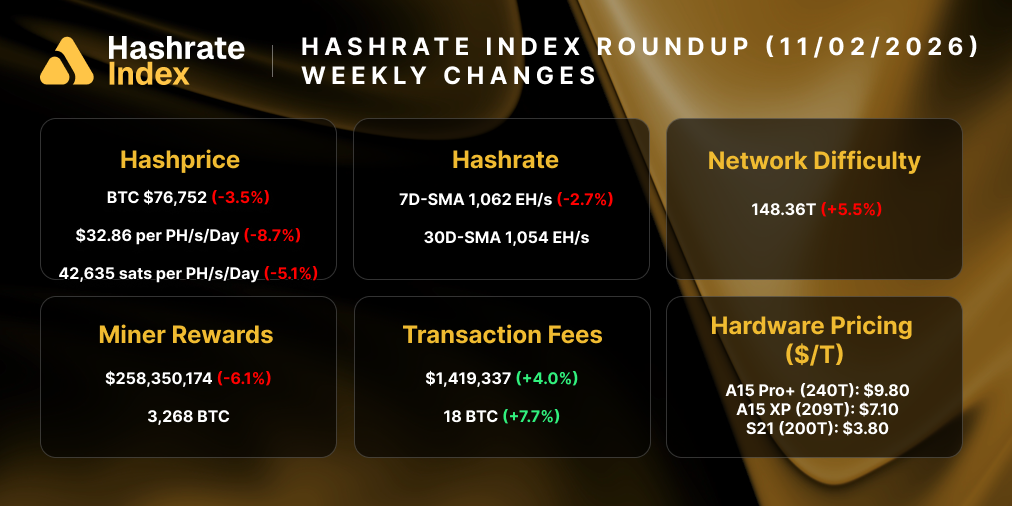
This week’s performance highlights the inherent volatility of the Proof-of-Work mining ecosystem. As miners contend with a year-to-date performance dip of 12.2% in Bitcoin’s valuation, the operational burden has intensified. The total yield for the network during this cycle amounted to 3,268 BTC, valued at approximately $258 million. While transaction fees saw a modest increase of 17.4%, they remain a marginal component of overall miner revenue, accounting for only 0.55% of the total block rewards, or roughly $1.42 million.
Network Dynamics and Hashrate Volatility
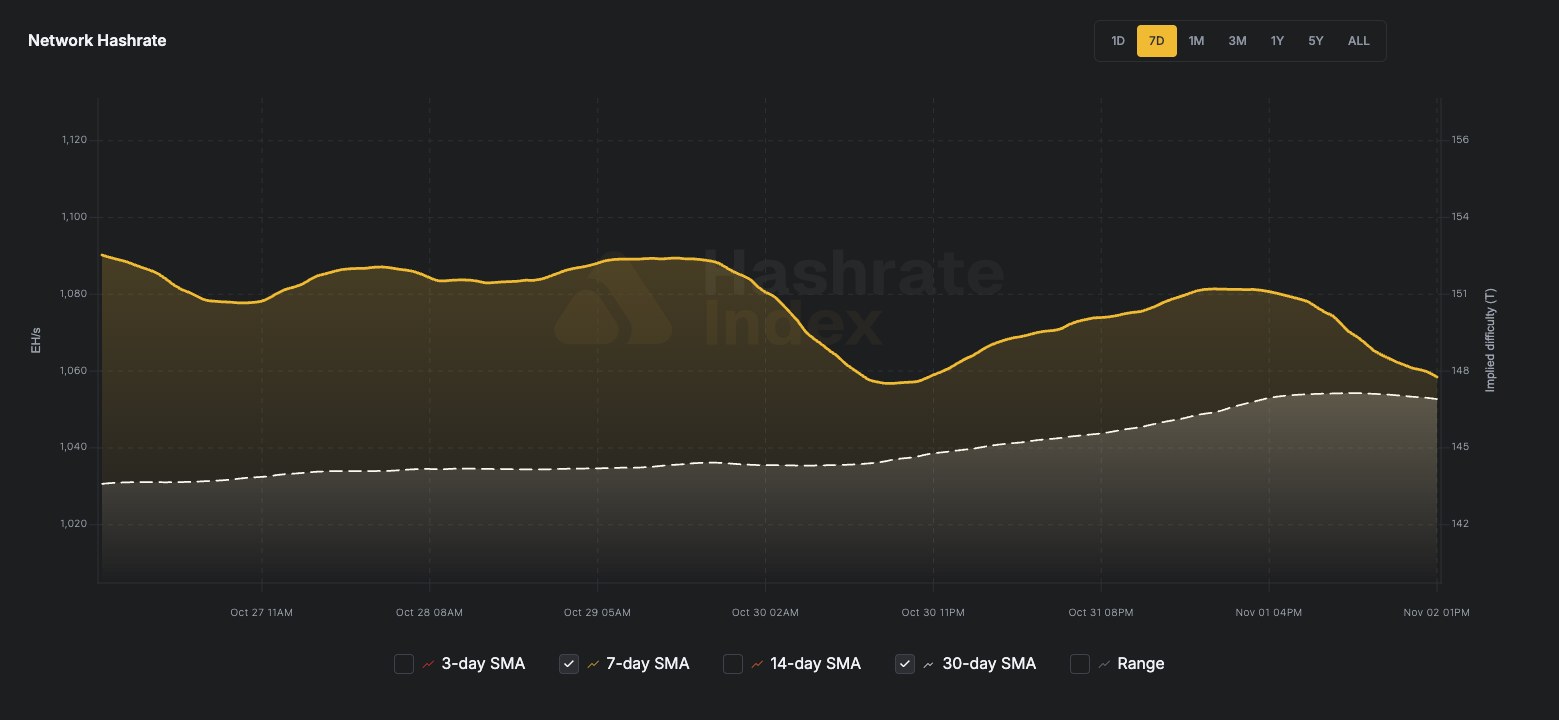
The Bitcoin network experienced a slight cooling in computational power this week, with the seven-day simple moving average (SMA) of the total network hashrate dipping by 2.7%. The hashrate fell from 1,091 EH/s to 1,062 EH/s. This contraction occurred against the backdrop of the most recent difficulty adjustment on October 29, 2026, which saw a 5.5% increase, pushing the network difficulty to a new level of 148.36T.
The mechanism of difficulty adjustment is designed to maintain a consistent block production time of roughly ten minutes. However, with the current average block time hovering at 10 minutes and 17 seconds, the network is slightly lagging behind the ideal pace. This discrepancy, combined with the influx of new, more efficient hardware entering the market, often creates a "difficulty squeeze." Analysts are already projecting a further adjustment, with current estimates pointing to a potential 2.8% decrease in the next cycle, expected to occur around November 13, 2026. While early-epoch estimates are notoriously susceptible to noise, they provide a necessary forward-looking indicator for firms planning their capital expenditure.
The Erosion of Hashprice
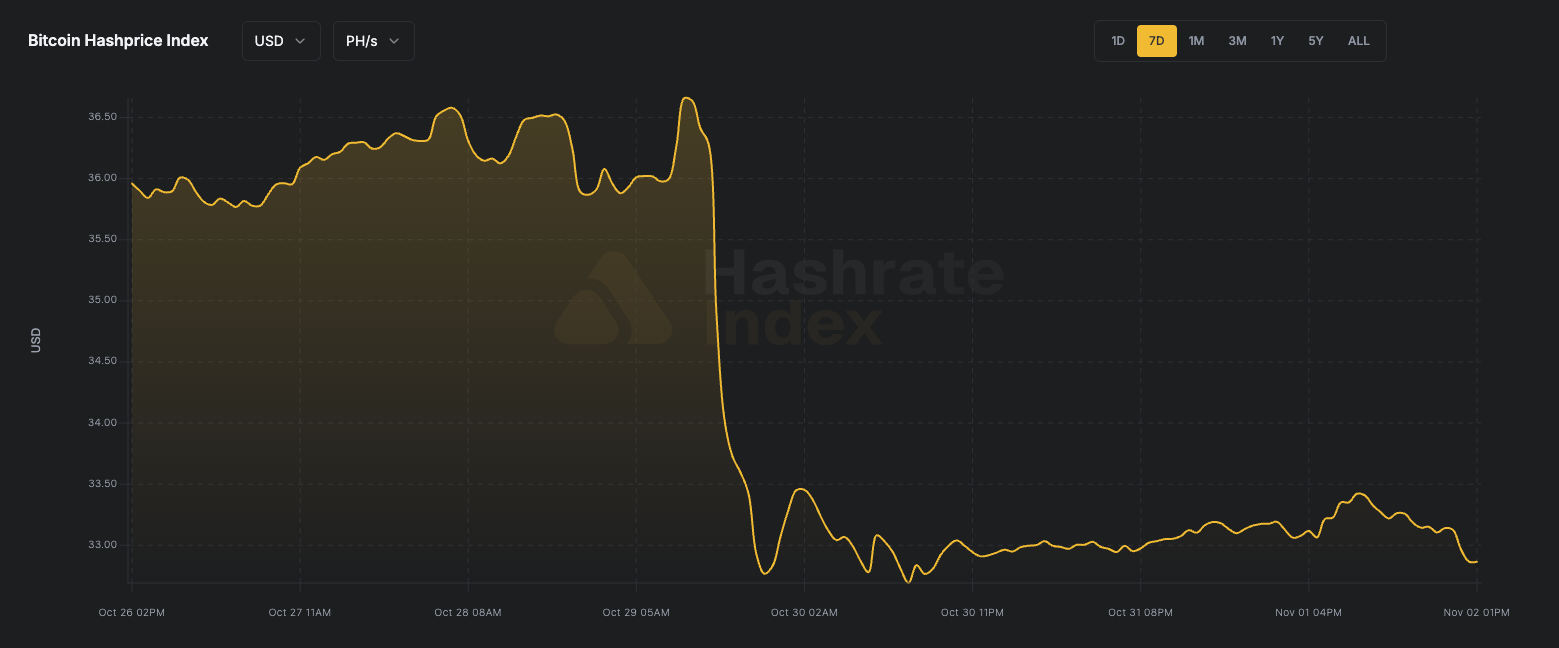
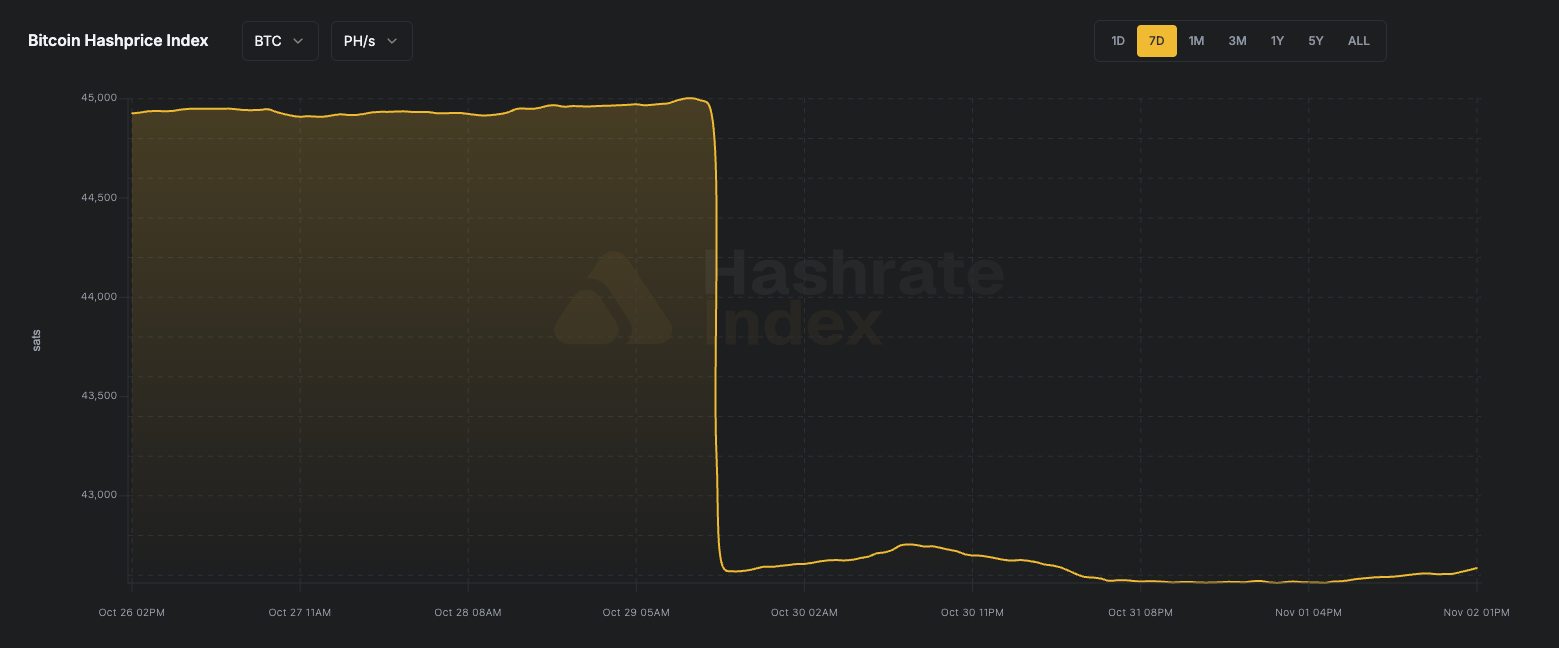
The most critical metric for industry participants—USD hashprice—declined from $35.99 per PH/s/Day to $32.86 per PH/s/Day. This drop reflects the tightening economic environment for miners who must balance electricity costs against a decreasing revenue-per-unit-of-compute.
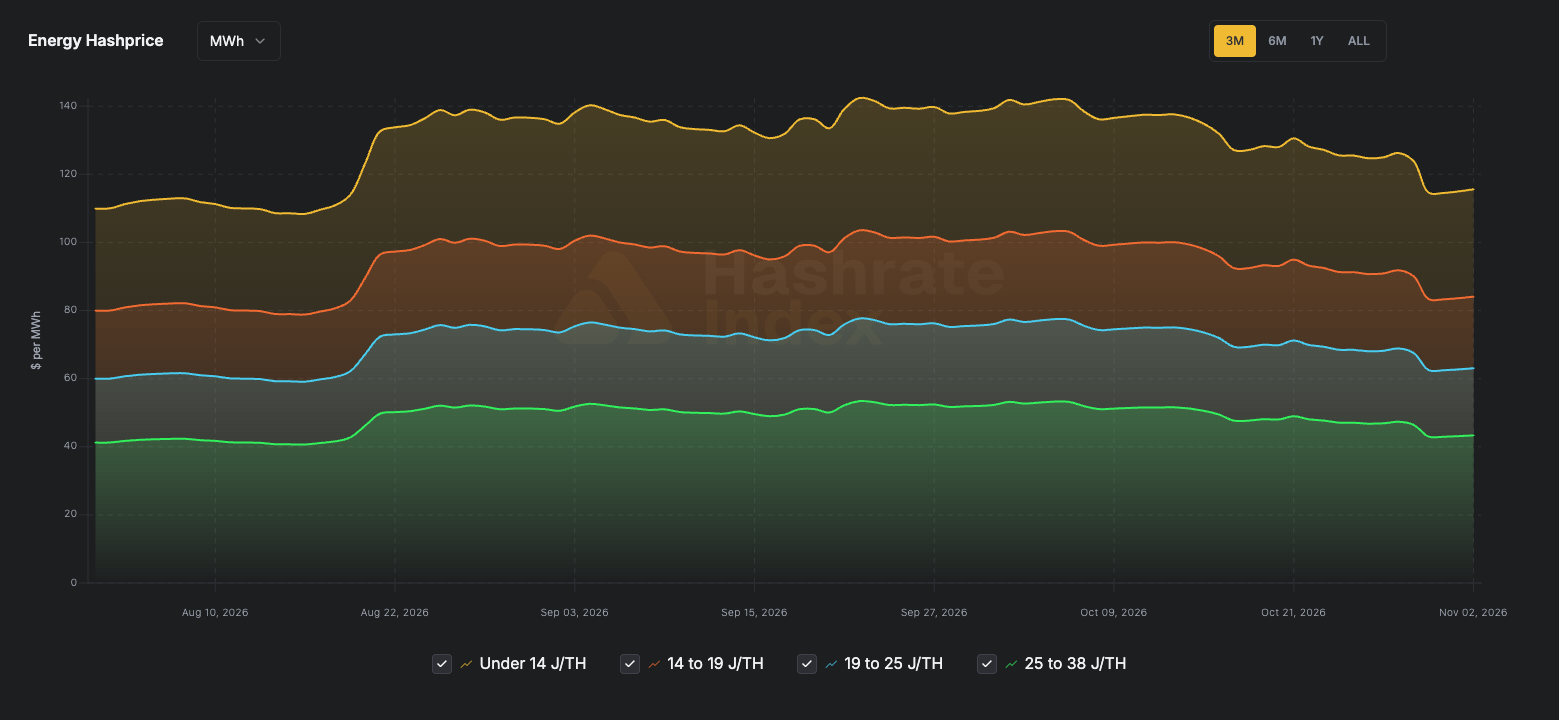
When hashprice reaches these levels, the threshold for operational profitability narrows significantly. For many, the breakeven point is dictated by the efficiency of their specific hardware fleet. Operators utilizing older, less efficient rigs, such as certain iterations of the S19 series, are increasingly facing the choice of either upgrading to current-generation hardware—like the S21 series—or curtailing operations during peak energy cost hours. The integration of advanced firmware, such as that provided by companies like Luxor, has become a standard industry strategy to squeeze additional efficiency from existing infrastructure, effectively delaying the obsolescence of older machines.
Mining Equity Performance and Investor Sentiment
Publicly traded Bitcoin mining companies mirrored the broader market downturn, with nearly the entire sector experiencing significant valuation compression. Out of 18 tracked mining stocks, 17 recorded declines during the week. The median stock price movement for the group was -11.0%.
Notable laggards included Bitdeer (BTDR), which saw its stock price fall by 15.1%, and DMG Blockchain (DMGI), which dropped 14.3%. Even established industry leaders like IREN and Marathon Digital (MARA) were not spared, recording declines of 13.1% and 5.7%, respectively. The only notable exception to this trend was Soluna Holdings (SLNH), which bucked the downward pressure with an 11.5% gain, signaling potential idiosyncratic strength or investor sentiment shift independent of the broader mining sector’s headwinds.
The widespread decline in mining equities suggests that investors are pricing in the long-term impact of the compressed hashprice environment. As mining becomes more capital-intensive, firms with lower debt-to-equity ratios and more favorable power purchase agreements (PPAs) are likely to emerge as the survivors of this cycle.
Transaction Fee Landscape
Transaction fees, while historically volatile, offered a slight glimmer of stability for miners this week. The average transaction fee per block rose to 0.0183 BTC, a 17.4% increase over the prior week’s 0.0156 BTC. While still representing a small fraction of total income, any growth in fee-based revenue is welcomed by operators, as it provides a buffer against the reduction in the block subsidy.
The stability of these fees is often correlated with network congestion and the adoption of various Layer-2 scaling solutions. As the ecosystem continues to evolve, miners are increasingly looking toward high-fee environments—such as spikes in Ordinals or BRC-20 activity—to supplement their income. However, for the current week, the modest increase was insufficient to offset the decline in the primary block reward value.
Forward Market Outlook
Looking toward the future, the Luxor Hashrate Forward Market provides a glimpse into industry expectations for the coming six months. The market is currently pricing in an average hashprice of $33.04, or 0.00043 BTC per PH/s/Day. This forward curve suggests that traders and miners expect a period of relative consolidation rather than a sharp reversal or a further collapse in profitability.
The forward market serves as a vital hedging instrument for miners who wish to lock in future revenue streams. By selling future hashrate at a fixed price, operators can mitigate the risks associated with the inherent volatility of the Bitcoin network. The current pricing indicates a consensus that the current $32–$34 range may serve as a floor for the medium term, provided there are no major unexpected shocks to the network’s total hash power or the price of the underlying asset.
Broader Implications and Strategic Adjustments
The current state of the Bitcoin mining industry is indicative of a maturing market that is increasingly sensitive to global macroeconomic factors and local energy regulations. The 2026 cycle has been characterized by a drive toward extreme efficiency. Mining is no longer a high-margin "gold rush" but a sophisticated industrial operation that requires rigorous financial management and constant technological iteration.
For institutional players, the recent stock price declines provide a potential entry point, though one tempered by the ongoing uncertainty of the next difficulty adjustment. For individual miners, the focus remains on power costs and machine efficiency. As the industry moves into the final quarter of the year, the combination of high difficulty and suppressed hashprice will likely force smaller, less efficient players to consolidate or exit, potentially leading to further centralization among larger, more efficient mining pools and infrastructure providers.

The industry remains in a period of intense testing, where only those with the most robust balance sheets and the most efficient cooling and hardware configurations can maintain sustainable growth. As of November 2, 2026, the sector is clearly in a defensive posture, waiting for either a renewed rally in Bitcoin’s spot price or a downward adjustment in network difficulty to provide relief to the bottom line.