The digital asset market is currently focusing its attention on XRP as the token approaches a pivotal technical juncture, characterized by a significant concentration of trading activity within the South Korean market. Market analysts and on-chain data providers have identified two primary factors that are likely to dictate XRP’s price trajectory in the immediate term: the formidable $1.20 resistance level and a dramatic shift in exchange-specific wallet flows. Specifically, data indicates that South Korea’s largest cryptocurrency exchange, Upbit, has become the primary hub for XRP movement, suggesting that regional retail sentiment may once again be the driving force behind the asset’s momentum.
The Significance of the Upbit Flow Surge
Recent on-chain metrics provided by CryptoQuant highlight a substantial redistribution of XRP liquidity across global exchanges. Between June 7 and June 14, Upbit’s XRP Net Wallet Flow Dominance skyrocketed from a modest 13% to a commanding 31%. This figure represents the highest level of wallet-flow concentration for Upbit since May 2024, signaling a sharp departure from the more distributed activity observed in previous months.
In the context of the cryptocurrency market, "Net Wallet Flow Dominance" measures the proportion of total exchange-related wallet transfers—including deposits and withdrawals—occurring on a specific platform relative to the rest of the market. A rise to 31% suggests that nearly one-third of all major XRP on-chain movements are currently interacting with Upbit’s infrastructure. This concentration is rarely accidental and often precedes periods of heightened volatility or significant price shifts, as it indicates a synchronization of movement among a specific subset of market participants.
South Korea has long been established as a cornerstone of the XRP ecosystem. The "Kimchi Premium"—a phenomenon where digital assets trade at higher prices on South Korean exchanges compared to global platforms—often manifests most prominently during XRP rallies. The current data suggests that South Korean retail investors, who are known for their high-risk tolerance and collective momentum-driven trading strategies, are repositioning themselves. This regional concentration serves as a critical "canary in the coal mine" for global traders, as historical cycles have shown that aggressive buying or selling on Upbit often leads to broader market reactions.
Technical Analysis: The $1.20 Resistance Level
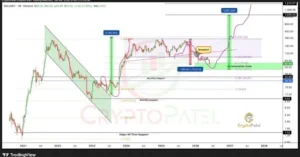
While on-chain data provides insight into participant behavior, the price chart offers the definitive roadmap for XRP’s next move. The $1.20 level has emerged as the "line in the sand" for both bulls and bears. This price point is not merely a psychological round number; it represents a historical area of supply where previous rallies have stalled and sellers have traditionally regained control.
For a breakout to be considered valid and sustainable, market analysts emphasize the need for a "clean break." A clean break involves the price moving decisively above $1.20 on high trading volume, followed by a period of consolidation above that level. If XRP can transform $1.20 from a ceiling (resistance) into a floor (support), it would signal a fundamental shift in the short-to-medium-term market structure. Such a move would likely open the door for a challenge of higher psychological barriers, potentially targeting the $1.50 range.
However, the risk of a "liquidity sweep" remains high. In this scenario, the price might briefly spike above $1.20 to trigger stop-loss orders and attract "breakout buyers," only to reverse sharply and fall back into the previous range. Such "fakeouts" are common in the XRP market, particularly when retail enthusiasm is high. Traders are therefore looking for confirmation through secondary indicators, such as the Relative Strength Index (RSI) and Moving Average Convergence Divergence (MACD), to ensure the move has the requisite strength to sustain itself.
Chronology of Recent Market Activity
The evolution of the current setup can be traced through a specific timeline of events throughout the first half of June:

- June 1 – June 6: XRP traded in a relatively tight range with low volatility. Exchange flows were evenly distributed among global giants like Binance, Coinbase, and OKX. Upbit’s dominance remained below its long-term average.
- June 7: CryptoQuant data recorded Upbit’s XRP Net Wallet Flow Dominance at 13%. This marked the beginning of a gradual migration of tokens toward the South Korean platform, though price action remained muted.
- June 8 – June 12: While the broader altcoin market faced headwinds due to fluctuations in Bitcoin’s price, XRP began to show relative strength. On-chain transfers to Upbit started to accelerate, coinciding with a rise in social media mentions across Korean-speaking crypto communities.
- June 14: Upbit’s dominance reached a peak of 31%. At the same time, XRP’s price began testing the lower boundaries of the $1.20 resistance zone. The synchronization of the flow peak and the price test created the current high-stakes environment.
- Present: The market remains in a state of observation. The surge in Upbit activity has plateaued at elevated levels, and the $1.20 level continues to act as a firm barrier to entry for a more aggressive bullish phase.
Understanding the Mechanics of Wallet Flows
It is essential to distinguish between wallet flows and direct spot market buying. While a surge in Upbit’s wallet flow dominance is a strong indicator of interest, it does not provide a 1:1 correlation with bullish pressure. Wallet flows encompass a variety of activities, including:
- Exchange Deposits: Traders moving XRP from private cold storage to an exchange, often in preparation to sell or to use as collateral for margin trading.
- Internal Management: Exchanges moving funds between hot and cold wallets for security or liquidity purposes.
- Market Maker Positioning: Institutional entities moving large blocks of tokens to provide liquidity for anticipated trading volume.
- Arbitrage: Traders moving tokens between exchanges to capitalize on price discrepancies (the Kimchi Premium).
Despite these nuances, the fact that Upbit is the focal point of this activity is significant. South Korean exchanges are primarily retail-driven, and a spike in deposits or withdrawals there typically reflects a surge in active participation from individual traders. When this activity aligns with a test of a major resistance level like $1.20, it suggests that the market is preparing for a high-volume event.
The Broader Market Context: Bitcoin and Regulatory Factors
XRP does not exist in a vacuum, and its ability to clear the $1.20 hurdle is heavily dependent on the stability of the broader cryptocurrency market, particularly Bitcoin (BTC). Historically, altcoin breakouts are rarely successful if Bitcoin is experiencing a period of high volatility or a downward trend. For XRP bulls, the ideal macro environment involves Bitcoin trading sideways or slightly upward, providing a "risk-on" backdrop that encourages investors to rotate capital into high-beta assets like XRP.
Furthermore, the long-standing legal battle between Ripple Labs and the U.S. Securities and Exchange Commission (SEC) continues to cast a shadow over the asset. While the current price action is largely driven by technicals and regional exchange flows, any sudden regulatory developments or court filings can instantly override chart patterns. The market has largely priced in the partial victory Ripple achieved in 2023 regarding secondary market sales, but the final resolution of the case remains a key fundamental driver for long-term institutional adoption.
Implications for the Near-Term Outlook
If XRP manages to secure a daily close above $1.20 with supported volume, the implications for the altcoin market could be significant. Such a move would likely trigger a wave of FOMO (fear of missing out) among retail investors who have been sidelined during the recent period of consolidation. Given Upbit’s current dominance, a successful breakout could see the South Korean market lead a global rally, potentially decoupling XRP from the broader market for a short period.
Conversely, a failure to break $1.20 would likely result in a retracement toward established support levels at $1.05 or $1.00. A rejection at such a visible level, especially after a surge in exchange activity, would suggest that the "smart money" used the retail-driven liquidity to exit positions, leading to a period of cooling off and further consolidation.
Conclusion: A Data-Driven Crossroads
The convergence of technical resistance and on-chain flow dominance has placed XRP at a critical crossroads. The data from Upbit confirms that the South Korean market is currently the primary theater of operations for XRP, and the $1.20 level remains the definitive benchmark for bullish confirmation.
As the week progresses, traders will be closely monitoring whether the 31% wallet flow dominance translates into sustained buying pressure. In the fast-moving world of digital assets, these signals provide the necessary context to navigate volatility, but they require the ultimate validation of price action. For now, the XRP market is characterized by a "wait-and-see" approach, with all eyes on the charts and the exchange order books of Seoul.