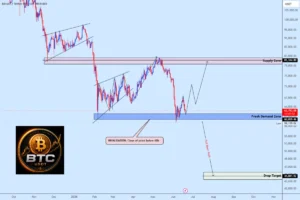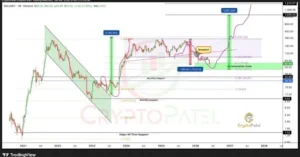
The digital asset market is currently navigating a severe test of resilience as altcoins face mounting headwinds, characterized by significant bearish on-chain movements and declining valuations over the past 30 days. This downward pressure has been compounded by Bitcoin’s inability to break past key psychological resistance levels, with the pioneer cryptocurrency persistently trading below the $60,000 threshold. Major altcoin assets, including Ethereum, Solana, and XRP, find themselves entrenched in the red zone, prompting analysts to re-evaluate the short-term and medium-term trajectory of the broader digital economy.
The current market cycle has proven particularly punishing for alternative cryptocurrencies. According to recent insights published by CryptoQuant analysts, altcoins have absorbed the brunt of the ongoing correction. When measuring the maximum drawdown from recent cycle peaks relative to Bitcoin, the vulnerability of altcoins becomes starkly apparent. While Bitcoin’s corrective phase has seen fluctuations maintaining a decline of over 50% from its cyclical highs, certain altcoin assets have plummeted by nearly 65% since the final quarter of last year.
This divergence in performance highlights a flight to relative safety among institutional and retail participants alike. Market barometers such as the Total 3 index—which tracks the total market capitalization of the altcoin sector excluding Ethereum—have decisively breached critical technical thresholds, plunging further below the crucial 200-day moving average (DMA). On major centralized derivatives and spot exchanges, particularly Binance, order book dynamics reflect a distinct bearish bias. Persistent token inflows into exchange wallets suggest that market participants are positioning themselves for potential further liquidations and spot selling.
The behavior observed on centralized exchanges serves as a vital macroeconomic indicator for the health of retail sentiment. Panicked retail traders are actively liquidating holdings to stanch portfolio bleeding, while a notable segment of early-year whale investors is systematically trimming exposure. Market strategists attribute these capital outflows not only to internal crypto market dynamics but also to broader macroeconomic pressures weighing down global financial markets.
Macroeconomic Headwinds and Shifting Liquidity
The broader macroeconomic environment has introduced formidable challenges for risk-on assets, including cryptocurrencies. Central bank monetary policies, particularly regarding reserve ratios and liquidity contraction in the United States, have tightened the availability of speculative capital. As global fiat liquidity shrinks, market participants are exercising extreme caution, resulting in capital either moving toward cash equivalents or concentrating defensively within Bitcoin.

This liquidity squeeze has had a direct, measurable impact on institutional investment vehicles. Spot exchange-traded funds (ETFs) tied to major digital assets have experienced tepid demand or net negative outflows over the trailing 30-day window. For instance, spot Ethereum ETFs recently registered substantial net redemptions, underscoring the risk-off posture adopted by institutional allocators.
Market observers note that the current consolidation and prolonged stagnation phase is testing the psychological endurance of retail investors. Historical market data reveals that the ongoing underperformance streak among altcoins ranks as the second-longest sustained consolidation period since 2020. A comparable structural compression phase last occurred during the protracted bear market of the previous cycle, where similar market dynamics persisted for approximately ten months. If prevailing macroeconomic conditions and restrictive monetary policies persist, analysts warn that the altcoin sector may endure a prolonged period of sideways price action before establishing a definitive cyclical bottom.
Performance Breakdown of Major Assets
The impact of these systemic pressures is clearly visible in the recent price action of the market’s leading digital assets. The wider cryptocurrency market capitalization has contracted by over 2%, dipping to approximately $2.04 trillion, as investor sentiment hovers near multi-month lows.
Ethereum, the undisputed flagship of the decentralized finance and smart contract ecosystem, has extended its sideways and downward trajectory. Over the past week, Ether shed an additional 5.2% of its value, extending its monthly loss to over 22%. Trading at approximately $1,566, the asset is currently testing levels well below the optimistic projections held by market participants at the close of previous quarters. Despite the steep descent, technical analysts suggest that long-term accumulation patterns are forming, with market bulls positioning for a measured recovery once the broader cycle reaches its macro floor.
Solana, while demonstrating relative relative strength in specific timeframes, has not been entirely immune to the broader correction. Despite a minor intraday retraction of 1.5%, Solana has maintained a positive net inflow on a weekly basis, securing modest gains of around 4% over the seven-day period. This resilience is largely attributed to continued network activity and decentralized application (dApp) engagement.
Conversely, XRP experienced a more pronounced weekly decline, sliding approximately 6% amid generalized profit-taking and cautious risk management across trading desks. Other mid-to-large-cap altcoins have displayed similar correlations, moving in lockstep with Bitcoin’s inability to reclaim higher trading channels.

Chronology of the Recent Market Contraction
To fully comprehend the current market posture, it is essential to examine the chronological progression of the 2024-2026 market cycle:
- Q1 2025: Altcoins experienced an initial wave of speculative capital inflows, driven by optimistic macroeconomic projections and the successful launch of various spot crypto ETFs. Whales and institutional entities accumulated substantial inventories during this window.
- Q2 to Q3 2025: Early signs of macroeconomic tightening began to manifest. Central banks maintained elevated interest rates to combat persistent inflation, draining liquidity from global risk markets.
- Late Q3 to Q4 2025: Bitcoin failed to sustain momentum above the $70,000 threshold, triggering a cascade of long liquidations. Altcoins began to decouple downward, losing their 200-day moving averages as retail panic selling intensified.
- Past 30 Days (Current Phase): Persistent outflows from institutional products, combined with heavy token inflows to centralized exchanges like Binance, have pushed over 80% of altcoins below their 200-day moving averages. The Total 3 market capitalization index has recorded accelerated losses, signaling a deepening of the cyclical correction phase.
Fact-Based Market Implications and Outlook
The structural implications of the current market climate extend across multiple operational dimensions for the digital asset industry.
First, the prolonged breach of the 200-day moving average by the vast majority of altcoins signals a definitive shift from a bull market expansion phase to a defensive accumulation or consolidation regime. For retail investors, this environment demands rigorous risk management, strict portfolio diversification, and an awareness of liquidity cycles.
Second, the contraction in spot ETF trading volumes and institutional inflows highlights the sensitivity of traditional finance participants to macroeconomic policy shifts. Until central bank balance sheets expand or monetary policy pivots toward accommodation, institutional capital is likely to remain highly selective, prioritizing the liquidity and market dominance of Bitcoin over higher-beta alternative assets.
Finally, while the immediate outlook remains challenged by bearish technical indicators and macroeconomic headwinds, historical precedent suggests that prolonged periods of capitulation and underperformance frequently lay the groundwork for subsequent structural expansions. Whether the current ten-month-like stagnation pattern will mirror past cycles depends entirely on the stabilization of global liquidity metrics and the eventual recovery of primary assets like Bitcoin above key psychological resistance levels. Market participants continue to monitor on-chain metrics, exchange reserve balances, and macroeconomic data releases for the definitive signals that will mark the ultimate transition out of the current red zone.