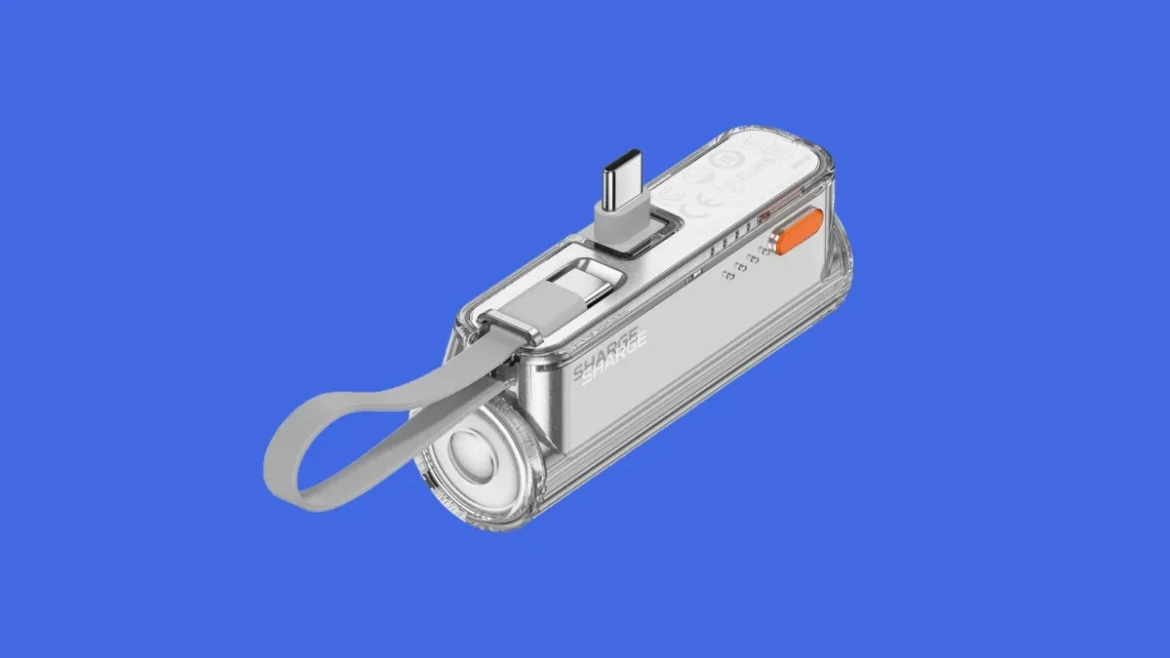
The portable charging market has long been dominated by high-capacity, heavy-duty power bricks designed to replenish laptops and tablets over multiple cycles. However, these bulky accessories often fail to meet the demands of everyday carry (EDC) enthusiasts and urban commuters who prioritize pocketability and lightweight convenience. Addressing this specific market segment, the Sharge Flow Mini 2—which originally launched late last year—has seen a notable price reduction on Amazon, falling from its standard retail price of $29 to $22.90. This discount brings a high-aesthetic, ultra-portable charging solution to a broader consumer base, balancing everyday utility with aggressive pricing.
Evolution of Pocket Charging: Sharge’s Market Strategy
Over the past decade, the portable power bank industry has experienced exponential growth, driven by the increasing power demands of smartphones, wireless earbuds, and wearable technology. Early iterations of power banks were heavy, utilitarian blocks of lithium-ion batteries encased in industrial plastic. As consumer electronics grew sleeker and more design-conscious, hardware manufacturers began shifting their focus toward aesthetics and ergonomic form factors.
Sharge, formerly known as Shargeek, carved out a distinct niche in this competitive landscape by blending retro-futuristic transparent designs with high-performance internals. While products like the Sharge Retro 67 and the Storm2 power bank captured the attention of tech enthusiasts with their cyberpunk-inspired transparent casings and real-time power display screens, the company also recognized a glaring gap in the market for minimalist, highly portable daily drivers.
The introduction of the Sharge Flow Mini series marked a departure from massive multi-port power stations, focusing instead on seamless integration into daily life. The Flow Mini 2 builds upon this philosophy, offering a targeted 5,000mAh capacity that aligns with the average battery requirements of a modern smartphone during a standard workday, eliminating the need to carry tangled external cables.
Design, Specifications, and Technical Performance
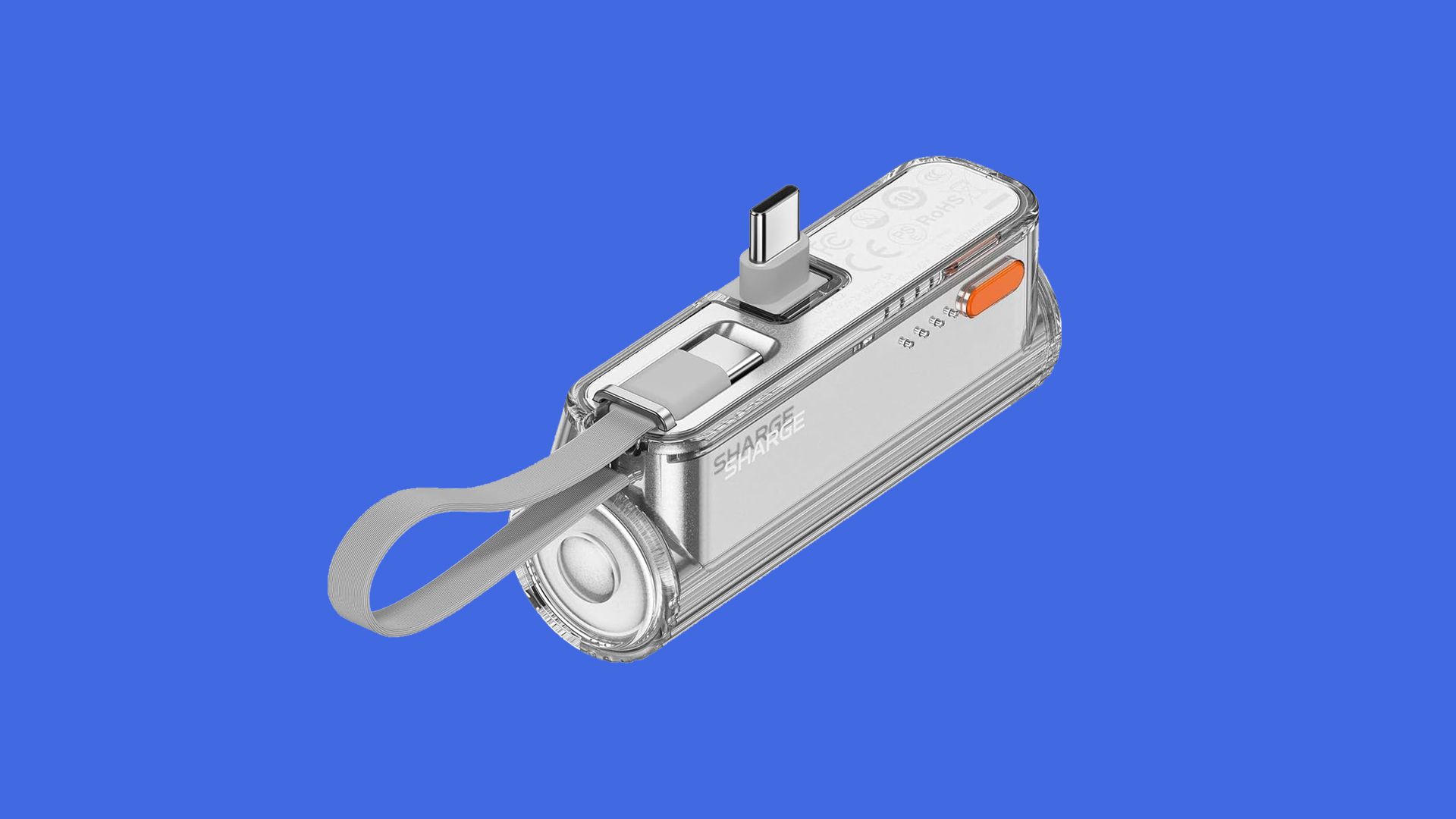
At the technical core of the Sharge Flow Mini 2 is a 5,000mAh lithium-ion cell configuration. While this capacity is intentionally modest compared to heavy-duty 20,000mAh or 24,000mAh laptop chargers, it is purposefully engineered to provide a full single charge to most contemporary smartphones, including Apple iPhone and Android flagship devices.
One of the standout design choices of the Flow Mini 2 is its integrated USB-C cable alongside dual swappable connectors, which cater natively to both iOS (Lightning/USB-C ecosystem depending on device generation) and Android users. This reduces cable clutter, a common pain point for consumers navigating transit or working in mobile environments. Furthermore, the device incorporates a striking metallic trim, an energetic splash of signature Sharge orange, and subtle LED charge-status indicators.
In terms of power delivery, the compact unit is capable of outputting up to 22.5W of fast-charging power. This output efficiently mitigates low-battery anxiety, allowing users to rapidly replenish their devices while on the move. When evaluated against competing ultra-portable models—such as the Anker MagGo 5K, which retails around $55—the Sharge Flow Mini 2 offers a more cost-effective alternative while maintaining a smaller footprint.
However, industry analysts note clear performance trade-offs inherent to its size class. While the Flow Mini 2 excels in portability, it cannot compete with heavy-duty enterprise power banks like the Anker Prime 20K. The latter provides massive multi-device charging capabilities and laptop compatibility, but commands a substantially higher price tag of approximately $89 and adds significant weight to a daily carry bag.
Market Context and Consumer Implications
The timing of the Amazon price reduction reflects broader retail trends within the consumer electronics accessories sector. Mid-year and seasonal promotional campaigns frequently target peripheral devices—such as chargers, cables, and protective cases—to stimulate consumer spending on high-utility accessories.
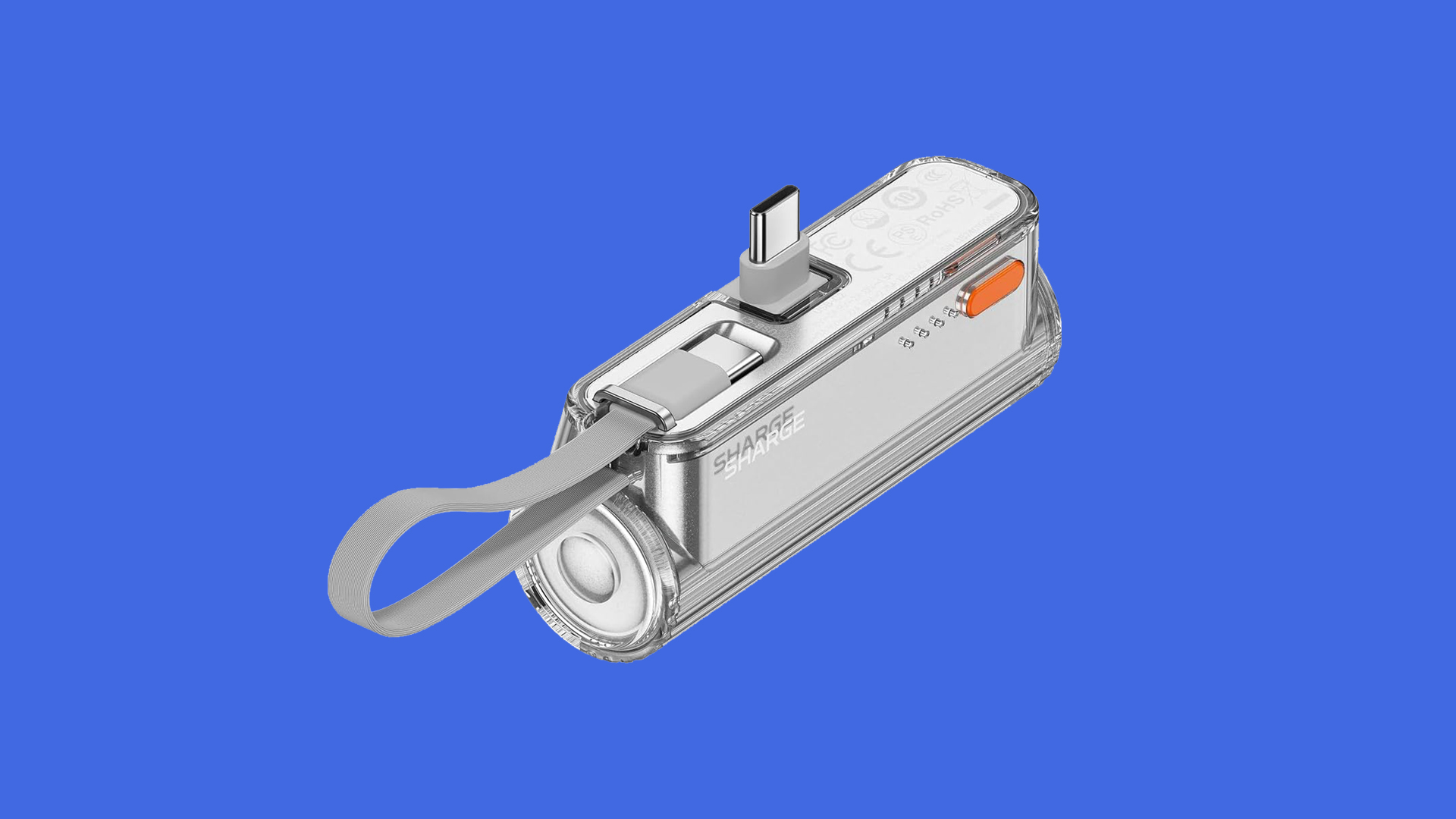
For the average consumer, the availability of a sub-$30 fast-charging power bank with built-in connectivity options signifies a maturation in the accessories market, where premium design and rapid-charging technologies are no longer restricted to luxury price points. Industry observers suggest that as smartphone manufacturers continue to omit wall adapters from retail packaging and push the boundaries of thinness in device design, the demand for reliable, pocket-sized auxiliary power will remain robust.
The Sharge Flow Mini 2 occupies a specific intersection of lifestyle tech and practical utility. By reducing the friction associated with carrying external cables and heavy power bricks, the device caters directly to remote workers, students, and frequent travelers. While it is not designed to power high-draw professional equipment like content creation laptops or professional camera gear, its ability to rescue a depleted smartphone battery in a compact, visually appealing package makes it a compelling option for budget-conscious tech buyers looking to upgrade their daily carry setup.
As the device remains discounted on Amazon, it serves as a bellwether for how niche accessory manufacturers are competing against legacy tech giants by emphasizing unique industrial design, multi-platform compatibility, and aggressive pricing strategies.