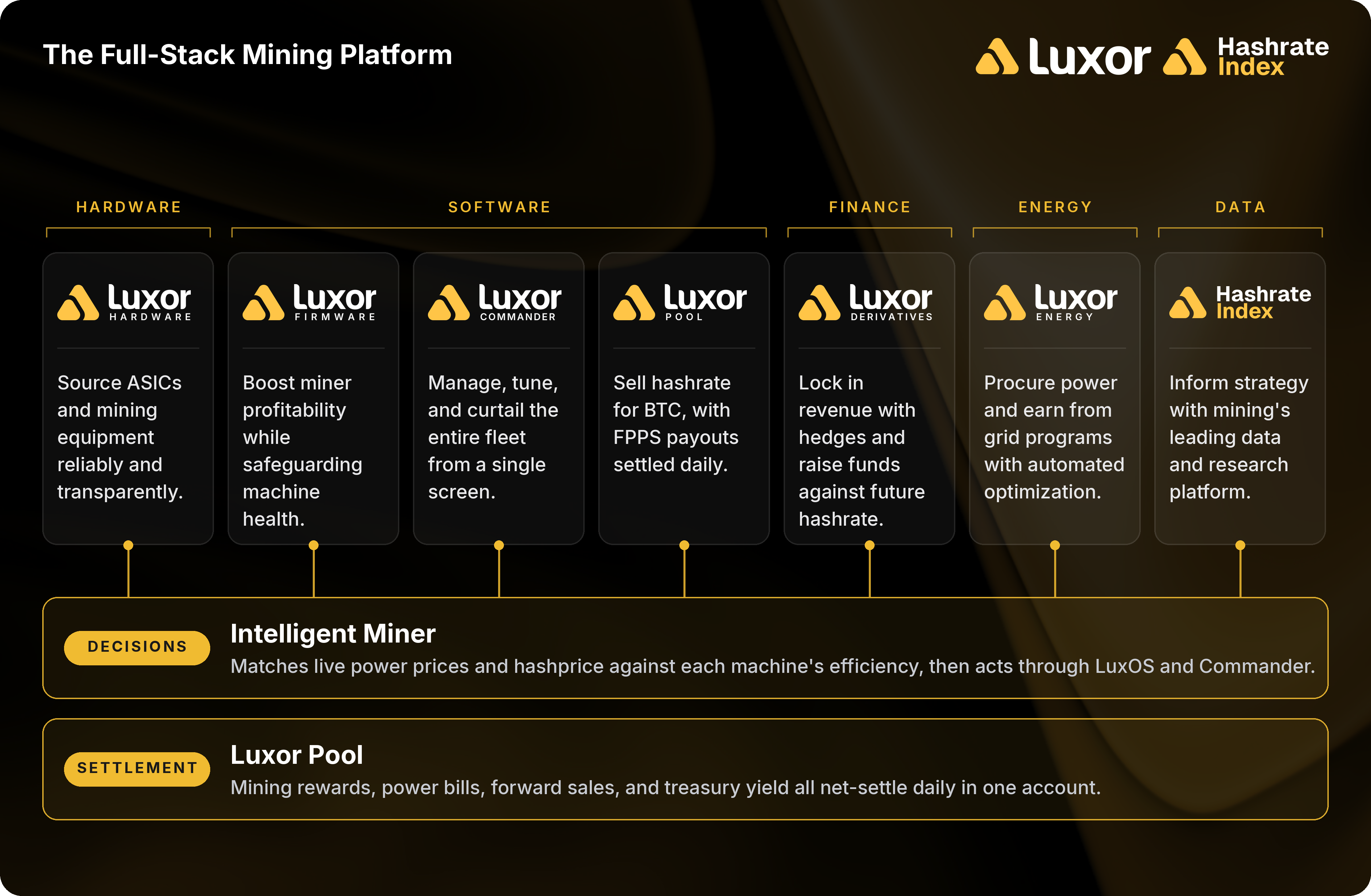
Most industrial-scale Bitcoin miners assemble their infrastructure in a fragmented manner, sourcing hardware from specialized brokers, firmware from third-party vendors, mining pools from different operators, and financial services from institutions that lack visibility into the physical realities of the mining site. This piecemeal approach often leads to operational inefficiencies, misaligned incentives, and a failure to capture the full economic potential of the compute produced. Steelhead Power Company, an independent operator founded in 2023, has bucked this trend by adopting a vertically integrated "full-stack" model powered by Luxor Technology’s comprehensive ecosystem. This case study explores how the integration of hardware, software, energy management, and financial services has allowed Steelhead to navigate the volatile Texas mining landscape while maximizing profitability.
The Operational Architecture of Steelhead Power
Steelhead Power Company operates industrial-scale Bitcoin mining facilities with a primary focus on liquid-cooling architectures. Recognizing that the Texas climate—where ambient temperatures frequently exceed 40°C (104°F)—poses a significant threat to hardware longevity and performance, the company shifted early from traditional air-cooling to immersion and hydro-cooling systems. By utilizing skid-mounted and containerized hydro infrastructure, Steelhead ensures that its mining fleet remains within an optimal thermal range, preventing the performance degradation often seen in heat-stressed air-cooled units.
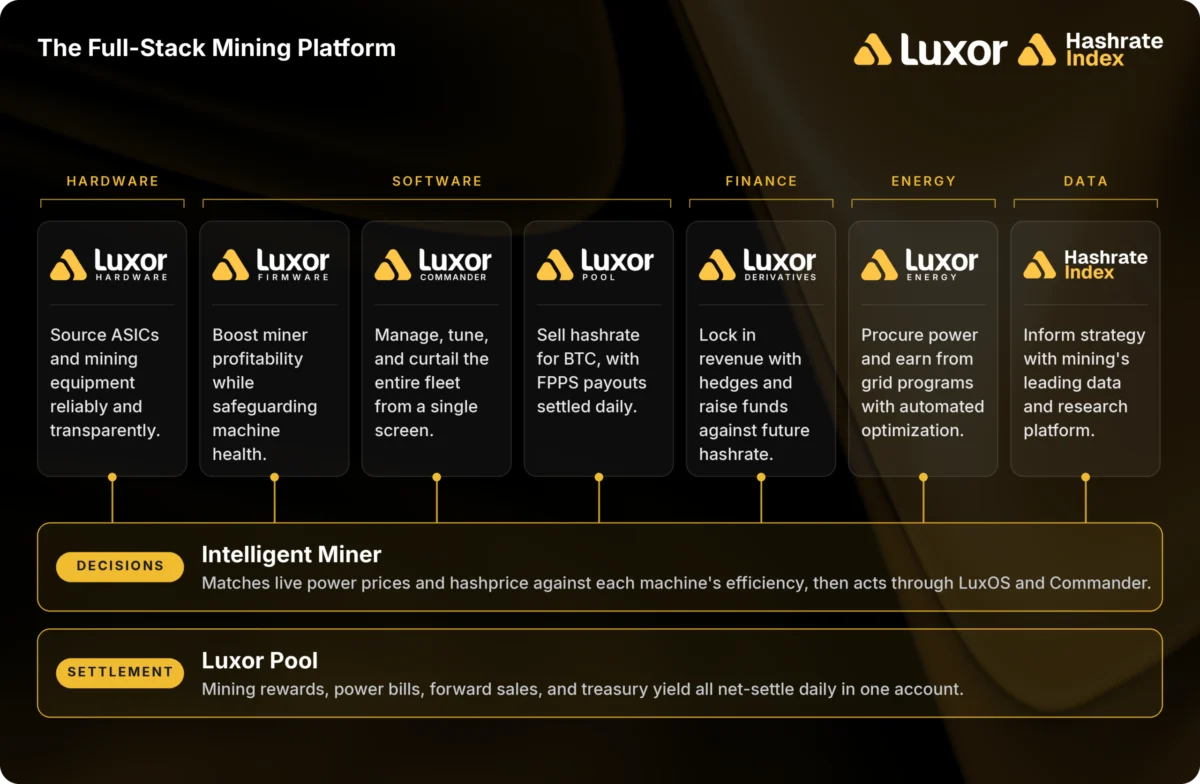
However, the hardware is only one piece of the puzzle. A Bitcoin mining operation is fundamentally a four-in-one business: it is a procurement firm, a compute-production facility, a commodities trader, and an energy consumer. Steelhead’s strategy centers on the realization that these layers are interdependent. By utilizing a single vendor, Luxor, for its hardware procurement, fleet management, energy desk, and financial hedging, Steelhead has created a "flywheel" where data from one segment informs the decisions of the others.
Chronology and Hardware Deployment
Since its inception, Steelhead has been aggressive in scaling its operations. By 2026, the company had sourced over 1,000 machines across three major manufacturers—Bitmain, MicroBT, and Canaan. This diversity in hardware was not accidental; it allowed the company to test various hydro and immersion-ready units to identify the most efficient configurations for their specific facility designs.
The procurement process was facilitated by Luxor’s hardware desk, which provides real-time market data to guide purchasing decisions. According to Steven Hood, President of Steelhead Power, this partnership approach extends beyond simple transactions. The hardware desk offers insights into market trends, ensuring that Steelhead buys machines when price-to-performance ratios are most favorable, while simultaneously streamlining OEM warranty management and logistics.
Software and Fleet Management
The intelligence of the operation lies in the software layer, specifically the deployment of LuxOS, which runs on approximately 40% of Steelhead’s total hashrate capacity. For a liquid-cooled site in Texas, firmware is not just about overclocking; it is about thermal control. Steelhead utilizes two critical features within LuxOS: Advanced Thermal Management (ATM) and Power Targeting.
ATM allows the firmware to be "water-inlet aware," adjusting fan speeds and power draw based on the temperature of the cooling fluid. Power Targeting, meanwhile, allows the team to set watt-level constraints on individual miners. This granularity is essential during the intense heat of a Texas summer, where pushing a machine to its maximum theoretical limit might result in overheating or inefficiency.
Furthermore, the "Commander" fleet management system serves as the control center. Mario Mojarro, an analyst at Steelhead, notes that Commander allows the team to execute fleet-wide changes in minutes, staging them so that power draw does not spike or drop suddenly, which could cause grid instability or trigger utility penalties.
The Energy Desk: Navigating ERCOT’s 4CP Rules
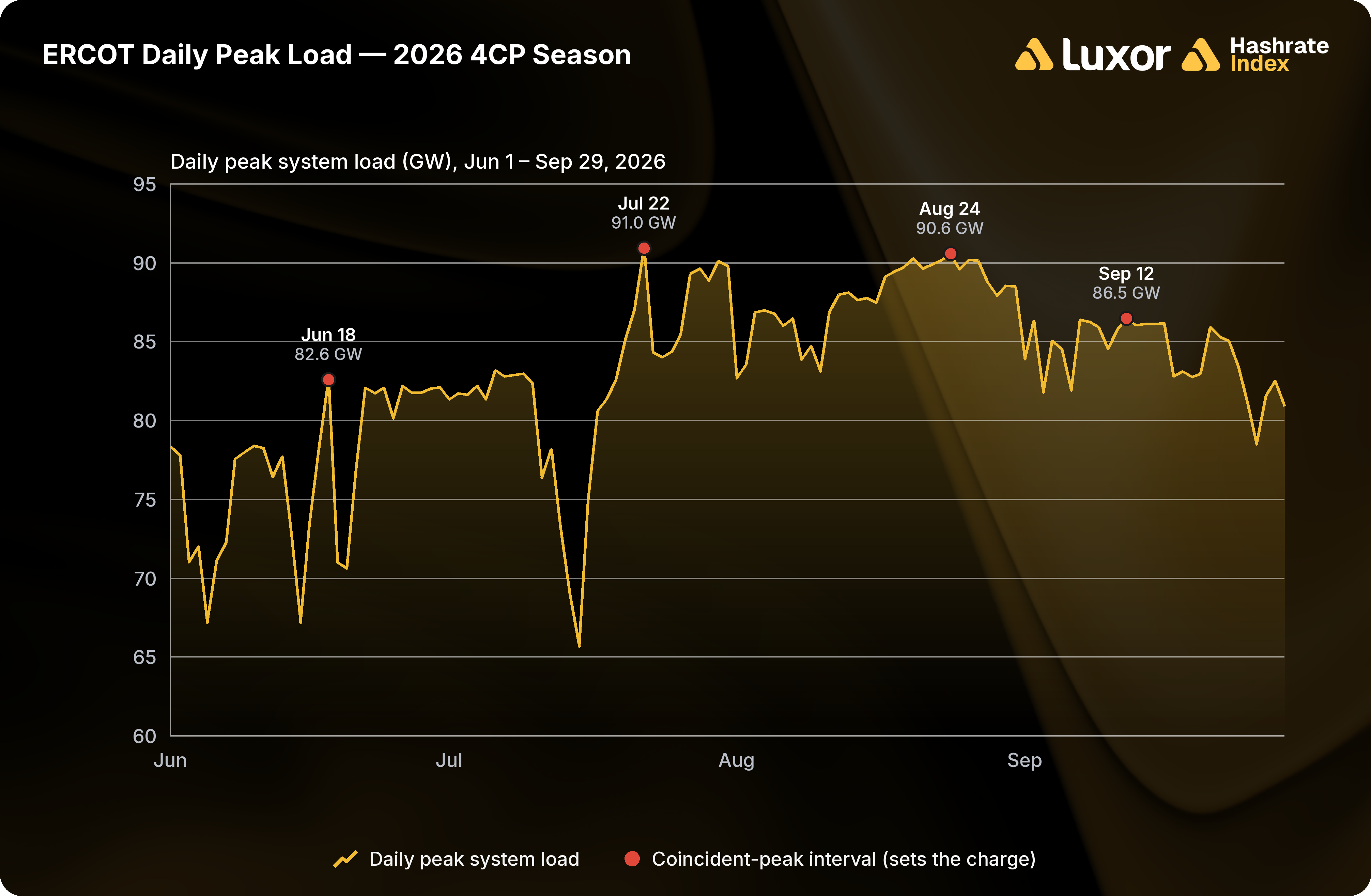
The most significant impact of the full-stack integration is observed in the energy layer. Operating in the Electric Reliability Council of Texas (ERCOT) market, Steelhead faces complex regulatory and pricing environments. One of the most critical challenges for any large industrial load in Texas is the Four Coincident Peaks (4CP) methodology, which dictates transmission charges for the following year based on the site’s demand during the four highest-load 15-minute intervals of the summer.
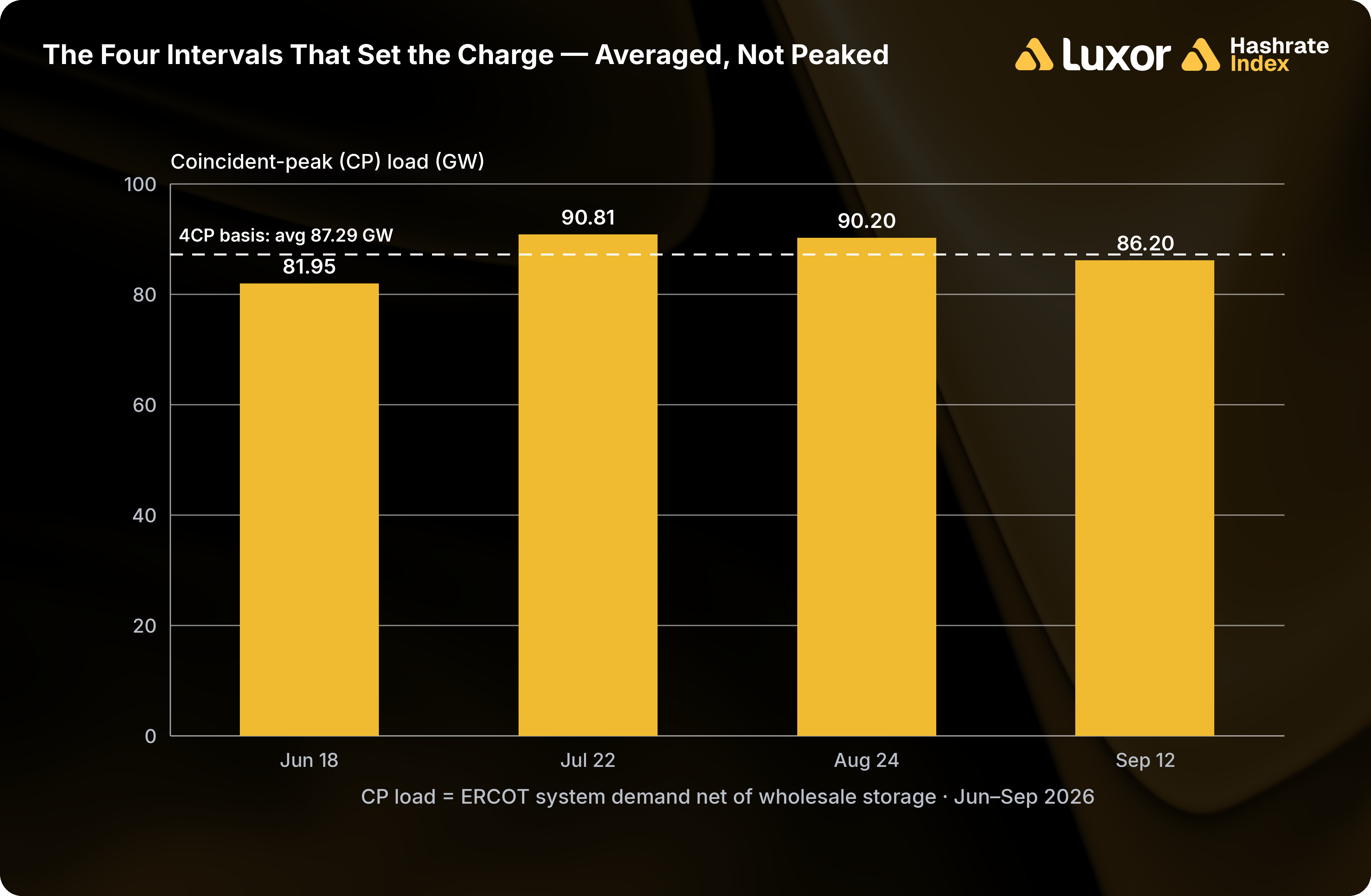
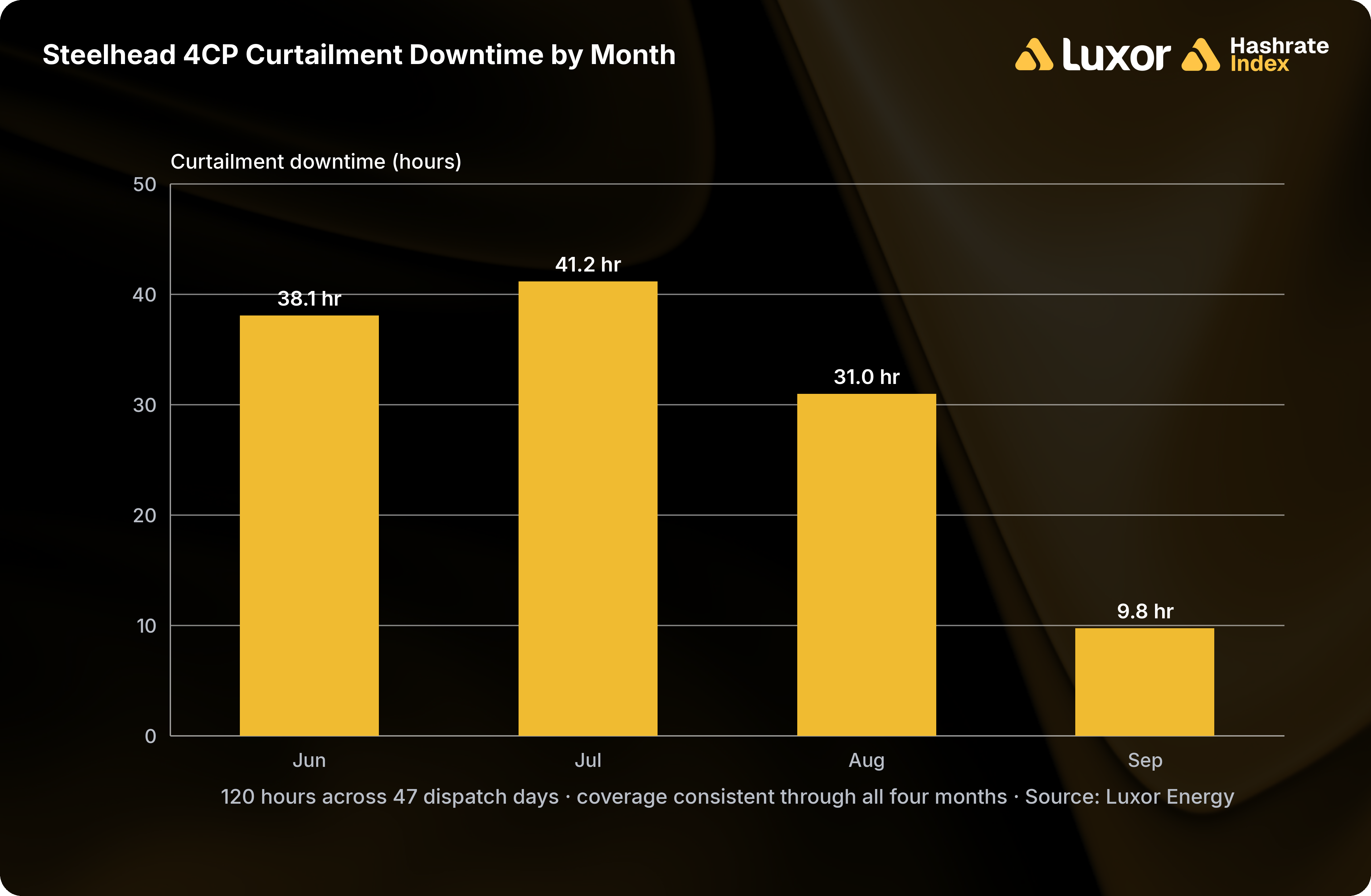
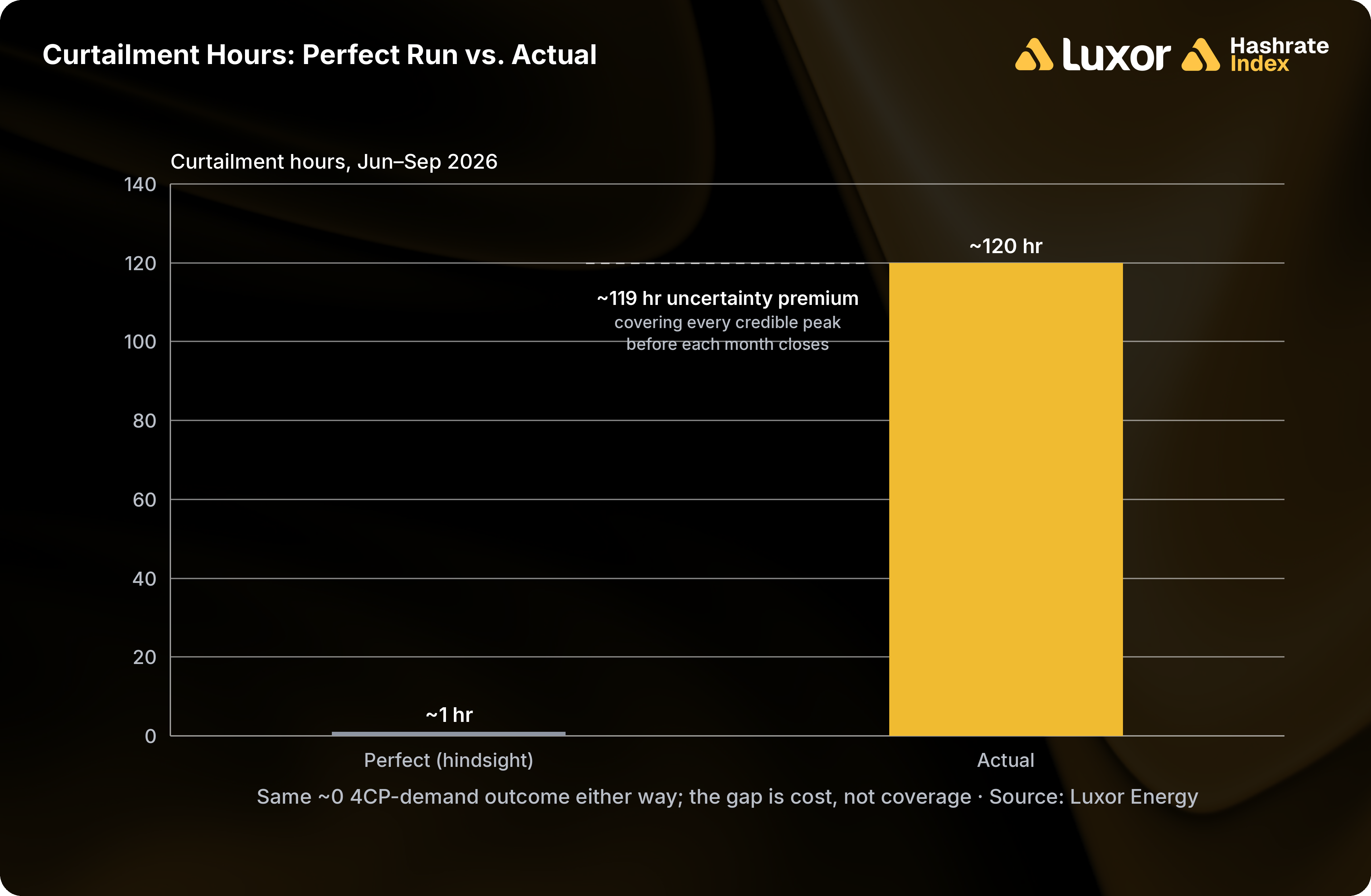
In 2026, the four coincident peaks were identified in June, July, August, and September. To avoid massive transmission surcharges, Steelhead employed Luxor’s energy services to dynamically curtail operations. This was not a manual guessing game; it was an automated process where the "Intelligent Miner" agent received signals to power down during the exact windows when system-wide demand peaked.
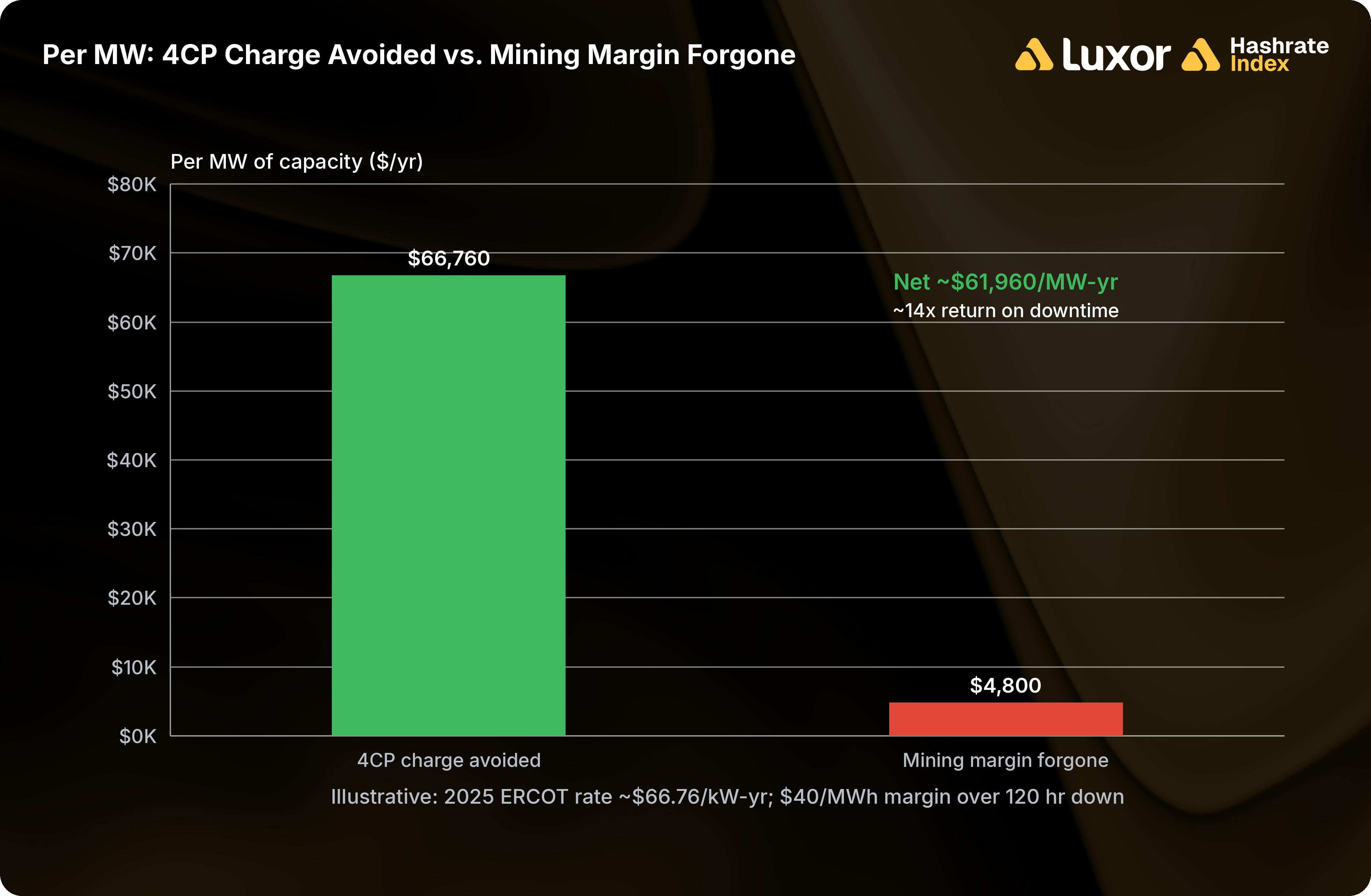
The data supports the economic rationale for this strategy. At 2025 ERCOT transmission rates, avoiding one megawatt (MW) of demand during those peak intervals saved the company approximately $66,760 in annual transmission costs. Even when accounting for the forgone mining revenue during the ~120 hours of curtailment required to ensure no peaks were missed, the net gain was roughly $61,960 per MW. This represents a return of approximately 14:1 on the curtailed load, a massive margin uplift that a standard, non-integrated operation would struggle to capture.
Financial Engineering and Treasury Yield
Steelhead differentiates itself by treating its Bitcoin treasury as a productive asset rather than a dormant reserve. The company employs two parallel financial strategies:
- Hashprice Hedging: By selling a portion of its future hashrate through fixed pool payouts, Steelhead locks in revenue certainty, insulating the balance sheet from the extreme volatility of Bitcoin’s hashrate market.
- Yield Generation: Steelhead pledges a portion of its BTC treasury as liquidity for other miners using Luxor’s upfront payout programs. This allows Steelhead to earn yield on its idle assets, turning the treasury into a Bitcoin-native income generator.
The synergy here is clear: the daily settlement of mining rewards through the Luxor Pool serves as the clearinghouse for these financial activities. Because the energy costs, mining rewards, and hedging contracts are all settled within the same ecosystem, the company avoids the accounting friction and latency associated with multi-counterparty setups.
Analysis of the Full-Stack Impact
To quantify the value of this integration, one can compare a representative 1 MW fleet on the Luxor stack against a peer running stock firmware on a standard 2.5% FPPS (Full-Pay-Per-Share) pool without active 4CP curtailment.
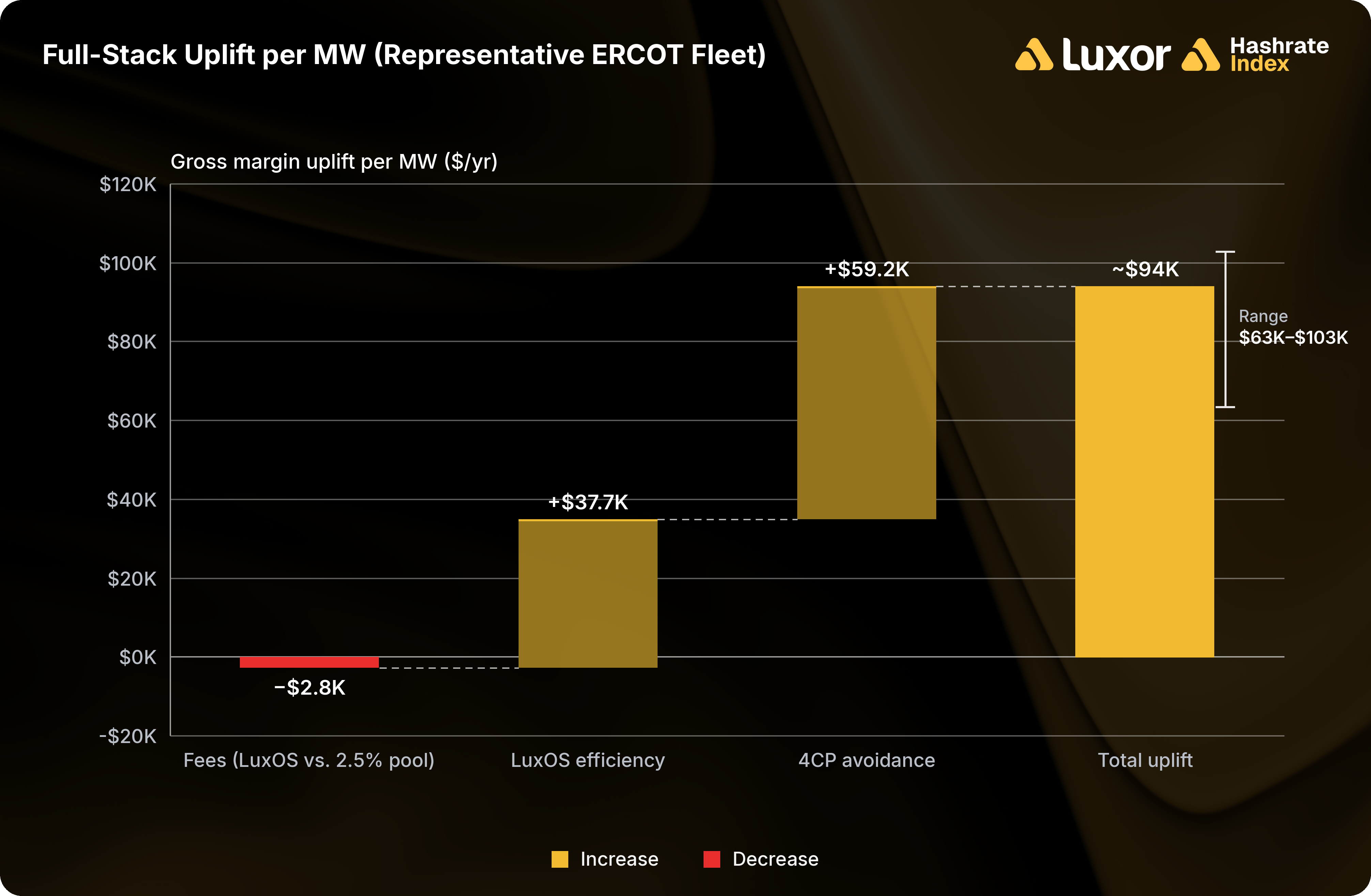
The estimated gross margin uplift for the Luxor-integrated fleet is approximately $94,000 per MW per year—an 18% increase over the baseline. The breakdown of this gain is telling:
- 4CP Avoidance: Contributes roughly $59,000 per MW, accounting for the bulk of the margin expansion.
- LuxOS Efficiency: Adds approximately $38,000 per MW, derived from lower power draw and optimized thermal performance.
- Fee Structure: While LuxOS carries a 2.8% fee, the 0% pool fee on Luxor offsets this, making it roughly cost-neutral compared to traditional pools.
This model is conservative, as it excludes potential gains from demand-response programs, ancillary services, and optimized hardware procurement, all of which are part of the full-stack offering.
Implications for the Bitcoin Mining Industry
The success of Steelhead Power Company signals a maturation of the Bitcoin mining sector. As mining moves away from the era of "easy gains" and into a regime of operational optimization, the advantage shifts toward those who can manage the entire compute lifecycle.
The proposal by the Public Utility Commission of Texas to move from a 4CP to a 12CP (12 Coincident Peaks) methodology could further favor the integrated model. If peak avoidance becomes a year-round discipline rather than a summer-only activity, the manual, fragmented approaches of the past will become increasingly untenable. Operators will need to rely on automated, data-driven systems—like those utilized by Steelhead—to survive the tighter margins.
Conclusion
Steelhead Power Company’s integration of hardware, software, finance, and energy represents a blueprint for the modern industrial miner. By collapsing the distance between the physical ASIC and the financial markets, the company has created a resilient operation that is not just surviving the current hashprice regime, but actively engineering its own profitability. As the mining industry continues to professionalize, the "full-stack" approach exemplified by Steelhead and supported by partners like Luxor will likely become the industry standard for operators seeking to scale in a competitive global market.