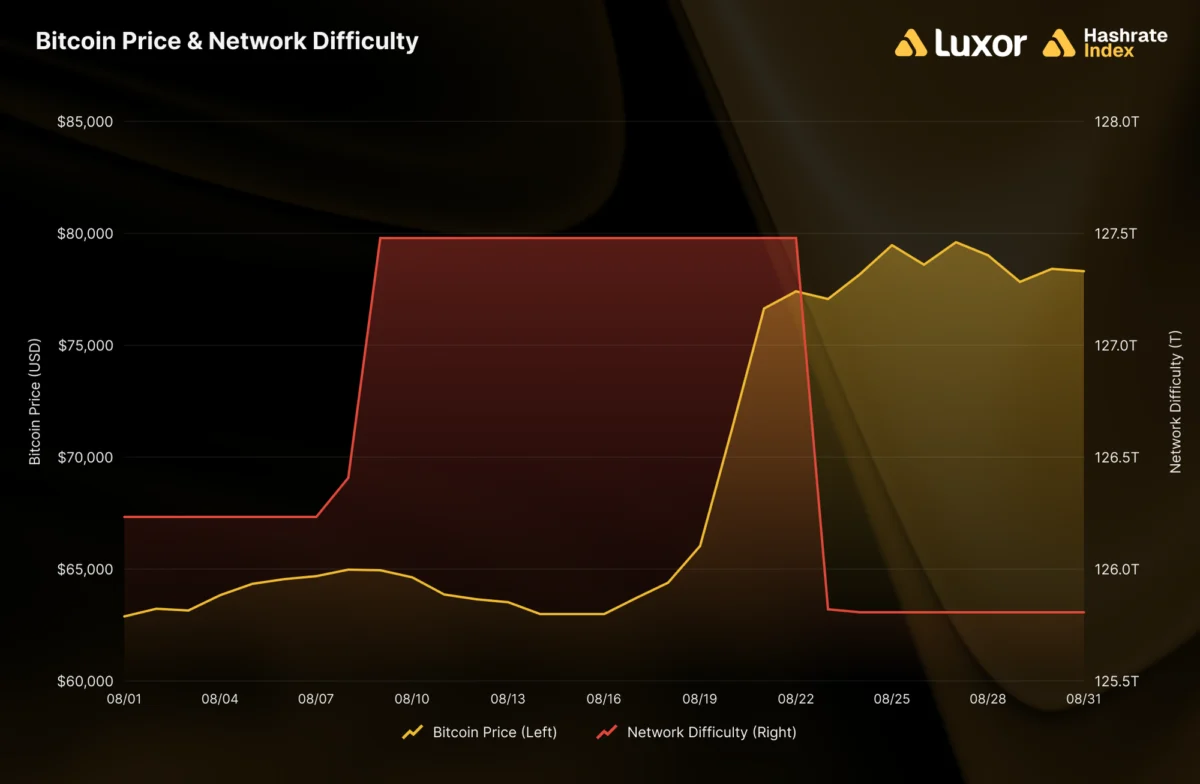
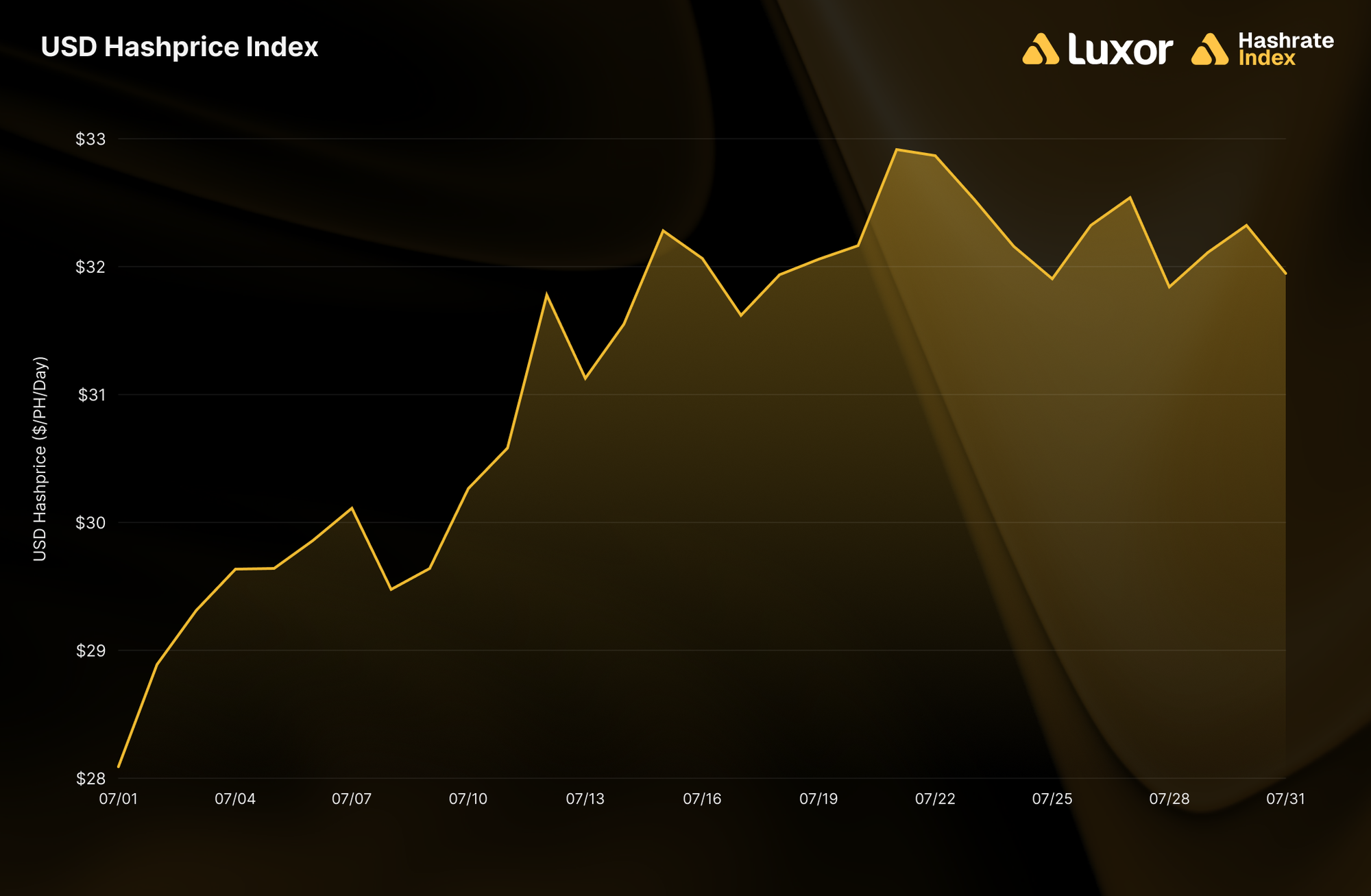
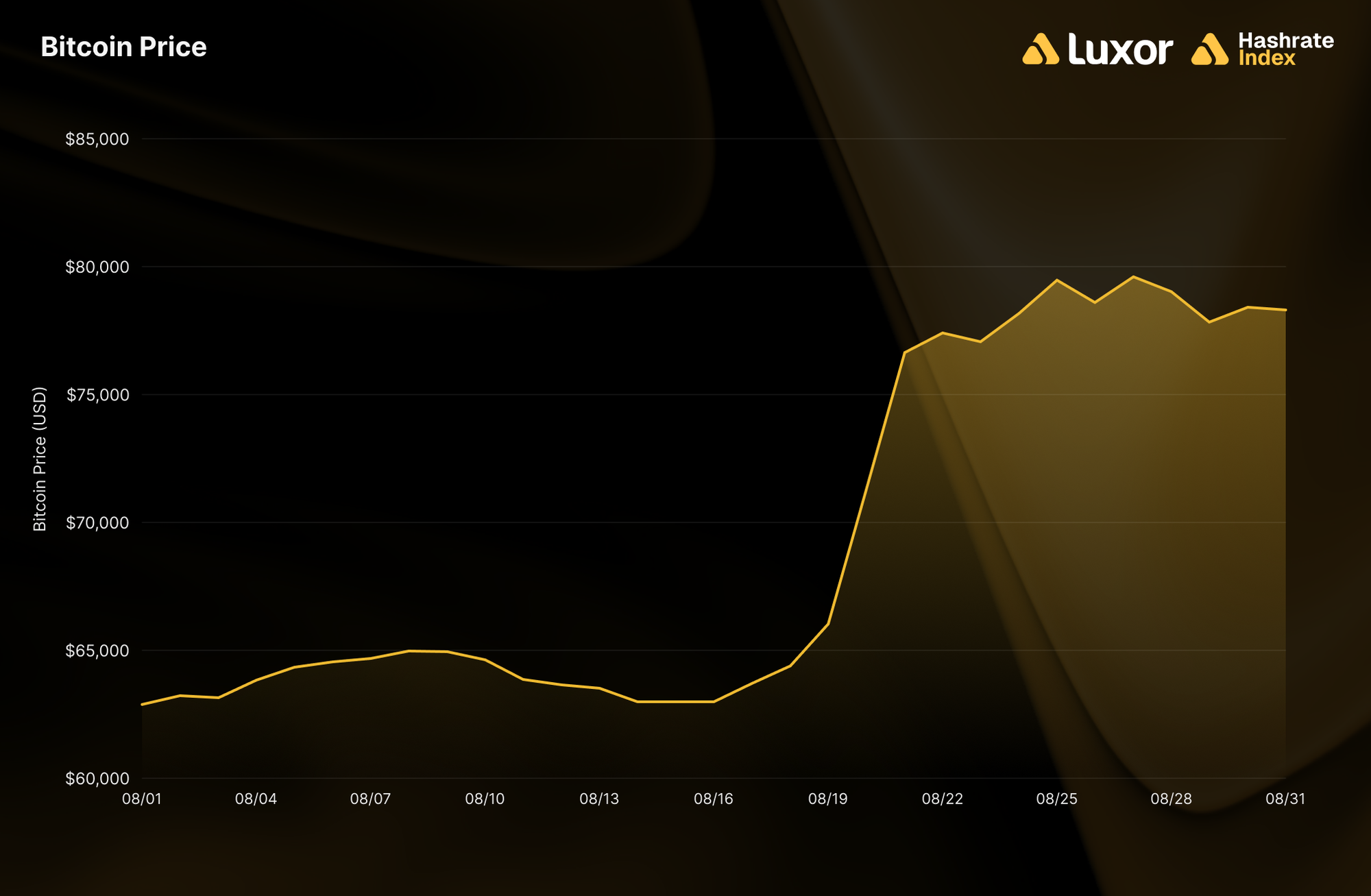
The Bitcoin mining sector experienced a profound shift in August 2026, as a stagnant mid-summer market gave way to a sharp, high-volatility price rally that fundamentally altered the economics of global hashrate. For the first nineteen days of the month, the industry operated within the confines of a narrow $31 to $33 hashprice band, mirroring the subdued activity seen throughout July. However, a massive repricing event triggered by regulatory shifts, monetary policy adjustments, and a cascade of short liquidations fundamentally transformed the landscape, ending the month with hashprice levels not seen since mid-May.
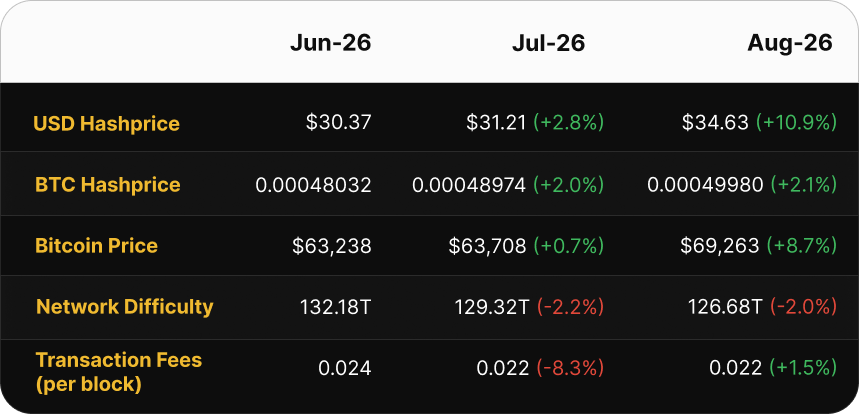
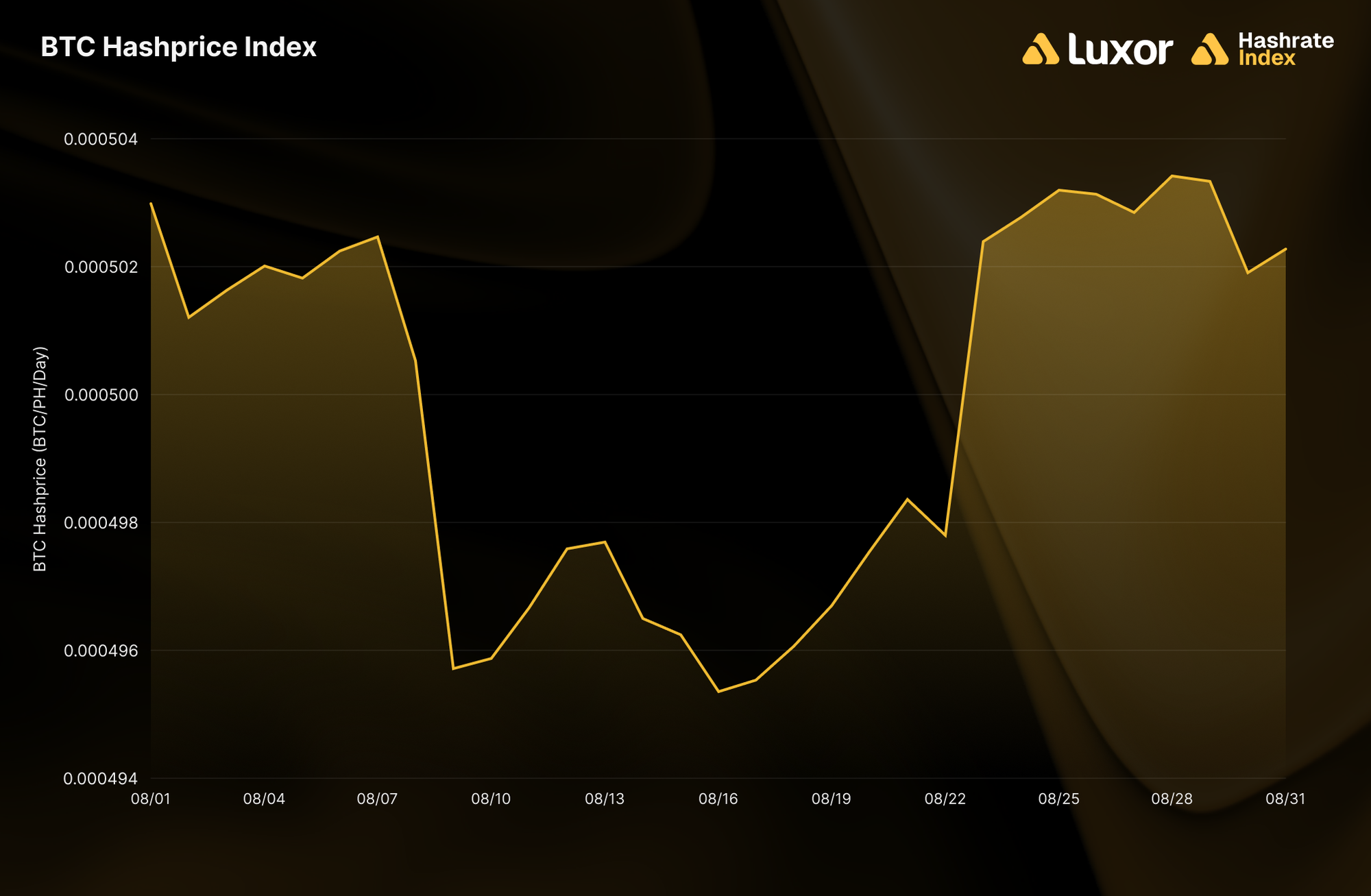
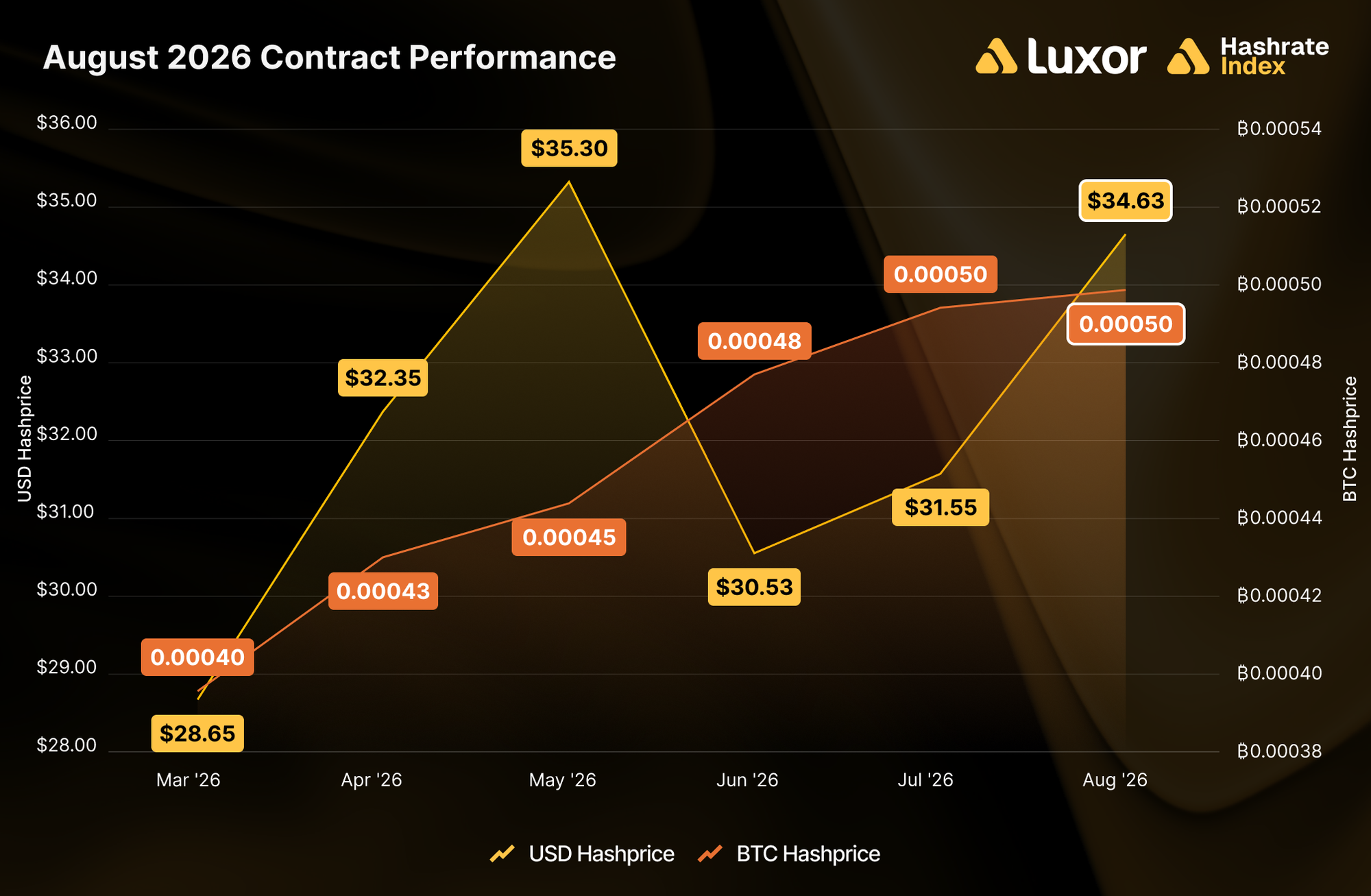
August 2026 was effectively a tale of two distinct market regimes. The first period was characterized by price consolidation, while the second witnessed a 19.0% gain in Bitcoin’s spot price over just three days, dragging hashprice metrics upward in lockstep. Monthly average USD hashprice climbed from $31.21 to $34.63 per PH/s/day—a 10.9% increase. While this represents a significant recovery, it remains roughly 32% lower than the 2025 mean of $50.68, highlighting the lingering impact of the post-halving environment on total miner revenue.
Chronology of a Market Breakout
The catalysts for this sudden reversal were multifaceted, involving a convergence of legislative, macroeconomic, and market-structure developments. On August 18, the Securities and Exchange Commission (SEC) introduced its "Regulation Crypto Assets" framework, the agency’s first dedicated rulemaking for crypto-asset offerings. By providing exemptions for smaller capital raises, the SEC signaled a clearer pathway for crypto-based financial activity, bolstering market confidence.
This was immediately followed by a significant macroeconomic signal from the U.S. Treasury on August 19, which announced a doubling of long-end buyback operations from $2 billion to $4 billion. As long-term yields dropped, the liquidity environment improved, providing a tailwind for risk assets. By August 20, political momentum compounded these factors when President Trump publicly urged the Senate to pass the Clarity Act, a bipartisan legislative effort aimed at providing regulatory certainty for the digital asset industry.
The technical impact on Bitcoin was immediate and violent. On August 20, the price of Bitcoin surged by 7.9%, followed by an additional 7.5% gain on August 21. This two-day move of 16.1% represented the most significant upward volatility since the April 2024 halving. Simultaneously, approximately $2.7 billion in short positions were liquidated across centralized exchanges, fueling the momentum. Spot Bitcoin ETFs served as a pillar of strength during this period, recording $3.52 billion in inflows for the month, which pushed total Assets Under Management (AUM) to $99.6 billion, up from $76.3 billion at the start of August.
However, the momentum faced a cooling period late in the month. On August 28, Federal Reserve Chair Kevin Warsh addressed the Jackson Hole economic symposium, casting doubt on the adequacy of recent inflation data. His commentary pushed CME FedWatch interest rate expectations for a September hike from roughly 35% to as high as 66%, prompting a brief, albeit minor, 1.5% retracement in Bitcoin price on the final days of the month.
Network Difficulty and Operational Efficiency
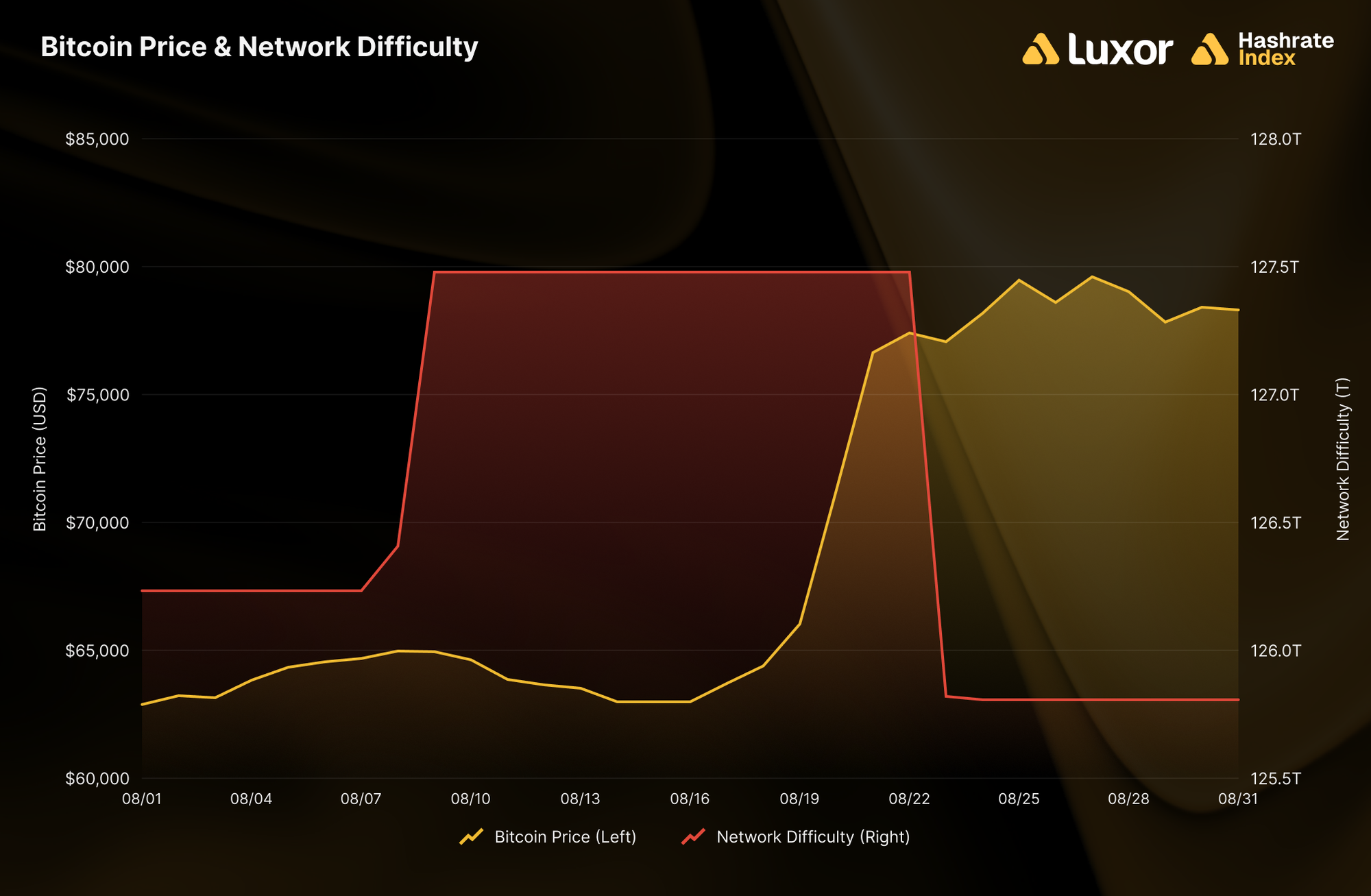
While Bitcoin price volatility dominated headlines, network difficulty remained relatively stable, acting as a counterweight to revenue fluctuations. August saw two primary difficulty adjustments: a 0.99% increase on August 8, followed by a 1.31% decrease on August 23. The net change for the month was a marginal 0.34% decline. This stability suggests that while some marginal hashrate remains offline, the network has entered a period of equilibrium following the aggressive departures of hashrate in June and July.
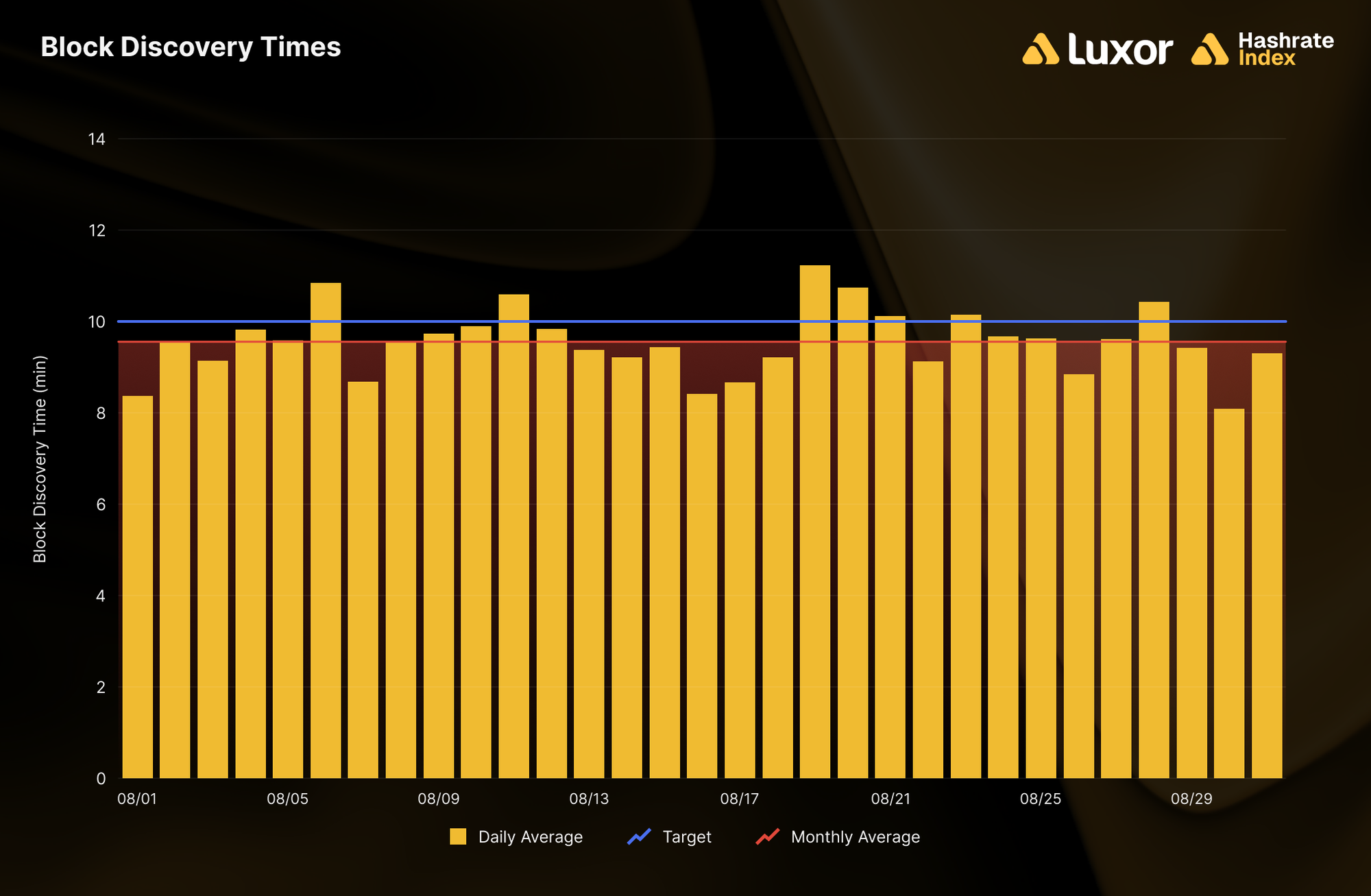
The efficiency of block production also improved, with average block times falling to 9 minutes and 34 seconds, compared to 9 minutes and 55 seconds in July. The network produced blocks 4.6% faster than the nominal difficulty implied, suggesting that miners with more efficient hardware are continuing to increase their share of the network’s total hashrate.
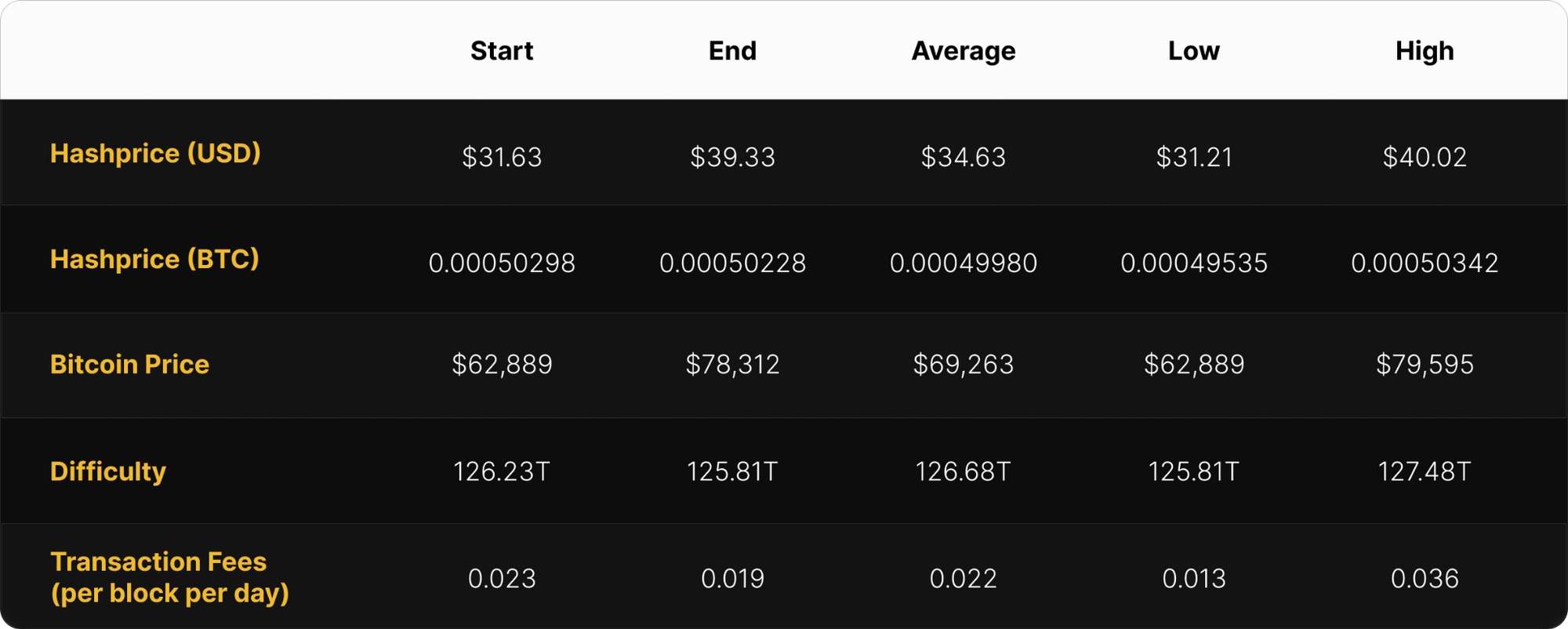
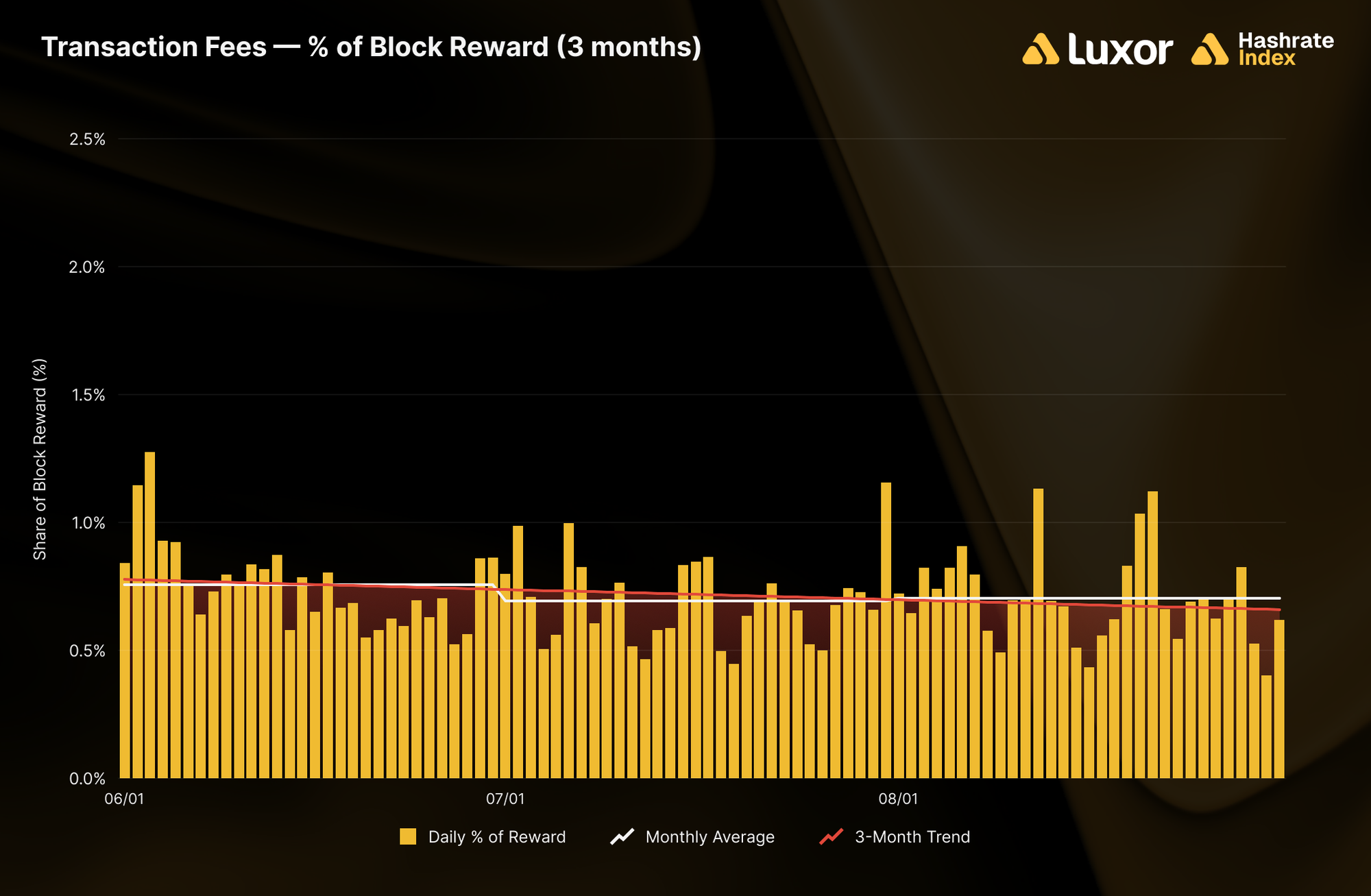
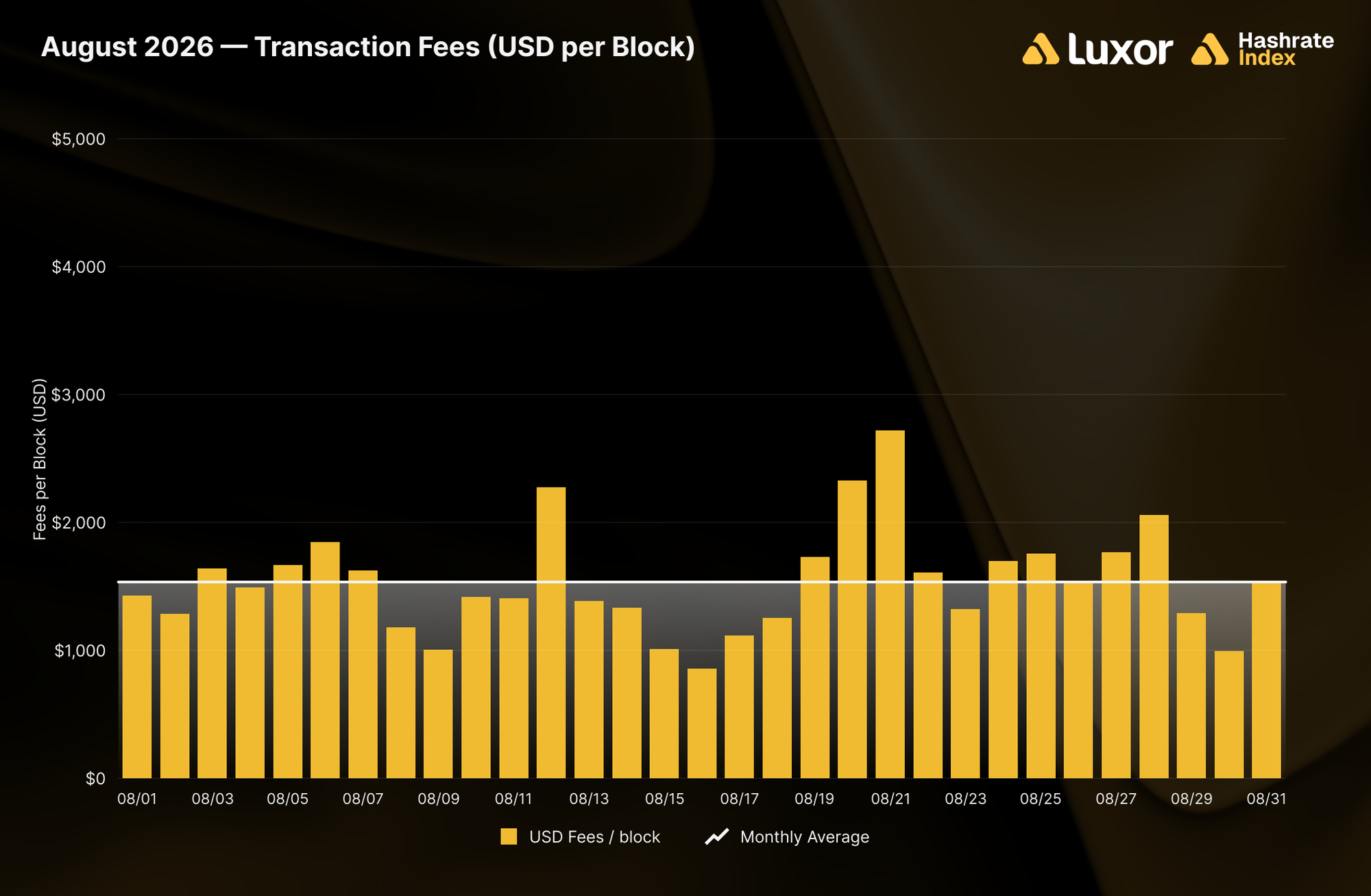
An anomalous event in transaction fee collection provided a brief point of interest. On August 12, a single block—block 962,142—recorded 1.82 BTC in fees, largely due to an automated Replace-by-Fee (RBF) script error that resulted in a user paying approximately $103,000 in fees to send nothing. Excluding this outlier, transaction fees remained remarkably flat in BTC terms, continuing a fourteen-month streak where fees accounted for less than 1% of total block rewards.
Hedging Strategies and Forward Market Performance
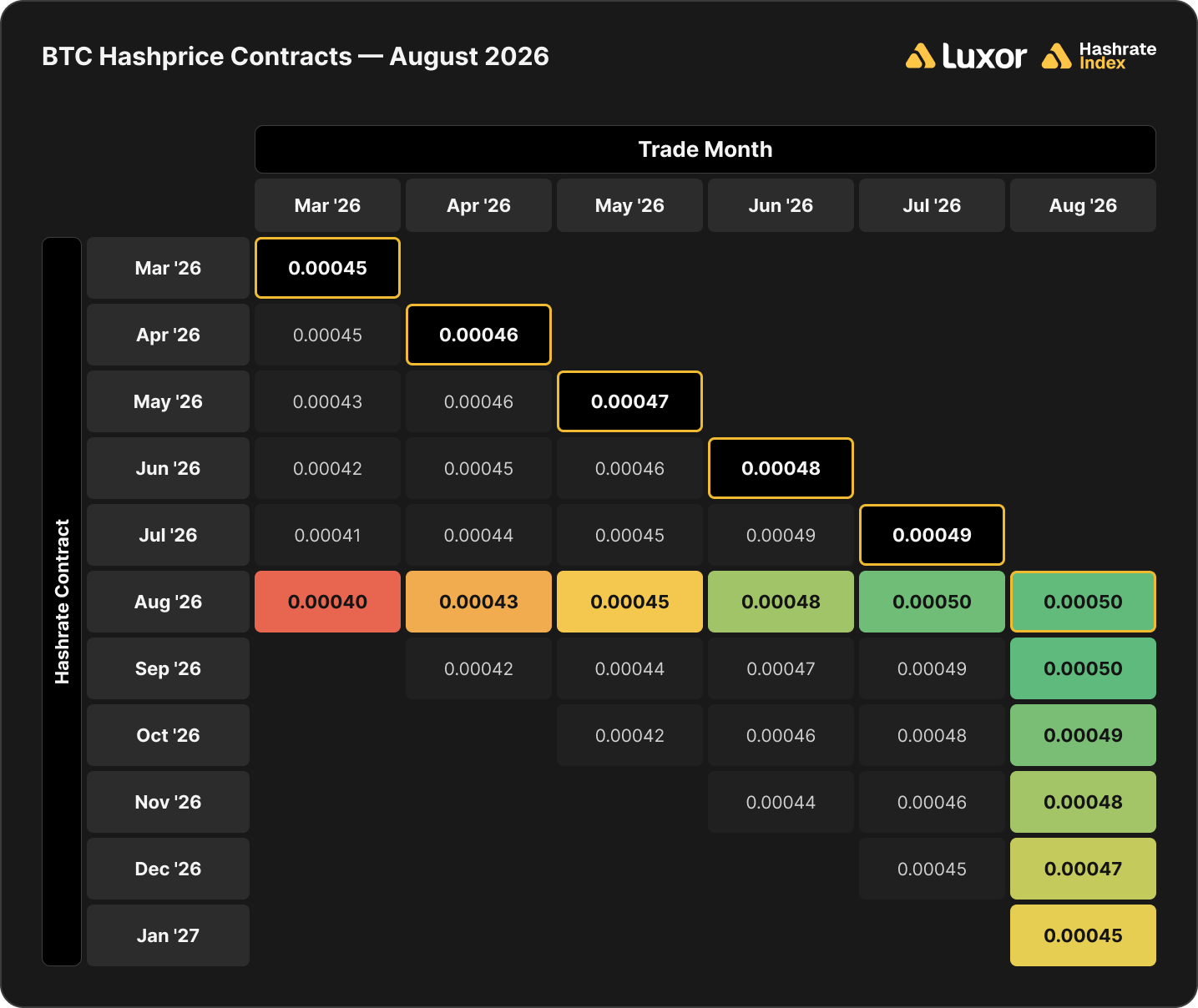
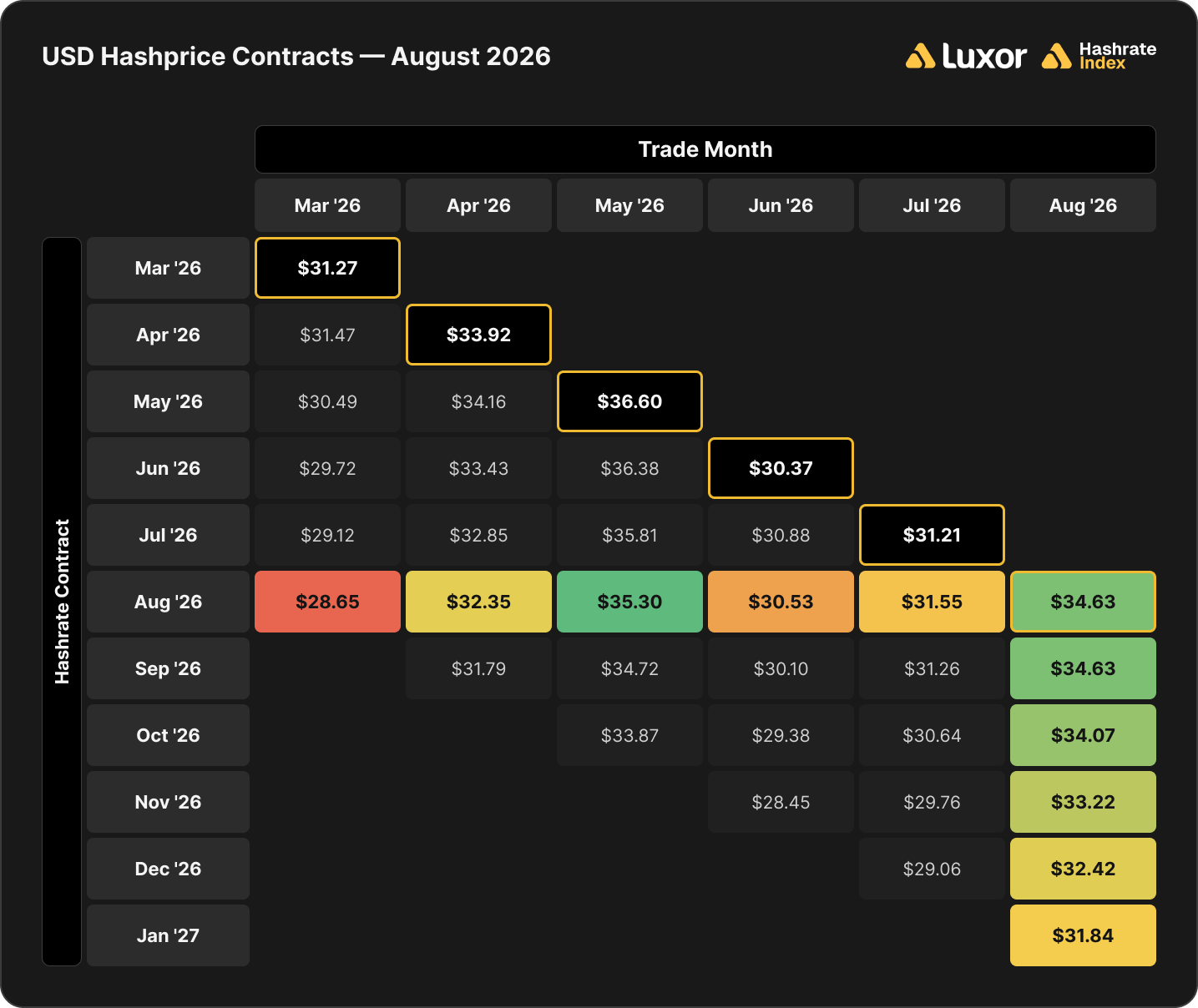
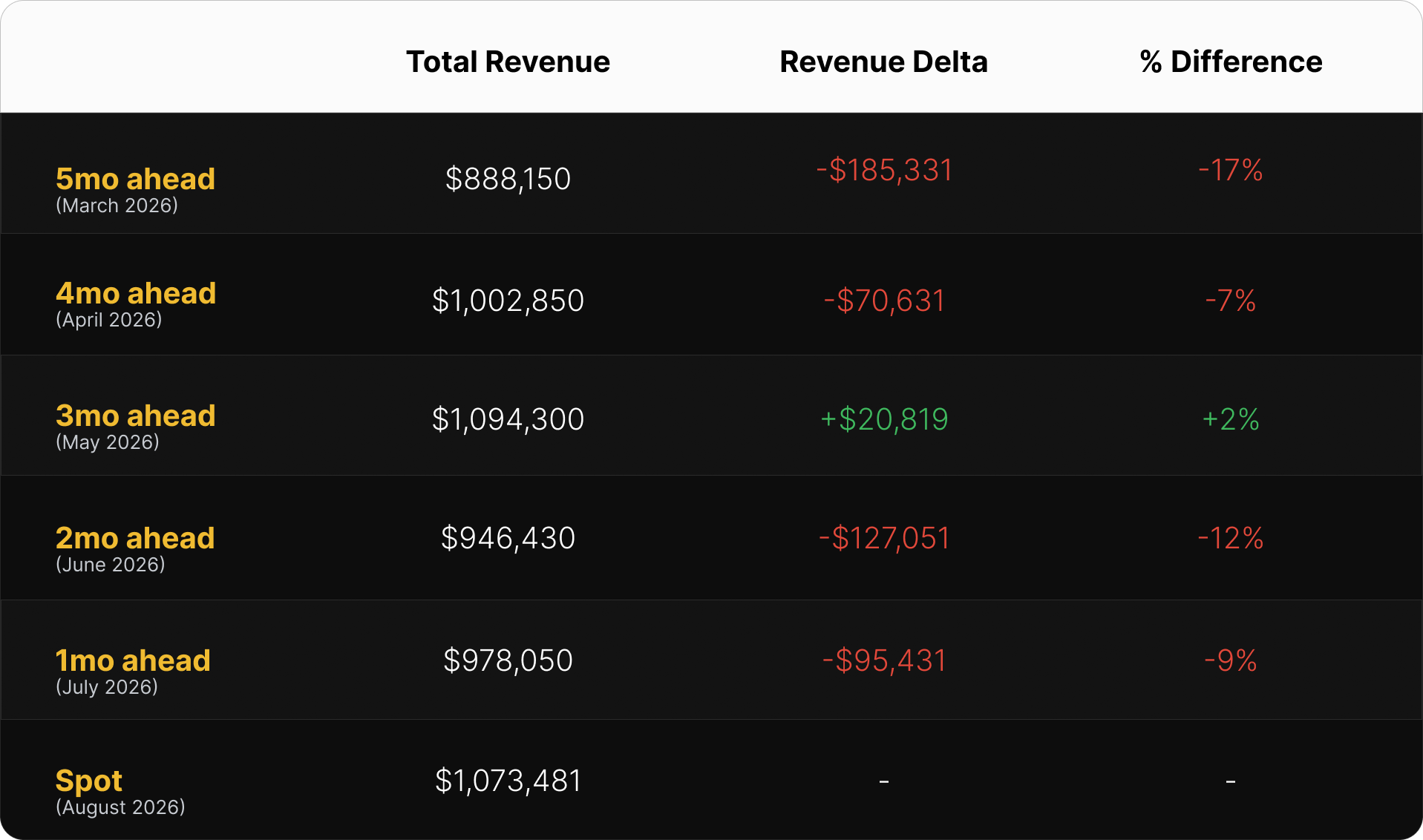
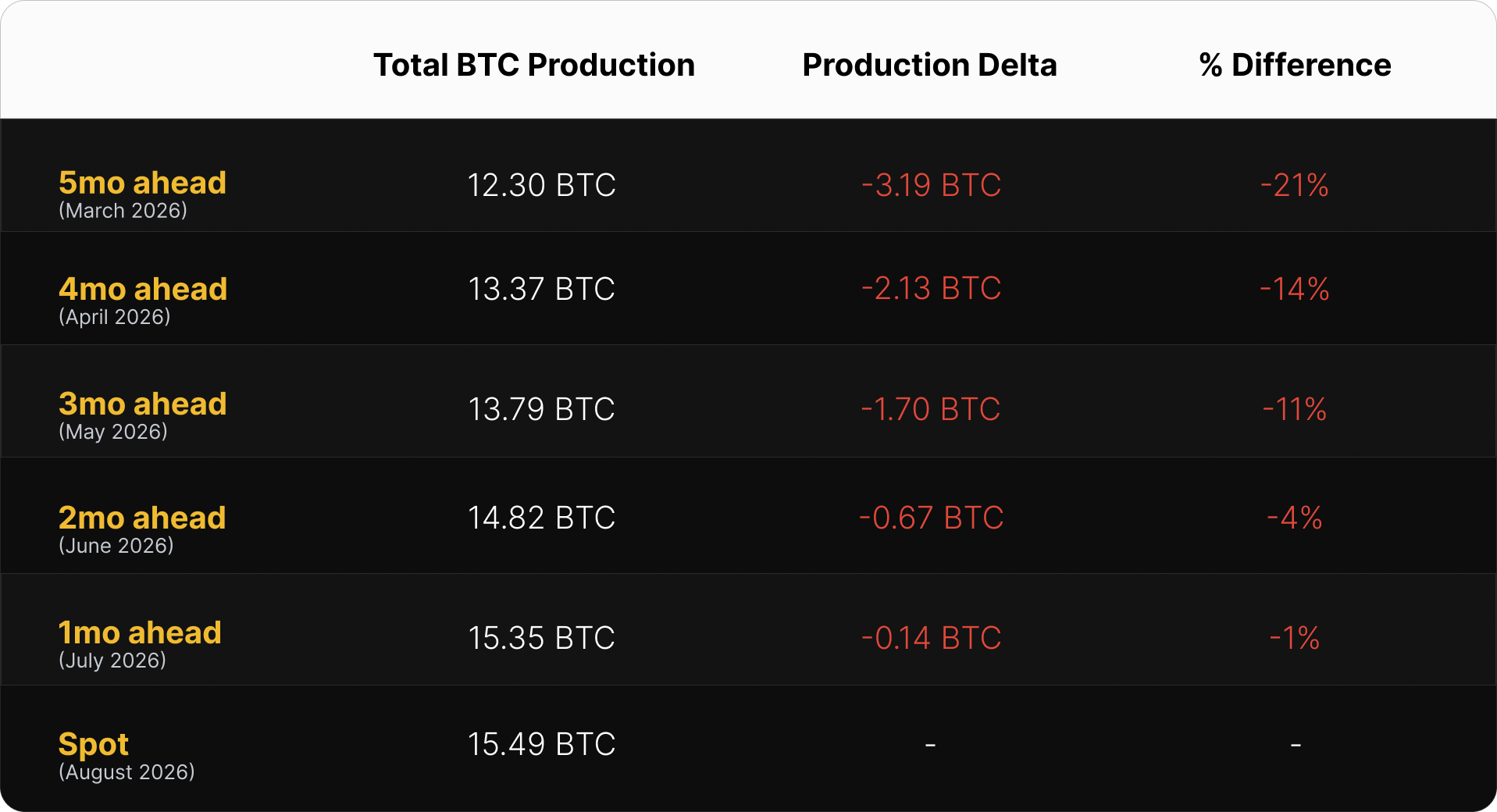
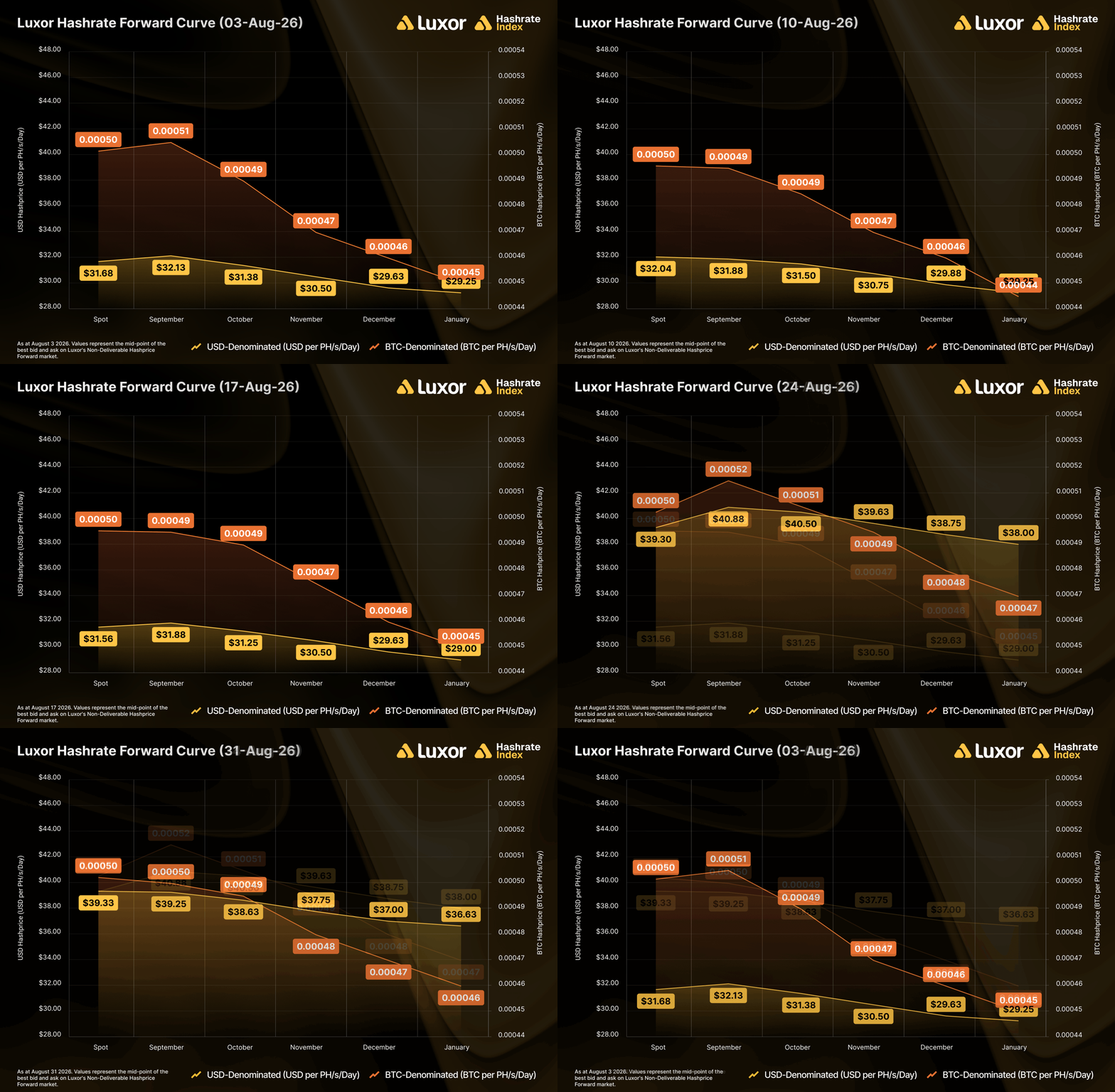
The August market activity provided a masterclass in the value of hashrate derivatives. Luxor’s Non-Deliverable Hashrate Forward (NDF) market reflected the shifting sentiment throughout the month. Sellers who locked in USD-denominated hashrate contracts during the early-month lows largely missed out on the late-month rally. Specifically, those who hedged at the lower price points saw their locked-in rates fall significantly below the spot settlement of $34.63.
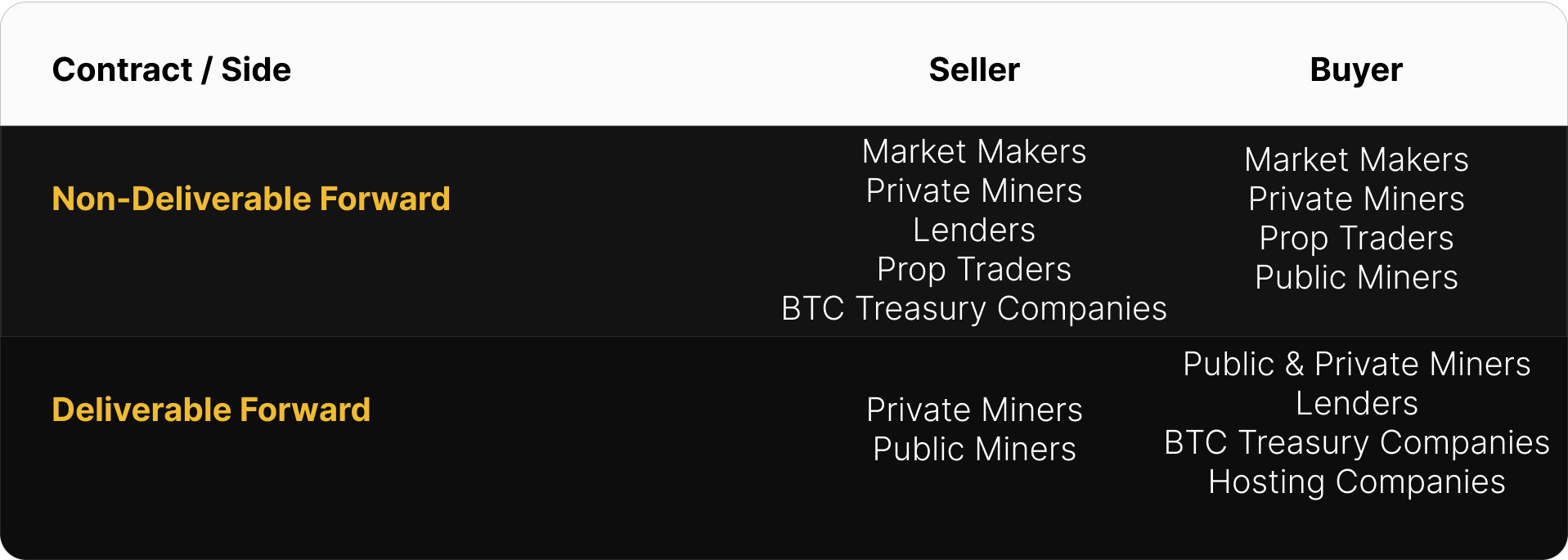
Conversely, for those miners who utilized deliverable (DF) and non-deliverable (NDF) pairs to manage capital costs, the month offered a clear lesson in risk management. The spread between these two contract types allowed lenders and treasury-focused mining companies to earn an annualized yield of 6% to 13%. This strategy has become a vital tool for miners seeking non-dilutive financing to upgrade their fleets.
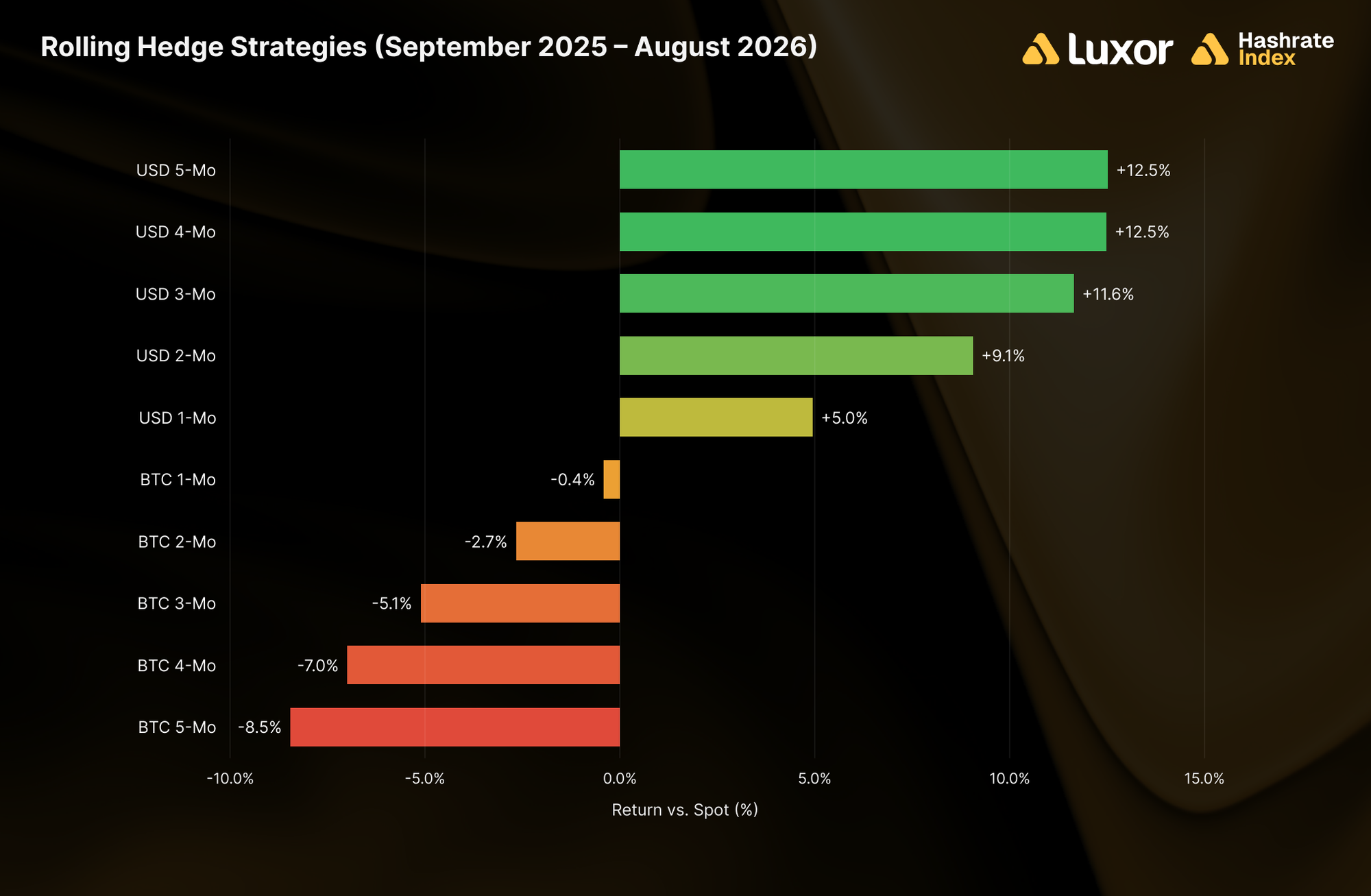
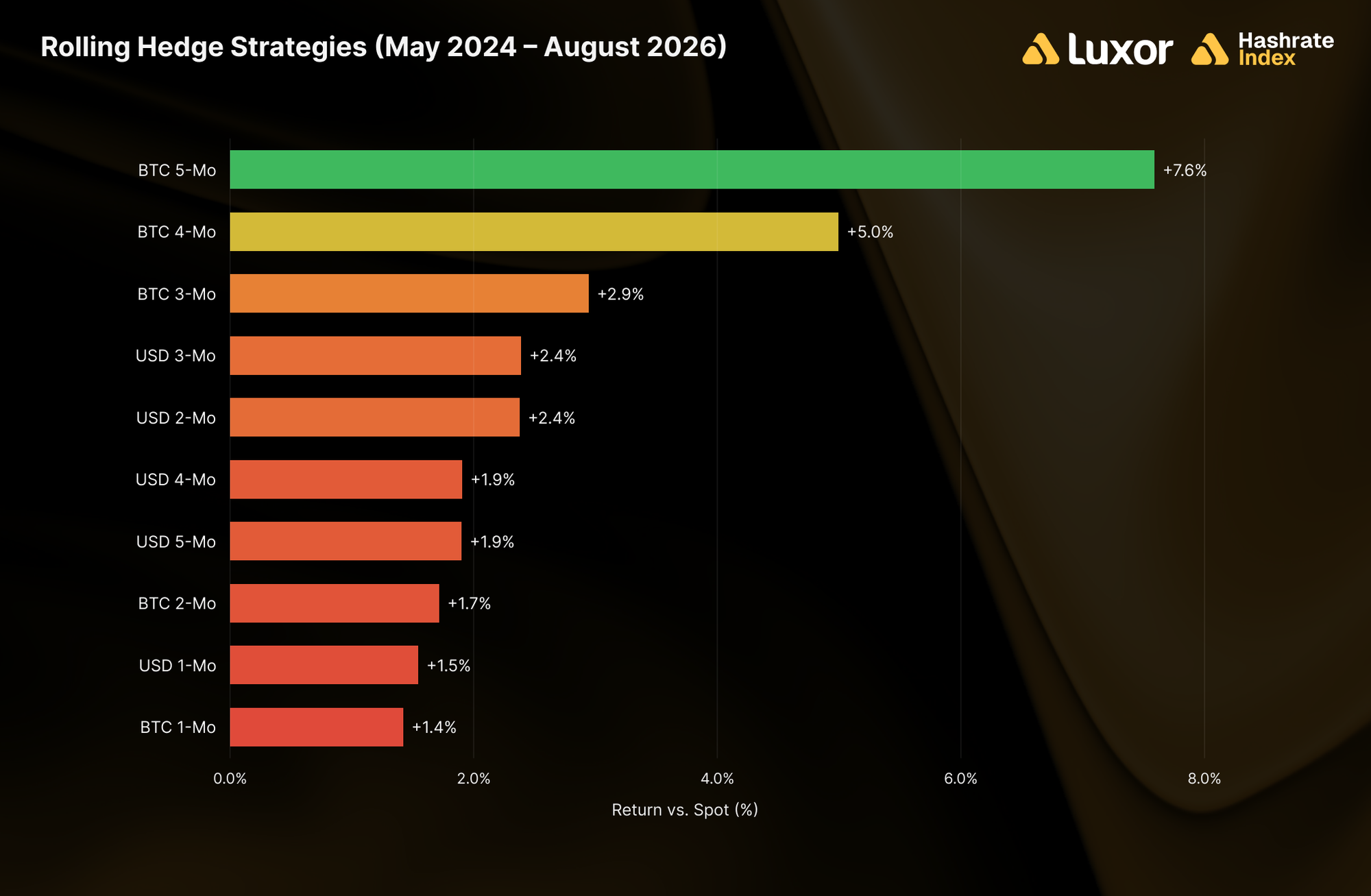
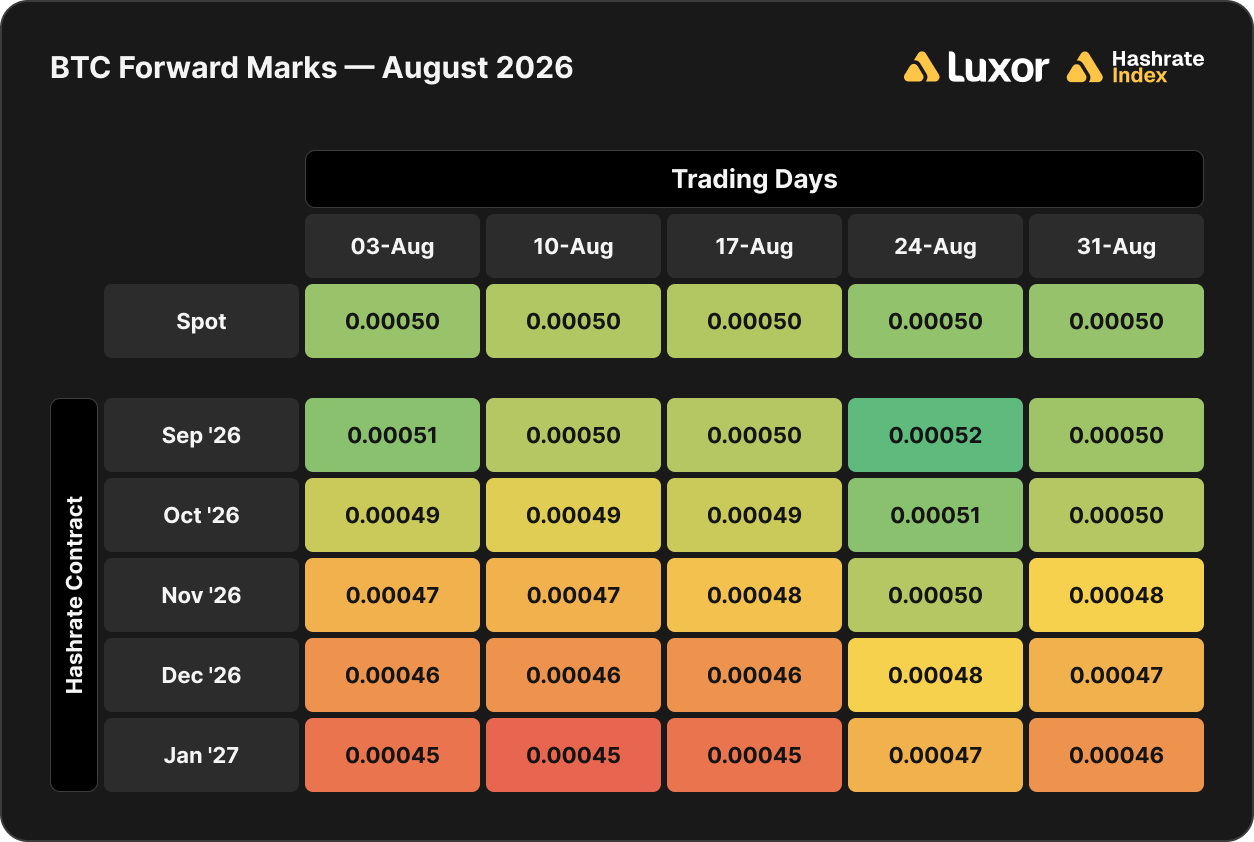
Looking at rolling hedge performance since the 2024 halving, the data reveals a clear trend: long-duration BTC-denominated hashrate hedges have outperformed spot prices in several instances, though the advantage has shifted as the market environment evolved. In August, the forward curve adjusted its outlook on future difficulty, slightly lowering expectations for late 2026 and early 2027. The implied network hashrate for December 2026 was adjusted downward from 985 EH/s to 964 EH/s, indicating that the market expects a slower return of offline hashrate than previously projected.
Implications for the Mining Industry
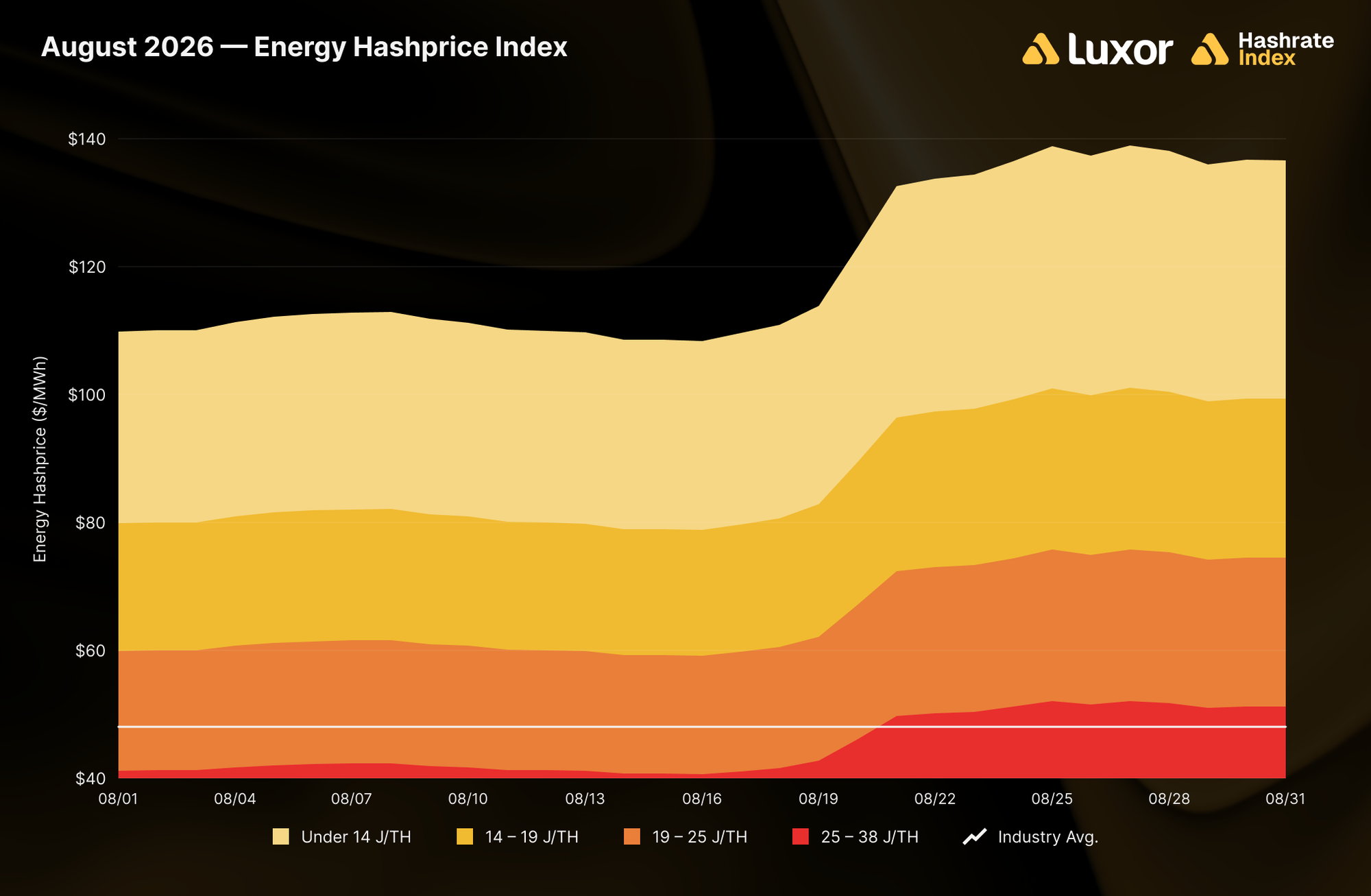
As the industry moves into September, the primary concern for miners remains the interplay between electricity costs and hashprice. With an industry-average power cost estimated at $0.048/kWh, the breakeven threshold for mining fleets is highly sensitive to price fluctuations. At the $31.21 hashprice seen in mid-August, the breakeven efficiency was approximately 27 J/TH. At the month-end $40 hashprice, this threshold improved to approximately 35 J/TH, effectively bringing previously unprofitable hardware back into the viable operating range.
The upcoming month will be defined by two critical events. First, the Senate’s vote on the Clarity Act on September 15 will determine the legislative trajectory for the remainder of the year. With odds of passage currently estimated at 10% by some industry researchers, a failure to achieve cloture could signal a year-end regulatory stalemate. Second, the FOMC decision on September 16 remains the most significant macroeconomic indicator. A rate hike, if realized, would mark the first such increase since July 2023 and could exert downward pressure on risk assets, including Bitcoin.
Furthermore, the seasonal influence of the 4CP (Four Coincident Peaks) charges in Texas will conclude in September. Historically, Texas miners curtail operations during the summer to mitigate transmission costs; once these incentives disappear, the industry typically sees a surge in hashrate return as miners ramp up capacity for the cooler autumn months. October has consistently delivered positive difficulty growth since 2022, and the expectation of this seasonal pattern suggests that network difficulty may soon rise, potentially absorbing some of the revenue gains seen in late August.
Strategic Outlook for Miners
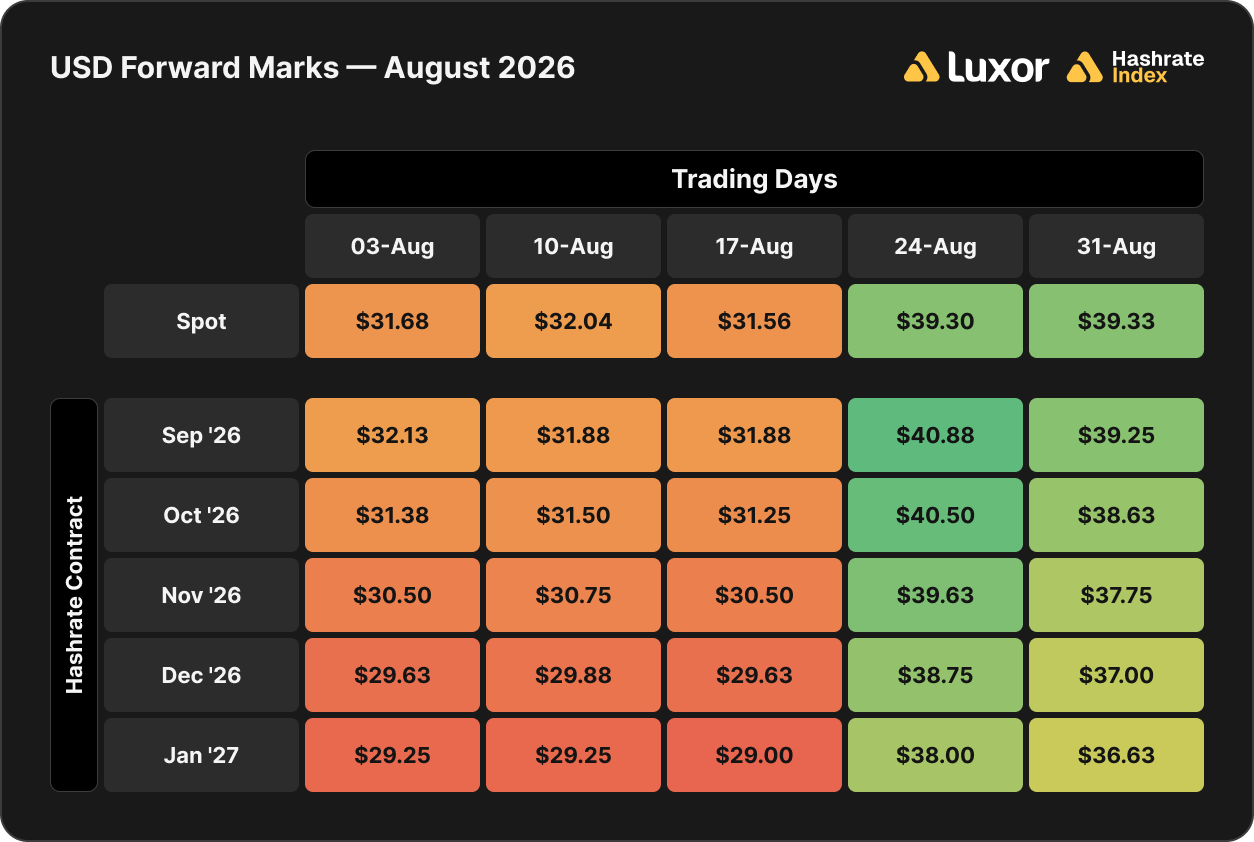
Miners currently face a narrow, yet manageable, band of profitability. While the late-August rally provided much-needed relief to fleets operating in the 25–38 J/TH efficiency range, the sustainability of this state depends on continued price appreciation or a lack of rapid hashrate expansion. As Luxor’s forward market indicates, the consensus expectation for the next six months is a relatively steady hashprice environment, averaging roughly $36.98.
The integration of financial derivatives into the standard mining operational model is no longer a luxury but a strategic necessity. By utilizing forward contracts to lock in future revenue, miners can insulate themselves from the inherent volatility of the Bitcoin network. As the industry matures, the ability to predict and hedge against fluctuations in difficulty and price will distinguish the most resilient operators. For now, the market remains in a state of cautious optimism, awaiting further clarity from Washington and the Federal Reserve, while keeping a watchful eye on the returning hashrate that will inevitably reset the competitive baseline of the network.