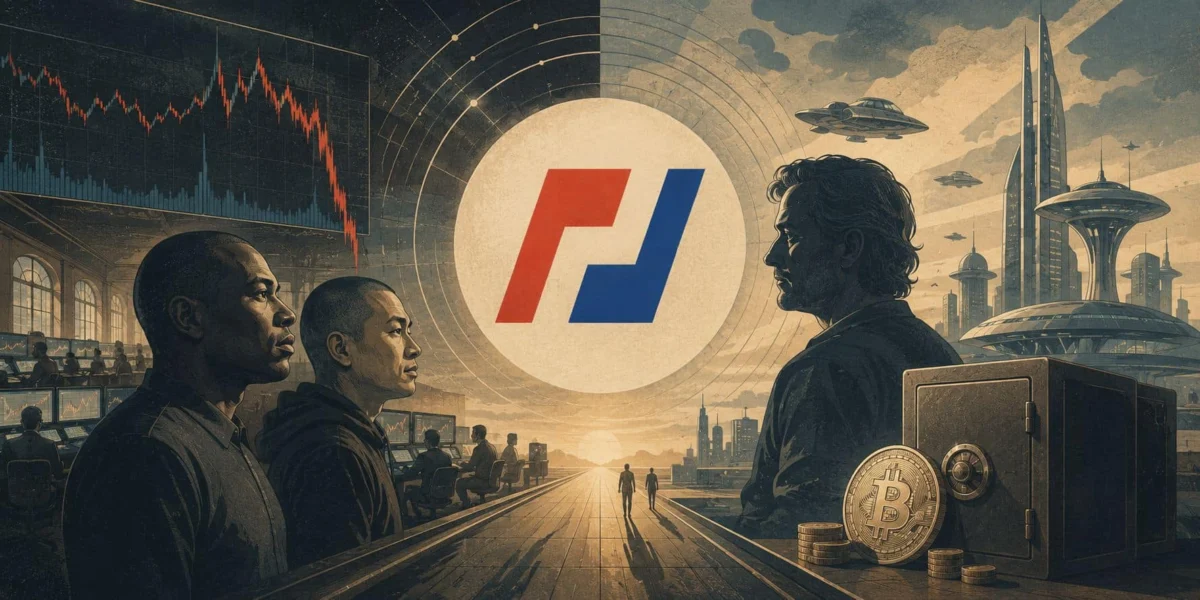
After more than a decade of operations that profoundly shaped the landscape of crypto derivatives, BitMEX, once a titan of the digital asset market, is set to permanently cease operations. The exchange, owned and operated by HDR Global Trading Limited, officially announced on July 23, 2026, its decision to shut down at 04:00 UTC on September 23, 2026. This pivotal decision follows a comprehensive strategic review of its business and the broader cryptocurrency industry, though specific detailed reasons for the closure were not publicly disclosed beyond a general assessment of market conditions and internal strategy. The news sends ripples through the industry, prompting reflections on BitMEX’s enduring legacy and the evolving nature of crypto finance.
A Decade of Disruption: BitMEX’s Genesis and Rise
Founded in 2014 by a trio of visionary entrepreneurs — Arthur Hayes, Benjamin Delo, and Samuel Reed — BitMEX rapidly ascended to prominence by introducing innovative financial instruments to the nascent cryptocurrency market. Operating primarily out of Hong Kong, the exchange quickly became synonymous with high-octane trading, attracting a global user base eager to speculate on the volatile price movements of Bitcoin and other digital assets.
At the core of BitMEX’s revolutionary impact was its pioneering of the "perpetual swap" contract. Unlike traditional futures contracts that come with fixed expiration dates, perpetual swaps allow traders to hold leveraged positions indefinitely, provided they meet margin requirements. This innovation, coupled with the platform’s infamous offering of up to 100x leverage, democratized access to sophisticated trading strategies previously confined to traditional financial markets. It allowed traders to amplify their exposure significantly with relatively small amounts of collateral, a feature that was both its greatest draw and a source of considerable risk.
During its zenith, particularly between 2017 and 2019, BitMEX commanded a significant share of the global Bitcoin derivatives market. It was a primary liquidity provider for Bitcoin (XBT) perpetual swaps, and its trading volumes frequently reached into the billions of dollars daily. This period saw BitMEX emerge as a bellwether for market sentiment, with its order books and liquidation cascades often influencing spot prices across the broader crypto ecosystem. The platform cultivated a distinct culture, appealing to a demographic of aggressive, risk-tolerant traders who thrived on volatility. Its technological infrastructure, designed for speed and resilience, was also highly regarded, supporting massive trading volumes even during extreme market events.
Pioneering Product: The Perpetual Swap’s Enduring Legacy
The perpetual swap, as conceptualized and popularized by BitMEX, fundamentally altered the structure of crypto derivatives trading. Before its widespread adoption, most crypto derivatives were standard futures contracts, which often lacked sufficient liquidity or were inconvenient due to their expiry dates. The perpetual swap, by mimicking a spot market position while allowing leverage and continuous trading, provided unparalleled flexibility. It quickly became the cornerstone product for major crypto derivatives platforms worldwide.

Competitors, recognizing the immense popularity and utility of the perpetual swap, swiftly integrated it into their own offerings. Exchanges like Binance, Bybit, OKX, and Deribit adopted the model, refining it and expanding its reach to a wider array of cryptocurrencies. Today, perpetual contracts remain one of the most widely traded instruments in digital assets, a testament to BitMEX’s initial vision.
However, the high leverage afforded by perpetual swaps also introduced systemic risks, particularly during periods of extreme market volatility. The infamous "Black Thursday" crash of March 12-13, 2020, stands as a stark reminder of these dangers. During this event, a rapid and severe drop in Bitcoin’s price triggered a cascade of liquidations across highly leveraged positions on BitMEX and other derivatives platforms. While BitMEX’s trading engine remarkably held up under immense pressure, the episode highlighted the magnified risks inherent in such instruments, prompting calls for greater risk management and regulatory oversight.
Regulatory Headwinds and Market Evolution
The operational journey of BitMEX was not without significant challenges, particularly concerning regulatory compliance. Operating in the largely unregulated early crypto environment, the exchange initially prioritized growth and innovation, which later put it at odds with established financial regulations, particularly in the United States.
In October 2020, U.S. authorities, including the Commodity Futures Trading Commission (CFTC) and the Department of Justice (DOJ), initiated enforcement actions against BitMEX and its founders. The charges centered on allegations of operating an unregistered trading platform and failing to implement adequate Anti-Money Laundering (AML) and Know Your Customer (KYC) programs. These regulatory lapses, authorities argued, allowed illicit activities to flourish on the platform and provided a conduit for money laundering.
The legal battles that ensued were protracted and had a profound impact on the exchange’s leadership and strategic direction. Arthur Hayes, Benjamin Delo, and Samuel Reed eventually pleaded guilty to violating the Bank Secrecy Act, acknowledging their failure to establish, implement, and maintain an AML program. The legal saga culminated in a surprising turn of events in 2025 when the founders were granted pardons by U.S. President Donald Trump, a move that stirred considerable debate within both political and crypto circles.
Beyond the legal challenges, the regulatory scrutiny intensified the competitive landscape. As other exchanges moved to adopt stricter compliance frameworks and acquire necessary licenses, BitMEX’s market position weakened. The rising costs of compliance, coupled with the need to rebuild trust and adapt to an increasingly regulated global market, proved to be significant hurdles. This period also saw an influx of new competitors, many of whom offered more diverse asset listings, user-friendly interfaces, and proactive regulatory engagement, further eroding BitMEX’s once-dominant market share.
A Decline in Dominance: Supporting Data and Market Position

The announcement of BitMEX’s shutdown comes at a time when its influence in the global crypto derivatives market had already diminished considerably. This decline is starkly illustrated by various market metrics. Reuters, citing data from Kaiko, reported that at the time of the closure announcement, BitMEX’s market share had plummeted to less than 0.01% of global crypto derivatives trading volume. Daily trading volumes, which once soared into the billions, had dwindled to roughly $400,000.
This represents a precipitous fall from its earlier prominence, where it often competed with, and sometimes surpassed, traditional finance institutions in terms of trading activity for specific assets. The reasons for this decline are multi-faceted, encompassing the aforementioned regulatory pressures, the proliferation of well-funded and globally compliant competitors, and a perceived lag in product diversification compared to newer entrants.
Further supporting this narrative, data shared by CryptoQuant analyst Julio Moreno revealed that BitMEX’s Bitcoin reserves had fallen to multi-year lows of approximately 13,300 BTC in July 2026, coinciding with the shutdown announcement. While reserve levels alone do not fully explain a company’s decision to cease operations, the consistent decline underscores the platform’s reduced trading activity and user base. This figure stands in stark contrast to its peak, when its Bitcoin holdings were a significant indicator of its market liquidity and strength. The shift reflects a broader trend of users migrating to other platforms offering a wider range of services, better regulatory clarity, and a more diverse trading environment.
Farewell Messages: Founders and Industry Leaders Reflect
The news of BitMEX’s impending closure elicited reflections from key figures within the cryptocurrency industry, including its co-founder, Arthur Hayes, and Binance founder, Changpeng Zhao (CZ). Their statements provided a mix of nostalgia, acknowledgment of legacy, and a pragmatic view of the industry’s evolution.
Arthur Hayes, who transitioned into a prominent crypto market commentator and investor after his operational departure from BitMEX, shared a heartfelt farewell message. He expressed that the decision was made "with a heavy heart" but also conveyed immense pride in the platform’s legacy. Hayes extended gratitude to the company’s employees, partners, and customers who contributed to its development over more than a decade. His message underscored BitMEX’s role in challenging established financial infrastructure and pioneering new forms of digital asset trading. Hayes concluded his post with the phrase "Satoshi for life," a poignant reference to Bitcoin’s pseudonymous creator and the early, often anti-establishment, ideological underpinnings of the cryptocurrency movement that BitMEX embodied in its formative years. This ideological stance has long characterized Hayes’s public commentary on Bitcoin, global liquidity, and monetary policy, continuing even after his direct involvement with the exchange waned.
Changpeng Zhao (CZ), the founder of Binance, one of BitMEX’s most successful successors in the derivatives space, also responded to the shutdown announcement. CZ acknowledged BitMEX’s profound contribution to the development of cryptocurrency derivatives, specifically highlighting its 2014 introduction of the 100x leveraged perpetual swap. He noted how this product transformed crypto derivatives from a market largely centered on traditional delivery futures to one offering continuous, highly liquid trading. CZ also commended BitMEX’s historical emphasis on platform security, particularly its reliance on cold storage and multi-signature controls, which contributed to its impressive record of zero customer funds lost to hacks throughout its operational history. While acknowledging the regulatory difficulties that ultimately affected BitMEX’s leadership and competitive standing, CZ expressed respect for the founders and reflected on the broader regulatory environment that continues to shape crypto businesses globally. His comments underscore the significance of BitMEX’s role as an industry pioneer, even as the competitive landscape shifted dramatically.
The Phased Wind-Down: A Detailed Timeline for Users

BitMEX has outlined a clear, phased plan for its orderly wind-down, prioritizing the security and accessibility of customer assets. The exchange has already stopped accepting new account registrations, initiating a transition period to facilitate the closure.
Key dates and actions for users are as follows:
- July 23, 2026: Official announcement of the permanent cessation of operations. New account registrations halted.
- Until August 26, 2026, 04:00 UTC: Full trading services will continue as normal, allowing users to manage their positions.
- August 26, 2026, 04:00 UTC: Trading services will officially cease. At this point, new risk limits will be introduced, preventing users from opening any new positions. Users will only be able to reduce or close their existing exposure.
- Between August 26, 2026, and September 23, 2026: BitMEX will begin the systematic process of force-closing remaining open positions as part of an orderly wind-down.
- September 23, 2026, 04:00 UTC: The final shutdown time. Any remaining open positions will be automatically closed, and exchange operations will formally cease.
BitMEX has strongly urged users to take proactive steps to close open positions and withdraw all their assets well before the September deadline. The company has reassured customers that their assets remain safe and that, according to its regularly published proof-of-reserves and liabilities information, its assets comfortably exceed its liabilities. This transparency aims to instill confidence and prevent any panic withdrawals.
After the formal closure of exchange operations, users will still retain access to their accounts. This access will be limited to reviewing wallet balances and transaction history, and most importantly, to withdraw any remaining funds. However, customers are advised against waiting until after operations formally end, as the wind-down period is the most opportune time for asset retrieval. The company has also issued a warning to users to remain vigilant against potential phishing attempts, emphasizing that there will be no "special" or "expedited" withdrawal services. Furthermore, additional review procedures might be applied to withdrawals during the wind-down period to ensure security and compliance, which could potentially extend processing times.
Broader Implications: A Changing Crypto Landscape
The closure of BitMEX, while marking the end of a significant chapter, is unlikely to trigger a major market-wide shock or cause significant direct disruption to broader cryptocurrency liquidity. This is primarily because the exchange’s influence in the global crypto derivatives market had already diminished considerably over the past few years. As noted by Kaiko research analyst Thomas Probst, BitMEX’s current trading footprint is too small to cause widespread market instability.
Instead, the shutdown carries more symbolic significance. It represents the closing of a platform whose historical impact on shaping the structure of crypto derivatives far outweighs its current market position. It serves as a powerful reminder of the rapid evolution and intense competition within the digital asset space. The market has matured significantly, moving from a wild west environment to one increasingly influenced by institutional players, diverse product offerings, and a complex web of global regulations.
The BitMEX story offers crucial lessons. It underscores the critical importance of regulatory compliance in a maturing industry. While early pioneers often operate in gray areas, sustained success and long-term viability increasingly depend on adhering to legal frameworks and building robust compliance programs. It also highlights the relentless pace of innovation and competition; platforms that fail to adapt, diversify, and maintain a competitive edge risk being overtaken by newer, more agile entrants. The rise of decentralized perpetual trading venues further complicates the landscape, offering alternatives that prioritize censorship resistance and self-custody.

Conclusion: A Legacy That Outlives the Platform
BitMEX’s closure marks the culmination of one of the most recognizable and impactful chapters in cryptocurrency trading history. The exchange played an instrumental role in establishing perpetual swaps as a defining product in digital-asset markets, demonstrating how crypto-native derivatives could attract a vast global network of traders beyond the confines of traditional futures models. Its aggressive leverage limits, distinctive trading culture, and its central role during major market events cemented its place as an integral part of the industry’s formative years.
Its history also serves as a microcosm of the challenges that followed as cryptocurrency markets matured. Regulatory scrutiny intensified globally, institutional participation expanded, and competition grew fiercely across both centralized and decentralized trading platforms. These pressures, combined with strategic decisions, ultimately led to its decline from market dominance.
For Arthur Hayes, the shutdown closes the operational chapter of the exchange he helped build, allowing him to continue his influential role as a market commentator. For Changpeng Zhao and other industry participants, it offers a poignant opportunity to reflect on BitMEX’s lasting, albeit indirect, influence on the very architecture of crypto derivatives.
BitMEX will formally cease exchange operations on September 23, 2026, at 04:00 UTC. By then, the platform that helped popularize 100x perpetual swaps will have completed an 11-year journey, transitioning from a crypto derivatives pioneer to a historical reference point, a testament to both innovation and the unforgiving forces of market evolution and regulatory pressures. Its legacy will undoubtedly continue to resonate in the design and functionality of crypto trading platforms for years to come.