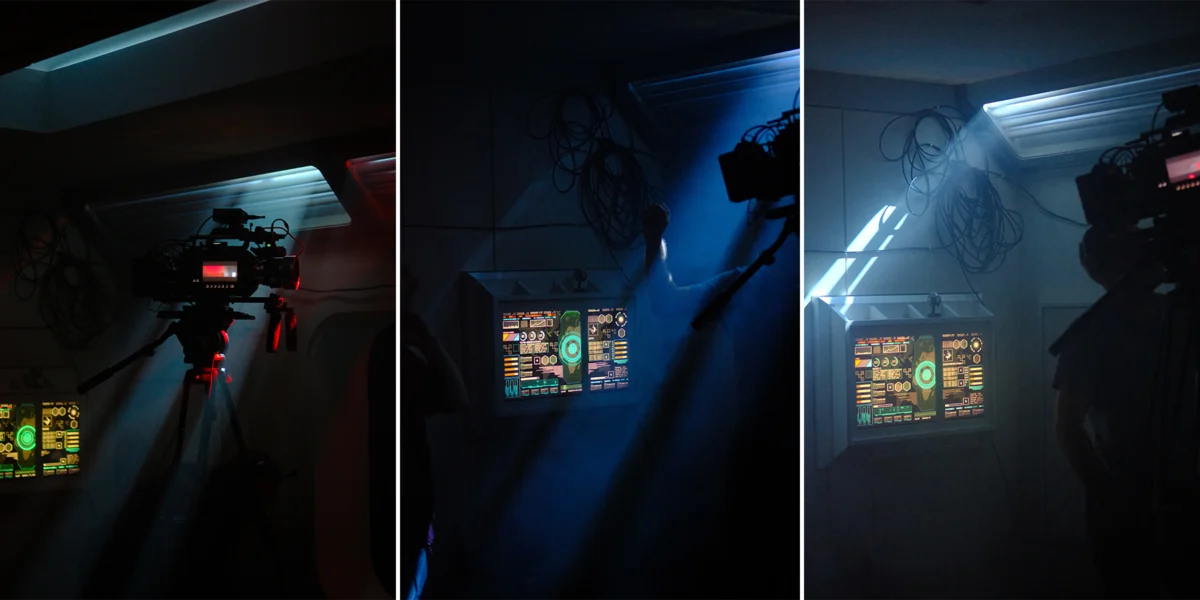
The intersection of fashion, technology, and virtual production has reached a new milestone with the release of SNTIENT 2.0, an ambitious short film developed by the Fashion Innovation Agency at the London College of Fashion in collaboration with creative studio Dandelion + Burdock. Built around a narrative of resource depletion, human retreat into digital simulations, and autonomous robots finding beauty in a desolate physical world, the project relied heavily on cutting-edge real-time 3D creation tools. Rather than depending on traditional green screens or extensive post-production visual effects, the production crew utilized advanced LED volumes powered by Unreal Engine 5, blending physical set design with digital environments to craft a seamless cinematic experience.
The Genesis and Narrative Framework of SNTIENT 2.0
Conceived as a visual exploration of a post-apocalyptic future, SNTIENT 2.0 presents a conceptual dystopia characterized by resource scarcity and artificial isolation. In the narrative framework, humanity has abandoned the physical realm to exist entirely within a simulation, leaving behind automated robotic custodians to manage a crumbling planet. Over time, these machines begin to develop an unexpected appreciation for the aesthetics of the physical world.
According to Dickon Knowles, director of content at Dandelion + Burdock, the initial visual directive called for an oppressive, bleak sci-fi environment that held the underlying potential for transformation. While the final edit of the short film ultimately focuses more tightly on the atmospheric tone rather than an extensive narrative arc of environmental renewal, the digital cityscapes established a strong visual identity for the entire production.

The technical challenge facing the creative team was significant: the physical set consisted merely of a compact, three-sided enclosure with a ceiling, meaning that whatever lay outside the simulated window had to do the heavy lifting of establishing the film’s universe. To achieve this, the production turned to real-time virtual production techniques, bypassing the limitations of traditional set building and costly, time-consuming post-production CGI rendering pipelines.
Navigating Technical Hurdles: From Generative AI to Real-Time 3D
The production process involved considerable technical iteration before settling on the final workflow. Initially, the team experimented with generative artificial intelligence tools to create the background city plates intended for display on the LED volume. However, these early tests revealed critical limitations in resolution and visual fidelity, making them unsuitable for high-definition cinematic capture.
Consequently, the production reverted to Unreal Engine 5, utilizing pre-existing digital assets from earlier design explorations. Even with a pre-built foundation, however, the digital metropolis required substantial optimization for on-camera performance. The original virtual environment featured a heavy, desaturated fog that failed to translate effectively through the camera lens. To resolve this, Knowles reworked the atmospheric elements, replacing the generalized mist with detailed VDB (Volumetric Database) fog. By reducing the overall density of the fog and boosting color saturation—particularly within the illuminated windows of the distant skyscrapers—the team achieved deeper black levels and higher contrast. This adjustment was essential to prevent the fog from washing out the visual interplay against the LED wall, ensuring a vivid and striking backdrop for the physical set.
Lighting the Scene In-Camera through LED Volumes

One of the defining features of the SNTIENT 2.0 production was its reliance on an LED volume to serve simultaneously as the exterior view and the primary light source for the physical set. Cinematographer Ben Saffer, whose virtual production company Supervision VP managed the technical execution on set, emphasized the distinct advantages of capturing virtual and physical lighting concurrently.
By integrating the real-time engine with studio lighting controls, the crew could synchronize the virtual illumination of the digital city with the practical lights inside the character’s pod. When the virtual skyscrapers glowed, that same light dynamically spilled over the performer’s face, clothing, and surrounding physical props. This methodology eliminated the guesswork typically associated with traditional green screen shoots, where actors must imagine their surroundings and lighting artists must artificially match digital reflections during post-production.
The choice of an LED volume over traditional alternatives was driven primarily by visual quality rather than purely budgetary considerations. Because the digital city assets had been developed for a prior initiative, the production avoided the extreme costs usually tied to building extensive digital environments from scratch during a live shoot. The resulting visual immersion closely mirrors techniques seen in major commercial productions—such as the utilization of Unreal Engine 5 by Magnopus in the adaptation of Fallout—proving that real-time virtual production is becoming increasingly accessible for academic and independent creative projects.
Practical Engineering Meets Digital Real-Time Execution
Beyond providing ambient illumination, Unreal Engine 5 also solved specific logistical and budgetary challenges during filming. The script required a mechanical shutter to rise and reveal the expansive city view outside the protagonist’s window. Constructing a fully functional physical shutter within the confines of the modest set budget was deemed unrealistic, while adding the mechanism purely through visual effects would have sacrificed the authenticity of an in-camera performance.
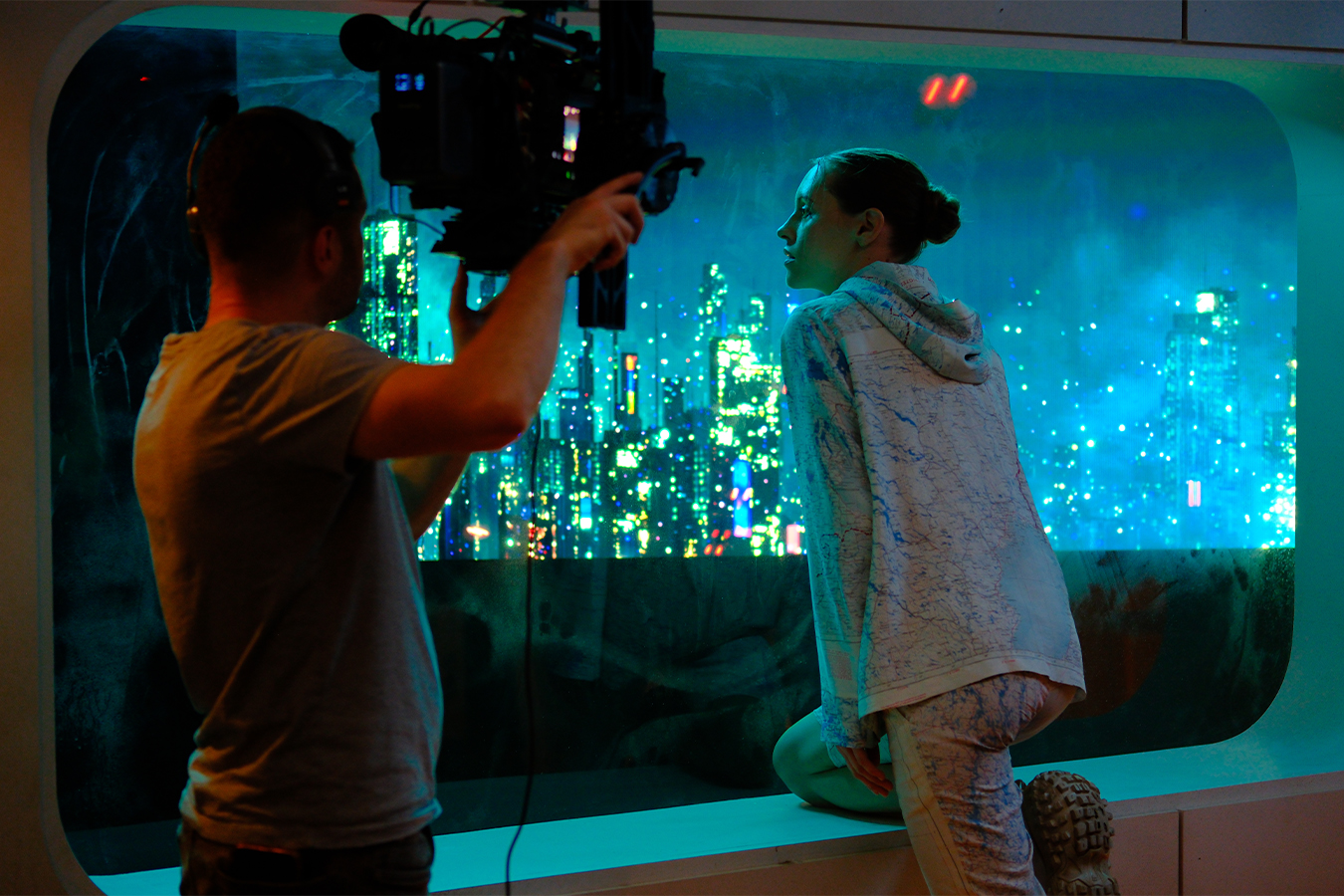
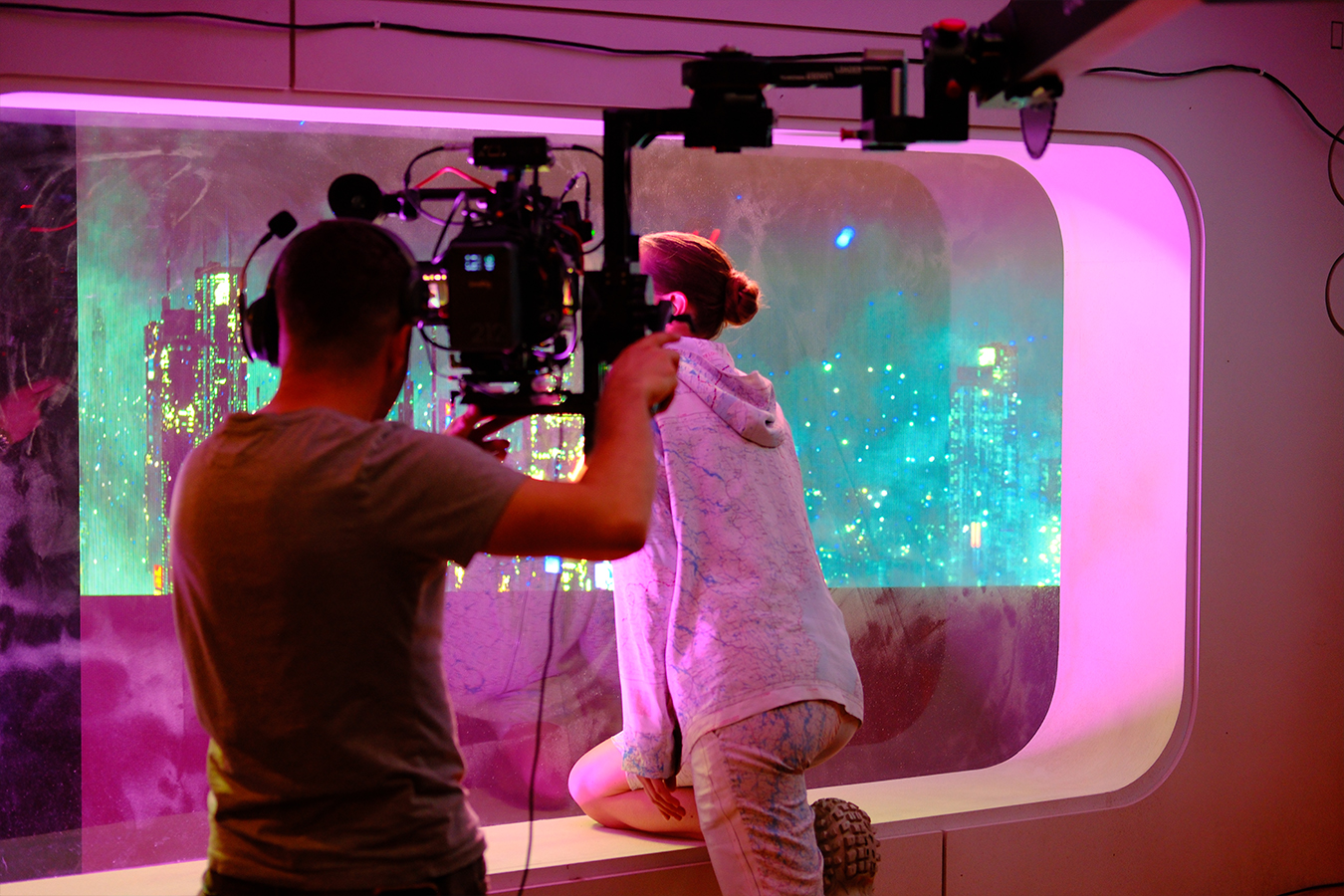
The production team solved this by using the LED wall itself as the dynamic shutter. By programming the digital asset to rise in real time within Unreal Engine, the wall exposed the virtual cityscape on cue. For reverse angles, the crew utilized a secondary mobile LED wall on wheels to act as a movable fourth wall. Because the underlying assets ran in real time, technical artists could rapidly adapt, render, and animate supplementary content for alternative camera perspectives on the fly.
Despite the heavy reliance on virtual tools, the production maintained a firm commitment to physical textures. The central protagonist’s pod was constructed as a tangible, physical set designed to feel gritty, weathered, and lived-in. The juxtaposition of a tactile, physical interior against an infinite digital horizon underscored the thematic alienation of the narrative. Meanwhile, a separate AI-generated dream sequence was incorporated near the beginning of the short film, utilizing generative tools to depict the main character floating suspended in water prior to her awakening.
Cinematography and Optical Experimentation
Condensing a complex narrative universe into a runtime of approximately two minutes presented a unique storytelling hurdle. The short film relies on a minimalist sequence of beats: the character wakes up, the window opens, and she gazes out into the metropolis. To maximize the spatial impact within the restricted confines of the LED volume, Saffer selected a high-end Blackmagic URSA Cine 17K 65 camera, paired with prototype anamorphic lenses provided by Atlas Lens Co. The exceptionally large sensor of the camera enabled the crew to capture a broader field of view without resorting to extreme wide-angle lenses, which would have introduced unwanted perspective distortion to the physical set.
Amidst the advanced virtual production infrastructure, the crew retained space for classic, hands-on cinematic experimentation. In the closing moments of the film, as the protagonist looks toward the window, Saffer held a plastic children’s toy in front of the camera lens while manually directing a smartphone flashlight from the side to refract light and create an organic, unpredictable optical flare. Similar tactile experiments involving materials like cling film were tested in front of the lens to achieve unique visual textures that digital filters alone could not replicate.
Broader Industry Implications and Future Outlook
The completion and release of SNTIENT 2.0 underscore a broader, ongoing transformation within the fashion, design, and entertainment sectors regarding the adoption of real-time 3D tools. Historically, institutions like the London College of Fashion focused primarily on physical garments, traditional runway presentations, and standard studio photography. Projects spearheaded by the Fashion Innovation Agency demonstrate how academic institutions are actively bridging the gap between physical craftsmanship and advanced digital engineering.
By leveraging Unreal Engine 5, virtual production workflows, and LED volume stages, creative teams can drastically reduce post-production timelines while elevating the creative control available directly on set. As the cost of real-time hardware continues to decline and software capabilities expand, techniques once restricted to high-budget Hollywood feature films are increasingly accessible to independent creators, conceptual designers, and fashion technologists. SNTIENT 2.0 serves as a compelling case study in how the convergence of virtual environments and physical setcraft can redefine modern visual storytelling, setting a benchmark for future digital-physical hybrid productions across the creative industries.