
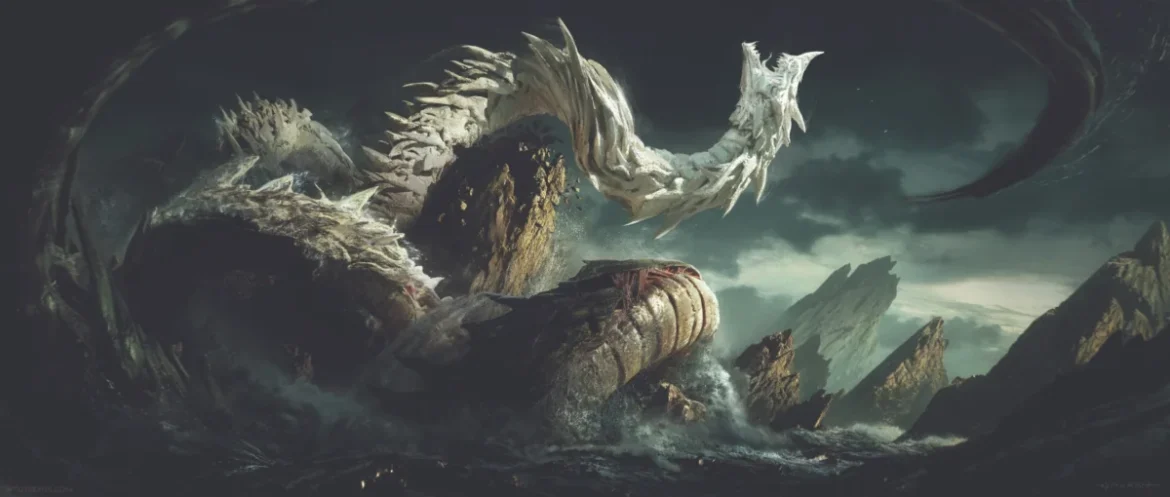
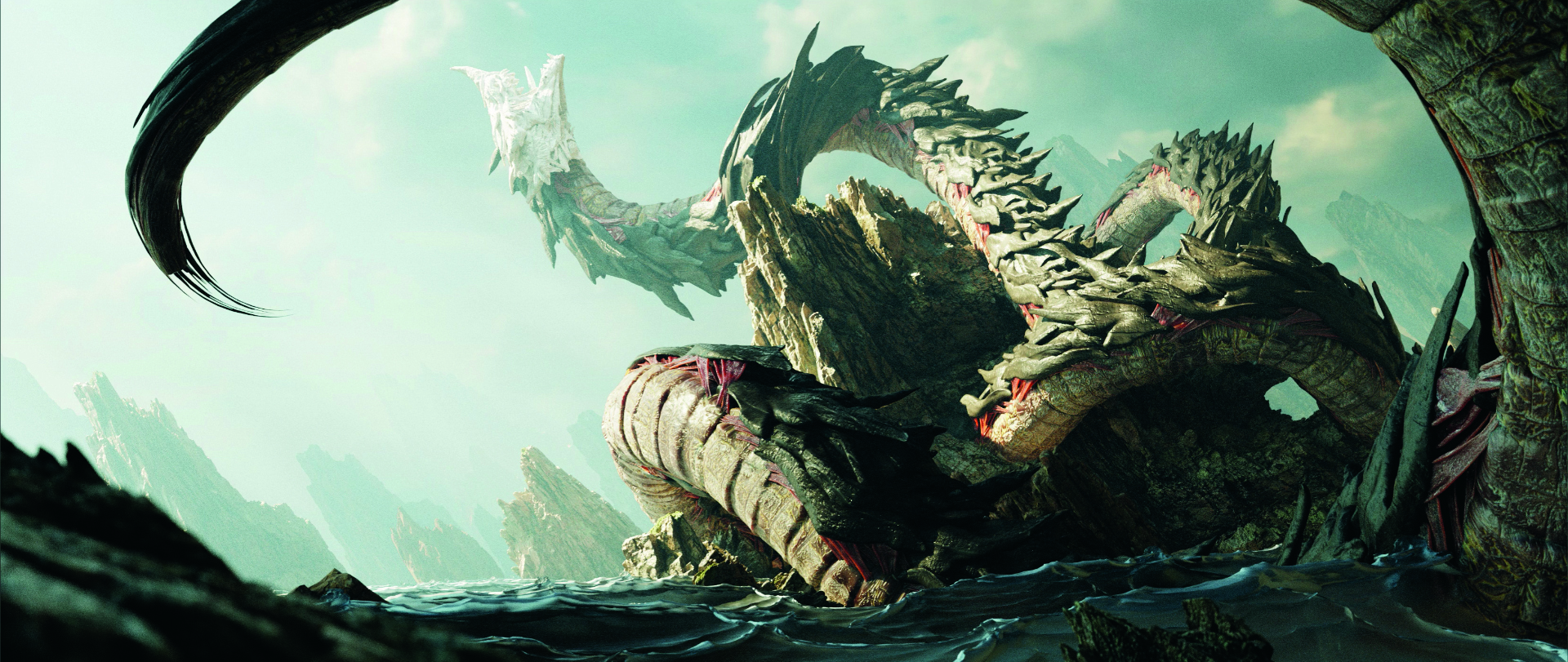
The intersection of independent cinematic storytelling and advanced digital artistry has yielded a striking new visual milestone in the development of Paul Coulthard’s upcoming short film, God of Bones. Central to the project’s ambitious world-building is a key vista shot depicting a colossal serpent caught in its final, agonizing moments of life, calcifying and collapsing into solid stone. To achieve the necessary weight, scale, and emotional resonance, the production enlisted renowned digital artist Wojtek Fus. Working alongside a multidisciplinary team of designers and 3D modelers, Fus transformed a rudimentary concept sketch into a cinematic spectacle that redefines the visual boundaries of digital creature design.
The Genesis of God of Bones and the Need for Monumental Scale
Independent short films frequently face the challenge of establishing massive, high-fantasy environments on constrained timelines and budgets. God of Bones, spearheaded by director Paul Coulthard, aims to circumvent traditional limitations through meticulous artistic direction and cutting-edge digital pipeline execution. The narrative required a definitive visual centerpiece: a breathtaking vista that immediately communicates the brutal, mythic scale of the film’s universe.
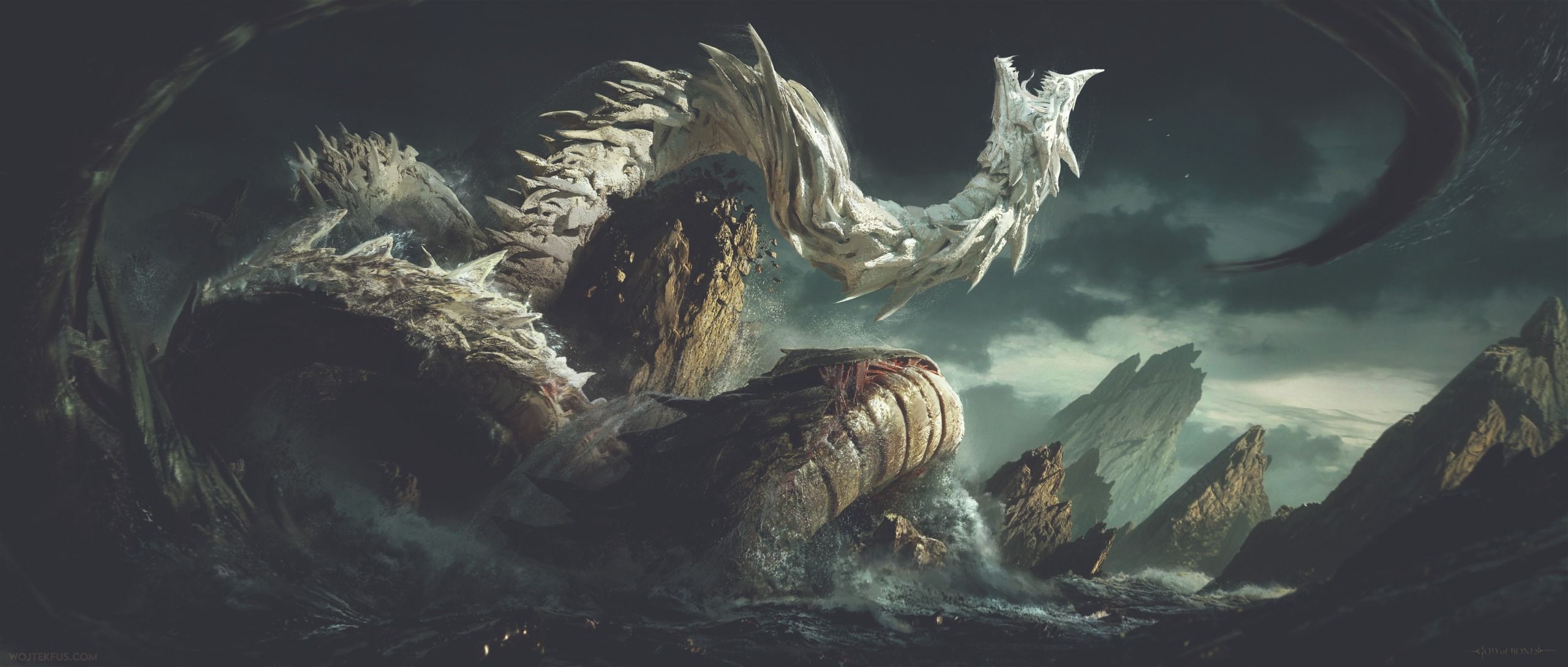
The central challenge of the shot lay in capturing a sense of halted motion. The serpent could not appear merely static; it had to convey the raw violence of its final death throes while simultaneously displaying the geological permanence of petrification. Initial compositions struggled to balance these competing requirements, prompting Coulthard to bring in Fus to refine the framing, atmosphere, and overall cinematic gravity of the scene.
A Step-by-Step Chronology of the Visual Development
The creation of the monumental serpent scene followed a rigorous, three-phase digital production pipeline, moving from traditional 2D ideation to complex 3D blocking and, finally, meticulous paintover and compositing.
Phase 1: Concept Ideation and Initial Sketching
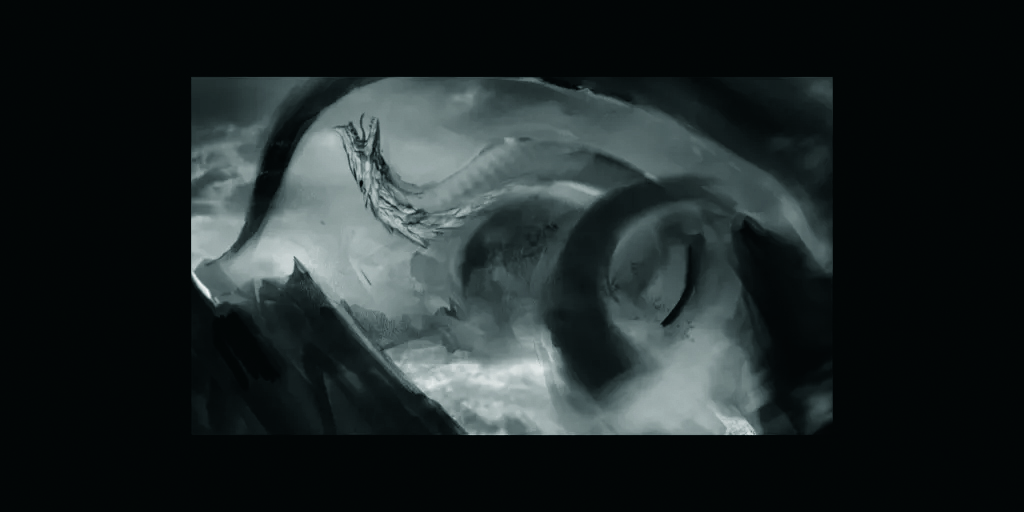
The collaborative workflow commenced with a rough concept sketch provided by director Paul Coulthard. This initial drawing served as the foundational blueprint for the sequence, establishing the primary mood, the violent rhythm of the creature’s death coil, and the vast scale of the surrounding environment. While sparse in fine detail, the drawing successfully mapped out the kinetic energy and spatial trajectory of the serpent as it wound through the rocky terrain, providing Fus with a definitive trajectory for how the organic form would interact with inorganic stone.
Phase 2: Spatial Blockout and 3D Layout in Blender
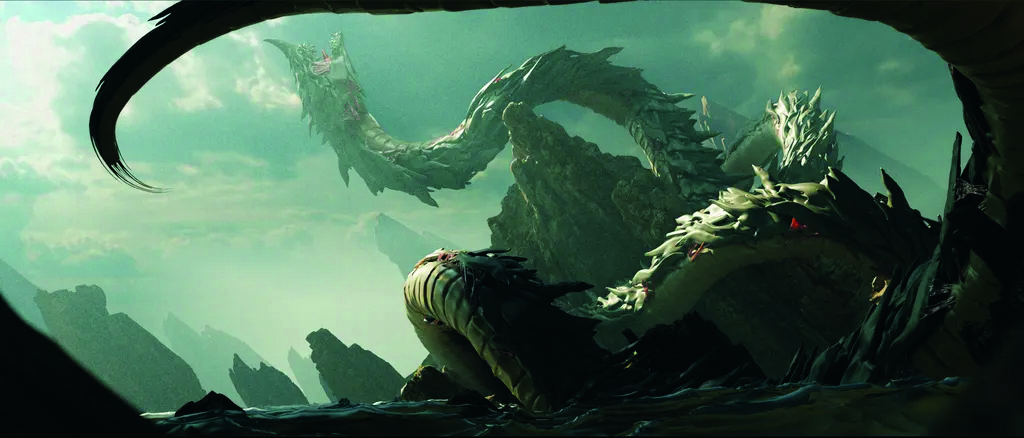
With the composition direction established, Fus transitioned the project into the 3D realm using Blender, a premier application in contemporary digital asset creation and 3D modeling. During this phase, Fus constructed the monolithic rock formations that would house the creature, carefully positioning the massive serpent mesh within the craggy landscape.
Collaboration during this stage was critical. Fus and Coulthard worked in tandem to balance visual readability, structural scale, and dynamic tension. The objective was to ensure the serpent maintained an overpowering visual presence while preserving an intentionally unstable, chaotic cinematic arrangement that suggested the earth itself was swallowing and calcifying the beast. The serpent design itself was developed under the supervision of Christian Bull, with precise digital modeling executed by Laurens Rasti and Wilmar Ballespi of the visual development studio Shoot First.
Phase 3: High-End Rendering and Final Paintover Integration
Once the foundational 3D layout was approved, the scene underwent high-resolution rendering. To bridge the gap between computer-generated geometry and cinematic realism, Fus integrated extensive digital photography and manual paintovers.
This phase introduced vital atmospheric layers, including billowing ocean spray, hyper-detailed rock weathering, and environmental mist that grounded the massive creature in a believable atmosphere. One of the most technically demanding aspects of this stage was rendering the serpent’s head calcification—a delicate visual effect requiring the seamless transition of reptilian scales into jagged, mineralized stone. In a final bold compositional choice, the entire scene was horizontally flipped to maximize visual flow and impact before locking the final frame.
Technical Breakdown and Industry Standards
The methodology employed in developing the God of Bones vista highlights current trends in independent visual effects and concept art production. By leveraging accessible yet powerful 3D software like Blender alongside traditional digital painting techniques, modern artists can achieve visual fidelity that once required the resources of major Hollywood studios.
Industry analysts note that projects relying heavily on pre-visualization and close collaboration between directors and concept artists experience fewer pipeline bottlenecks. The seamless handoff from Shoot First’s modeling team to Fus’s compositing and lighting expertise demonstrates the viability of distributed, specialized workflows in modern digital art creation.
Broader Implications for Independent Filmmaking and Digital Art
The release of the God of Bones serpent vista underscores a broader shift in how independent filmmakers handle world-building. Rather than relying on expositional dialogue or standard CGI crowd-pleasers, contemporary shorts are investing heavily in establishing shots that tell an entire mythological history through environmental storytelling.
Furthermore, the public breakdown of Fus’s creative process provides valuable educational insight for the digital art community. By detailing the transition from a simple 2D sketch to a complex 3D composition enhanced by texture painting and atmospheric effects, the production offers a blueprint for emerging artists tackling large-scale cinematic environments. As tools for 3D modeling and digital painting continue to evolve, the ability to rapidly prototype, iterate, and finalize high-concept imagery will remain a cornerstone of successful independent genre filmmaking.
