The landscape of the Bitcoin mining industry experienced a significant shift during the week ending September 21, 2026, characterized by a notable surge in the price of Bitcoin, a slight contraction in network hashrate, and a broad-based rally across publicly traded mining equities. As the industry navigates the post-halving economic environment, market participants continue to monitor the interplay between asset appreciation, network difficulty adjustments, and the operational efficiency of global mining fleets.
Market Performance and Price Action
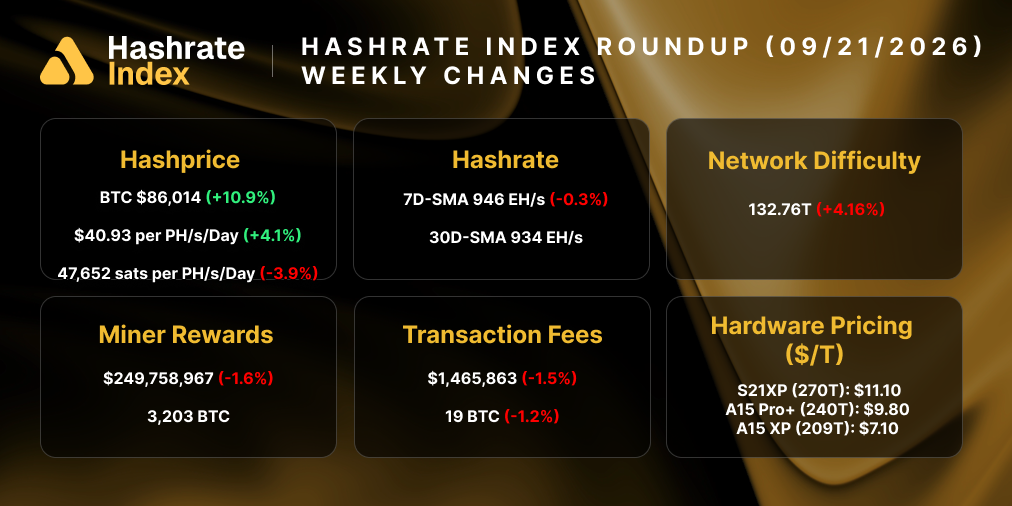
Bitcoin demonstrated substantial momentum over the seven-day period, appreciating by approximately 10.9%. The asset moved from a baseline of $77,567 to a spot price of $86,003 as of September 21, 2026. This price action provided a necessary tailwind for miners whose profitability has been under pressure since the most recent block subsidy halving. Despite this weekly rally, Bitcoin’s year-to-date performance remains slightly in the negative territory at -1.6%, reflecting the volatility and macro-economic headwinds that have characterized the broader digital asset market throughout the year.
The futures market indicates a sense of cautious optimism among institutional participants. Data from the Chicago Mercantile Exchange (CME) shows September futures trading at $86,065, with October and November contracts trading at $86,580 and $86,950, respectively. This upward sloping forward curve suggests that traders are pricing in continued price stability or incremental growth through the end of the year.
The Dynamics of Hashprice and Profitability
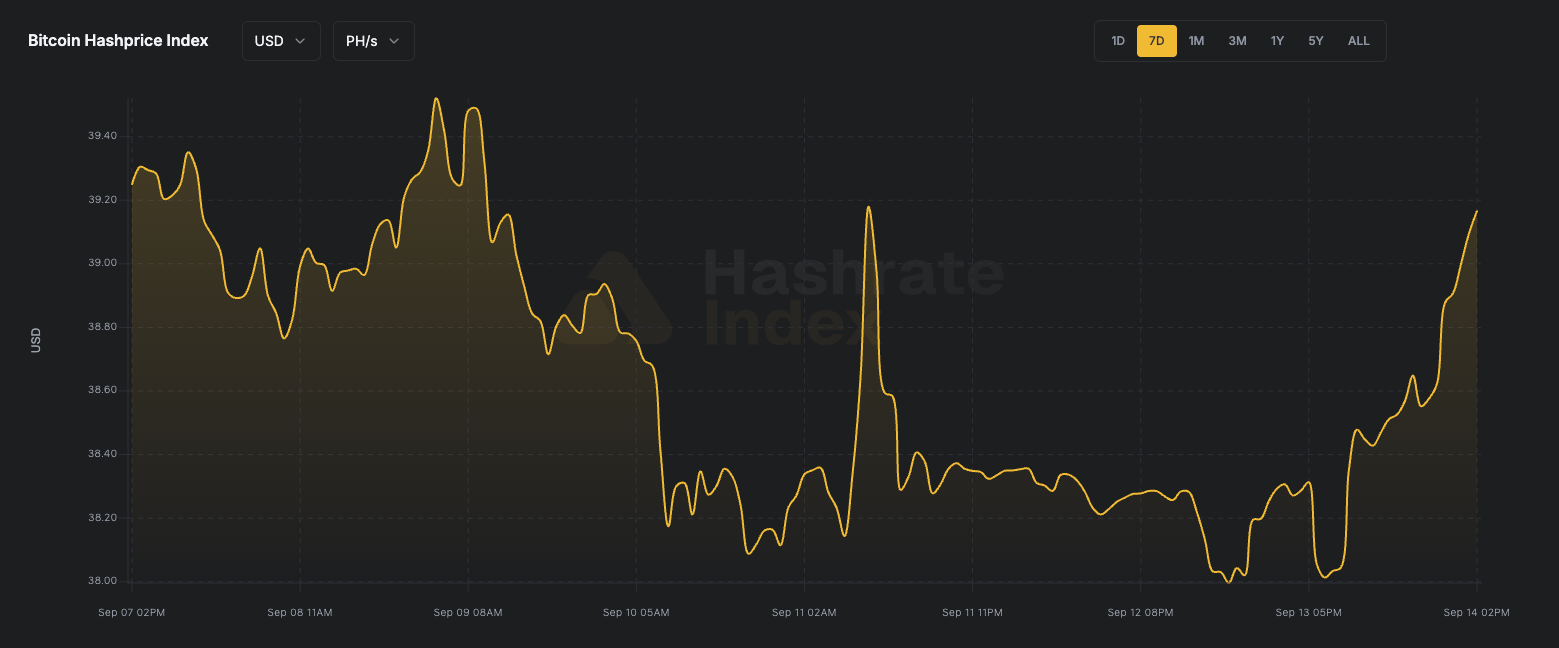
The economic viability of mining operations is measured primarily through "hashprice," a metric representing the expected daily revenue per petahash per second (PH/s) of computing power. During the reporting period, the USD-denominated hashprice experienced a 4.1% increase, rising from $39.31 per PH/s/day to $40.93 per PH/s/day. This recovery is largely attributed to the strengthening of the underlying Bitcoin price, which offset some of the challenges posed by high network difficulty.
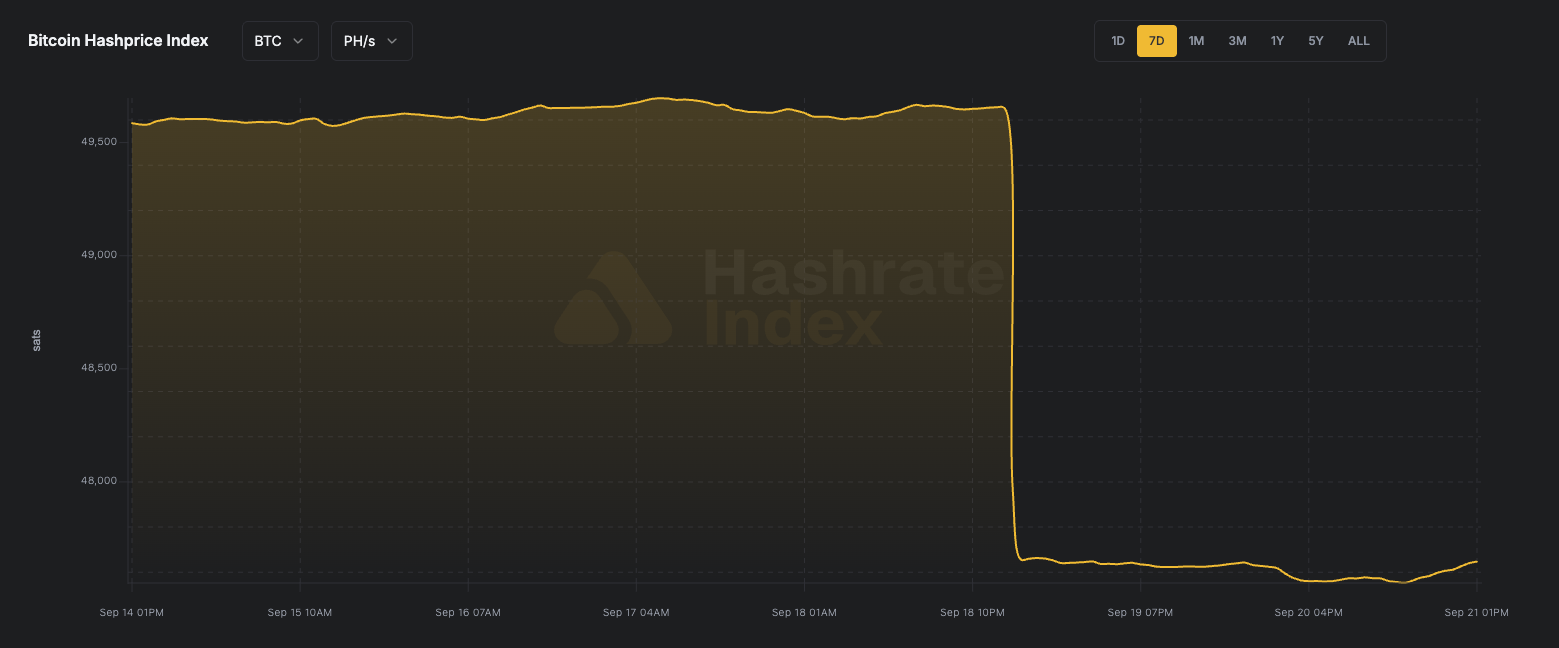
Conversely, the Bitcoin-denominated hashprice—which ignores the fiat value of the coin and focuses solely on the BTC rewards generated—dipped by 3.9%, moving from 0.00049594 BTC to 0.00047652 BTC per PH/s/day. This divergence highlights a critical reality for miners: while the dollar value of their rewards has increased, their share of the total Bitcoin issuance remains subject to the competitive pressures of a highly industrialized network. As fleet efficiency continues to be the primary differentiator between profitable and distressed operations, the importance of proprietary hardware, such as the S19 and S21 series, and energy-optimized firmware, has become paramount for survival.
Network Hashrate and Difficulty Adjustments
The Bitcoin network hashrate, which serves as a proxy for the total computational security of the blockchain, saw a minor contraction over the week. The 7-day simple moving average (SMA) for network hashrate drifted from 949 EH/s down to 946 EH/s. While this represents a marginal decrease of 0.3%, it underscores a period of recalibration among mining operators as they optimize their infrastructure for the current difficulty environment.
The most recent network difficulty adjustment, which occurred on September 19, 2026, resulted in a 4.16% increase to 132.76T. This adjustment is a direct consequence of the network’s self-correcting mechanism, which seeks to maintain a steady 10-minute block interval. Because the network had been producing blocks at a rate slightly faster than the target, the difficulty climbed, creating a higher barrier to entry for less efficient machines. Analysts anticipate the next adjustment, expected around October 3, 2026, could see a slight reversal of -1.80%, though these estimates remain subject to change based on the variance of block discovery times over the coming two weeks.
Mining Equities and Market Capitalization
Publicly traded Bitcoin mining companies witnessed a remarkable week, with almost all major players experiencing double-digit percentage gains in their stock prices. This rally reflects a broader correlation between mining stock performance and the underlying spot price of Bitcoin, as investors look to these companies as a levered play on the asset.
Notable performers included BTBT, which saw a 23.7% increase, and CIFR, which climbed 20.8% with a market capitalization reaching $7.84 billion. The largest firms, such as IREN, which commands an $18.98 billion market cap, saw a healthy 11.6% appreciation. The collective rise across firms like RIOT, MARA, and CLSK indicates that market sentiment toward the long-term viability of industrial-scale mining remains high. These equities are currently benefiting from a "risk-on" environment where institutional capital is flowing back into assets that track the performance of digital currencies.
Transaction Fees and Revenue Composition
Miners collected a total of 3,203 BTC in block rewards during the week, equating to approximately $249 million in value. Of that, transaction fees accounted for only 0.59% of the total revenue, amounting to roughly 19 BTC or $1.47 million. While the role of transaction fees remains a point of long-term concern for mining sustainability, the current average fee per block per day rose slightly to 0.0191 BTC, a 4% increase over the previous week. This suggests that while network activity is currently dominated by block subsidy, there remains consistent underlying demand for block space, which provides a small but meaningful revenue buffer for miners.
Strategic Outlook and Future Implications
As the industry looks toward the next six months, the Luxor Hashrate Forward Market is pricing in an average hashprice of $38.96 (or 0.00045 BTC). This forward-looking data provides a benchmark for miners engaging in hedging strategies. By locking in future revenue through forward contracts, miners can mitigate the risks associated with the inherent volatility of Bitcoin prices and the unpredictable nature of network difficulty adjustments.
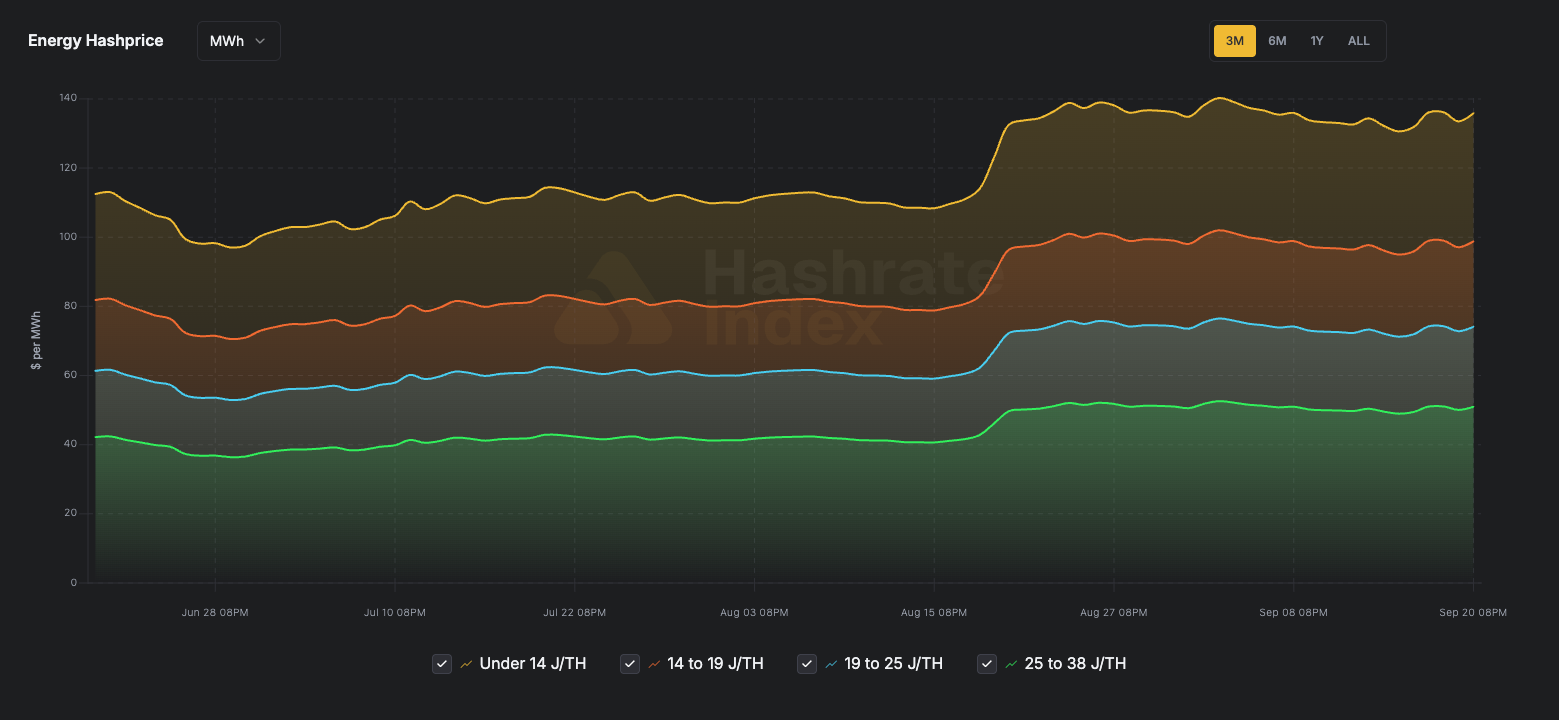
The current state of the industry is one of stabilization. The post-halving shakeout has largely favored firms with access to low-cost energy and the latest generation of ASIC hardware. As the network continues to scale toward the 1,000 EH/s milestone, the competitive threshold for miners will only rise. Those who are able to maintain operational efficiency, leverage advanced firmware to maximize hash density, and maintain a disciplined financial approach to debt and capital expenditure are best positioned to thrive in the final quarter of 2026.
In conclusion, the week ending September 21, 2026, has been characterized by a robust recovery in Bitcoin’s price and a synchronized rally in the mining sector. While the network continues to grapple with high difficulty and the necessity of constant technological upgrading, the overall health of the mining industry appears resilient, supported by strong capital market interest and a stable, albeit challenging, operational environment.