In the high-stakes environment of organ transplantation, minutes can dictate the boundary between life and death. When a viable organ becomes available, a complex, high-velocity relay begins. A harvested human heart, for instance, remains viable outside the body for only a matter of hours. Within that narrow window, a multitude of moving parts across hospitals, regional agencies, and national coordinators must function in absolute harmony. Every single piece of medical data, patient consent, and logistical authorization must be flawlessly accurate and instantly verifiable. A misplaced paper form, a delayed validation, or a fraudulent signature can abruptly derail a life-saving procedure.
To mitigate these systemic vulnerabilities, Argentina’s national organ donation authority has taken a groundbreaking step. The Instituto Nacional Central Único Coordinador de Ablación e Implante (INCUCAI)—operating in tandem with Latin American decentralized-identity pioneer Extrimian and utilizing the IOTA mainnet—has successfully transitioned its nationwide organ, tissue, and cell transplantation system onto a public, verifiable digital-identity and notarization infrastructure. This deployment marks a monumental shift for public sector administration, proving that decentralized technology can effectively secure and streamline critical, life-saving public services on a national scale.
The Scale of Argentina’s Transplant Network
To understand the magnitude of this technological overhaul, one must examine the intricate bureaucracy governing Argentina’s healthcare logistics. INCUCAI functions as the central national coordinator for all organ procurement and transplantation activities across the country. However, its mandate requires constant, seamless collaboration with 24 distinct jurisdictional procurement agencies—encompassing every Argentine province alongside the Autonomous City of Buenos Aires—as well as an extensive network of public and private hospitals and specialized transplant clinics.
Historically, coordinating life-or-death decisions across this sprawling, decentralized network relied heavily on traditional administrative workflows, legacy databases, and physical paperwork. While rigorous, these conventional systems introduced friction, potential bottlenecks, and vulnerabilities to human error or administrative delay. Ensuring absolute transparency, unassailable data integrity, and rapid cross-jurisdiction communication is a daily operational challenge. Recognizing the urgent need to modernize this digital backbone, INCUCAI sought a robust architecture capable of guaranteeing security without compromising administrative agility or patient privacy.
The Technology Stack: Self-Sovereign Identity and IOTA
To engineer a solution tailored to these stringent requirements, INCUCAI partnered with Extrimian, a recognized leader in Latin American digital identity systems. Extrimian specializes in Self-Sovereign Identity (SSI) frameworks, a model that empowers individuals and institutions with direct, unmediated control over their digital identities and the specific data they choose to share. The overarching goal of Extrimian’s architecture is to instill absolute transparency and user-centric efficiency into digital interactions spanning healthcare, education, and government administration.
For the underlying public ledger, Extrimian selected IOTA. Functioning as a neutral, scalable, and highly secure foundational layer, IOTA enables institutional identities and document integrity to be verified instantaneously without third-party gatekeepers or restrictive friction.
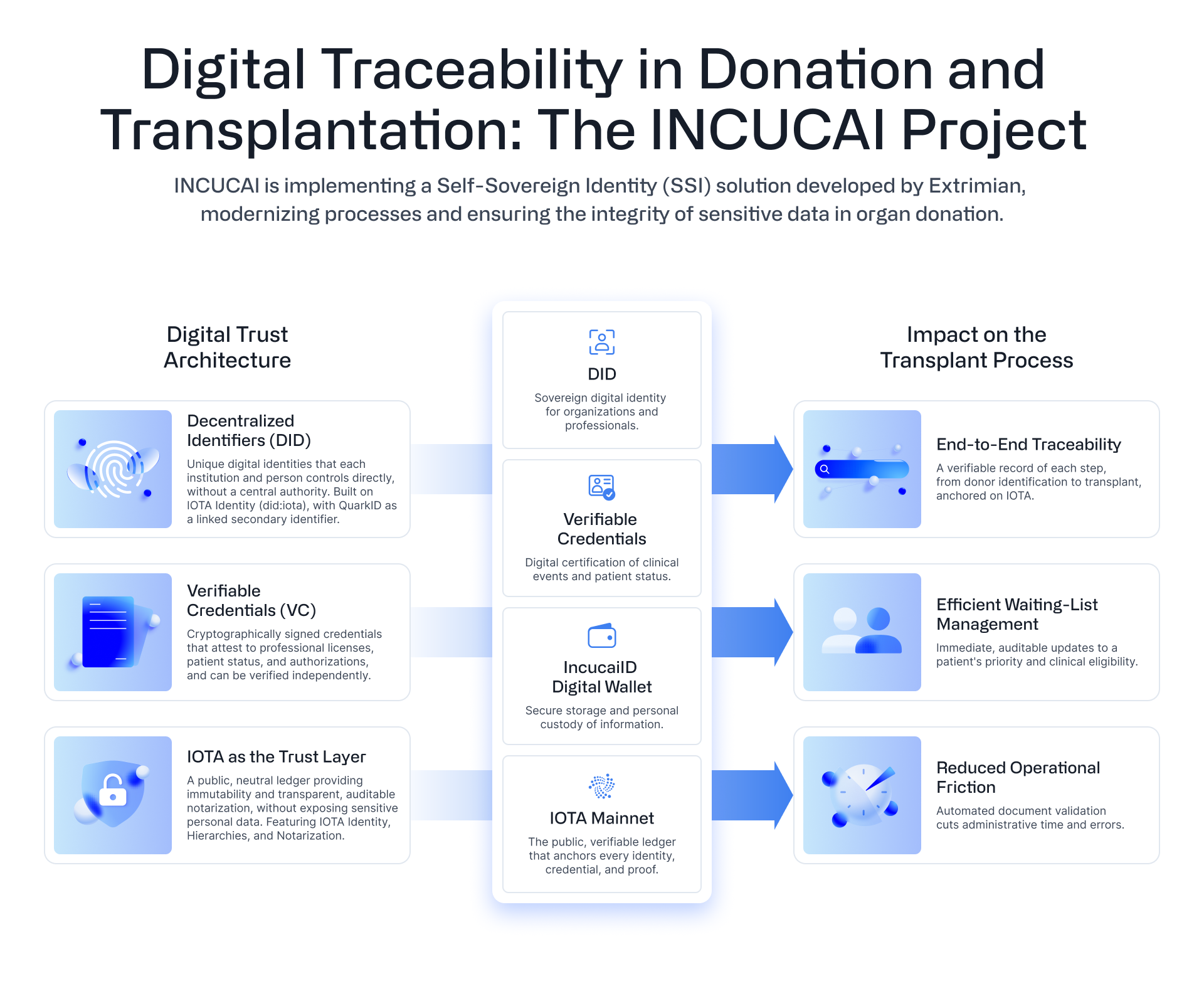
A vital architectural pillar of the INCUCAI-Extrimian deployment is strict adherence to data privacy regulations and ethical medical standards: zero patient-identifiable information is ever stored directly on the blockchain. Instead, the system anchors only cryptographic proofs—specifically, mathematical hashes of documents and discrete process steps—onto the public ledger. This ingenious cryptographic methodology guarantees complete immutability and tamper-proof verification while shielding the deeply personal and sensitive details of patients and grieving families. Medical professionals, regulatory agencies, and families can independently verify that every step of the transplant authorization protocol occurred precisely as recorded, all while the underlying private data remains strictly confidential.
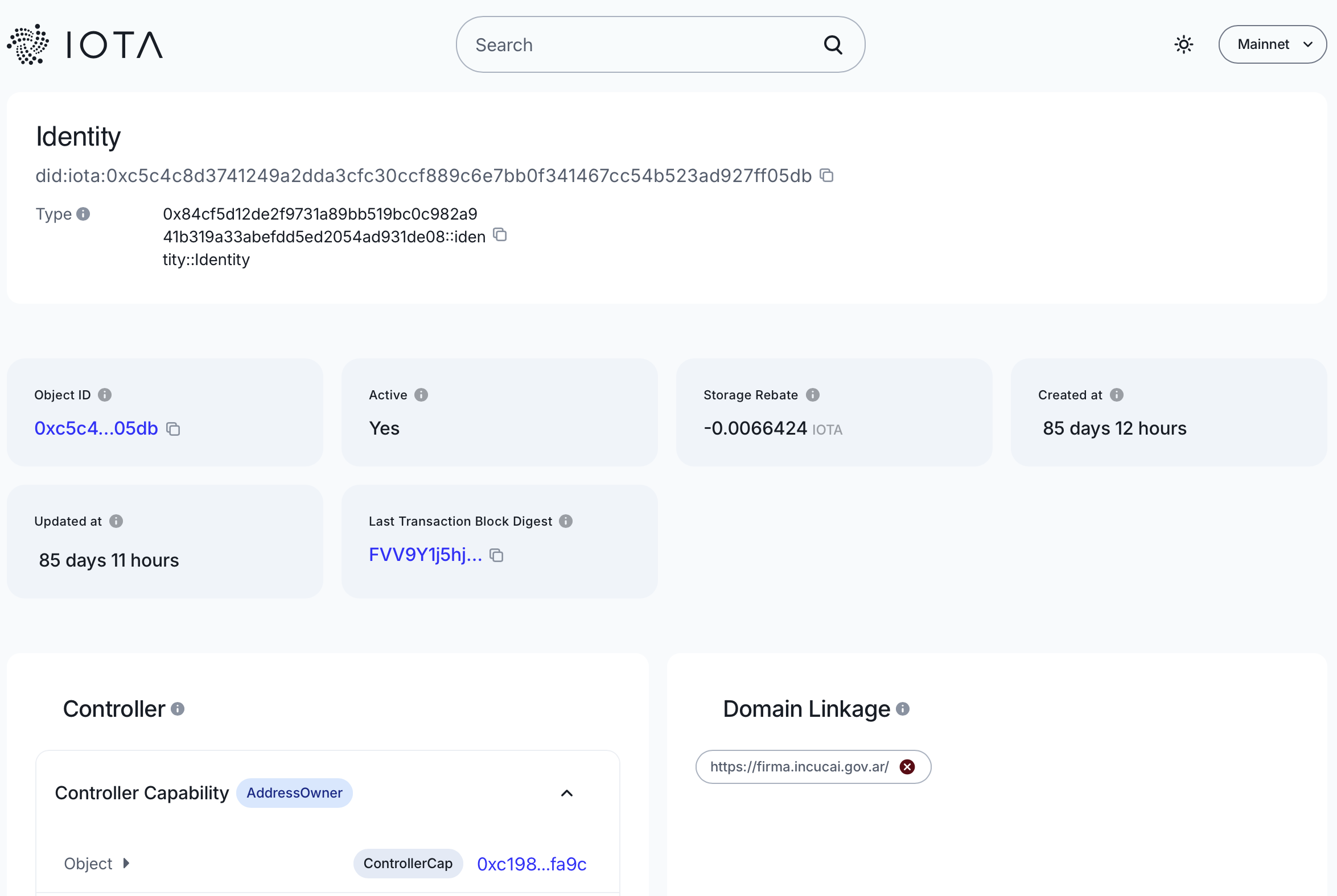
Furthermore, the technological deployment leverages open, verifiable standards. Identities and credentials strictly follow World Wide Web Consortium (W3C) specifications, and INCUCAI’s institutional identity is cryptographically bound to its official government domain. This ensures that any observer can scientifically confirm the identity belongs to the legitimate state institution rather than an impostor. Additionally, critical components of the architecture integrate with ARSAT, Argentina’s state-owned telecommunications and infrastructure company, ensuring that foundational elements remain securely under national jurisdiction.
Chronology of Implementation: From Conception to Resolution 199/2026
The journey toward a fully onchain national transplant system culminated in mid-2026, backed by formal regulatory changes within the Argentine government.
Early Development and Integration: Extrimian and INCUCAI spent months designing, testing, and deploying the decentralized infrastructure, ensuring seamless integration with SINTRA (Sistema Nacional Procuración y Trasplante de la República Argentina), the country’s national procurement and information management system.
June 10, 2026: The decentralized identity and document-signing infrastructure officially went live on the public IOTA Mainnet, allowing institutional identities and cryptographic proofs to be independently verified by external auditors and the public.
June 2026 (Resolution 199/2026): Through the publication of Resolution 199/2026 in the national Official Gazette (Boletín Oficial), INCUCAI formally mandated the implementation of electronic signatures across all donation and transplant processes managed via SINTRA. This administrative decree provided the necessary legal certainty and framework for blockchain-backed evidence to govern institutional workflows.
Mid-July 2026: Public auditing confirmed the robustness of the system. Independent checks verified that all 24 provincial identities resolved correctly on the IOTA Explorer, matching the established trust federation and confirming that the entities controlling each identity were properly accredited.
The Role of IncucaiID and the Paperless Workflow
At the heart of the user-facing deployment is IncucaiID, the ecosystem’s official decentralized wallet application, available for download on major mobile platforms including the Apple App Store and Google Play.
Through IncucaiID, registered patients, accredited healthcare professionals, and authorized administrative personnel receive verifiable digital credentials. Users can securely prove their identity and electronically sign legal and medical documents tied to the donation and transplant lifecycle. Every interaction is cryptographically secured, timestamped, and immutably recorded to facilitate future audits without exposing private medical histories.
The rollout is intentionally phased. Initial implementation focuses heavily on the waiting-list registration workflows, beginning specifically with heart and lung transplant lists before systematically scaling to cover all remaining organ categories. Over time, the framework will absorb the entirety of SINTRA’s administrative processes, successfully transitioning Argentina’s national transplant network into a fully digital, paperless ecosystem that eliminates the historical delays associated with physical document transport and manual provincial gatekeeping.
Official Statements and Leadership Perspectives
The successful realization of this national-scale blockchain integration has drawn praise from technology leaders and healthcare administrators alike, underscoring its profound implications for public sector modernization.
Daniela Hansen Krogh, Director of Information Technology and Information Systems at INCUCAI, emphasized the foundational role of trust in medical administration:
"Trust is at the heart of every organ donation and transplantation process. Our responsibility is to ensure that every decision is supported by reliable, secure, and verifiable information. By incorporating decentralized identity and cryptographic verification into our national systems, we are strengthening the integrity, traceability, and legal certainty of every critical stage, while safeguarding sensitive patient information. This initiative reflects INCUCAI’s ongoing commitment to modernizing Argentina’s transplant system through secure, transparent, and citizen-centered digital innovation."
Echoing this sentiment, Esteban Musso, Professional Services Manager and Partner at Extrimian, pointed to the practical viability of decentralized architecture in modern governance:
"At Extrimian, we believe that trust is the foundation of every digital transformation. By combining open standards with privacy-preserving technologies, we’ve helped build a solution that enhances traceability, security, and interoperability while respecting the privacy of every participant. Projects like this demonstrate that decentralized technologies are no longer a vision for the future—they are delivering tangible value today in critical public services."
Dominik Schiener, Co-Founder and Chairman of the IOTA Foundation, highlighted the broader utility of open ledger technology:
"This is what IOTA’s open technology can do for critical public services at national scale: real infrastructure, already coordinating decisions that save lives."
Implications and Future Outlook
The integration of IOTA and Extrimian’s infrastructure into INCUCAI’s daily operations serves as a watershed moment for the application of distributed ledger technology (DLT) in government institutions. For decades, public sector blockchain initiatives have struggled to move past the conceptual or pilot-project phase, often criticized as solutions searching for problems.
By contrast, the Argentine model addresses a hyper-specific, high-stakes logistical challenge where immutability, cryptographic verification, and absolute data integrity provide undeniable operational value. By eliminating paperwork, securing inter-provincial communication, and safeguarding patient privacy through zero-knowledge principles, Argentina has established a blueprint for public administration modernization.
As other nations observe the successful deployment of Resolution 199/2026 and the widespread adoption of tools like IncucaiID, the paradigm for institutional trust is evolving. Verifiable trust is rapidly shifting from an idealistic technological theory into core public infrastructure—proving that when deployed thoughtfully, decentralized systems can actively assist in safeguarding human life.
The office chair market has long struggled to strike a harmonious balance between exorbitant pricing, mechanical reliability, and practical ergonomic features. Consumers are frequently forced to choose between ultra-budget options like the Sihoo M18, which offer baseline ergonomic utility at a low cost, or luxury models like the Hbada X7, which often pack unnecessary and overly complex technological novelties that inflate retail costs without enhancing daily comfort. Finding a seating solution that successfully navigates price, genuine comfort, and meaningful electronic integration is exceptionally rare.
The LiberNovo Omni Pro enters the high-end office furniture sector seeking to bridge this divide. Retailing at a standard price of $1,299 / £1,369—though frequently found on promotional sale for around $1,009 / £989—this premium seating solution aims to justify its four-figure cost through advanced biomechanics, plush upholstery, and thoughtful electronic integrations that extend far beyond standard gimmicks. For remote professionals, digital artists, and enterprise employees spending upward of eight hours a day at a desk, the Omni Pro represents a compelling, albeit expensive, investment in spinal health.
Anatomy of Comfort: Ergonomics and Biomechanical Engineering
At the core of the LiberNovo Omni Pro’s design philosophy is an innovative approach to lumbar and spinal support. Traditional office chairs typically rely on a static or manually adjustable lumbar pad that targets a single point in the lower back. The Omni Pro replaces this conventional method with an engineered system comprising eight segmented, flexible panels that actively rotate and contour to the natural curvature of the user’s entire spine.
A central electric piston drives this vertebral array, exerting subtle, calculated pressure to maintain continuous contact with the back. This configuration distributes weight evenly across the thoracic and lumbar regions, reducing localized pressure points that commonly lead to chronic fatigue and back pain during long working hours. Industry analysts and ergonomic specialists have noted that dynamic lumbar systems, when executed correctly, significantly decrease the incidence of musculoskeletal disorders associated with sedentary office work.
Furthermore, the chair incorporates a proprietary setting known as OmniStretch mode. When activated, the motorized lumbar support executes a slow, rhythmic vertical oscillation. This gentle mechanical motion stretches the user’s back muscles incrementally, promoting micro-movements and blood circulation throughout the torso without requiring the user to leave their workstation. Unlike aggressive mechanical massage rollers found in competing luxury models—which can feel intrusive or mechanically harsh—the Omni Pro’s breathing motion is designed to blend seamlessly into the background of a focused workday.
Design Language and Aesthetic Integration
Aesthetic considerations in office furniture often force a compromise between corporate minimalism and aggressive gamer-centric styling. The LiberNovo Omni Pro occupies a distinctive middle ground. Viewed from the front, the chair presents a soft, cloud-like aesthetic characterized by generous cushioning and approachable contours that signal immediate comfort.
However, a shift to the side or rear perspective reveals a distinctly organic, mechanical architecture. The curved spine bracket, the vertebral panel system, and the motorized housing evoke biomorphic design elements reminiscent of industrial science-fiction machinery. Available in two primary colorways—Graphite and Glacier—the chair makes a bold visual statement that leans into its technological capabilities rather than attempting to conceal them.
Weighing in at 25.3 kilograms, the chair possesses a substantial physical footprint, driven largely by the heavy-duty motorized bracket arc that forms the backbone of its structural integrity. It supports a maximum load capacity of 136 kilograms (approximately 300 pounds) and accommodates users up to 6 feet 1 inch tall in its standard configuration, with a larger "Maxi" variant available for taller profiles. The 54.5 cm width and 132.5 cm height dimensions demand adequate spatial clearance in a home office or corporate studio environment.
Power Management and Connectivity
Integrating electronic features into an office chair introduces unique logistical challenges, primarily concerning power delivery and cable management. LiberNovo addresses this by equipping the Omni Pro with a removable, rechargeable battery pack that powers the chair’s motorized lumbar adjustments, active cooling fan systems, and rhythmic stretching modes.
The battery refuels via a standard USB-C connection, minimizing proprietary clutter. While the omission of permanent tethered cables prevents tangling hazards during routine height adjustments or swivel rotations, the reliance on an independent power source means users must periodically recharge the unit. Reviewers and early adopters have noted that for individuals prone to forgetting maintenance tasks, acquiring a secondary backup battery at the time of purchase is a prudent precaution to ensure uninterrupted access to the chair’s motorized features.
In addition to the motorized backrest, the seat pad incorporates an integrated cooling fan mechanism designed to mitigate heat retention. Traditional non-mesh, high-density foam cushioning frequently traps body heat, leading to discomfort during extended sessions. The Omni Pro’s active airflow system actively circulates air through the seating surface, maintaining thermal equilibrium without generating disruptive noise levels.
Comparative Market Analysis
The market for office chairs priced above $1,000 has expanded significantly over the past five years, driven by the global transition toward hybrid and remote work models. Within this tier, the LiberNovo Omni Pro competes directly against established heavyweights such as the Herman Miller Embody and tech-forward challengers like the Hbada X7.
The Herman Miller Embody, which routinely retails at double the price of the Omni Pro, remains a benchmark for passive ergonomic engineering. It utilizes a pixelated support matrix that dynamically conforms to micro-movements without the need for electronic motors. However, the Embody lacks active features such as motorized lumbar stretching and integrated seat cooling fans. For consumers prioritizing pure mechanical simplicity and legendary brand longevity, the Embody maintains its appeal, albeit at a significantly higher financial barrier to entry.
Conversely, direct tech-infused competitors like the Hbada X7 attempt to incorporate similar automated relaxation and adjustment features but often struggle with software-hardware integration. User feedback on the X7 frequently cites overly complex control schemes and jarring massage routines that detract from daily productivity. By contrast, the LiberNovo Omni Pro restricts its electronic interventions to targeted spinal health maintenance and thermal regulation, ensuring that the technology serves a functional purpose rather than acting as a superficial marketing checkbox.
Assembly Process and Component Quality
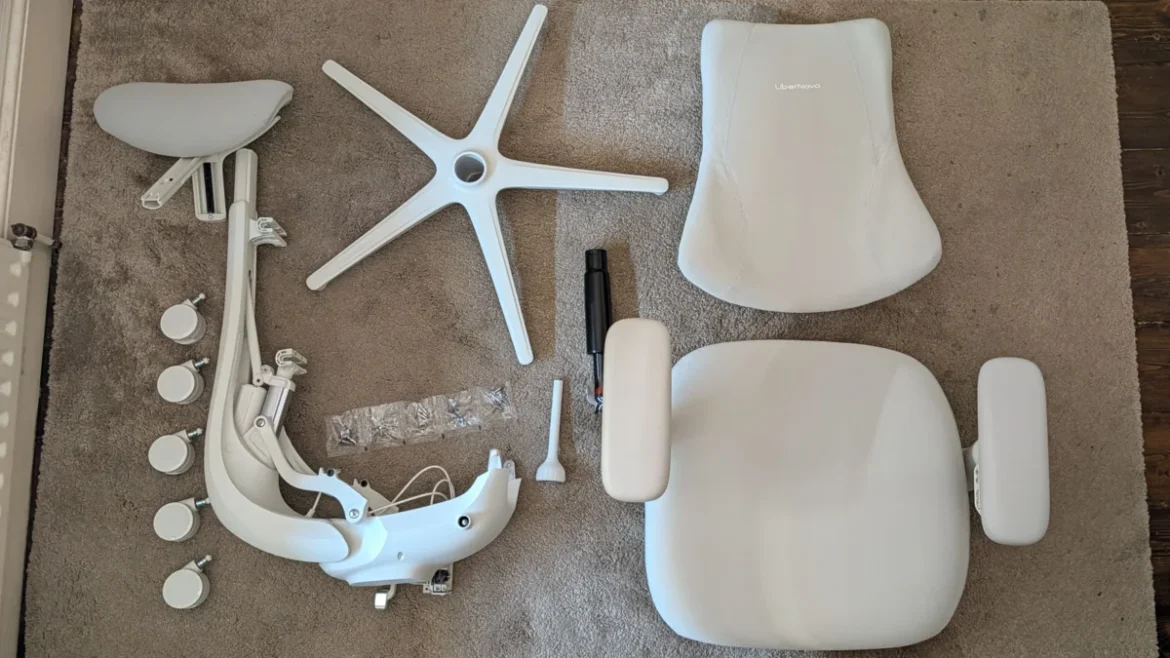
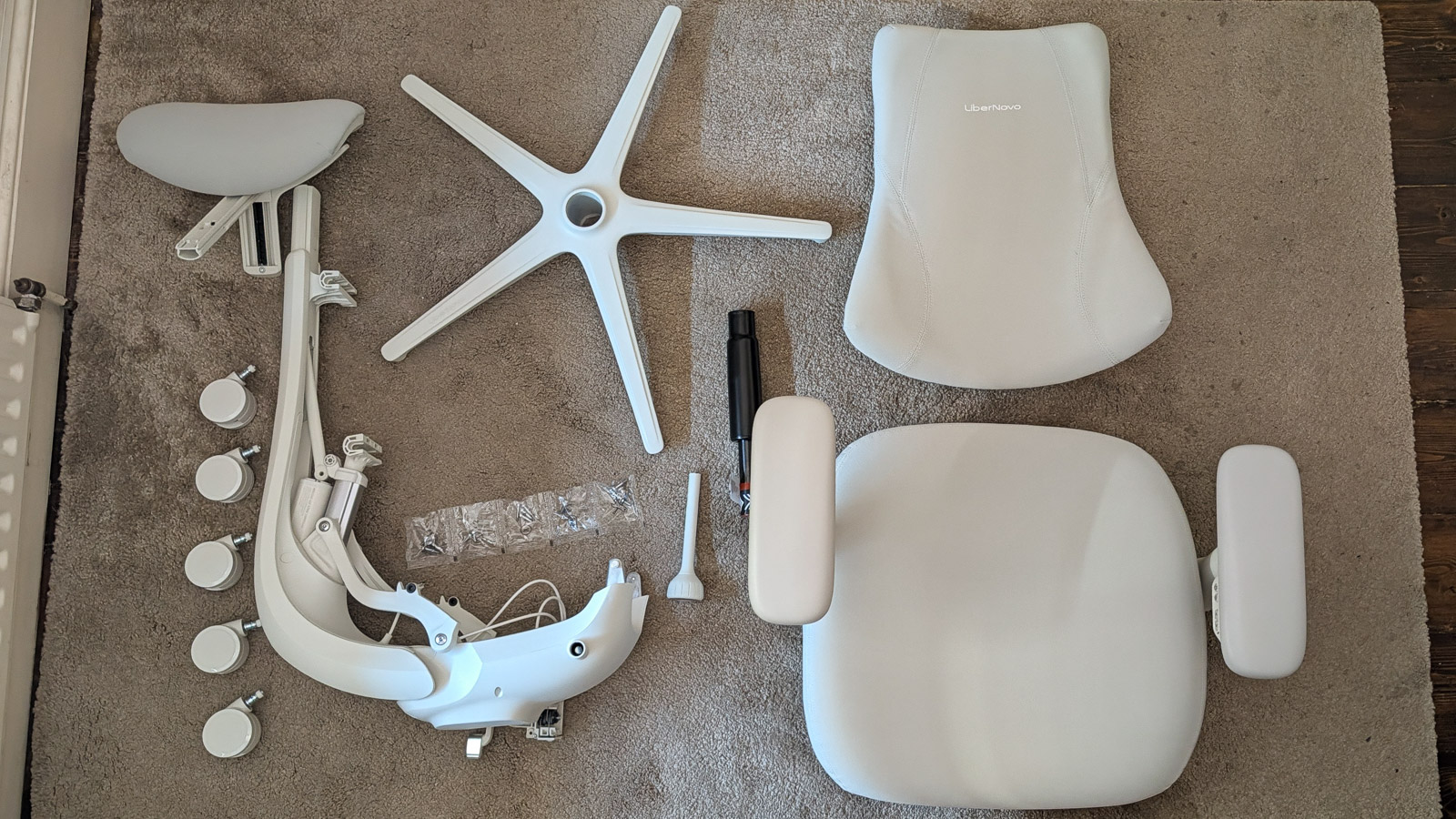
Assembling high-end office furniture can often be a frustrating endeavor due to excessive hardware counts and ambiguous instruction manuals. The LiberNovo Omni Pro streamlines this process through a modular design anchored by its heavy central back bracket.
The assembly requires fastening a minimal number of high-tolerance bolts, guided by oversized visual documentation. However, assemblers must exercise caution regarding internal orientation; specifically, ensuring the primary control levers are aligned laterally rather than forward-facing during initial construction prevents the need for disassembly and realignment later in the build process.
The six-year warranty provided by LiberNovo underscores the manufacturer’s confidence in the durability of its mechanical pistons, electronic actuators, and high-density cushioning materials. This warranty coverage places the Omni Pro on competitive footing with industry leaders who typically offer extended structural guarantees to justify premium pricing.
Industry Implications and Future Outlook
The launch and reception of the LiberNovo Omni Pro highlight a broader evolution in ergonomic furniture design. As workspaces continue to decentralize into home environments, consumer expectations have shifted. Buyers are increasingly willing to invest in appliances that offer holistic wellness benefits—such as active posture correction, thermal management, and stress-reduction features—rather than passive seating alone.
While the $1,000-plus price tag ensures that the Omni Pro remains a niche product aimed at dedicated professionals, software developers, and digital creatives, its success demonstrates that electronic integration in office seating can move past the realm of gimmicks. If manufacturers can continue to refine battery life, reduce overall structural weight, and streamline motorized components, active ergonomics may transition from a luxury novelty to a standard expectation in high-end workspace design.
The landscape of decentralized finance (DeFi) is constantly evolving, requiring institutional-grade maintenance, careful risk management, and rigorous onchain governance. Lido DAO, the decentralized autonomous organization governing the leading liquid staking protocol on Ethereum, has officially completed another critical onchain governance milestone by executing Vote #206. Coming swiftly on the heels of Vote #205 and earlier operational upgrade packages, this latest administrative measure underscores the protocol’s ongoing commitment to refining its internal mechanics, optimizing validator distributions, and enhancing decentralized oversight without introducing disruptive changes to the core economic model of its flagship asset, stETH.
While everyday users experience Lido as a streamlined, user-friendly interface—allowing them to deposit native Ether (ETH) and receive stETH in return—the reality behind the user-facing application is a complex, highly coordinated operating system. This intricate machinery dictates how billions of dollars in digital assets are secured, how validators are allocated across a vast network of node operators, and how staking capacity is distributed to mitigate centralization risks. Vote #206 represents another vital adjustment to this underlying infrastructure, focusing heavily on staking-router specifications and node-operator parameters rather than altering the fundamental tokenomics that drive the liquid staking economy.
Understanding the Mechanics of Lido Governance
To fully comprehend the significance of Vote #206, one must examine the broader governance framework that dictates Lido’s operations. As the largest liquid staking protocol in the Ethereum ecosystem, Lido commands a massive share of the network’s total staked assets. This prominent position places an immense responsibility on the DAO to ensure that its operational framework remains secure, decentralized, and resilient against single points of failure.
Governance within the Lido ecosystem relies on a decentralized voting process where token holders, delegates, and community stakeholders evaluate proposals ranging from economic adjustments to granular technical updates. Votes are executed directly on the blockchain, creating an immutable public record of every operational decision. This transparency is crucial for maintaining trust among institutional and retail participants alike, ensuring that no single development team or centralized entity can unilaterally alter the protocol’s underlying parameters.
Vote #206 specifically targets the operational plumbing of the protocol. According to validated governance notes, the execution implements precise modifications concerning validator assignment keys and staking-router parameters. The staking router acts as a modular architecture designed to manage multiple staking modules and node operators, allowing the protocol to diversify its validator set safely. By fine-tuning these parameters, the DAO can optimize how incoming stake is distributed among participating node operators, thereby improving network efficiency, performance, and decentralization metrics.
Contextualizing Vote #206 Within the 2025 Operational Calendar
The rapid succession of recent governance actions highlights a busy operational calendar for Lido DAO. Vote #206 follows closely after Vote #205, illustrating an accelerated pace of protocol maintenance and infrastructure iteration. In the rapidly moving environment of blockchain infrastructure, protocols cannot afford to remain static. Continuous integration of security patches, module updates, and parameter optimizations has become standard practice for top-tier DeFi platforms.
Unlike major protocol upgrades of the past—such as those that introduced stETH withdrawal capabilities, or architectural overhauls designed to support dual-governance models—Vote #206 is characterized by its routine, maintenance-focused nature. It does not redesign the withdrawal mechanism, nor does it introduce a new auxiliary staking token. Instead, it serves as the digital equivalent of engine maintenance on a high-performance vehicle: essential for long-term health, even if it lacks the sensational appeal of a major product launch.
For the average token holder, the execution of Vote #206 requires no manual intervention or special user action. Stakers holding stETH will see no disruption to their daily rewards accumulation, liquidity access, or transfer capabilities. However, for node operators, validators, and protocol delegates, the newly enacted parameters establish the updated operational boundaries under which they must function. These adjustments ensure that the network continues to operate smoothly while adhering to rigorous performance standards.
The Broader Implications for Ethereum Staking and Decentralization
The systemic importance of Lido within the wider Ethereum ecosystem cannot be overstated. As a dominant force in the proof-of-stake landscape, Lido’s operational security directly impacts the economic stability and decentralization health of Ethereum as a whole. Consequently, every parameter change executed by the DAO is closely monitored by researchers, developers, and industry analysts.
One of the central criticisms historically leveled against large liquid staking protocols is the risk of centralization—the concentration of a significant percentage of validators within a single protocol or under a limited group of node operators. Lido DAO has actively combated this perception by introducing permissionless node-operator modules, distributed validator technology (DVT) integrations, and continuous refinements to its staking router.
Vote #206 contributes to this ongoing decentralization effort. By formalizing operational controls through repeated onchain votes rather than centralizing discretionary power within a small core team, the DAO reinforces its commitment to decentralized governance. Each parameter update leaves an auditable trail, allowing the community to track how the protocol adapts to scaling challenges over time.
Furthermore, the execution of routine operational votes demonstrates the maturity of the DAO’s governance framework. As DeFi matures from its experimental roots into a robust financial sector, protocols must balance the need for rapid responsiveness with the necessity of thorough coordination. An overly sluggish governance process can leave a protocol vulnerable to operational bottlenecks, while a rushed process can introduce catastrophic security risks. Lido’s ability to smoothly execute technical packages like Vote #206 indicates a maturing organizational structure capable of managing enterprise-grade infrastructure.
Looking Ahead: The Future of Protocol Maintenance
As Lido DAO looks toward the remainder of the year and beyond, the focus will likely remain on iterative improvements, security enhancements, and scaling decentralized validation techniques. The challenges facing the protocol involve maintaining high performance, minimizing centralization risks, and ensuring that governance participation remains robust and informed.
The successful implementation of Vote #206 serves as a case study in effective protocol maintenance. It proves that behind the simple, accessible interface of modern decentralized finance lies a dedicated network of stakeholders, developers, and operators working tirelessly to secure the decentralized future. As the protocol continues to process further operational upgrades, the transparent, onchain nature of its governance will remain its strongest safeguard against operational drift and systemic vulnerability.
Ultimately, while routine governance votes may lack the explosive market narratives of token listings or sudden price surges, they represent the foundational bedrock upon which sustainable decentralized applications are built. Through measured actions like Vote #206, Lido DAO continues to demonstrate that meticulous, behind-the-scenes engineering is just as vital to the success of DeFi as the innovative products it delivers to the end user.
The decentralized autonomous organization behind Lido, the largest liquid staking protocol within the broader decentralized finance ecosystem, has successfully concluded another critical onchain governance action, officially executing Vote #206. Coming on the heels of the protocol’s recent operational upgrade package, Vote #206 represents a targeted, administrative evolution of the infrastructure governing Ethereum staking. Rather than introducing sweeping economic reforms or altering the core value proposition of stETH—the protocol’s liquid staking token—this latest governance measure focuses tightly on fine-tuning staking-router parameters and node-operator configurations. As Lido continues to hold a systemically significant share of the total staked Ethereum supply, these routine administrative updates serve as the backbone of the network’s security, efficiency, and decentralization efforts.
Demystifying the Mechanics: Behind the Lido User Interface
For the average retail participant, interacting with Lido is a straightforward and streamlined experience. Users deposit native Ether into the protocol’s smart contracts and receive stETH in return, a token that accrues staking rewards while remaining liquid and usable across various decentralized finance applications. However, beneath this frictionless interface lies a deeply complex, institutional-grade operating system responsible for orchestrating thousands of independent validators, managing a diverse roster of node operators, and regulating how incoming staking capacity is distributed across the network.
Vote #206 targets this complex operational machinery. Specifically, the governance notes validated by the decentralized community highlight technical adjustments concerning validator assignment keys and updated staking-router parameters. These modifications provide the DAO with enhanced capabilities to distribute operational workloads efficiently and securely across its expanding network of node operators. In the context of a protocol entrusted with billions of dollars in digital assets, even minute adjustments to operational parameters carry substantial weight, ensuring that the infrastructure scales safely alongside user demand.
Routine Maintenance Versus Structural Overhauls
Market observers and tokenholders examining Vote #206 must distinguish between routine infrastructure management and structural monetary policy shifts. Unlike previous milestones that involved complex upgrade paths for withdrawals or the integration of alternative layer architectures, Vote #206 is fundamentally an exercise in protocol maintenance.
While network maintenance may lack the speculative excitement of major tokenomics redesigns, it represents the lifeblood of mature decentralized infrastructure. A premier liquid staking protocol must maintain precise control over validator permissions, operational capacities, and security parameters to safeguard user funds against emerging vulnerabilities. The rapid succession of Vote #206 following closely behind Vote #205 underscores an increasingly active operational calendar for the Lido DAO. This cadence demonstrates the community’s proactive approach to governance, ensuring that the protocol remains adaptable in a fast-moving blockchain environment.
For everyday users of stETH, the execution of Vote #206 requires no manual intervention or special action. The underlying smart contracts handle the parameter updates seamlessly. Conversely, for protocol delegates, validators, and node operators, the newly enacted settings establish the compliance and operational framework under which they must now function.
The Broader Context of Onchain Governance and Decentralization
To fully appreciate the significance of Vote #206, one must examine the broader evolution of decentralized governance within the Ethereum ecosystem. Historically, protocol maintenance was the exclusive domain of centralized core development teams. However, decentralized autonomous organizations like Lido are shifting this paradigm by executing routine operational controls transparently through onchain voting mechanisms.
This transition is not merely philosophical; it is a vital risk-mitigation strategy. By utilizing repeated, public governance votes, Lido avoids concentrating critical operational discretion within a single, centralized team. Every parameter adjustment leaves an immutable, public record detailing what the DAO approved, who voted, and precisely when the changes went live.
This level of radical transparency has become increasingly imperative as Lido’s total value locked and market share within Ethereum staking have grown. Maintaining a delicate balance is one of the protocol’s most persistent challenges: governance must remain agile and responsive to technological necessities without devolving into an endless coordination bottleneck that paralyzes development. Vote #206 serves as a practical case study in how decentralized protocols can successfully navigate this balance in a production environment.
Implications for the Future of Ethereum Liquid Staking
As the Ethereum network continues to mature following major upgrades like the Merge and subsequent execution layer enhancements, liquid staking protocols remain a foundational pillar of its security model. Because Lido commands a dominant share of all staked ETH, the health, security, and operational resilience of its underlying architecture are matters of systemic importance to the entire blockchain industry.
Any vulnerability or inefficiency in Lido’s staking router could theoretically ripple across decentralized finance platforms that rely heavily on stETH as collateral, liquidity, or yield-generating assets. Therefore, continuous and meticulous operational governance—typified by Vote #206—acts as a continuous stress test and reinforcement of the network’s defenses.
Looking ahead, the Lido DAO is expected to maintain its rigorous schedule of operational governance proposals. As the protocol pursues further decentralization milestones, including the expansion of permissionless node-operator sets and the refinement of risk-management frameworks, the frequency and technical scope of onchain votes are likely to increase. For the broader cryptocurrency community, the seamless execution of Vote #206 reinforces confidence in the operational maturity of decentralized governance, proving that complex web3 organizations can effectively manage mission-critical infrastructure at scale.
Foundry, the digital asset infrastructure company renowned for operating Foundry USA—the world’s largest Bitcoin mining pool by total computational power—has officially announced its strategic expansion into the privacy-focused cryptocurrency sector. Scheduled to launch in April 2026, the company will introduce an institutional-grade Zcash (ZEC) mining pool designed specifically to cater to corporate entities, public companies, and institutional miners.
This major development seeks to address a long-standing structural deficit in the Zcash ecosystem. While the underlying privacy coin has matured into a prominent digital asset over its nearly decade-long existence, the infrastructure supporting its mining operations has historically lagged behind the rigorous compliance, security, and stability standards required by corporate market participants. By leveraging its extensive experience managing massive hashrates in the Bitcoin ecosystem, Foundry aims to bridge this divide, offering a reliable, US-based mining environment tailored for institutional players.
Background and Context of the Zcash Network
Launched in October 2016, Zcash was created as a decentralized, privacy-focused alternative to Bitcoin. While traditional proof-of-work (PoW) cryptocurrencies like Bitcoin and Ethereum offer pseudonymous transactions—where wallet addresses are publicly visible on a transparent ledger—Zcash introduced advanced zero-knowledge cryptography, specifically zk-SNARKs. This technology allows users to shield transactions, completely obscuring the sender, recipient, and transaction amount by default while still maintaining network consensus and verifying validity without revealing sensitive data.
Architecturally, Zcash shares deep roots with Bitcoin. It was originally built upon Bitcoin’s foundational codebase, resulting in identical tokenomics. Zcash operates on a fixed maximum supply cap of 21 million ZEC, with new tokens minted and distributed to miners as block rewards for successfully validating transactions and securing the blockchain. Additionally, the network incorporates a halving schedule, reducing the block reward by half approximately every four years to control inflation and manage circulating supply.
Despite its technological sophistication, Zcash has experienced structural fragmentation in its mining sector. Unlike Bitcoin, which benefits from massive, highly organized, institutional-grade mining pools equipped with advanced telemetry and compliance tracking, Zcash mining has traditionally relied on smaller, retail-oriented, or fragmented pools. This absence of institutional-grade infrastructure has occasionally deterred large-scale public companies and regulated financial entities from participating directly in network consensus through mining operations.
Chronology of Events and Industry Developments
The announcement of Foundry’s ZEC mining pool follows a period of notable operational shifts and organic growth within the broader cryptocurrency mining and privacy coin sectors.
Over the past several years, Foundry has established market dominance through Foundry USA, cementing its position as the premier Bitcoin mining pool globally. However, the company has also navigated industry-wide headwinds, including fluctuating hardware efficiency metrics, regional energy policy changes, and cyclical adjustments in global hashrates.
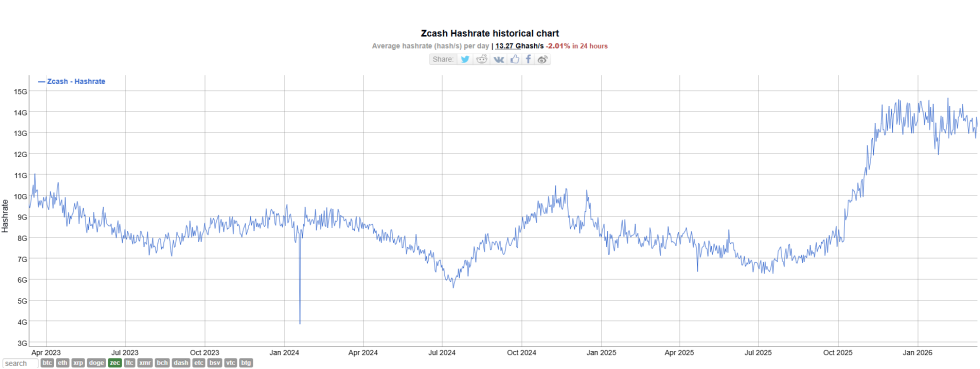
Simultaneously, the Zcash network has witnessed a quiet yet powerful resurgence in computational participation. According to on-chain analytics data from BitInfoCharts, the total network hashrate dedicated to Zcash has surged dramatically over recent months. In October of the preceding year, the aggregate Zcash hashrate hovered below 8 gigahashes per second (Ghash/s). By early 2026, that figure expanded past 13 Ghash/s, reflecting renewed miner interest, hardware upgrades, and rising network security metrics.
Recognizing this upward trajectory in network hash power, Foundry finalized its plans to expand its operational footprint. The upcoming April 2026 launch will replicate the successful structural framework of its US-based Bitcoin mining operations, ensuring regulatory compliance, transparency, and high uptime for institutional participants.
Official Statements and Industry Reactions
The announcement has garnered widespread support from key figures and organizations within the Zcash development ecosystem, highlighting the collaborative nature of the upcoming infrastructure rollout.
Mike Colyer, Chief Executive Officer of Foundry, emphasized the strategic necessity of the new venture during the press release announcement. Colyer noted that while Zcash has successfully evolved into an institutional-grade digital asset from a market adoption and technological standpoint, the surrounding mining infrastructure has simply not kept pace with the demands of the modern corporate landscape. By introducing a trusted, enterprise-ready platform, Foundry intends to provide the structural foundation necessary for broader market integration.
The initiative was similarly praised by leadership at Shielded Labs, an independent Swiss-based support and development organization dedicated to the growth of the Zcash ecosystem. Zooko Wilcox, founder of Zcash and Chief Product Officer at Shielded Labs, expressed immense enthusiasm for the partnership and expansion.
"We at Shielded Labs are delighted that Foundry—the largest Bitcoin mining pool, and one based in North America—is launching an enterprise-grade Zcash mining pool," Wilcox stated. He underscored the broader significance of the move, noting that Zcash consistently demonstrates how cutting-edge financial privacy and compliant digital infrastructure can successfully coexist by pairing strong zero-knowledge cryptography with transparent blockchain verification mechanisms.
Market Implications and Economic Analysis
The introduction of Foundry’s institutional-grade Zcash mining pool carries several profound implications for both the privacy coin sector and the broader digital asset mining industry.
First, the entry of a market leader like Foundry signals growing confidence in the regulatory viability of privacy-preserving technologies. In recent years, privacy coins have faced heightened scrutiny from global regulators concerned about illicit finance and anti-money laundering (AML) compliance. However, Zcash’s unique dual-nature—offering both transparent and shielded transaction capabilities—allows institutional entities to engage with the asset while maintaining compliance frameworks. Foundry’s involvement provides an institutional stamp of approval, potentially encouraging other regulated custodians, asset managers, and public corporations to allocate resources toward Zcash mining.
Second, the consolidation of hashrate through a reputable, US-based operator enhances network security and stability. Mining pools mitigate the inherent volatility of solo mining by allowing participants to pool their computational resources and distribute rewards proportionally based on contributed hash power. An institutional-grade pool ensures that large-scale miners have access to advanced security protocols, optimal payout structures, and robust infrastructure, thereby reducing downtime and stabilizing the network’s hash distribution.
At the time of this report, Zcash (ZEC) is trading around the $209 price level, experiencing a minor retracement of over 11% on a weekly timeframe amid broader cryptocurrency market fluctuations. Despite short-term price volatility, fundamental metrics—such as the expanding network hashrate and incoming enterprise infrastructure—point toward long-term structural maturation for the protocol.
As the April 2026 launch date approaches, industry observers will closely monitor how institutional adoption unfolds and whether Foundry’s expansion catalyzes a broader wave of enterprise participation within the privacy-focused blockchain sector.
The decentralized finance (DeFi) ecosystem, long dominated by dollar-pegged assets, is witnessing a pivotal shift toward multi-currency functionality as the Solana-based lending protocol Kamino Finance officially opens a market for tGBP. This development introduces a sterling-denominated stablecoin to the high-speed Solana blockchain, providing users with the ability to supply or borrow capital tracked against the British pound. By integrating tGBP—a stablecoin issued by BCP Technologies and regulated under the United Kingdom’s Financial Conduct Authority (FCA)—Kamino is attempting to bridge the gap between traditional fiat-based accounting needs and the efficiency of on-chain lending markets.
The Mechanics of the tGBP Integration
tGBP, or TrueGBP, is a digital asset designed to maintain a 1:1 parity with the British pound sterling. Its issuer, BCP Technologies, operates as a registered cryptoasset firm under the stringent regulatory framework of the U.K.’s Financial Conduct Authority. This institutional-grade backing is a crucial component of its integration into Kamino’s ecosystem.
On the Kamino platform, the tGBP market functions as a specialized lending pool. Users can supply tGBP to earn yield or leverage the asset by borrowing it against supported collateral. The list of accepted collateral assets for this market includes USDC, cbBTC (Coinbase Wrapped Bitcoin), and JitoSOL (a liquid staking derivative of Solana). This structure allows for a cross-asset borrowing dynamic that was previously restricted to dollar-centric pairs. By curating this market through Steakhouse Financial—a boutique advisory firm known for its expertise in on-chain financial governance—Kamino seeks to ensure that the liquidity parameters and risk assessments remain consistent with institutional expectations.
Bridging the Foreign Exchange Gap
The primary utility of this launch lies in the mitigation of foreign exchange (FX) risk. For the vast majority of DeFi participants, borrowing has historically meant taking on dollar-denominated debt. While this is efficient for crypto-native traders whose primary assets are pegged to the dollar, it creates a significant "currency mismatch" for businesses or individuals whose operational expenses, tax liabilities, and revenue streams are denominated in pounds sterling.
When a U.K.-based entity borrows USDC to fund an operation, they are essentially taking on a short position against the dollar while holding a long position in their collateral asset. If the pound weakens against the dollar, the cost of servicing that loan increases in real-time, regardless of the underlying performance of their crypto-collateral. By introducing a sterling-pegged stablecoin, Kamino allows these users to align their debt obligations with their local currency, effectively neutralizing the FX volatility that has previously deterred traditional businesses from engaging with decentralized lending protocols.
The Persistence of Dollar Dominance
Despite the innovation represented by the tGBP market, it remains a modest entry in a landscape heavily tilted toward the U.S. dollar. Data from major decentralized aggregators indicates that dollar-pegged stablecoins like USDT, USDC, and DAI command the overwhelming majority of DeFi liquidity. This "dollarization" of crypto is not merely a historical accident; it is the result of a powerful network effect known as liquidity gravity.
Liquidity begets liquidity. Because the deepest markets for decentralized exchange (DEX) pairs and lending protocols are denominated in dollars, borrowers naturally gravitate toward those pools to minimize slippage and maximize capital efficiency. Lenders, conversely, prioritize pools with high trading volume to ensure consistent yields and the ability to exit their positions without triggering significant price impacts.
Breaking this cycle is a formidable challenge. The success of a non-dollar market requires a critical mass of participants who are specifically seeking exposure to the sterling or who have functional needs that cannot be met by dollar-pegged assets. For Kamino, the tGBP market serves as a test case to determine whether the utility of currency-matching outweighs the immediate liquidity advantages of the established dollar-pegged pools.
Chronology and Regulatory Context
The integration of tGBP follows a broader trend of "fiat-on-chain" expansion. The journey toward a more diversified on-chain currency landscape has been incremental:
2014–2017: The inception of dollar-pegged stablecoins, led by Tether (USDT), solidified the dollar as the native unit of account for the crypto industry.
2020–2022: The DeFi summer and the subsequent growth of lending protocols like Aave, Compound, and later Kamino, cemented the dollar’s status as the default collateral and loan currency.
2023–2024: Increased regulatory scrutiny in the United Kingdom, specifically the passing of the Financial Services and Markets Act, provided a clearer path for institutional-grade stablecoin issuers to operate under FCA oversight.
2025 (Q1): The official launch of the tGBP market on Solana’s Kamino protocol marks a departure from purely speculative crypto-assets toward the integration of regional fiat-denominated debt instruments.
This timeline highlights the transition from unregulated, dollar-only liquidity to a more mature, compliant, and multi-currency environment. The involvement of the FCA-registered BCP Technologies is particularly significant, as it suggests that future DeFi growth may be dictated as much by regulatory compliance as by technological prowess.
Implications for Decentralized Credit Markets
If the tGBP experiment proves successful, the implications for the broader DeFi space are significant. A move toward regional currency stablecoins could open the door for Euro-pegged, Yen-pegged, or even emerging market currency-pegged assets on protocols like Kamino. This would theoretically transform DeFi from a niche financial playground into a global credit engine capable of serving real-world businesses in their local jurisdictions.
However, the transition faces several structural hurdles:
Interest Rate Parity: For a sterling-denominated loan to be attractive, the interest rates must remain competitive relative to traditional banking products in the U.K. If the cost of capital in DeFi remains significantly higher than that of traditional retail banks, adoption will likely be limited to sophisticated users.
Collateral Quality: The ability to borrow against sterling requires reliable price feeds and deep liquidity for the collateral assets used. As Kamino expands its collateral list, maintaining the security of these price oracles becomes paramount to preventing liquidations during high-volatility events.
Market Depth: The next phase of the experiment will focus on whether the market can attract enough lenders to keep borrowing rates stable. If liquidity is too thin, the cost of borrowing could fluctuate wildly, making it an unreliable tool for business accounting.
Analyst Perspectives and Future Outlook
Industry observers have noted that the "dollar-centric" nature of DeFi is perhaps its most significant barrier to mass adoption by corporate entities. By enabling the borrowing of sterling, Kamino is addressing a fundamental requirement for global financial infrastructure: the ability to manage debt in the same currency as one’s liabilities.
While some analysts argue that the fragmentation of liquidity across different currency pools could potentially weaken the efficiency of the Solana ecosystem, others contend that this is a necessary evolution. "A truly global financial system cannot exist in a single currency," remarked one DeFi analyst familiar with the integration. "If we want to see businesses using Solana for treasury management or operational credit, we must provide them with the tools to manage their local currency exposure."
The launch of the tGBP market is not expected to shift the balance of power in the DeFi world overnight. Rather, it serves as a proof-of-concept for the viability of decentralized, non-dollar-denominated lending. Whether or not users choose to take on debt and earn yield in pounds remains the final, and most important, test of this integration.
As the Solana network continues to scale and integrate more diverse financial products, the success of the tGBP pool will be closely monitored by both institutional players and protocol developers. If it succeeds, it will provide a blueprint for how other regional fiat currencies might be integrated into the DeFi stack, potentially ushering in an era where on-chain credit is as diverse as the global economy itself. For now, sterling is merely one more option on Solana, but it is an option that signals a shift toward a more mature, versatile, and globally-relevant version of decentralized finance.
The global artificial intelligence landscape is undergoing a profound geopolitical and technological realignment. Following the Trump administration’s sweeping policy decision to restrict non-American access to Anthropic’s most advanced cybersecurity-focused AI models—Mythos and its restricted sibling, Fable 5—major tech players in Asia have rapidly moved to fill the emerging vacuum. In a matter of days, Tokyo-based startup Sakana AI and Chinese cybersecurity titan 360 introduced competing frontier systems designed to match, and potentially bypass, the capability of the restricted American models.
These concurrent developments underscore the unintended consequences of aggressive technology export controls. While Washington aimed to safeguard critical national security assets by keeping elite AI out of foreign hands, the policy has instead catalyzed an accelerated push toward regional technological self-sufficiency. As Asian markets reckon with the vulnerability of relying on a single, geographically concentrated provider, domestic innovators are seizing the moment to market localized alternatives.
The Genesis of the U.S. Export Ban on Anthropic Models
The current friction stems from a high-stakes regulatory order enacted by the U.S. federal government roughly two weeks ago. The directive placed Anthropic’s Mythos Preview and Fable 5 models under strict export limitations, completely banning their distribution to non-American entities.
Anthropic, which has enjoyed an extraordinary growth trajectory, recently reported that its run-rate revenue crossed an astounding $47 billion in May 2026, putting the company on a fast track toward a historic valuation approaching $1 trillion ahead of an anticipated initial public offering. Much of this explosive growth has been fueled by robust enterprise adoption across global markets, including Asia.
However, the abrupt enforcement of the export ban severed international access overnight. For foreign governments and multinational enterprises that rely on cutting-edge automated threat detection and agentic orchestration, the ruling highlighted an acute strategic vulnerability. Critics of the ban, including industry executives and policy analysts, argue that restricting access for close allies risks alienating key international partners and fracturing the global AI ecosystem into isolated regional silos.
Sakana AI Debuts Fugu: A Tokyo-Based Hedge Against Geopolitical Volatility
Responding directly to these shifting dynamics, Tokyo-based startup Sakana AI officially launched its latest frontier model, Fugu—named after the Japanese word for blowfish—earlier in the week. Founded in 2023 by Google alumni David Ha and Llion Jones, alongside former Mercari and Stability AI executive Ren Ito, Sakana has built a reputation for developing cost-effective generative AI models optimized for smaller datasets, local languages, and Japanese cultural nuances.
Sakana representatives have maintained that the release schedule for Fugu was entirely coincidental, noting that the underlying research was presented earlier this spring at the International Conference on Learning Representations (ICLR). Nevertheless, the startup has inevitably capitalized on the fortuitous timing, marketing Fugu on its website as a solution capable of "delivering frontier capability without the risk of export controls."
Fugu is architected specifically for agentic workflows, featuring advanced capabilities to orchestrate and manage access to other AI models through application programming interfaces (APIs). During the G7 summit in Evian, where AI access and export controls dominated diplomatic discussions, Sakana co-founder Ren Ito addressed the broader geopolitical implications. In a subsequent op-ed published by Project Syndicate, Ito urged the U.S. federal government to prioritize the preservation of access for its closest allies, asserting that advanced artificial intelligence should be a collaborative technology rather than a hoarded commodity.
David Ha, CEO and co-founder of Sakana AI, expanded on this philosophy in statements shared on social media, emphasizing that orchestration models represent the inevitable next frontier beyond sheer model scaling. Ha argued that relying on a single foreign provider for critical national infrastructure is an untenable risk in an era of unpredictable trade policy. "Access to top models can disappear overnight," Ha noted, framing collective intelligence and multi-model orchestration as practical hedges against the dangerous concentration of power.
China’s 360 Unveils Tulongfeng and Yitianzhen in Direct Challenge
While Sakana has positioned its offerings as a cooperative hedge to preserve international operational continuity, Chinese cybersecurity giant 360 has adopted a much more direct and assertive stance. On Wednesday, the firm officially unveiled Tulongfeng, an advanced AI tool engineered to compete head-to-head with Anthropic’s restricted Mythos model.
Alongside Tulongfeng, which is specifically designed to autonomously discover complex software vulnerabilities, 360 also introduced Yitianzhen, a companion tool built to automate cyber defense operations and incident response protocols.
The launch was accompanied by pointed strategic messaging from 360 founder Zhou Hongyi. According to reports from Reuters, Zhou characterized vulnerability-finding artificial intelligence as a critical national strategic asset. He sharply criticized the concept of "one-way transparency"—a scenario where select global actors retain exclusive rights to advanced cyber-detection capabilities while leaving the rest of the world exposed. Unlike Sakana, 360 did not respond to requests for comment regarding the launch, signaling a hardening divide between Western regulatory frameworks and domestic Chinese cybersecurity development.
Broader Implications for the Global AI Market
The rapid emergence of alternatives like Fugu and Tulongfeng signals a fundamental turning point for the global artificial intelligence industry. Several key implications have already begun to manifest across international markets:
Erosion of U.S. Tech Monopoly: By cutting off access to leading frontier models, export restrictions are accelerating the maturation of foreign competitors. Even if current regulatory bans are eventually lifted, local enterprises that have integrated domestic alternatives may see little incentive to return to U.S. providers.
The Rise of Orchestration and Multi-Model Frameworks: Startups are shifting away from monolithic dependency. Tools like Sakana’s Fugu prove that the market values flexibility, distributed agent coordination, and the ability to seamlessly switch between multiple foundational APIs.
Localization and Linguistic Precision: Foreign alternatives often hold a distinct advantage in understanding local regulatory compliance, cultural nuances, and regional linguistic frameworks—attributes that U.S. models, trained primarily on Western datasets, may struggle to match.
Militarization and Security Focus: The direct linkage of AI models to cybersecurity vulnerability discovery, as demonstrated by 360’s new suite of tools, elevates generative AI from a commercial productivity tool to a frontline instrument of national security and cyber warfare.
As the U.S. government navigates the complex crosscurrents of national security and economic diplomacy, the actions of companies like Sakana AI and 360 demonstrate that innovation cannot be indefinitely contained by regulatory fiat. The global race for artificial intelligence supremacy has officially entered a decentralized, multi-polar era where regional resilience and adaptive orchestration will dictate the winners of tomorrow.
Foundry, the powerhouse operator behind the world’s largest Bitcoin mining pool, has officially announced plans to expand its operational footprint into the privacy-centric cryptocurrency sector. The company is set to launch an institutional-grade Zcash (ZEC) mining pool slated for deployment in April 2026. This strategic initiative is specifically engineered to address and bridge a long-standing infrastructure gap for public companies and institutional entities looking to participate securely and compliantly in Zcash mining operations.
The announcement marks a significant milestone for both Foundry and the broader privacy coin ecosystem. By introducing an enterprise-grade infrastructure to Zcash, Foundry aims to bring the same level of reliability, regulatory compliance, and operational scale to ZEC that it has historically provided to the Bitcoin network through Foundry USA, currently the dominant Bitcoin mining pool by total computational power, or hashrate.
Background and Context of the Expansion
The decision by Foundry to venture into Zcash mining does not happen in a vacuum. Over the past decade, the cryptocurrency landscape has matured significantly, transitioning from a niche technological experiment dominated by retail enthusiasts into an institutional asset class. However, the infrastructure supporting privacy-focused digital assets has frequently lagged behind the rigorous standards required by publicly traded companies, regulated financial institutions, and corporate treasuries.
Zcash, launched in October 2016, occupies a unique position in the digital asset hierarchy. While pioneer cryptocurrencies like Bitcoin and Ethereum offer pseudonymous transparency—where transaction histories and public addresses are permanently recorded on an open ledger—Zcash introduced advanced cryptographic technology known as zero-knowledge proofs (specifically zk-SNARKs). This architecture allows users to execute transactions with absolute privacy regarding the sender, receiver, and transaction amount, while still maintaining consensus integrity on a public blockchain.
For years, this robust privacy feature created a friction point with institutional adoption due to regulatory compliance uncertainties. However, as the industry has evolved, developers and stakeholders have increasingly demonstrated that financial privacy and regulatory transparency can coexist through selective disclosure and compliant infrastructure design. Recognizing this maturation, Foundry has positioned itself to capture the rising institutional interest in privacy-preserving assets.
Chronology of Recent Developments and the Zcash Hashrate Boom
Foundry’s upcoming April 2026 launch arrives on the heels of a remarkable technical resurgence within the Zcash network. Over the past several quarters, the Zcash blockchain has experienced a substantial surge in network hashrate, reflecting renewed miner confidence and heightened computational participation.
Historical data from analytics providers such as BitInfoCharts illustrates the velocity of this growth. In October of the previous year, the total computational power dedicated to securing the Zcash network hovered below 8 Ghash/s. Since then, the network has undergone a dramatic expansion, with the active hashrate climbing steadily to surpass 13 Ghash/s. This upward trajectory indicates that hardware operators are increasingly allocating resources back toward Zcash mining operations, driven by shifting market dynamics, technological upgrades, and anticipated infrastructural improvements.
The timeline for Foundry’s entry involves rigorous preparatory phases leading up to the scheduled April 2026 rollout. Following the initial press release and stakeholder alignment, engineering teams are currently focused on establishing secure, resilient, U.S.-based operational frameworks mirroring the robust architecture utilized by Foundry USA.
Economic Architecture of Zcash
From a foundational standpoint, Zcash shares deep technical roots with Bitcoin. The protocol was originally derived from Bitcoin’s foundational codebase, resulting in identical or parallel macroeconomic principles. Like Bitcoin, Zcash operates on a Proof-of-Work (PoW) consensus mechanism, meaning new tokens are minted and introduced into circulation as rewards given to miners who successfully cryptographically verify and append new blocks to the blockchain.
Furthermore, Zcash enforces a strict maximum supply cap of 21 million tokens, mirroring Bitcoin’s deflationary scarcity model. To control the emission rate, the Zcash protocol incorporates a halving schedule, cutting the block reward in half approximately every four years. This predictable supply schedule has historically served as a core pillar of value retention, attracting long-term investors and capital allocators who favor transparent, programmatic monetary policies.
Official Responses and Industry Reactions
The announcement has generated widespread enthusiasm across the Zcash development community and independent support organizations. Industry leaders have been quick to praise Foundry’s strategic commitment to the ecosystem, viewing it as a validation of Zcash’s technological maturity.
Mike Colyer, Chief Executive Officer of Foundry, emphasized the necessity of bridging the gap between traditional corporate requirements and decentralized mining technology. "Zcash has matured into an institutional-grade asset, but the mining infrastructure supporting it hasn’t kept pace," Colyer stated, underlining the core motivation behind the upcoming pool.
Similarly, Zooko Wilcox, founder of Zcash and Chief Product Officer at Shielded Labs—an independent, Switzerland-based support organization dedicated to the growth of the ZEC ecosystem—welcomed the news with strong endorsement. "We at Shielded Labs are delighted that Foundry—the largest Bitcoin mining pool, and one based in North America—is launching an enterprise-grade Zcash mining pool," Wilcox remarked. The endorsement from a foundational figure like Wilcox highlights the collaborative synergy between major infrastructure providers and core protocol advocates.
Current Market Performance of ZEC
As Foundry prepares its infrastructure for the 2026 launch, the market price of Zcash continues to experience normal volatility characteristic of the broader digital asset markets. At the time of reporting, Zcash is changing hands at approximately $209 per token, reflecting a retracement of more than 11% over the preceding seven-day trading period. Market analysts note that while short-term price fluctuations remain tied to macroeconomic conditions and sector-wide sentiment, fundamental network health metrics—such as the aforementioned surge in hashrate—suggest underlying network strength independent of immediate price action.
Implications and Broader Impact on the Mining Ecosystem
The introduction of an institutional-grade Zcash mining pool by an industry titan like Foundry carries profound implications for the digital asset mining landscape.
First, it provides a trusted, regulatory-compliant gateway for institutional entities, asset managers, and public corporations to directly engage with privacy-preserving networks without compromising on operational security or compliance standards. By utilizing US-based operations, Foundry ensures that participants benefit from jurisdictional clarity and adherence to rigorous corporate governance frameworks.
Second, the move is expected to decentralize and diversify the revenue streams of major mining operations. As profitability margins fluctuate within the Bitcoin mining sector due to rising energy costs and hardware competition, diversification into alternative Proof-of-Work networks like Zcash offers miners a viable hedge.
Finally, Foundry’s entry signals a broader shift in how privacy coins are perceived by the financial mainstream. By actively building enterprise infrastructure for a privacy-focused asset, Foundry helps legitimize the coexistence of transactional privacy and regulatory compliance, potentially paving the way for wider institutional integration across other privacy-centric protocols in the future.
The modern computing market has long maintained a strict boundary between consumer electronics intended for leisure and heavy-duty workstations designed for industrial production. For decades, professionals requiring intensive computational rendering, 3D modeling, and real-time ray tracing were restricted to austere, heavy, and exorbitantly priced mobile workstations. Conversely, high-end gaming laptops prioritized raw frame rates and aggressive aesthetic choices, often alienating academic and corporate environments. However, the release of the HP Omen Max 16 challenges this dichotomy, offering a dual-purpose mobile platform equipped with bleeding-edge hardware designed to bridge the gap between high-fidelity gaming and professional-grade digital content creation.
Main Facts and Architectural Breakdown
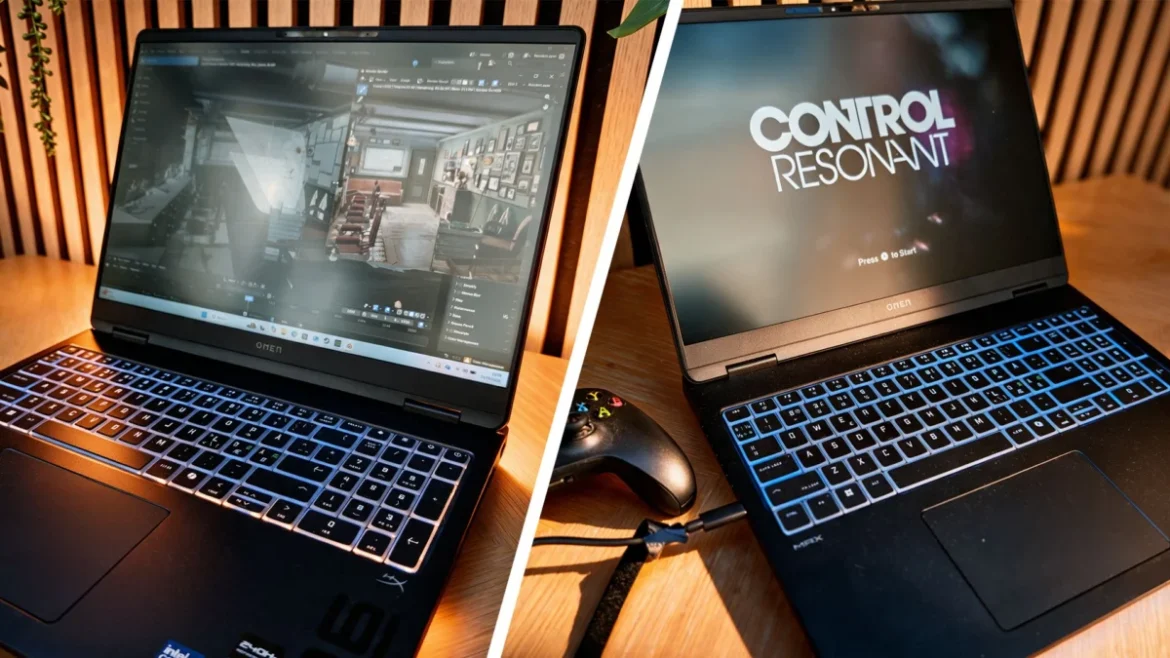
At the core of the HP Omen Max 16 lies a formidable pairing of enterprise-tier silicon: an Intel Core Ultra 9 275HX processor featuring 24 computing cores, coupled with an NVIDIA GeForce RTX 5080 laptop GPU equipped with 16GB of GDDR7 VRAM. This configuration is supported by 32GB of system RAM and a 1TB NVMe solid-state drive.
Despite packing components that traditionally demand massive cooling apparatuses and thick chassis designs, the Omen Max 16 maintains a surprisingly manageable physical profile. Weighing significantly less than legacy desktop replacements, the machine bridges the portability gap, rivaling the everyday carry weight of popular productivity notebooks like the Apple MacBook Pro.
Out of the box, the laptop’s aesthetic presents a nuanced identity. While the customizable RGB keyboard backlighting can be programmed to emit vibrant multi-colored light pulses reminiscent of recreational setups, turning off the illumination reveals a sleek, professional black chassis suitable for lecture halls, boardrooms, and client meetings.
Chronology and Technological Evolution
The convergence of gaming hardware and creative workflows has accelerated over the past five cycles of graphics card architectures. Historically, NVIDIA maintained a rigid operational divide by separating its product lines into GeForce drivers optimized for consumer entertainment and Quadro (later NVIDIA RTX Studio) drivers tailored for computer-aided design, animation, and video editing.
By the introduction of the RTX 50-series architecture, NVIDIA refined its driver ecosystem to allow seamless switching between "Gamer Ready" and "Studio" software environments through a streamlined graphical interface. This technological evolution enables users to toggle operational profiles within minutes.
During practical daily evaluations, this capability transforms the workflow of digital artists and game developers. A typical workday can begin in the morning utilizing the Studio drivers for heavy scene manipulation in Blender or complex spatial calculations in Unreal Engine 5, leveraging CUDA and OptiX acceleration. By evening, a user can switch to Gamer Ready drivers to test fully ray-traced builds of demanding titles such as Control Resonant, demonstrating that high-end gaming laptops can transition between high-demand productivity and leisure without hardware bottlenecks.
Supporting Data and Comparative Market Analysis
To fully understand the market positioning of the HP Omen Max 16, industry analysts look closely at pricing structures and component stratification within HP’s broader catalogue. The top-tier configuration carrying the RTX 5080 and Core Ultra 9 processor launches with a recommended retail price of £2,999, though promotional retail discounts have temporarily positioned the machine at approximately £2,619.
In contrast, lower-tier alternatives within the same product family—such as an Omen 16 variant equipped with an NVIDIA GeForce RTX 5060, an eight-core processor, 16GB of RAM, and 512GB of storage—retail at significantly reduced price points, often hovering around £1,299 during seasonal sales promotions.
While the lower-tier configurations present an attractive financial proposition for budget-conscious consumers, hardware benchmarks highlight critical limitations. The entry-level models typically feature 8GB of VRAM compared to the Max variant’s 16GB. For 3D artists, digital sculptors, and environment designers utilizing modern rendering engines, VRAM capacity acts as a hard ceiling for texture resolution, scene density, and polygon counts. As software ecosystems increasingly rely on massive asset libraries like Megascans and Nanite geometry, hardware limitations encountered in the third or fourth year of an academic or professional career can render lower-spec machines obsolete far faster than their heavily provisioned counterparts.
Economic Implications and Financial Accessibility
The integration of workstation-grade power into a consumer laptop introduces significant economic and ethical considerations, particularly regarding target demographics such as university students and junior designers. High-end computing investments of nearly £3,000 represent a major financial commitment.
Retail financing structures, including "buy now, pay later" schemes and consumer credit options, frequently obscure the true cost of ownership. Industry watchdogs have noted that representative annual percentage rates (APRs) on retail financing can exceed 44% if promotional zero-interest windows are missed. Consequently, financial advisors and technology commentators urge caution, noting that while premium hardware provides essential longevity for intensive creative pipelines, acquiring such assets through high-interest short-term debt poses substantial financial risks for individuals with limited or fixed incomes.
Broader Industry Impact and Future Outlook
The launch of desktop-replacement laptops like the HP Omen Max 16 signals a broader shift in how hardware manufacturers approach professional computing. As remote work, hybrid educational models, and independent content creation continue to expand, the demand for hardware that eliminates compromise between computational power and physical mobility is at an all-time high.
For students and professionals entering fields such as game development, VFX production, and architectural visualization, the availability of unified systems reduces the necessity of maintaining separate desktop workstations for rendering and portable laptops for basic text processing. However, the premium pricing tier occupied by these devices ensures they remain niche investments aimed at dedicated practitioners whose professional output directly justifies the capital expenditure.
Ultimately, the Omen Max 16 demonstrates that the technological barriers between gaming and professional rendering have effectively vanished. Whether the market will embrace these unified systems as standard educational and professional tools will largely depend on future pricing strategies and the ongoing evolution of mobile thermal management solutions.
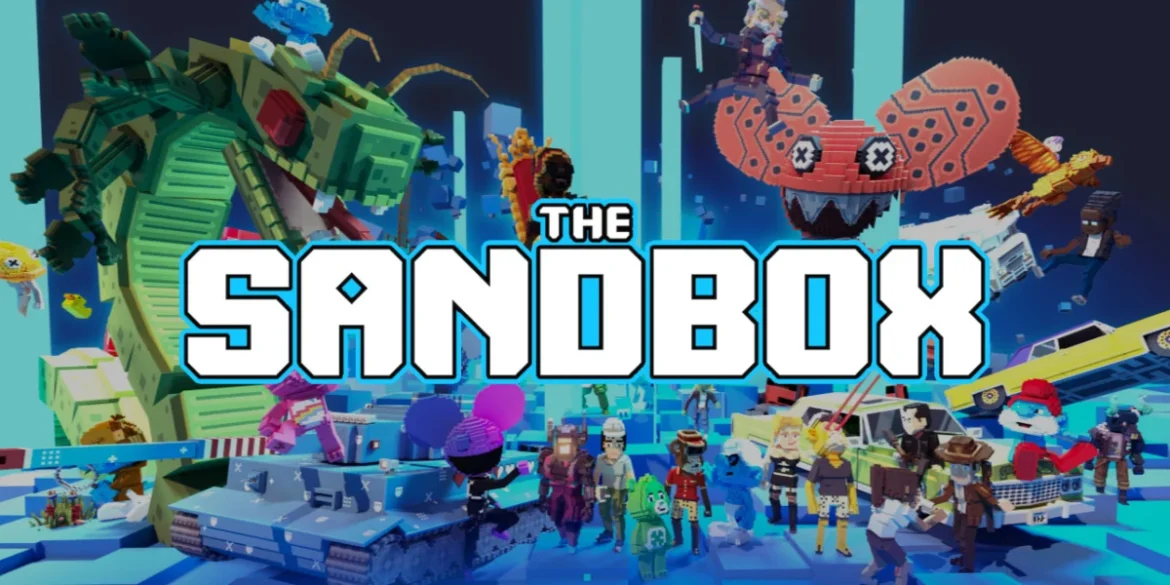
The evolution of virtual worlds and blockchain-based gaming has experienced a paradigm shift over recent years, moving from simple pixelated environments to complex, immersive 3D metaverses. At the forefront of this digital transformation is The Sandbox, a decentralized virtual gaming platform powered by the Ethereum blockchain. By leveraging non-fungible tokens (NFTs), virtual real estate ownership, and high-profile global intellectual property (IP) partnerships, The Sandbox has cemented its position as a dominant force in the Web3 ecosystem. This comprehensive report examines the platform’s recent growth, strategic IP integrations, land sale mechanics, token economics under the native asset SAND, and the broader implications for the future of digital entertainment.
The Rise of The Sandbox and Decentralized Virtual Worlds
The Sandbox has transitioned from a traditional mobile gaming franchise into a leading user-generated content (UGC) metaverse. Unlike conventional video games where developers retain absolute control over digital assets and in-game economies, The Sandbox empowers players, creators, and brands through true digital ownership. Utilizing blockchain technology, the platform allows users to create, own, and monetize their gaming experiences, virtual assets, and real estate plots using NFTs.
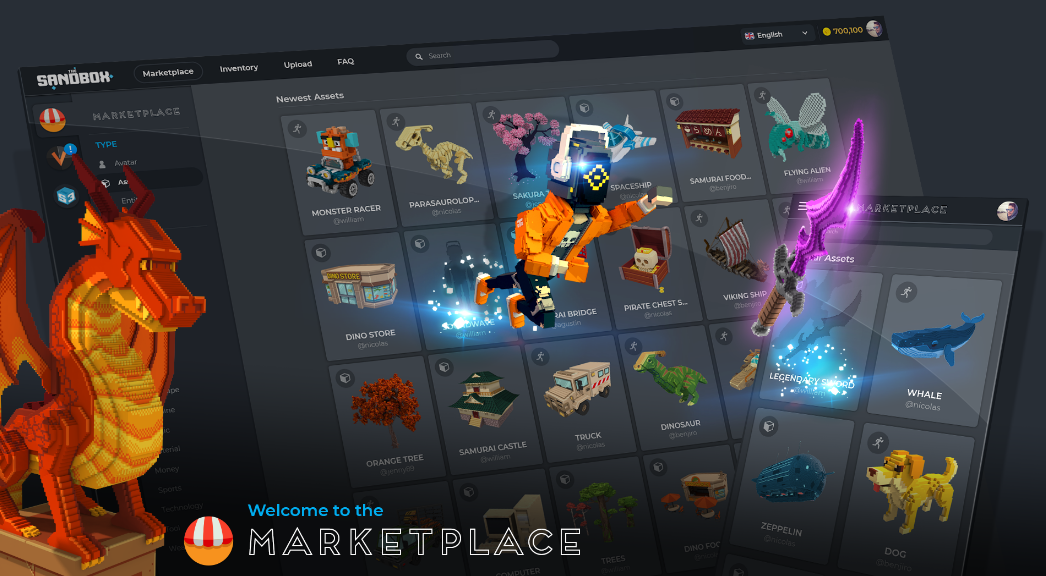
The foundational architecture of the platform relies on three key components: VoxEdit, a 3D modeling and animation software that allows users to create voxel-based objects; the Marketplace, where creators can publish and trade their NFT creations; and the Game Maker, a visual scripting tool that enables anyone to build 3D interactive games without prior coding knowledge. This trifecta of creation tools has attracted a diverse community of independent creators, major corporations, and global entertainment franchises eager to establish a permanent presence in the virtual space.
Strategic IP Integrations and Brand Partnerships
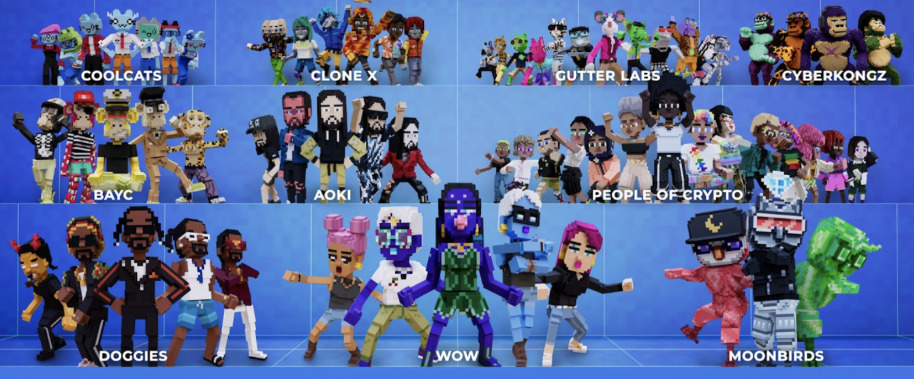
One of the primary catalysts for The Sandbox’s rapid expansion is its aggressive acquisition of major intellectual properties. The platform has successfully bridged the gap between traditional entertainment (Web2) and the metaverse (Web3) by onboarding over 400 prominent global partners across fashion, music, cinema, gaming, and sports.
Recent high-profile collaborations include partnerships with major entertainment studios, iconic music artists, celebrity icons, and motorsport organizations, such as Formula 1-affiliated virtual experiences. These entities utilize virtual LAND parcels to build themed entertainment hubs, virtual museums, interactive concert venues, and gamified brand experiences. By integrating globally recognized IPs, The Sandbox not only drives organic user acquisition but also elevates the credibility and mainstream appeal of blockchain-based gaming.
Land Sales, Virtual Real Estate, and Scarcity Mechanics
At the heart of The Sandbox’s economy is LAND, the digital real estate parcels within the metaverse represented as unique ERC-721 tokens on the Ethereum blockchain. There is a strict, finite supply of 166,464 LAND plots globally, creating a scarcity model that drives long-term value for investors and creators.
Land sales are typically conducted in sequential waves or public auctions. Owning LAND allows creators to populate their virtual plots with games, assets, and interactive experiences. Furthermore, landowners can monetize their properties by hosting events, charging entry fees for custom games, renting out plots to other creators, or selling them on secondary markets such as OpenSea. The interplay between limited supply and escalating demand from global brands has historically positioned LAND as a premier asset class within the blockchain gaming sector.
Chronology of Expansion and Ecosystem Milestones
The trajectory of The Sandbox has been marked by steady operational development and strategic milestones since its acquisition and pivot toward blockchain technology:
Late 2021: The platform successfully completed a significant funding round, raising $93 million led by SoftBank Vision Fund 2, signaling major institutional confidence in the metaverse model.
2022: The expansion of alpha testing phases allowed thousands of community members to experience early versions of the metaverse, accompanied by continuous LAND sale events featuring international brands.
2023: Deepening integration of major IP holders, refinement of creator monetization tools, and enhanced cross-platform capabilities. Leadership, including Co-Founder Sebastien Borget, outlined regulatory compliance frameworks and plans for decentralized autonomous organization (DAO) governance.
2024 and Beyond: Continued transition toward user-generated governance, rollout of advanced mobile accessibility, and scaling infrastructure to support millions of concurrent users.
Leadership Insights and Governance Vision
In statements addressing the future of virtual economies, Co-Founder Sebastien Borget has emphasized the importance of regulatory compliance, user safety, and sustainable tokenomics. As regulatory scrutiny increases globally across the cryptocurrency sector, platforms like The Sandbox are proactively engaging with legal frameworks to ensure long-term viability.
Borget and the core development team have consistently underscored that the transition from closed Web2 gaming ecosystems to open Web3 metaverses requires robust security measures, intuitive user onboarding, and verifiable digital property rights. By empowering creators with direct ownership of their revenues—often retaining up to 95% or more of primary and secondary sales—The Sandbox distinguishes itself from traditional gaming platforms that traditionally capture the vast majority of developer revenues.
Token Economics: The Role of SAND
The utility token of the ecosystem, SAND, serves as the economic backbone for all transactions and interactions within The Sandbox. Built on the Ethereum blockchain, SAND is required for participating in governance, acquiring LAND and ASSETS, staking for passive rewards, and paying transaction fees on the marketplace.
The tokenomics of SAND are designed to encourage long-term holding and platform engagement. Users can stake SAND to earn passive yields, participate in platform governance votes, and gain priority access to exclusive NFT drops and land sales. The deflationary mechanics, driven by platform utility and transaction volume, establish a direct correlation between the growth of the metaverse and the demand for the native token. Major cryptocurrency exchanges, including Coincheck and Bybit, provide robust liquidity and trading pairs for SAND, facilitating global participation from retail and institutional investors alike.
Market Implications and Future Outlook
The convergence of gaming, blockchain technology, and mainstream intellectual property represents a fundamental shift in how digital content is consumed and monetized. While market volatility and regulatory developments continue to shape the broader crypto industry, platforms that demonstrate real utility, sustained user engagement, and strong corporate partnerships are uniquely positioned to weather market cycles.
The Sandbox’s ability to attract top-tier brands while simultaneously fostering a grassroots community of independent voxel artists highlights the versatility of its ecosystem. As the infrastructure of the metaverse matures, the integration of advanced artificial intelligence tools, improved rendering engines, and cross-chain interoperability will likely dictate the next wave of adoption.
In summary, The Sandbox continues to redefine the boundaries of digital real estate and virtual entertainment. Through strategic IP integration, robust token economics, and a commitment to decentralized ownership, the platform offers a compelling glimpse into the future of the internet—where digital spaces are built, owned, and governed by the community itself.