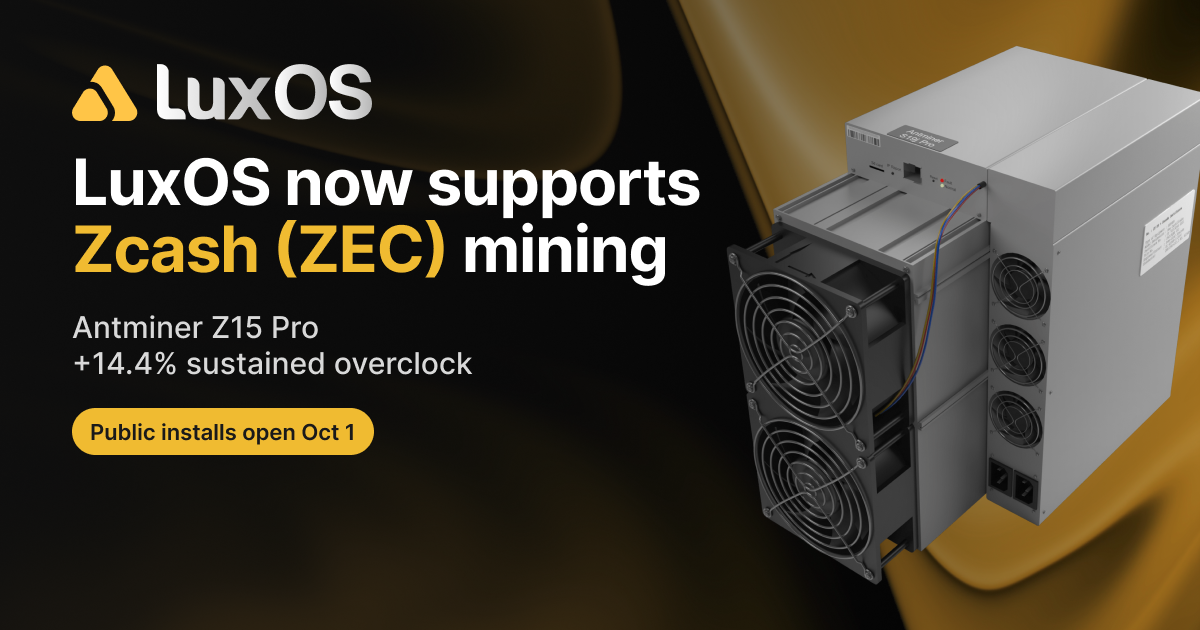
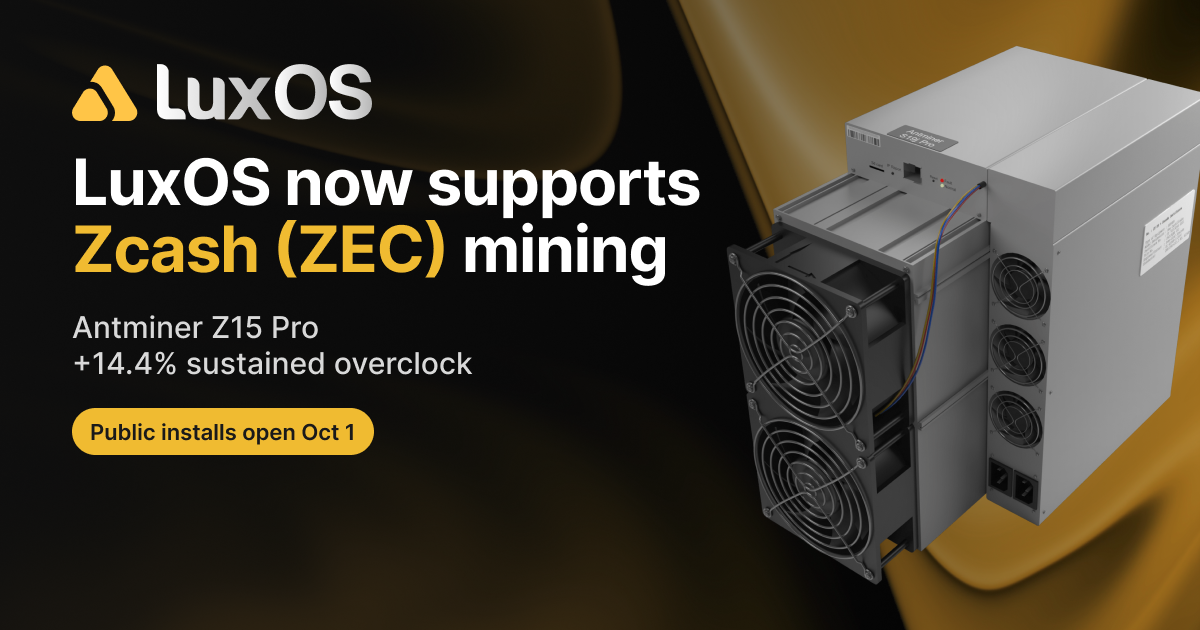
The landscape of professional Zcash mining is set for a significant transformation this October as Luxor Technology Corporation officially extends its proprietary LuxOS firmware to the Antminer Z15 Pro. This development marks the first time that the widely utilized LuxOS suite—previously reserved exclusively for Bitcoin-centric SHA-256 ASIC machines—will support Equihash-based hardware. As the Zcash network continues to navigate complex market conditions with a total hashing power hovering around 31 GSol/s, the introduction of this firmware offers operators a sophisticated toolset for performance optimization, thermal management, and improved profitability.
Historically, the Antminer Z15 Pro has operated as a "black box" ecosystem. Out of the box, the unit provides a fixed hashrate of 840 KSol/s, with stock firmware offering limited flexibility for operators to adjust power consumption, frequency, or voltage. Furthermore, the lack of granular, per-chip monitoring has often hindered large-scale mining operations from identifying and mitigating hardware inefficiencies before they lead to premature equipment failure. By transitioning to LuxOS, operators gain access to a comprehensive management stack that includes real-time health scoring, advanced power tuning, and overclocking capabilities, effectively turning a static machine into a dynamic, performance-optimized asset.
Technical Evolution and Performance Gains
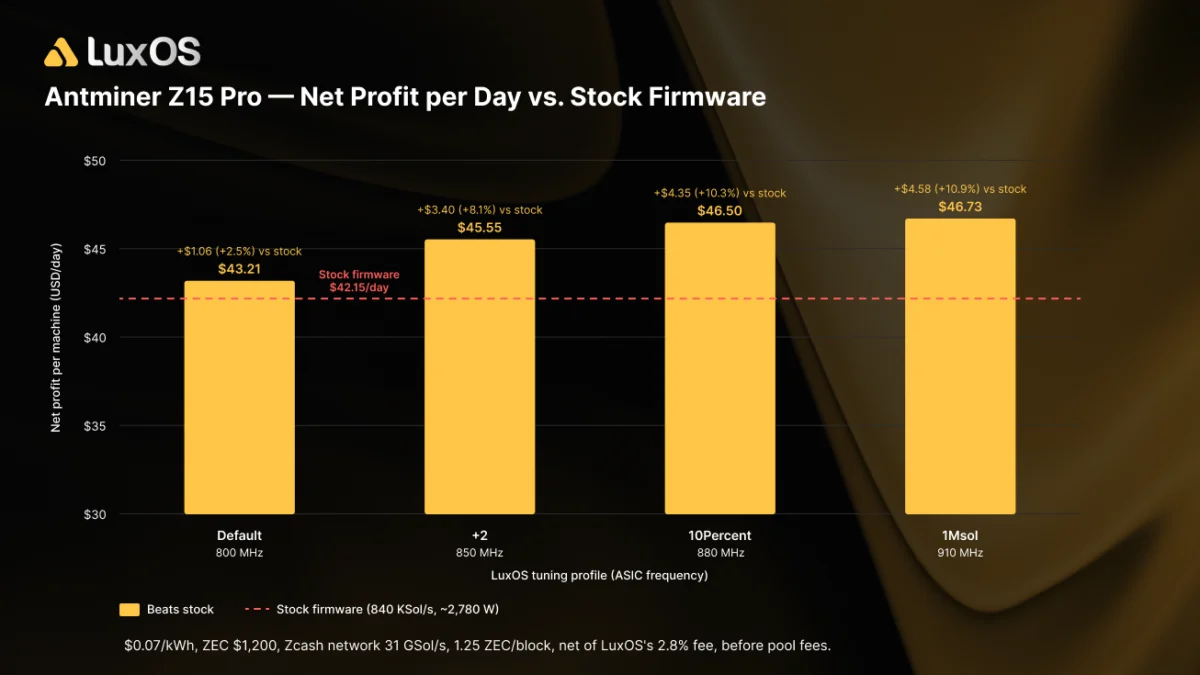
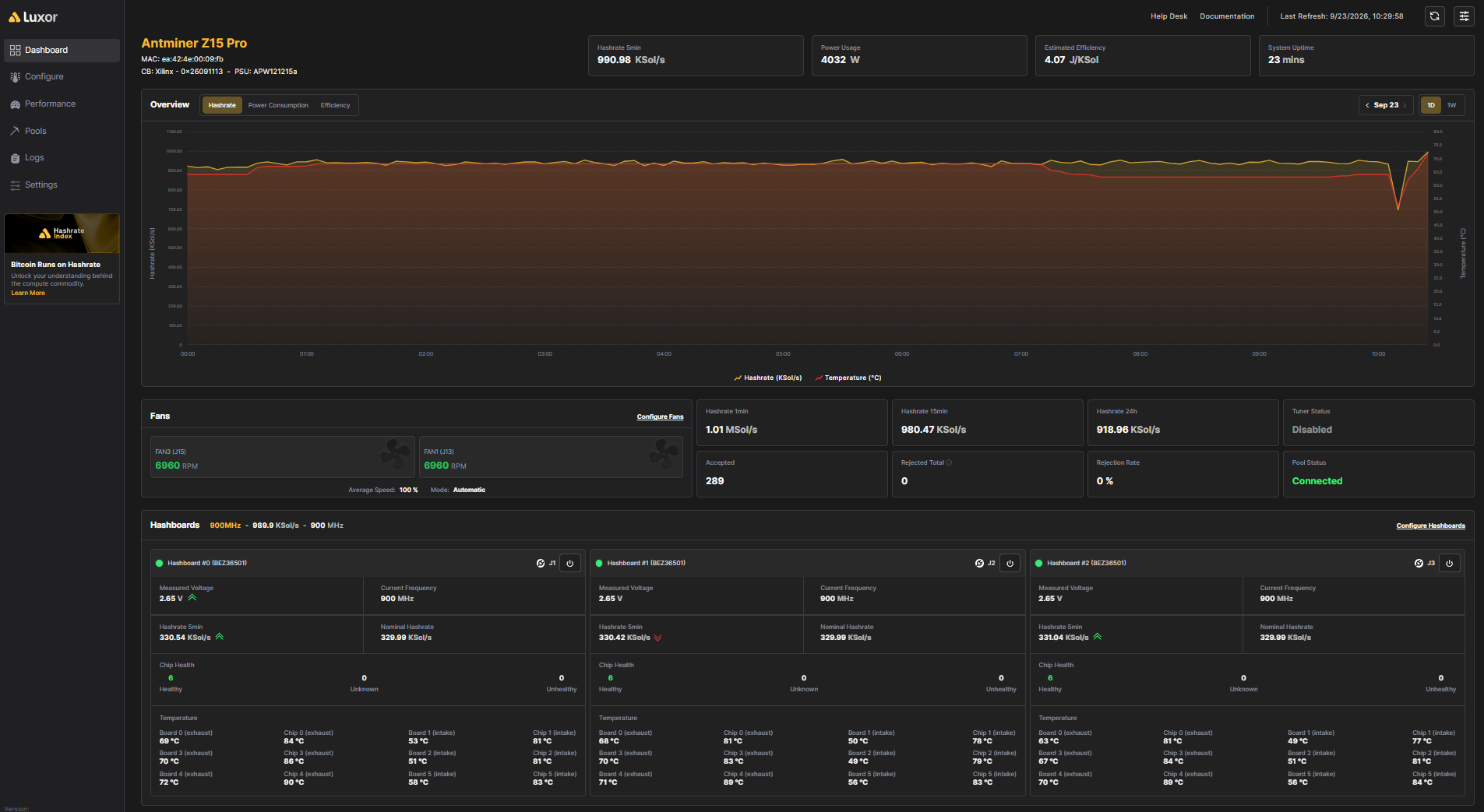
The primary value proposition of this integration lies in the ability to bridge the gap between manufacturer-specified performance and the actual potential of the hardware. Under standard operating conditions, the Z15 Pro consumes approximately 2,780 Watts to maintain its base hashrate. However, testing conducted on September 23, 2026, demonstrated that with the implementation of LuxOS, a tuned Z15 Pro could achieve a sustained hashrate of 961 KSol/s—a significant increase of approximately 121 KSol/s per unit.
This performance boost is facilitated by the firmware’s ability to bypass the rigid limitations imposed by stock software. LuxOS enables operators to tailor their hardware to specific site requirements, such as cooling capacity and electricity pricing. While the trade-off for higher hashrate is an increase in power consumption—with tested profiles drawing roughly 4,032 Watts—the economic calculus remains favorable for many operators, particularly those with access to low-cost electricity. When factoring in the 2.8% fee associated with the use of the LuxOS software, the net gains remain substantial. At a ZEC market price of $1,200, an operator running a fleet of Z15 Pros can expect a marked increase in daily revenue compared to those utilizing the stock configuration.
Economic Implications for Mining Fleets
The financial impact of this shift is most visible when analyzing the return on investment (ROI) for mining farms. Current projections suggest that the adoption of LuxOS can shorten the payback period for a new Z15 Pro unit from approximately 177 days on stock settings to roughly 159 days. This reduction of nearly three weeks in the breakeven timeline represents a critical competitive advantage in the high-stakes environment of cryptocurrency mining, where equipment depreciation and network difficulty adjustments act as constant pressures on margins.
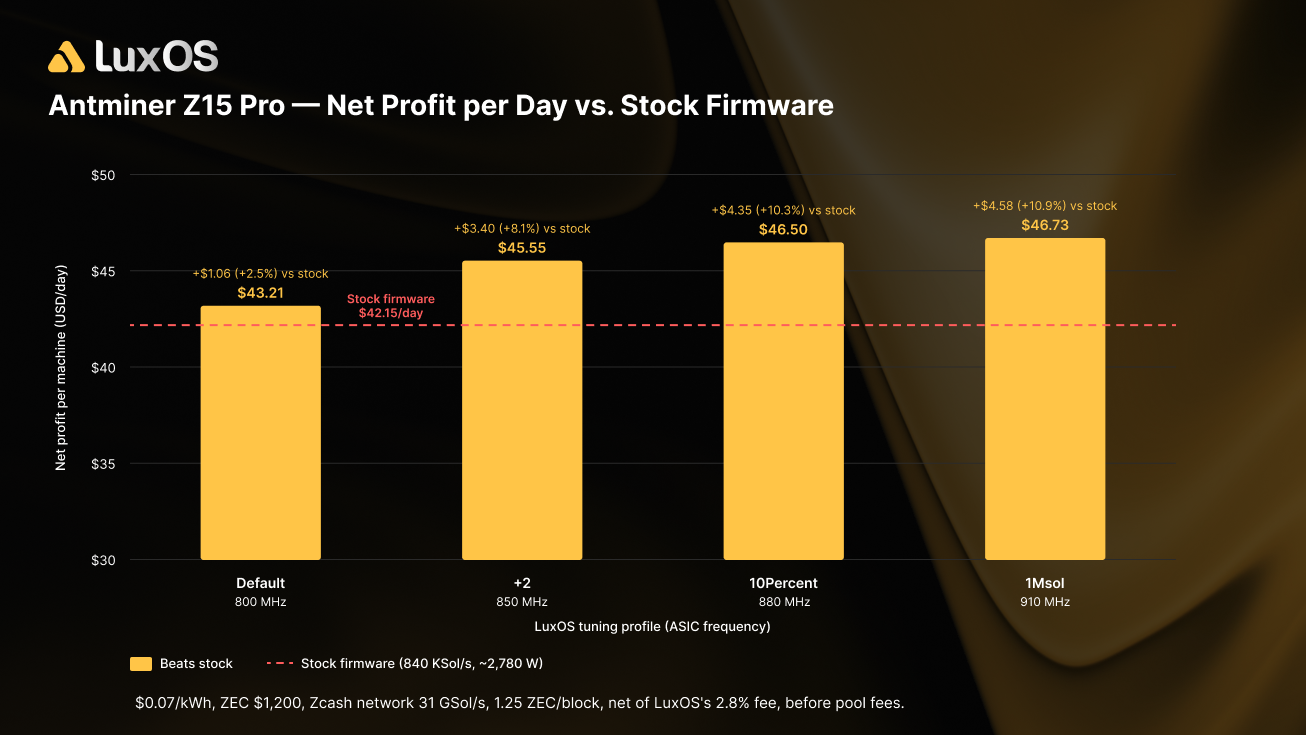
Data analysis indicates that the profitability of this overclocking strategy is sensitive to two primary variables: the prevailing market price of Zcash (ZEC) and the operator’s cost of electricity. At an electricity cost of $0.07/kWh, the net gain per machine remains consistent, adding significant cumulative value to large fleets over a 90-day cycle. Even at higher electricity costs, such as $0.15/kWh, the overclocking profile maintains positive margins. It is only when ZEC prices fall below the $370 threshold that the marginal cost of the extra electricity required for the overclock begins to outweigh the revenue generated by the additional hashrate.
Implementation and Operational Transparency
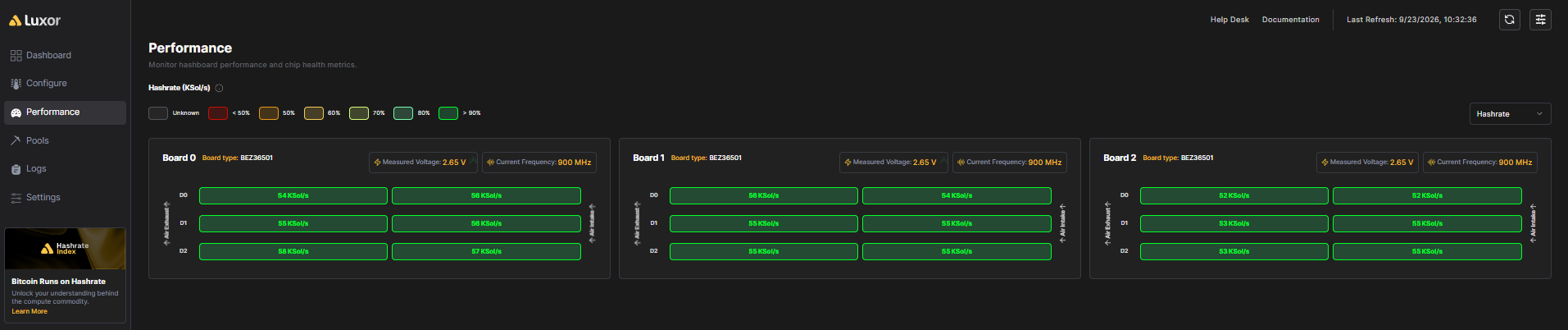
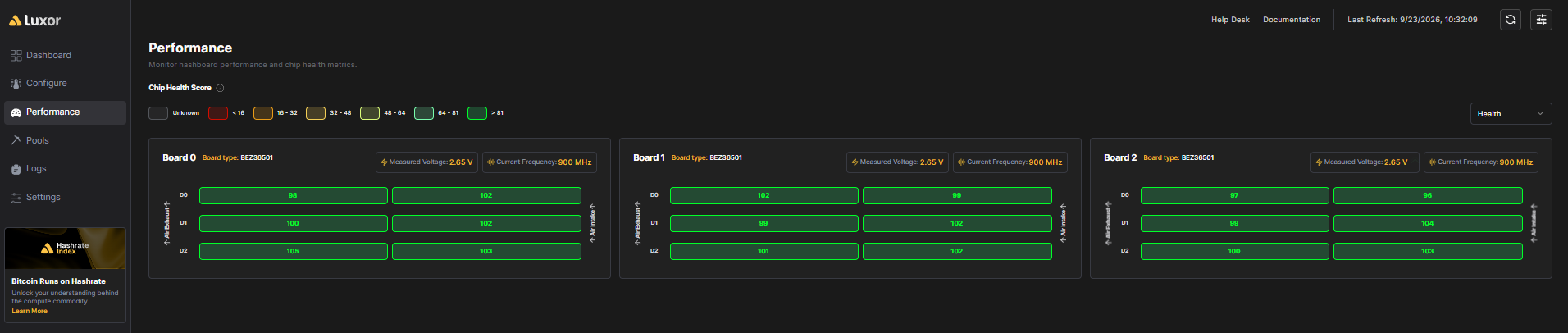
Beyond the raw performance metrics, the inclusion of the Z15 Pro in the LuxOS ecosystem brings a higher level of operational visibility. The firmware provides a dashboard that includes detailed per-chip hashrate tracking and health diagnostics. By enabling operators to monitor individual chips across all three hashboards, the software allows for targeted maintenance. If a specific chip begins to show signs of degradation, the system can flag the issue, allowing operators to adjust settings or schedule maintenance before a complete hashboard failure occurs.
For the mining industry, this shift toward "smart" firmware reflects a broader trend of professionalization. As the industry moves away from the era of "set it and forget it" mining, the demand for sophisticated monitoring and management software has grown. By providing tools that are pool-agnostic, Luxor allows operators to maintain their existing pool relationships while benefiting from improved hardware efficiency.
Broader Context and Future Outlook
The decision by Luxor to branch out from Bitcoin (SHA-256) into Equihash hardware indicates a strategic diversification of its firmware business. As the total network hashrate of Zcash continues to fluctuate, the efficiency of individual machines becomes the deciding factor in which mining operations remain solvent during market downturns. The integration of the Z15 Pro is expected to be the first of several expansions into different hardware classes.
Industry analysts observe that this move also places pressure on other manufacturers to provide more open and flexible firmware options for their clients. As Luxor begins public installations on October 1, the impact on the overall network hashrate will likely become apparent within the following quarter. If the adoption rate is high, the network could see an increase in overall security, though this would naturally lead to a rise in network difficulty, forcing all participants to prioritize efficiency to maintain profitability.
Conclusion and Strategic Considerations
For operators currently managing Z15 Pro fleets, the integration of LuxOS offers a viable path toward reclaiming lost potential and improving unit-level economics. While the technical risks—such as the requirement for adequate power supply unit (PSU) and cooling capacity—must be assessed on a site-by-site basis, the empirical data suggests that the benefits of precision tuning are clear.
As the cryptocurrency market continues to evolve, the distinction between efficient and inefficient operators will only widen. By providing the tools to move beyond stock configurations, firms like Luxor are effectively raising the bar for the entire sector. Operators interested in upgrading their infrastructure are encouraged to evaluate their specific energy constraints and fleet requirements before proceeding, ensuring that the necessary hardware overhead is available to support the increased thermal and power demands of the overclocked profiles. With the public rollout scheduled for the start of October, the mining community will soon have the ability to observe the real-world performance of these machines at scale, potentially setting a new standard for Equihash mining efficiency.