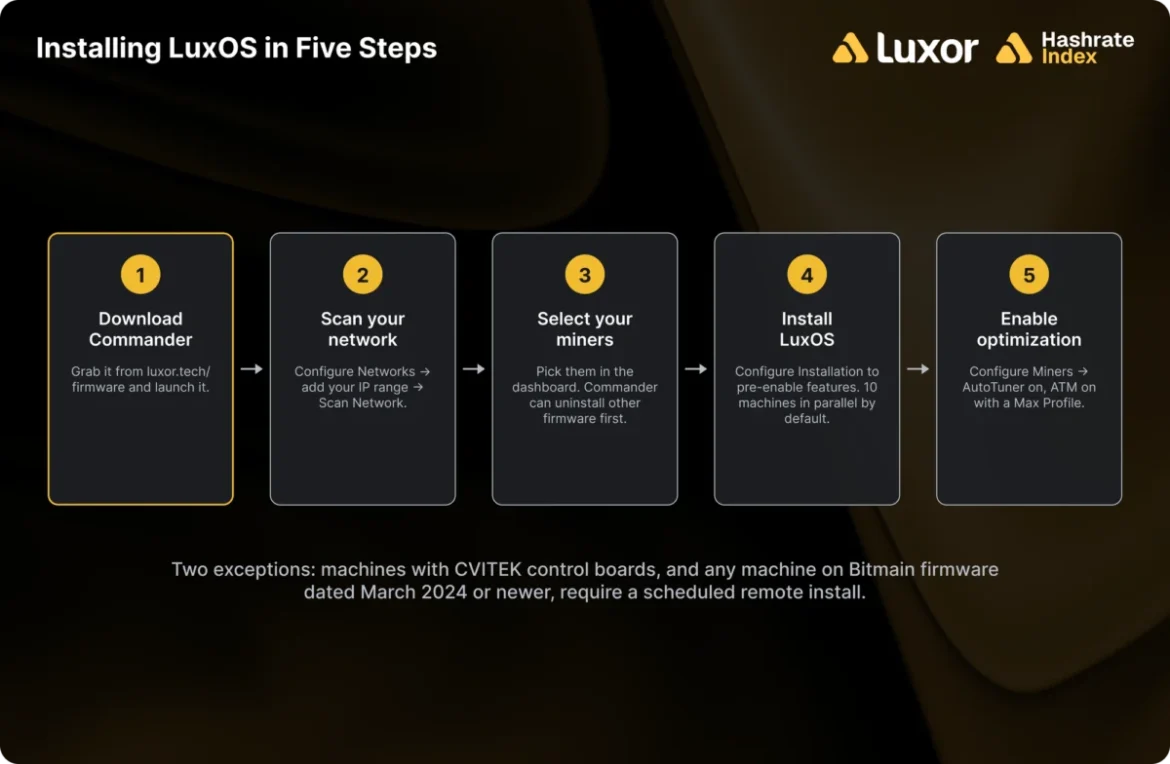
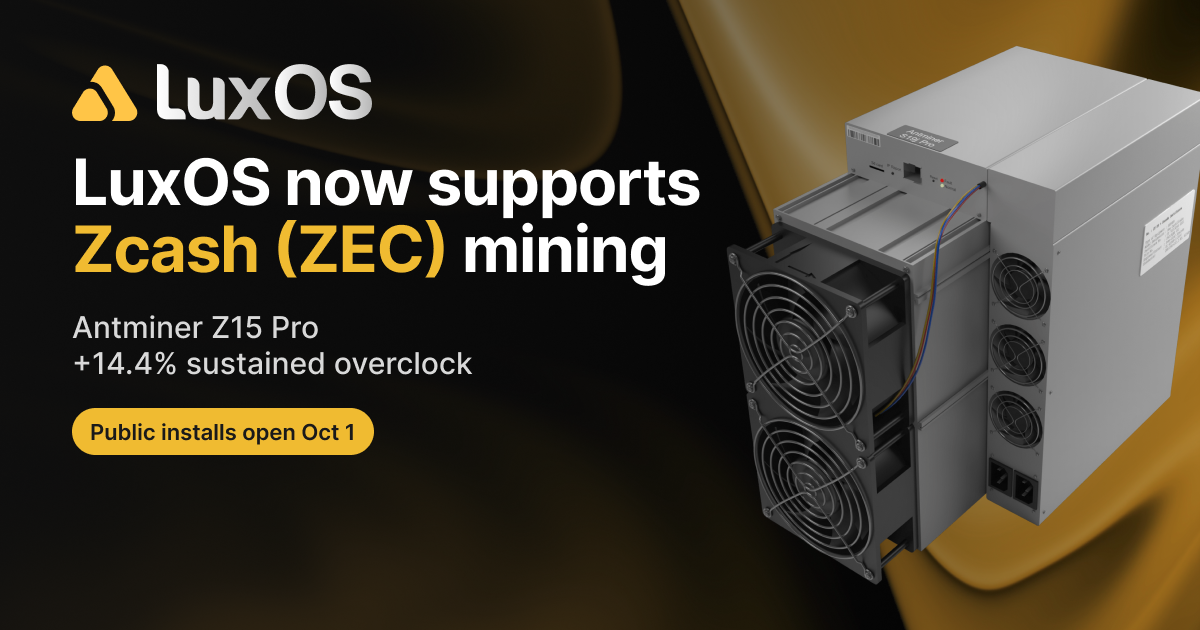
The landscape of Equihash mining is undergoing a significant technical shift as Luxor Technology Corporation officially extends its proprietary firmware, LuxOS, to support the Bitmain Antminer Z15 Pro. This development marks the first time the company, which previously focused exclusively on the Bitcoin (SHA-256) mining ecosystem, has optimized firmware for Equihash-based hardware. With Zcash (ZEC) trading near $1,200 and the network hash rate hovering around 31 GSol/s, the introduction of customizable tuning software is poised to redefine the operational efficiency of Zcash mining fleets globally. Public installations of the new firmware are scheduled to commence on October 1, 2026.
The Evolution of Mining Efficiency
Historically, the Antminer Z15 Pro has functioned as a "sealed unit." Users were restricted to Bitmain’s stock firmware, which maintains a fixed hash rate of 840 KSol/s. This standard configuration lacks the granular control necessary for operators to adapt to fluctuating electricity prices, varying thermal environments, or aging hardware components. Stock firmware provides no mechanism for frequency adjustment, voltage tuning, or real-time per-chip health diagnostics.
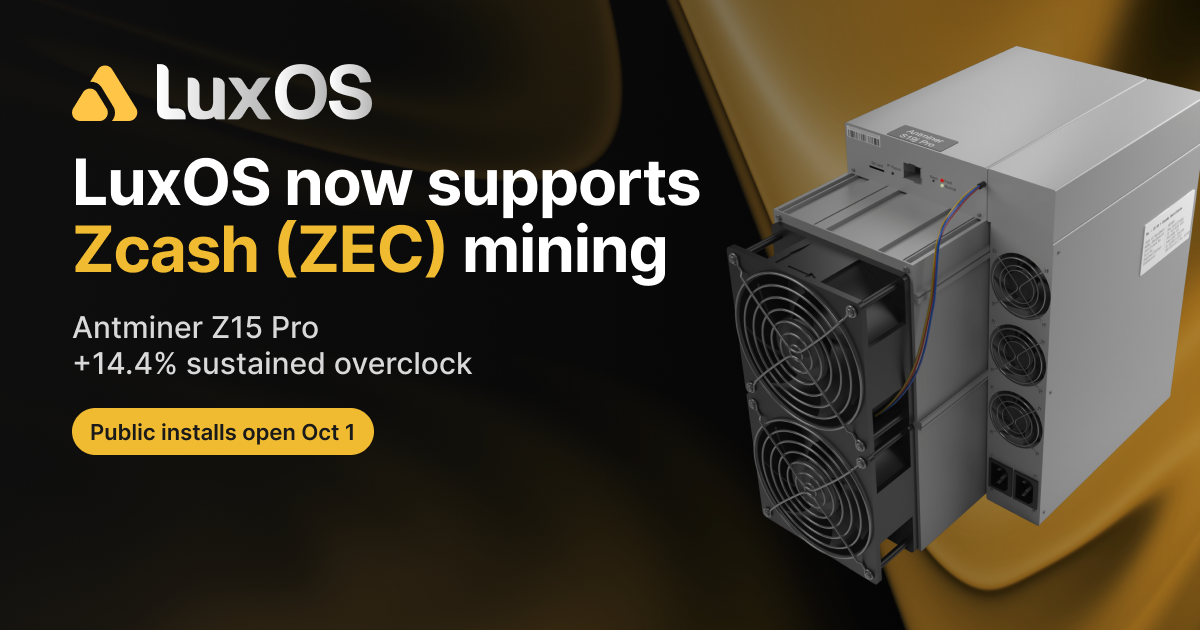
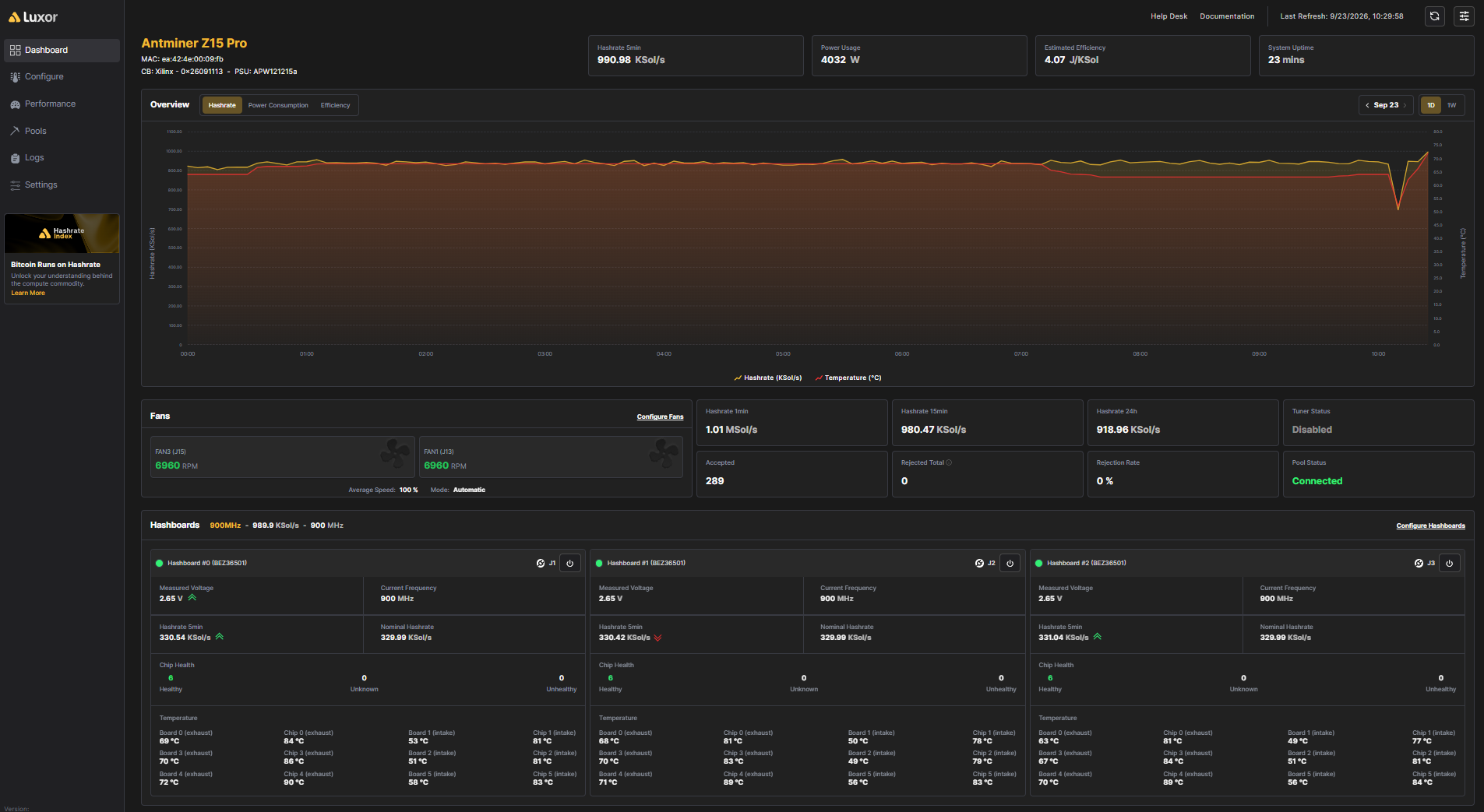
By migrating to LuxOS, operators transform these machines from static appliances into flexible computing assets. The LuxOS stack introduces advanced features previously exclusive to Bitcoin ASIC fleets, including per-chip monitoring, health scoring, and dynamic tuning. This allows miners to adjust their power-to-performance ratio based on local electricity costs. In internal testing conducted by Luxor on September 23, 2026, a test unit running LuxOS achieved a sustained hash rate of 961 KSol/s, representing a 14.4% increase over the manufacturer’s base specifications.
Financial Implications and Market Context
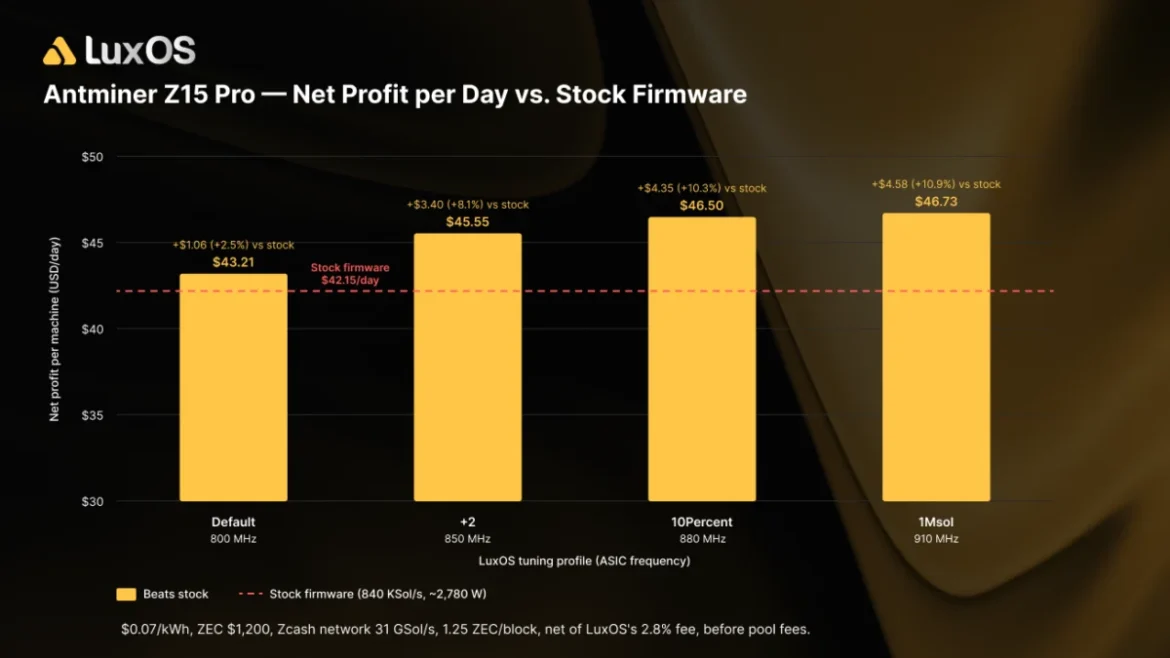
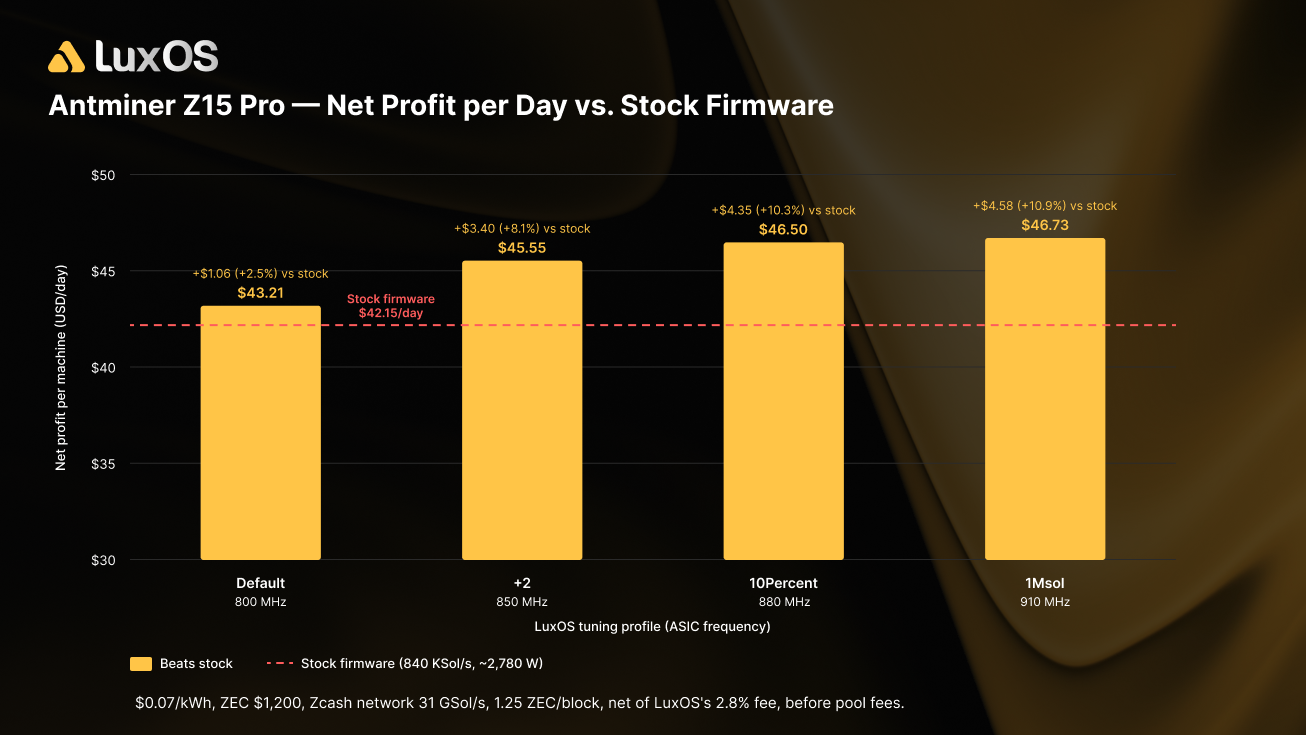
The economic viability of mining hardware is fundamentally tied to the "efficiency line"—the trade-off between increased hash rate and the additional energy consumption required to sustain it. For the Z15 Pro, the transition to LuxOS involves a power increase from the stock 2,780 W to approximately 4,032 W under overclocked conditions. However, the resulting boost in ZEC production often offsets the marginal utility of the increased electricity expenditure.
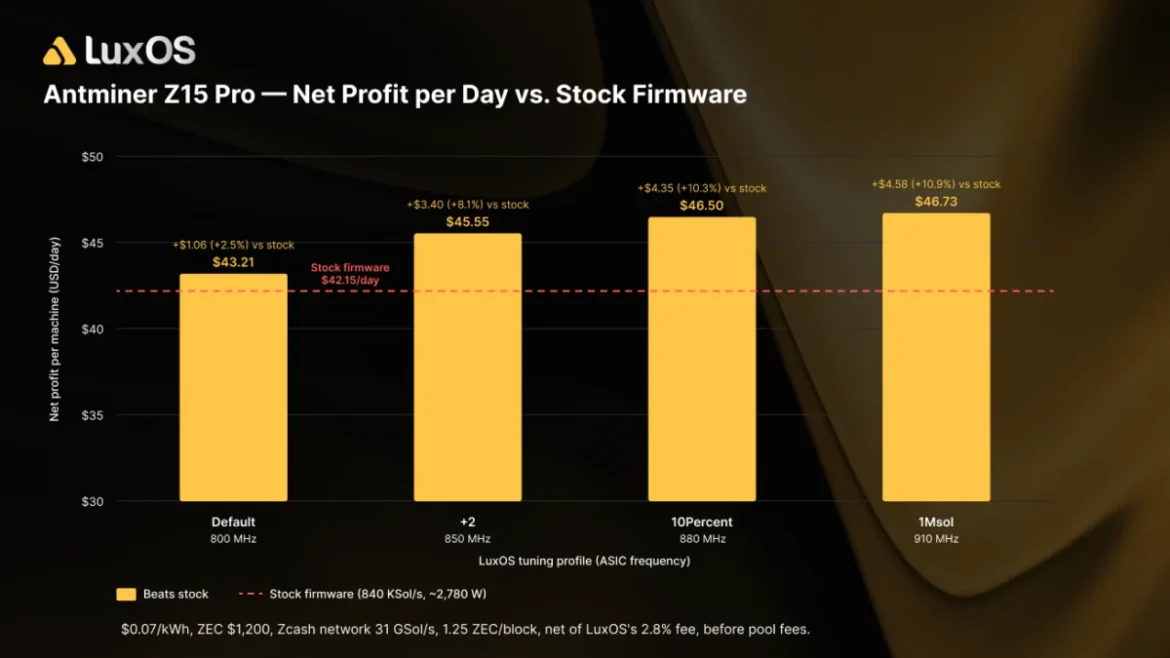
Current projections suggest that at a power cost of $0.07/kWh and a ZEC price of $1,200, an operator can expect a daily net gain of approximately $47 per machine, even after accounting for the 2.8% fee associated with the LuxOS software. This efficiency gain significantly accelerates capital recovery. Under stock parameters, the payback period for a Z15 Pro—priced at approximately $7,475 per unit—is estimated at 177 days. By implementing LuxOS, that timeline is compressed to roughly 159 days, representing an 18-day improvement in return on investment.
The sensitivity of these earnings to market conditions is pronounced. Luxor’s analysis indicates that the overclock remains gross-margin positive for operators with electricity costs as high as $0.23/kWh. However, the profitability of the upgrade is intrinsically linked to the market price of ZEC. Should the price drop toward the $370 range, the cost of the additional power consumption begins to outweigh the value of the incremental ZEC earned, effectively rendering the overclock a net liability.
Technological Implementation and Fleet Management
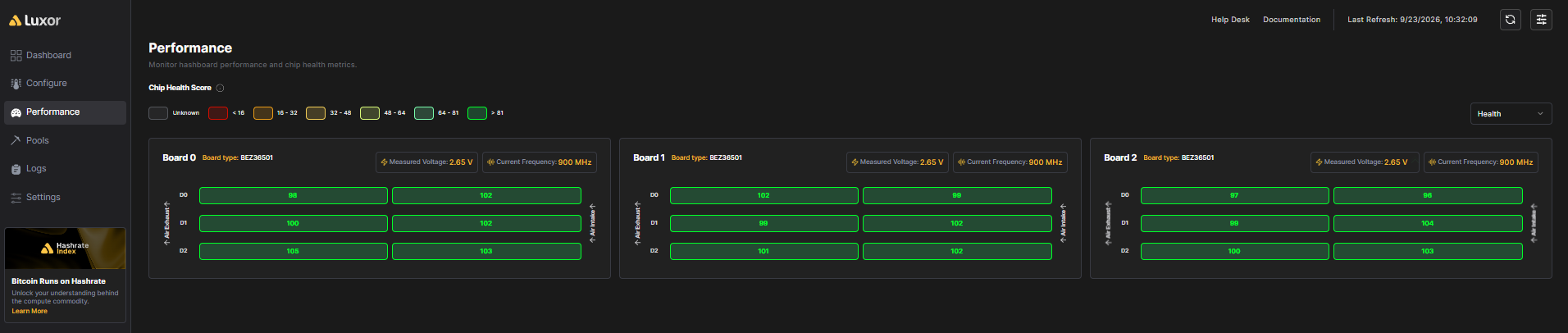
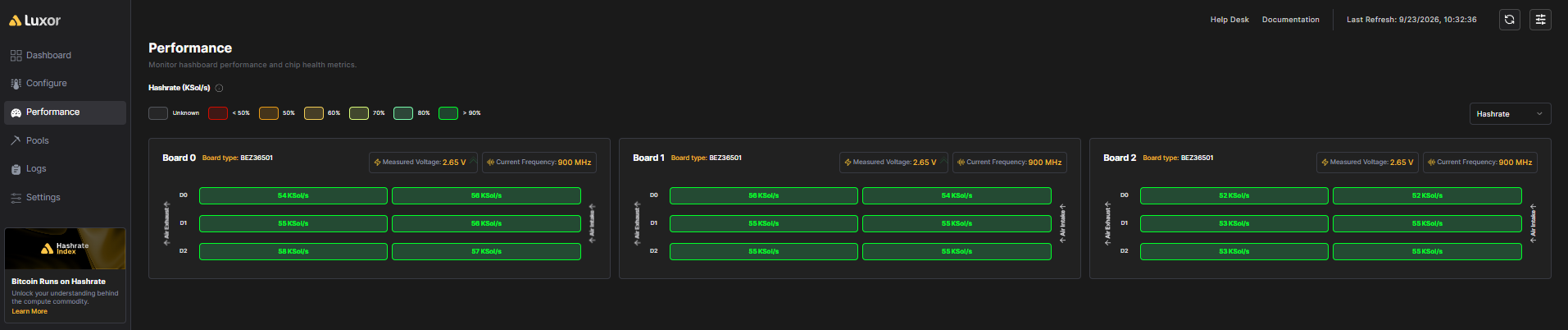
The technical deployment of LuxOS involves a shift toward a more transparent hardware management architecture. The firmware provides a granular dashboard that displays real-time statistics for each hashboard and individual chip. This level of visibility allows facility managers to identify underperforming chips or cooling issues before they result in hardware failure.
In Figure 3 and subsequent data logs from the September 2026 testing phase, the LuxOS-equipped Z15 Pro demonstrated a 0% rejection rate while maintaining a stable hash rate of 991 KSol/s. Furthermore, the firmware’s ability to conduct per-chip health scoring ensures that operators can extend the lifespan of their machines by identifying specific components that may be overheating or suffering from degradation. This proactive maintenance approach is increasingly critical as the Zcash network faces rising difficulty levels and intense competition for block rewards.
Strategic Implications for the Equihash Ecosystem
The decision by Luxor to expand into the Equihash space signals a broader trend in the industrialization of crypto mining. As the industry matures, the focus has shifted from mere hardware acquisition to software-driven optimization. By bringing the same rigorous monitoring and tuning stack used in large-scale Bitcoin mining operations to the Zcash network, Luxor is addressing the demand for enterprise-grade management tools in a niche sector of the industry.
The "pool-agnostic" nature of LuxOS further ensures that operators are not forced to migrate their hash rate to a specific mining pool to utilize the software. This interoperability allows large-scale data centers to standardize their firmware across a diverse fleet of machines, regardless of the underlying algorithm or network.
Broader Industry Outlook
The introduction of this firmware coincides with a period of high network activity for Zcash. With 1,440 ZEC being issued to miners daily, the competition for block rewards is intense. For operators, the ability to squeeze an extra 10% to 15% of performance out of existing hardware represents a significant competitive advantage.
As of late September 2026, the industry is closely monitoring the impact of such firmware updates on total network difficulty. If widespread adoption of LuxOS occurs, the collective hash rate of the Zcash network is likely to increase, which could lead to a corresponding rise in difficulty. This creates a "Red Queen" scenario where operators must adopt optimization software simply to maintain their existing share of the network’s total rewards.
Conclusion and Future Trajectory
The integration of the Antminer Z15 Pro into the LuxOS ecosystem represents a milestone for Luxor Technology and the broader Zcash mining community. By providing the tools necessary for precision tuning and real-time monitoring, Luxor is facilitating a shift toward more professionalized, data-driven mining operations.
While the 14.4% performance increase is an estimate based on controlled test environments, the underlying value proposition—lower payback periods and increased operational transparency—is clear. As public installations open in October, the market will likely see a rapid influx of Z15 Pro units transitioning to the new firmware, further elevating the performance floor of the Zcash network. Operators looking to maintain their competitive edge in an increasingly efficient market will find that the ability to tune, monitor, and optimize their hardware is no longer a luxury, but a necessity for long-term operational success.
For organizations currently managing large-scale Zcash fleets, the shift to specialized firmware is a strategic imperative. As energy costs remain a critical variable in the mining equation, the ability to dynamically adjust performance profiles ensures that operators can remain profitable across a wider range of price and difficulty environments. Whether the market trends bullish or bearish, the ability to control the operational variables of one’s fleet will remain the primary differentiator between sustained profitability and premature hardware retirement.