In the high-stakes environment of organ transplantation, minutes and seconds dictate the boundary between life and death. When a viable organ becomes available, a complex, high-pressure countdown immediately begins. A human heart, for instance, remains medically viable for transplantation for only a few fleeting hours. Within this narrow window of opportunity, dozens of medical professionals, provincial coordinators, institutional administrators, and regional agencies must synchronize their efforts with absolute precision. Every authorization, every diagnostic record, and every consent form must be accurate and unquestionable on the very first pass. In this delicate ecosystem, a single lost document, an unverified signature, or a compromised communication channel can disrupt the entire sequence, ultimately costing a human life.
To mitigate these profound risks and modernize its operational infrastructure, Argentina has taken a monumental step forward. The nation’s central authority for organ, tissue, and cell procurement and transplantation—the Instituto Nacional Central Único Coordinador de Ablación e Implante (INCUCAI)—has officially integrated decentralized digital identity and cryptographic notarization into its core nationwide systems. Executed in collaboration with Latin American decentralized identity specialist Extrimian and anchored on the IOTA mainnet, this deployment represents a paradigm shift for public sector administration. By moving critical verification processes onchain, Argentina is setting a pioneering global benchmark for how emerging technologies can secure, streamline, and safeguard life-saving public health infrastructure.
The Operational Architecture of Argentina’s Transplant Network
To understand the magnitude of this technological integration, one must examine the complex organizational framework of Argentina’s transplant ecosystem. INCUCAI operates as the national coordinating body responsible for establishing policies, managing the centralized national waiting list, and overseeing the equitable distribution of organs throughout the country. However, national oversight alone cannot capture the decentralized nature of medical emergencies. INCUCAI coordinates its monumental efforts alongside 24 distinct jurisdictional procurement agencies—encompassing every Argentine province alongside the Autonomous City of Buenos Aires—as well as an extensive network of public hospitals, private clinics, and specialized transplant centers.
Historically, coordinating life-or-death workflows across such a vast, multi-tiered bureaucratic landscape has been vulnerable to administrative friction. The physical transportation of paperwork, manual verification of medical credentials, and reliance on legacy centralized databases introduced potential bottlenecks. While these traditional systems functioned adequately, they lacked the cryptographic guarantees, instantaneous global verifiability, and tamper-proof auditing capabilities required for modern public administration. Recognizing the imperative to enhance security without sacrificing speed, INCUCAI sought a digital backbone capable of unifying its national network while ensuring absolute data integrity.
Enter Extrimian, a leading technology firm renowned for its expertise in self-sovereign identity (SSI) frameworks. Extrimian specializes in constructing architectures that grant individuals and institutions direct, unmediated control over their digital identities and the specific data they choose to share. By championing transparency, efficiency, and user-centric security, Extrimian aims to revolutionize digital interactions across critical sectors, including healthcare, education, and government services. To serve as the neutral, public foundation for INCUCAI’s new decentralized infrastructure, Extrimian selected IOTA—a scalable, energy-efficient, and secure distributed ledger designed for real-world enterprise and public sector adoption.
The Chronology of Digital Transformation: From Concept to National Deployment
The integration of blockchain-backed digital identity into Argentina’s national transplant framework did not happen overnight; it was the culmination of meticulous planning, regulatory alignment, and phased technological execution.
The foundation of the project was laid through intensive architectural design and rigorous testing phases conducted by Extrimian and INCUCAI engineers. The primary objective was to engineer a system that could seamlessly integrate with SINTRA—Argentina’s National Procurement and Transplant Information System—without disrupting ongoing medical operations. By leveraging W3C-compliant decentralized identifiers (DIDs) and verifiable credentials, the engineering teams established a framework where institutional identities could be cryptographically linked to official government domains. This ensured that any entity interacting with the system could instantly verify that they were communicating with accredited authorities rather than malicious actors.
A critical milestone in this chronology arrived in June 2026. On June 10, 2026, the decentralized infrastructure officially went live on the IOTA mainnet, making INCUCAI and its 24 provincial agencies part of a publicly verifiable digital identity and document-signing ecosystem. Shortly thereafter, the regulatory framework caught up with the technological rollout. Through Resolution 199/2026, published in the national Official Gazette (Boletín Oficial), INCUCAI formally mandated the implementation of electronic signatures across all donation and transplant processes managed via SINTRA and its associated institutional networks.
Following the regulatory decree, the rollout advanced to user-facing applications with the launch of IncucaiID, the ecosystem’s official mobile wallet available for download on major application marketplaces. Initially deployed to streamline the waiting-list registration process—starting specifically with heart and lung transplant lists before expanding to other modalities—IncucaiID empowers patients, medical professionals, and authorized personnel to hold their verifiable credentials securely, prove their identities instantaneously, and execute legally binding electronic signatures for critical medical documents.
Privacy-First Engineering and Cryptographic Proofs
One of the most delicate challenges in modernizing healthcare infrastructure via distributed ledger technology is the protection of patient privacy. Medical records, donor consents, and recipient evaluations constitute some of the most sensitive personal data in existence. Acknowledging this reality, Extrimian and INCUCAI engineered the architecture with a strict privacy-by-design mandate: no patient-identifiable information or raw medical records are ever stored on the blockchain.
Instead, the system utilizes cryptographic hashes—unique, mathematically generated digital fingerprints of documents and process steps—which are anchored permanently to the IOTA mainnet. This methodology ensures absolute document integrity and chronological immutability without exposing any of the underlying personal or clinical data. When a document is signed or a procedural step is completed within the SINTRA network, its corresponding cryptographic proof is recorded on the ledger.
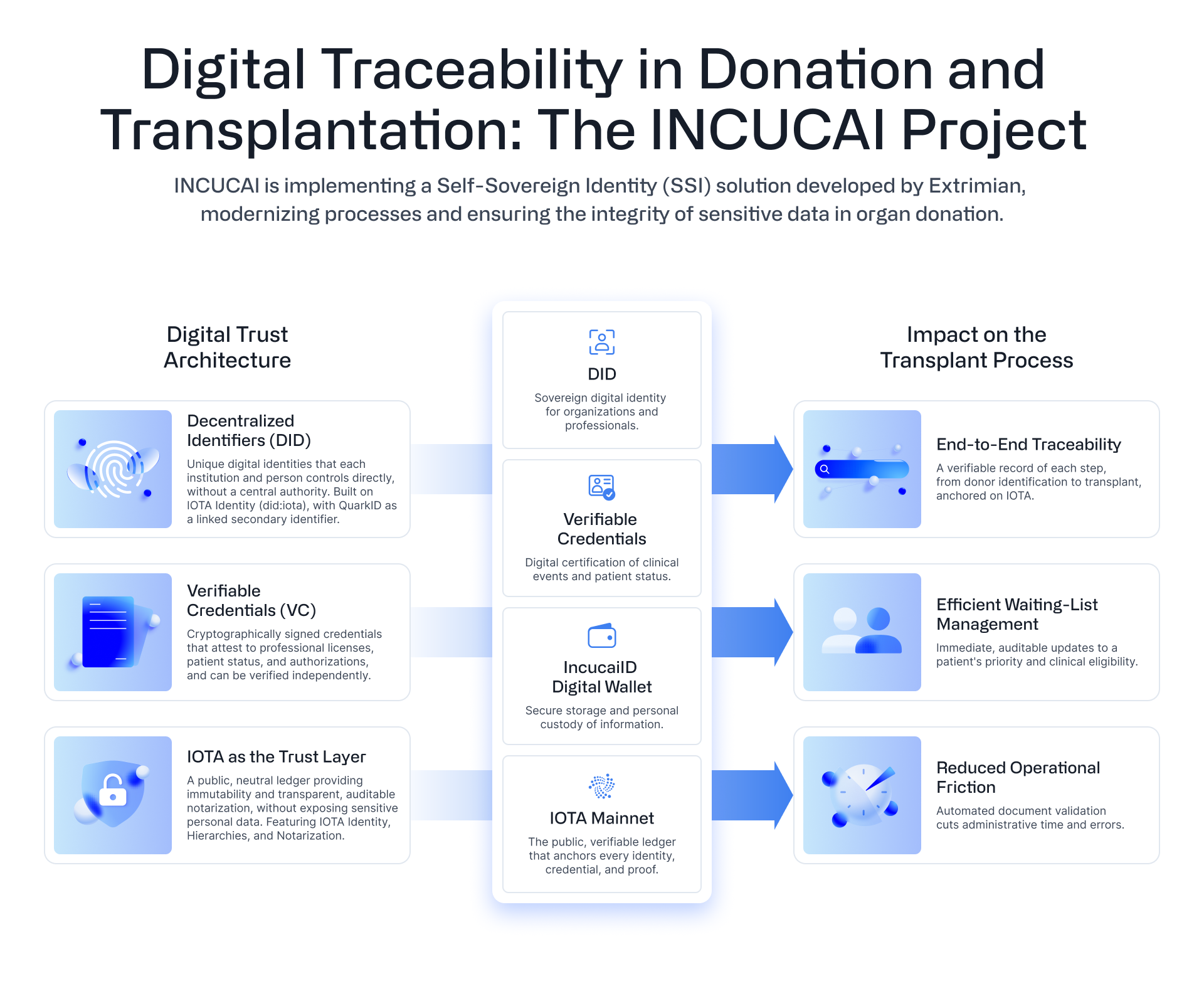
This mechanism satisfies the foundational cybersecurity principle of "don’t trust, verify." Doctors, provincial agencies, and auditing bodies can independently confirm that every step of a transplant authorization occurred precisely as recorded, ensuring complete legal certainty and traceability. Meanwhile, the sensitive medical details of patients and grieving families remain entirely private and secure, protected from unauthorized access or data breaches. Furthermore, part of the system’s critical infrastructure operates on ARSAT, Argentina’s state-owned telecommunications company, ensuring that foundational components remain securely under national sovereignty and control.
Official Statements and Industry Implications
The successful deployment of Argentina’s onchain transplant system has drawn widespread attention from technological and public administration leaders alike, highlighting the practical utility of decentralized ledger technology in solving real-world challenges.
Daniela Hansen Krogh, Director of Information Technology and Information Systems at INCUCAI, underscored the foundational philosophy driving the initiative: "Trust is at the heart of every organ donation and transplantation process. Our responsibility is to ensure that every decision is supported by reliable, secure, and verifiable information. By incorporating decentralized identity and cryptographic verification into our national systems, we are strengthening the integrity, traceability, and legal certainty of every critical stage, while safeguarding sensitive patient information. This initiative reflects INCUCAI’s ongoing commitment to modernizing Argentina’s transplant system through secure, transparent, and citizen-centered digital innovation."
Esteban Musso, Professional Services Manager and Partner at Extrimian, emphasized the broader significance of the deployment for the tech sector: "At Extrimian, we believe that trust is the foundation of every digital transformation. By combining open standards with privacy-preserving technologies, we’ve helped build a solution that enhances traceability, security, and interoperability while respecting the privacy of every participant. Projects like this demonstrate that decentralized technologies are no longer a vision for the future—they are delivering tangible value today in critical public services."
Echoing these sentiments, Dominik Schiener, Co-Founder and Chairman of the IOTA Foundation, pointed to the scalability and real-world applicability of open ledger technology: "This is what IOTA’s open technology can do for critical public services at national scale: real infrastructure, already coordinating decisions that save lives."
Fact-Based Analysis of Broader Implications
The implementation of INCUCAI’s decentralized identity and notarization framework carries significant implications for the future of public administration, both within Latin America and globally. For decades, public sector digital transformation has struggled against the limitations of centralized databases, which remain vulnerable to single points of failure, administrative silos, and a lack of interoperability between regional jurisdictions.
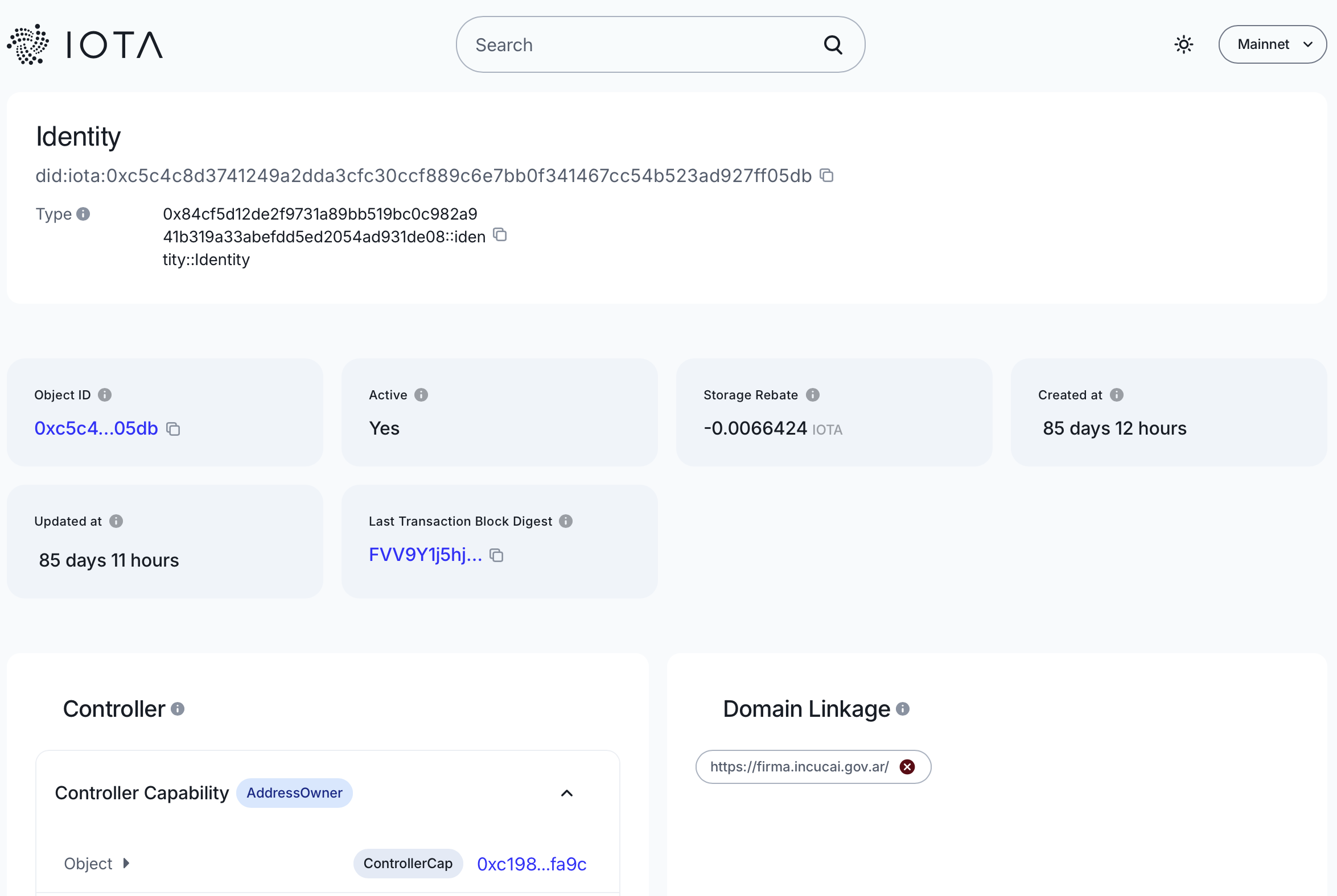
By integrating a public, neutral ledger like IOTA into a national health service, Argentina has demonstrated that decentralized architectures can coexist harmoniously with state sovereignty and strict regulatory compliance. The utilization of W3C-compliant open standards prevents vendor lock-in, ensuring that the infrastructure remains flexible, interoperable, and future-proof.
From an administrative standpoint, the elimination of physical paperwork and manual bureaucratic bottlenecks drastically reduces the time required to process donor-recipient matches. In an arena where every minute counts, removing friction from the administrative workflow directly correlates with improved patient outcomes. Furthermore, the establishment of an immutable, publicly verifiable audit trail virtually eliminates the risk of document tampering, bureaucratic fraud, or administrative negligence, thereby bolstering public confidence in the national healthcare system.
As governments worldwide grapple with the challenges of digital identity management, data privacy, and infrastructural resilience, the collaboration between INCUCAI, Extrimian, and IOTA serves as a compelling case study. It proves that blockchain and distributed ledger technologies extend far beyond financial speculation, offering vital tools for enhancing transparency, protecting human dignity, and ultimately saving lives through efficient public infrastructure.