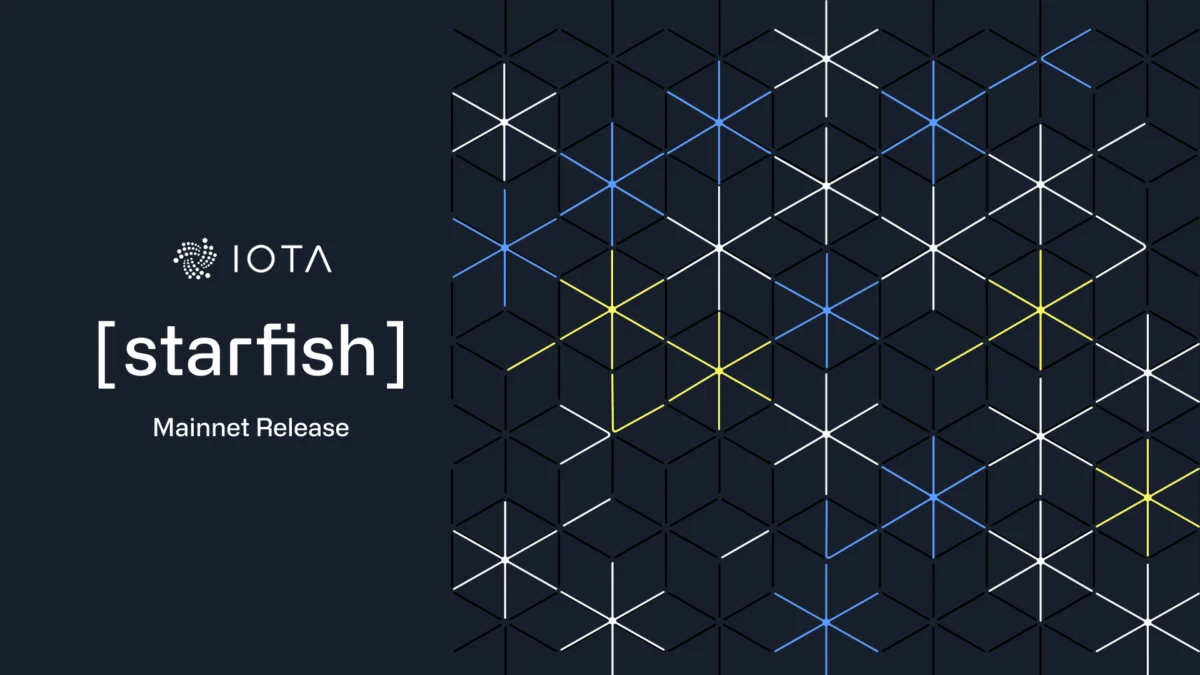
The IOTA Foundation has successfully implemented a significant consensus upgrade, known as Starfish, on its Mainnet, transitioning from its previous testnet phase. This advancement marks a critical step in positioning IOTA as a robust, production-grade infrastructure solution tailored for the complexities of global trade and other regulated industries that demand unwavering reliability. The Starfish protocol is engineered to ensure the network’s resilience even when participant coordination falters, building in scalability and fault tolerance directly at the protocol level. This design guarantees continuous operation through disruptions, a non-negotiable requirement for foundational platforms supporting global commerce and systems where downtime is simply not an option.
Understanding Blockchain Consensus: The Bedrock of Distributed Networks
At its fundamental level, a blockchain consensus mechanism is the sophisticated engine that enables a distributed network of independent participants to collectively agree on the validity and precise chronological order of transactions. Unlike traditional centralized systems that rely on a single authority, blockchain networks distribute this responsibility among numerous independent entities known as validators. These validators meticulously scrutinize transactions to ensure they adhere to established rules and guidelines, thereby safeguarding the integrity of the shared ledger against tampering or alteration. This decentralized, collaborative process is what establishes a consistent, immutable, and tamper-resistant record of events.
For any blockchain network to operate successfully and reliably, its consensus process must be capable of withstanding various real-world challenges. These include intermittent connectivity issues, network latency, and temporary communication failures between nodes. The design of a consensus mechanism inherently involves trade-offs between transaction speed, the degree of coordination required among participants, and the network’s overall resilience, particularly when operating at a large scale. These trade-offs become acutely critical for systems designed for production environments where continuous operation is paramount, and assumptions about perfectly synchronized participation or coordinated recovery efforts cannot be made. This principle is especially pertinent to the demanding landscape of global trade.
The Operational Imperative of Consensus in Global Trade
Global trade systems are inherently complex, spanning diverse jurisdictions, intricate regulatory frameworks, and a multitude of independent organizations that may not share a common operator or an inherent trust anchor. These systems also rely on networks characterized by varying degrees of reliability and technological maturity. Consequently, such infrastructure must remain fully functional even when faced with significant fluctuations in connectivity, availability, and performance. Specifically, these systems need to adeptly handle a range of challenges without triggering network-wide disruptions. These challenges include:
- Variable Network Latency: Global trade involves participants across vast geographical distances, leading to inherent delays in data transmission.
- Intermittent Connectivity: Participants in remote areas or those operating mobile assets may experience periods of disconnectedness.
- Partial Node Failures: Individual nodes within the network may temporarily fail or experience reduced functionality.
- Asynchronous Participation: Different organizations operate on varying schedules and with different technical capabilities, leading to non-simultaneous participation.
- Regulatory Divergence: Cross-border transactions are subject to the rules and regulations of multiple sovereign entities, adding layers of complexity to data synchronization and validation.
These stringent requirements are central to the vision of the Trade Worldwide Information Network (TWIN), a public trade infrastructure powered by IOTA. TWIN is designed to serve a broad spectrum of stakeholders, including governments, customs agencies, logistics providers, exporters, and importers, facilitating seamless cross-border transactions. Within the TWIN ecosystem, critical trade documents such as certificates of origin, bills of lading, and compliance records are represented on-chain as tokenized assets. The inherent value and utility of these digital assets are directly dependent on the network’s ability to maintain continuous availability and a consistent, ordered record of transactions over time.
Historically, a significant concern for enterprises and public institutions exploring distributed ledger technology (DLT) has been the uncertainty surrounding system behavior during periods of disruption. The introduction of Starfish addresses this by embodying a new archetype of DLT architecture, specifically built to ensure reliable operation even when participants experience delays or temporary disconnections. This capability is a fundamental prerequisite for widespread adoption within the global trade sector.
Starfish: Ensuring Continuous Network Progress Amidst Disruption
The Starfish upgrade fundamentally alters how the IOTA network responds to and operates during periods of disruption. In contrast to previous consensus models that might impose a performance penalty until all participants synchronize, Starfish enables the network to maintain consistent forward progress while recovery processes occur in parallel. This ensures sustained reliability and steady performance, even under the imperfect real-world conditions where some validators might experience delays or encounter operational difficulties.
Drawing inspiration from its biological namesake, the Starfish upgrade empowers the network to continue functioning even when some of its participants are temporarily unreachable or operate intermittently. Much like a starfish can regenerate from a severed limb without succumbing, the network’s resilience allows individual components to recover independently while the broader system continues to operate smoothly. This is achieved by decoupling the progress of consensus from the absolute synchronization of all validators, allowing lagging nodes to rejoin the network without interrupting the operations of others. The net effect is a network that maintains its reliability at scale, adapting gracefully to the dynamic and often unpredictable conditions of real-world deployments.
A Resilient Evolution from Mysticeti
Starfish represents a significant evolution of the Mysticeti consensus engine. While Mysticeti demonstrated exceptional low-latency performance under optimal network conditions, it proved vulnerable in slower or more adversarial environments. A key challenge with Mysticeti was the necessity for nodes to suspend block creation while awaiting the retrieval of "missing" ancestor blocks, which were required to construct a complete causal history within the block Directed Acyclic Graph (DAG). This dependency could stall network progress.
Starfish addresses this limitation by moving away from the assumption that all participants must advance in lockstep. Instead, it tolerates temporary divergences and resolves discrepancies continuously. This allows validators that have fallen behind to safely rejoin the network without impeding the progress of other active participants. Consequently, short-term disruptions are contained locally, preventing them from cascading and amplifying across the entire network. The outcome is a network that exhibits more consistent behavior across diverse geographical locations and deployment contexts, with progress remaining stable rather than fluctuating. For users, this translates into reduced operational risk and a simplification in the design and implementation of various application types. Therefore, Starfish fortifies IOTA by ensuring that high performance is not achieved at the expense of fundamental robustness.
Adaptable Infrastructure for the Demands of Global Trade
The design philosophy behind Starfish extends beyond mere performance enhancement; it aims to redefine the very behavior of infrastructure when subjected to stress. Starfish acknowledges the reality that global systems do not operate in a vacuum where coordination is effortless, disruptions are easily overcome, or perfect synchronization is a given. Instead, these systems necessitate infrastructure that can maintain availability through periods of delay, variance, and partial failure.
With the implementation of Starfish, IOTA continues its trajectory of advancement, even when participant engagement is inconsistent. The network’s ability to recover unfolds organically alongside its ongoing progress. This characteristic is the hallmark of enterprise-grade infrastructure, and it is precisely why the Starfish upgrade holds such significant implications for the future of distributed ledger technology in critical sectors like global trade.
The implications of this upgrade are far-reaching. For businesses involved in international trade, the enhanced reliability offered by Starfish translates into greater confidence in the underlying technology. This can accelerate the adoption of DLT-based solutions for supply chain management, trade finance, and customs clearance, streamlining processes that have historically been burdened by inefficiencies and a lack of transparency. The ability of the IOTA network to remain operational through disruptions reduces the risk of costly delays and disputes, fostering a more predictable and efficient global trading environment.
Furthermore, for regulators and governmental bodies, Starfish offers a foundation of trust and stability. The assurance of continuous operation and tamper-resistance is crucial for the secure and efficient management of trade data, ensuring compliance with international standards and facilitating smoother cross-border interactions. The integration of tokenized assets for trade documents, as envisioned by initiatives like TWIN, becomes more viable and attractive when underpinned by a network that can demonstrably withstand real-world operational challenges.
The development and deployment of Starfish is not an isolated event but part of a broader strategic push by the IOTA Foundation to establish its network as a leading platform for the Internet of Things (IoT) and machine-to-machine (M2M) economies, as well as for enterprise solutions. This upgrade signifies a maturing of the technology, moving from a research-oriented phase to one focused on delivering production-ready infrastructure. The IOTA Foundation has consistently emphasized its commitment to building a decentralized ecosystem that is both scalable and secure, and the Starfish consensus mechanism is a testament to this ongoing effort.
Looking ahead, the successful integration of Starfish is expected to pave the way for further innovations and integrations within the IOTA ecosystem. The enhanced resilience and scalability will likely attract more developers and businesses to build on the IOTA network, fostering a vibrant community and driving the adoption of DLT across a wider array of industries. The ability of the network to handle increasing transaction volumes and maintain performance under diverse conditions is a critical factor for its long-term success and its ability to fulfill its promise as a foundational technology for the digital future.
For those seeking a deeper technical understanding of the Starfish protocol, the full whitepaper is available for review on the Cryptology ePrint Archive, offering comprehensive details on its architecture, design principles, and performance characteristics. This commitment to transparency and open research underscores the IOTA Foundation’s dedication to advancing the field of distributed ledger technology. The successful Mainnet deployment of Starfish is a significant milestone, reinforcing IOTA’s position as a compelling solution for the demanding requirements of global trade infrastructure and beyond.