In the high-stakes environment of organ transplantation, every second carries immense weight. When a donor organ becomes available, a race against time immediately begins. A human heart, for instance, remains medically viable outside the human body for only a matter of hours. Within this narrow window, an intricate chain of events must unfold flawlessly across multiple jurisdictions. Hospitals, regional procurement coordinators, and national agencies must execute authorizations, review medical histories, and verify legal consent in precise chronological order. In this delicate ecosystem, a misplaced form, an unverified signature, or a delayed confirmation can mean the difference between life and death.
To mitigate these systemic vulnerabilities and streamline life-saving coordination, Argentina has officially integrated blockchain technology into its national transplant architecture. Through a pioneering collaboration between the nation’s primary organ authority, Latin American decentralized identity firm Extrimian, and the open-source IOTA network, Argentina’s transplant system is now anchored on a public, verifiable digital ledger. This deployment marks a monumental shift in how sovereign digital infrastructure, cryptographic notarization, and self-sovereign identity (SSI) can intersect to protect critical public services at a national scale.
The Operational Anatomy of Argentina’s Transplant Network
At the center of Argentina’s donation framework is the Instituto Nacional Central Único Coordinador de Ablación e Implante (INCUCAI). Established to oversee, regulate, and coordinate organ, tissue, and cell donations and procedures nationwide, INCUCAI operates as the administrative backbone for a massive healthcare network. The agency manages the national waiting lists and works in constant coordination with 24 distinct jurisdictional procurement agencies—encompassing every Argentine province alongside the Autonomous City of Buenos Aires—as well as an extensive network of public and private hospitals and specialized transplant centers.
Historically, coordinating life-or-death decisions across such a sprawling bureaucratic and medical apparatus presented immense logistical challenges. Ensuring absolute transparency, data integrity, and swift communication across dozens of independent provincial entities required a modernized digital framework. INCUCAI recognized that traditional centralized databases, while useful, lacked the absolute neutrality, cross-institutional verifiability, and tamper-proof auditing capabilities required for modern public administration.
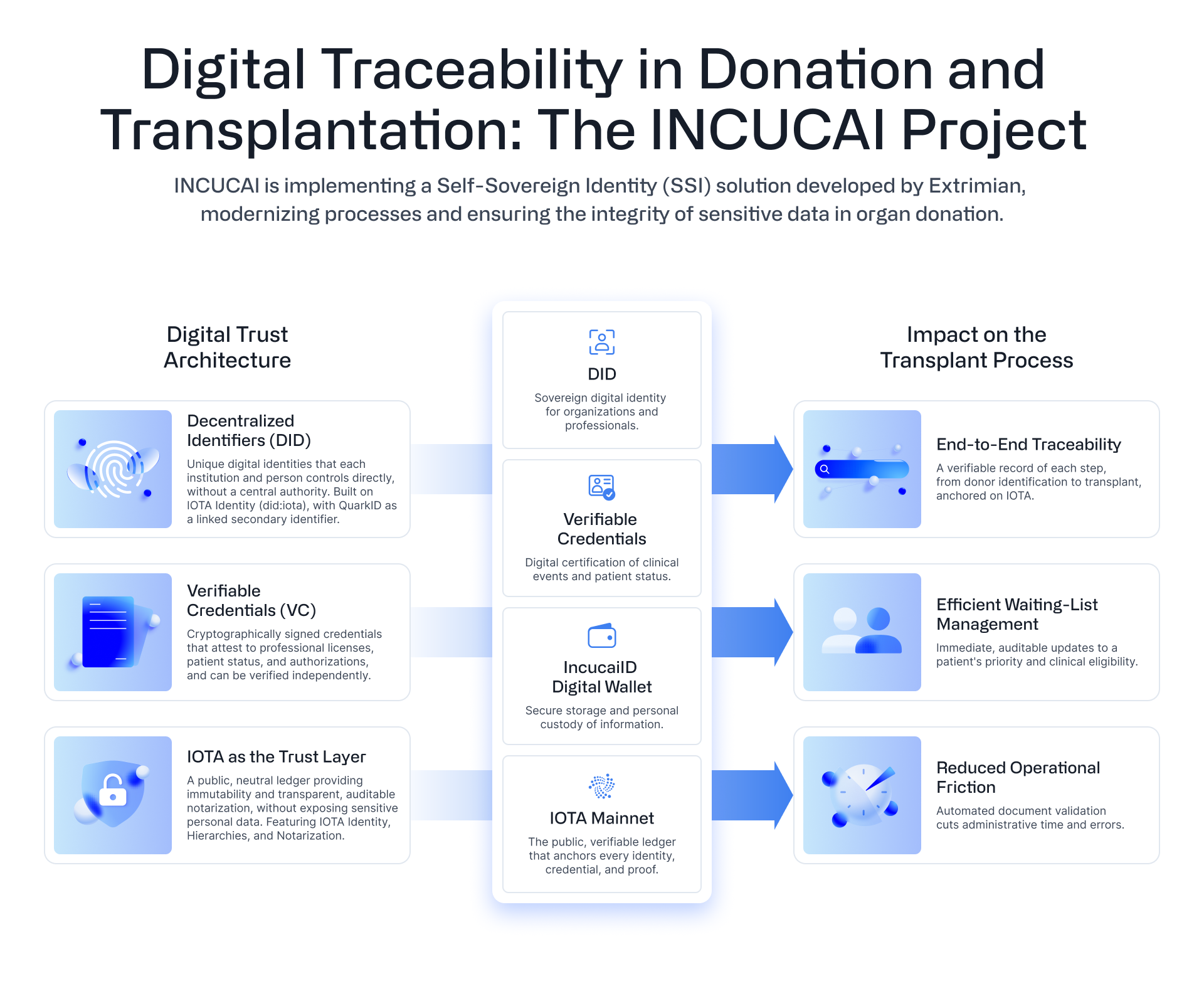
To overcome these structural hurdles, INCUCAI partnered with Extrimian, a regional leader in decentralized digital identity solutions. Extrimian specializes in self-sovereign identity architectures, a model that empowers individuals and institutions with direct cryptographic ownership over their credentials and data. Rather than relying on a vulnerable central server or a single proprietary cloud database, Extrimian engineered an infrastructure layer utilizing IOTA—a scalable, feeless, and public ledger designed to host verifiable credentials and institutional identifiers without exposing sensitive underlying data.
Chronology of a Digital Transformation
The integration of blockchain-backed infrastructure into Argentina’s medical apparatus did not happen overnight; it represents the culmination of rigorous planning, software development, and regulatory alignment.
The groundwork for the initiative involved mapping out the complex workflows of the National Procurement and Transplant Information System, known locally as SINTRA. Engineers and institutional stakeholders needed a mechanism to digitize document signing, authorization flows, and identity verification without compromising patient privacy or violating strict national data protection laws.
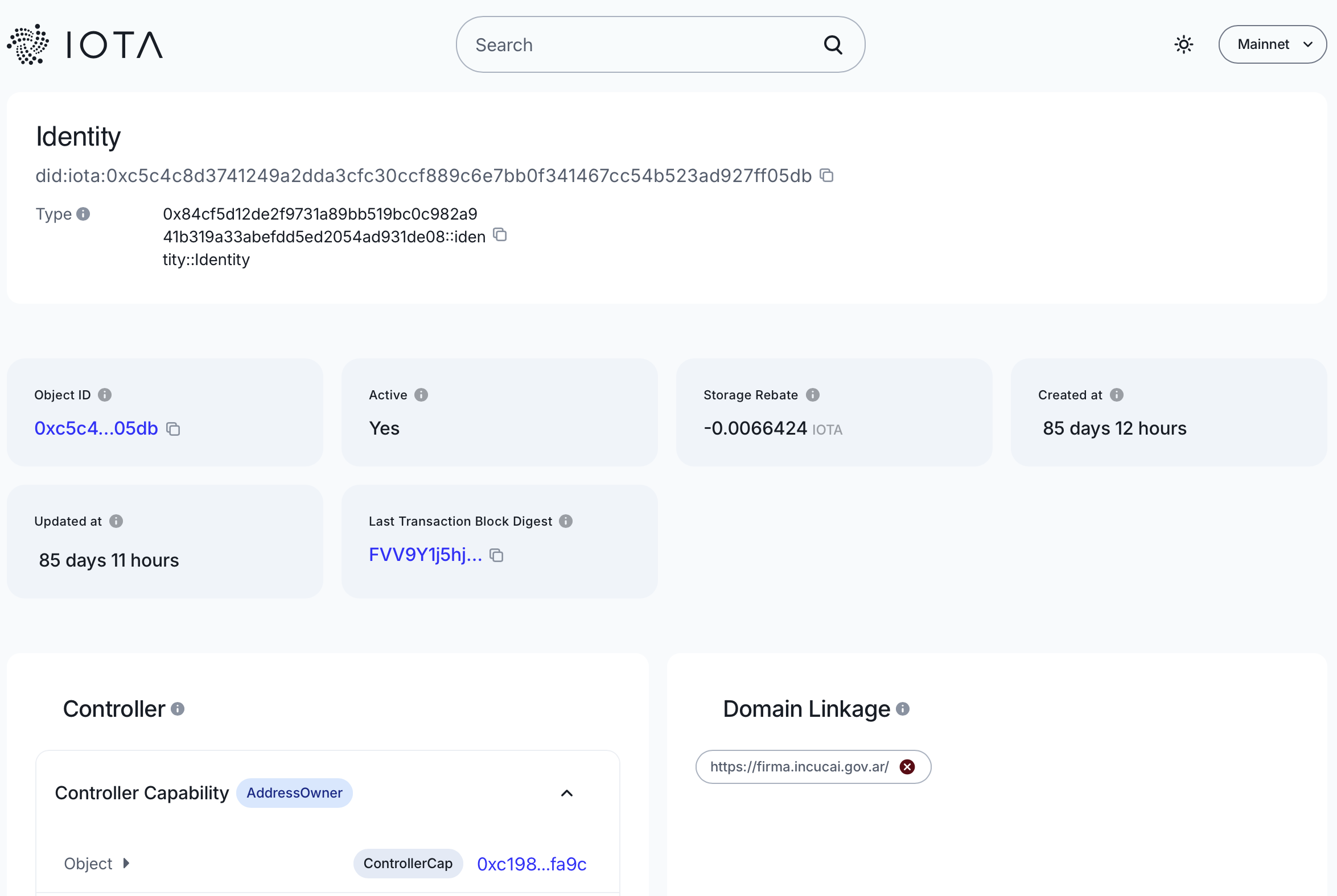
By mid-2026, the technological framework transitioned from development environments into live production. On June 10, 2026, the decentralized identity infrastructure went live on the IOTA Mainnet. This deployment established cryptographically verifiable decentralized identifiers (DIDs) for INCUCAI and all 24 of its provincial jurisdictional agencies. These onchain identities are directly linked to official government domains, ensuring that any external observer or participating hospital can cryptographically confirm the authenticity of a communicating entity.
Following the technical deployment, regulatory adoption swiftly followed. On June 18, 2026, through Resolution 199/2026 published in the national Official Gazette (Boletín Oficial), INCUCAI officially mandated the rollout of electronic signatures across all processes managed via SINTRA. This regulatory milestone provided the necessary legal certainty for digital transformations, ensuring that blockchain-backed evidentiary trails carry full administrative and legal weight.
To facilitate user interaction with the new ecosystem, INCUCAI launched "IncucaiID," a dedicated mobile wallet application available on major app stores. The rollout began strategically with high-acuity waiting lists—specifically targeting heart and lung transplant registrations—before expanding progressively to encompass broader tissue and organ registries.
Technical Architecture and Privacy-First Engineering
A primary concern when integrating distributed ledger technology into healthcare systems is the protection of sensitive medical data. Public ledgers, by their very design, prioritize transparency and immutability, which can conflict with medical confidentiality requirements if implemented carelessly.
Extrimian and the IOTA Foundation resolved this challenge by adhering strictly to a zero-knowledge, privacy-preserving architectural philosophy. Under no circumstances is personally identifiable information (PII) or raw patient medical data stored on the IOTA blockchain. Instead, the system utilizes cryptographic hashes—mathematical fingerprints—of signed documents, credentials, and procedural steps.
When a doctor, hospital administrator, or provincial coordinator signs a document within the system, a cryptographic proof is anchored to the IOTA Mainnet. This guarantees that the document cannot be altered, forged, or backdated without breaking the cryptographic chain of custody. However, the actual contents of the medical record remain entirely off-chain, accessible exclusively to authorized parties via secure, encrypted channels.
Furthermore, the system leverages decentralized identifier (DID) standards established by the World Wide Web Consortium (W3C). INCUCAI’s root authority address operates transparently on the public ledger, allowing any auditor, citizen, or international medical body to independently verify the authenticity of issued credentials. Part of the infrastructure is additionally hosted on ARSAT, Argentina’s state-owned telecommunications and satellite solutions company, ensuring that critical computational components remain anchored within national jurisdiction and under sovereign domestic control.
Official Statements and Institutional Perspectives
The successful deployment of Argentina’s onchain transplant registry has drawn praise from technology leaders and healthcare administrators alike, underscoring the practical viability of decentralized networks in high-impact public sectors.
Daniela Hansen Krogh, Director of Information Technology and Information Systems at INCUCAI, emphasized the foundational role of trust in organ donation:
"Trust is at the heart of every organ donation and transplantation process. Our responsibility is to ensure that every decision is supported by reliable, secure, and verifiable information. By incorporating decentralized identity and cryptographic verification into our national systems, we are strengthening the integrity, traceability, and legal certainty of every critical stage, while safeguarding sensitive patient information. This initiative reflects INCUCAI’s ongoing commitment to modernizing Argentina’s transplant system through secure, transparent, and citizen-centered digital innovation."
Echoing these sentiments, Esteban Musso, Professional Services Manager and Partner at Extrimian, highlighted the broader philosophical shift represented by the project:
"At Extrimian, we believe that trust is the foundation of every digital transformation. By combining open standards with privacy-preserving technologies, we’ve helped build a solution that enhances traceability, security, and interoperability while respecting the privacy of every participant. Projects like this demonstrate that decentralized technologies are no longer a vision for the future—they are delivering tangible value today in critical public services."
Dominik Schiener, Co-Founder and Chairman of the IOTA Foundation, pointed to the large-scale utility of open-source ledger technology:
"This is what IOTA’s open technology can do for critical public services at national scale: real infrastructure, already coordinating decisions that save lives."
Implications and Future Outlook for Public Sector Blockchain
The integration of Extrimian’s SSI framework and IOTA’s public ledger into INCUCAI’s operations establishes a compelling precedent for the digitalization of government services across Latin America and the broader global community. For years, critics of blockchain technology argued that distributed ledgers represented a solution in search of a problem—speculative financial instruments disconnected from tangible, real-world utility.
The Argentine transplant system project dismantles this narrative. By demonstrating that decentralized identifiers and cryptographic notarization can dramatically improve administrative efficiency, reduce human error, and eliminate document forgery in a life-or-death medical environment, the initiative showcases the quiet, foundational power of enterprise-grade public infrastructure.
As INCUCAI continues to phase out paper-based workflows and expand electronic signature mandates across all remaining regional agencies and medical registries, the system serves as a live testbed for resilient public administration. In an era where data integrity, institutional transparency, and citizen privacy are paramount, Argentina’s onchain transplant network illustrates how cutting-edge cryptography can be harnessed not for financial speculation, but for the preservation of human life.