The digital asset landscape is currently navigating a complex transition as the initial euphoria surrounding Bitcoin and Ethereum spot Exchange-Traded Funds (ETFs) gives way to a more nuanced and critical evaluation of the broader altcoin market. While retail investors have long anticipated a "bailout" or a massive capital injection from institutional titans like BlackRock, industry experts and analysts are increasingly dismissing these hopes as a fundamental misunderstanding of institutional mandates. The prevailing sentiment among Wall Street strategists suggests that traditional finance (TradFi) firms are less interested in subsidizing speculative retail "bags" and more focused on the long-term utility of blockchain technology, specifically through the tokenization of real-world assets (RWAs).
The Institutional Pivot: Beyond Speculative Altcoins
The narrative that institutional giants will soon pivot to accumulate a wide array of altcoins has met with significant skepticism. Analysts argue that firms like BlackRock, Fidelity, and Franklin Templeton view the majority of the altcoin market through a lens of extreme caution. From an institutional perspective, many existing tokens are perceived as fundraising mechanisms for decentralized projects rather than productive assets with intrinsic value.
This skepticism is rooted in the lack of a clear link between a project’s underlying utility and the market price of its native token. While a blockchain may facilitate thousands of transactions per second, the economic design of the token often fails to capture that value for the holder. Consequently, the "institutional bailout" that many retail traders are waiting for may never materialize in the form of direct market buys. Instead, the integration of crypto and Wall Street is expected to manifest through the migration of traditional financial products—such as bonds, equities, and real estate—onto high-performance Layer-1 networks.
Weiss Crypto recently projected a future where the stock exchange model itself is disrupted. In this scenario, companies may choose to list their shares directly on blockchains like Solana or Ethereum. This shift would represent a move toward genuine ownership tokens, where the digital asset directly represents a claim on a physical or corporate asset, rather than a speculative instrument. This evolution would effectively bypass traditional exchanges, positioning public blockchains as the new backbone of global settlement.
The ETF Frontier: Solana, XRP, Cardano, and the Meme Coin Phenomenon
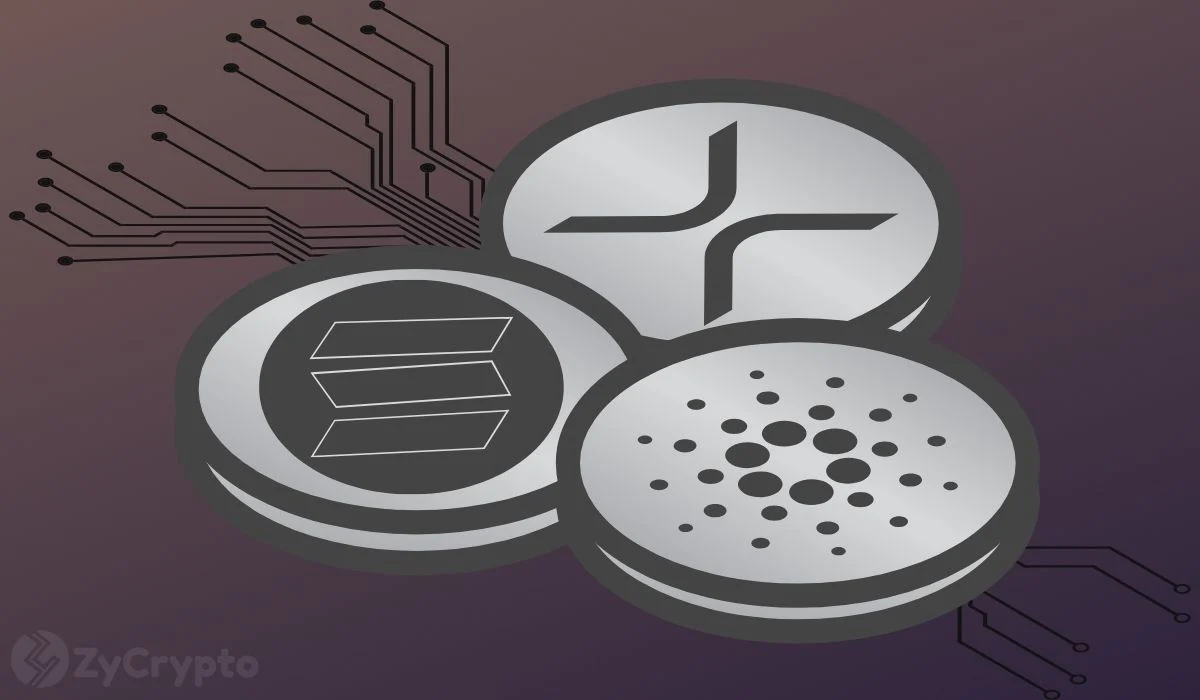
The successful launch of Bitcoin ETFs in January 2024 and the subsequent approval of Ethereum ETFs have set a legal and regulatory precedent that other digital assets are now eager to follow. Solana has emerged as the frontrunner in this next wave of institutional adoption. Following filings by VanEck and 21Shares for a spot Solana ETF, the industry is closely watching the Securities and Exchange Commission (SEC) for signals on how it will treat "high-throughput" blockchains.
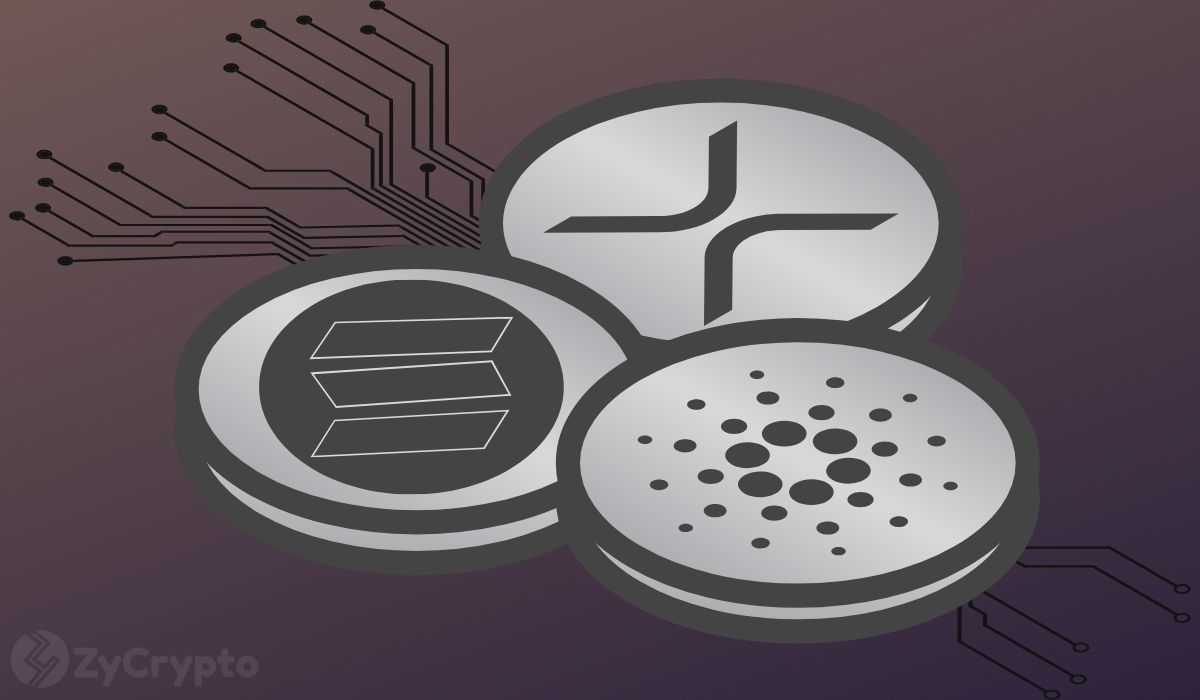
The momentum behind a Solana ETF has sparked renewed speculation regarding XRP, Cardano (ADA), and even Shiba Inu (SHIB). For XRP, the path to an ETF is bolstered by the ongoing legal clarity resulting from the Ripple vs. SEC case, which established that the token itself is not inherently a security. Cardano, known for its rigorous academic approach and decentralized governance, is often cited as a prime candidate for institutional products due to its perceived regulatory compliance and long-term stability.
Perhaps most surprising is the discussion surrounding a Shiba Inu ETF. While originally dismissed as a "meme coin," the ecosystem’s transition toward a Layer-2 solution (Shibarium) and its massive liquidity profiles have caught the attention of some market observers. However, the path for SHIB remains the most arduous, as the SEC has historically required a regulated futures market of significant size before considering a spot ETF—a hurdle that Solana and XRP are closer to clearing than most other assets.
Market Stagnation and the "Bitcoin Season" Dominance
Despite the optimism surrounding potential ETF filings, the current state of the altcoin market reflects a period of grueling underperformance. Data indicates that approximately 84% of altcoins listed on Binance, the world’s largest cryptocurrency exchange, are currently trading below their 200-day moving average. This trend is not a recent development; the underperformance has persisted for nearly eight months, marking the second-longest streak of bearishness since 2020. The only period of greater sustained weakness was the ten-month decline experienced during the depths of the 2022 bear market.
The CoinMarketCap Altcoin Season Index currently sits at 48 out of 100, a level that firmly categorizes the current environment as "Bitcoin Season." For a true "Altcoin Season" to be declared, 75% of the top 50 coins must outperform Bitcoin over a 90-day period—a feat that seems distant in the current climate. Furthermore, the Total 3 index, which measures the total market capitalization of all cryptocurrencies excluding Bitcoin and Ethereum, continues to show a downward trajectory, suggesting that capital is fleeing smaller-cap assets in favor of the perceived safety of "blue-chip" digital assets or fiat.
Technical Breakdown and Price Action of Major Assets
The broader market malaise is being felt even by the most established assets. Ethereum, the second-largest cryptocurrency by market cap, has recently dipped 2.54% to approximately $1,579.21. This decline is attributed to a combination of hawkish signals from central banks, which suggest that interest rates may remain "higher for longer," and a strong negative correlation with the S&P 500. As traditional equities face pressure from macroeconomic uncertainty, Ethereum and other high-beta assets have struggled to maintain their support levels.
Binance Coin (BNB) has also seen a decline of 2.57%, following a technical breakdown below critical support levels. Analysts suggest that the regulatory pressure on centralized exchanges continues to weigh on the valuation of exchange-linked tokens.
XRP, meanwhile, has declined 2.36% to $1.04. Traders and market makers are now locked in a battle to defend the $1.00 psychological mark. For XRP, this level is more than just a price point; it represents a threshold of investor confidence. A sustained drop below $1.00 could trigger a wave of liquidations and further test the conviction of long-term "HODLers" who have remained resilient through years of litigation.
Chronology of the 2024 Institutional Wave
To understand the current state of the market, one must look at the timeline of events that led to this juncture:
- January 2024: The SEC approves 11 spot Bitcoin ETFs, leading to billions of dollars in inflows and validating the asset class for institutional portfolios.
- March 2024: Bitcoin reaches a new all-time high, but the expected "altcoin rotation" fails to materialize with the same intensity as previous cycles.
- May 2024: In a surprise pivot, the SEC moves toward approving spot Ethereum ETFs, signaling a potential softening of its stance on tokens previously labeled as "crypto asset securities."
- June 2024: VanEck files the first-ever spot Solana ETF application in the United States, followed shortly by 21Shares. This marks the beginning of the "third-generation" ETF race.
- July 2024: Market data confirms that the majority of altcoins are in a structural downtrend, despite the positive regulatory news for Solana and Ethereum.
Broader Impact and Future Implications
The shift toward institutional involvement and the potential for a wider array of crypto ETFs carry profound implications for the market’s structure. If the SEC continues to move toward a disclosure-based regime rather than an enforcement-based one, the "regulatory moat" surrounding established projects like Cardano and XRP could strengthen. However, this also means that the "wild west" era of altcoin speculation may be drawing to a close.
The focus on tokenized real-world assets (RWAs) suggests that the next phase of growth will not be driven by retail-led "pumps," but by the migration of institutional liquidity into on-chain finance. This could lead to a "bifurcation" of the market: a small group of highly regulated, utility-driven tokens that integrate with Wall Street, and a larger group of speculative tokens that remain confined to the fringes of the ecosystem.
For investors, the current stagnation serves as a period of "maximum pain," testing the thesis that altcoins will eventually follow Bitcoin’s lead. Without meaningful catalysts—such as a significant shift in Federal Reserve policy or a breakthrough in blockchain scalability that leads to mass-market adoption—the prolonged underperformance of the altcoin market may continue to pressure retail portfolios. The coming months will be decisive in determining whether the "ETF effect" can extend beyond the top three assets to revitalize the broader digital asset economy.