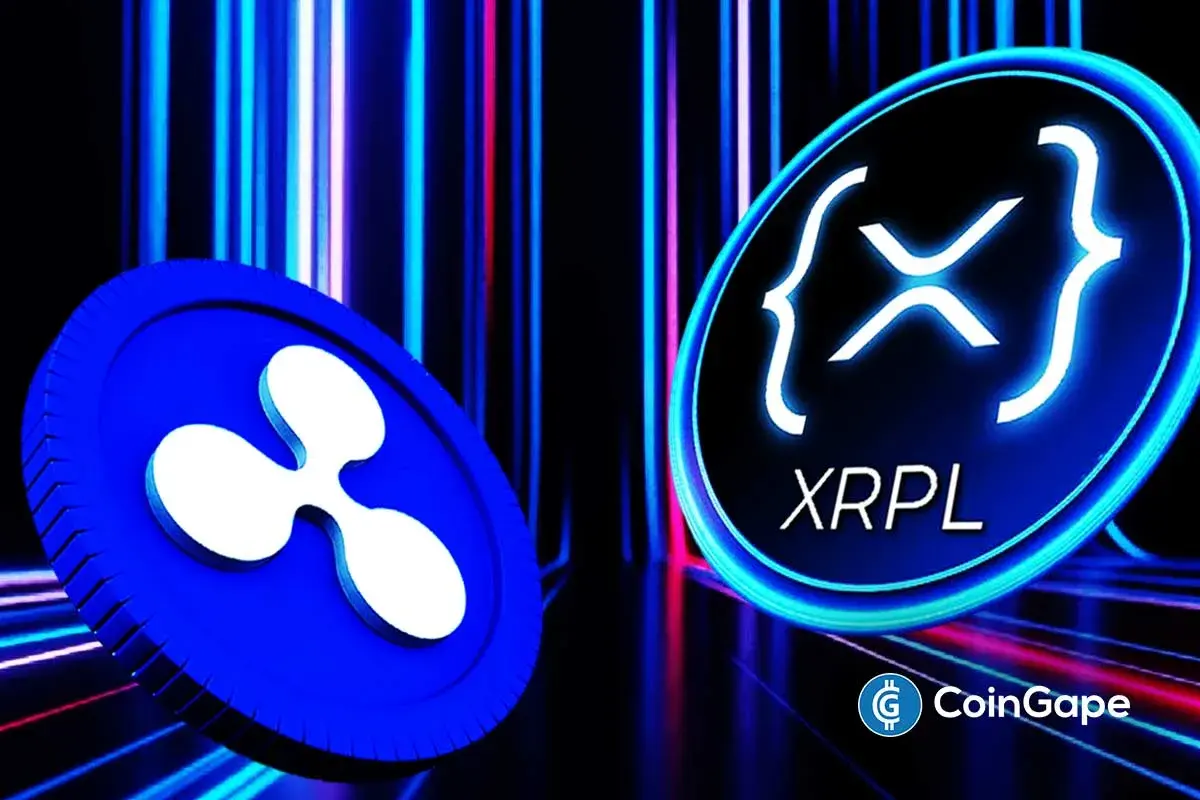
The financial landscape of the XRP Ledger (XRPL) is undergoing a significant transformation as Ripple’s regulated stablecoin, RLUSD, reaches a historic milestone. As of September 22, the circulating supply of the asset surged to nearly $2.5 billion, marking a new all-time high for the project. This expansion is not merely a reflection of individual retail interest, but a byproduct of a deliberate, multi-pronged strategy by Ripple to integrate its dollar-backed token into the global institutional treasury and payment infrastructure. Current data provided by market trackers such as CoinMarketCap and RWA.xyz corroborate that the supply remains firmly within the $2.4 billion to $2.5 billion range, signaling sustained liquidity rather than a fleeting spike.
A Chronology of Rapid Growth
The trajectory of RLUSD has been characterized by consistent, month-over-month expansion. In late August, Ripple officially surpassed the $2 billion mark in total circulation, a figure that stood as a major developmental benchmark at the time. The subsequent move toward $2.5 billion in less than a month demonstrates an accelerated velocity of minting. This growth is intrinsically linked to the increasing utility of the token across diverse financial verticals, including cross-border settlements, AI-driven payment agents, and institutional treasury management.
The following timeline highlights the key phases of this ascent:
- Initial Launch Phase: Ripple introduces RLUSD to provide a regulated, USD-pegged alternative for enterprise users, focusing on transparency and regulatory compliance.
- August 2024: The token achieves the $2 billion circulation milestone, validating the demand for high-quality stablecoins on the XRPL.
- September 2024: Through strategic integrations with global financial entities, the circulating supply breaks past $2.4 billion, solidifying its position as the dominant stablecoin on the XRPL.
Strategic Drivers of Supply Expansion
The growth of RLUSD is primarily attributed to a series of high-profile partnerships and technological integrations that have effectively "onboarded" institutional liquidity into the Ripple ecosystem.
A pivotal factor in this expansion is the integration of RLUSD into major payment and reward networks. For instance, Binance has implemented XRP rewards for holders of the stablecoin, which has served to pull significant float on-chain. Beyond retail incentives, the institutional utility of the token has been bolstered by Mastercard’s recent move to utilize RLUSD for 24/7 settlement operations on the XRPL. By enabling instantaneous, round-the-clock settlement, Mastercard is positioning RLUSD as a functional alternative to traditional, legacy clearing systems that are often hampered by banking hours and outdated settlement protocols.
Furthermore, the integration of RLUSD into AI agent payment flows—facilitated by partnerships with firms like Stripe and Tempo—highlights the shift toward machine-to-machine commerce. As AI agents increasingly require a reliable, programmable medium of exchange, RLUSD is being leveraged to handle these autonomous transactions. Additionally, the launch of "Ripple Mint" has simplified the process for institutions to mint and redeem tokens directly, removing the friction that previously hindered large-scale capital entry.
The geographical reach of the token has also expanded significantly. The collaboration with the SBI Group in Japan is particularly noteworthy, as it introduces RLUSD into a major, highly regulated market under the oversight of the Japan Financial Services Agency (JFSA). This move provides a regulatory "seal of approval" that is essential for encouraging Japanese corporations to utilize the stablecoin for international treasury operations.

The Rise of the XRPL as a Single-Issuer Dollar Rail
The broader stablecoin ecosystem on the XRP Ledger provides a compelling look at the network’s shift in utility. According to data from DefiLlama, the total stablecoin supply on the XRPL is currently hovering around $1.192 billion—an increase of approximately 6% over a seven-day period and 11% over the past month.
Perhaps the most striking finding is that RLUSD now accounts for more than 92% of the total stablecoin supply on the XRPL. This concentration transforms the XRPL into what analysts describe as a "single-issuer dollar rail." While this dominance underscores Ripple’s successful execution of its financial rails, it also introduces a centralized risk profile. Unlike decentralized stablecoin models, the integrity of RLUSD rests on the reserve management, regulatory compliance, and redemption capabilities of Ripple and its partner, Standard Custody. Investors and network participants are closely monitoring these entities, as the stability of the entire ledger’s dollar-denominated volume is now inextricably linked to the issuer’s operational health.
Implications for Market Dynamics and Institutional Utility
The transition of RLUSD to a $2.5 billion asset class has profound implications for the XRP token itself. As RLUSD becomes the primary liquidity bridge for institutional payments, the utility of XRP as a bridge asset for the underlying value transfer is theoretically enhanced. However, market analysts caution that the growth of RLUSD should be viewed as an issuance-driven metric rather than a direct indicator of price speculation for XRP.
The $13 trillion treasury market, which Ripple has identified as a primary target for its settlement technology, represents the ultimate benchmark for RLUSD. Whether the stablecoin can continue to grow depends on its ability to convert its current $2.5 billion float into consistent, daily treasury volume. If the current trend holds, observers expect the total XRPL stablecoin supply to challenge the $1.5 billion threshold in the near term, provided that regulatory environments remain favorable and institutional demand for 24/7 settlement continues to rise.

The Role of Transparency and Regulatory Compliance
A critical component of this growth story is the emphasis on reserve attestations. As the supply grows, the burden of proof regarding the 1:1 backing of these tokens increases. The market is currently waiting for the next round of reserve attestations, which will serve as the "floor" for investor confidence. In an era where stablecoin regulation is becoming increasingly stringent, Ripple’s ability to provide transparent, audited reports will likely dictate whether the current growth rate is sustainable.
From a regulatory perspective, Ripple’s efforts to align with global standards have allowed it to penetrate markets that are otherwise hostile to crypto-assets. By focusing on compliant, regulated issuance, Ripple has successfully differentiated itself from projects that prioritize speed over legal clarity. This "compliance-first" approach is likely to pay dividends as governments continue to formulate policies for tokenized assets and central bank digital currencies (CBDCs).
Conclusion and Future Outlook
The ascent of RLUSD to a $2.5 billion market cap is a testament to the maturation of the XRP Ledger as an institutional-grade settlement rail. By integrating with global payment giants, expanding into the Japanese market, and enabling AI-native payments, Ripple has successfully created a robust ecosystem for its stablecoin.
However, the path forward requires sustained execution. Investors and analysts should focus on three primary indicators in the coming months: the maintenance of the $2.5 billion supply ceiling, the expansion of the total XRPL stablecoin market beyond the $1.25 billion mark, and the rigorous publication of reserve attestations. As Ripple continues to position itself as a bridge between traditional finance and the blockchain-native economy, the performance of RLUSD will serve as a primary indicator of whether the industry can successfully bridge the gap to a fully tokenized global treasury infrastructure. The transition from a speculative asset market to a utility-driven settlement network is well underway, with RLUSD acting as the cornerstone of this evolution.