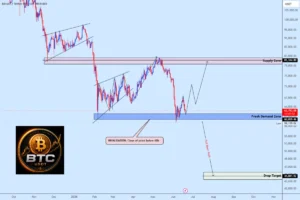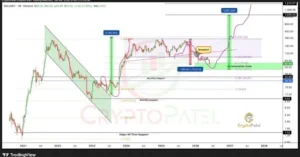
The broader cryptocurrency market is enduring a punishing phase of contraction, with altcoins bearing the heaviest brunt of the ongoing bearish momentum. Over the past thirty days, digital assets outside of Bitcoin have faced sustained headwinds, driven by a combination of macroeconomic pressures, tightening liquidity, and dwindling retail and institutional participation. While Bitcoin has struggled to maintain decisive momentum above the critical $60,000 threshold, major altcoins—including Ethereum, Solana, and XRP—have found themselves trapped in a prolonged red zone.
On-chain metrics and exchange data indicate that market sentiment has deteriorated significantly. Analysts note that the current correction is testing the conviction of both retail investors and institutional funds, raising questions about the trajectory of the digital asset economy for the remainder of the year. As market participants navigate these turbulent waters, understanding the underlying drivers of the downturn is essential for assessing the future viability of the altcoin sector.
Altcoins Plunge Below the Critical 200-Day Moving Average
The depth of the current altcoin correction is starkly illustrated by technical indicators across major centralized exchanges. According to recent insights published by CryptoQuant analysts, the vast majority of altcoins are now trading firmly below their 200-day moving average (DMA). This technical milestone is widely regarded by market technicians as a definitive dividing line between bullish and bearish market regimes.
When measured from their previous cycle peaks relative to Bitcoin, many altcoins have experienced drawdowns exceeding 65% since the final quarter of last year. By comparison, Bitcoin’s decline during the same timeframe has fluctuated above the 50% mark. This divergence highlights a persistent flight to safety within the digital asset ecosystem, where capital increasingly concentrates in the benchmark cryptocurrency at the expense of higher-beta alternative assets.
The Total 3 index, which tracks the total market capitalization of all cryptocurrencies excluding Bitcoin and Ethereum, has suffered a severe breakdown below its 200 DMA. Trading activity on platforms like Binance reveals an accumulation of inflows that point toward a heightened probability of cascading sell-offs. Centralized exchange order books show retail traders actively liquidating positions to stanch mounting losses, a capitulation pattern that has increasingly been mirrored by short-term whale accounts.
Macroeconomic Pressures and Liquidity Constraints
The struggles facing the altcoin market do not exist in a vacuum; they are intrinsically tied to shifting macroeconomic conditions. Chief among these concerns is the contraction of the United States reserve ratio and tightening monetary policies that continue to reduce overall market liquidity. As central banks maintain cautious stances on interest rates, risk-on assets across global financial markets—including equities and digital currencies—have faced systemic pressure.

This liquidity squeeze has directly impacted institutional capital allocation. Spot exchange-traded funds (ETFs), particularly those tied to alternative assets like Ethereum, have experienced pronounced net outflows over the past month. For instance, spot Ethereum ETFs recently posted significant single-day redemption volumes, translating to tens of millions of dollars exiting regulated investment products in a matter of 48 hours.
Market analysts emphasize that the current environment represents one of the longest sustained periods of altcoin underperformance since 2020. Historical comparisons point back to the previous bear market cycle, where a similar stagnation dynamic persisted for approximately ten months. This prolonged sideways and downward drift is steadily exhausting the patience of retail investors, driving down trading volumes and dampening network activity across multiple layer-1 and layer-2 protocols.
Performance Breakdown of Major Assets
The impact of these macroeconomic and technical headwinds is vividly reflected in the weekly and monthly price performance of the market’s leading digital assets. The wider cryptocurrency market capitalization recently contracted by over 2%, dipping to approximately $2.04 trillion as overall trading sentiment languished in fearful territory.
Ethereum, the undisputed heavyweight of the altcoin sector, extended its sideways and downward trajectory, sliding over 5% within a single week. This move deepened its monthly losses to more than 22%, pushing the asset down to the $1,566 range. Despite the gloomy price action, fundamental developers and dedicated bulls continue to eye long-term network upgrades, pricing in a potential macro recovery once the broader market establishes a definitive cycle bottom.
Solana displayed relative resilience amidst the wider carnage, though it still faced localized selling pressure. Despite shedding a modest 1.5% in recent daily trading, Solana managed to maintain a positive weekly inflow, posting gains of roughly 4% over a seven-day window. This relative outperformance is frequently attributed to robust decentralized exchange (DEX) volumes and sustained network usage, though it remains vulnerable to the broader macroeconomic undertow.
Meanwhile, XRP experienced a 6% pullback over the same weekly timeframe, tracking closely with the general risk-off sentiment dominating centralized trading venues. The divergence in performance among these top-tier assets underscores a selective market where investors increasingly favor networks demonstrating tangible on-chain utility and active user retention over speculative momentum.
Whale Behavior and Retail Capitulation
A critical element of the current market structure is the behavioral shift observed among large-holder accounts, commonly referred to as whales. Market intelligence platforms tracking on-chain wallet movements indicate that significant cohorts of whales who accumulated positions during the first quarter of the year are now gradually distributing their holdings.

This capital rotation is largely defensive. As macroeconomic uncertainty persists and traditional financial markets exhibit heightened volatility, large-scale investors are trimming exposure to speculative altcoin portfolios. While some of this capital is finding a temporary safe haven in stablecoins, a notable portion is shifting back into Bitcoin as a defensive store of value.
Conversely, retail traders are demonstrating classic capitulation behavior. Triggered by persistent losses and the failure of altcoins to mount sustained relief rallies, retail participants are cutting their losses on centralized exchanges. Historical market cycles suggest that such periods of widespread retail fatigue often accompany macro bottoming processes, though timing the exact inflection point remains exceptionally challenging.
Fact-Based Analysis of Market Implications
The ongoing contraction in the altcoin sector carries several profound implications for the digital asset industry as a whole. First, the prolonged stay beneath the 200-day moving average signals that any near-term recovery will likely face stubborn overhead resistance. Institutional investors are expected to remain cautious, demanding clearer regulatory frameworks and concrete signs of macroeconomic stabilization before re-engaging with high-risk altcoin sectors.
Second, the disparity in performance between Bitcoin and alternative tokens highlights a maturing market structure. In previous cycles, altcoin seasons frequently correlated with broad-based speculative manias. The current market, however, is heavily influenced by institutional products like ETFs, compliance requirements, and macroeconomic liquidity metrics. Consequently, capital is far more discerning, concentrating in assets with proven institutional backing and clear economic models.
Finally, the contraction in trading volume and spot ETF inflows serves as a reminder of the cyclical nature of cryptocurrency markets. While the current environment is undeniably challenging—testing the resolve of investors and putting immense pressure on project treasuries—it also acts as a natural market purge, clearing out overleveraged positions and unsustainable projects.
As the market absorbs these shocks, market participants will be closely monitoring upcoming macroeconomic data releases, central bank policy adjustments, and shifts in exchange reserve balances. Whether the current consolidation phase will pave the way for a sustainable fourth-quarter recovery or lead to a more prolonged period of stagnation will depend heavily on the evolution of global liquidity and investor risk appetite in the months ahead.