The global financial architecture faces a continuous stress test as international regulatory bodies seek to plug loopholes sustaining the Russian Federation’s military-industrial complex. On October 8, the United Kingdom’s Foreign, Commonwealth and Development Office (FCDO) escalated its economic pressure campaign by designating 38 separate entities accused of financing Russia’s wartime operations, bolstering its industrial capabilities, and providing structural infrastructure for sanctions evasion. Among the targeted organizations are prominent cryptocurrency payment processors Cryptomus and Heleket—both operating under the parent company Xeltox Enterprises LTD—and the Kyrgyzstani digital asset exchange TokenSpot CJSC. This sweeping regulatory maneuver underscores the growing convergence between traditional state-level geopolitical conflict and illicit decentralized finance, highlighting how digital payment rails have transformed into vital lifelines for sanctioned economies.
The inclusion of these digital asset platforms in the UK’s latest sanctions package did not occur in a vacuum. According to comprehensive intelligence reports compiled by blockchain analytics firm Chainalysis, these specific services have long operated at the bleeding edge of high-risk cryptocurrency transactions. For years, financial watchdogs and on-chain investigators have monitored how lax compliance protocols at certain overseas exchanges and payment gateways inadvertently—and in some cases intentionally—create frictionless pathways for bad actors. The October 8 designations validate these ongoing investigations, bringing public and regulatory accountability to companies that have historically marketed themselves as standard financial intermediaries while quietly absorbing millions of dollars in dirty money.
Tracing the Illicit Ecosystem Surrounding Cryptomus and Heleket

An in-depth examination of the transaction flows involving Cryptomus and Heleket reveals a sprawling, cross-border network of criminal actors. On-chain analytics indicate that these two processors have collectively received funds from more than 15,000 distinct illicit counterparties. This exposure spans virtually every major category of financial crime tracked by digital forensics experts, including ransomware operations, darknet market transactions, fraud shops, and sophisticated international scam networks.
Notably, forensic tracing links indirect fund transfers to Cryptomus and Heleket back to some of the largest digital heists in history. For instance, proceeds originating from the staggering $1.4 billion Bybit exploit—widely attributed by intelligence agencies to North Korea’s state-sponsored Lazarus Group—ultimately trickled into these payment processors. Furthermore, capital generated by notorious ransomware variants such as Black Basta and illicit commercial hubs like the Xinbi Guarantee marketplace routinely passed through their infrastructure.
Cybercriminal infrastructure vendors have also heavily relied on Cryptomus and Heleket as primary payment rails. Operators offering bulletproof hosting, proxy services, malware development, and distributed denial-of-service (DDoS) capabilities frequently direct their clients to these processors. This includes several malicious entities that have previously faced direct Western sanctions, such as Zservers, Stark Industries, First VPN, and the Aeza Group.
The structural vulnerabilities of these platforms were further underscored in October 2025, when Canada’s financial intelligence unit, FINTRAC, levied a record-shattering administrative monetary penalty of CAD 177 million against Cryptomus for severe violations of Anti-Money Laundering and Counter-Terrorist Financing (AML/CFT) regulations. Combined with recent on-chain discoveries, this enforcement action demonstrates a deeply ingrained pattern of negligent or complicit oversight, allowing criminal networks to launder capital at an unprecedented scale.

Comparative Risk Analysis: Payment Processors Outpacing Privacy Mixers
A striking revelation from recent blockchain investigations is the sheer volume of illicit capital managed by ostensibly legitimate payment processors when compared to traditional privacy-enhancing tools. Historically, regulators and compliance professionals have viewed cryptocurrency mixers—services specifically designed to scramble transaction trails and obscure the origins of digital assets—as the primary threat vector for illicit finance.
However, data concerning Cryptomus and Heleket paint a different picture. Across specific criminal typologies—namely scams, operations within sanctioned jurisdictions, commercial escort services, terrorist financing networks, and entities flagged under various European Union sanctions packages—Cryptomus and Heleket have received more funds from illicit actors than all dedicated mixing services tracked by Chainalysis combined.
While mixers are universally recognized as high-risk mechanisms intended to conceal transactions, Cryptomus and Heleket masqueraded as standard e-commerce payment processors while operating with negligible identity verification standards. This false veneer of legitimacy allowed them to function as mass-scale laundering operations. By offering fast settlement times and low-friction onboarding, they rivaled or even exceeded the utility of dedicated obfuscation tools, capturing massive shares of illicit market volume.

The Post-Garantex Shift and Dark Web Marketing
The transaction volume passing through Cryptomus and Heleket has not remained static; rather, it has exhibited a steady upward trajectory since 2022, culminating in a dramatic surge in late 2025 that saw distinct illicit counterparties exceed 900 in a single month. This sudden spike was largely catalyzed by international law enforcement disruptions, most notably the dismantling of Garantex, a major Russian-linked cryptocurrency exchange that had served as a cornerstone for illicit ruble-to-crypto conversions.
On-chain analysis reveals that a significant portion of Garantex users maintained active accounts on Cryptomus and Heleket simultaneously. When Western authorities successfully crippled Garantex, these users seamlessly migrated their operational liquidity to alternative providers, cementing Cryptomus and Heleket as the new default clearinghouses for illicit Russian-linked capital. Additionally, while some of this statistical surge can be attributed to retroactive transaction accounting following new sanctions designations, the underlying behavioral shift is unmistakable.
This migration was actively encouraged by the companies themselves. Cryptomus engaged in direct marketing campaigns on dark web and cybercrime forums, explicitly courting illicit operators. Promotional advertisements posted on Russian-language crime portals like BHF and major English-language hacking forums like Nulled—which boasted over 10 million registered users at its peak—pitched the platform as an ideal solution for moving money anonymously. Cryptomus explicitly advertised its capacity to process crypto payments and currency conversions without requiring Know Your Customer (KYC) or Know Your Business (KYB) verifications, directly targeting individuals determined to bypass traditional international financial controls.

Unmasking TokenSpot and the A7A5 Sanctions-Evasion Apparatus
Beyond payment processors, the UK’s October 8 designations targeted TokenSpot CJSC, a Kyrgyzstani exchange that sits at the center of a sophisticated regional sanctions-evasion network. TokenSpot is functionally and structurally tied to a broader constellation of Central Asian financial intermediaries that have emerged to help Moscow bypass trade blockades.
Investigators have uncovered striking similarities between TokenSpot and Meer, a Kyrgyzstani exchange previously sanctioned by the Office of the Superintendent of Financial Institutions (OSFI) in August 2025 for its role in facilitating trades involving the controversial A7A5 digital token. A side-by-side technical evaluation of TokenSpot and Meer reveals near-identical website templates, synchronized user interfaces, and matching visual assets. While Meer marketed itself broadly as a crypto-fiat exchange, TokenSpot advertised "cryptocurrency for business growth," offering ruble-denominated digital asset purchases tailored to both individual and corporate legal entities. This shared digital infrastructure points unequivocally to common ownership or cooperative operational management behind both storefronts.
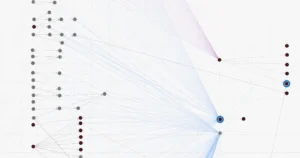
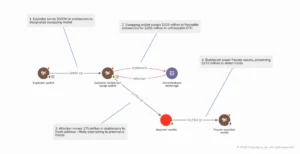
On-chain tracing via blockchain intelligence tools further clarifies the interconnection of these entities. Reactor graphs demonstrate that TokenSpot, Meer, and another sanctioned exchange, Grinex, routinely funneled downstream funds into the exact same deposit addresses hosted on major international exchanges. Specifically, these three Kyrgyzstani platforms routed substantial volumes into a single HTX (formerly Huobi) deposit address that ultimately processed over $308 million.

This transactional pipeline directly intersects with leaked documentation concerning AnyKey LLC, a company affiliated with sanctioned Moldovan-Russian oligarch Ilan Shor, as well as the A7A5 instant swapper—a specialized utility enabling the rapid conversion of ruble-backed A7A5 tokens into dollar-pegged stablecoins like Tether (USDT). The convergence of these disparate actors onto shared exchange deposit addresses highlights a centralized plumbing system designed to siphon capital out of Russia and convert it into globally liquid stablecoins. Furthermore, the selection of HTX as a terminal point aligns with prior UK sanctions issued in May, which penalized HTX for processing over $1.5 billion in transactions linked to previously sanctioned Russian entities.
Targeting Russia’s Oil Reserves and Military Supply Chains
While the inclusion of digital asset platforms marks a critical evolution in financial enforcement, the FCDO’s October 8 actions extended far beyond the digital sphere, striking directly at the physical commodities and industrial inputs fueling the Kremlin’s war machine.
The UK government formally designated two major Russian petroleum entities, Zarubezhneft and INK Capital, alongside commercial lender Stolichny Kredit. With these additions, British sanctions now cover more than 90 percent of Russia’s total crude oil production capacity, choking off the primary revenue streams feeding the national budget. Additionally, the FCDO added twelve vessels to its designated shadow fleet list, bringing the cumulative total of sanctioned oil tankers to over 600. These vessels have routinely engaged in deceptive shipping practices—such as disabling automatic identification system (AIS) transponders and conducting mid-ocean ship-to-ship transfers—to export Russian oil above the G7-mandated price cap.

Simultaneously, the regulatory net tightened around the procurement networks supplying Russia’s defense sector. Seventeen individuals and corporate entities involved in importing high-precision machine tools, advanced electronics, and specialized chemical precursors necessary for the manufacture of ballistic missiles and long-range strike drones were placed on the sanctions blacklist.
Cryptocurrency plays an increasingly documented role in underwriting these procurement pipelines. Investigations conducted earlier in the year by financial intelligence units and private blockchain analysts revealed that state-backed procurement cells routinely leverage open crowdfunding initiatives to acquire military hardware. In notable instances, loosely organized pro-Russian volunteer networks and paramilitary associations successfully raised upwards of $8.3 million in digital assets to purchase reconnaissance drones, thermal optics, and tactical communication gear, bypassing traditional banking controls entirely.
Broader Implications and Future Outlook
The simultaneous targeting of shadow oil fleets, industrial supply chains, dark-web-marketed payment processors, and Central Asian swap networks signals a holistic shift in Western sanctions enforcement. Regulatory bodies no longer view cryptocurrency as a peripheral or isolated financial risk; instead, they recognize it as an integrated component of modern geopolitical conflict and state-level sanctions evasion.

As international authorities continue to dismantle legacy evasion hubs like Garantex, illicit actors will inevitably attempt to migrate their liquidity toward more obscure, compliant-looking intermediaries like Cryptomus, Heleket, and TokenSpot. However, the aggressive deployment of retroactive on-chain analytics, coordinated cross-border asset freezes, and severe corporate penalties—exemplified by Canada’s historic fine against Cryptomus and the recent UK designations—demonstrates that the margin for error for non-compliant digital asset providers is rapidly shrinking.
Financial institutions, cryptocurrency exchanges, and compliance officers worldwide must adapt to these shifting operational realities. As sanctions architectures expand to encompass multi-jurisdictional web services and decentralized conversion rails, continuous, real-time blockchain monitoring remains an indispensable tool for identifying illicit capital flows, dismantling proxy networks, and enforcing international law in the digital age.