In the intricate architecture of modern healthcare, few systems operate under constraints as absolute as those governing organ donation and transplantation. When a viable organ becomes available, a race against time begins instantly. A donated human heart, for instance, remains viable outside the body for only a matter of hours. Within this narrow window, a complex network of medical professionals, provincial coordinators, institutional administrators, and national authorities must act in precise sequence. Every medical record, every legal consent form, and every official authorization must be authenticated with absolute precision on the first attempt. In this high-stakes environment, a misplaced document, a fraudulent signature, or a delayed verification can mean the difference between life and death.
Recognizing the critical need for absolute security, transparency, and operational efficiency, Argentina has fundamentally modernized its national organ procurement infrastructure. Through a groundbreaking collaborative effort between the country’s central transplant authority and Latin American decentralized identity pioneers, Argentina has successfully transitioned its national organ, tissue, and cell donation framework onto a live, publicly verifiable blockchain ledger. This digital transformation represents a major milestone in the practical application of decentralized technologies to vital public sector operations, offering a blueprint for governments worldwide seeking to enhance institutional trust and data integrity.
The Operational Scope of Argentina’s National Transplant Authority
At the heart of this transformation is the Instituto Nacional Central Único Coordinador de Ablación e Implante, universally known as INCUCAI. Established to oversee, regulate, and coordinate the allocation of organs and tissues throughout the South American nation, INCUCAI operates as the central administrative engine for the country’s entire transplantation ecosystem. The institution manages the centralized national waiting list, ensuring equitable access and strict adherence to medical allocation priorities.
However, the geographic and administrative scale of Argentina presents unique logistical hurdles. INCUCAI does not operate in a vacuum; it functions in constant coordination with 24 distinct jurisdictional procurement agencies—encompassing every individual province alongside the Autonomous City of Buenos Aires—as well as an extensive network of public and private hospitals and specialized transplant centers. Coordinating life-or-death decisions across these disparate regional entities demands a digital backbone capable of immediate authentication, flawless interoperability, and immutable record-keeping.
To solve this challenge, INCUCAI partnered with Extrimian, a prominent Latin American technology company specializing in decentralized digital identity and self-sovereign identity (SSI) frameworks. Extrimian’s core mission centers on developing infrastructure that grants individuals and institutions direct, cryptographic control over their digital identities and shared data. By bringing transparency and user-centric security to complex interactions across health, education, and government, Extrimian provided the conceptual architecture required to overhaul INCUCAI’s legacy systems.
For the underlying public ledger, Extrimian selected IOTA, a scalable, energy-efficient, and neutral decentralized network. IOTA serves as the foundational verification layer, enabling institutional identities and document integrity proofs to be validated globally without relying on centralized gatekeepers or introducing operational friction.
Chronology of a National Digital Evolution
The integration of decentralized identity and electronic signatures into Argentina’s healthcare infrastructure is the culmination of meticulous planning, legal reform, and technical deployment. The chronology of this transformation highlights the deliberate steps taken by national authorities to ensure regulatory compliance and technical resilience:
Foundational Development (2024–2025): Extrimian and INCUCAI collaborate with the IOTA Foundation to design a privacy-preserving architecture tailored to Argentina’s legal and administrative requirements. The framework is engineered to align with World Wide Web Consortium (W3C) open standards for decentralized identifiers (DIDs) and verifiable credentials.
Infrastructure Integration (Late 2025 – Early 2026): Portions of the decentralized infrastructure are integrated with ARSAT, Argentina’s state-owned telecommunications enterprise. This ensures that critical components of the system remain under national sovereign control while leveraging public blockchain verification layers.
Legal Authorization (June 2026): The regulatory foundation is formally established with the publication of Resolution 199/2026 in the Argentine Official Gazette (Boletín Oficial). This resolution officially authorizes the implementation of electronic signatures across all processes managed by SINTRA, the National Procurement and Transplant Information System.
Mainnet Go-Live (June 10, 2026): The system officially goes live on the IOTA Mainnet. Institutional identities for INCUCAI and all 24 provincial procurement agencies are established onchain, equipped with cryptographically linked domain verifications.
Public Rollout and Wallet Deployment (July 2026): INCUCAI launches IncucaiID, the official ecosystem wallet application available on major mobile platforms. Implementation commences with heart and lung transplant waiting-list registrations, setting the stage for a fully paperless, blockchain-secured workflow across all national transplant categories.
Architectural Design and Privacy-First Engineering
A primary concern when introducing distributed ledger technology to healthcare is the protection of sensitive patient data. Medical records, genetic profiles, and personal histories are among the most private information entrusted to any institution. To address this, the Extrimian-IOTA architecture was designed from the ground up to adhere to strict data minimization and privacy principles.
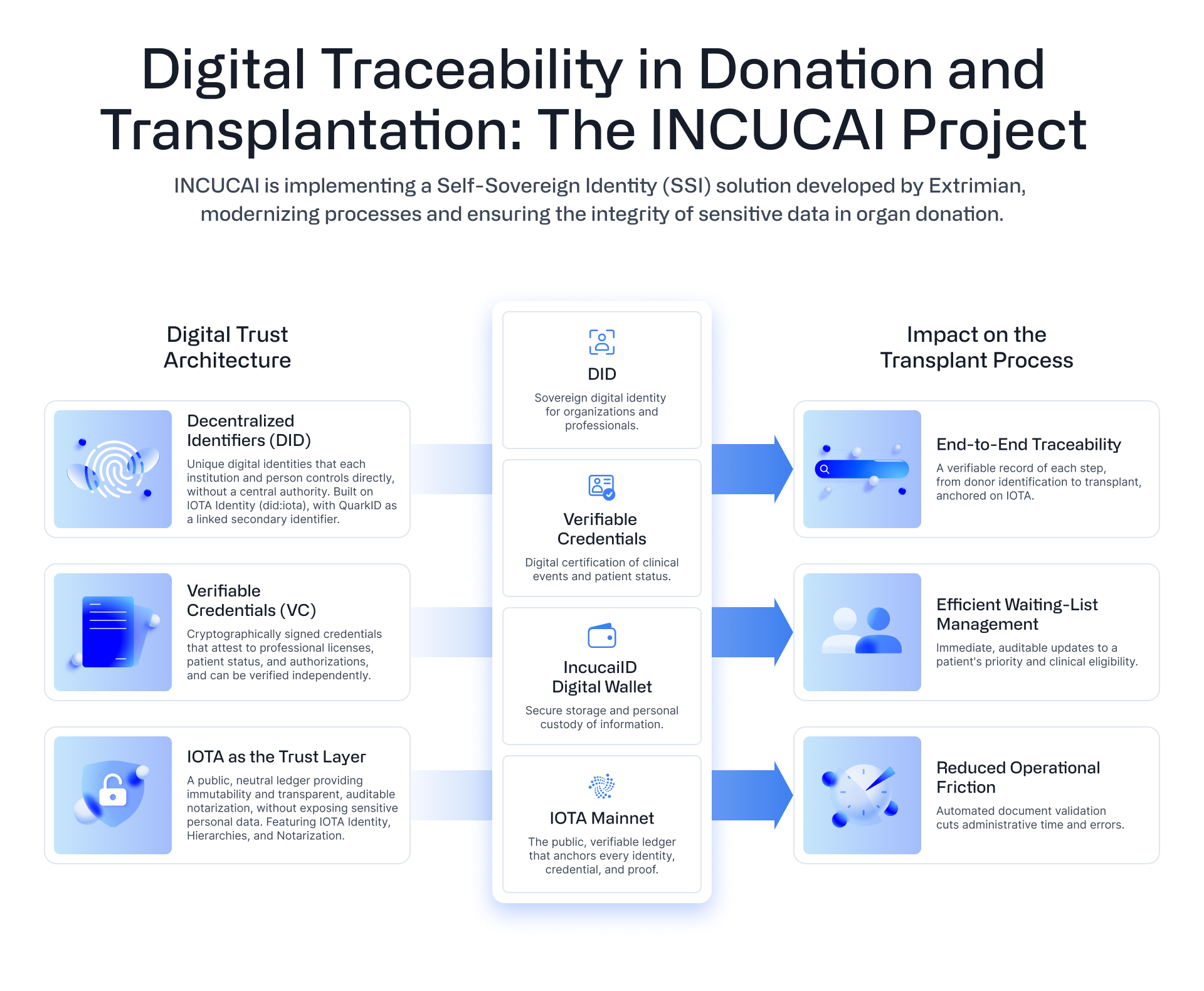
Crucially, no patient-identifiable information or raw medical records are ever stored on the blockchain. Instead, the system utilizes cryptographic hashes—mathematical fingerprints generated from official documents and process steps—which are permanently anchored to the IOTA ledger. This mechanism guarantees absolute document integrity and chronological proof without exposing any underlying personal data.
Through this approach, doctors, regional agencies, and families can independently cryptographically verify that every authorization, medical check, and administrative step occurred exactly as recorded. Meanwhile, the sensitive details of patients and grieving families remain strictly confidential.
The technical deployment relies heavily on several key components of the IOTA ecosystem:
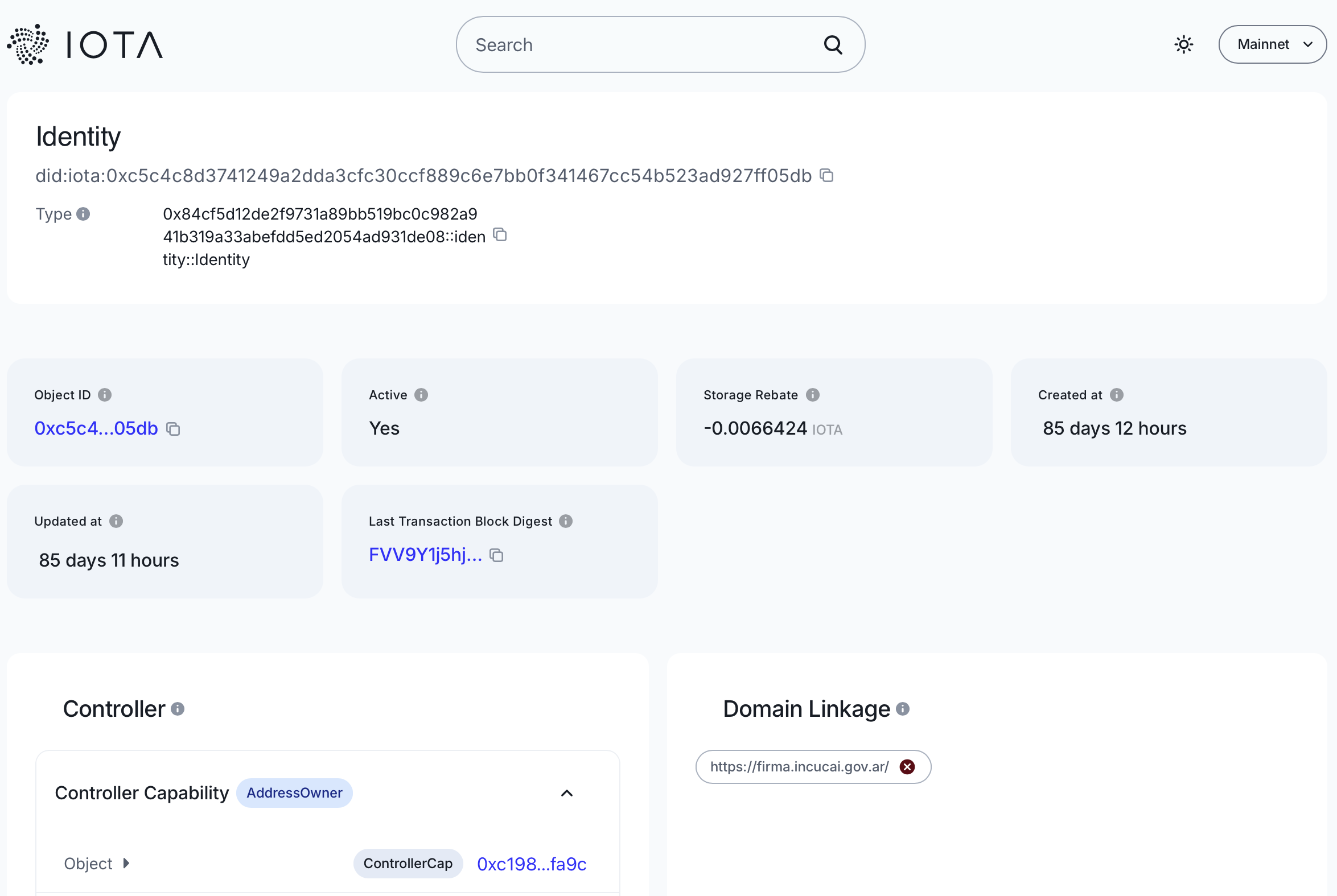
Decentralized Identifiers (DIDs): W3C-compliant identifiers that give INCUCAI and its 24 provincial agencies sovereign digital identities. INCUCAI’s root identity is cryptographically linked to its official government domain (firma.incucai.gov.ar), enabling anyone to confirm that an entity is genuinely accredited by the state rather than an impostor.
Verifiable Credentials: Tamper-proof, cryptographically signed digital documents issued to authorized participants, healthcare professionals, and patients via the IncucaiID mobile wallet.
Onchain Anchoring: Micro-transactions on the IOTA Mainnet (costing fractional amounts of IOTA in network gas fees) that permanently timestamp and notarize document hashes, creating an immutable audit trail.
To ensure total transparency, the IOTA Foundation conducted independent verifications of the deployment using only public endpoints and the IOTA Explorer. Independent audits confirmed that all 24 provincial identities resolved correctly, their respective trust federations matched onchain data, and the entities controlling each identity possessed the precise accreditation required by the state.
Official Statements and Institutional Perspectives
The successful deployment of this infrastructure has drawn praise from technology leaders and healthcare administrators alike, highlighting the tangible utility of decentralized systems in real-world public administration.
Daniela Hansen Krogh, Director of Information Technology and Information Systems at INCUCAI, emphasized the foundational role of trust in organ donation:
"Trust is at the heart of every organ donation and transplantation process. Our responsibility is to ensure that every decision is supported by reliable, secure, and verifiable information. By incorporating decentralized identity and cryptographic verification into our national systems, we are strengthening the integrity, traceability, and legal certainty of every critical stage, while safeguarding sensitive patient information. This initiative reflects INCUCAI’s ongoing commitment to modernizing Argentina’s transplant system through secure, transparent, and citizen-centered digital innovation."
Esteban Musso, Professional Services Manager and Partner at Extrimian, pointed to the broader significance of the project for enterprise and government adoption of blockchain technology:
"At Extrimian, we believe that trust is the foundation of every digital transformation. By combining open standards with privacy-preserving technologies, we’ve helped build a solution that enhances traceability, security, and interoperability while respecting the privacy of every participant. Projects like this demonstrate that decentralized technologies are no longer a vision for the future—they are delivering tangible value today in critical public services."
Dominik Schiener, Co-Founder and Chairman of the IOTA Foundation, underscored the societal impact of deploying public ledger infrastructure at a national scale:
"This is what IOTA’s open technology can do for critical public services at national scale: real infrastructure, already coordinating decisions that save lives."
Implications and Future Outlook
The integration of blockchain-backed electronic signatures and decentralized identity into Argentina’s transplant network establishes a powerful precedent for digital governance. By eliminating reliance on physical paperwork, manual provincial handoffs, and centralized databases prone to single points of failure, INCUCAI has created a resilient, paperless workflow.
As the implementation expands from initial heart and lung registry lists to encompass all remaining organ categories and institutional processes within SINTRA, the system is expected to drastically reduce administrative friction and response times. Furthermore, by embedding verifiable trust at the source using open W3C standards and sovereign national infrastructure hosted in part on ARSAT, Argentina has future-proofed its national health administration against fraud, data tampering, and bureaucratic delay.
Ultimately, the collaboration between INCUCAI, Extrimian, and IOTA demonstrates that decentralized ledger technology has evolved past theoretical speculation. In Argentina, it is actively operating as critical public infrastructure—safeguarding privacy, ensuring legal certainty, and streamlining the complex choreography required to save human lives.
The landscape of global artificial intelligence is undergoing a profound structural realignment, catalyzed by strict regulatory interventions from the United States government. Within days of Washington enacting sweeping export controls that barred non-American access to Anthropic’s advanced cybersecurity-focused AI models—specifically Mythos and its more restricted variant, Fable 5—major technological players in Asia have stepped forward with indigenous alternatives. This swift geopolitical and market response underscores the fragility of relying on centralized, single-jurisdiction AI supply chains and highlights a rapidly accelerating race toward technological sovereignty across international borders.
The emergence of these competitive regional models signals that the era of uncontested American dominance over frontier artificial intelligence architecture is facing severe practical challenges. As governments and enterprises in Asia grapple with the sudden disruption of access to tools they once integrated into their national infrastructure, local industry leaders are seizing the opportunity to bridge the gap. Consequently, what began as a targeted U.S. national security measure has rapidly evolved into a catalyst for decentralized AI development, forever altering the dynamics of the global technology market.
Chronology of the Regulatory Freeze and Counter-Responses
The sequence of events leading to the current market fragmentation unfolded rapidly over a matter of weeks, shifting the strategic priorities of international AI developers.
Two weeks prior to the late-June announcements, the U.S. federal administration issued an unexpected directive enforcing a strict ban on the global dissemination of Anthropic’s Mythos model and its derivative, Fable 5. Marketed as cutting-edge cybersecurity tools possessing unprecedented capabilities in vulnerability detection and automated defense, these models were deemed too sensitive for international distribution under current geopolitical risk assessments.
The sudden enforcement of this policy created an immediate vacuum in international markets that heavily relied on U.S.-engineered frontier capabilities. The response from Asian markets was swift and multifaceted, manifesting through both commercial innovation and strategic positioning:
Early June 2026: The G7 Summit in Evian, France, becomes a diplomatic battleground over AI access and export controls, with industry leaders like Sakana AI co-founder Ren Ito publicly urging Western governments to prioritize collaborative access over technology hoarding.
Mid-June 2026: Anthropic reports staggering financial momentum, with its annualized run-rate revenue crossing the $47 billion threshold in late May, highlighting its deep integration into global enterprise frameworks prior to the ban.
Late June 2026 (Days 1–2): Tokyo-based startup Sakana AI launches Fugu, a frontier model optimized for agent orchestration and regional cultural nuances, which the company explicitly markets as a hedge against export control risks.
Late June 2026 (Days 3–4): Chinese cybersecurity firm 360 unveils Tulongfeng and Yitianzhen, domestic tools engineered to rival Anthropic’s capabilities in automated vulnerability discovery and incident response, framing the release as a vital matter of national strategic autonomy.
The Rise of Sakana Fugu: Orchestration and Regional Resilience
In Tokyo, Sakana AI’s introduction of Fugu—named after the Japanese word for blowfish—has positioned the startup at the forefront of this geopolitical shift. Co-founded in 2023 by former Google researchers David Ha and Llion Jones, alongside former Mercari and Stability AI executive Ren Ito, Sakana has built a reputation for producing cost-efficient generative models optimized for small datasets and specific linguistic environments.
While Sakana’s leadership insists that the timing of Fugu’s public release was entirely coincidental—pointing to foundational research presented earlier this spring at the International Conference on Learning Representations (ICLR)—the company has undeniably benefited from the ensuing market attention. Sakana’s corporate communications now heavily emphasize delivering frontier capabilities completely insulated from the vulnerabilities of foreign export controls.
However, Sakana’s strategy is not isolationist. Rather than declaring a permanent divorce from American technology, the startup’s executive team views Fugu as a pioneer in a different direction: model orchestration. According to CEO David Ha, the future of enterprise and national AI infrastructure does not lie in relying on a single massive, centralized model that can be rendered inaccessible overnight. Instead, Ha argues that "orchestration models" represent the next evolutionary tier of artificial intelligence. By designing Fugu to seamlessly coordinate access to multiple distinct models through their respective application programming interfaces (APIs), Sakana offers businesses a decentralized ecosystem that safeguards against sudden regulatory shutdowns.
This pragmatic philosophy was echoed on an international stage by co-founder Ren Ito during the G7 summit in Evian, and further elaborated in a high-profile op-ed published via Project Syndicate. Ito cautioned policymakers in Washington that the primary objective of allied technology policy should be the preservation of access rather than the monopolization of ownership, warning that artificial intelligence must remain a collaborative global endeavor rather than a hoarded asset.
China’s Strategic Pivot: 360’s Tulongfeng and the Fear of "One-Way Transparency"
While Japanese startups are framing their new models as strategic hedges and orchestration frameworks, the response from mainland China has taken on a distinctly assertive tone. Chinese cybersecurity powerhouse 360 publicly introduced two sophisticated security-focused AI models: Tulongfeng, engineered for automated software vulnerability discovery, and Yitianzhen, built to streamline cyber defense and incident response mechanisms.
The rollout of these systems was accompanied by pointed geopolitical commentary from 360 founder Zhou Hongyi. According to reports from Reuters, Zhou characterized advanced vulnerability-finding artificial intelligence as a critical national strategic asset. He warned against the dangers of "one-way transparency"—a scenario wherein hostile or dominant foreign actors retain exclusive access to advanced cyber-detection capabilities while leaving rival nations structurally blind and vulnerable to unseen digital threats.
Unlike its Tokyo-based counterparts, which continue to advocate for interconnected global ecosystems, the Chinese tech sector’s response highlights an accelerating push toward total technological self-sufficiency. By developing indigenous models capable of matching or exceeding the specialized defensive and offensive parameters of Anthropic’s restricted software, Chinese firms are systematically insulating their domestic digital infrastructure from the whims of Western regulatory bodies.
Broader Economic and Market Implications
The long-term economic ramifications of these localized developments extend far beyond immediate national security concerns. For American artificial intelligence labs, particularly market leaders like Anthropic—which was recently valued near the $1 trillion mark following a massive $6.5 billion funding round—the export bans risk alienating lucrative international enterprise customer bases.
While the precise financial exposure of U.S. firms in Asian markets remains closely guarded proprietary data, the economic reality of hardware and software localization is undeniable. When access to frontier American models is abruptly terminated, foreign enterprises and government agencies face immense pressure to maintain operational continuity. By default, this pressure accelerates the adoption of local alternatives.
Industry analysts note that these home-grown models possess inherent advantages in regional compliance, linguistic nuance, and cultural context. Even if Western export restrictions were to be lifted in the future, regaining lost market share will prove exceptionally difficult for U.S. providers whose reliability has been called into question by sudden geopolitical mandates. Local alternatives are already filling the functional void, establishing deep roots within regional corporate ecosystems that will not easily be dislodged.
Conclusion: A Fragmented Future for Artificial Intelligence
The concurrent launches of Sakana Fugu in Tokyo and 360’s Tulongfeng in Beijing mark a permanent turning point in the evolution of the global artificial intelligence industry. The assumption that frontier AI would remain concentrated within a handful of Western laboratories, accessible globally via cloud APIs, has been decisively shattered by regulatory reality.
As nations increasingly view artificial intelligence not merely as a commercial commodity but as a core pillar of national sovereignty and security, the global market is fracturing into regional technological blocs. Whether through the decentralized orchestration models pioneered in Japan or the defensive sovereignty frameworks asserted in China, the international technology sector has adapted to a new normal: one where access to digital intelligence is fragile, competitive, and distributed across multiple geopolitical fault lines.
The landscape of global artificial intelligence is undergoing a profound structural realignment, catalyzed by sweeping regulatory actions from Washington and rapid technological counter-mobilization across Asia. Just weeks after the U.S. federal administration enacted stringent export controls barring non-Americans from accessing Anthropic’s powerhouse cybersecurity models—namely Mythos Preview and its restricted counterpart, Fable 5—major technology firms in Tokyo and Beijing have rolled out indigenous alternatives.
This swift emergence of regional competitors underscores the growing fragility of centralized technological dependencies. As international supply chains fracture along geopolitical fault lines, the race for artificial intelligence sovereignty has shifted from a theoretical debate into an urgent operational necessity for foreign governments and enterprises alike.
The Catalyst: The U.S. Ban on Anthropic’s Frontier Models
The current wave of disruption traces back to an executive decision made by the U.S. administration, which placed strict limitations on the global distribution of Anthropic’s most advanced models. The restrictions specifically targeted Anthropic’s Mythos Preview and Fable 5, models recognized industry-wide for their unprecedented capabilities in autonomous vulnerability discovery, complex agentic reasoning, and sophisticated cyber operations.
While Anthropic was riding an unprecedented wave of commercial momentum—having reported that its run-rate revenue crossed a staggering $47 billion in May 2026 alongside a looming near-trillion-dollar valuation—the geopolitical friction point arrived abruptly. The federal decree blocked international deployment of these systems outside of U.S. borders, citing national security implications and the potential dual-use nature of advanced offensive and defensive cyber intelligence models.
For international allies and strategic competitors alike, the sudden cutoff served as an alarming wake-up call. Relying on a single domestic market for critical national infrastructure intelligence suddenly presented an unacceptable existential risk. Within days of the restriction taking effect, the vacuum left by Anthropic’s withdrawal began to attract aggressive, localized counter-deployments designed to insulate foreign economies from future supply shocks.
Sakana AI Introduces Fugu: Tokyo’s Answer to Orchestrated Intelligence
In Tokyo, Japanese artificial intelligence pioneer Sakana AI capitalized on the shifting tides with the mid-week release of Fugu, a frontier AI model named after the notoriously difficult-to-prepare Japanese blowfish. Founded in 2023 by Google alumni David Ha and Llion Jones, alongside former Mercari and Stability AI executive Ren Ito, Sakana has carved out a distinct market niche by building affordable, resource-efficient generative AI models optimized for smaller datasets, regional linguistic nuances, and Japanese cultural contexts.
According to Sakana AI, the timing of Fugu’s commercial release was entirely coincidental. Company representatives noted that the foundational research behind the model had been presented earlier this spring at the International Conference on Learning Representations (ICLR), and that development had been underway since the previous year. Nevertheless, the company found itself in an advantageous position to market Fugu as an immediate alternative for Japanese corporations and government agencies seeking to minimize their exposure to unpredictable regulatory shifts.
Sakana’s leadership emphasized that Fugu is designed not merely as a localized replica of U.S. tech, but as a technological leap forward focusing on agent orchestration. Unlike monolithic systems designed to handle every computational task independently, Fugu acts as a supervisory framework capable of seamlessly orchestrating access to a multitude of other models via their respective application programming interfaces (APIs).
In a series of public statements, CEO David Ha underscored that "orchestration models are the next frontier, beyond bigger models." Ha argued on social media that the vulnerabilities exposed by sudden export controls have made reliance on a single provider untenable. "Access to top models can disappear overnight," Ha wrote. "Collective intelligence is the practical hedge against this concentration of power."
Despite the commercial tailwinds driving interest toward Fugu, Sakana’s leadership has maintained a measured diplomatic stance. During the G7 summit in Evian, France, co-founder Ren Ito addressed global leaders, asserting that U.S. models remain vital to the technological ecosystem of Asia and framing the current period as a temporary adaptation rather than a permanent, irrevocable decoupling.
In a subsequent op-ed published via Project Syndicate, Ito urged Western policymakers to prioritize the preservation of access for trusted international allies, arguing that artificial intelligence should function as a collaborative global asset rather than a hoarded proprietary weapon.
Beijing Responds: 360 Unveils Tulongfeng and Yitianzhen
While Tokyo’s approach leaned toward diversification and cooperative orchestration models as a hedge against volatility, Beijing’s response reflected a more direct and uncompromised pursuit of technological self-reliance. On Wednesday, major Chinese cybersecurity firm 360 formally unveiled Tulongfeng, an advanced AI model engineered to compete directly with Anthropic’s restricted Mythos architecture.
Alongside Tulongfeng, 360 introduced Yitianzhen, a companion model specifically designed to automate comprehensive cyber defense protocols and real-time incident response. Together, the twin tools represent a significant leap in China’s domestic defensive and offensive algorithmic capabilities.
The launch carried unmistakable strategic undertones. According to reports from Reuters, 360 founder Zhou Hongyi framed automated vulnerability-discovery systems as foundational national security assets. Hongyi explicitly warned against the dangers of "one-way transparency"—a scenario in which adversarial nations maintain absolute dominance over advanced vulnerability-detection technologies while leaving other global actors blind and defenseless.
Unlike Sakana AI, which welcomed international collaboration while building protective local alternatives, 360’s launch signals a hardening of technological autonomy within mainland China. Industry analysts note that Chinese firms have systematically accelerated domestic substitution strategies in response to successive rounds of U.S. semiconductor sanctions and software export blocks. The arrival of Tulongfeng confirms that this substitution trend has officially expanded into the domain of frontier agentic reasoning and automated cyber warfare.
Chronology of Events: A Rapidly Escalating Timeline
To understand the current state of international AI fragmentation, it is essential to trace the sequence of developments that compressed years of expected geopolitical realignment into a matter of weeks:
May 2026: Anthropic announces historic financial milestones, reporting that its run-rate revenue has surpassed $47 billion as it prepares for a monumental initial public offering near a $1 trillion valuation.
Early June 2026: The U.S. administration issues an emergency directive restricting the deployment of Anthropic’s advanced Mythos Preview and Fable 5 models outside the United States, citing national security concerns over cyber intelligence capabilities.
Mid-June 2026: G7 leaders convene in Evian, France, where cross-border AI access, sovereign computing infrastructure, and export controls dominate high-level diplomatic discussions. Sakana co-founder Ren Ito publicly advocates for open technological sharing among allied nations.
Late June 2026: Sakana AI officially launches Fugu, promoting its agent-orchestration capabilities as an operational hedge against sudden regulatory cutoffs.
Wednesday, June 24, 2026: Chinese cybersecurity giant 360 unveils Tulongfeng and Yitianzhen, explicitly positioning the models to rival Anthropic’s restricted technologies and warning against asymmetrical global transparency.
Economic and Strategic Implications for the Global Tech Market
The concurrent rise of Sakana’s Fugu and 360’s Tulongfeng marks a critical turning point in the commercial lifecycle of generative artificial intelligence. For the past several years, the global enterprise market operated under the assumption of a centralized technological hierarchy anchored by a handful of elite American laboratories.
The enforcement of the Anthropic export ban has effectively shattered that paradigm. Even if political tensions were to de-escalate and export controls were eventually lifted, regional markets have already absorbed a vital lesson in vulnerability. International enterprises and government ministries are unlikely to reverse investments in localized sovereign AI solutions that offer superior comprehension of regional languages, cultural nuances, and domestic regulatory frameworks.
Furthermore, the pivot toward orchestration-based models—pioneered by startups like Sakana—heralds a structural shift in how businesses utilize artificial intelligence. Rather than depending on a single monolithic model to handle complex automated tasks, future corporate infrastructures will likely rely on federated networks of specialized, multi-vendor agents capable of routing queries across diverse domestic and international APIs.
Ultimately, the actions taken by Tokyo and Beijing this week illustrate that artificial intelligence has officially completed its transition from a commercial consumer novelty into foundational geopolitical infrastructure. As local alternatives mature to fill the voids left by Western regulatory restrictions, the vision of a unified global internet and a single shared AI ecosystem is rapidly giving way to a fractured, multi-polar technological order.
In the high-stakes environment of organ transplantation, every second counts. When a donor organ becomes available, a race against time begins immediately. A human heart, for instance, remains viable outside the body for only a matter of hours. During this narrow window, a complex chain of custody must unfold seamlessly across multiple hospitals, provincial healthcare agencies, and a central national authority. Dozens of medical professionals, coordinators, and administrators must execute their duties in precise chronological order. Every medical record, authorization, and consent form must be accurate, immutable, and trusted instantly. In this critical domain, a lost document, a forged signature, or an unverified record can carry irreversible consequences.
To eliminate these vulnerabilities, Argentina has taken a pioneering step in public administration. The nation’s central authority for organ, tissue, and cell procurement and transplantation—the Instituto Nacional Central Único Coordinador de Ablación e Implante (INCUCAI)—has modernized its digital backbone. In partnership with Latin American decentralized-identity innovator Extrimian and utilizing the IOTA mainnet, INCUCAI has integrated a live, publicly verifiable digital-identity and document-signing system across its entire national network. This includes the central body and all 24 jurisdictional procurement agencies spanning Argentina’s provinces and the Autonomous City of Buenos Aires.
The Architectural Framework of Trust
The deployment relies on Self-Sovereign Identity (SSI) architecture, a model that empowers individuals and organizations with direct, cryptographic control over their digital identities and the specific data they share. Extrimian selected the IOTA network to serve as the foundational public layer for this infrastructure. IOTA provides a neutral, scalable, and cost-efficient public ledger where institutional identities and document integrity can be validated directly by any authorized stakeholder, eliminating traditional gatekeepers and administrative friction.
A critical design choice in this implementation is the absolute protection of patient privacy. No personally identifiable information (PII) or sensitive medical data is ever stored on the public blockchain. Instead, the system utilizes cryptographic hashes—unique, irreversible mathematical fingerprints—of documents and procedural steps. These hashes are anchored directly to the IOTA ledger. This methodology guarantees absolute tamper-proof verification while leaving the underlying sensitive data entirely private. Physicians, regulatory agencies, and families can cryptographically confirm that every step of the transplant pipeline occurred exactly as recorded, without exposing the deeply personal details entrusted to the medical system during times of grief and critical care.
The technological stack adheres strictly to open, verifiable global standards. The identities and credentials deployed across the network comply with World Wide Web Consortium (W3C) specifications. Furthermore, INCUCAI’s onchain institutional identity is cryptographically linked to its official government domain, enabling anyone to verify that the entity executing a transaction is the authentic governmental body rather than an impostor. Portions of the operational infrastructure are hosted on ARSAT, Argentina’s state-owned telecommunications and satellite solutions company, ensuring that critical data handling remains under sovereign national control.
Chronology and Implementation Milestones
The integration of blockchain-backed decentralized identity into Argentina’s national health system represents the culmination of rigorous planning, technological development, and regulatory reform.
The timeline of adoption unfolded through several key phases:
Foundational Development: Extrimian and INCUCAI collaborated to build an interoperable, privacy-preserving infrastructure tailored to the specific legal and operational demands of Argentina’s public health sector. The framework was engineered to integrate smoothly with SINTRA (Sistema Nacional Procuración y Trasplante de Argentina), the nation’s centralized information system for organ procurement and transplantation.
Regulatory Authorization: In June 2026, the regulatory framework caught up with technological readiness. Through Resolution 199/2026, published in the national Official Gazette (Boletín Oficial), INCUCAI officially mandated the rollout of electronic signatures across all processes managed through SINTRA and its associated networks. The resolution aimed to imbue every certification, authorization, and validation act with maximum legal certainty and immutable traceability.
Mainnet Go-Live: On June 10, 2026, the decentralized identity and notarization system went live on the IOTA Mainnet. This deployment established live, publicly verifiable identifiers for INCUCAI and all 24 provincial procurement agencies.
Ecosystem Rollout via IncucaiID: Alongside the backend integration, INCUCAI launched IncucaiID, an official digital wallet application available on the Apple App Store and Google Play. Designed for patients, medical professionals, and administrative personnel, the wallet allows users to hold verifiable credentials, prove identity attributes, and execute legally binding electronic signatures for donation and transplant workflows.
Phased Clinical Integration: The transition to a paperless, blockchain-secured workflow began with waiting-list registration processes. Initial deployment focused specifically on heart and lung transplant waiting lists, with a structured roadmap designed to expand into other organ registries and comprehensive SINTRA document workflows over time.
Independent Verification and Transparency
In alignment with the foundational blockchain ethos of "don’t trust, verify," independent technical audits were conducted to validate the system’s integrity. Following the June 2026 launch, technical teams utilized public endpoints and the IOTA Explorer to independently analyze the network deployment.
The audits confirmed that all 24 provincial institutional identities successfully resolved onchain, and their corresponding federation trusts matched the recorded data. Direct queries to the IOTA ledger verified that the entities controlling each decentralized identifier matched the accredited regional authorities. Furthermore, administrative actions—such as document notarizations executed by INCUCAI’s root authority address—demonstrated high computational efficiency, requiring minimal transactional gas fees while permanently anchoring the integrity of the national transplant pipeline.
Official Statements and Leadership Perspectives
The successful deployment of this national-scale blockchain application has drawn praise from technology leaders and healthcare administrators alike, underscoring the practical viability of decentralized infrastructure in the public sector.
Daniela Hansen Krogh, Director of Information Technology and Information Systems at INCUCAI, emphasized the human and institutional dimensions of the technological upgrade. "Trust is at the heart of every organ donation and transplantation process," Krogh stated. "Our responsibility is to ensure that every decision is supported by reliable, secure, and verifiable information. By incorporating decentralized identity and cryptographic verification into our national systems, we are strengthening the integrity, traceability, and legal certainty of every critical stage, while safeguarding sensitive patient information. This initiative reflects INCUCAI’s ongoing commitment to modernizing Argentina’s transplant system through secure, transparent, and citizen-centered digital innovation."
Echoing this sentiment, Esteban Musso, Professional Services Manager and Partner at Extrimian, highlighted the broader significance of the project for enterprise and governmental blockchain adoption. "At Extrimian, we believe that trust is the foundation of every digital transformation," Musso remarked. "By combining open standards with privacy-preserving technologies, we’ve helped build a solution that enhances traceability, security, and interoperability while respecting the privacy of every participant. Projects like this demonstrate that decentralized technologies are no longer a vision for the future—they are delivering tangible value today in critical public services."
Dominik Schiener, Co-Founder and Chairman of the IOTA Foundation, pointed to the national scale of the implementation as proof of the technology’s maturity. "This is what IOTA’s open technology can do for critical public services at national scale: real infrastructure, already coordinating decisions that save lives," Schiener noted.
Broader Implications and Future Outlook
The integration of IOTA-powered decentralized identity into Argentina’s transplant apparatus signals a profound shift in how governments can leverage emerging technologies to solve complex coordination challenges. By replacing fragmented paper trails and vulnerable centralized databases with an immutable, privacy-respecting public ledger, INCUCAI has established a new benchmark for administrative transparency in healthcare.
As the implementation expands from heart and lung registries to encompass the entirety of Argentina’s organ and tissue allocation networks, the system is expected to drastically reduce bureaucratic friction, eliminate the risk of document tampering, and accelerate the response times of life-saving medical interventions. More broadly, the success of the INCUCAI-Extrimian initiative serves as a compelling case study for public sector digital transformation globally, proving that decentralized, self-sovereign infrastructure can be successfully integrated into mission-critical government operations without compromising citizen privacy or institutional sovereignty.
In the high-stakes arena of organ transplantation, every single second counts. When a donor heart becomes available, a tightly compressed window of viability—often lasting only a few hours—dictates the pace of operations. Dozens of medical professionals, provincial coordinators, institutional leaders, and administrative personnel must act in absolute synchrony. Every medical record, authorization, and consent form must be unimpeachably accurate the very first time. In this critical environment, a misplaced document, a delayed verification, or a forged signature can carry irreversible consequences.
To mitigate these systemic risks and safeguard the integrity of one of the nation’s most vital humanitarian efforts, Argentina’s national organ donation authority has taken a groundbreaking leap. The Instituto Nacional Central Único Coordinador de Ablación e Implante (INCUCAI), operating in tandem with Latin American decentralized identity specialist Extrimian and the public ledger technology of IOTA, has successfully integrated Argentina’s entire national transplant network onto a live, publicly verifiable decentralized identity and digital notarization system.
This technological overhaul anchors the administrative backbone of 24 provincial agencies, the Autonomous City of Buenos Aires, and hundreds of public and private hospitals onto the IOTA mainnet. By leveraging self-sovereign identity (SSI) frameworks, open standards, and cryptographic proofs, the initiative establishes a tamper-proof digital infrastructure designed to eliminate administrative friction while preserving the strict confidentiality of patients and grieving families.
The Bureaucratic and Logistical Challenge of National Transplants
INCUCAI serves as the central governing body overseeing the allocation of organs, tissues, and cells across Argentina, managing the national waiting list in close coordination with 24 jurisdictional procurement agencies. The logistical complexity of orchestrating life-or-death decisions across a geographically expansive nation cannot be overstated. Historically, the pipeline relied on a combination of centralized databases and physical paperwork, systems that, while functional, exposed vulnerabilities in traceability, inter-agency communication, and auditability.
Recognizing the urgent need for modernization without compromising security, INCUCAI partnered with Extrimian, a firm renowned for engineering decentralized digital identity solutions across health, education, and government sectors. Extrimian utilizes self-sovereign identity architectures to grant individuals and institutions direct ownership and control over their digital credentials. For the underlying public network, Extrimian selected IOTA—a scalable, fee-efficient, and neutral distributed ledger that allows institutional identities and document integrity to be validated autonomously, removing single points of failure and third-party gatekeepers.
The operational architecture of this deployment is meticulously designed to protect sensitive data. At no point are patient-identifiable details or private medical records stored on the public blockchain. Instead, only cryptographic hashes—unique mathematical fingerprints of signed documents and procedural milestones—are anchored to the IOTA ledger. This guarantees absolute immutability and tamper resistance while ensuring that the profound privacy of patients and donors remains entirely uncompromised. Doctors, auditors, and regulatory bodies can independently verify that every step of a transplantation protocol occurred exactly as recorded, without ever exposing the underlying personal information.
Chronology of Implementation and Resolution 199/2026
The integration of blockchain-backed verification into Argentina’s medical infrastructure represents the culmination of years of digital strategy and regulatory adaptation. The foundational development phase saw Extrimian and INCUCAI map out the complex legal and technical requirements of the nation’s SINTRA (National Procurement and Transplant Information System) framework.
By June 2026, the digital architecture reached a critical milestone with its official activation on the IOTA Mainnet. This deployment coincided with a major regulatory shift marked by Resolution 199/2026, published in the national Official Gazette (Boletín Oficial). The resolution authorized the formal implementation of electronic signatures across all donation and transplant processes managed via SINTRA and its associated institutional networks.
The roll-out plan follows a carefully staged methodology. Implementation commenced with the waiting-list registration workflows, prioritizing high-acuity categories such as heart and lung lists. Over subsequent phases, the system is scheduled to expand to cover remaining organ lists and eventually encompass the entirety of SINTRA’s administrative documentation.
To facilitate widespread participation, the ecosystem introduced "IncucaiID," a dedicated mobile wallet application available on major app stores. Through IncucaiID, authorized healthcare professionals, patients, and administrative personnel receive W3C-compliant verifiable credentials. Users can authenticate their identities and apply legally binding electronic signatures to documents tied to the donation process. Every transaction is cryptographically secured, allowing for seamless post-hoc auditing while shifting the national transplant network toward a streamlined, paperless paradigm.
Technological Architecture and National Sovereignty
The resilience of the INCUCAI-Extrimian deployment relies on a multi-layered technological stack that marries global cryptographic standards with national infrastructure control.
At the core of the system are decentralized identifiers (did:iota) adhering to World Wide Web Consortium (W3C) specifications. INCUCAI’s institutional identity is cryptographically linked directly to its official government domain (firma.incucai.gov.ar), enabling any external observer or auditor to confirm that the entity interacting with the network is the legitimate state authority rather than a malicious actor. Furthermore, critical components of the node and verification infrastructure operate on ARSAT, Argentina’s state-owned telecommunications and satellite solutions company. This integration ensures that the foundational data layers remain anchored within national jurisdiction.
Adhering to the blockchain ethos of "don’t trust, verify," independent technical evaluations conducted by the IOTA Foundation confirmed the integrity of the deployment. By querying public endpoints and the IOTA Explorer, engineers verified that all 24 provincial institutional identities resolved correctly, trust federations matched onchain data, and the root authority address—interacting via nominal transaction gas fees—consistently processed document notarization hashes.
Official Statements and Institutional Perspectives
The adoption of decentralized technologies for national healthcare governance has drawn praise from key stakeholders across the public and private sectors, emphasizing a shared commitment to transparency and patient welfare.
Daniela Hansen Krogh, Director of Information Technology and Information Systems at INCUCAI, underscored the foundational role of trust in medical logistics: "Trust is at the heart of every organ donation and transplantation process. Our responsibility is to ensure that every decision is supported by reliable, secure, and verifiable information. By incorporating decentralized identity and cryptographic verification into our national systems, we are strengthening the integrity, traceability, and legal certainty of every critical stage, while safeguarding sensitive patient information. This initiative reflects INCUCAI’s ongoing commitment to modernizing Argentina’s transplant system through secure, transparent, and citizen-centered digital innovation."
Echoing this sentiment, Esteban Musso, Professional Services Manager and Partner at Extrimian, highlighted the real-world utility of decentralized systems: "At Extrimian, we believe that trust is the foundation of every digital transformation. By combining open standards with privacy-preserving technologies, we’ve helped build a solution that enhances traceability, security, and interoperability while respecting the privacy of every participant. Projects like this demonstrate that decentralized technologies are no longer a vision for the future—they are delivering tangible value today in critical public services."
Dominik Schiener, Co-Founder and Chairman of the IOTA Foundation, pointed to the broader significance of deploying public ledger infrastructure for humanitarian applications: "This is what IOTA’s open technology can do for critical public services at national scale: real infrastructure, already coordinating decisions that save lives."
Implications and Future Outlook
The successful migration of Argentina’s transplant coordination system to the IOTA mainnet marks a watershed moment for the practical application of decentralized ledger technology in public administration. For decades, blockchain initiatives have frequently been categorized as experimental or theoretical. However, the INCUCAI-Extrimian deployment demonstrates that self-sovereign identity and cryptographic notarization can be seamlessly integrated into high-stakes, mission-critical government workflows.
By enhancing auditability, eliminating administrative bottlenecks, and cementing legal certainty through electronic signatures, Argentina has established a robust template for institutional transparency. As this paperless workflow expands across all provincial jurisdictions and medical specialties, it offers a compelling blueprint for other nations seeking to modernize complex public services without sacrificing data privacy or centralization of trust. Through the convergence of state-backed infrastructure and neutral public ledgers, Argentina’s transplant system has redefined the standard for how technology can safeguard human life.
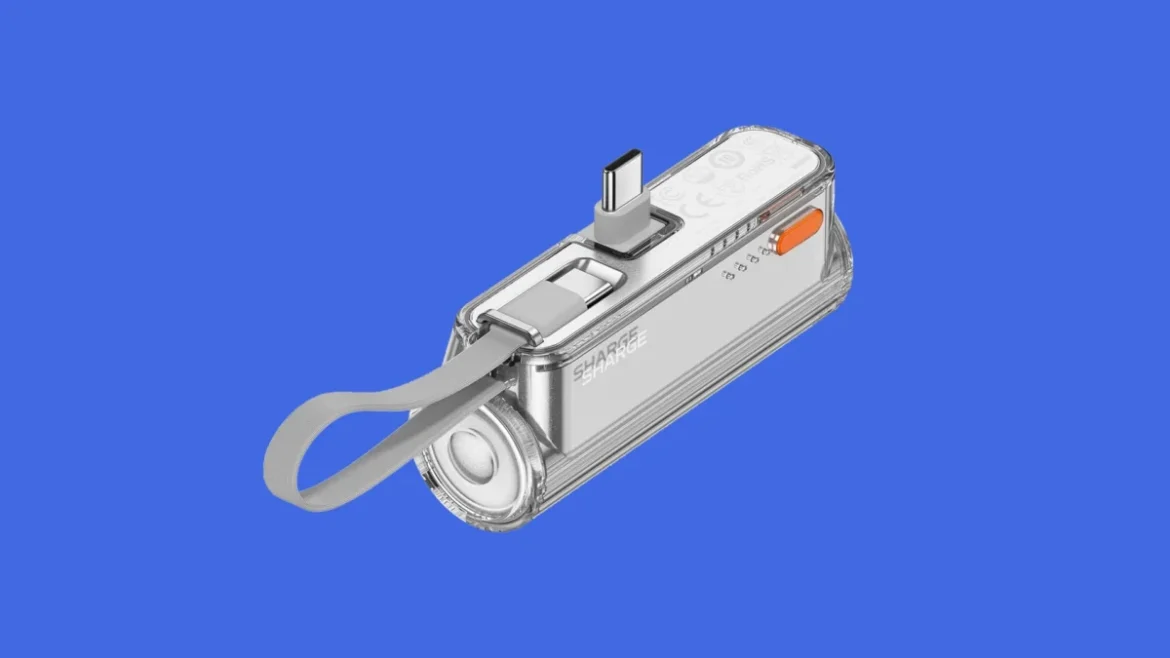
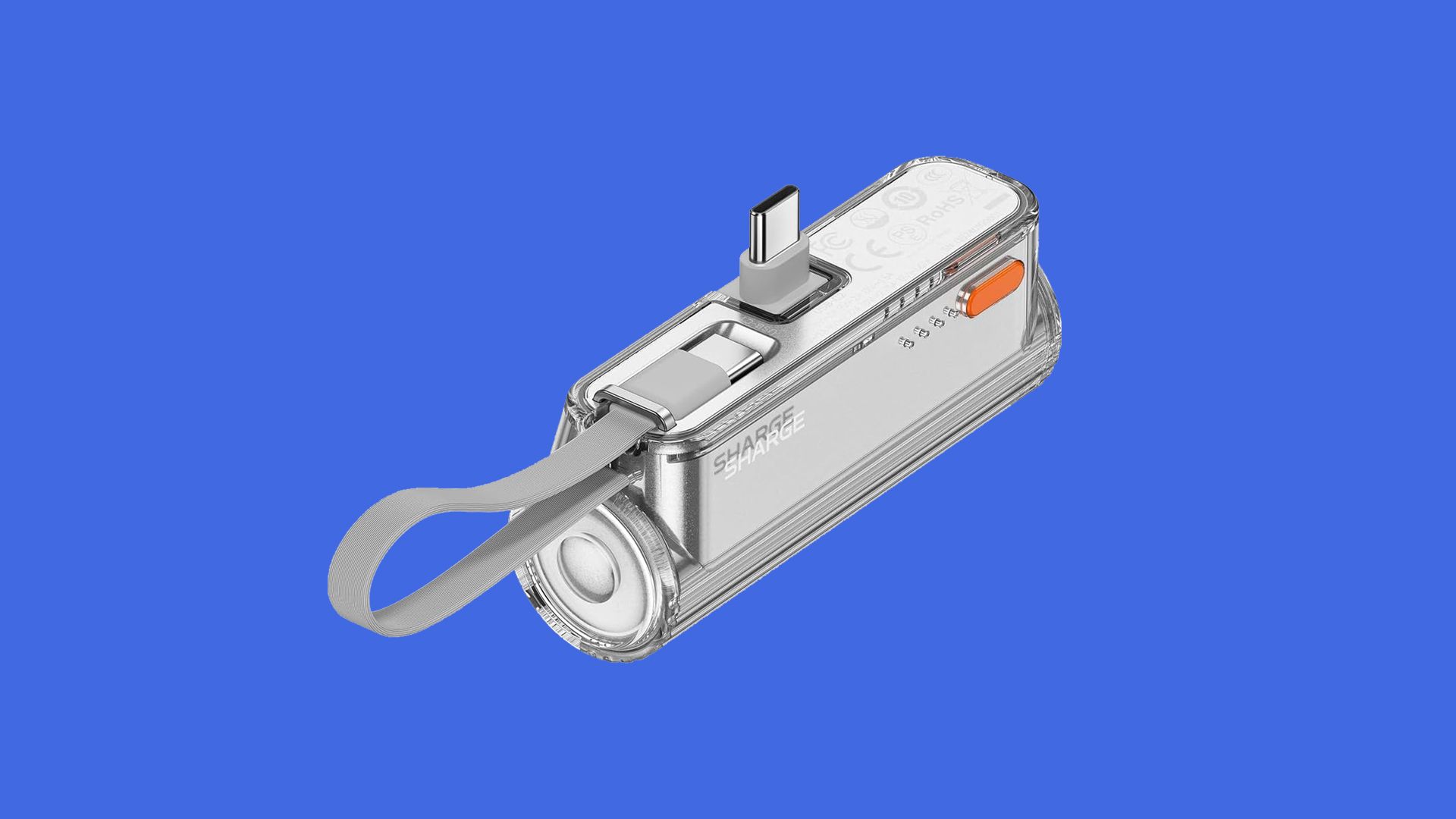
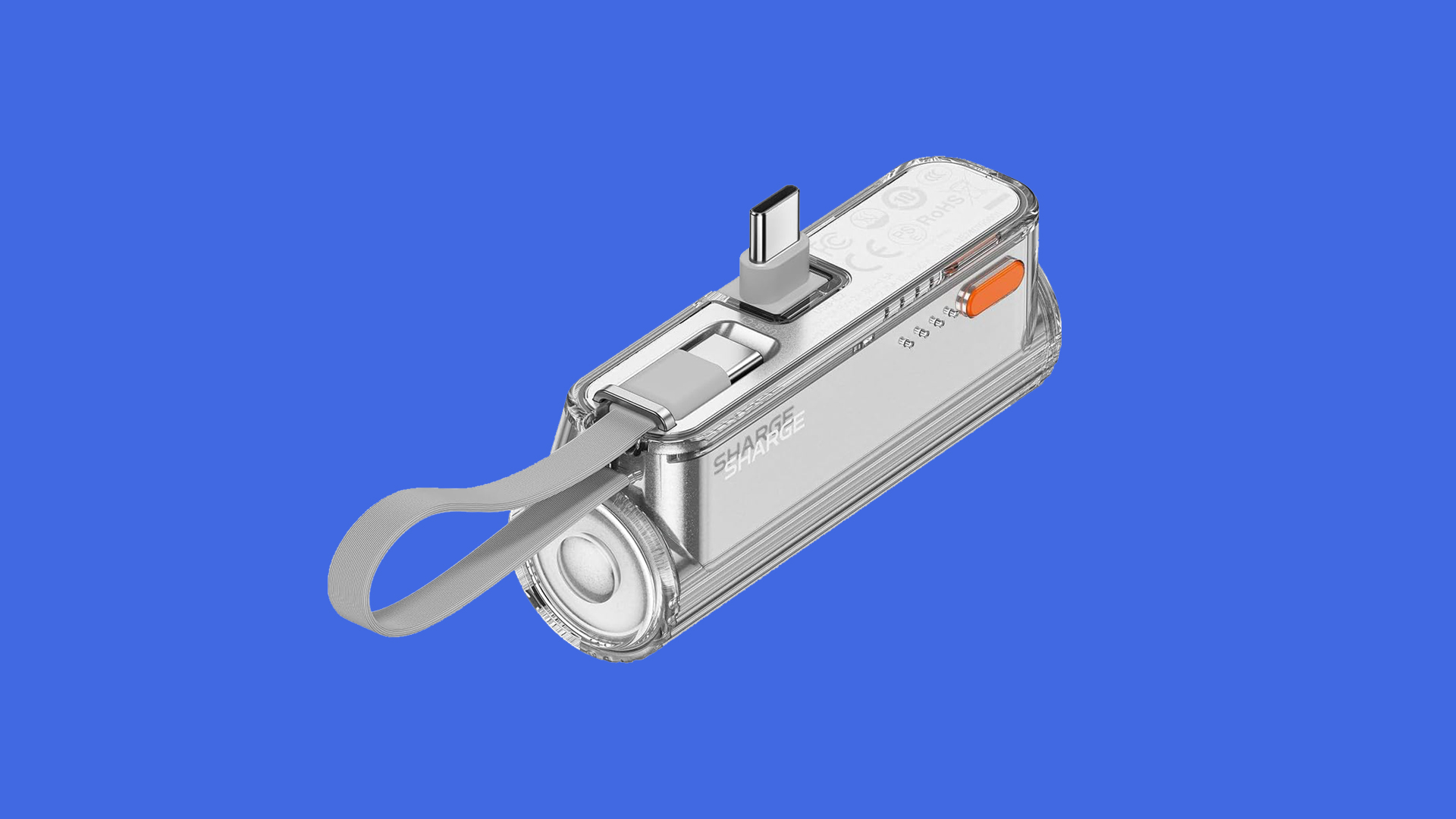
The portable charging market has long been dominated by high-capacity, heavy-duty power bricks designed to replenish laptops and tablets over multiple cycles. However, these bulky accessories often fail to meet the demands of everyday carry (EDC) enthusiasts and urban commuters who prioritize pocketability and lightweight convenience. Addressing this specific market segment, the Sharge Flow Mini 2—which originally launched late last year—has seen a notable price reduction on Amazon, falling from its standard retail price of $29 to $22.90. This discount brings a high-aesthetic, ultra-portable charging solution to a broader consumer base, balancing everyday utility with aggressive pricing.
Evolution of Pocket Charging: Sharge’s Market Strategy
Over the past decade, the portable power bank industry has experienced exponential growth, driven by the increasing power demands of smartphones, wireless earbuds, and wearable technology. Early iterations of power banks were heavy, utilitarian blocks of lithium-ion batteries encased in industrial plastic. As consumer electronics grew sleeker and more design-conscious, hardware manufacturers began shifting their focus toward aesthetics and ergonomic form factors.
Sharge, formerly known as Shargeek, carved out a distinct niche in this competitive landscape by blending retro-futuristic transparent designs with high-performance internals. While products like the Sharge Retro 67 and the Storm2 power bank captured the attention of tech enthusiasts with their cyberpunk-inspired transparent casings and real-time power display screens, the company also recognized a glaring gap in the market for minimalist, highly portable daily drivers.
The introduction of the Sharge Flow Mini series marked a departure from massive multi-port power stations, focusing instead on seamless integration into daily life. The Flow Mini 2 builds upon this philosophy, offering a targeted 5,000mAh capacity that aligns with the average battery requirements of a modern smartphone during a standard workday, eliminating the need to carry tangled external cables.
Design, Specifications, and Technical Performance
At the technical core of the Sharge Flow Mini 2 is a 5,000mAh lithium-ion cell configuration. While this capacity is intentionally modest compared to heavy-duty 20,000mAh or 24,000mAh laptop chargers, it is purposefully engineered to provide a full single charge to most contemporary smartphones, including Apple iPhone and Android flagship devices.
One of the standout design choices of the Flow Mini 2 is its integrated USB-C cable alongside dual swappable connectors, which cater natively to both iOS (Lightning/USB-C ecosystem depending on device generation) and Android users. This reduces cable clutter, a common pain point for consumers navigating transit or working in mobile environments. Furthermore, the device incorporates a striking metallic trim, an energetic splash of signature Sharge orange, and subtle LED charge-status indicators.
In terms of power delivery, the compact unit is capable of outputting up to 22.5W of fast-charging power. This output efficiently mitigates low-battery anxiety, allowing users to rapidly replenish their devices while on the move. When evaluated against competing ultra-portable models—such as the Anker MagGo 5K, which retails around $55—the Sharge Flow Mini 2 offers a more cost-effective alternative while maintaining a smaller footprint.
However, industry analysts note clear performance trade-offs inherent to its size class. While the Flow Mini 2 excels in portability, it cannot compete with heavy-duty enterprise power banks like the Anker Prime 20K. The latter provides massive multi-device charging capabilities and laptop compatibility, but commands a substantially higher price tag of approximately $89 and adds significant weight to a daily carry bag.
Market Context and Consumer Implications
The timing of the Amazon price reduction reflects broader retail trends within the consumer electronics accessories sector. Mid-year and seasonal promotional campaigns frequently target peripheral devices—such as chargers, cables, and protective cases—to stimulate consumer spending on high-utility accessories.
For the average consumer, the availability of a sub-$30 fast-charging power bank with built-in connectivity options signifies a maturation in the accessories market, where premium design and rapid-charging technologies are no longer restricted to luxury price points. Industry observers suggest that as smartphone manufacturers continue to omit wall adapters from retail packaging and push the boundaries of thinness in device design, the demand for reliable, pocket-sized auxiliary power will remain robust.
The Sharge Flow Mini 2 occupies a specific intersection of lifestyle tech and practical utility. By reducing the friction associated with carrying external cables and heavy power bricks, the device caters directly to remote workers, students, and frequent travelers. While it is not designed to power high-draw professional equipment like content creation laptops or professional camera gear, its ability to rescue a depleted smartphone battery in a compact, visually appealing package makes it a compelling option for budget-conscious tech buyers looking to upgrade their daily carry setup.
As the device remains discounted on Amazon, it serves as a bellwether for how niche accessory manufacturers are competing against legacy tech giants by emphasizing unique industrial design, multi-platform compatibility, and aggressive pricing strategies.
In the delicate ecosystem of organ donation and transplantation, time is measured not merely in hours, but in fleeting minutes. When a human heart becomes available, a high-stakes, meticulously choreographed countdown begins. A viable heart remains operational outside the human body for only a few brief hours. Within that narrow window, a vast network of actors—spanning emergency rooms, regional hospitals, provincial agencies, and national coordinators—must execute their duties in absolute synchronization. Every medical record, authorization, and expression of consent must be pristine, unassailable, and verified instantly. In this high-pressure environment, a misplaced form, an unverified signature, or a bureaucratic delay is not just an administrative hurdle; it is a matter of life and death.
To eradicate these vulnerabilities and streamline a critical public service, Argentina’s national organ, tissue, and cell transplantation authority has taken a monumental step forward. The Instituto Nacional Central Único Coordinador de Ablación e Implante (INCUCAI), operating in partnership with Latin American decentralized identity firm Extrimian and powered by the IOTA blockchain mainnet, has officially migrated its national transplant infrastructure onto a live, publicly verifiable digital-identity framework. This deployment marks a watershed moment for public sector digital transformation, proving that distributed ledger technology can move beyond financial speculation to anchor critical, life-saving government workflows.
The Anatomy of Argentina’s Transplant Network and Its Vulnerabilities
To understand the magnitude of this technological overhaul, one must examine the complexity of Argentina’s medical architecture. INCUCAI serves as the central administrative body overseeing the national waiting list, policy enforcement, and organ allocation. However, it does not operate in a vacuum. It coordinates closely with 24 distinct jurisdictional procurement agencies—encompassing every Argentine province alongside the Autonomous City of Buenos Aires—as well as an expansive network of public and private hospitals and transplant centers.
Historically, coordinating life-or-death decisions across this sprawling national footprint relied heavily on legacy databases, paper trails, and fragmented verification processes. While Argentina’s National Procurement and Transplant Information System (SINTRA) digitized much of the administrative workload, the system remained vulnerable to traditional cybersecurity challenges, including document tampering, identity spoofing, and the friction associated with cross-jurisdictional verification.
Recognizing the urgent need for a tamper-proof, highly secure digital backbone, INCUCAI sought a modern architectural solution that could guarantee absolute integrity without compromising the strict confidentiality required in medical environments. The mandate was clear: establish an immutable audit trail for every authorization and document signing procedure while ensuring that patient privacy remains fiercely protected.
The Technological Architecture: How IOTA and Extrimian Built the Bridge
The solution to INCUCAI’s coordination challenge arrived through a strategic collaboration with Extrimian, a regional pioneer in decentralized digital identity (SSI). Extrimian specializes in self-sovereign identity models, which empower individuals and institutions with absolute control over their digital credentials and the data they choose to share. To provide the neutral, scalable, and cost-efficient public layer required for a national-scale deployment, Extrimian selected the IOTA mainnet.
The core architecture relies on cutting-edge cryptographic principles. Crucially, no patient-identifiable information (PII) or sensitive medical history is ever stored on the blockchain ledger. Instead, the system anchors only cryptographic proofs—specifically, secure hashes of documents and process steps—directly to the IOTA mainnet. This methodology guarantees absolute data integrity and immutability while shielding the deeply personal and painful details entrusted to medical professionals during times of grief and crisis.
Doctors, regional agencies, and families can mathematically confirm that every procedural step occurred exactly as recorded, while the underlying data remains strictly private and secure. Furthermore, the deployment incorporates elements of Argentina’s state-owned infrastructure provider, ARSAT, ensuring that critical physical and network components remain under domestic sovereign control.
The technical foundation utilizes several advanced building blocks:
W3C Decentralized Identifiers (DIDs): Institutional identities follow World Wide Web Consortium standards. INCUCAI’s onchain identity is cryptographically bound to its official government domain (firma.incucai.gov.ar), enabling anyone to verify that an incoming document originates from the genuine national authority rather than an impostor.
Verifiable Credentials: Standardized digital certificates that allow individuals and medical staff to prove their professional accreditation or consent status securely.
Decentralized Trust Registries: A federated architecture that allows all 24 provincial agencies to validate identities and signatures across state boundaries without relying on a centralized, single point of failure.
Independent verification of the system has reinforced its credibility. Exercising the core blockchain ethos of "don’t trust, verify," external technical auditors and the IOTA Foundation independently evaluated public endpoints and the IOTA Explorer. All 24 provincial identities resolved accurately, all cryptographic explorer links matched, and direct onchain calls confirmed that the entities controlling each identity were fully accredited within the federal trust structure.
Chronology of Implementation and Resolution 199/2026
The path to a fully onchain transplant system culminated in mid-2026, following months of rigorous development, testing, and regulatory alignment.
Early Development Phase: Extrimian and INCUCAI architected the decentralized trust framework, integrating W3C-compliant decentralized identifiers with SINTRA’s existing backend architecture while routing notarization layers through the IOTA mainnet.
June 10, 2026: The decentralized identity and notarization system officially went live on the IOTA Mainnet, making institutional identities and transactional proofs independently verifiable by the public.
Mid-June 2026 (Resolution 199/2026): Through Resolution 199/2026, published officially in the national Boletín Oficial, INCUCAI mandated the nationwide rollout of electronic signatures across all processes managed via SINTRA. This administrative decree provided the necessary legal certainty to transition high-value medical workflows into blockchain-backed executions.
Launch of IncucaiID: To facilitate user interaction, the ecosystem released IncucaiID, an official mobile wallet application available on both the Apple App Store and Google Play. Through this application, patients, medical practitioners, and authorized officials receive verifiable credentials, authenticate their identities, and sign regulatory documents tied to organ harvesting and transplantation.
The rollout has been designed with operational resilience in mind, beginning initially with the national waiting lists for heart and lung transplants. Subsequent phases will systematically integrate remaining organ categories and expand across all ancillary SINTRA workflows, ultimately driving toward a completely paperless, frictionless national system.
Official Perspectives: Leadership Endorsements
The deployment has drawn praise from government and technology leaders alike, underscoring the convergence of public sector governance and next-generation cryptographic infrastructure.
Daniela Hansen Krogh, Director of Information Technology and Information Systems at INCUCAI, emphasized the human element underpinning the technical upgrade: "Trust is at the heart of every organ donation and transplantation process. Our responsibility is to ensure that every decision is supported by reliable, secure, and verifiable information. By incorporating decentralized identity and cryptographic verification into our national systems, we are strengthening the integrity, traceability, and legal certainty of every critical stage, while safeguarding sensitive patient information. This initiative reflects INCUCAI’s ongoing commitment to modernizing Argentina’s transplant system through secure, transparent, and citizen-centered digital innovation."
Echoing this sentiment, Esteban Musso, Professional Services Manager and Partner at Extrimian, pointed to the tangible real-world application of the technology: "At Extrimian, we believe that trust is the foundation of every digital transformation. By combining open standards with privacy-preserving technologies, we’ve helped build a solution that enhances traceability, security, and interoperability while respecting the privacy of every participant. Projects like this demonstrate that decentralized technologies are no longer a vision for the future—they are delivering tangible value today in critical public services."
Dominik Schiener, Co-Founder and Chairman of the IOTA Foundation, framed the milestone within the broader narrative of blockchain utility: "This is what IOTA’s open technology can do for critical public services at national scale: real infrastructure, already coordinating decisions that save lives."
Implications and Broader Impact on Public Administration
The integration of IOTA and Extrimian into Argentina’s national transplant framework carries profound implications for the future of public administration, both regionally and globally. For decades, governments seeking to modernize have oscillated between vulnerable centralized databases and costly, proprietary enterprise software solutions. The INCUCAI deployment presents a third, highly viable paradigm: leveraging public, neutral, decentralized ledgers as trust anchors while maintaining localized database sovereignty and stringent data privacy protections.
By eliminating manual paperwork, securing institutional communications against forgery, and providing a unified cryptographic audit trail across 24 distinct provincial jurisdictions, Argentina has dramatically reduced administrative friction during emergency scenarios. Furthermore, the use of open standards ensures that the architecture is interoperable and future-proof.
As governments worldwide grapple with issues of institutional trust, cyber resilience, and bureaucratic inefficiency, the Argentine model offers a blueprint for how decentralized identity can be deployed responsibly in life-critical sectors. By anchoring administrative accountability to an immutable ledger, INCUCAI has not only optimized the mechanics of organ procurement—it has redefined how digital trust can be engineered into the very fabric of public health.
The global artificial intelligence landscape is undergoing a profound geopolitical and technological realignment. Following the Trump administration’s sweeping policy decision to restrict non-American access to Anthropic’s most advanced cybersecurity-focused AI models—Mythos and its restricted sibling, Fable 5—major tech players in Asia have rapidly moved to fill the emerging vacuum. In a matter of days, Tokyo-based startup Sakana AI and Chinese cybersecurity titan 360 introduced competing frontier systems designed to match, and potentially bypass, the capability of the restricted American models.
These concurrent developments underscore the unintended consequences of aggressive technology export controls. While Washington aimed to safeguard critical national security assets by keeping elite AI out of foreign hands, the policy has instead catalyzed an accelerated push toward regional technological self-sufficiency. As Asian markets reckon with the vulnerability of relying on a single, geographically concentrated provider, domestic innovators are seizing the moment to market localized alternatives.
The Genesis of the U.S. Export Ban on Anthropic Models
The current friction stems from a high-stakes regulatory order enacted by the U.S. federal government roughly two weeks ago. The directive placed Anthropic’s Mythos Preview and Fable 5 models under strict export limitations, completely banning their distribution to non-American entities.
Anthropic, which has enjoyed an extraordinary growth trajectory, recently reported that its run-rate revenue crossed an astounding $47 billion in May 2026, putting the company on a fast track toward a historic valuation approaching $1 trillion ahead of an anticipated initial public offering. Much of this explosive growth has been fueled by robust enterprise adoption across global markets, including Asia.
However, the abrupt enforcement of the export ban severed international access overnight. For foreign governments and multinational enterprises that rely on cutting-edge automated threat detection and agentic orchestration, the ruling highlighted an acute strategic vulnerability. Critics of the ban, including industry executives and policy analysts, argue that restricting access for close allies risks alienating key international partners and fracturing the global AI ecosystem into isolated regional silos.
Sakana AI Debuts Fugu: A Tokyo-Based Hedge Against Geopolitical Volatility
Responding directly to these shifting dynamics, Tokyo-based startup Sakana AI officially launched its latest frontier model, Fugu—named after the Japanese word for blowfish—earlier in the week. Founded in 2023 by Google alumni David Ha and Llion Jones, alongside former Mercari and Stability AI executive Ren Ito, Sakana has built a reputation for developing cost-effective generative AI models optimized for smaller datasets, local languages, and Japanese cultural nuances.
Sakana representatives have maintained that the release schedule for Fugu was entirely coincidental, noting that the underlying research was presented earlier this spring at the International Conference on Learning Representations (ICLR). Nevertheless, the startup has inevitably capitalized on the fortuitous timing, marketing Fugu on its website as a solution capable of "delivering frontier capability without the risk of export controls."
Fugu is architected specifically for agentic workflows, featuring advanced capabilities to orchestrate and manage access to other AI models through application programming interfaces (APIs). During the G7 summit in Evian, where AI access and export controls dominated diplomatic discussions, Sakana co-founder Ren Ito addressed the broader geopolitical implications. In a subsequent op-ed published by Project Syndicate, Ito urged the U.S. federal government to prioritize the preservation of access for its closest allies, asserting that advanced artificial intelligence should be a collaborative technology rather than a hoarded commodity.
David Ha, CEO and co-founder of Sakana AI, expanded on this philosophy in statements shared on social media, emphasizing that orchestration models represent the inevitable next frontier beyond sheer model scaling. Ha argued that relying on a single foreign provider for critical national infrastructure is an untenable risk in an era of unpredictable trade policy. "Access to top models can disappear overnight," Ha noted, framing collective intelligence and multi-model orchestration as practical hedges against the dangerous concentration of power.
China’s 360 Unveils Tulongfeng and Yitianzhen in Direct Challenge
While Sakana has positioned its offerings as a cooperative hedge to preserve international operational continuity, Chinese cybersecurity giant 360 has adopted a much more direct and assertive stance. On Wednesday, the firm officially unveiled Tulongfeng, an advanced AI tool engineered to compete head-to-head with Anthropic’s restricted Mythos model.
Alongside Tulongfeng, which is specifically designed to autonomously discover complex software vulnerabilities, 360 also introduced Yitianzhen, a companion tool built to automate cyber defense operations and incident response protocols.
The launch was accompanied by pointed strategic messaging from 360 founder Zhou Hongyi. According to reports from Reuters, Zhou characterized vulnerability-finding artificial intelligence as a critical national strategic asset. He sharply criticized the concept of "one-way transparency"—a scenario where select global actors retain exclusive rights to advanced cyber-detection capabilities while leaving the rest of the world exposed. Unlike Sakana, 360 did not respond to requests for comment regarding the launch, signaling a hardening divide between Western regulatory frameworks and domestic Chinese cybersecurity development.
Broader Implications for the Global AI Market
The rapid emergence of alternatives like Fugu and Tulongfeng signals a fundamental turning point for the global artificial intelligence industry. Several key implications have already begun to manifest across international markets:
Erosion of U.S. Tech Monopoly: By cutting off access to leading frontier models, export restrictions are accelerating the maturation of foreign competitors. Even if current regulatory bans are eventually lifted, local enterprises that have integrated domestic alternatives may see little incentive to return to U.S. providers.
The Rise of Orchestration and Multi-Model Frameworks: Startups are shifting away from monolithic dependency. Tools like Sakana’s Fugu prove that the market values flexibility, distributed agent coordination, and the ability to seamlessly switch between multiple foundational APIs.
Localization and Linguistic Precision: Foreign alternatives often hold a distinct advantage in understanding local regulatory compliance, cultural nuances, and regional linguistic frameworks—attributes that U.S. models, trained primarily on Western datasets, may struggle to match.
Militarization and Security Focus: The direct linkage of AI models to cybersecurity vulnerability discovery, as demonstrated by 360’s new suite of tools, elevates generative AI from a commercial productivity tool to a frontline instrument of national security and cyber warfare.
As the U.S. government navigates the complex crosscurrents of national security and economic diplomacy, the actions of companies like Sakana AI and 360 demonstrate that innovation cannot be indefinitely contained by regulatory fiat. The global race for artificial intelligence supremacy has officially entered a decentralized, multi-polar era where regional resilience and adaptive orchestration will dictate the winners of tomorrow.
In the high-stakes environment of organ transplantation, minutes and seconds dictate the boundary between life and death. When a human heart, liver, or pair of lungs becomes available for donation, a complex, high-pressure countdown begins. A harvested heart remains clinically viable outside the human body for only a matter of hours. Within that narrow temporal window, a sprawling network of medical professionals, provincial coordinators, institutional administrators, and national authorities must act in absolute, flawless synchronization. Every single authorization, medical record, and legal consent must be thoroughly verified, completely accurate, and entirely beyond dispute the very first time. In this specialized domain, a lost form, a questionable signature, or a bureaucratic delay can carry catastrophic, irreversible consequences.
To eliminate these vulnerabilities and fortify its national infrastructure, the Argentine Republic has taken a historic leap forward. Through a strategic collaboration between the national organ authority and regional technology innovators, Argentina has officially integrated its entire organ, tissue, and cell donation ecosystem onto a live, publicly verifiable decentralized digital identity system hosted on the IOTA mainnet. This sweeping technological upgrade marks a paradigm shift in how sovereign governments manage life-critical public services, replacing legacy administrative bottlenecks with cryptographic certainty, immutable document signing, and decentralized transparency.
The Anatomy of Argentina’s National Transplant Framework
At the heart of this massive logistical undertaking is the Instituto Nacional Central Único Coordinador de Ablación e Implante, universally known as INCUCAI. Established as Argentina’s central national authority for organ procurement and transplantation, INCUCAI carries the monumental responsibility of managing the national patient waiting list. The agency does not operate in a vacuum; it functions as the central nervous system connecting 24 distinct jurisdictional procurement agencies—encompassing every single Argentine province alongside the Autonomous City of Buenos Aires—as well as a vast network of public and private hospitals, surgical units, and specialized transplant centers distributed across the South American nation’s vast geographic expanse.
Coordinating life-or-death medical decisions across this decentralized national apparatus requires an administrative backbone characterized by absolute reliability, uncompromising security, and real-time interoperability. Historically, even the most advanced healthcare systems have struggled with the friction of paper-based documentation, fragmented provincial databases, and manual verification steps. Recognizing that modern challenges demand modern technological safeguards, INCUCAI embarked on an ambitious initiative to modernize its digital infrastructure by embedding decentralized identity and cryptographic notarization directly into its administrative workflow.
To engineer and deploy this sophisticated digital architecture, INCUCAI partnered with Extrimian, a leading Latin American technology company specializing in decentralized digital identity and self-sovereign identity (SSI) frameworks. Extrimian has long championed models that grant individuals and institutions direct, unmediated control over their digital identities and the specific data they choose to share. By bringing transparency, cryptographic efficiency, and strict user control to interactions across critical sectors like healthcare, education, and public administration, Extrimian positioned itself as an ideal technological partner for a government entity seeking to overhaul a nationwide health network.
Rather than building upon a centralized database—which inherently introduces single points of failure, vulnerabilities to tampering, and a reliance on trusted intermediaries—Extrimian selected IOTA as the foundational public network for INCUCAI’s new decentralized infrastructure. IOTA provides a neutral, highly scalable, and verifiably secure ledger layer where institutional identities and document integrity can be authenticated directly by any authorized stakeholder, entirely free from corporate gatekeepers or administrative friction.
Technological Architecture and the Principle of Privacy-First Design
The technical solution deployed by Extrimian and IOTA is engineered to digitize, unify, and secure the organ transplantation workflow on a national scale. Officially launched on the IOTA mainnet, the system allows institutional identities and cryptographic proofs to be independently audited and verified by anyone with access to the public ledger, embodying the foundational cybersecurity ethos of "don’t trust, verify."
One of the most critical design considerations of this deployment is its uncompromising approach to data privacy. In a healthcare context involving sensitive medical histories, organ matching, and grieving families, data protection is paramount. To safeguard this vulnerable information, the system ensures that no patient-identifiable data or raw medical records are ever stored on the public blockchain. Instead, only cryptographic proofs—specifically cryptographic hashes of official documents and process steps—are permanently anchored to the IOTA ledger.
This cryptographic separation guarantees absolute data integrity and immutability without exposing any underlying personal details. Doctors, provincial agencies, and auditing bodies can mathematically confirm that a specific authorization, medical report, or consent form existed in a precise state at an exact moment in time, while the private details of patients and donors remain strictly confidential. The system effectively bridges the gap between public transparency and medical privacy, ensuring that trust is established through mathematics rather than institutional blind faith.
The technical framework relies heavily on open, interoperable standards. The institutional identities and verifiable credentials integrated into the platform strictly adhere to World Wide Web Consortium (W3C) specifications. Furthermore, INCUCAI’s onchain decentralized identifier (did:iota) is cryptographically bound to its official government domain. This ensures that any external observer or participating hospital can mathematically confirm that a digital signature originates from the authentic national institution rather than a malicious impostor. Crucially, components of the infrastructure are hosted on ARSAT, Argentina’s state-owned telecommunications and satellite solutions company, ensuring that critical data pathways and operational nodes remain firmly under national sovereignty and control.
Chronology of Implementation: From Policy to Mainnet Deployment
The realization of Argentina’s onchain transplant system is the culmination of meticulous planning, regulatory reform, and technical execution. The timeline of this transformation reflects a steady, deliberate march toward full national integration:
Early Planning and Development: Extrimian and the IOTA Foundation collaborate to design a decentralized identity framework tailored to the specific legal, administrative, and security requirements of Argentina’s healthcare sector, utilizing W3C standards and integrating with state-owned infrastructure provider ARSAT.
Regulatory Foundation (June 2026): The Argentine government publishes Resolution 199/2026 in the official national gazette (Boletín Oficial). This landmark resolution officially authorizes the implementation of electronic signatures across all donation and transplant processes managed through SINTRA (Argentina’s National Procurement and Transplant Information System) and its affiliated institutional networks.
Mainnet Go-Live (June 10, 2026): The decentralized identity and notarization infrastructure officially goes live on the IOTA Mainnet. All 24 provincial procurement agencies are successfully onboarded onto the trust federation, enabling live cryptographic document signing and verifiable institutional identities.
Ecosystem Rollout and Wallet Launch (Mid-2026): INCUCAI introduces IncucaiID, the official ecosystem mobile wallet available on major application stores. Healthcare professionals, administrative personnel, and patients begin receiving verifiable credentials to sign and authenticate documents digitally. Implementation initiates with the national waiting-list registration process, prioritizing heart and lung lists before expanding to other organ categories.
Official Adoption and Regulatory Milestones
The transition from conceptual framework to operational reality was formalized through Resolution 199/2026, enacted in June 2026. Published prominently in the Boletín Oficial, this resolution mandated the nationwide adoption of electronic signatures for every single administrative and medical process handled via SINTRA. The regulatory mandate was designed to inject unprecedented legal certainty, traceability, and transparency into the organ procurement pipeline, replacing cumbersome paper trails with immutable blockchain-backed evidence.
At the center of this rollout for end-users is IncucaiID, a dedicated mobile application available for download across major smartphone platforms. Through this digital wallet, authorized medical professionals and participants securely manage their verifiable credentials, verify their professional standing, and apply legally binding electronic signatures to documents tied to organ harvesting and transplantation. Every interaction executed through the wallet is cryptographically secured, generating an indelible audit trail that can be reviewed when necessary while strictly enforcing the principles of self-sovereign identity—allowing users to disclose only the precise data required for a given administrative step.
The initial rollout phase focuses specifically on the waiting-list registration process, beginning with high-acuity registries such as the heart and lung transplant lists. Over subsequent phases, the system is slated to expand to cover all remaining organ and tissue lists, ultimately absorbing the entirety of SINTRA’s documentary workflows to establish a fully paperless, frictionless national system.
Stakeholder Perspectives and Institutional Endorsements
The successful deployment of a national healthcare system onto a public distributed ledger has drawn praise from technology leaders and public health administrators alike, highlighting the tangible utility of decentralized systems in solving real-world humanitarian challenges.
Daniela Hansen Krogh, Director of Information Technology and Information Systems at INCUCAI, emphasized the profound cultural and operational importance of the upgrade: "Trust is at the heart of every organ donation and transplantation process. Our responsibility is to ensure that every decision is supported by reliable, secure, and verifiable information. By incorporating decentralized identity and cryptographic verification into our national systems, we are strengthening the integrity, traceability, and legal certainty of every critical stage, while safeguarding sensitive patient information. This initiative reflects INCUCAI’s ongoing commitment to modernizing Argentina’s transplant system through secure, transparent, and citizen-centered digital innovation."
Echoing these sentiments, Esteban Musso, Professional Services Manager and Partner at Extrimian, underscored the broader philosophical shift represented by the project: "At Extrimian, we believe that trust is the foundation of every digital transformation. By combining open standards with privacy-preserving technologies, we’ve helped build a solution that enhances traceability, security, and interoperability while respecting the privacy of every participant. Projects like this demonstrate that decentralized technologies are no longer a vision for the future—they are delivering tangible value today in critical public services."
Dominik Schiener, Co-Founder and Chairman of the IOTA Foundation, pointed to the national scale of the achievement as proof of maturity for distributed ledger technology: "This is what IOTA’s open technology can do for critical public services at national scale: real infrastructure, already coordinating decisions that save lives."
Fact-Based Analysis of Implications and Broader Impact
The integration of INCUCAI’s transplant network onto the IOTA mainnet carries significant implications that extend far beyond the borders of Argentina, offering a blueprint for how governments worldwide can modernize legacy bureaucracies without sacrificing privacy or centralization of control.
From an administrative standpoint, the elimination of physical paperwork and manual provincial verification drastically reduces the risk of human error, administrative delays, and document tampering during critical transplant windows. By anchoring cryptographic proofs to a neutral public ledger, INCUCAI establishes an unalterable chain of custody for every organ and tissue allocation. This level of verifiable transparency not only insulates the national system against potential fraud or bureaucratic negligence but also reinforces public confidence in an institution where fairness and equity are matters of life and death.
Furthermore, the project demonstrates the viability of Self-Sovereign Identity (SSI) frameworks in highly regulated public sectors. By demonstrating that robust cybersecurity, W3C standards, and state-backed telecommunications infrastructure can successfully harmonize with public distributed ledgers, Argentina has set a compelling precedent. As governments globally grapple with the demands of digital transformation, secure citizen data management, and operational resilience, the INCUCAI-Extrimian-IOTA deployment stands as a watershed moment: tangible proof that decentralized technology can actively participate in saving human lives at a national scale.
In the delicate, high-stakes ecosystem of organ transplantation, time is measured not just in hours, but in vital minutes. When a human heart, lung, or liver becomes available for donation, a complex, nationwide chain of events is immediately triggered. Medical professionals, regional agencies, and national coordinators must act in absolute synchrony to evaluate matches, secure legal and medical authorizations, and transport the organ to the recipient before viability fades. Within this narrow window, a single administrative error, a misplaced form, or an unverifiable signature can carry devastating consequences. To mitigate these risks and modernize its critical infrastructure, Argentina has taken a pioneering step: moving its national transplant system onto a publicly verifiable, blockchain-backed digital identity framework.
The Instituto Nacional Central Único Coordinador de Ablación e Implante (INCUCAI), Argentina’s national authority overseeing organ, tissue, and cell donation, has officially integrated decentralized identity and notarization architecture into its operations. Developed in partnership with Latin American decentralized-identity leader Extrimian and anchored on the IOTA mainnet, this live system represents a major milestone in public-sector digital transformation. By uniting INCUCAI and its 24 provincial procurement agencies—including the Autonomous City of Buenos Aires—under a shared, tamper-proof cryptographic ledger, Argentina is setting a new global benchmark for transparency, efficiency, and security in healthcare logistics.
The Engineering of Trust: Bridging Bureaucracy and Blockchain
At its core, the newly deployed infrastructure addresses a fundamental challenge of modern bureaucracy: how to establish absolute trust and traceability across fragmented institutional networks without compromising individual privacy. Historically, coordinating organ procurement across diverse public and private hospitals required navigating layers of paperwork, manual verifications, and centralized databases vulnerable to operational bottlenecks.
Extrimian’s solution leverages Self-Sovereign Identity (SSI) principles, utilizing the IOTA network as a neutral, decentralized foundation. The architecture ensures that institutional identities and the cryptographic integrity of documents can be independently checked by authorized stakeholders without relying on proprietary intermediaries.
Critically, the system is designed with rigorous privacy safeguards. Patient-identifiable information is never stored on the public blockchain. Instead, the ledger anchors only cryptographic proofs—mathematical hashes—of documents and specific workflow milestones. This mechanism guarantees absolute data integrity and immutability while shielding the deeply sensitive medical histories of donors, patients, and grieving families. Doctors and provincial regulators can cryptographically verify that every procedural step occurred exactly as recorded, while the underlying personal data remains strictly confidential.
Chronology of a National Rollout
The integration of blockchain technology into Argentina’s transplant infrastructure is the culmination of meticulous planning, regulatory updates, and technical deployment.
Initial Development and Testing: Extrimian and INCUCAI collaborated to design a decentralized identity framework tailored to the rigorous compliance standards of Argentina’s healthcare sector, utilizing open W3C specifications for verifiable credentials.
June 10, 2026: The infrastructure officially went live on the IOTA Mainnet, allowing decentralized identifiers (DIDs) and document notarization proofs to be independently audited via public explorers.
Resolution 199/2026: Published in the national Official Gazette (Boletín Oficial), this legislative decree formally authorized the implementation of electronic signatures across all processes managed through SINTRA (Argentina’s National Procurement and Transplant Information System).
Mid-2026 Rollout: INCUCAI released IncucaiID, the ecosystem’s official digital wallet application on iOS and Android app stores. Initial implementation focuses heavily on streamlining waiting-list registrations, beginning specifically with heart and lung transplant lists before expanding to other organs and comprehensive SINTRA workflows.
Furthermore, parts of the technical architecture are hosted on ARSAT, Argentina’s state-owned telecommunications infrastructure company, ensuring that critical components of the national system remain under sovereign governmental control while interacting with the global public ledger.
Official Perspectives and Institutional Commitment
The transition toward decentralized public infrastructure has garnered strong support from both governmental and technology leaders, who view the deployment as a practical demonstration of blockchain’s utility in saving lives.
Daniela Hansen Krogh, Director of Information Technology and Information Systems at INCUCAI, emphasized the human element driving the technological upgrade. "Trust is at the heart of every organ donation and transplantation process," Krogh stated. "Our responsibility is to ensure that every decision is supported by reliable, secure, and verifiable information. By incorporating decentralized identity and cryptographic verification into our national systems, we are strengthening the integrity, traceability, and legal certainty of every critical stage, while safeguarding sensitive patient information. This initiative reflects INCUCAI’s ongoing commitment to modernizing Argentina’s transplant system through secure, transparent, and citizen-centered digital innovation."
Extrimian executives echoed these sentiments, highlighting the departure of decentralized tech from speculative theory into practical, life-saving application. Esteban Musso, Professional Services Manager and Partner at Extrimian, noted: "At Extrimian, we believe that trust is the foundation of every digital transformation. By combining open standards with privacy-preserving technologies, we’ve helped build a solution that enhances traceability, security, and interoperability while respecting the privacy of every participant. Projects like this demonstrate that decentralized technologies are no longer a vision for the future—they are delivering tangible value today in critical public services."
From the technology provider’s perspective, Dominik Schiener, Co-Founder and Chairman of the IOTA Foundation, emphasized the broader significance of the deployment. "This is what IOTA’s open technology can do for critical public services at a national scale: real infrastructure, already coordinating decisions that save lives," Schiener remarked.
Implications and Future Outlook
The successful integration of IOTA and Extrimian’s technology into INCUCAI’s workflow offers profound implications for public administration well beyond the borders of Argentina. By replacing legacy paper trails and siloed digital databases with an interoperable, cryptographically secure verification layer, the system drastically reduces the administrative friction that can delay time-sensitive medical procedures.
Independent verification by technical auditors has confirmed the operational stability of the deployment: all 24 provincial agency identities successfully resolved on the IOTA Explorer, trust federations mapped accurately to onchain data, and direct network calls validated the accreditation of each participating entity.
As IncucaiID adoption expands among medical professionals and patients, the transition toward a fully paperless, frictionless workflow gathers momentum. By demonstrating that decentralized ledgers can successfully optimize high-consequence administrative processes without compromising data privacy, Argentina has established a compelling blueprint for modernizing critical state infrastructure through transparent, citizen-centric digital innovation.