The digital asset market has endured a tumultuous period marked by macroeconomic headwinds, regulatory pressures, and sudden liquidations that have effectively erased previous quarterly gains. Amid this persistent market volatility, Real Vision Chief Crypto Analyst Jamie Coutts has offered a compelling macroeconomic perspective, forecasting what he describes as a final altcoin rally for the current market cycle. According to Coutts, this impending recovery will not be driven by speculative retail mania, but rather by fundamental network activity, high-utility protocols, and rising decentralized finance (DeFi) trading volumes. This forecast arrives at a critical juncture for the cryptocurrency ecosystem, where investors and institutional stakeholders alike are closely monitoring liquidity metrics to determine whether the broader altcoin market can decouple from Bitcoin’s recent corrective phases and chart an independent course toward recovery by mid-2025.
Chronology of the Market Shift: From Early Optimism to Macroeconomic Headwinds
The trajectory of the cryptocurrency market throughout the year has been characterized by sharp contrasts between early optimism and subsequent macroeconomic reality. During the opening quarter, market sentiment reached a fever pitch as retail traders and institutional desks alike anticipated the arrival of a broad-based altcoin season. This optimism was fueled by declining Bitcoin dominance metrics and the historic precedent of capital rotating from Bitcoin into alternative layer-1 and layer-2 networks.
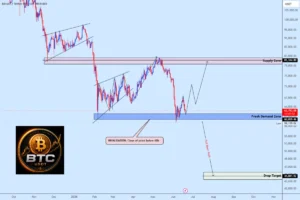
However, these bullish projections were abruptly challenged by tightening macroeconomic conditions, persistent inflationary pressures, and shifting monetary policies across global central banks. As broader financial markets reacted to liquidity tightening, risk-on assets faced severe downward pressure. Bitcoin, which had previously surged to unprecedented heights touching an all-time high of approximately $111,000, experienced a correction exceeding 22%. This significant drawdown inevitably dragged the broader altcoin market down with it, neutralizing gains across major digital assets and plunging bullish market momentum into a prolonged state of consolidation and caution.
Despite these hurdles, industry analysts have continued to evaluate underlying blockchain metrics rather than focusing strictly on superficial price action. It was within this environment of caution that Jamie Coutts, speaking alongside Real Vision co-founder Raoul Pal during a widely followed livestream, articulated his thesis regarding the remaining breadth thrust for altcoins. Coutts emphasized that while the macro environment has been unforgiving, network fundamentals in select ecosystems are quietly strengthening, setting the stage for a targeted recovery phase.
Supporting Data: Network Activity, Total Value Locked, and Market Dominance
A comprehensive examination of the altcoin landscape reveals stark disparities in value accumulation and network utilization across various protocols. While thousands of digital assets populate the cryptocurrency ecosystem, capital concentration remains heavily skewed toward a select group of high-utility networks. Ethereum continues to maintain an undisputed stronghold over the decentralized finance sector, commanding roughly 55% of the total value locked (TVL) across all major alternative layer-1 and layer-2 platforms.
Following Ethereum, other prominent layer-1 blockchains maintain meaningful shares of the decentralized finance market. Solana commands approximately 6.89% of the total value locked, positioning itself as a primary hub for high-frequency trading and retail-facing applications. Binance Smart Chain (BNB Chain) accounts for 5.69% of the TVL, supported by a robust ecosystem of decentralized exchanges and yield-generating protocols, while Tron captures roughly 5.2%, largely driven by stablecoin transaction volume.
These metrics are central to Coutts’s thesis that upcoming rallies will disproportionately reward projects exhibiting tangible network utility. Unlike previous market cycles where speculative narratives drove uniform price appreciation across the board, the current market environment demands verifiable on-chain metrics, active user addresses, and sustained transactional throughput. Coutts noted that while the broader market faces an uphill battle, projects experiencing genuine organic growth will spearhead the impending recovery.

Official Reactions and Expert Analysis: Volume Over Price
The debate surrounding the mechanics of an altcoin season has evolved significantly among institutional researchers and on-chain analysts. Rather than relying on traditional market cap dominance charts to signal the onset of an altcoin rally, experts are increasingly pointing to trading volumes and incoming liquidity as the definitive indicators of market health.
CryptoQuant CEO Ki Young Ju recently weighed in on the debate, declaring that a localized altcoin season had effectively begun, albeit with a vital caveat. According to Ju, the modern altcoin season does not manifest as a sweeping tide that lifts all assets simultaneously. Instead, capital is moving selectively into specific digital assets that benefit from dedicated institutional demand and localized liquidity injections. This bifurcated reality means that while a select group of high-utility altcoins may experience exponential gains, a large portion of the wider altcoin market may continue to trade sideways as liquidity remains tightly controlled.
Echoing this sentiment, Jamie Coutts highlighted the nuanced nature of the expected mid-year rebound. During his analysis, Coutts addressed the sustainability of the anticipated rally, posing a fundamental question to market participants:
"I think there will be one more breadth thrust from altcoins. The question is, is it a sustained rally that we will see for six to twelve months? At this stage, I am not too sure, but I do believe that quality altcoins where activity returns, and activity drives prices—we will see a recovery in some of these more high-quality names. I’m expecting by June to see altcoins really start to pick up again."
This measured outlook underscores a broader professional consensus within the digital asset advisory space. Analysts stress that while a technical rebound could easily yield 50% gains or more for fundamentally sound altcoins following a market turnaround, traders must navigate the landscape with heightened risk management protocols.
Broader Impact and Market Implications
The intersection of macroeconomic tightening, shifting institutional liquidity, and on-chain network activity holds profound implications for the future trajectory of the digital asset class. As the industry matures, the traditional correlation between Bitcoin’s price movements and the performance of alternative tokens is undergoing structural transformation.
The anticipated altcoin recovery projected for mid-2025 serves as a test of resilience for the decentralized finance and smart contract sectors. If high-utility assets can successfully decouple from broader macroeconomic pressures through sustained organic usage, it will validate the thesis that blockchain networks are increasingly driven by fundamental utility rather than purely speculative capital inflows. Conversely, if liquidity remains constrained to a handful of dominant ecosystems, the divergence between performing assets and stagnant tokens will likely widen.
For institutional investors, family offices, and retail participants, these market dynamics necessitate a sophisticated approach to portfolio allocation. The era of indiscriminate altcoin investing appears to have been permanently replaced by a rigorous focus on tokenomics, developer retention, transaction throughput, and real-world adoption metrics. As market participants look toward the coming months, the ability to accurately assess network health and liquidity flows will remain the definitive differentiator between sustainable market outperformance and continued sideways consolidation.