• Home
Crypto Gohan
keep your memories alive
Japanese & Asian Crypto Markets

Essential Security Protocols for Web3 Navigating the Decentralized Landscape Amid Rising Cyber Threats

by Nana Muazin July 19, 2026
written by Nana Muazin

The rapid evolution of the Web3 ecosystem has ushered in a new era of digital ownership and decentralized finance, yet this progress is mirrored by an increasingly sophisticated landscape of cybercrime and social engineering. As blockchain technology shifts the burden of security from centralized institutions to the individual user, the mantra of "self-responsibility" has become the foundational pillar of the industry. However, for many participants, the transition from the protected environment of Web2 to the permissionless reality of Web3 remains a precarious journey fraught with the risk of asset theft, phishing, and smart contract exploitation. Industry experts and security analysts emphasize that understanding the technical nuances of wallet management and transaction authorization is no longer optional but a prerequisite for participation in the digital economy.

【3分でわかるWeb3.0基礎講座】セキュリティ

The Paradigm of Self-Responsibility in a Decentralized World

In traditional banking systems, a central authority acts as a gatekeeper, offering fraud protection, transaction reversals, and identity verification. Web3 fundamentally removes these safety nets. In a decentralized environment, users interact directly with smart contracts via non-custodial wallets. While this grants unprecedented autonomy, it also means that a single mistake—such as signing a malicious transaction or revealing a seed phrase—can result in the irreversible loss of funds.

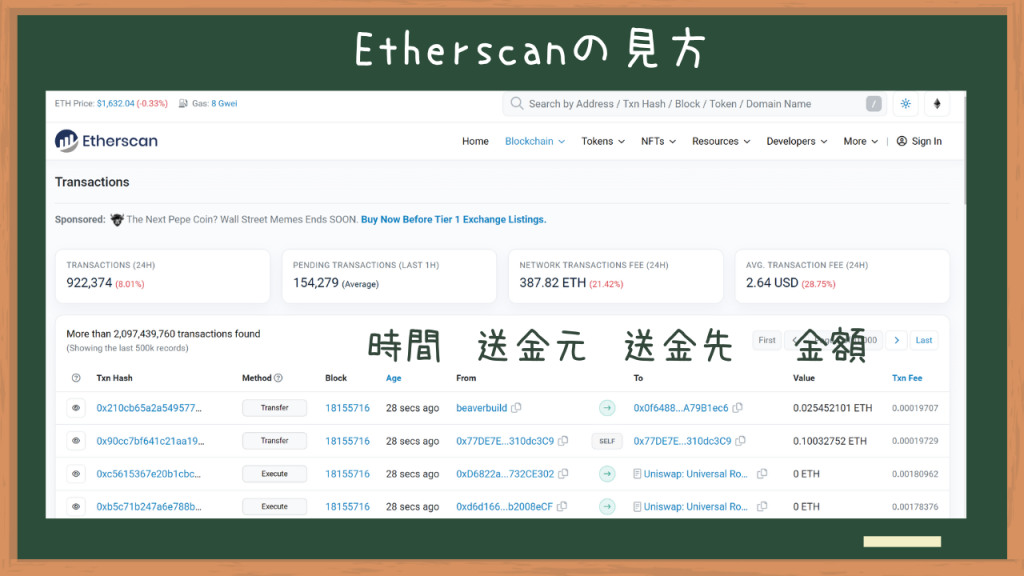
The public nature of the blockchain further complicates the security landscape. Tools such as Etherscan and BSCScan allow anyone to view the transaction history and balance of any wallet address. While this transparency is vital for auditing and trust, it also provides a roadmap for malicious actors. Scammers frequently monitor block explorers to identify active wallets or "whales" (high-net-worth individuals), subsequently targeting them with tailored phishing attacks or "airdropped" malicious tokens designed to trigger exploitative smart contracts upon interaction.

【3分でわかるWeb3.0基礎講座】セキュリティ

Anatomy of a Web3 Scam: A Chronological Overview

The lifecycle of a Web3 security breach often begins long before a transaction is signed. Cybercriminals utilize a multi-stage approach to bypass the skepticism of modern users.

Phase 1: Social Engineering and Lead Generation

The process typically starts on social platforms such as Discord, Telegram, or X (formerly Twitter). Scammers deploy automated bots to send Direct Messages (DMs) or tag users in posts claiming they have won a "whitelist" spot, a high-value airdrop, or an exclusive NFT. These messages are designed to create a sense of urgency and FOMO (Fear Of Missing Out), prompting the user to act quickly without performing due diligence.

【3分でわかるWeb3.0基礎講座】セキュリティ

Phase 2: The Phishing Gateway

Users are directed to a "spoofed" website that meticulously mimics the interface of a legitimate project, such as OpenSea, Blur, or a popular DeFi protocol. These sites often use "typosquatting"—registering domains that are nearly identical to the original (e.g., "openseea.io" instead of "opensea.io"). Once on the site, the user is prompted to "Connect Wallet" to claim their prize.

Phase 3: The Malicious Signature

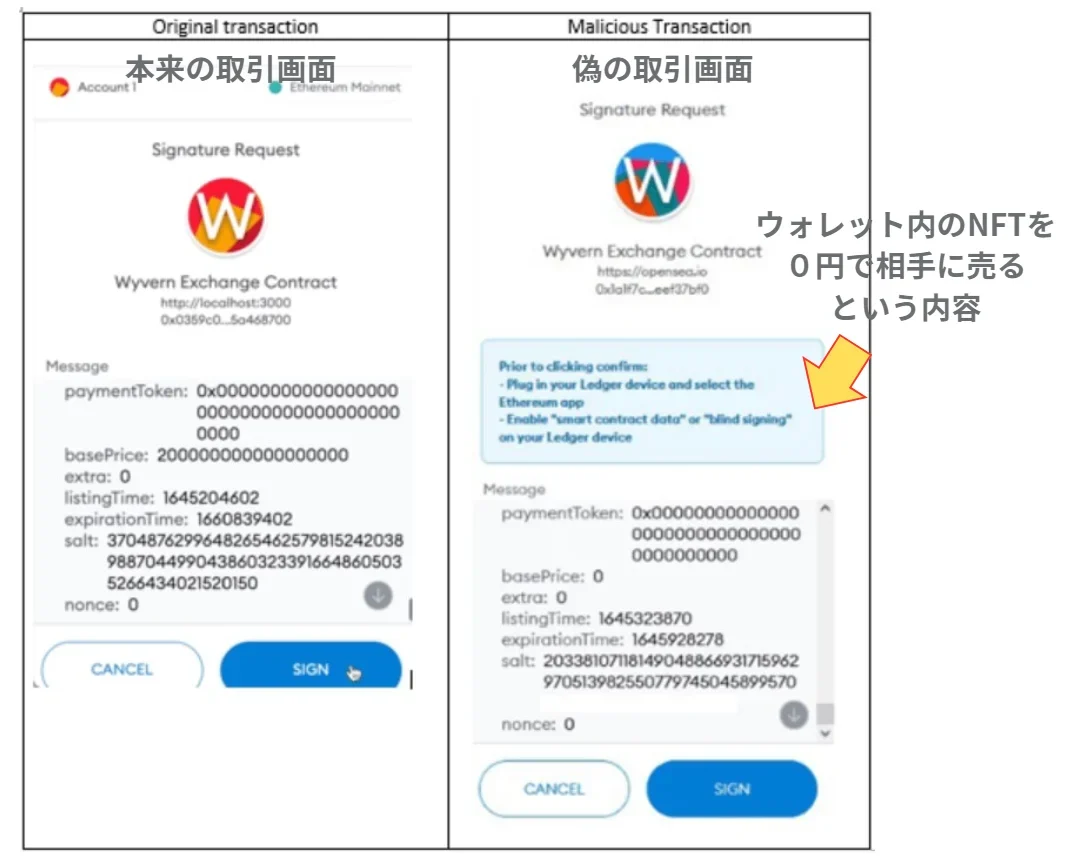
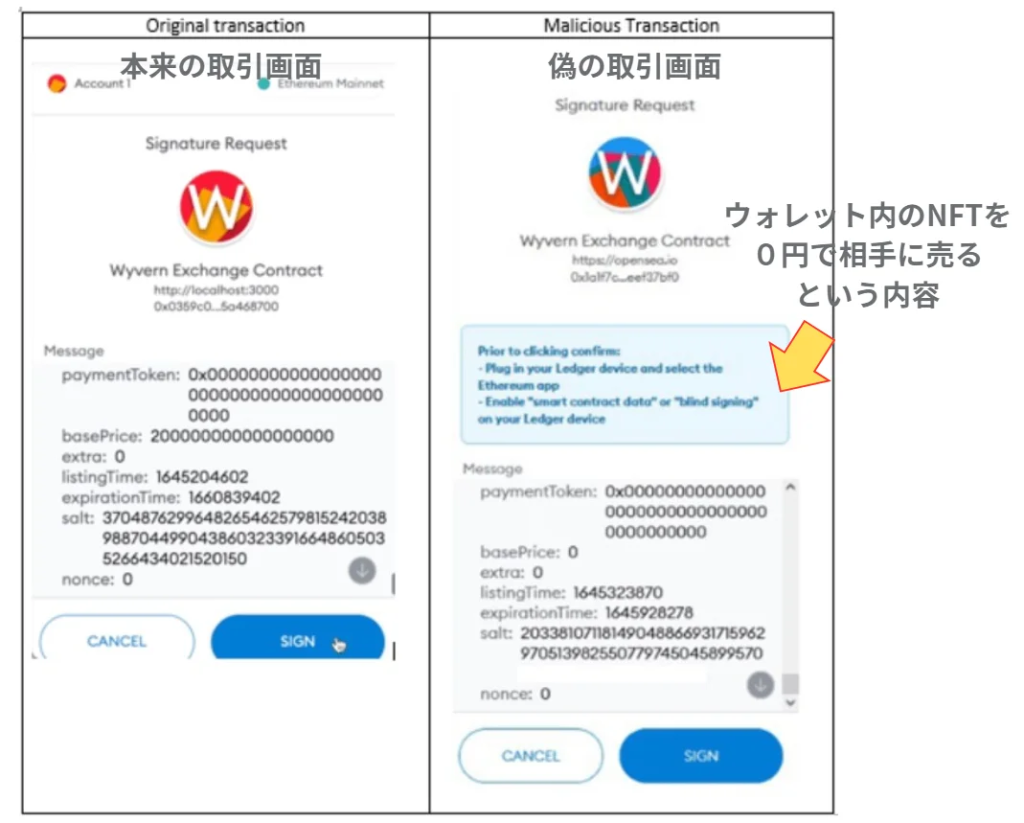
This is the critical juncture where the theft occurs. Instead of a simple login, the fake site presents a transaction request. To the untrained eye, this may look like a standard "Sign" or "Approve" request. In reality, the user is often granting the scammer’s smart contract an "Unlimited Allowance" to spend a specific token (like USDT or ETH) from their wallet. Once the user signs this transaction, the scammer gains the legal "permission" on the blockchain to drain the assets at any time.

【3分でわかるWeb3.0基礎講座】セキュリティ

Technical Defense Mechanisms: The Role of Revoking and Security Extensions

To combat these threats, the industry has developed specialized tools and protocols. One of the most critical, yet underutilized, functions is the "Revoke" mechanism.

Understanding Token Approvals

When a user interacts with a legitimate DeFi protocol, they must "approve" the protocol to move tokens on their behalf. For convenience, many protocols request "unlimited" approval so the user doesn’t have to pay gas fees for every single trade. However, if that protocol is later hacked, or if the user accidentally granted this permission to a scam site, their funds remain at risk indefinitely.

【3分でわかるWeb3.0基礎講座】セキュリティ

The Revocation Process

"Revoking" is the act of resetting these permissions to zero. Security experts recommend that users regularly audit their approvals using services integrated into block explorers. The process involves:

  1. Navigating to the "Token Approval" section of a block explorer (e.g., Etherscan’s "More" menu).
  2. Connecting a Web3 wallet to the interface.
  3. Identifying unrecognized or high-risk contracts.
  4. Clicking "Revoke" and confirming the transaction.
    It is important to note that revoking is an on-chain transaction that requires a small amount of "gas" (network fees), meaning users must maintain a small balance of the network’s native token to secure their wallet.

Proactive Protection Tools

Beyond manual audits, browser extensions like "Kekkai" or "Pocket Universe" have emerged as essential layers of defense. These tools act as a firewall, intercepting wallet requests and simulating the transaction before the user signs it. They provide a clear, human-readable summary of what the transaction will do—such as "This transaction will move all your Bored Ape NFTs to an unknown address"—effectively neutralizing the ambiguity that scammers rely on.
【3分でわかるWeb3.0基礎講座】セキュリティ

Supporting Data: The Scale of the Threat

The necessity for these security measures is underscored by staggering industry data. According to reports from blockchain analytics firm Chainalysis, crypto-related scams and hacks resulted in the theft of approximately $3.8 billion in 2022. While 2023 saw a decline in the total value stolen due to improved market conditions and better security practices, the frequency of "approval phishing" attacks increased.

A study by the FBI’s Internet Crime Complaint Center (IC3) noted that investment fraud involving cryptocurrency reached record highs in recent years, with social engineering on platforms like Discord being a primary entry point. The data suggests that while the technical security of the blockchains themselves (like Ethereum or Bitcoin) remains robust, the "human layer" remains the most vulnerable point of failure.

【3分でわかるWeb3.0基礎講座】セキュリティ

Industry and Regulatory Responses

The prevalence of these scams has forced major platforms to take action. Discord has implemented more stringent bot-detection algorithms and has encouraged server moderators to disable DMs by default for community members. Wallet providers like MetaMask have overhauled their user interfaces to make "Set Approval For All" warnings more prominent and easier to understand for non-technical users.

Regulators, including the Securities and Exchange Commission (SEC) in the United States and the Financial Conduct Authority (FCA) in the UK, have issued repeated warnings regarding the risks of decentralized finance. Their focus has largely been on investor education, emphasizing that in the world of Web3, there is no "customer service" line to call once a transaction has been confirmed on the ledger.

【3分でわかるWeb3.0基礎講座】セキュリティ

Broader Impact on Mass Adoption

The "security tax" currently imposed on Web3 users—the need to constantly audit approvals, use multiple hardware wallets, and decipher complex hexadecimal signatures—remains one of the most significant barriers to mass adoption. For blockchain technology to reach the next billion users, the industry must move toward "Account Abstraction" and other technologies that allow for social recovery and programmable security rules, reducing the catastrophic impact of a single lost key or signed message.

Until these technical improvements become standard, education remains the most effective tool. The transition from the "walled gardens" of Web2 to the open frontiers of Web3 requires a fundamental shift in user psychology. The convenience of "one-click" interactions must be replaced by a culture of verification.
【3分でわかるWeb3.0基礎講座】セキュリティ

Conclusion: A Checklist for the Modern Web3 User

To navigate this landscape safely, users are encouraged to adopt a "Zero Trust" policy. This includes:

  • Disabling DMs: Turning off direct messages on Discord and X to avoid automated scam outreach.
  • Using Hardware Wallets: Storing long-term assets in "cold storage" devices that are not connected to the internet.
  • Verification of Links: Always accessing protocols through official documentation or bookmarked links rather than search engine results or social media tags.
  • Regular Audits: Monthly checks of token approvals and revoking any permissions that are no longer necessary.
  • Transaction Simulation: Utilizing security extensions to preview the outcome of any signature request.

As the Web3 ecosystem continues to mature, the battle between innovators and exploiters will persist. The resilience of the decentralized future depends not only on the strength of its code but on the informed vigilance of its participants. In the digital age, the price of sovereignty is eternal vigilance.


July 19, 2026 0 comment
0 FacebookTwitterPinterestEmail
Japanese & Asian Crypto Markets

Asian AI Giants Challenge US Dominance as Export Bans Reshape Global Cybersecurity Landscape

by Raul Delapena Setiawan July 19, 2026
written by Raul Delapena Setiawan

The global artificial intelligence landscape underwent a significant shift this week as leading technology firms in China and Japan unveiled advanced AI models designed to rival top-tier American technology currently restricted by federal export controls. On Wednesday, the Chinese cybersecurity titan 360 announced the development of Tulongfeng, a sophisticated AI tool specifically engineered to match the capabilities of Anthropic’s Mythos model. This move follows the recent launch of Fugu by Tokyo-based Sakana AI, a frontier model that the company claims stands "shoulder-to-shoulder" with the most powerful restricted versions of Anthropic’s suite. These developments signal a rapid acceleration in the pursuit of AI sovereignty across Asia, as regional players move to fill a vacuum created by tightening U.S. trade policies.

The Catalyst: U.S. Export Controls and the Anthropic Ban

The sudden surge in Asian AI product launches is directly linked to an executive order from the Trump administration issued earlier this month. The order effectively prohibited Anthropic from providing global access to its two most powerful cybersecurity-focused models: Mythos and Fable 5. Mythos, described by industry experts as a "frontier" model with unprecedented capabilities in identifying software vulnerabilities and orchestrating complex cyber maneuvers, was deemed a national security risk if accessed by non-American entities.

Fable 5, a slightly more restricted but still highly capable version of the model, was also included in the ban. These restrictions were implemented despite Anthropic’s historic growth trajectory; in May 2026, the San Francisco-based AI lab reported that its run-rate revenue had surpassed $47 billion, with a valuation nearing $1 trillion ahead of its anticipated initial public offering. The ban has significantly disrupted Anthropic’s expansion into Asian enterprise markets, creating an immediate demand for high-performance alternatives that are not subject to the volatility of U.S. foreign policy.

China’s Strategic Countermove: 360’s Tulongfeng and Yitianzhen

In Beijing, the cybersecurity firm 360 has positioned its new tools not merely as commercial products, but as national strategic assets. The company’s founder, Zhou Hongyi, introduced Tulongfeng as a direct competitor to Anthropic’s Mythos, specifically focused on the automated discovery of software vulnerabilities. Alongside Tulongfeng, 360 unveiled Yitianzhen, a model designed to automate cyber defense and incident response.

Zhou Hongyi emphasized the concept of "one-way transparency" as a primary driver for these developments. He argued that if only certain global actors have access to advanced AI for vulnerability detection, it creates a dangerous imbalance in international cybersecurity. By developing Tulongfeng, 360 aims to ensure that China possesses the same high-level offensive and defensive capabilities as those guarded by the U.S. government. The firm’s rhetoric suggests that AI-driven cybersecurity is now a central pillar of national defense, mirroring the U.S. stance that such technology is too powerful to be shared freely.

Japan’s Resilience Strategy: Sakana AI and the Fugu Model

While 360’s approach is rooted in strategic competition, Tokyo-based Sakana AI has framed its new model, Fugu, as a practical hedge against geopolitical instability. Named after the Japanese blowfish—a delicacy that is dangerous if not handled with extreme precision—Fugu is designed to deliver frontier-level capabilities without the risk of being cut off by foreign export controls.

Sakana AI, founded in 2023 by former Google researchers David Ha and Llion Jones, along with former Mercari executive Ren Ito, has quickly become a leader in the Japanese AI sector. The company recently raised $135 million in a Series B funding round, reaching a valuation of $2.65 billion. Fugu represents a shift in philosophy from the "bigger is better" approach of American labs. Instead of focusing solely on raw parameter count, Fugu is an "orchestration model" designed to manage and coordinate access to various other models through their APIs.

David Ha, CEO of Sakana AI, noted on social media that reliance on a single provider for national infrastructure is a risk that the recent U.S. export controls have made impossible for Japanese businesses to ignore. "Access to top models can disappear overnight," Ha stated. "Collective intelligence is the practical hedge against this concentration of power."

Chronology of the AI Export Crisis

To understand the speed of the current market realignment, it is necessary to look at the timeline of events leading up to this week’s launches:

  • May 2026: Anthropic announces record-breaking revenue figures, solidifying its position as the dominant force in enterprise AI.
  • June 10, 2026: The Trump administration issues an emergency export ban on Anthropic’s Mythos and Fable 5 models, citing concerns over "dual-use" technology that could be used for state-sponsored cyber warfare.
  • June 17, 2026: At the G7 summit in Evian, France, AI access and export controls become a primary topic of discussion. Sakana AI co-founder Ren Ito participates in high-level talks, advocating for "AI sovereignty" and the preservation of access for U.S. allies.
  • June 22, 2026: Sakana AI launches Fugu, explicitly marketing it as a way for Japanese firms to bypass the risks of U.S. export restrictions.
  • June 24, 2026: 360 unveils Tulongfeng and Yitianzhen in Beijing, framing them as essential tools for maintaining China’s strategic parity in the AI age.

Geopolitical Implications: The Rise of AI Sovereignty

The emergence of Tulongfeng and Fugu highlights a growing trend toward "AI Sovereignty"—the idea that nations must control their own AI infrastructure to ensure economic and national security. For years, the global tech industry operated on the assumption that U.S.-developed models would serve as the foundational layer for the world’s AI applications. However, the weaponization of export controls has shattered that trust.

Ren Ito, in an op-ed published shortly after the G7 summit, argued that the U.S. government’s first priority should be to preserve access for its closest allies. He warned that hoarding technology would lead to a fragmented global ecosystem where every region develops its own incompatible "walled gardens." The current situation suggests that this fragmentation is already well underway. Japanese businesses and government agencies, traditionally reliant on American software, are now looking toward local alternatives like Fugu to ensure their digital infrastructure cannot be disabled by a change in Washington’s political climate.

Technical Analysis: Orchestration vs. Raw Power

The technical distinction between these new Asian models and their American counterparts is significant. While Anthropic’s Mythos is built as a monolithic, highly powerful model, Sakana’s Fugu is designed for the "agentic" era of AI. It excels at acting as a central hub that can call upon different specialized models to complete complex tasks. This approach is particularly effective for small-to-medium datasets and is optimized for the specific linguistic and cultural nuances of the Japanese market.

In contrast, 360’s Tulongfeng appears to be more focused on the brute-force identification of code vulnerabilities. By automating the "red teaming" process—where AI attempts to hack into systems to find weaknesses—360 is providing a tool that was previously the sole domain of elite human cybersecurity researchers or highly restricted Western AI.

Economic Impact and the Future of Global AI Markets

The long-term economic consequences of the Anthropic ban remain to be seen, but the immediate impact is a loss of market share for U.S. firms. While Anthropic’s $47 billion run-rate suggests a strong domestic and European base, the exclusion of Asian enterprise customers provides a massive opening for local competitors.

Industry analysts suggest that even if the U.S. were to lift the ban tomorrow, the damage to the reputation of American AI providers may be permanent. "Trust is the hardest currency to regain," said one Tokyo-based venture capitalist. "When a company realizes their entire workflow can be halted by a foreign government’s signature, they don’t go back to that provider. They build their own."

As 360 and Sakana AI continue to refine their products, the "gap" between Western and Eastern AI capabilities is narrowing. If Tulongfeng and Fugu prove to be as effective as their creators claim, the U.S. may find that its attempt to contain advanced AI has instead served as the catalyst for a more competitive and decentralized global market. The era of U.S. AI hegemony is facing its most significant challenge yet, driven not just by technological innovation, but by the fundamental need for national and corporate self-preservation in an increasingly polarized world.

July 19, 2026 0 comment
0 FacebookTwitterPinterestEmail
Crypto Mining & Infrastructure

The State of Bitcoin Mining in Brazil: A Deep Dive into Energy Infrastructure Institutional Growth and Global Hashrate Resiliency

by Reynand Wu July 19, 2026
written by Reynand Wu

Brazil’s emergence as a significant contender in the global Bitcoin mining landscape has transitioned from a peripheral narrative to a central development in the digital asset infrastructure sector. Historically characterized by a complex tax code and a sprawling, often difficult-to-navigate energy grid, the nation has recently demonstrated a remarkable level of resiliency. Between the third quarter of 2025 and the third quarter of 2026, Brazil’s estimated hashrate contribution grew from 2.5 exahashes per second (EH/s) to 3.5 EH/s, marking a 40% year-over-year increase. While the explosive growth of 2024 has moderated, the most significant data point lies in Brazil’s relative performance: during a period when the global network hashrate contracted by 6.4%—dropping from approximately 1,004 EH/s to 940 EH/s—Brazil’s output remained stable at 3.5 EH/s. This stability has effectively increased Brazil’s global market share to approximately 0.37%, signaling a deep institutional conviction that persists even when major jurisdictions like the United States, China, and Russia have seen temporary contractions.

The Brazilian Power Grid: A Renewable Energy Powerhouse

The backbone of Brazil’s mining appeal is the Sistema Interconectado Nacional (SIN), one of the world’s most robust and greenest energy networks. In 2023, the SIN generated 708.1 TWh of electricity, with an installed capacity reaching 232 GW in 2024. Projections from the Brazilian energy ministry suggest this capacity will expand to 268 GW by 2029. What distinguishes Brazil from other mining hubs is its renewable composition, which consistently fluctuates between 88% and 90%.

The State of Bitcoin Mining in Brazil (2026)

The country utilizes several "mega-dams" to anchor its energy supply, including Itaipu (14,000 MW, shared with Paraguay), Belo Monte (11,233 MW), and Tucuruí (8,370 MW). Furthermore, the Northeast region has become a global leader in wind energy, boasting 19.6 GW of capacity across nearly 700 plants. For Bitcoin miners, this translates into some of the cleanest grid power available globally. However, the cost of this energy is highly dependent on the consumer’s regulatory status.

While captive industrial consumers pay average tariffs ranging from $0.126/kWh in the South to $0.159/kWh in the Central-West, these figures are not the relevant benchmark for industrial mining. The true opportunity lies in the Ambiente de Contratação Livre (ACL), or the Free Contracting Environment. Under Portaria 50/2022, which reached full implementation in 2024, high-tension consumers can bypass traditional distributors to negotiate directly with power generators. This allows for bilateral contracts with wind or hydro producers, securing fixed prices and shielding operators from the "Bandeira Tarifária" system—a real-time surcharge mechanism triggered during periods of low hydrology.

The Strategic Importance of Energy Curtailment

The most significant operational frontier in Brazil is the Northeast wind belt. Despite its productivity, the region suffers from severe transmission bottlenecks. In 2024 alone, 1,445 renewable plants faced curtailment, resulting in approximately 400,000 hours of forced interruptions where energy was generated but could not be transmitted to the grid.

The State of Bitcoin Mining in Brazil (2026)

Bitcoin miners have positioned themselves as the "buyer of last resort" for this stranded energy. By co-locating modular data centers directly at the generation source, miners absorb structural waste, providing a revenue floor for energy producers. This symbiotic relationship is the primary driver behind the current wave of institutional investment in the Brazilian mining sector.

Institutional Profiles: The Vanguard of Brazilian Mining

The landscape of 2026 is defined by four primary operators, each representing a different facet of the market’s maturity and strategic direction.

Minter Digital: The Institutional Pioneer

Minter Digital represents the most operationally mature entity in the Brazilian market. With a founding team tracing its lineage to CleanSpark (NASDAQ: CLSK) and the launch of the first regulated crypto ETF via Hashdex, the company focuses on "financializing" mining. Minter recently secured a Series A investment from Itaú Ventures, the venture capital arm of Itaú Unibanco, Latin America’s largest private-sector bank. This partnership is viewed as a landmark moment for the industry, signaling that traditional financial titans now view mining as a legitimate energy infrastructure asset. Minter operates on a "Greenabler" model, utilizing profit-sharing agreements with generators to monetize intermittent wind and solar energy that would otherwise be lost to dispatch constraints.

The State of Bitcoin Mining in Brazil (2026)

Arthur Mining: The Proven Blueprint

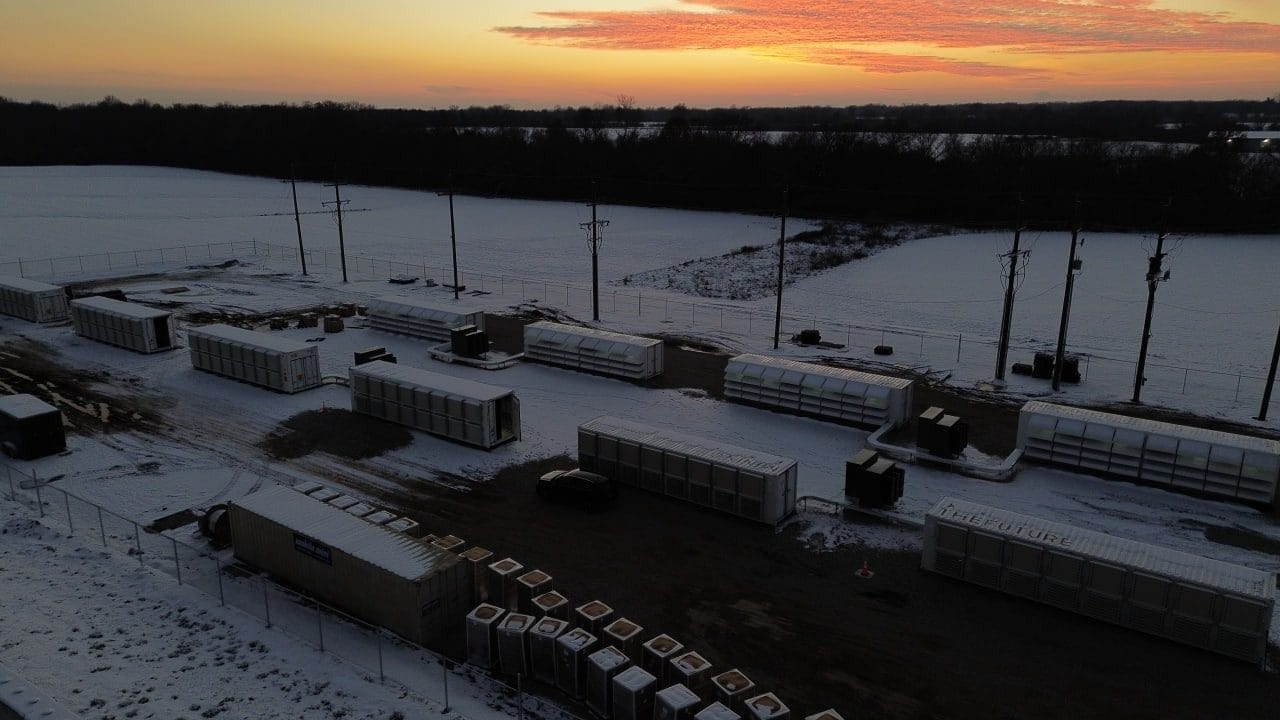
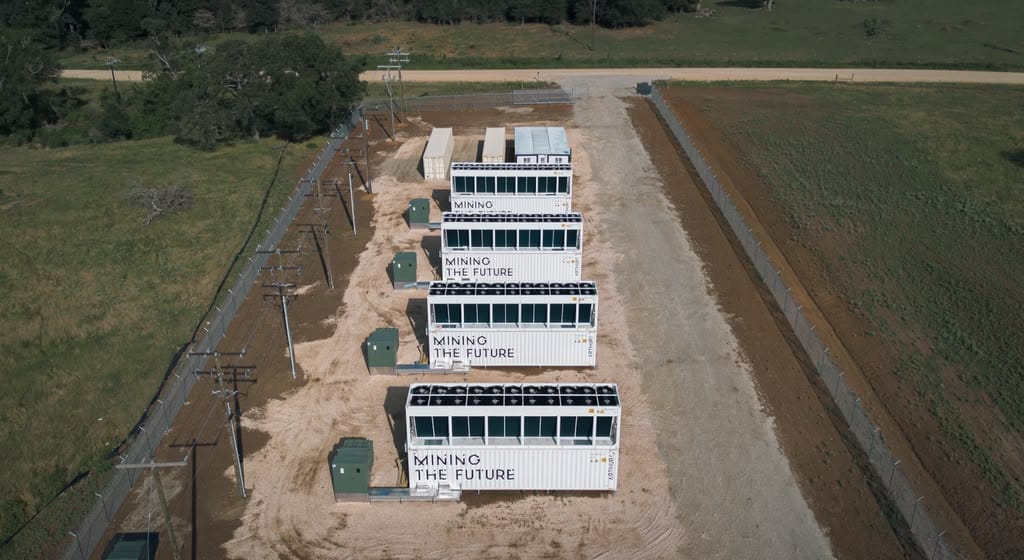
Founded by Rudá Pellini, Arthur Mining (Arthur Inc.) spent years proving its containerized, energy-first model in the United States before expanding back into Brazil. With a development pipeline of 117 MW across North America, the company uses its Brazilian arm to identify undervalued energy sources. Arthur Mining also serves as a regional distributor for FBOX, providing the "Container-as-a-Service" (CaaS) model that allows smaller players to deploy institutional-grade infrastructure without the heavy R&D costs.

Radius Mining: Targeting the Northeast

Led by former Credit Suisse banker Flávio Hernandez, Radius Mining is specifically designed to solve the curtailment problem in the Northeast. The company recently signed a landmark Operations and Maintenance (O&M) contract with Axia, the successor to the privatized state utility Eletrobras. This relationship provides Radius with the credibility to negotiate with major energy generators who were previously skeptical of the mining sector. Radius is currently building toward a target of 50 MW of installed capacity by the end of 2026, backed by seed capital from major Brazilian energy entrepreneurs and directors from XP Investimentos.

Vextron Technologies: The Industrial Innovator

Vextron Technologies, based in the technological hub of Florianópolis, focuses on the electromechanical supply chain. By manufacturing proprietary mining modules within Brazil using components from global giants like WEG and Schneider, Vextron sidesteps many of the logistical hurdles associated with importing hardware. Their "MINERA" software platform integrates directly with power plant dispatch centers, allowing the mining load to function as a responsive, controllable element of the grid.

The State of Bitcoin Mining in Brazil (2026)

The Logistical and Regulatory Maze

While energy is abundant, the importation of hardware remains a significant hurdle. Brazil’s customs environment is notoriously complex, requiring a "non-automatic" import license from DECEX for any used equipment. This process can take between 15 and 60 days and must be completed before the hardware leaves its country of origin.

Furthermore, the tax implications of hardware classification are severe. Miners must be classified under NCM 8473.30.49 (parts for data processing) to qualify for 0% import duties. An incorrect classification under "general electrical apparatus" (NCM 8543.70.99) can result in a tax burden exceeding 50% of the hardware’s value. Success in the Brazilian market, therefore, requires a sophisticated understanding of the "RADAR" registration system and the "Receita Federal" vetting process.

Financial Sophistication and Market Outlook

The arrival of institutional financial products is a key indicator of Brazil’s maturation. Hashrate forward financing—where operators receive upfront capital in exchange for future production—is now being utilized to fund capital expenditures (CapEx). This reduces the reliance on equity diluting rounds and allows miners to scale more efficiently.

The State of Bitcoin Mining in Brazil (2026)

Industry analysts observe that Brazil’s current hashrate of 3.5 EH/s is not merely a number, but a "floor" established by operators who have survived a global downturn. The conviction displayed by Brazilian miners during the Q3 2026 network contraction suggests that the infrastructure being built is designed for long-term sustainability rather than short-term speculation.

Chronology of Key Developments

  • 2017-2020: Early pioneers like Arthur Mining establish the first operational proofs of concept, largely focusing on US markets while scouting Brazilian energy.
  • September 2022: The Brazilian government issues Portaria 50/2022, setting the stage for the full opening of the Free Contracting Environment (ACL).
  • January 2024: The ACL becomes fully accessible to all high-tension consumers, enabling Bitcoin miners to negotiate directly with renewable energy generators.
  • Early 2025: Brazil’s hashrate begins a steep climb from 1.5 EH/s as the first wave of large-scale containerized deployments goes live.
  • June 2025: Vextron Technologies commences operations, highlighting a shift toward domestic manufacturing of mining infrastructure.
  • Q3 2026: Brazil maintains 3.5 EH/s of hashrate despite a 6.4% global network contraction, proving the resilience of the domestic sector.

Broader Impact and Implications

Brazil’s trajectory offers a blueprint for other developing nations with abundant renewable energy and transmission challenges. By integrating Bitcoin mining into the national grid as a flexible, dispatchable load, Brazil is not only securing a piece of the global digital economy but also underwriting the financial viability of its renewable energy expansion.

The entry of Itaú Ventures and directors from XP Investimentos suggests that the "stigma" of Bitcoin mining is fading in the eyes of traditional Brazilian finance. As the Leilão 001/2024 transmission expansion begins to alleviate bottlenecks in the Northeast through 2026 and 2027, the potential for Brazil to break into the top five global mining jurisdictions becomes increasingly plausible. The current 3.5 EH/s represents a hardened base of operations; the next phase of growth will likely be driven by the integration of these mines into the broader demand-response mechanisms of the Brazilian power grid.

July 19, 2026 0 comment
0 FacebookTwitterPinterestEmail
Crypto Mining & Infrastructure

Foundry to Expand Global Mining Footprint with Launch of Institutional Grade Zcash Mining Pool in April 2026

by Raul Delapena Setiawan July 19, 2026
written by Raul Delapena Setiawan

Foundry, the operator of the world’s most prolific Bitcoin mining pool, has officially announced its strategic expansion into the privacy-centric cryptocurrency sector with the upcoming launch of a Zcash (ZEC) mining pool tailored specifically for institutional participants. Scheduled to debut in April 2026, the new initiative represents a significant pivot for the North American mining giant, which currently dominates the Bitcoin network via its Foundry USA pool. The move is designed to address a perceived deficit in the professional mining infrastructure currently supporting Zcash, providing a compliant, high-security environment for public companies and large-scale institutional miners to contribute computational power to the ZEC network.

The announcement comes at a time when the digital asset industry is witnessing a divergence between retail-driven speculative assets and privacy-focused protocols that offer robust utility for secure financial transactions. By entering the Zcash ecosystem, Foundry intends to apply the same operational rigors and transparency standards that propelled its Bitcoin operations to the top of the global rankings. The new pool will be based in the United States, adhering to domestic regulatory standards while offering the technical sophistication required by enterprise-level entities.

The Strategic Rationale Behind Foundry’s Expansion

Foundry’s decision to launch a Zcash-specific pool is rooted in the maturation of Zcash as an asset class. Despite its long-standing presence in the market, Zcash has historically lacked the institutional-grade mining "plumbing" that characterizes the Bitcoin ecosystem. Mike Colyer, CEO of Foundry, emphasized that while Zcash has evolved into an asset suitable for institutional portfolios, the underlying infrastructure has not seen a commensurate level of professionalization.

For institutional miners, particularly those listed on public stock exchanges, participating in decentralized networks requires a high degree of certainty regarding the provenance of rewards, the security of the pool, and the transparency of the payout structures. Existing Zcash mining pools, while functional, often lack the rigorous auditing and compliance frameworks that larger corporations demand. Foundry’s entry is expected to bridge this gap, potentially attracting a new wave of capital into the Zcash mining hardware market.

Furthermore, the expansion allows Foundry to diversify its revenue streams. As the Bitcoin network undergoes periodic halvings and faces increasing competition, established mining operators are looking toward other Proof-of-Work (PoW) assets that offer sustainable economics and a clear value proposition. Zcash, with its fixed supply and established brand, fits the profile of a "blue-chip" PoW asset that complements a Bitcoin-centric mining strategy.

Bitcoin Mining Giant Enters Zcash With Institutional Service

Technical Foundations: Zcash and the Bitcoin Lineage

Zcash was launched in 2016 as a fork of the Bitcoin codebase, meaning it shares several fundamental economic properties with the world’s largest cryptocurrency. Like Bitcoin, Zcash has a hard cap of 21 million tokens. It also utilizes a halving mechanism approximately every four years to manage inflation and ensure long-term scarcity. However, Zcash distinguishes itself through its implementation of zk-SNARKs (Zero-Knowledge Succinct Non-Interactive Arguments of Knowledge), a form of cryptography that allows users to verify transactions without revealing the sender, receiver, or transaction amount.

In the current digital landscape, most blockchains are pseudonymous rather than anonymous. While Bitcoin addresses do not inherently carry names, the public nature of the ledger allows chain analysis firms to deanonymize users by tracking transaction patterns. Zcash offers a solution to this through its "shielded" addresses, which provide a layer of financial privacy essential for certain corporate and individual use cases.

The Foundry press release noted that Zcash demonstrates how financial privacy can coexist with compliant digital infrastructure. This balance is critical for institutional adoption, as it allows entities to protect sensitive financial data while still providing the necessary transparency for audits and regulatory reporting.

Analyzing the Recent Surge in Network Hashrate

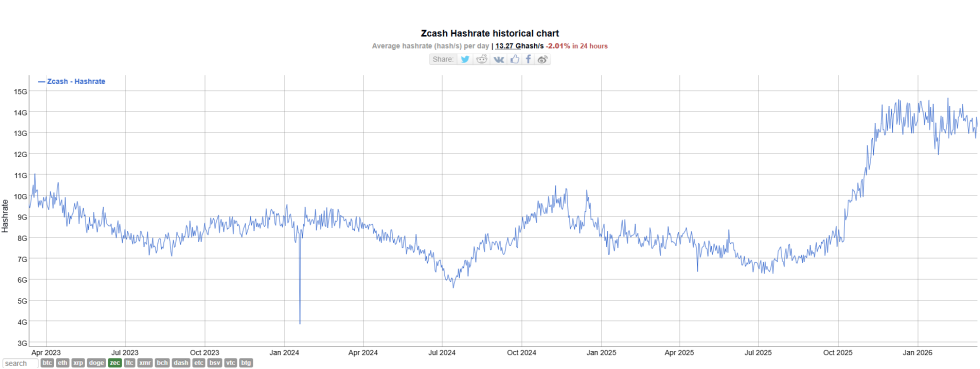
The timing of Foundry’s announcement coincides with a period of remarkable growth for the Zcash network. Data from BitInfoCharts indicates a significant upward trend in the computing power, or hashrate, dedicated to the ZEC blockchain. In October 2025, the Zcash hashrate was recorded at less than 8 Ghash/s. By early 2026, that figure has climbed to over 13 Ghash/s, representing an increase of more than 60% in a matter of months.

A rising hashrate is generally viewed as a sign of network health and security. It indicates that miners are increasingly confident in the future value of the asset, leading them to deploy more hardware or upgrade existing rigs. The surge in hashrate also suggests that specialized mining hardware, such as Equihash ASICs (Application-Specific Integrated Circuits), is becoming more efficient and widely available.

Foundry’s entry into the space is likely to accelerate this trend. As the largest operator in the Bitcoin space, Foundry’s endorsement of Zcash serves as a powerful signal to hardware manufacturers and other large-scale miners that the network is a viable destination for significant capital expenditure.

Bitcoin Mining Giant Enters Zcash With Institutional Service

Chronology of Zcash Development and Mining Milestones

To understand the significance of Foundry’s move, it is necessary to look at the timeline of Zcash’s evolution:

  1. October 2016: Zcash is officially launched by the Zerocoin Electric Coin Company (now Electric Coin Co.), led by Zooko Wilcox.
  2. 2018–2020: The network undergoes several major upgrades, including "Sapling" and "Blossom," which significantly improve the speed and efficiency of shielded transactions.
  3. November 2020: The first Zcash Halving occurs, reducing the block reward from 6.25 ZEC to 3.125 ZEC. This event also saw the introduction of the "Dev Fund," which allocates a portion of rewards to support further development and ecosystem growth.
  4. 2022–2024: The network navigates various regulatory challenges regarding privacy coins while continuing to refine its zero-knowledge proof technology.
  5. Late 2025: The Zcash hashrate begins a sharp ascent, moving from 8 Ghash/s toward historical highs.
  6. March 2026: Foundry announces the April 2026 launch of its institutional Zcash mining pool.

Zooko Wilcox, the founder of Zcash and currently the Chief Product Officer at Shielded Labs, expressed strong support for Foundry’s initiative. Shielded Labs, an independent support organization based in Switzerland, has been instrumental in fostering the Zcash ecosystem. Wilcox noted that having a North American-based, enterprise-grade pool from an operator of Foundry’s caliber is a major milestone for the decentralization and security of the network.

Broader Implications for the Privacy Coin Market

The launch of an institutional Zcash pool by a major US-based firm carries heavy implications for the broader privacy coin market. For years, privacy-focused assets have faced scrutiny from regulators who fear their potential for misuse in illicit activities. This has led to the delisting of various privacy coins from major exchanges in certain jurisdictions.

However, Foundry’s involvement suggests a shift toward a more nuanced understanding of privacy technology. By operating a transparent, US-based pool, Foundry provides a "clean" path for institutional participation. This could potentially set a precedent for how other privacy protocols interact with the traditional financial system. If Zcash can prove that privacy and compliance are not mutually exclusive, it may pave the way for broader acceptance of zero-knowledge technologies in mainstream finance.

From a market perspective, the increased security provided by a larger and more diverse mining base often correlates with lower volatility and higher liquidity. As more professional miners enter the ZEC ecosystem, the "sell pressure" from mining rewards becomes more predictable, and the overall robustness of the network makes it a more attractive prospect for long-term investors.

Market Reaction and Price Performance

At the time of the announcement, the price of Zcash (ZEC) was trading at approximately $209. While the coin has experienced a retracement of roughly 11% over the past week, its long-term trajectory remains a point of interest for analysts. The retracement is viewed by many as a standard market correction following a period of recovery.

Bitcoin Mining Giant Enters Zcash With Institutional Service

Historically, the introduction of institutional infrastructure has served as a catalyst for asset appreciation. While Foundry’s pool is not scheduled to go live until April 2026, the anticipation of increased network security and institutional involvement may provide a floor for the asset’s price. Traders are closely watching the $200 support level, as a sustained hold above this mark, combined with the news of Foundry’s expansion, could signal a renewed bullish phase for ZEC.

Conclusion and Future Outlook

The launch of the Foundry Zcash mining pool in April 2026 is poised to be a landmark event for the Proof-of-Work landscape. It signals the end of the era where Zcash was primarily the domain of hobbyist miners and niche privacy advocates, ushering in a period of professionalized, large-scale operations.

For Foundry, the move reinforces its position as a dominant force in the global mining industry, capable of shaping the trajectory of multiple blockchains. For Zcash, it provides the structural support needed to fulfill its promise as a secure, private, and institutional-grade digital currency. As the 2026 launch date approaches, the industry will be watching closely to see how this infusion of North American institutional hashrate affects the decentralization, security, and market dynamics of one of the world’s most prominent privacy-preserving protocols.

July 19, 2026 0 comment
0 FacebookTwitterPinterestEmail
Crypto Mining & Infrastructure

Trump-Backed American Bitcoin Set for Nasdaq Debut Through Merger With Gryphon Digital Mining as Expansion Plans Target Asia

by Dwi Wanna July 19, 2026
written by Dwi Wanna

American Bitcoin, a specialized cryptocurrency mining enterprise backed by Eric Trump and Donald Trump Jr., is finalizing preparations to transition into a publicly traded entity through an all-stock merger with Gryphon Digital Mining. According to reports confirmed by Hut 8 CEO Asher Genoot, the transaction is expected to conclude in the coming weeks, with the new entity targeted to begin trading on the Nasdaq stock exchange in early September 2025. The company will operate under the ticker symbol ABTC, marking a significant milestone in the intersection of high-level political figures and the institutionalized digital asset sector.

The structural framework of the deal positions Hut 8, one of the industry’s most prominent infrastructure providers, as a central pillar of the new organization. Hut 8 currently maintains an 80% stake in American Bitcoin and is slated to retain a majority interest following the completion of the merger. In a move that underscores the high-profile nature of the venture, the company has secured a roster of anchor investors that includes Tyler and Cameron Winklevoss, the co-founders of the Gemini cryptocurrency exchange. While Gemini has not issued a formal statement regarding the investment, the inclusion of the Winklevoss twins suggests a robust level of confidence from established industry veterans.

Strategic Objectives and the Path to Public Listing

The decision to pursue a merger with Gryphon Digital Mining rather than a traditional initial public offering (IPO) reflects a strategic choice to streamline the path to the public markets. Speaking at the Bitcoin Asia conference in Hong Kong, Asher Genoot emphasized that the merger provides American Bitcoin with more flexible and broader financing options. This approach allows the company to bypass some of the lengthy regulatory hurdles associated with a standard IPO while immediately gaining access to the liquidity and capital-raising potential of the Nasdaq.

Upon the closing of the deal, the combined entity will adopt the American Bitcoin name, effectively rebranding the existing Gryphon infrastructure under the new banner. The ownership structure will remain highly concentrated; Hut 8 and the Trump brothers are expected to collectively control approximately 98% of the company’s equity. This concentration of ownership indicates a long-term commitment from the founding parties to maintain control over the company’s operational direction and strategic pivot points.

American Bitcoin was established in March 2025 with the explicit goal of becoming the world’s most efficient "pure-play" Bitcoin miner. Unlike some competitors that have diversified their data center operations to include artificial intelligence (AI) and high-performance computing (HPC) services, American Bitcoin intends to focus exclusively on the extraction and accumulation of Bitcoin. The company’s growth model is twofold: scaling its mining operations through the deployment of next-generation ASIC (Application-Specific Integrated Circuit) hardware and the direct acquisition of Bitcoin on the open market to bolster its corporate treasury.

Global Expansion and the Asian Pivot

While the company is rooted in the United States, its growth strategy is decidedly global. Eric Trump’s recent appearance at the Bitcoin Asia conference highlights the firm’s intent to cultivate relationships within the Eastern hemisphere. Following the Hong Kong event, Trump is scheduled to travel to Tokyo for an engagement hosted by Metaplanet, a Japanese firm that has gained international attention for its aggressive "Bitcoin-first" treasury strategy, often drawing comparisons to MicroStrategy.

Genoot has indicated that American Bitcoin is actively exploring acquisition opportunities in both Hong Kong and Japan. The rationale behind this international expansion is to offer global investors a gateway to Nasdaq-listed Bitcoin assets, particularly in jurisdictions where direct access to U.S. equities may be restricted or complex. By establishing a physical and operational presence in Asia, American Bitcoin aims to capture a larger share of the global capital currently seeking exposure to the digital asset mining sector.

The focus on Japan and Hong Kong comes at a time when both regions are refining their regulatory frameworks to attract cryptocurrency businesses. Hong Kong, in particular, has positioned itself as a burgeoning hub for digital assets, launching spot Bitcoin and Ethereum ETFs earlier in 2024. For American Bitcoin, establishing a foothold in these markets provides not only geographic diversification but also a strategic hedge against potential regulatory shifts in the United States.

Technical Infrastructure and Operational Efficiency

To achieve its goal of becoming the "most efficient" miner, American Bitcoin must navigate a highly competitive landscape characterized by rising hash rates and fluctuating energy costs. Since the Bitcoin halving event in April 2024, which reduced block rewards by 50%, the mining industry has entered a phase of consolidation. Only the most well-capitalized firms with access to low-cost power and efficient hardware have remained profitable.

American Bitcoin’s partnership with Hut 8 provides a significant advantage in this regard. Hut 8 brings years of operational expertise in managing large-scale data centers and optimizing energy procurement. The "pure-play" mining strategy suggests that the company will prioritize the "hash-rate-to-power-draw" ratio, ensuring that its fleet of miners generates the maximum amount of Bitcoin for every kilowatt-hour of electricity consumed.

Furthermore, the company’s plan to engage in direct Bitcoin purchases suggests a "HODL" strategy common among top-tier public miners like Marathon Digital Holdings and Riot Platforms. By retaining the Bitcoin it mines and purchasing additional coins during market pullbacks, American Bitcoin aims to create a leveraged play on the price of the underlying asset, which often appeals to institutional investors looking for high-beta exposure to the crypto market.

Political Scrutiny and Potential Conflicts of Interest

The involvement of the Trump family has inevitably drawn scrutiny from political analysts and ethics watchdogs. As the Trump administration continues to shape policy, critics have raised concerns regarding potential conflicts of interest. Donald Trump has frequently positioned himself as a "pro-crypto" candidate and leader, advocating for the United States to become the "crypto capital of the planet" and suggesting that all remaining Bitcoin should be mined within the U.S.

The launch of a major mining firm backed by the President’s sons, coinciding with a pro-crypto legislative agenda, creates a complex narrative. Supporters argue that the venture demonstrates a commitment to American technological leadership and energy independence. Conversely, detractors suggest that policy decisions favoring the crypto industry could directly benefit the private financial interests of the First Family.

Despite these concerns, the legal and regulatory framework for the merger remains on track. The SEC’s oversight of Nasdaq listings ensures that the company must adhere to stringent disclosure requirements, providing transparency into its financial health and operational risks. For investors, the "Trump factor" adds a layer of brand recognition and political tailwinds that are unique in the mining sector.

Industry Context: The Competitive Landscape

American Bitcoin enters the public market at a time of significant evolution for the mining industry. The sector is currently dominated by several large-cap players:

  1. Marathon Digital Holdings (MARA): Known for its massive deployed hash rate and substantial Bitcoin treasury.
  2. Riot Platforms (RIOT): Focused on vertically integrated operations with a massive facility in Texas.
  3. Core Scientific (CORZ): Recently emerged from bankruptcy with a renewed focus on both mining and AI data services.
  4. CleanSpark (CLSK): Noted for its use of renewable energy and high operational efficiency.

By branding itself as a "pure-play" miner, American Bitcoin is positioning itself as a direct competitor to these giants. The company’s strategy of aggressive acquisition and global expansion suggests it is not content with being a niche player but aims to challenge the incumbents for market dominance.

The timing of the September 2025 listing is also noteworthy. Historically, the year following a Bitcoin halving is often characterized by significant price appreciation in the digital asset markets. If this trend continues, ABTC could debut during a period of heightened investor appetite for crypto-related equities.

Conclusion and Market Outlook

The merger between American Bitcoin and Gryphon Digital Mining represents a bold gamble on the long-term viability of the Bitcoin mining industry and the continued integration of digital assets into the global financial system. With the backing of the Trump family, the operational muscle of Hut 8, and the financial support of industry leaders like the Winklevoss twins, the company is well-positioned to make a significant impact upon its Nasdaq debut.

As the early September trading date approaches, market participants will be closely watching the finalization of the merger and the company’s first quarterly disclosures. The success of American Bitcoin will likely be measured by its ability to scale its hash rate efficiently, navigate the political complexities of its ownership, and successfully execute its expansion into the burgeoning Asian markets. Whether it can truly become the "world’s largest and most efficient" miner remains to be seen, but its entry into the public arena undoubtedly marks a new chapter in the history of the American crypto industry.

July 19, 2026 0 comment
0 FacebookTwitterPinterestEmail
Global Cryptocurrency News

Uniswap Founder Hayden Adams Proposes Landmark Protocol Fee Expansion, Igniting Core DeFi Value Capture Debate

by Iffa Jayyana July 19, 2026
written by Iffa Jayyana

Hayden Adams, the visionary founder of Uniswap, the decentralized exchange (DEX) powerhouse, has ignited a pivotal discussion within the decentralized finance (DeFi) ecosystem by formally proposing the expansion of protocol fees across upcoming Uniswap v4 deployments and various network integrations, including the recently launched Robinhood Chain. This significant move thrusts one of DeFi’s most enduring and contentious governance debates—the mechanism of value capture for foundational protocols—squarely back into the market’s spotlight. The proposal, published through official Uniswap governance channels, aims to activate a protocol-level fee across a broader spectrum of Uniswap’s operations, a decision that could fundamentally reshape the economic model of the protocol and the investment thesis for its native UNI token holders.

Background: The Genesis of Uniswap and the UNI Token

Uniswap stands as an undisputed titan within the DeFi landscape, a cornerstone infrastructure that has revolutionized on-chain trading. Since its inception, Uniswap has been synonymous with innovation, pioneering the automated market maker (AMM) model that underpins much of the decentralized exchange sector. Its successive iterations, from v1 to v3, have consistently pushed the boundaries of capital efficiency and user experience, enabling billions of dollars in daily trading volume and becoming a primary liquidity venue for countless digital assets across multiple blockchains. The protocol’s importance cannot be overstated; it serves as a critical conduit for liquidity, price discovery, and token swaps, effectively decentralizing a function historically dominated by centralized exchanges.

However, despite its immense utility and colossal transaction volumes, the Uniswap protocol’s native governance token, UNI, has long faced a unique challenge: the question of direct economic value capture. When UNI was launched in September 2020, primarily through an airdrop to early users and liquidity providers, its stated purpose was primarily for governance. Holders of UNI could vote on key protocol parameters, treasury allocations, and future upgrades, embodying the spirit of decentralized ownership. Yet, unlike many other protocol tokens that accrue a portion of the fees generated by their underlying applications, UNI did not directly benefit from the vast trading fees generated by Uniswap. Instead, 100% of trading fees were routed directly to liquidity providers (LPs) as a reward for supplying capital to the pools. This design choice fostered rapid growth by incentivizing liquidity, but it also created a disconnect between the protocol’s unprecedented usage and the token’s intrinsic economic value, leading to persistent discussions among token holders and the wider DeFi community.

The Enduring Debate: Value Capture in DeFi

The debate over protocol fees is not unique to Uniswap but rather a microcosm of a larger philosophical and economic discussion within DeFi: how should decentralized protocols, which often operate as public goods or critical infrastructure, sustain themselves and reward their contributors and governance participants? For years, the prevailing narrative emphasized growth at all costs – attracting liquidity, users, and integrations. The implicit promise was that once sufficient network effects were established, a mechanism for value capture could be introduced without jeopardizing competitiveness.

This paradigm has led to a diversity of approaches across the DeFi ecosystem. Some protocols, like SushiSwap or PancakeSwap, incorporated fee-sharing mechanisms for their token holders from their early days. Others, such as GMX, built their tokenomics directly around revenue sharing, demonstrating a clear link between protocol activity and token holder benefit. These examples often showcased a more direct correlation between protocol success and token price performance, providing a compelling counterpoint to Uniswap’s governance-only model.

The sensitivity surrounding Uniswap’s fees stems from its sheer scale and systemic importance. Any change to its fee structure could have ripple effects across the entire DeFi landscape, impacting liquidity dynamics, trading costs, and the overall competitiveness of the platform. For many UNI holders, the absence of a direct economic link has been a source of frustration, with the token’s valuation often struggling to reflect the protocol’s dominance. This proposal by Hayden Adams directly addresses this long-standing tension, seeking to bridge the gap between usage and token value.

Details of the Current Proposal: Expanding the Fee Horizon

The new proposal put forth by Hayden Adams is designed to activate protocol-level fees across specific new deployments, explicitly mentioning Uniswap v4 pools and the newly integrated Robinhood Chain. This is a crucial distinction from previous, more general discussions about activating the "fee switch" on existing v2 or v3 pools. By targeting new deployments and future iterations like v4, the proposal aims to implement this change strategically, potentially mitigating immediate disruption to established liquidity pools while setting a precedent for future growth.

If approved, a portion of the trading fees, which traditionally flow entirely to liquidity providers, would be redirected to a protocol-controlled mechanism. This mechanism could involve routing funds to the protocol’s treasury, initiating token buybacks (which would reduce supply and potentially increase token value), or implementing token burning (permanently removing tokens from circulation). The exact percentage of fees to be diverted, the specific pools affected, and the chosen chains for implementation are all critical details that will be subject to further governance discussions and votes. This nuanced approach recognizes the complex interplay between incentivizing liquidity, maintaining competitiveness, and creating sustainable value for the protocol and its stakeholders.

A Chronology of Uniswap’s Evolution and Fee Discussions

Uniswap’s journey has been marked by continuous innovation and growth:

  • 2018: Uniswap v1 launches on Ethereum, pioneering the AMM model.
  • 2020 (May): Uniswap v2 introduces ERC-20 to ERC-20 pools and price oracles, significantly expanding its utility.
  • 2020 (September): The UNI governance token is launched via a massive airdrop, distributing tokens to past users and LPs. This moment firmly established Uniswap as a decentralized entity, but without direct fee capture for UNI holders.
  • 2021 (May): Uniswap v3 introduces concentrated liquidity, allowing LPs to allocate capital within specific price ranges, dramatically improving capital efficiency. While v3 included an inactive "protocol fee switch," it remained dormant.
  • Ongoing (2020-2023): Numerous discussions and informal proposals arise within the Uniswap community and governance forums regarding the activation of the fee switch. These often highlighted the discrepancy between Uniswap’s market dominance and UNI’s economic model.
  • 2023 (June): Uniswap v4 whitepaper is released, outlining a highly customizable and "hook"-enabled architecture, designed to be more flexible and extensible. V4’s design inherently offers more granular control over fee mechanisms.
  • 2024 (Early): Uniswap expands its multi-chain footprint, including deployments on various Layer 2s and sidechains, and notably, the new Robinhood Chain.
  • Recently: Hayden Adams formally proposes the expansion of protocol fees, specifically targeting v4 pools and new deployments like Robinhood Chain, signaling a strategic shift in the long-standing debate.

This chronology illustrates a gradual evolution, from pure technological innovation to a more mature consideration of economic sustainability and value alignment for its stakeholders.

Understanding Protocol Fees: Mechanism and Impact

At its core, a protocol fee diverts a small percentage of the transaction fees generated by an application from its primary recipients (in Uniswap’s case, liquidity providers) to a protocol-controlled address or mechanism. In the context of a DEX like Uniswap, traders typically pay a fee for each swap, a percentage of which currently goes to LPs. Activating a protocol fee means that, for example, if the total trading fee is 0.30%, a small fraction (e.g., 0.05% or 0.10%) might be routed to the protocol, with the remaining portion still going to LPs.

The impact of such a mechanism is multifaceted:

  • For UNI Holders: It creates a direct economic link between the protocol’s activity and the value of the UNI token. This could lead to increased demand for UNI, a more robust investment case, and potentially higher token valuations.
  • For Liquidity Providers (LPs): A protocol fee would reduce the share of trading fees they receive. This necessitates a careful balance; if the fee is too high, LPs might withdraw their capital and migrate to other DEXs that offer higher returns, thereby reducing Uniswap’s liquidity and competitiveness.
  • For Traders/Users: Depending on how the fee is implemented and its size, it could marginally increase trading costs. However, if the fee is small and maintains competitive liquidity, the impact on users might be minimal or even offset by benefits derived from a more stable and well-funded protocol.
  • For the Protocol Treasury: Fees could bolster the protocol’s treasury, providing funds for ongoing development, security audits, grants, and strategic initiatives without relying solely on initial token allocations or external funding.

The Multi-Chain Imperative: Complexity and Opportunity

Uniswap is no longer confined to the Ethereum mainnet. Its strategic expansion across a multitude of networks—including popular Layer 2 solutions like Arbitrum and Optimism, sidechains like Polygon, and other EVM-compatible chains like BNB Chain and the newly launched Robinhood Chain—underscores its ambition to be a universal liquidity layer. While this multi-chain footprint vastly expands its reach and potential volume, it also introduces significant complexity to governance and fee implementation.

Each chain presents a unique operating environment:

  • User Demographics: Different chains attract different user bases with varying risk appetites and preferences.
  • Fee Environments: Transaction costs vary widely. A fee model viable on low-cost Layer 2s might be prohibitive on Ethereum mainnet.
  • Liquidity Profiles: The depth and type of liquidity differ across networks, impacting the sensitivity to fee changes.
  • Competitive Pressures: The competitive landscape for DEXs varies from chain to chain, with local players often vying for market share.

This fragmentation means that a one-size-fits-all fee model may not be optimal. The current proposal’s focus on "multiple deployments" suggests a flexible approach, allowing for tailored fee structures that can adapt to the specific characteristics of each chain. The governance materials specifically note that fee collections would be routed into "TokenJars" and claimed for burning through UNI bridging to the mainnet. This sophisticated cross-chain accounting and collection mechanism highlights the technical evolution of DeFi governance, moving beyond simple on-chain votes to intricate multi-chain execution details. The more networks Uniswap supports, the more crucial these sophisticated mechanics become for seamless and effective value capture.

Stakeholder Perspectives: A Delicate Balancing Act

The proposal’s fate hinges on navigating the diverse interests of Uniswap’s key stakeholders:

  • UNI Holders: For them, the primary concern is the creation of a clearer, more direct path for token value appreciation. While governance rights are valuable, many investors seek a tangible economic benefit linked to the protocol’s success. A credible method for converting protocol volume into economic value could significantly strengthen UNI’s investment case and potentially lead to a repricing, even if not immediately.
  • Liquidity Providers (LPs): LPs are driven by returns on their capital. They will scrutinize the proposal to understand how protocol fees might reduce their share of trading economics. DeFi liquidity is notoriously fluid; if LPs perceive that other venues offer better risk-adjusted returns, they are quick to redeploy their capital. Uniswap governance must ensure that any fee implementation does not aggressively diminish LP profitability to the point of causing significant liquidity migration.
  • Traders/Users: While typically less vocal in governance debates, traders ultimately care about execution quality, minimal slippage, and competitive pricing. If fee activation adversely impacts liquidity depth or worsens trade execution, users might seek alternatives. The goal is to implement a fee structure that is small enough to preserve competitiveness and barely noticeable to the end-user.
  • Broader DeFi Community and Analysts: This proposal is being watched closely across the entire DeFi sector. Its outcome will set a precedent for how other mature, infrastructure-level protocols might approach their own value capture strategies. Analysts will assess its potential impact on market efficiency, tokenomics models, and the overall narrative surrounding the sustainability of decentralized applications.

Broader Implications: DeFi’s Shift from Growth to Sustainability

This proposal transcends Uniswap, serving as a powerful indicator of DeFi’s maturation. The early years of DeFi were largely characterized by hyper-growth, prioritizing metrics like Total Value Locked (TVL), transaction volume, user acquisition, and integrations. The focus was on establishing dominance and building out foundational infrastructure. However, as the industry evolves, mature protocols inevitably confront a different, more challenging question: how does all this activity translate into long-term economic sustainability and value for their stakeholders?

Uniswap, being one of the most widely used and heavily scrutinized protocols, is at the forefront of this transition. If a protocol of its scale and importance cannot successfully implement a sustainable value-capture model, it will raise difficult questions for investors across the sector about the viability and long-term investment case for governance tokens in general. This debate is therefore a bellwether for the entire industry, signaling a shift from an era of pure growth to one that prioritizes sustainable economics, robust tokenomics, and clear value accrual mechanisms.

Furthermore, the implementation of protocol fees often comes with increased scrutiny from a regulatory perspective. As protocols begin to capture direct economic value, the discussion around whether their tokens could be classified as securities intensifies. This adds another layer of complexity to the governance challenge, as protocols must balance their economic objectives with the need to avoid creating unforeseen regulatory liabilities.

Technicalities of Implementation: TokenJars and Cross-Chain Bridging

The details outlined in the governance materials regarding fee collection mechanisms are particularly insightful. The mention of "TokenJars" and the process of "claiming for burning through UNI bridging to mainnet" points to a sophisticated, multi-layered technical solution.

  • TokenJars: These would likely serve as smart contract vaults on various chains where collected fees are temporarily held. This allows for localized collection without immediately sending every minuscule fee back to Ethereum mainnet.
  • UNI Bridging to Mainnet for Burning: This indicates a two-step process. First, the collected fees (potentially in various tokens) would be converted into UNI tokens on the respective chains. Second, these UNI tokens would then be bridged back to the Ethereum mainnet for a final action, such as burning (permanently removing tokens from circulation). This ensures that the value accrues to the main UNI token and can be managed from a central, secure location.

This architecture underscores the increasing technical sophistication required for multi-chain governance and value capture, demonstrating how far DeFi governance has evolved beyond simple single-chain voting.

Looking Ahead: The Path Through Governance

Hayden Adams’ proposal initiates a formal governance process that will unfold over the coming weeks and months. Typically, this involves several stages:

  1. Discussion and Feedback: The proposal is open for community discussion on the Uniswap governance forum, allowing for feedback, critiques, and refinement.
  2. Temperature Check/Snapshot Vote: An informal, non-binding vote often takes place to gauge community sentiment.
  3. Formal On-Chain Vote: If sufficient support is garnered, a formal, binding on-chain vote by UNI token holders will determine the proposal’s approval or rejection.
  4. Implementation: If approved, Uniswap Labs or relevant development teams would then work on implementing the technical changes required to activate the fees.

The market will be closely watching each stage of this process. The mere proposal has already given the market a fresh reason to pay attention to UNI governance. While it may not instantly settle the decades-long value-capture debate, it decisively moves the discussion into a more concrete, actionable phase.

Conclusion: A Pivotal Moment for Decentralized Finance

Hayden Adams’ proposal for expanding Uniswap protocol fees marks a critical juncture for both Uniswap and the broader DeFi ecosystem. It directly confronts the fundamental question of how decentralized protocols can sustainably capture and distribute the value they create. If approved and implemented cleanly, with a thoughtful balance between rewarding UNI holders and maintaining competitive liquidity, this development could become one of the most important DeFi governance milestones of the year. It signifies a maturation of the industry, moving beyond mere technological innovation to a more profound consideration of economic models, sustainability, and long-term value alignment for all stakeholders in a decentralized future. The outcome will undoubtedly serve as a crucial precedent, shaping the economic trajectories of countless protocols yet to come.

July 19, 2026 0 comment
0 FacebookTwitterPinterestEmail
Bitcoin & Core Networks

An Older Bitcoin Roadmap by Klarck Resurfaces as Market Approaches Key Downside Zone, Prompting Reassessment of Long-Term Projections.

by Reynand Wu July 19, 2026
written by Reynand Wu

The cryptocurrency market is currently witnessing a renewed interest in an older Bitcoin roadmap penned by the prominent crypto commentator known as Klarck, as Bitcoin’s price trajectory has brought it remarkably close to a significant downside range highlighted in the forecast months prior. Originally posted in February, Klarck’s detailed projection outlined a specific path for Bitcoin, which included an initial rebound, a subsequent corrective phase, an accumulation period, and a long-term bullish target. The current market conditions, particularly Bitcoin’s recent price movements, have prompted traders and analysts alike to revisit this particular forecast, examining its accuracy in retrospect and its potential implications for the asset’s future direction. This phenomenon underscores the cyclical nature of market analysis and how older, well-articulated predictions can regain relevance when price action begins to validate their initial premises.

The Genesis of the Forecast: Klarck’s February Projections

In February, amidst a backdrop of burgeoning market optimism and the anticipation of Bitcoin’s halving event, the X user Klarck published a comprehensive Bitcoin roadmap. This forecast posited an initial bullish move, projecting a bounce towards the $83,000 mark. Following this peak, the roadmap anticipated a gradual but significant decline, targeting a downside region between $65,000 and $55,000. Crucially, Klarck’s analysis suggested that this corrective phase would be followed by an approximate two-week accumulation period, a critical consolidation phase where selling pressure wanes and buyers begin to absorb supply. The ultimate long-term vision articulated in the post was a substantial transition back into growth, culminating in a projected price of $140,000 per Bitcoin. At the time of its release, such a detailed, multi-stage forecast provided a potential framework for market participants navigating the volatile crypto landscape.

It is imperative to clarify that this particular post is not recent market commentary, nor should it be interpreted as a fresh analytical update. Its current relevance stems entirely from the fact that Bitcoin’s price movements since February have now brought it into close proximity with the upper boundary of the predicted $65,000-$55,000 downside range. This convergence serves as a compelling case study for how market participants often re-examine and re-evaluate historical cycle maps or technical forecasts when real-time price action begins to align with specific segments of the predicted path. While the validation of one part of a multi-stage prediction does not inherently guarantee the accuracy of the entire forecast, particularly the more distant upside targets, it undeniably lends a degree of credibility to the analysis and sparks broader market discussion.

Bitcoin’s Trajectory: From February to Present

To fully appreciate the renewed focus on Klarck’s roadmap, it is essential to trace Bitcoin’s journey since February. Following Klarck’s initial post, Bitcoin indeed experienced a significant upward thrust. The cryptocurrency broke new all-time highs in March, surpassing the $70,000 mark and even briefly touching above $73,000. This rally was largely fueled by sustained institutional interest, particularly through the success of spot Bitcoin Exchange-Traded Funds (ETFs) in the United States, which had launched in January. The momentum carried Bitcoin well beyond the $65,000 level and even closer to Klarck’s initial bounce target of $83,000, though it did not quite reach it.

However, the subsequent months saw a period of consolidation and, more recently, a notable correction. After its March peak, Bitcoin entered a phase of heightened volatility, oscillating within a broader range. Various macroeconomic factors, including persistent inflation concerns, shifts in global interest rate expectations, and broader risk-off sentiment in traditional markets, began to exert downward pressure on risk assets like cryptocurrencies. This led to several pullbacks, testing key support levels. As of recent trading, Bitcoin has experienced a more pronounced downward trend, bringing its price closer to the $65,000 threshold, thus triggering the re-evaluation of Klarck’s February forecast. This current price action effectively places Bitcoin at the cusp of the corrective zone that Klarck had outlined, making the prediction particularly pertinent for near-term analysis.

The Critical Juncture: The $65,000-$55,000 Downside Zone

The immediate focus of traders and analysts scrutinizing Klarck’s old roadmap is not the ambitious $140,000 long-term target, but rather the more immediate and critical $65,000-$55,000 downside zone. When the forecast was first published in February, a call for a decline into this region might have appeared extreme or unlikely, given Bitcoin’s then-strong upward momentum and its trading levels significantly above this range. However, as the price has now descended and approached the upper boundary of this stipulated range, the prediction gains considerable weight and becomes a central point of discussion.

If Bitcoin were to stabilize effectively within this identified area, holding above the $55,000 mark and ideally consolidating around the upper end near $65,000, Klarck’s projected "two-week accumulation phase" would become the next crucial element to monitor. Such an accumulation phase would typically manifest through several key technical indicators: a cessation of lower lows, the establishment of a tighter trading range, and a noticeable decrease in selling pressure accompanied by increasing buying interest at these levels. This would signal that sellers are losing control, and a new base of support is forming, potentially setting the stage for a subsequent recovery.

Conversely, should Bitcoin fail to establish strong support at the upper end of the $65,000-$55,000 zone, and particularly if it breaks decisively below $65,000, market participants would likely shift their attention towards the lower end of the range, specifically near $55,000. This level could then become the next significant liquidity target, implying that further selling pressure might drive prices down to seek stronger demand zones. The behavior of Bitcoin within this critical range will thus be highly indicative of its near-term direction and will heavily influence the sentiment surrounding the market.

Technical Underpinnings and Market Context

The $65,000-$55,000 range holds significance beyond just Klarck’s prediction. From a broader technical analysis perspective, this zone often encompasses several key levels that experienced traders monitor. For instance, the $65,000 level has previously acted as both support and resistance during various phases of Bitcoin’s price history, indicating its importance as a psychological and technical battleground. Deeper within this range, around the $58,000-$60,000 mark, lies the 0.618 Fibonacci retracement level from the previous rally, a commonly watched indicator that often suggests a strong area of potential support or reversal. The 200-day exponential moving average (EMA), another widely respected long-term trend indicator, also frequently intersects with or hovers around this general price area, further solidifying its technical importance.

Bitcoin Prediction From February Comes Back Into Focus As BT

Moreover, the current market context adds layers of complexity. The recent outflows from spot Bitcoin ETFs, coupled with a general de-risking trend in broader financial markets due to persistent inflation and hawkish central bank rhetoric, contribute to the selling pressure. On-chain metrics, which provide insights into the behavior of network participants, also offer clues. For example, a significant portion of short-term holders might be underwater or close to their cost basis in this range, potentially leading to capitulation if support breaks. Conversely, long-term holders might view these levels as opportune accumulation zones, providing a floor for prices. Analysts often combine such on-chain data with technical levels to gain a more comprehensive understanding of market dynamics, assessing whether significant whale activity or miner capitulation is occurring, which could either strengthen or weaken the existing support.

The Nuance of Re-evaluating Old Roadmaps

While the convergence of Bitcoin’s price with Klarck’s predicted zone is noteworthy, it also serves as a crucial reminder of the inherent dangers and limitations of placing excessive reliance on old forecasts. Markets are dynamic entities, influenced by an ever-shifting tapestry of macroeconomic conditions, geopolitical events, regulatory changes, and evolving investor sentiment. A prediction that appears remarkably accurate for a period can quickly become obsolete if fundamental conditions change drastically. Liquidity flows, for example, can shift rapidly, altering support and resistance levels in unexpected ways.

Experienced traders and analysts approach such historical forecasts not as definitive trading plans, but rather as reference points. They can be invaluable in framing the key price levels that the market is currently testing or retesting, providing a historical context to current price action. However, the ultimate validation and actionable insights must always come from current price action, supported by real-time technical analysis, on-chain data, and an understanding of prevailing market sentiment. A rigid adherence to an old roadmap without incorporating up-to-date information can lead to significant misjudgments and financial losses. The utility of Klarck’s roadmap, therefore, lies in its capacity to provoke deeper analysis and confirm or contradict current observations, rather than serving as an infallible guide.

Market Reactions and Trader Psychology

The resurfacing of Klarck’s roadmap elicits varied reactions within the crypto community. For many retail traders, hitting a predicted level can instill a sense of validation and renewed confidence in technical analysis, sometimes leading to impulsive decisions based on the belief that the entire prediction will unfold as charted. This psychological aspect is potent; witnessing a forecast play out, even partially, can create a powerful confirmation bias.

From the perspective of the broader analyst community, the situation is often viewed with a more measured approach. Leading industry experts might acknowledge the "impressive foresight" of such a prediction while simultaneously cautioning against "over-reliance on singular, time-stamped forecasts." Many would emphasize the importance of continuous reassessment, stating that while old maps provide a framework, "the market always writes its own story." They would likely encourage traders to integrate multiple analytical perspectives—technical, fundamental, and on-chain—to form a robust trading strategy. While there are no direct "statements" from Klarck himself regarding the renewed attention on his old post, it is logically inferred that he, or any analyst whose prediction gains such retrospective validation, would experience a degree of professional recognition, even as they too would likely underscore the evolving nature of market dynamics. The discussion among traders would invariably revolve around whether to "trust the map" or to "trade what’s in front of you," highlighting the perennial tension between predictive models and dynamic reality.

Beyond the Accumulation Phase: The $140,000 Target and Future Prospects

Should Bitcoin successfully stabilize within the $65,000-$55,000 range and enter a period of accumulation as predicted, the market’s attention would inevitably turn to Klarck’s ultimate bullish target of $140,000 per BTC. Reaching such a lofty target would require a confluence of strong positive factors: sustained institutional inflows, a favorable macroeconomic environment (e.g., interest rate cuts, easing inflation), and robust on-chain metrics indicating strong holder conviction and decreasing supply on exchanges.

However, the path to $140,000 is fraught with potential challenges. Even if the current downside zone holds, subsequent resistance levels, unforeseen market events, or shifts in regulatory landscapes could impede such a dramatic upward trajectory. The Bitcoin halving, which occurred in April, historically sets the stage for bull runs, but its impact is often gradual and intertwined with broader market sentiment. Therefore, while Klarck’s $140,000 target represents an ambitious long-term outlook, its realization remains contingent on a multitude of factors extending far beyond the initial technical analysis. It acts more as a aspirational goal for the current cycle rather than a guaranteed outcome.

Navigating Volatility: A Prudent Approach to Forecasts

In conclusion, Klarck’s February Bitcoin roadmap has re-entered market discourse due to Bitcoin’s recent price action aligning with a critical downside zone outlined months ago. This development offers a valuable illustration of how historical technical analyses can regain relevance, providing a framework for understanding current market movements. The immediate focus remains on whether Bitcoin can establish robust support within the $65,000-$55,000 range, potentially initiating an accumulation phase.

However, the episode also serves as a potent reminder for market participants to exercise caution and critical thinking. While such forecasts can offer valuable reference points, they should never be treated as infallible trading blueprints. The highly volatile and rapidly evolving nature of the cryptocurrency market demands continuous adaptation, real-time analysis, and a comprehensive risk management strategy. Whether the remainder of Klarck’s path, including the ambitious $140,000 target, ultimately plays out, is still an open and complex question, subject to the myriad forces that perpetually shape the global financial landscape. For now, the crypto world watches intently as Bitcoin navigates this crucial juncture, validating one segment of an older, yet surprisingly prescient, market prediction.

July 19, 2026 0 comment
0 FacebookTwitterPinterestEmail
Bitcoin & Core Networks

Hyperliquid (HYPE) Navigates Crucial Price Test Amidst Expanding Derivatives Market Dominance

by Sagoh July 19, 2026
written by Sagoh

Hyperliquid (HYPE) is currently undergoing a significant price test, as its recent pullback from the June high of $77 brings a critical resistance zone into sharp focus. This period of consolidation follows a remarkable growth trajectory for the decentralized perpetual futures exchange, underscoring the complexities of asset valuation even amidst strong fundamental expansion. The current technical landscape suggests that HYPE is at a pivotal decision point, where its ability to reclaim key price levels will dictate its short-term trajectory, rather than indicating a confirmed bullish reversal.

Hyperliquid: A Deep Dive into a Decentralized Derivatives Powerhouse

To understand HYPE’s current market dynamics, it’s essential to first grasp the essence of Hyperliquid itself. Hyperliquid is not just another token; it represents the native cryptocurrency of a high-performance Layer-1 blockchain specifically designed for decentralized perpetual futures trading. Unlike many decentralized exchanges (DEXs) that operate on general-purpose blockchains, Hyperliquid’s dedicated infrastructure aims to rival the speed, efficiency, and liquidity of centralized exchanges (CEXs) like Binance or Bybit. Its architecture prioritizes low latency, high throughput, and deep order book liquidity, critical features for derivatives trading where swift execution and minimal slippage are paramount.

The platform’s growth has been nothing short of meteoric. While traditional finance grapples with regulatory hurdles and operational inefficiencies, decentralized finance (DeFi) continues to innovate, with Hyperliquid carving out a significant niche in the derivatives sector. This segment of the crypto market allows traders to speculate on the future price of assets without owning them outright, offering tools for hedging, risk management, and amplified profit potential through leverage. Hyperliquid’s commitment to a decentralized model – promoting self-custody, transparency, and censorship resistance – resonates with a growing segment of the crypto community, positioning it as a formidable challenger to established centralized entities.

Chronology of HYPE’s Ascent and Current Crossroads

HYPE’s journey to its current standing has been marked by rapid expansion, particularly evident in its trading volumes. From a nascent presence in 2023, Hyperliquid’s share of the perpetual futures market has surged dramatically. Data indicates that its volume relative to industry behemoth Binance escalated from near zero in 2023 to a substantial 16.52% by mid-2026. This exponential growth trajectory, with an accelerating pace observed from 2025 onwards, reflects a significant shift in trader preference and confidence towards decentralized platforms.

Hyperliquid (HYPE) Price Prediction: $64–$68 Resistance Stands Between HYPE and a Fresh Breakout

The token’s price action mirrors this fundamental growth, culminating in a June high of $77. This peak represented a significant milestone, showcasing the market’s bullish sentiment and the increasing recognition of Hyperliquid’s technological prowess and market penetration. However, as is common in highly volatile crypto markets, a period of profit-taking and consolidation has ensued. This pullback has brought HYPE’s price down, leading to the current situation where technical support and resistance levels are being rigorously tested. The market is now keenly observing whether this retreat is merely a healthy correction within an overarching uptrend or a precursor to a more significant bearish phase.

Technical Analysis: Unpacking the Critical Support and Resistance Levels

The current market structure for HYPE is defined by a confluence of technical indicators that point to specific areas of interest for traders. Leading crypto analyst CryptoPatel recently highlighted the $59 region on the HYPE three-day chart as a potentially critical support zone. This area is significant due to a powerful technical confluence, combining a bullish order block, a fair value gap (FVG), and the 0.382 Fibonacci retracement level.

  • Bullish Order Block: An order block typically signifies a price range where large institutional buying interest previously entered the market, often leading to a significant upward move. Traders often view these areas as potential re-entry points where demand could resurface.
  • Fair Value Gap (FVG): An FVG indicates an imbalance in the market where price moved rapidly in one direction, leaving behind a gap in trading activity. These gaps often act as magnets, attracting price back to "fill" the inefficiency before continuing its trend. A bullish FVG suggests that previous buying pressure was so strong it left an imbalance, and a retest could see buyers step in again.
  • 0.382 Fibonacci Retracement: This is a widely used tool in technical analysis to identify potential support or resistance levels during a price correction. A retracement to the 0.382 level suggests a relatively shallow and healthy pullback, often preceding a continuation of the prior trend.

The combination of these three indicators around the $59 mark provides a robust technical foundation, signaling a zone where buying interest is anticipated to be strong. Should HYPE successfully hold above this cluster, it could provide the necessary springboard for a recovery attempt. However, a decisive breach below this level would weaken the bullish setup considerably, potentially exposing lower support areas. Beyond this specific confluence, market commentary has also identified the broader $58 region as an important near-term support level. A break below $58 would likely shift attention towards the $53-$50 area, where increased selling pressure could accelerate the decline.

On the upside, the most immediate challenge for Hyperliquid’s price is the overhead resistance band of $64-$68. This zone has emerged as a formidable technical barrier following HYPE’s retreat from its June peak. A recovery into this range would serve as a crucial test of whether buyers have managed to regain sufficient momentum to reverse the recent downtrend. A sustained breakout above $68, especially if supported by robust trading volume, would significantly strengthen the recovery structure. Such a move could then shift market attention towards the $72-$76 resistance band, which sits closer to the previous all-time high of $77. Overcoming these successive hurdles would be essential for HYPE to challenge and potentially surpass its prior peak.

Hyperliquid’s Expanding Ecosystem: Volume, Market Share, and Implications

The technical indicators are unfolding against a backdrop of compelling fundamental growth within Hyperliquid’s ecosystem. The platform processed an astounding $266 billion in monthly perpetual futures volume last month. This figure is not only impressive in absolute terms but also highlights Hyperliquid’s increasing competitive edge. Its volume relative to Binance, a titan in the centralized crypto exchange space, reached 16.52%. This remarkable increase from a negligible share in 2023 to over 15% by mid-2026 signifies a profound shift in the decentralized finance landscape.

Hyperliquid (HYPE) Price Prediction: $64–$68 Resistance Stands Between HYPE and a Fresh Breakout

This expansion underscores the growing maturity and appeal of decentralized exchanges (DEXs), particularly those specializing in derivatives. Hyperliquid’s Layer-1 blockchain, meticulously engineered for perpetual futures trading, allows it to offer a trading experience that can directly compete with centralized counterparts in terms of speed, cost, and liquidity. The implications of such sustained growth are multifaceted:

  • Increased Protocol Revenue: Higher trading volumes translate directly into increased fees for the protocol, strengthening its financial health.
  • Enhanced Token Economics: Robust protocol revenue can feed into the HYPE token’s utility and value proposition, potentially through buyback mechanisms, staking rewards, or governance power, thereby aligning the interests of token holders with the protocol’s success.
  • Deepened Liquidity: Consistent high volume attracts more market makers and traders, further enhancing liquidity, which in turn reduces slippage and improves the trading experience, creating a positive feedback loop.
  • Network Effects: As more traders and capital migrate to Hyperliquid, its network effects strengthen, making it an even more attractive venue for derivatives trading.

While growing trading activity doesn’t automatically guarantee an immediate appreciation in HYPE’s price, it certainly provides a strong fundamental underpinning. Sustained volumes and market share gains are crucial long-term drivers for any decentralized protocol, validating its product-market fit and solidifying its position within the competitive crypto landscape.

Mixed Technical Signals and the Search for Momentum Confirmation

Beyond specific price levels, a broader look at HYPE’s technical indicators reveals a mixed picture, reflecting a market currently in a consolidation phase rather than exhibiting a clear, singular trend. TradingView’s technical summary for HYPEUSDT has recently presented a broadly neutral outlook across major timeframes. Moving averages, often used to gauge trend direction and strength, have also provided conflicting signals depending on the timeframe and trading pair under consideration. Shorter-term averages may act as dynamic resistance during a pullback, while longer-term averages, such as the 100-day Exponential Moving Average (EMA), are being closely watched as potential areas of enduring support, especially given HYPE’s strong multi-month performance leading up to its June high. Holding above such major long-term moving averages is crucial for preserving the broader bullish market structure. Conversely, a sustained breakdown below these averages could increase the probability of a deeper retracement towards the $53-$50 region.

A caveat for traders is the varying availability of live indicator readings across different trading pairs and platforms. The source material notes limitations for certain HYPEUSDT pairs on platforms like KuCoin regarding real-time data for indicators such as RSI, MACD, and Stochastic. This highlights the importance for traders to consult multiple high-volume spot and perpetual futures markets to gain a comprehensive and accurate technical perspective, rather than relying on potentially incomplete data from a single source.

The correction from the June high has significantly altered HYPE’s momentum profile. The token is no longer trading at the heavily extended or overbought levels seen during its previous rally, suggesting that oscillators like the Relative Strength Index (RSI), Stochastic Oscillator, and Williams %R may have moved closer to neutral or even oversold territory. However, without confirmed live readings, it would be premature to label HYPE as technically oversold based solely on the recent price decline.

Traders are therefore looking for clear signals of a momentum shift to confirm a potential recovery. Key indicators to watch include:

Hyperliquid (HYPE) Price Prediction: $64–$68 Resistance Stands Between HYPE and a Fresh Breakout
  • An RSI moving back above the 50 level, indicating increasing buying pressure.
  • A positive turn in the Moving Average Convergence Divergence (MACD) histogram, signaling a shift from bearish to bullish momentum.
  • A noticeable increase in trading volume accompanying any upward price movements, validating the strength of the rally.
  • The emergence of a bullish divergence, where price makes a lower low while a momentum indicator makes a higher low, often foreshadowing a potential trend reversal.

Until such confirmatory signals emerge, the prevailing neutral technical picture suggests that HYPE will likely remain in its current consolidation phase, with price action largely dictated by its interaction with the established support and resistance zones.

HYPE Price Prediction: Key Levels to Watch and Broader Market Context

From a purely technical standpoint, the immediate future of HYPE hinges on its interaction with several critical price levels. The $58-$59 area stands out as an exceptionally important support zone, buttressed by the technical confluence identified by CryptoPatel and its proximity to recent price lows. Should buyers successfully defend this area, the first significant upside test will be the $64-$68 resistance zone. A confirmed breakout above $68, ideally backed by a surge in trading volume, could pave the way for a move towards the $72-$76 range, with the ultimate target being a retest of the previous all-time high around $77.

Conversely, a decisive break below the $58 support level would signal a weakening of the recovery setup. In such a scenario, the $53-$50 range would become the next crucial area for the HYPE price prediction, representing a deeper retracement that could test the conviction of long-term holders.

The key levels for traders to monitor can be summarized as follows:

  • Immediate Support: $58-$59 (confluence of order block, FVG, 0.382 Fibonacci retracement)
  • Next Downside Targets: $53-$50
  • Immediate Resistance: $64-$68
  • Next Upside Targets: $72-$76, followed by the all-time high at $77

Beyond these technical levels, broader crypto-market volatility remains a significant external factor. Movements in Bitcoin (BTC), macroeconomic trends, and evolving regulatory landscapes can all exert considerable influence on altcoins like HYPE. Furthermore, changes in derivatives activity on Hyperliquid itself, such as shifts in funding rates or open interest, can offer additional insights into market sentiment and potential price movements.

Conclusion: A Decision Point for Hyperliquid

Hyperliquid (HYPE) Price Prediction: $64–$68 Resistance Stands Between HYPE and a Fresh Breakout

Hyperliquid’s current market structure presents a complex yet closely watched setup. The $58-$59 region is solidifying its role as a critical support area, while the $64-$68 zone represents the primary resistance that bulls must overcome. A sustained breakout above $68, particularly if accompanied by robust trading volume and improving momentum indicators, would provide compelling evidence of a recovery towards $72-$76 and potentially a challenge to the $77 all-time high. Conversely, a failure to hold the $58-$59 support area would likely shift the technical outlook to a more bearish stance, bringing the $53-$50 region into sharper focus.

The fundamental backdrop for Hyperliquid remains comparatively strong, characterized by impressive growth in perpetual futures activity, a rising market share against centralized competitors, and a token model intrinsically linked to protocol revenue. However, these strong fundamentals do not automatically guarantee near-term price appreciation in the face of prevailing market corrections and profit-taking.

Ultimately, the HYPE price prediction remains highly dependent on the confirmation provided by both price action and market participation. Traders are advised to meticulously monitor trading volume, multi-timeframe momentum indicators, and broader crypto-market conditions before interpreting either a breakout or a breakdown as a confirmed shift in trend. The coming days and weeks will be crucial in determining whether Hyperliquid can leverage its fundamental strength to overcome technical resistance and resume its upward trajectory, or if it will require further consolidation before a sustained rally can materialize.

July 19, 2026 0 comment
0 FacebookTwitterPinterestEmail
Ethereum & Smart Contracts

Devcon 8 Tickets Now Available, Ethereum Community Set to Converge in Mumbai This November for Landmark Event

by Asro July 19, 2026
written by Asro

The highly anticipated Devcon 8, the Ethereum Foundation’s flagship developer conference, has officially opened its ticket sales, inviting the global Ethereum community to gather in Mumbai, India, this November. Promising a "focused and intimate" experience, the eighth iteration of Devcon aims to foster deep technical discussions, collaborative workshops, and unparalleled networking opportunities among the brightest minds in decentralized technology.

A Global Nexus for Decentralized Innovation

Devcon stands as a cornerstone event for the Ethereum ecosystem, bringing together a diverse array of participants including core developers, researchers, protocol maintainers, application builders, community organizers, and enthusiasts curious about the future of open technology. Over four intensive days, attendees can expect to engage in profound conversations, participate in hands-on technical workshops, and glean insights from individuals representing a multitude of backgrounds, perspectives, and areas of expertise within the blockchain space. This year’s event in Mumbai underscores Ethereum’s commitment to global outreach and fostering innovation in burgeoning tech hubs.

The significance of Devcon extends beyond a mere conference; it serves as a vital annual congregation where the decentralized world coalesces to advance the Ethereum protocol and its surrounding ecosystem. Since its inception, Devcon has been instrumental in shaping the trajectory of blockchain technology, facilitating crucial discussions that have led to major upgrades, innovative applications, and the growth of a vibrant, interconnected global community. Past editions have seen the community convene in diverse cities such as Berlin, Osaka, and Bogotá, each time leaving an indelible mark on the local tech landscape and the global decentralized movement.

Mumbai: A Strategic Hub for Ethereum’s Future

The selection of Mumbai as the host city for Devcon 8 is a testament to India’s rapidly expanding technological landscape and its burgeoning developer community. India has emerged as a significant player in the global tech arena, boasting a vast pool of skilled engineers and a growing appetite for innovation, particularly in emerging technologies like blockchain. By bringing Devcon to Mumbai, the Ethereum Foundation aims to tap into this vibrant talent pool, accelerate local adoption of blockchain technologies, and integrate Indian perspectives more deeply into the global dialogue on decentralization.

This strategic choice aligns with Devcon’s history of rotating its location to different continents, reflecting Ethereum’s global, decentralized ethos. The move to an "intimate and focused" format for Devcon 8, while not explicitly detailed in its numerical implications, suggests a deliberate effort to prioritize deeper engagement and collaboration over sheer attendance numbers, potentially allowing for more nuanced technical exchanges and stronger community bonds. This approach could be particularly impactful in a market like India, where tailored engagement can significantly boost local participation and understanding. The event is poised to act as a catalyst for local innovation, offering Indian developers, entrepreneurs, and policymakers direct exposure to the cutting edge of Web3 development and thought leadership.

Diverse Pathways to Participation: Ticket Information

Devcon 8 organizers have structured ticket sales to ensure accessibility for various segments of the global community, emphasizing inclusivity and support for those who actively contribute to the Ethereum ecosystem. Attendees have several avenues to secure their spot, each tailored to different eligibility criteria and offering a comprehensive package that includes four-day conference access, full catering throughout the event, and exclusive Devcon 8 merchandise.

General Admission Tickets
General Admission tickets are available to all interested individuals, requiring no specific application or eligibility verification. The initial wave of these tickets launched on July 14, offering a limited quantity at the lowest available price point. Prospective attendees are strongly encouraged to secure their tickets early, as future sales waves will be released at progressively higher prices. This tiered pricing model is a common strategy to reward early commitment and manage demand for high-profile events. Securing a ticket in the current wave ensures the most favorable pricing before subsequent price increases. The process for purchasing General Admission tickets is streamlined, providing a direct path for anyone wishing to experience Devcon 8.

Community Discount Tickets
In line with its foundational principle of supporting its core contributors and fostering global participation, Devcon 8 offers a substantial number of discounted tickets. These non-transferable tickets are specifically allocated to individuals who play a crucial role in building, maintaining, and strengthening Ethereum and the broader open-source communities. Eligibility for these discounts extends to:

  • Indian residents: To encourage robust local participation and integrate the host country’s vibrant tech community.
  • Students: To nurture the next generation of blockchain developers and researchers.
  • Public-goods contributors: Acknowledging the vital work done in developing open-source tools and infrastructure that benefit the entire ecosystem.
  • Core developers: Recognizing the foundational work of those directly contributing to the Ethereum protocol.
  • Past attendees: Valuing the continued engagement of long-standing community members.
  • Sanctuary Tech builders: Supporting initiatives focused on privacy, security, and humanitarian applications of technology.

While these tickets do not require a formal application process, their availability is limited, reflecting the high demand and the specific criteria for eligibility. This initiative underscores Devcon’s commitment to making the conference accessible to those who are most invested in the ecosystem’s health and growth, ensuring that financial barriers do not impede participation from critical community members.

Student, Youth & Builder Applications
Beyond the direct community discounts, Devcon 8 provides specific application pathways for students, youth, and emerging builders. These applications are reviewed on a rolling basis, encouraging eligible individuals to apply promptly. This process allows organizers to identify and support promising new talent and ensure a diverse representation of voices and ideas at the conference. The application-based approach ensures that these opportunities are directed towards those who can most benefit from and contribute to the Devcon experience, further solidifying Ethereum’s commitment to education and talent development.

Beyond Attendance: Diverse Engagement Opportunities

Devcon is not merely a place to attend; it is a platform for active engagement and contribution. The organizers have laid out multiple avenues for individuals and organizations to deepen their involvement, shape the discourse, and contribute to the vibrant atmosphere of the event.

Community Hubs: Fostering Niche Collaborations
A highly anticipated feature, Community Hubs are making a return for Devcon 8, offering dedicated spaces for various groups across the Ethereum, open source, privacy, and public-interest technology spectrums. These hubs are designed to be dynamic environments for communities to gather, educate, experiment, and integrate diverse voices into the broader conversation. The beauty of Community Hubs lies in their decentralized nature; selected groups are empowered to design and execute their own programming, ranging from interactive workshops and focused roundtables to onboarding sessions for newcomers, engaging games, and live discussions on pressing topics.

To maintain their integrity and foster genuine collaboration, Community Hubs must adhere to specific guidelines: they must be community-led, center around a clear and relevant topic, offer tangible value to attendees, and be strictly free from explicit branding or project promotion. This ensures that the focus remains on collective learning and shared progress rather than commercial interests. Proposals for Community Hubs are currently being accepted through a Request for Proposals (RFP) process on the Devcon Forum, inviting innovative ideas that can enrich the conference experience and cultivate stronger, more specialized sub-communities within the Ethereum ecosystem. This initiative reflects the understanding that some of the most impactful discussions and collaborations happen organically outside the main stage, within smaller, focused groups.

Supporting Devcon 8: The Supporters and Impact Programs
Organizations and projects aligned with Devcon’s mission have two distinct avenues to contribute to and gain visibility at the event: the Supporters Program and the Impact Program.

The Supporters Program provides ecosystem projects with a unique opportunity to establish a meaningful presence at Devcon 8. This program allows projects to showcase their latest developments, launch new initiatives, connect directly with users and potential collaborators, and visibly demonstrate their commitment to the growth and sustainability of the Ethereum ecosystem. A key criterion for selection within this program is alignment with the "CROPS principles," which, while not explicitly defined in the announcement, are generally understood to represent core values of the Ethereum community, such as Collaboration, Research, Openness, Public goods, and Sustainability. This ensures that supporting organizations share the foundational ethos of the event. Participation in this program offers unparalleled visibility and networking opportunities within the global decentralized community.

Complementing this, the Impact Program is specifically designed for Free and Open-Source Software (FOSS) projects, public-goods teams, and non-profit organizations. This program offers various cost-free participation options, recognizing the critical role these entities play in building the foundational layers and public infrastructure of the decentralized web. The Impact Program is a direct manifestation of Devcon’s commitment to supporting public goods and ensuring that vital, non-commercial contributions are highlighted and nurtured. Applications for both programs are reviewed on a rolling basis, and interested parties can direct inquiries to [email protected].

Shape the Conversation at Devcon: Speaker Applications
A hallmark of Devcon’s open and meritocratic approach is its speaker application process. Unlike many conferences that rely on invite lists or speaker bureaus, Devcon’s programming is entirely shaped by individuals willing to share their knowledge, ongoing projects, and critical questions with the community. Speaker applications are open to everyone, creating an equitable platform for new voices and established experts alike. If an individual possesses an idea that can advance discussions surrounding the future of Ethereum and open technology, they are encouraged to apply.

This year’s program is meticulously structured across nine distinct tracks, designed to cater to the diverse interests and expertise of more than 10,000 anticipated builders, researchers, designers, and thinkers. These tracks include:

  • Core Protocol
  • Applied Cryptography
  • Privacy
  • Security
  • Open Source
  • Governance
  • And several other specialized areas, ensuring comprehensive coverage of the Ethereum ecosystem’s multifaceted landscape.

Applicants can propose various content formats, including in-depth talks, interactive workshops, engaging panel discussions, or visionary keynotes. The selection process prioritizes originality, relevance, and the potential impact of the content on the community. A significant incentive for speakers is the complimentary Devcon 8 ticket awarded to those whose proposals are selected. Speaker applications are scheduled to close on August 6, 2024, with decisions communicated to applicants starting at the end of August. This open call for speakers reinforces Devcon’s dedication to community-driven content and intellectual exchange.

The Broader Implications of Devcon 8

Devcon 8 in Mumbai carries significant implications for the Ethereum ecosystem and the broader global technology landscape. For Ethereum, it reinforces its commitment to decentralization, global expansion, and community-led development. By selecting a location in the Global South, Devcon continues to democratize access to cutting-edge blockchain knowledge and opportunities, fostering new hubs of innovation.

For India, hosting Devcon is a monumental event that can significantly accelerate the country’s engagement with blockchain technology. It provides a direct conduit for local developers to connect with global leaders, attract foreign investment into India’s Web3 sector, and stimulate domestic innovation. The "focused and intimate" nature of this Devcon could lead to more profound collaborations and knowledge transfer, ultimately strengthening India’s position as a burgeoning powerhouse in the decentralized world. Furthermore, the emphasis on public goods and open-source contributions through programs like the Impact Program can inspire and empower local initiatives that align with the ethos of a free and open internet.

The conference serves as a critical annual benchmark for the progress of the Ethereum network, which continues to be the leading smart contract platform, supporting a multi-trillion-dollar ecosystem of decentralized applications, financial protocols, and digital collectibles. Discussions at Devcon 8 will undoubtedly influence future protocol upgrades, security standards, scalability solutions (such as Layer 2 networks), and the overall strategic direction of Web3. The collaborative environment aims to address current challenges, explore future possibilities, and solidify the roadmap for a more decentralized and equitable digital future.

Timeline and Future Updates

Key dates for those looking to participate in Devcon 8 include:

  • July 14: General Admission ticket sales commence.
  • August 6, 2024: Speaker applications officially close.
  • End of August: Decisions regarding speaker applications begin to be communicated.
  • November: Devcon 8 takes place in Mumbai, India.

Attendees are encouraged to secure their General Admission tickets early to benefit from lower prices in the initial waves. For those seeking Community Discounts or applying for Student, Youth, or Builder tickets, early application is also recommended due to rolling reviews and limited availability.

As the event draws closer, further details regarding subsequent ticket release waves, the finalized roster of speakers, and the comprehensive programming schedule will be announced. Interested individuals are advised to stay tuned to the official Ethereum Foundation Blog and the @EFDevcon Twitter handle for all the latest updates.

Devcon 8 promises to be a pivotal gathering, shaping the next chapter of Ethereum’s journey and reinforcing its position at the forefront of global technological innovation. The call to find a path, secure a ticket, and join the community in India has been issued, setting the stage for an impactful November.

— The Devcon Team

July 19, 2026 0 comment
0 FacebookTwitterPinterestEmail
Ethereum & Smart Contracts

Ethereum Explores Practical Quantum-Resistance with Novel Smart Account Proposal

by Dwi Wanna July 19, 2026
written by Dwi Wanna

The theoretical discussions surrounding Ethereum’s vulnerability to future quantum computers have taken a significant step toward practical implementation, with a new proposal suggesting an opt-in mechanism for quantum-resistant smart accounts. This development signals a proactive approach within the Ethereum community to address long-term cryptographic threats, rather than waiting for a crisis to emerge. The proposal, put forth by a researcher associated with the Kohaku privacy and wallet project, outlines a method for users to adopt post-quantum security measures at a relatively low verification cost, leveraging the growing capabilities of account abstraction.

The Looming Quantum Threat: Understanding the Risk

At its core, the concern over quantum computing stems from its potential to shatter the cryptographic foundations upon which most modern digital security, including blockchain technology, relies. Current cryptographic systems, particularly those involving public-key cryptography like RSA and Elliptic Curve Digital Signature Algorithm (ECDSA), are secure because the mathematical problems they are based on are computationally intractable for classical computers. Ethereum, like many other cryptocurrencies, uses ECDSA for signing transactions and verifying ownership of funds.

The advent of powerful quantum computers, however, could fundamentally change this equation. Algorithms like Shor’s algorithm, first conceptualized in 1994, demonstrate that a sufficiently advanced quantum computer could efficiently solve the integer factorization and discrete logarithm problems that underpin RSA and ECDSA, respectively. This would effectively allow an attacker to derive private keys from public keys, thereby compromising the security of user wallets and potentially the entire network. While less directly threatening to signature schemes, Grover’s algorithm could also significantly speed up brute-force attacks on symmetric key cryptography and hash functions, further compounding security risks.

Experts globally have varying predictions on when "cryptographically relevant quantum computers" (CRQCs) will materialize. Estimates range from within the next decade to several decades, but there is a broad consensus that it is a matter of "when," not "if." For a decentralized network like Ethereum, which aims for long-term resilience and censorship resistance, waiting until the threat is imminent is not a viable strategy. The potential "harvest now, decrypt later" attack vector, where an adversary collects encrypted data or public keys today with the intention of decrypting them once a CRQC becomes available, underscores the urgency of proactive planning. Such an attack could compromise dormant accounts or even future transactions if the private keys can be derived.

Ethereum’s Proactive Stance: Why Planning Now Matters

The Ethereum community has long been aware of these future risks. Discussions around quantum resistance have been ongoing in academic circles and among core developers for years. The challenge has always been translating theoretical solutions into practical, deployable upgrades that do not disrupt the vast and complex ecosystem of millions of users, thousands of decentralized applications (dApps), and hundreds of billions of dollars in locked value. A forced, network-wide migration of all accounts to new cryptographic primitives would be an unprecedented logistical nightmare, potentially leading to lost funds, broken smart contracts, and significant user confusion.

This new proposal is significant because it shifts the conversation from abstract cryptographic replacement to a concrete, user-centric migration path. It acknowledges that the transition to quantum-resistant cryptography must be gradual, opt-in, and economically viable for users. By focusing on smart accounts and account abstraction, the proposal aligns with Ethereum’s broader roadmap, which is increasingly emphasizing user flexibility and advanced wallet functionalities. This forward-thinking approach is crucial for maintaining trust and ensuring the long-term viability of the network in an evolving technological landscape.

The Smart Account Route: A Novel Approach to Quantum Protection

The core innovation of the Kohaku-linked researcher’s proposal lies in its utilization of smart accounts and the principles of account abstraction (AA). Traditionally, Ethereum accounts come in two forms: Externally Owned Accounts (EOAs), controlled by a private key, and Contract Accounts (CAs), controlled by code. Account abstraction blurs this distinction, allowing wallets to be smart contracts themselves, enabling more flexible and programmable logic. This flexibility opens the door to a myriad of advanced features, including custom signature schemes, multi-factor authentication, social recovery, spending limits, and, crucially, post-quantum cryptography.

Ethereum Quantum-Proof Account Proposal Could Make Wallet Protection Cheap | Bitcoinist.com

Under the proposed model, users would not be forced to abandon their existing EOAs immediately. Instead, high-value users, decentralized autonomous organizations (DAOs), institutional treasuries, and development teams could choose to migrate their assets or create new smart accounts that incorporate post-quantum signature schemes. The proposal specifically highlights a method where the verification of these quantum-resistant signatures could be achieved at a relatively low gas cost. This is a critical factor, as previous attempts or theoretical discussions often faced hurdles due to the computational overhead and higher transaction fees associated with more complex cryptographic operations.

By embedding quantum-resistant logic within smart accounts, the network itself doesn’t need to undergo a massive, disruptive protocol change for every single user simultaneously. Instead, security-conscious entities can upgrade their wallets on an individual basis, leveraging the modularity that account abstraction provides. This allows for a more organic adoption curve, where the most vulnerable or risk-averse entities can secure their assets first, without imposing undue burdens on the entire user base.

Advantages of an Opt-In, Phased Migration

The opt-in model offers several compelling advantages over a mandatory, network-wide overhaul:

  1. Targeted Protection: It enables those with the highest risk profiles—such as large treasuries, DAOs managing significant funds, or institutional investors—to adopt stronger security measures without delay. A small retail user holding a modest amount might not feel the same immediate urgency as a multi-million dollar protocol treasury.
  2. Reduced Disruption: A full ecosystem migration would be an undertaking of immense complexity. Ethereum has millions of users, legacy wallets, dormant accounts, intricate smart contract interactions, diverse exchanges, and numerous custody providers. An opt-in approach sidesteps the logistical nightmare of forcing all these disparate elements to move in lockstep.
  3. Experimentation and Iteration: The phased rollout allows wallet developers and security researchers to experiment with different post-quantum signature schemes, test user experience (UX), evaluate real-world gas costs, and ensure compatibility with existing infrastructure in a controlled environment. This iterative feedback loop is invaluable for refining solutions before broader adoption.
  4. Risk Profile Diversification: Not every account has the same exposure or time horizon for quantum risk. An opt-in system allows users to align their security posture with their individual risk assessment, rather than a generalized network mandate.
  5. Market-Driven Adoption: The model allows the market to naturally drive adoption as the quantum threat becomes more palpable, or as the benefits of enhanced security become more apparent through real-world deployments. This organic growth is often more sustainable than top-down enforcement in decentralized systems.

Challenges and Remaining Hurdles

While promising, this proposal is still in its early stages and faces several critical challenges before it can be widely implemented:

  1. Cryptographic Rigor and Standardization: Any new cryptographic scheme, especially one intended for long-term security against a novel threat, requires exhaustive peer review from leading cryptographers. It must withstand intense scrutiny for potential vulnerabilities, side-channel attacks, and efficiency. The National Institute of Standards and Technology (NIST) in the U.S. is currently in the process of standardizing post-quantum cryptographic algorithms, and any proposed solution would ideally align with or draw from these emerging standards to ensure interoperability and long-term viability.
  2. Implementation Complexity: Integrating novel signature schemes into smart accounts, while conceptually feasible, involves intricate smart contract development and auditing. Ensuring the code is bug-free, gas-efficient, and secure against all known attack vectors is paramount.
  3. User Experience (UX): For any security feature to gain traction, it must be user-friendly. The process of opting into a quantum-resistant smart account, managing it, and interacting with dApps must be as seamless as possible. If it introduces significant friction or complexity, adoption will suffer.
  4. Ecosystem Compatibility: The new smart accounts must remain compatible with the broader Ethereum ecosystem. This includes dApps, exchanges, block explorers, and other wallet providers. Any breaking changes could fragment the user experience.
  5. Messaging and Education: There is a significant risk of miscommunication. If the market hears "quantum-proof wallet" and assumes the problem is entirely solved for everyone, it could lead to complacency. Clear, nuanced messaging is essential to explain that this is a proposal for a phased migration, not a completed, universal solution. Users need to understand the remaining risks and the steps they need to take.
  6. Scalability of Verification: While the proposal aims for low gas costs, the aggregated impact of verifying more complex post-quantum signatures on the network’s overall throughput and state growth needs careful assessment as adoption scales.

Broader Implications for Ethereum and the Crypto Ecosystem

This practical step towards quantum resistance has significant implications not just for Ethereum but for the entire blockchain and digital asset ecosystem:

  • Enhanced Security Posture: By proactively addressing a future existential threat, Ethereum solidifies its reputation as a resilient and forward-thinking blockchain. This enhances trust among existing users and attracts new institutional participants concerned with long-term asset security.
  • Precedent for Other Blockchains: Ethereum’s approach, particularly its reliance on account abstraction for phased migration, could serve as a blueprint for other Layer 1 and Layer 2 networks grappling with similar quantum concerns.
  • Innovation in Account Abstraction: This initiative further validates and drives the development and adoption of account abstraction, demonstrating its power beyond just UX improvements to include fundamental security upgrades.
  • Spurring Research and Development: The practical application of post-quantum cryptography within a live blockchain environment will likely accelerate research and development in this specialized field, drawing more talent and resources into securing decentralized systems.
  • Long-Term Viability: Ultimately, addressing quantum threats is crucial for the long-term viability and promise of blockchain technology. By taking these steps, Ethereum reinforces its commitment to being a foundational layer for the future of finance and decentralized applications.

The Bottom Line: A Practical Path Forward

Ethereum’s quantum problem is not an immediate crisis, but it is a genuine long-term threat that demands strategic planning. The value of this new proposal lies in its ability to make the solution space feel less abstract and more actionable. By offering an opt-in path for stronger account protection through smart accounts at a potentially low cost, Ethereum gains a more practical and manageable trajectory toward achieving long-term cryptographic resilience.

This work is precisely what needs to happen well in advance of the market being forced to react to an active threat. It represents the diligent, collaborative effort within a decentralized community to secure its future against the most advanced computing challenges on the horizon, ensuring that Ethereum remains robust and trustworthy for generations to come. The path ahead involves rigorous review, careful implementation, and extensive user education, but the initial steps toward a practical, phased migration are now firmly in place.

July 19, 2026 0 comment
0 FacebookTwitterPinterestEmail
Newer Posts
Older Posts

Recent Posts

  • TRON DAO Expands MetaMask Integration Across Major Ecosystem dApps to Streamline Onchain Finance Access
  • Navigating the Bear Market: Why Analyst Alex Mason Views Bitcoin’s Drop to $59,000 as Part of a Predictable Cycle
  • Deconstructing the $10 Trillion XRP Valuation Scenario and the Realities of Institutional Blockchain Adoption
  • Announcing a Trillion Dollar Security grant for WEBCAT
  • Behind the Scales: How Artist Wojtek Fus and the Team Brought a Petrified Serpent to Life for Paul Coulthard’s God of Bones

Recent Comments

No comments to show.
  • Facebook
  • Twitter

@2021 - All Right Reserved. Designed and Developed by PenciDesign


Back To Top
Crypto Gohan
  • Home

We are using cookies to give you the best experience on our website.

You can find out more about which cookies we are using or switch them off in .

Crypto Gohan
Powered by  GDPR Cookie Compliance
Privacy Overview

This website uses cookies so that we can provide you with the best user experience possible. Cookie information is stored in your browser and performs functions such as recognising you when you return to our website and helping our team to understand which sections of the website you find most interesting and useful.

Strictly Necessary Cookies

Strictly Necessary Cookie should be enabled at all times so that we can save your preferences for cookie settings.