• Home
Crypto Gohan
keep your memories alive
Japanese & Asian Crypto Markets

Katana Inu Redefines the Blockchain Gaming Landscape with Multi-Chain Battle Royale Integration and Strategic Telegram Expansion

by Sagoh October 2, 2025
written by Sagoh

The emerging sector of Web3 gaming has witnessed a significant evolution with the advancement of Katana Inu, a high-fidelity third-person shooter (TPS) battle royale that is bridging the gap between traditional competitive gaming and decentralized finance. Developed as a high-end PC experience, Katana Inu differentiates itself by offering a skill-based ecosystem where players can participate in large-scale combat across multiple blockchain networks, including Sui, Immutable zkEVM, Solana, Polygon, Beam, and Avalanche. By integrating a multi-chain framework, the project aims to resolve the liquidity and accessibility issues that have historically plagued blockchain-based titles, providing a seamless experience for both hardcore gamers and crypto enthusiasts.

Katana Inuの遊び方|PvPバトルロイヤルのゲーム性や特徴を解説

Core Gameplay Mechanics and Technical Specifications

Katana Inu is designed as a fast-paced, action-oriented battle royale that supports up to 60 players in a single match. Unlike many early-generation "Play-to-Earn" (P2E) games that prioritized financial mechanics over fun, Katana Inu focuses on high-quality graphics and complex combat systems. Players navigate the environment from a third-person perspective, utilizing a combination of traditional weaponry and magical abilities to eliminate opponents. The game emphasizes skill-based play, meaning that success is determined by a player’s reflexes, strategy, and mastery of the controls rather than purely by the rarity of their digital assets.

The technical infrastructure of Katana Inu is built to accommodate the demands of modern competitive gaming. By leveraging the Immutable zkEVM, the game provides a "gas-free" environment for in-game transactions. This is a critical development for the mass adoption of Web3 games, as it removes the friction of paying transaction fees for every skin change or item trade. Furthermore, the game’s support for Google account logins allows players to enter the ecosystem without the immediate need for a complex cryptocurrency wallet, effectively lowering the barrier to entry for mainstream users.

Katana Inuの遊び方|PvPバトルロイヤルのゲーム性や特徴を解説

The Strategic Expansion into the Telegram Ecosystem

In a recent move to capture the rapidly growing mobile and social gaming market, the Katana Inu development team announced the release of a dedicated Telegram mini-game. This expansion follows a broader industry trend where projects utilize Telegram’s massive user base—estimated at over 900 million active users—to drive engagement through simplified "tap-to-earn" or skill-based combat mechanics.

The Katana Inu Telegram game is described as a skill-based fighting title that integrates with both the $KATA token and the TON (The Open Network) blockchain. Initial demonstrations of the mini-game suggest a focus on mining mechanics and reward structures where players can accumulate points and participate in airdrops. By linking the Telegram experience with the core PC game, Katana Inu creates a dual-layered ecosystem: the PC platform provides the deep, immersive competitive experience, while the Telegram app offers a portable, high-frequency engagement tool for community building and token distribution.

Katana Inuの遊び方|PvPバトルロイヤルのゲーム性や特徴を解説

Chronology of Development and Future Roadmap

The journey of Katana Inu has been marked by a series of strategic milestones aimed at ensuring long-term sustainability. The project first gained traction by securing listings for its native utility token, $KATA, on major centralized exchanges such as MEXC. This provided the necessary liquidity to support its internal economy and tournament prize pools.

A timeline of the project’s trajectory highlights the following key phases:

Katana Inuの遊び方|PvPバトルロイヤルのゲーム性や特徴を解説
  • Initial Development and Alpha Phase: Focus on core combat mechanics and visual fidelity to ensure the game could compete with non-blockchain titles.
  • Token Launch and Exchange Listings: The debut of $KATA, establishing the financial backbone of the ecosystem.
  • Multi-Chain Integration: Expanding beyond a single network to include high-speed chains like Solana and Sui.
  • Telegram Mini-Game Announcement (December 2024): A pivot toward social gaming and the TON ecosystem to broaden user acquisition.
  • Open Beta Launch (Scheduled for July 2025): The first major public rollout of the fully integrated PC experience.
  • Ecosystem Strengthening: Ongoing initiatives for token burning and P2E experience refinement to maintain token value.

Digital Ownership and the NFT Marketplace

Central to the Katana Inu experience is the concept of true digital ownership through Non-Fungible Tokens (NFTs). In-game assets such as character skins, weapon skins, and unique items are minted as NFTs, allowing players to buy, sell, or trade them on various marketplaces. The project has gained significant attention for its high-profile collaborations, most notably with the Bored Ape Yacht Club (BAYC). These partnerships allow owners of prestigious NFT collections to use their avatars as playable characters within the Katana Inu universe, fostering a cross-platform "metaverse" experience.

The economic utility of these NFTs extends beyond aesthetics. Holding specific "Skin NFTs" is a prerequisite for participating in high-stakes tournaments and earning $KATA rewards. This creates a functional demand for the assets, ensuring that they are not merely speculative but are integral to the competitive gameplay loop. Additionally, the project introduced "Forge NFTs," which provide holders with advantages in ranking matches and point accumulation.

Katana Inuの遊び方|PvPバトルロイヤルのゲーム性や特徴を解説

Economic Model and Tokenomics

The $KATA token serves as the primary medium of exchange within the Katana Inu ecosystem. Its utility is multifaceted, encompassing:

  1. Tournament Entry: Players must use $KATA to gain access to competitive events with significant prize pools.
  2. NFT Minting: The creation of new digital assets often requires the burning or spending of $KATA.
  3. In-Game Purchases: From consumables to premium cosmetics, the token powers the internal marketplace.
  4. Staking and Rewards: Long-term holders can participate in staking programs to earn passive income or gain early access to new features.

The developers have also hinted at the implementation of a betting system, where spectators can use $KATA to predict the outcomes of professional matches. This layer of "SocialFi" is intended to increase engagement even for those who are not actively playing the game, mirroring the structure of traditional esports ecosystems.

Katana Inuの遊び方|PvPバトルロイヤルのゲーム性や特徴を解説

Industry Context and Broader Implications

Katana Inu is entering the market at a time when the "Play-to-Earn" model is transitioning into "Play-and-Earn." The industry has learned that games cannot survive on financial incentives alone; they must be inherently entertaining. By positioning itself as a high-quality TPS battle royale first and a blockchain game second, Katana Inu is challenging the dominance of titles like Fortnite and Apex Legends within the niche of decentralized gaming.

The integration with Immutable zkEVM and the move toward Telegram are indicative of a broader shift toward "invisible" blockchain technology. By removing the complexities of gas fees and wallet management, Katana Inu is attempting to solve the "onboarding problem" that has restricted Web3 gaming to a small circle of early adopters. If successful, the project could serve as a blueprint for how high-end PC games can utilize blockchain to enhance player agency and economic participation without sacrificing the user experience.

Katana Inuの遊び方|PvPバトルロイヤルのゲーム性や特徴を解説

Official Responses and Market Reaction

Market analysts have noted that the inclusion of $TON and the expansion into Telegram significantly de-risks the project by diversifying its user acquisition channels. While the PC gaming market is lucrative, it is also highly competitive. The Telegram mini-game provides a "top-of-funnel" strategy to attract casual users who may eventually convert into PC players.

Community feedback following the December 2024 Telegram announcement has been largely positive, particularly regarding the potential for $KATA and $TON cross-promotions. Representatives from Katana Inu have emphasized that their goal is to make blockchain gaming "indistinguishable" from traditional gaming in terms of quality, while offering the added benefits of decentralization and asset portability.

Katana Inuの遊び方|PvPバトルロイヤルのゲーム性や特徴を解説

Conclusion and Outlook

As Katana Inu moves toward its open beta in mid-2025, the project stands as a testament to the maturation of the Web3 gaming sector. By combining multi-chain flexibility, high-fidelity graphics, and a strategic presence on social platforms like Telegram, it addresses the core requirements of the modern gamer. The success of the project will ultimately depend on its ability to maintain a balanced economy and a vibrant competitive scene, but its current trajectory suggests it is well-positioned to become a leading title in the next generation of digital entertainment. With the $KATA token already established on exchanges and a clear roadmap for ecosystem expansion, Katana Inu represents a sophisticated intersection of gaming, community, and decentralized finance.

October 2, 2025 0 comment
0 FacebookTwitterPinterestEmail
Japanese & Asian Crypto Markets

Understanding Crypto Assets: The Evolution of Digital Finance and Essential Risk Management for the Web3 Era

by Asro September 30, 2025
written by Asro

The global financial landscape is currently undergoing a fundamental transformation driven by the emergence of Web3 and the integration of decentralized technologies. At the heart of this shift lies the concept of crypto assets—digital representations of value that operate independently of traditional banking systems and government oversight. Formerly referred to predominantly as "virtual currencies," these assets have evolved from niche experimental protocols into a multi-trillion-dollar asset class that defines the modern digital economy. However, as adoption increases, so does the necessity for a comprehensive understanding of the underlying technology, the historical milestones of the industry, and the significant risks associated with digital asset management.

【3分でわかるWeb3.0講座】暗号資産とは?特徴や歴史をわかりやすく解説

The Shift from Virtual Currency to Crypto Assets

In the early years of digital finance, the term "virtual currency" was the standard nomenclature used by the media and early adopters. However, as the industry matured and regulatory frameworks began to take shape, a shift in terminology occurred. In Japan, for instance, legal amendments to the Payment Services Act and the Financial Instruments and Exchange Act officially transitioned the terminology to "crypto assets." This change was intended to clarify that these digital tokens are not "currency" in the legal sense of being backed by a central government (legal tender), but are rather digital assets whose value is determined by market demand and technological utility.

The defining characteristic of a crypto asset is its decentralized nature. Unlike traditional fiat currencies—such as the Yen, Dollar, or Euro—which are managed by central banks and commercial institutions, crypto assets utilize blockchain technology. A blockchain is a distributed ledger that records all transactions across a network of computers. This technology ensures that no single entity has total control over the system. For users, this means that transactions can occur 24/7 without the need for a bank to "approve" the transfer, and the system remains operational even if specific nodes or geographical regions experience technical failures.

【3分でわかるWeb3.0講座】暗号資産とは?特徴や歴史をわかりやすく解説

A Chronological History of Digital Finance

The history of crypto assets is a relatively short but incredibly dense timeline of innovation, volatility, and paradigm shifts. Understanding how the industry arrived at its current state requires a look back at the key milestones that shaped the market.

2008–2009: The Genesis of Bitcoin

The era of crypto assets began in October 2008, when an individual or group using the pseudonym Satoshi Nakamoto published a whitepaper titled "Bitcoin: A Peer-to-Peer Electronic Cash System." This document was released against the backdrop of the global financial crisis, proposing a system where individuals could transact directly with one another without relying on financial institutions. In January 2009, the Bitcoin network went live with the mining of the "genesis block." At this stage, Bitcoin had no monetary value and was primarily a project for cryptographers and cypherpunks.

【3分でわかるWeb3.0講座】暗号資産とは?特徴や歴史をわかりやすく解説

2013–2015: The Rise of Ethereum and Smart Contracts

While Bitcoin proved that digital scarcity and decentralized payments were possible, it was limited in its functionality. In 2013, Vitalik Buterin proposed Ethereum, a new blockchain that would allow developers to write "smart contracts"—self-executing contracts with the terms of the agreement directly written into code. Launched in 2015, Ethereum transformed the industry from a simple payment network into a global, programmable computer. This paved the way for decentralized applications (dApps), decentralized finance (DeFi), and non-fungible tokens (NFTs).

2020–Present: The Era of Scalability and "Ethereum Killers"

As Ethereum grew in popularity, the network became congested, leading to high transaction fees (gas fees) and slower processing times. This created a market gap for new blockchains designed for high-speed performance and low costs. Projects such as Solana (SOL), Cardano (ADA), and Avalanche (AVAX) emerged, often dubbed "Ethereum Killers." These platforms focused on scalability, attempting to solve the "blockchain trilemma"—the challenge of achieving security, decentralization, and scalability simultaneously. For example, Solana gained significant traction by offering the ability to process tens of thousands of transactions per second at a fraction of a cent per transaction, though it faced criticisms regarding its level of decentralization and occasional network outages.

【3分でわかるWeb3.0講座】暗号資産とは?特徴や歴史をわかりやすく解説

Supporting Data: Analyzing Volatility and Market Performance

One of the most significant barriers to entry for new users is the extreme price volatility associated with crypto assets. To put this into perspective, a comparison between Bitcoin and traditional stock indices like the Nikkei 225 reveals a stark difference in risk profiles.

Over the past five years, Bitcoin has seen price fluctuations that often exceed 100% to 500% within a single year. While the potential for high returns is a primary draw for investors, the downside is equally dramatic. For instance, Bitcoin has experienced multiple "drawdowns" where its value plummeted by more than 50% in a matter of weeks. In contrast, the Nikkei 225, while subject to market cycles and external shocks like the 2020 pandemic, typically moves in a much more controlled and gradual manner.

【3分でわかるWeb3.0講座】暗号資産とは?特徴や歴史をわかりやすく解説

Data from financial regulators suggests that the "realized volatility" of Bitcoin is often five to ten times higher than that of major fiat currency pairs or blue-chip stocks. This necessitates a strategy of "surplus capital investment," wherein individuals only invest funds they can afford to lose entirely. Professional analysts emphasize that because crypto assets are not backed by physical commodities or government guarantees, their price is driven purely by market sentiment, adoption rates, and technological milestones.

Essential Risk Management: Addressing Remittance Errors and Scams

As users move away from centralized banks toward self-custody of digital assets, they inherit the responsibility of being their own bank. This shift brings two major risks: technical errors and social engineering scams.

【3分でわかるWeb3.0講座】暗号資産とは?特徴や歴史をわかりやすく解説

The Irreversibility of Remittance Errors

In traditional banking, if a user sends money to the wrong account number, there is usually a centralized authority (the bank) that can intervene, freeze the transaction, or facilitate a reversal. In the world of crypto assets, transactions are immutable. To send assets, a user must enter a "wallet address"—a long string of alphanumeric characters. If a single character is incorrect, or if assets are sent to a wallet on a non-compatible blockchain, the funds are effectively lost forever. There is no "customer support" for the blockchain to recover these assets. Experts recommend always using "copy-paste" functions and performing a small "test transaction" before sending significant amounts.

The Proliferation of Fraud and Social Engineering

The anonymity and lack of regulation in parts of the crypto space have made it a fertile ground for scammers. According to reports from Japan’s Consumer Affairs Agency, there has been a steady rise in "investment fraud" involving digital assets. These scams often follow a predictable pattern:

【3分でわかるWeb3.0講座】暗号資産とは?特徴や歴史をわかりやすく解説
  1. Direct Messages (DMs): Scammers contact individuals via SNS platforms like X (formerly Twitter), Telegram, or Instagram.
  2. Guaranteed Profits: They promise "guaranteed monthly returns" of 20%, 50%, or even 100%, often claiming to have insider information or "automated trading bots."
  3. Initial Success: To build trust, the scammer may allow the user to "withdraw" a small amount of profit initially.
  4. The Exit: Once the victim invests a large sum of "seed capital," the scammer disappears, and the funds are laundered through various privacy protocols.

Official statements from the Consumer Affairs Agency emphasize a simple rule: if an investment opportunity sounds too good to be true, it almost certainly is. There is no such thing as a "guaranteed profit" in a market as volatile as crypto assets.

Broader Impact and the Future of the Web3 Ecosystem

The implications of crypto assets extend far beyond simple investment or speculation. They are the foundational layer of the Web3 movement, which seeks to return data ownership to users and eliminate the monopolies held by "Big Tech" corporations. By using tokens and crypto assets, developers can create decentralized social networks, play-to-earn gaming economies, and transparent voting systems for decentralized autonomous organizations (DAOs).

【3分でわかるWeb3.0講座】暗号資産とは?特徴や歴史をわかりやすく解説

Governments worldwide are currently grappling with how to regulate this space without stifling innovation. Japan has taken a proactive stance, implementing some of the world’s strictest exchange registration requirements and consumer protection laws following high-profile hacks in the past. This regulatory clarity has made the Japanese market a unique hub for institutional interest and "stablecoin" development.

As the industry moves forward, the focus is shifting from "what" a crypto asset is to "how" it can be used to solve real-world problems. The next phase of the digital economy will likely involve the "tokenization" of real-world assets—such as real estate, fine art, and carbon credits—allowing these traditionally illiquid assets to be traded as easily as a digital coin.

【3分でわかるWeb3.0講座】暗号資産とは?特徴や歴史をわかりやすく解説

For the average user, the path forward requires a balance of curiosity and caution. The Web3 era offers unprecedented financial freedom and technological potential, but it demands a high level of personal responsibility and a commitment to continuous education. By understanding the history, the technology, and the inherent risks, participants can navigate the digital frontier with confidence, ensuring that their transition into the world of crypto assets is both secure and informed.

September 30, 2025 0 comment
0 FacebookTwitterPinterestEmail
Japanese & Asian Crypto Markets

Fintech Startup KPay Secures 55 Million Dollars in Series A Funding to Accelerate Financial Management Solutions for Asian SMBs

by Ali Ikhwan September 29, 2025
written by Ali Ikhwan

The Asian financial technology landscape has reached a significant milestone with KPay, a leading one-stop financial management platform, announcing the successful closure of a $55 million Series A funding round. This investment, led by the London-based private equity firm Apis Partners through its Apis Growth Markets Fund III, marks a pivotal moment for the Hong Kong-headquartered startup as it seeks to address the chronic inefficiencies plaguing small and medium-sized businesses (SMBs) across the Asia-Pacific region. The infusion of capital is earmarked for aggressive product innovation, regional expansion, and the integration of advanced technologies such as artificial intelligence to streamline merchant operations.

The Evolution of KPay: From Revenue Optimization to Financial Integration

The genesis of KPay was not a sudden epiphany but rather a calculated pivot born out of direct observation of market friction. Before founding KPay, Davis Chan and his co-founding team operated in the digital marketing and merchant services space, focusing primarily on helping small businesses optimize their customer traffic and revenue streams. However, as they embedded themselves deeper into the daily operations of their clients, a recurring theme emerged: while merchants were becoming adept at attracting customers, they were struggling under the weight of archaic, fragmented financial systems.

Traditional financial institutions have historically underserved the SMB sector, offering rigid products designed for large corporations or basic consumer accounts that lack the necessary business integration. Chan observed that merchants were often forced to juggle multiple disconnected platforms for payment processing, payroll, bill settlement, and accounting. This fragmentation created a "data silo" effect, where business owners had no real-time visibility into their overall financial health.

“Traditional financial solutions for merchants and SMBs do not effectively cater to the modern needs for business agility, integration, and data-informed decision-making,” Chan noted during the funding announcement. He emphasized that the current fragmented approach results in higher operational costs and a significant lack of actionable business insights, which are crucial for survival in a post-pandemic economy. Consequently, KPay was launched three years ago with a mission to unify these disparate threads into a single, cohesive ecosystem.

Rapid Market Penetration and Operational Milestones

Since its inception, KPay has demonstrated remarkable growth, validating the demand for integrated financial tools. The company currently serves approximately 45,000 merchants across three primary markets: Hong Kong, Singapore, and Japan. This rapid scaling is supported by a robust network of over 150 partners, including Software-as-a-Service (SaaS) providers, traditional banking institutions, and specialized financial service firms.

The company’s growth trajectory is further underscored by its financial performance. Christopher Yu, Chief Financial Officer of KPay, revealed that the company has maintained a compound annual growth rate (CAGR) of 166% since it began operations. This level of growth is particularly notable given the tightening of venture capital markets globally, suggesting that KPay’s business model—centered on high-stickiness merchant services—is particularly attractive to growth-stage investors.

Currently, the startup employs approximately 440 staff members across its regional hubs. This workforce is tasked with maintaining a platform that supports a wide array of functions, including the acceptance of all major payment methods, automated payroll processing, and localized as well as global remittance services. By acting as a central nervous system for a merchant’s finances, KPay allows business owners to pivot from manual administrative tasks to strategic growth.

Strategic Utilization of Series A Capital

The $55 million investment led by Apis Partners is more than just a balance sheet booster; it is a strategic catalyst for KPay’s next phase of development. The company has outlined a multi-pronged approach for the deployment of these funds:

1. Accelerated Product Development and AI Integration

KPay intends to deepen its technological moat by investing heavily in payment technologies that prioritize speed, security, and flexibility. A significant portion of the R&D budget will be directed toward exploring how artificial intelligence can be leveraged to enhance the merchant experience. Potential applications include predictive cash flow analytics, automated reconciliation, and AI-driven fraud detection. By providing merchants with tools that can "predict" financial hurdles, KPay aims to move from a reactive service provider to a proactive business partner.

2. Enhanced Go-to-Market (GTM) Speed

In the competitive fintech space, speed of execution is paramount. KPay plans to use the funding to streamline its sales and marketing funnels, ensuring that its suite of products can be deployed rapidly across different jurisdictions. This includes tailoring its "one-stop" platform to meet the specific regulatory and cultural requirements of diverse Asian markets.

KPay, a financial management platform for SMEs, raises $55M Series A

3. Regional Expansion and Inorganic Growth

While Hong Kong and Singapore remain the company’s strongholds, KPay is eyeing broader horizons within Asia. The company is actively exploring opportunities for expansion into emerging markets where digital payment adoption is surging but merchant infrastructure remains underdeveloped. Christopher Yu also indicated that the company is open to inorganic growth strategies, including strategic mergers and acquisitions (M&A). By acquiring smaller, specialized SaaS players or local payment gateways, KPay can quickly add new features to its platform and gain immediate access to established merchant bases.

The Investor Perspective: Why Apis Partners Led the Round

The decision by Apis Partners to lead this Series A round reflects a broader confidence in the "platformization" of SMB finance. As a London-based firm with a specific focus on financial services in growth markets, Apis Partners brings both capital and sector-specific expertise to the table.

Investors are increasingly looking for "ecosystem plays"—companies that don’t just process a transaction but manage the entire lifecycle of a business’s money. KPay’s ability to integrate with over 150 SaaS and banking partners makes it a central hub rather than a peripheral tool. In an era where data is the most valuable commodity, KPay sits at the intersection of payment data, payroll data, and supply chain data, providing a comprehensive view of the SMB economy that few other players can match.

Contextual Analysis: The Changing Face of Asian SMB Finance

The rise of KPay occurs against the backdrop of a massive shift in the Asian digital economy. According to recent industry reports, the digital payment market in Southeast Asia alone is expected to cross the $1 trillion mark in transaction value by 2025. However, the "backend" for the merchants facilitating these transactions has often been overlooked.

Historically, an SMB in a city like Singapore or Tokyo might use one provider for their Point-of-Sale (POS) system, a different bank for their corporate account, a third-party app for payroll, and an international wire service for paying overseas suppliers. Each of these services carries its own fee structure and requires manual data entry to sync with accounting software.

KPay’s value proposition is the elimination of this "fragmentation tax." By offering a unified platform, they reduce the overhead costs associated with multiple subscriptions and decrease the likelihood of human error in financial reporting. This is particularly vital for "neighborhood businesses"—the cafes, boutiques, and local service providers that Chan mentioned—who do not have the resources to employ full-time finance departments.

Future Outlook: The Road to One Million Merchants

Looking toward the horizon, KPay has set an ambitious target: to empower one million merchants within the next five years. This goal is not merely about scale but about creating a more inclusive digital economy.

“Our goal is to enable neighborhood businesses to have the same opportunities as major brands,” Davis Chan stated. This vision of "democratizing" high-end financial tools could have profound implications for economic resilience in the region. When small businesses have access to real-time data and efficient remittance, they are better equipped to navigate inflationary pressures and supply chain disruptions.

However, the path forward is not without challenges. KPay will face stiff competition from both established "super-apps" that are moving into merchant services and traditional banks that are finally beginning to modernize their SMB offerings. Furthermore, navigating the complex regulatory environment of the Asia-Pacific region—where each country has its own licensing requirements for payments and remittances—will require significant legal and operational finesse.

Conclusion

The successful Series A funding of KPay is a testament to the maturation of the Asian fintech sector. It signals a shift away from simple payment processing toward comprehensive financial management ecosystems. By addressing the pain points of fragmented systems and manual processes, KPay is positioning itself as an essential infrastructure provider for the millions of SMBs that form the backbone of the Asian economy. As the company integrates AI and expands its geographic footprint, the industry will be watching closely to see if KPay can indeed bridge the gap between traditional banking and the modern needs of the digital-first merchant.

September 29, 2025 0 comment
0 FacebookTwitterPinterestEmail
Crypto Mining & Infrastructure

Luxor’s Monthly Lookback Series: March 2026 Bitcoin Hashrate and Hashprice Analysis

by Lina Hope September 27, 2025
written by Lina Hope

March 2026 emerged as one of the most volatile and economically challenging periods for the Bitcoin mining industry in recent history, characterized by a convergence of geopolitical instability, legislative shifts, and technical milestones. According to the latest data from Luxor’s Monthly Lookback Series, the month saw the average USD hashprice collapse to a new all-time low, while the network experienced one of the largest difficulty drops in the modern ASIC era. These shifts occurred against a backdrop of a flat yet volatile Bitcoin price and a significant reshuffling of global hashrate due to the ongoing conflict in the Middle East.

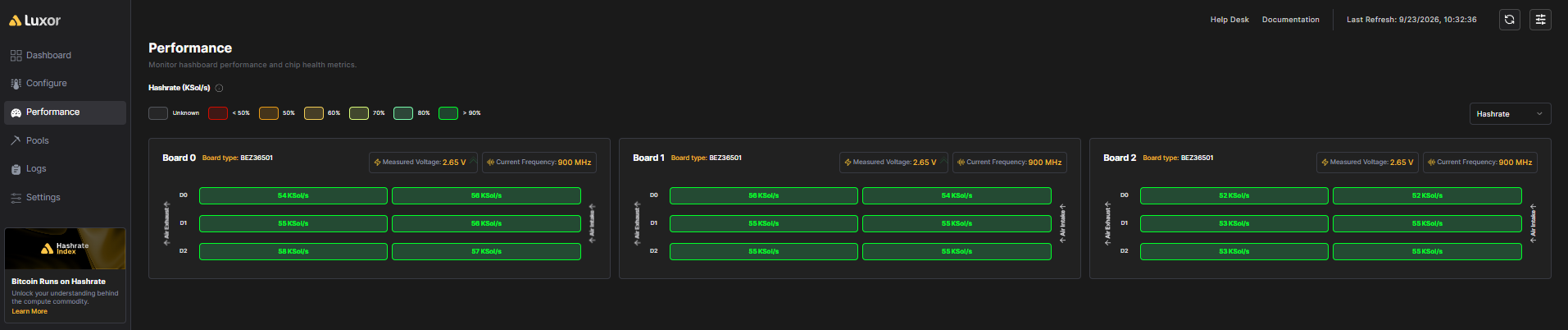
Luxor Hashrate Lookback Series – March 2026

The Record Low of USD Hashprice

The primary headline of March 2026 was the continued erosion of mining profitability. The monthly average USD hashprice—a measure of the expected value of 1 petahash of hashing power per day—fell by 3.2%, dropping from $32.31 in February to $31.27 in March. This represents a new historic floor for the industry. Although Bitcoin’s price remained relatively stable on a month-over-month basis, increasing by a marginal 0.8%, the combination of high network difficulty early in the month and a lack of transaction fee growth compressed margins to their breaking point for many operators.

Luxor Hashrate Lookback Series – March 2026

The month opened with the USD hashprice at $29.15, a figure that reflected the market’s deep pessimism amid regional warfare and high energy costs. However, a steady recovery took place in the latter half of the month. This rebound was not driven by a sudden surge in Bitcoin’s value, but rather by a massive downward difficulty adjustment on March 20, which allowed remaining miners to capture a larger share of the block rewards. By the close of March, the USD hashprice had climbed back to $31.84.

Luxor Hashrate Lookback Series – March 2026

Bitcoin Price Dynamics: Volatility Amid Geopolitical Conflict

Bitcoin began the month trading at $66,619 and ended at $67,368, maintaining a monthly average of $69,618. While the average suggests a period of stagnation, the intra-month reality was defined by sharp spikes and rapid drawdowns. These price movements were largely dictated by Bitcoin’s complex relationship with global macro events, specifically the escalation of the Iran War.

Luxor Hashrate Lookback Series – March 2026

On March 4, 10, and 16, Bitcoin experienced significant rallies. Analysts point to a "short squeeze" on March 4, where crowded bearish positions were liquidated as the price surged 4.4%. This was bolstered by $1.7 billion in spot ETF inflows, marking the first sustained streak of institutional buying in several months. Mid-month gains were further supported by progress on the U.S. Clarity Act. On March 10, U.S. Senators announced a compromise regarding stablecoin yields, a move that provided much-needed regulatory clarity and lifted sentiment across the digital asset sector.

Luxor Hashrate Lookback Series – March 2026

However, the "Iran War" factor introduced a "fiat-like" risk correlation. When U.S. strikes on Iran intensified, global equity markets felt the shock, with the S&P 500 and Nasdaq both sliding 5.1% from their March 2 levels. While Bitcoin showed independence during its upside spikes, it proved unable to decouple during the sharpest equity sell-offs on March 26 and 27. This suggests that while Bitcoin is increasingly viewed as an independent asset class, it remains susceptible to "risk-off" liquidity drains during periods of extreme geopolitical tension.

Luxor Hashrate Lookback Series – March 2026

The Historic Difficulty Drop of March 20

The technical highlight of the month was the network difficulty adjustment on March 20. The Bitcoin network underwent a -7.76% downward adjustment, moving from 145.04T (1,038 EH/s) to 133.79T (958 EH/s). This event ranks as the 10th-largest difficulty decrease in the "modern ASIC era"—the period beginning in 2016 when specialized hardware became the industry standard.

Luxor Hashrate Lookback Series – March 2026

This drop followed an even more severe -11.16% adjustment in February, making the first quarter of 2026 the most turbulent period for Bitcoin’s hashrate since the 2021 China mining ban. The causes for such a significant retreat in hashrate are multifaceted:

Luxor Hashrate Lookback Series – March 2026
  1. Regional Disruptions: The conflict in Iran directly impacted approximately 8% to 10% of global hashrate located in the Gulf states. Physical infrastructure damage and power grid instability in the region forced a significant amount of capacity offline.
  2. Energy Prices: While global oil prices spiked above $100, the more critical factor for miners was the surge in natural gas prices in Europe and Asia, which squeezed the margins of grid-exposed operators.
  3. Economic Curtailment: With hashprice at all-time lows, many miners running older hardware, such as the S19 series, found themselves operating at a loss.

Data suggests that the March 20 drop was a "curtailment" event rather than a permanent "capitulation." Following the adjustment, block times—which had slowed to nearly 11 minutes—immediately accelerated to an average of 9.23 minutes. This rapid snap-back indicates that miners did not sell their machines, but rather "toggled" them back on as soon as the lower difficulty made their operations profitable again.

Luxor Hashrate Lookback Series – March 2026

Mining Efficiency and the Energy Threshold

The economic pressure of March 2026 highlighted the widening gap between efficient and legacy mining fleets. Luxor’s Energy Hashprice Index revealed that at an average network power cost of $50/MWh, only the most efficient machines remained comfortably in the black.

Luxor Hashrate Lookback Series – March 2026
  • Under 19 J/TH (e.g., S21 series): Implied revenue of $77/MWh.
  • 19–25 J/TH (e.g., S19 XP): Implied revenue of $59/MWh.
  • 25–38 J/TH (e.g., S19j Pro): Implied revenue of $41/MWh.

For operators using S19-era hardware at standard power costs, March was a month of net losses. This has accelerated the industry-wide transition toward more efficient hardware, with many public miners utilizing forward contracts to finance fleet upgrades to the S21 and beyond.

Luxor Hashrate Lookback Series – March 2026

Transaction Fees and Revenue Composition

Transaction fees remained a negligible component of miner revenue in March, continuing a trend of "quiet" on-chain activity that began in late 2025. Average fee collection stood at 0.0183 BTC per block, representing just 0.58% of the total block reward. In USD terms, this amounted to approximately $1,279 per block. The lack of a "fee spike" meant that miners were almost entirely dependent on the subsidy and the BTC price, leaving them highly exposed to the -4.0% decline in monthly average BTC hashprice.

Luxor Hashrate Lookback Series – March 2026

Hashrate Forward Markets: A Tale of Two Denominations

The Luxor hashrate forward market provided a vital tool for risk management during this volatile period. The performance of these contracts in March was described as a "fiat fork."

Luxor Hashrate Lookback Series – March 2026

Sellers of USD-denominated contracts emerged as the clear winners. By locking in prices as high as $43.53 per PH/s/day back in October 2025, these hedgers outperformed spot mining by up to 39%. This strategy allowed them to bypass the record-low spot settlements of $31.27.

Luxor Hashrate Lookback Series – March 2026

Conversely, buyers of BTC-denominated contracts saw better results than sellers. Because the -7.76% difficulty drop was more severe than the forward market had anticipated, the "yield" in BTC terms was higher than expected. This highlights the fundamental choice miners face: hedging against a drop in Bitcoin’s price (USD contracts) or hedging against an increase in network difficulty (BTC contracts).

Luxor Hashrate Lookback Series – March 2026

Institutional Participation and Financing

March saw robust activity from lenders and Bitcoin treasury companies. In the Deliverable Forward (DF) market, where miners sell hashrate for upfront payment, the cost of capital hovered between 6% and 13% annualized. Public and private miners increasingly used these instruments as a form of non-dilutive financing. By selling future hashrate, companies were able to fund capital expenditures—specifically fleet upgrades—without issuing new equity in a depressed market.

Luxor Hashrate Lookback Series – March 2026

For example, an operator upgrading from an S19j Pro to an S21 could reduce their "hashcost" from $35.40 to $21.00 per PH/s/day. In the current environment, where the forward curve is pricing hashrate at ~$32, such an upgrade is the difference between insolvency and a sustainable margin.

Luxor Hashrate Lookback Series – March 2026

Broader Implications and Outlook

As the industry moves into April 2026, the landscape remains precarious but stabilizing. A two-week ceasefire in the Iran conflict has offered a temporary reprieve for regional miners, though the long-term stability of Gulf-based hashrate remains an open question. The network difficulty saw a modest +3.87% increase on April 3, with a further downward adjustment estimated for mid-April.

Luxor Hashrate Lookback Series – March 2026

The primary takeaway from March 2026 is the maturation of the mining financial ecosystem. Despite the "hashprice depression," the availability of sophisticated derivatives and the entry of institutional lenders have provided a buffer that did not exist in previous cycles. For Bitcoin treasury companies and forward buyers, the current market represents one of the most attractive entry points since the 2024 halving. Buying forward hashrate at $32 per PH/s/day is currently more economical than self-mining for any operator with a hashcost above that threshold.

Luxor Hashrate Lookback Series – March 2026

Ultimately, March 2026 will be remembered as the month the "Modern ASIC Era" was truly tested. The network’s ability to shed nearly 8% of its difficulty and then rapidly re-absorb hashrate demonstrates the incredible resilience of the decentralized protocol. While the economic "floor" has been lowered, the tools available to miners to navigate these depths have never been more advanced.

September 27, 2025 0 comment
0 FacebookTwitterPinterestEmail
Crypto Mining & Infrastructure

Iran Intensifies Crackdown on Illegal Cryptocurrency Mining Amid National Power Crisis and Grid Instability

by Asep Darmawan September 26, 2025
written by Asep Darmawan

The Iranian government has significantly escalated its enforcement actions against unauthorized cryptocurrency mining operations, with state authorities reporting the detection and seizure of 9,404 illegal mining farms over the past five months. This aggressive campaign comes as the nation grapples with a deepening energy crisis characterized by frequent power blackouts, grid instability, and growing public dissatisfaction. Kambiz Nazerian, the head of the Tehran Electricity Distribution Company, confirmed in a recent statement that police and energy officials have successfully identified and dismantled thousands of energy-intensive mining hubs scattered across the districts of the capital city, Tehran. This crackdown reflects a broader national strategy to stabilize the power grid during periods of peak demand, particularly during the grueling summer months when electricity consumption for cooling reaches critical levels.

The scale of the recent seizures underscores the magnitude of the clandestine mining industry in Iran. In June alone, Iranian police confiscated approximately 7,000 illegal mining machines, highlighting the persistence of the underground sector despite repeated government warnings. The surge in enforcement is not a new phenomenon but rather an intensification of a multi-year effort to curb "energy-guzzling" activities that threaten the country’s infrastructure. For years, Iran has been a focal point for the global crypto-mining community, driven by the country’s vast reserves of fossil fuels and heavily subsidized electricity rates, which make the cost of producing digital assets significantly lower than the global average.

The Incentive Structure: Subsidized Energy and Economic Survival

To understand the proliferation of mining in Iran, one must examine the country’s unique economic landscape. Iran possesses the world’s second-largest natural gas reserves and fourth-largest oil reserves. To support its domestic population and industrial sectors, the government provides substantial subsidies for electricity, making it among the cheapest in the world. While these subsidies were intended to lower the cost of living and foster industrial growth, they have inadvertently created a vacuum for high-energy industries like cryptocurrency mining.

For many tech-savvy Iranians, mining Bitcoin and other digital assets became a lifeline amidst a domestic economy battered by international sanctions and high inflation. Cryptocurrency offers a way to bypass traditional banking restrictions and generate "hard" currency that retains value better than the rial. However, the sheer volume of electricity required for Proof-of-Work (PoW) mining—where powerful computers solve complex mathematical equations to secure the network—has put an unsustainable strain on the national grid. The Iranian media outlet, Iran International, has noted that these operations are often conducted by influential domestic networks and, in some cases, foreign groups, including Chinese mining syndicates that relocated to the region following China’s comprehensive ban on crypto activities in 2021.

Public Facilities as Clandestine Mining Hubs

One of the most controversial aspects of the illegal mining trend in Iran is the location of these farms. Investigations have revealed that a significant portion of unregistered miners have established their operations within public and religious institutions, such as mosques and schools. Under Iranian law, these facilities often receive free or highly subsidized electricity. By hiding mining rigs within the basements or backrooms of these buildings, operators can eliminate their primary overhead cost—energy—thereby maximizing profits at the expense of the public treasury.

Over 9,000 Crypto Mining Farms Seized In Iran To Combat Electricity Crisis | Bitcoinist.com

The state-run energy provider, Tavanir, has been at the forefront of identifying these anomalies. By monitoring localized spikes in power consumption that do not align with typical residential or institutional usage patterns, officials have been able to pinpoint specific blocks and buildings hosting hidden rigs. The recent seizure of 45,000 application-specific integrated circuit (ASIC) machines at the start of the previous year served as a wake-up call for the government regarding the industrial scale of the problem.

A Chronology of Regulatory Friction and Grid Failures

The relationship between the Iranian state and the cryptocurrency sector has been marked by a cycle of legalization, restriction, and outright prohibition.

  • 2019: Iran officially recognized cryptocurrency mining as a legal industrial activity, requiring operators to obtain licenses from the Ministry of Industry, Mine, and Trade. This move was intended to regulate the sector and generate tax revenue.
  • Early 2021: As electricity demand surged, the government began to blame crypto miners for widespread winter blackouts. In May 2021, a four-month ban on all mining activities was implemented to protect the grid during the summer.
  • Late 2021: Despite the ban, illegal mining persisted. Tavanir reported that unauthorized mining was consuming upwards of 2,000 megawatts of power—more than the consumption of several major provinces combined.
  • 2022: The government intensified its "whistleblower" program, offering bounties to citizens who reported illegal mining activities. This led to the discovery of over 1,600 operations in a single month, which had collectively consumed 250 megawatts of power over an 18-month period.
  • Current Period: The latest report of 9,404 farms being dismantled indicates that the "cat-and-mouse" game between the state and miners has reached a fever pitch.

The timing of these crackdowns is often tied to environmental and social factors. During the summer of 2022, Iran faced a dual crisis of electricity outages and water shortages, fueled by record-breaking temperatures and drought conditions. These outages triggered national protests, with citizens expressing frustration over the government’s inability to maintain basic services. In response, authorities not only targeted illegal miners but also cut the power to 118 licensed mining platforms, illustrating that even legal operators are not immune to the country’s energy instability.

Global Context and the Shift in Hashrate

The impact of Iran’s mining sector extends beyond its borders. According to the Cambridge Bitcoin Electricity Consumption Index (CBECI), Iran contributed approximately 7.5% of the global Bitcoin hashrate in early 2021. This made it one of the top mining destinations in the world, alongside the United States, Kazakhstan, and Russia. The influx of mining hardware into Iran was accelerated by the 2021 "Great Mining Migration" from China.

However, unlike the United States or Kazakhstan, where mining often utilizes a mix of renewable energy or surplus natural gas (flaring), the Iranian grid is heavily reliant on aging thermal power plants. The addition of several gigawatts of demand from crypto mining has pushed this infrastructure to the brink of collapse. This has forced the Iranian government to view crypto mining not as an economic opportunity, but as a national security threat that jeopardizes social stability.

Official Responses and Strategic Implications

Government officials have been vocal about the "parasitic" nature of illegal mining. Tavanir officials have frequently stated that the unauthorized use of the grid for mining is "theft of public resources." The police force, tasked with the physical seizure of equipment, has described the operations as sophisticated, often involving custom-built cooling systems and soundproofing to avoid detection in residential neighborhoods.

Over 9,000 Crypto Mining Farms Seized In Iran To Combat Electricity Crisis | Bitcoinist.com

From a strategic perspective, the Iranian government finds itself in a paradox. On one hand, the state has explored using cryptocurrency to pay for imports and bypass U.S.-led sanctions. On the other hand, the physical infrastructure required to generate that digital wealth is destroying the domestic power grid. This internal conflict has led to a fragmented policy where the Central Bank may support crypto for trade, while the Energy Ministry seeks to ban it entirely.

Broader Impact and Future Outlook

The crackdown on 9,404 mining farms is a clear signal that the Iranian government is prioritizing grid resilience over the potential economic benefits of the crypto sector. For the global Bitcoin network, the continued volatility of the Iranian mining scene means a potential reduction in regional hashrate, though the global network has historically proven resilient to such localized shifts.

As the September deadline for the lifting of the current mining ban approaches, it remains unclear whether the government will allow licensed miners to resume full operations. Experts suggest that as long as the underlying issues—subsidized energy, aging infrastructure, and climate-induced demand—remain unaddressed, the friction between the state and the mining community will persist.

The Iranian experience serves as a cautionary tale for other energy-rich but infrastructure-poor nations. Countries like Kosovo and Kazakhstan have faced similar crises, leading to bans and social unrest. For Iran, the path forward likely involves a much more stringent regulatory framework, perhaps involving "mining zones" located near power plants where miners must pay international market rates for electricity. Until such a balance is struck, the "police on their toes" will likely continue to find and seize thousands of machines in a desperate bid to keep the lights on for the general population.

September 26, 2025 0 comment
0 FacebookTwitterPinterestEmail
Crypto Mining & Infrastructure

Grayscale Launches Bitcoin Miners ETF (MNRS) to Offer Investors Targeted Exposure to the Global Digital Asset Mining Industry.

by Neng Nana September 25, 2025
written by Neng Nana

The digital asset management landscape reached a new milestone this week as Grayscale Investments, the world’s largest crypto-focused asset manager, officially announced the launch of the Grayscale Bitcoin Miners ETF (ticker: MNRS). This new exchange-traded fund is specifically engineered to provide investors with a transparent, regulated, and passively managed vehicle to gain exposure to the companies responsible for securing the Bitcoin network. The fund tracks a proprietary index comprised of global leaders in the Bitcoin mining sector, marking a significant expansion of Grayscale’s thematic product suite.

According to official documentation and a press release issued by the firm, MNRS is designed to measure the performance of publicly traded companies that derive the majority of their revenue or profits from Bitcoin mining activities. By focusing on the "infrastructure" layer of the cryptocurrency ecosystem, Grayscale aims to capture the growth of the firms that serve as the backbone of the decentralized financial network. The launch comes at a time of increased institutional interest in the operational side of the blockchain, where hardware, energy management, and computational power intersect.

The Strategic Vision Behind the Bitcoin Miners ETF

The introduction of MNRS represents a pivot toward specialized, thematic investing within the broader cryptocurrency sector. While spot Bitcoin ETFs, such as the Grayscale Bitcoin Trust (GBTC), provide direct exposure to the price of the underlying asset, the Bitcoin Miners ETF offers a different risk-reward profile. Mining companies often exhibit operational leverage, meaning their stock prices can move more aggressively than the price of Bitcoin itself during periods of market volatility.

David LaValle, Global Head of ETFs at Grayscale, emphasized the strategic importance of this new offering. In a statement accompanying the launch, LaValle noted that the Grayscale Bitcoin Miners ETF offers investors targeted exposure to Bitcoin miners and the global Bitcoin mining industry through a passively managed, rules-based, and index-tracked fund. He further characterized Bitcoin miners as the "backbone of the network," asserting that these firms are uniquely positioned for significant growth as global adoption and network usage continue to scale.

The fund’s methodology is rooted in a proprietary index that filters for liquidity, market capitalization, and revenue purity. This ensures that the ETF remains focused on pure-play mining operations rather than diversified technology conglomerates that may only have tangential exposure to the sector.

Historical Context and the Evolution of Bitcoin Mining

To understand the significance of MNRS, it is essential to examine the evolution of the Bitcoin mining industry over the last decade. In the early years of the network, mining was primarily conducted by hobbyists using personal computers. However, as the network’s "hash rate"—the total computational power securing the blockchain—increased, the industry transitioned into a highly competitive, capital-intensive sector dominated by industrial-scale operations.

The industry faced a pivotal moment in April 2024 with the occurrence of the fourth Bitcoin "halving." This pre-programmed event reduced the block reward issued to miners from 6.25 BTC to 3.125 BTC. Historically, halvings act as a stress test for the industry, forcing inefficient operators to shut down while rewarding those with the lowest energy costs and the most advanced hardware.

Grayscale’s launch of MNRS in the post-halving environment suggests a confidence in the resilience of the surviving mining giants. On its official website, Grayscale noted that rising Bitcoin prices typically lead to higher revenue and increased gross margins for the mining industry. Because miners hold a high, positive longer-term correlation to the price of Bitcoin, they offer a "picks and shovels" investment strategy that capitalizes on the growth of the entire ecosystem.

The Intersection of Mining and Artificial Intelligence

A critical component of the modern mining thesis included in the MNRS framework is the industry’s recent pivot toward High-Performance Computing (HPC) and Artificial Intelligence (AI). Following the 2024 halving, several prominent mining firms, including Core Scientific, TeraWulf, and Iris Energy, began repurposing their sophisticated power infrastructure and cooling systems to host AI workloads.

This diversification has transformed many "Bitcoin miners" into "energy infrastructure providers." By hosting AI data centers alongside mining rigs, these companies can balance their revenue streams, providing a hedge against Bitcoin price volatility. Grayscale’s MNRS ETF captures this transition, as the index includes firms that are leveraging their electrical footprints to serve the burgeoning demand for AI compute power. Analysts suggest that this dual-purpose utility could lead to a re-rating of mining stocks, moving them away from being viewed solely as crypto-proxies and more toward being valued as essential data infrastructure.

Supporting Data and Market Performance

At the time of its debut, the MNRS ETF was trading at approximately $26.64 per share. While the fund is in its nascent stages, the broader mining sector has shown significant volatility and growth potential throughout the current market cycle.

Data from the Bitcoin network indicates that the total hash rate has continued to hit all-time highs despite the reduction in block rewards, signaling that miners are continuing to invest heavily in next-generation ASIC (Application-Specific Integrated Circuit) hardware. This sustained investment in infrastructure suggests a long-term bullish outlook from the miners themselves, which the MNRS ETF seeks to monetize for retail and institutional investors.

Furthermore, the "hashprice"—a metric used to measure the daily revenue a miner earns from a specific unit of compute power—has shown signs of stabilization. As transaction fees on the Bitcoin network increase due to new protocols like Ordinals and Runes, miners are finding additional revenue streams beyond the standard block subsidy. The MNRS ETF is structured to benefit from these evolving network dynamics.

Grayscale’s Regulatory Journey and Market Position

The launch of MNRS is also a testament to Grayscale’s persistence in the regulatory arena. The firm famously engaged in a lengthy legal battle with the U.S. Securities and Exchange Commission (SEC) to convert its flagship Bitcoin Trust (GBTC) into a spot ETF. The landmark court victory in 2023 paved the way for the approval of several spot Bitcoin ETFs in January 2024, fundamentally changing the landscape of crypto investing in the United States.

By adding MNRS to its portfolio, Grayscale is diversifying its revenue model and providing more granular tools for portfolio construction. Unlike spot Bitcoin ETFs, which are subject to intense fee competition among giants like BlackRock and Fidelity, thematic ETFs like MNRS allow Grayscale to differentiate itself by offering specialized expertise in crypto-adjacent equities.

The fund is listed on major exchanges, providing the liquidity and transparency that institutional investors require. This is a significant shift from the previous era of crypto investing, where exposure to miners often required navigating over-the-counter (OTC) markets or offshore platforms.

Implications for Global Energy and ESG Standards

One of the most discussed aspects of the Bitcoin mining industry is its environmental impact. Grayscale’s move to institutionalize mining through an ETF brings further scrutiny—and potential progress—to the sector’s Environmental, Social, and Governance (ESG) profile. Many of the companies likely to be included in the MNRS index are leaders in sustainable mining, utilizing stranded energy, hydroelectric power, and flare gas mitigation techniques.

As institutional capital flows into MNRS, there will be increased pressure on mining firms to maintain high transparency regarding their carbon footprints. This could accelerate the industry’s transition to renewable energy, as ESG-conscious funds and investors look for exposure to the digital economy without compromising their sustainability mandates.

Future Outlook and Industry Reactions

Industry analysts have reacted positively to the launch, noting that MNRS fills a gap in the market for investors who want to bet on the "industrialization" of Bitcoin. By wrapping mining companies into an ETF, Grayscale has lowered the barrier to entry for financial advisors who may be hesitant to buy Bitcoin directly but are comfortable with equity-based funds.

The broader implications for the market are significant. As the Bitcoin network matures, the distinction between "digital gold" and the "digital infrastructure" required to maintain it will become clearer. MNRS provides a vehicle for the latter, allowing investors to participate in the technological arms race of the 21st century.

Looking ahead, the performance of MNRS will likely be tied to three major factors: the price of Bitcoin, the global cost of energy, and the continued integration of AI and blockchain infrastructure. While the mining sector remains subject to high volatility and regulatory shifts, the launch of the Grayscale Bitcoin Miners ETF marks a coming-of-age for the industry, transforming it from a niche tech operation into a recognized pillar of the global financial system.

As of the current writing, MNRS continues to trade with modest gains, reflecting a cautious but optimistic entry into the public markets. Investors are advised to monitor the fund’s quarterly rebalancing and the broader macroeconomic environment, as the intersection of energy policy and digital asset regulation will continue to shape the destiny of the firms within the MNRS portfolio.

September 25, 2025 0 comment
0 FacebookTwitterPinterestEmail
Global Cryptocurrency News

The Meteoric Rise and Precipitous Fall: An Examination of Solana Meme Coins’ Multi-Billion Dollar Crashes

by Neng Nana September 23, 2025
written by Neng Nana

During the last significant bull market, a period colloquially known as the Solana meme coin season, the cryptocurrency landscape witnessed an unprecedented surge in new digital assets, many of which were born from internet culture and community hype rather than utility. These nascent cryptocurrencies, initially boasting market capitalizations in the tens of millions, rapidly ascended to cross the billion-dollar threshold, often achieving this remarkable feat in mere months. This explosive growth attracted a vast holder base, drawn by the allure of quick and substantial returns. However, with the inevitable shift to a bear market, these once-billion-dollar meme coins have experienced dramatic reversals, losing the vast majority of their gains and serving as stark reminders of the inherent volatility and speculative nature of this segment of the crypto market. The collective deleveraging of the meme coin attention economy has been brutal, seeing the sector’s total market capitalization plummet from an estimated $150 billion to $31 billion, reflecting a widespread liquidation and a significant loss of speculative capital.

The Solana Meme Coin Phenomenon: A Brief Background

The emergence of Solana as a prominent blockchain platform played a pivotal role in fostering this meme coin boom. Its technical advantages, including high transaction speeds and remarkably low fees compared to rivals like Ethereum, made it an attractive environment for developers and users alike to launch and trade new tokens. This accessibility lowered the barrier to entry, enabling a rapid proliferation of experimental and community-driven projects. Meme coins, by their very nature, thrive on virality, social media engagement, and a collective belief in their potential to generate wealth, often without a discernible underlying product or service. The bull market conditions of 2024 provided fertile ground for this speculative fervor, with retail investors, often driven by FOMO (fear of missing out), pouring funds into these assets in hopes of replicating early success stories. The "Solana meme coin season" became synonymous with rapid wealth creation and equally rapid destruction.

POPCAT: From Viral Sensation to Steep Decline

Among the most recognizable names to emerge from the Solana meme coin season is POPCAT. Its trajectory from obscurity to a multi-billion dollar valuation is particularly illustrative of the era’s speculative excesses. Launched with minimal fanfare, POPCAT quickly captivated a niche audience, riding the wave of cat-themed meme coins that sought to challenge the dominance of dog-themed tokens like Dogecoin and Shiba Inu. Its growth was nothing short of astonishing: from a market capitalization of less than $1 million, it surged past the $2 billion mark in under a year, representing one of the most impressive meme coin rallies ever recorded.

A significant milestone for POPCAT occurred in early 2024 when its price crossed the $1 threshold, making it the first cat-themed meme coin to officially achieve this psychological benchmark. This achievement further fueled investor excitement, propelling the coin to its ultimate peak of $2.05 per token. At this zenith, its market capitalization comfortably exceeded $2 billion, cementing its status as a top-tier meme coin. However, the tide began to turn in November 2024, coinciding with a broader downturn across the cryptocurrency market. Since its peak, POPCAT has suffered a catastrophic decline, with its price crashing by more than 97%. At the time of writing, it trades at approximately $0.05 per coin, and its market capitalization has plummeted to below $50 million. This represents one of the most severe contractions experienced by a previously top-ranked meme coin, wiping out nearly all gains for those who invested at or near its peak.

Cats in a Dogs World (MEW): The "Cabal Coin" Narrative and Subsequent Fall

Another prominent Solana-based meme coin that experienced a dramatic ascent and equally brutal fall is Cats in a Dogs World, or MEW. Unlike many meme coins that started from near-zero valuations, MEW made its entrance into the market "fully formed," bursting onto the scene with an already impressive market capitalization exceeding $100 million. This unusual launch immediately drew scrutiny and led to allegations of it being a "cabal coin." This term typically suggests that a significant portion of the token supply was pre-mined or controlled by a small group of early investors or developers, potentially allowing for coordinated market manipulation or "pump-and-dump" schemes. Such accusations, whether substantiated or not, often raise concerns about fairness and transparency in the nascent stages of a token’s distribution.

Despite these initial allegations, MEW continued its upward trajectory, fueled by market momentum and continued speculative interest. It eventually reached a peak market capitalization just above $1.2 billion, demonstrating its ability to capture a substantial share of the meme coin market’s attention. However, like POPCAT, MEW’s fortunes reversed sharply with the onset of the bear market in November 2024. Since its peak, the coin’s value has depreciated by more than 95%. Its market capitalization now hovers around a mere $50 million, a stark contrast to its multi-billion dollar valuation just months prior. The rapid decline underscores the extreme vulnerability of assets lacking fundamental utility to shifts in market sentiment and liquidity.

Peanut The Squirrel (PNUT): A Tragic Origin and Rapid Demise

The story of Peanut The Squirrel (PNUT) adds a unique, albeit somber, dimension to the meme coin narrative. PNUT was conceived as a tribute to an Eastern gray squirrel that gained viral fame before its unfortunate death in 2024. The squirrel’s demise, particularly after it was put down by the New York State Department of Environmental Conservation (DEC), sparked public outcry and sympathy, which developers quickly capitalized on to launch the PNUT meme coin. This origin story, rooted in a real-world event and public sentiment, initially provided a compelling narrative that resonated with a segment of the crypto community.

Following its launch, PNUT rapidly gained prominence, distinguishing itself with an exceptionally fast ascent. Its trajectory was significantly bolstered by securing support and a listing on the prominent Binance crypto exchange, an endorsement that often lends considerable legitimacy and liquidity to new tokens. As a direct result of this exposure and market enthusiasm, PNUT achieved a market capitalization exceeding $1 billion in less than one month, making it the fastest among the highlighted meme coins to reach this significant milestone. This rapid growth showcased the immense power of exchange listings and community engagement in driving speculative value.

Meme Coin Unicorns That Are Now Basically Dust Again

However, just as its growth trajectory was the fastest, PNUT has also suffered the most severe losses among the three tokens examined. According to data from Coingecko, the coin has plummeted by more than 98% since its peak in November 2024. Its market capitalization now sits at approximately $40 million, representing an almost complete erasure of its prior multi-billion dollar valuation. The speed of its rise and the subsequent brutality of its fall serve as a particularly potent example of the high-risk, high-reward nature of meme coin investments.

Broader Market Context and Supporting Data

The dramatic crashes of POPCAT, MEW, and PNUT are not isolated incidents but rather symptomatic of a broader trend within the cryptocurrency market, particularly as it transitioned from a bull market to a bear market environment towards the end of 2024. The overall crypto market, influenced by macroeconomic factors such as rising interest rates, inflation concerns, and a general deleveraging across global financial markets, experienced a significant contraction. Bitcoin (BTC), the market leader, saw its price decline from its all-time highs, pulling down altcoins and, most acutely, highly speculative assets like meme coins.

The "deleveraging of the memecoin attention economy" refers to the process where speculative capital, often deployed with high leverage, exits the market en masse. During a bull run, the promise of quick returns attracts significant retail and institutional capital, inflating asset prices beyond their intrinsic value. When market sentiment shifts, this capital rapidly withdraws, triggering cascading liquidations and steep price declines. For meme coins, which primarily derive their value from community hype and speculative demand rather than technological innovation or fundamental utility, this deleveraging effect is amplified. Their lack of inherent value means there are fewer "sticky" investors willing to hold through prolonged downturns, leading to sharp sell-offs as confidence erodes. The overall meme coin market cap’s reduction from $150 billion to $31 billion illustrates the sheer scale of wealth destruction that occurred across the sector. Trading volumes for these assets also contracted significantly, further exacerbating price declines as liquidity dried up, making it harder for holders to exit their positions without significant price impact.

Analysis of Implications and Investor Sentiment

The precipitous declines witnessed across the Solana meme coin landscape carry significant implications for various stakeholders within the cryptocurrency ecosystem.

  • For Retail Investors: The most immediate and tangible impact is on retail investors who poured their savings into these assets, often at their peak valuations. Many have experienced devastating financial losses, underscoring the critical importance of risk management, diversification, and thorough due diligence before investing in highly speculative assets. These events serve as a cautionary tale, highlighting that while the allure of rapid gains is strong, the potential for equally rapid losses is ever-present. The "greater fool theory," where investors buy an asset hoping to sell it to an even "greater fool" at a higher price, is often at play in such markets, and these crashes demonstrate what happens when the supply of greater fools runs out.

  • For the Solana Ecosystem: While Solana has proven itself as a robust and technically capable blockchain, the association with numerous meme coin pump-and-dump cycles can impact its reputation. Critics may argue that the ease of launching tokens on Solana fosters a breeding ground for speculative projects with little long-term value, potentially overshadowing genuine innovation happening on the platform. However, proponents might argue that the vibrant meme coin scene also brought significant user adoption and liquidity to the Solana network, contributing to its overall growth and development infrastructure. The challenge for Solana now is to balance fostering innovation with mitigating the risks associated with excessive speculation.

  • For the Broader Cryptocurrency Market: These meme coin crashes reinforce broader concerns about market manipulation, lack of intrinsic value in certain assets, and the need for enhanced investor protection within the crypto space. They highlight the distinction between projects with clear utility and those driven purely by hype. Industry observers and market analysts consistently emphasize that while meme coins can offer short-term trading opportunities, they represent the riskiest end of the crypto spectrum. The volatility of meme coins often fuels calls for increased regulatory scrutiny globally, particularly regarding disclosure requirements, insider trading prevention, and market integrity.

  • Inferred Analyst Perspectives: Market analysts frequently reiterate the warning that meme coins are essentially lottery tickets. "While the stories of overnight millionaires are compelling, the reality for the vast majority of participants is significant capital loss," noted one crypto market commentator, speaking generally about the sector’s risks. "The intrinsic value is often non-existent, and their price movements are almost entirely dictated by sentiment, social media trends, and the flow of speculative capital. When that capital dries up or shifts, these assets are the first to suffer the most dramatic corrections." There is a consensus that investors should only allocate capital they can afford to lose entirely when engaging with such volatile assets.

The Future of Meme Coins

Despite the recent devastation, the meme coin phenomenon is unlikely to disappear entirely. The human fascination with speculative assets, the allure of quick wealth, and the power of internet culture will likely continue to drive new iterations of meme coins. However, the current downturn is expected to foster a more cautious environment. Future meme coin seasons may see investors conducting more thorough due diligence, scrutinizing tokenomics, distribution methods, and community engagement more closely. The long-term viability of any meme coin will likely depend on its ability to sustain community interest, perhaps through novel mechanisms, or even to eventually develop some form of utility, however minor.

In conclusion, the meteoric rise and subsequent collapse of Solana-based meme coins like POPCAT, MEW, and PNUT serve as a potent illustration of the extreme volatility and speculative risks inherent in a segment of the cryptocurrency market. Their journey from multi-million to multi-billion dollar valuations and back down to fractions of their peak demonstrates the powerful forces of market sentiment, speculative capital, and the stark realities of a bear market. For investors, the lessons are clear: while the potential for extraordinary gains exists, it is inextricably linked to an equally extraordinary risk of loss, emphasizing the enduring importance of prudence and a deep understanding of the assets one chooses to invest in.

September 23, 2025 0 comment
0 FacebookTwitterPinterestEmail
Bitcoin & Core Networks

Musician G. Love Loses $420,000 in Bitcoin Retirement Fund to Sophisticated App Store Scam

by Reynand Wu September 22, 2025
written by Reynand Wu

Garrett Dutton, the renowned American musician professionally known as G. Love, experienced a devastating financial blow when a decade of meticulous Bitcoin accumulation, intended as a long-term retirement fund, was wiped out in a single afternoon. The artist lost approximately 5.9 Bitcoin, valued at roughly $420,000 at the time of the incident, after falling victim to a sophisticated phishing scam involving a malicious application disguised as the legitimate Ledger Live software on Apple’s App Store. The incident underscores the persistent and evolving threat of digital asset fraud, even for seasoned participants in the cryptocurrency space.

A Decade of Diligence Undone

Dutton had been an early adopter and consistent accumulator of Bitcoin since 2017, demonstrating a long-term vision for the digital asset as a cornerstone of his retirement planning. His strategy involved self-custody, holding his Bitcoin in a hardware wallet—a method widely advocated for its enhanced security against online threats. However, this robust security posture was compromised on Saturday, April 11, 2026, when he encountered a deceptive application during a routine setup procedure on a new MacBook.

The musician took to X (formerly Twitter) to share the harrowing experience with his 67,500 followers, detailing how his substantial Bitcoin holdings vanished instantaneously. "I had a really tough day today I lost my retirement fund in a hack/Scam when I switched my @Ledger over to my new computer and by accident downloaded a malicious ledger app from the @Apple store. All my BTC gone in an instant," Dutton posted, sparking immediate concern and a wave of reactions within the cryptocurrency community.

Decade Of Bitcoin Savings Gone In Minutes After Fake App Fools Musician

The Anatomy of the Deception

The core of the scam lay in its deceptive simplicity and exploitation of trust in official platforms. Dutton recounted downloading what he believed to be the authentic Ledger Live application—the essential interface for managing Ledger hardware wallets—from the Apple App Store. Unbeknownst to him, the application was a meticulously crafted fake. Upon launching the fraudulent app, he was prompted to perform an action that no legitimate hardware wallet application would ever request: enter his 24-word seed phrase directly into the software interface. The seed phrase, also known as a recovery phrase or mnemonic phrase, is the master key to a cryptocurrency wallet, granting full control over the funds. It is designed to be kept offline, ideally etched onto metal or written on paper and stored securely, and never entered into any digital device unless strictly within the secure environment of the hardware wallet itself during a recovery process.

By inputting his seed phrase into the imposter application, Dutton unwittingly granted the scammers complete access to his Bitcoin. The funds were siphoned away almost immediately, an irreversible act on the blockchain. Reflecting on the incident, Dutton admitted his lapse in vigilance: "I been in the crypto circus since 2017. Today they caught me off guard. It was my own damn fault for not being more diligent. But let it serve as a warning. There’s so many scams." His candid admission served as a stark reminder that even experienced users can fall prey to increasingly sophisticated tactics.

Rapid Tracing and Exchange Involvement

Following Dutton’s public disclosure, blockchain investigator ZachXBT, known for his prowess in tracing stolen crypto assets, swiftly jumped into action. Within hours, ZachXBT published details of the stolen funds’ movement, revealing that the 5.92 Bitcoin had been transferred to deposit addresses associated with the cryptocurrency exchange KuCoin. The funds were disbursed across nine separate transactions, a common tactic employed by scammers to obfuscate their tracks and complicate recovery efforts.

Decade Of Bitcoin Savings Gone In Minutes After Fake App Fools Musician

KuCoin responded to ZachXBT’s findings with a standard statement often issued in such cases, indicating their willingness to cooperate with law enforcement requests. However, the nature of decentralized cryptocurrency transactions means that once funds are moved off a user’s wallet and into an exchange, recovery is highly dependent on the exchange’s internal policies, the timing of the report, and the involvement of legal authorities. The specific link or method through which Dutton was led to the fraudulent download remains undisclosed, highlighting the diverse vectors through which such scams can propagate, from malicious advertisements to compromised search results.

A Recurring Threat: The Peril of Fake Wallet Apps

Dutton’s ordeal is not an isolated incident but rather a chilling echo of previous, similarly devastating scams involving counterfeit wallet applications on major app marketplaces. In 2023, a fake version of the Ledger Live app appeared on Microsoft’s app store, successfully siphoning nearly $600,000 from multiple unsuspecting users before it was eventually identified and removed. In that instance, Microsoft acknowledged that the malicious app had circumvented its review processes undetected, raising serious questions about the efficacy of app store vetting mechanisms. As of the time of reporting, Apple had not publicly responded to requests for comment regarding the presence of the fraudulent Ledger Live application on its platform or the circumstances surrounding Dutton’s loss.

These incidents underscore a critical vulnerability in the digital ecosystem: the implicit trust users place in official app stores. While platforms like Apple’s App Store are generally lauded for their stringent security protocols, malicious actors consistently find innovative ways to bypass these defenses, often by impersonating legitimate software developers or exploiting subtle flaws in the review process. This creates a dangerous landscape where users, believing they are accessing secure and verified software, are instead downloading sophisticated phishing tools designed to steal their most sensitive financial information.

The Paramount Importance of Seed Phrase Security

Decade Of Bitcoin Savings Gone In Minutes After Fake App Fools Musician

At the heart of G. Love’s unfortunate loss, and countless other crypto scams, lies the compromise of the seed phrase. The seed phrase is a cryptographic safeguard, typically a sequence of 12 or 24 words, that acts as the ultimate backup and recovery mechanism for a cryptocurrency wallet. It is the sole key to recovering access to funds should a hardware wallet be lost, stolen, or damaged. The fundamental rule of self-custody in cryptocurrency is to never disclose your seed phrase to anyone, nor to input it into any software application or website unless you are performing a legitimate recovery operation on a verified, air-gapped hardware device itself, where the seed phrase never touches an internet-connected computer.

Legitimate hardware wallet applications like Ledger Live are designed to facilitate interaction with the physical hardware device, not to demand the seed phrase directly. The device itself handles the private keys and signs transactions offline, only communicating the signed transaction to the computer for broadcast to the network. The fake app, however, was engineered precisely to trick users into violating this cardinal rule of crypto security. Dutton’s acknowledgment of his "own damn fault" highlights the human element in cybersecurity—even with years of experience, a momentary lapse in judgment or an oversight in diligence can have catastrophic consequences.

Escalating Crypto Fraud and Broader Implications

G. Love’s case is a stark illustration of a much larger and rapidly escalating problem. According to data from the U.S. Federal Bureau of Investigation (FBI), Americans lost a staggering $11 billion to crypto-related fraud in 2025, marking a significant increase from $9 billion reported the previous year. This upward trend reflects the growing sophistication of scammers, the increasing mainstream adoption of cryptocurrencies, and the substantial financial incentives involved.

Crypto fraud encompasses a wide array of tactics, including phishing schemes, fake investment opportunities, romance scams, and, as seen in Dutton’s case, malicious software designed to mimic legitimate applications. The irreversible nature of blockchain transactions means that once funds are transferred to a scammer’s address, recovery is exceedingly difficult, often impossible without the cooperation of law enforcement and cryptocurrency exchanges. This places a heavy burden on individual users to maintain an almost hyper-vigilant stance against potential threats.

Decade Of Bitcoin Savings Gone In Minutes After Fake App Fools Musician

The implications of such incidents extend beyond individual financial loss. They erode trust in the broader cryptocurrency ecosystem, deterring potential new users and casting a shadow over the industry’s advancements. For app store providers like Apple and Microsoft, these recurring breaches highlight an urgent need for more robust and proactive vetting processes to protect their users from increasingly sophisticated digital threats. The fact that malicious applications can penetrate these supposedly secure environments points to a critical gap in their security frameworks.

Vigilance and Education: The Only Defense

The incident serves as a critical warning to the entire cryptocurrency community:

  1. Verify Download Sources Meticulously: Always download wallet applications directly from the official website of the hardware wallet manufacturer (e.g., Ledger.com for Ledger Live) and never through search engine results, third-party app stores, or unverified links. Bookmark official sites to avoid phishing redirects.
  2. Inspect App Details: Before downloading any app, carefully check the developer’s name, publisher, reviews (though fake reviews exist), and the number of downloads. Discrepancies, even subtle ones, can indicate a fraudulent application.
  3. Understand Seed Phrase Protocol: Reiterate that a legitimate hardware wallet application will never ask you to type your seed phrase into your computer screen. Seed phrases are exclusively for recovery on the hardware device itself or for secure, offline backup.
  4. Practice Due Diligence: Even seasoned crypto users must remain diligent. The crypto landscape is constantly evolving, and scammers are quick to adapt their methods.
  5. Utilize Security Features: Enable multi-factor authentication (MFA) on all exchange accounts, use strong, unique passwords, and consider using dedicated devices for crypto management if feasible.
  6. Stay Informed: Keep up-to-date with common scam tactics and security best practices through reputable crypto news sources and security advisories.

G. Love’s public sharing of his painful experience, while a personal tragedy, provides an invaluable, albeit costly, lesson for millions. His candor underscores the universal susceptibility to sophisticated digital fraud and the enduring necessity of unwavering vigilance in the self-custody of digital assets. As the cryptocurrency market continues to grow and attract new participants, the battle against scammers will intensify, making robust security practices and continuous user education more critical than ever before. The future of decentralized finance hinges not just on technological innovation, but equally on the collective commitment to security and personal responsibility.

September 22, 2025 0 comment
0 FacebookTwitterPinterestEmail
Bitcoin & Core Networks

Strategy Inc. Adds Another $1 Billion in Bitcoin, Elevating Total Holdings to Nearly 781,000 BTC and Reinforcing Digital Asset Strategy

by Raul Delapena Setiawan September 20, 2025
written by Raul Delapena Setiawan

Strategy Inc., the prominent business intelligence firm that has strategically pivoted its treasury to Bitcoin, announced a significant expansion of its digital asset holdings, acquiring an additional 13,927 Bitcoin between April 6th and April 12th, 2026. This substantial purchase, valued at approximately $1 billion, was executed at an average price of $71,902 per coin, underscoring the company’s persistent and aggressive accumulation strategy in the cryptocurrency market. This latest acquisition brings Strategy Inc.’s total Bitcoin treasury to an impressive 780,897 BTC, acquired for approximately $59.02 billion at an overall average cost basis of $75,577 per Bitcoin.

The company disclosed that the funding for this latest acquisition was entirely sourced through its ongoing at-the-market (ATM) offering program. Specifically, the capital was raised through the sale of its Variable Rate Series A Perpetual Stretch Preferred Stock (STRC), a financing method that allows Strategy Inc. to expand its Bitcoin reserves without issuing additional common stock. This approach is consistent with the company’s stated objective of minimizing dilution for its existing common shareholders while continuing to leverage financial markets to bolster its Bitcoin-centric balance sheet. Michael Saylor, the founder and chairman of Strategy Inc., further highlighted the company’s performance, noting a 5.6% BTC yield year-to-date in 2026, a metric that reflects the strategic value creation derived from its Bitcoin holdings.

A Pioneering Corporate Bitcoin Strategy

Strategy Inc.’s journey into the realm of digital assets began in August 2020, marking it as one of the first publicly traded companies to adopt Bitcoin as a primary treasury reserve asset. This initial move, which saw the company invest $250 million into Bitcoin, was championed by Michael Saylor, who articulated a vision of Bitcoin as a superior store of value, a hedge against inflation, and a long-term strategic asset in an increasingly digital global economy. Saylor’s conviction quickly transformed Strategy Inc.’s corporate identity, shifting it from a traditional business intelligence software provider to a de facto Bitcoin acquisition vehicle, closely watched by investors and analysts alike in both traditional finance and the cryptocurrency space.

Over the subsequent years, Strategy Inc. has consistently expanded its Bitcoin holdings through various innovative financing mechanisms. These have included convertible senior notes, secured debt offerings, and multiple at-the-market equity offerings. Each capital raise has been met with significant investor interest, demonstrating a strong appetite for exposure to Bitcoin through a publicly traded, regulated entity. This consistent accumulation, regardless of market cycles, has solidified Strategy Inc.’s position as the largest corporate holder of Bitcoin globally, a testament to its unwavering commitment to its digital asset strategy. The latest acquisition reinforces this long-term view, signaling continued confidence in Bitcoin’s future price appreciation and its role in a diversified corporate treasury.

Deep Dive into the Latest Acquisition and Funding

The recent acquisition of 13,927 BTC for approximately $1 billion represents a significant capital deployment for Strategy Inc. The average price of $71,902 per Bitcoin indicates that the company was active in the market during a period of strong price performance, likely capitalizing on market dips or maintaining a consistent dollar-cost averaging approach within the specified acquisition window of April 6th to April 12th, 2026. This acquisition strategy, executed during a robust market phase, suggests a proactive stance to secure additional Bitcoin while prices remain within their target acquisition range.

A critical aspect of this transaction is the funding mechanism: the sale of Variable Rate Series A Perpetual Stretch Preferred Stock (STRC) through an at-the-market (ATM) offering. An ATM offering allows a company to sell new shares of its stock directly into the open market at prevailing market prices, rather than through a single, large issuance. This method provides flexibility and allows the company to raise capital incrementally, often coinciding with opportune market conditions for both its stock and Bitcoin.

The choice of preferred stock over common stock is particularly noteworthy. Preferred stock typically carries a fixed dividend payment and often has preference over common stock in the event of liquidation, but usually does not come with voting rights. By issuing preferred stock, Strategy Inc. achieves several strategic objectives:

  1. Minimizing Common Share Dilution: This is paramount for existing common shareholders, as new preferred shares do not dilute their ownership percentage or voting power.
  2. Attracting a Different Investor Base: Preferred stock appeals to investors seeking a more stable income stream and potentially lower risk profile compared to common equity, while still gaining indirect exposure to Bitcoin’s upside potential.
  3. Leveraging Capital Efficiently: The proceeds from preferred stock sales are immediately converted into Bitcoin, effectively using external capital to grow the company’s core asset without impacting its operational cash flow.

This sophisticated financing approach highlights Strategy Inc.’s financial engineering prowess, continuously finding novel ways to fund its Bitcoin treasury expansion while managing shareholder interests. The "perpetual stretch" feature likely refers to terms that allow for flexibility in dividend rates or redemption, providing the company with adaptability in its capital structure.

Michael Saylor’s Vision and the "BTC Yield" Metric

Michael Saylor’s statement, delivered via his widely followed Twitter account, not only confirmed the acquisition but also introduced a intriguing metric: a 5.6% BTC yield year-to-date in 2026. This "BTC yield" is not a traditional dividend or interest payment generated directly from holding Bitcoin, as Bitcoin itself is a non-yielding asset in the conventional sense. Instead, for Strategy Inc., it likely represents a sophisticated internal performance indicator that encapsulates the value generated by its Bitcoin strategy.

Several interpretations of this "BTC yield" are possible, reflecting the multifaceted nature of Strategy Inc.’s operations:

  • Strategic Capital Allocation Efficiency: It could be a measure of the effective return on the capital Strategy Inc. deploys into Bitcoin, factoring in the appreciation of its holdings relative to its financing costs. If the cost of capital (e.g., interest on debt, preferred dividends) is effectively lower than the increase in Bitcoin’s value, it creates a positive "yield" on the strategy.
  • Value Creation from Software and Services: While Strategy Inc. is known for its Bitcoin treasury, it also operates a business intelligence software segment. The "yield" could be a consolidated metric reflecting the synergy between its software business and its Bitcoin holdings, or how its Bitcoin strategy enhances its overall enterprise value.
  • Arbitrage or Active Management: Although Saylor is a staunch "hodler" (long-term holder), the company might engage in highly selective and limited strategies to optimize its Bitcoin holdings, such as rebalancing or taking advantage of specific market opportunities, though this is less likely for the core treasury.
  • Public Relations and Investor Confidence: The metric also serves as a powerful communication tool, reinforcing the success and profitability of Strategy Inc.’s unique corporate strategy to investors and the broader market. It frames their Bitcoin holdings not just as a static asset, but as a dynamic, value-generating component of the business.

Regardless of the precise calculation, Saylor’s emphasis on a "BTC yield" underscores Strategy Inc.’s proactive management of its digital asset strategy and its commitment to demonstrating tangible returns from its significant Bitcoin investment. It positions the company as more than just a passive holder, but an active participant in leveraging Bitcoin for corporate growth and shareholder value.

Broader Market Context and Implications

Strategy Inc.’s continued aggressive Bitcoin accumulation takes place within a dynamic and evolving cryptocurrency landscape. By April 2026, the institutional adoption of Bitcoin is likely to be significantly more mature, with spot Bitcoin ETFs firmly established in major financial markets globally. These ETFs provide traditional investors with regulated and accessible avenues to gain exposure to Bitcoin, often leading to increased demand and price stability. Strategy Inc., however, offers a unique value proposition: a leveraged bet on Bitcoin through a publicly traded company that actively manages its capital structure to acquire more of the digital asset.

The company’s consistent purchases, particularly when Bitcoin’s price is hovering around the $70,000-$75,000 range, demonstrate an ongoing belief in the asset’s long-term growth trajectory. This sustained accumulation by a major corporate entity can serve as a strong bullish signal for the broader market, influencing other institutional investors and even smaller corporations considering similar treasury strategies. Strategy Inc. effectively acts as a bellwether for corporate Bitcoin adoption, its actions often scrutinized for insights into potential future trends.

However, Strategy Inc.’s strategy is not without its inherent risks. The high volatility of Bitcoin remains a significant factor, meaning the value of its substantial holdings can fluctuate dramatically. The company’s reliance on debt and equity offerings to fund its acquisitions also introduces financial leverage, which can amplify both gains and losses. Should Bitcoin’s price experience a prolonged downturn, the value of Strategy Inc.’s treasury could diminish, potentially impacting its stock performance and ability to service its debt or preferred dividends. Investors in MSTR (Strategy Inc.’s common stock) or STRC (its preferred stock) are effectively making a directional bet on Bitcoin, albeit with the added layer of corporate management and financial engineering.

Chronology of Strategy Inc.’s Bitcoin Journey (Illustrative)

Strategy Inc.’s evolution into a Bitcoin-centric enterprise is marked by a consistent and aggressive acquisition timeline:

  • August 2020: Initiated its Bitcoin treasury strategy with an initial purchase of $250 million worth of BTC, declaring Bitcoin its primary treasury reserve asset. This move was revolutionary for a public company.
  • Late 2020 – Early 2021: Followed with several additional substantial purchases, often funded by convertible senior notes, demonstrating an early commitment to leveraging traditional finance for Bitcoin accumulation.
  • 2021 – 2022: Continued to expand holdings through a mix of debt offerings and common stock ATM programs, navigating Bitcoin’s bull run to all-time highs and subsequently its initial corrections. The company consistently used proceeds to buy more BTC.
  • 2023: Despite a challenging "crypto winter," Strategy Inc. maintained its conviction, continuing to accumulate Bitcoin through strategic capital raises, often at lower price points, thereby lowering its overall average cost basis during periods.
  • Early 2024 – 2025: As Bitcoin markets showed signs of recovery and institutional interest surged with the anticipation and approval of spot Bitcoin ETFs, Strategy Inc. intensified its ATM offerings, leveraging renewed investor confidence to acquire more BTC.
  • Q1 2026: Preceding the current announcement, Strategy Inc. likely engaged in other capital raises and Bitcoin purchases, building towards its near 770,000 BTC total before this latest $1 billion acquisition. The company’s strategy has been characterized by opportunistic and consistent accumulation.
  • April 6-12, 2026: The most recent acquisition of 13,927 BTC, bringing the total holdings to 780,897 BTC, funded by preferred stock, marking a continued preference for non-dilutive financing for common shareholders.

This chronology illustrates a consistent, multi-year strategy executed with unwavering resolve, adapting financing methods to market conditions and corporate objectives, but always with the central goal of accumulating more Bitcoin.

Conclusion

Strategy Inc.’s latest $1 billion Bitcoin acquisition further cements its position as a pioneering and aggressive proponent of digital assets within the corporate world. By strategically utilizing preferred equity through an ATM offering, the company continues to expand its Bitcoin treasury to nearly 781,000 BTC, reinforcing its unique business model. Michael Saylor’s articulation of a 5.6% BTC yield year-to-date in 2026 further highlights the company’s focus on demonstrating tangible value creation from its Bitcoin-centric strategy. As institutional adoption of cryptocurrencies matures, Strategy Inc.’s ongoing actions remain a critical barometer for corporate sentiment and a significant force in the broader Bitcoin ecosystem, continually challenging traditional corporate treasury management paradigms. Its journey continues to be a closely watched experiment in leveraging digital assets for long-term enterprise value.

September 20, 2025 0 comment
0 FacebookTwitterPinterestEmail
Bitcoin & Core Networks

Raees Chowdhury and Tok-Edge Unveil Institutional-Grade DeFi Hedge Fund with Novel Redemption Token Structure

by Asro September 19, 2025
written by Asro

London, UK – Raees Chowdhury, co-founder and chief investment officer of Tok-Edge, has emerged from stealth with a groundbreaking London-based regulated DeFi hedge fund, introducing a novel cryptoasset structure known as the Redemption Token. This initiative, launched amidst a significant market drawdown, positions Tok-Edge as a contrarian force aiming to bridge the chasm between traditional finance and decentralized markets, offering institutional investors a sophisticated, regulated pathway into the burgeoning DeFi ecosystem. Chowdhury’s distinguished career, encompassing senior roles at consulting giants BCG and Bain Capital, a managing partner position at Revolt Ventures—a fund operating under a $10 billion AUM vehicle—and deep-seated experience in on-chain markets dating back to the pivotal ICO era of 2016-2017, grants him a unique dual fluency. This rare blend of expertise in both institutional finance and DeFi positions him at the vanguard of one of crypto’s most ambitious new fund structures.

The Strategic Launch Amidst Market Volatility

Tok-Edge’s calculated emergence coincides with a period of profound market volatility, characterized by Bitcoin trading roughly 50% below its all-time highs and many altcoins experiencing declines of 90% or more. This timing, far from coincidental, is deliberate and underpins Raees Chowdhury’s core thesis: such drawdowns represent an opportune moment for strategic capital allocation into DeFi. The fund’s foundation is built upon a rigorous, albeit contrarian, conviction that crypto represents a genuinely new, liquid asset class. Furthermore, Tok-Edge asserts that existing token models are structurally flawed, and that future market leaders will be those adept at integrating robust TradFi infrastructure with native DeFi principles. This perspective directly challenges the prevailing sentiment of caution and retrenchment that often accompanies bear markets, advocating instead for proactive engagement with the underlying innovation.

The current market environment, often referred to as a "crypto winter" or bear market, has seen significant capitulation from retail investors and a cautious approach from many institutional players. Bitcoin’s journey from its November 2021 peak near $69,000 to lows around $16,000-$20,000 in 2022, alongside the dramatic collapses of prominent projects and centralized entities, has reinforced skepticism. However, seasoned investors often view such periods as prime opportunities for long-term accumulation, leveraging lower valuations to build positions in high-conviction assets. Tok-Edge’s strategy aligns with this contrarian investment philosophy, betting on the long-term resilience and transformative potential of DeFi, particularly as the dust settles and fundamental value propositions become clearer.

Raees Chowdhury: A Confluence of Expertise

Raees Chowdhury’s professional trajectory is instrumental in understanding Tok-Edge’s vision. His formative years at top-tier management consulting firms like Boston Consulting Group (BCG) and Bain Capital provided him with an invaluable understanding of traditional financial markets, strategic analysis, and large-scale capital deployment. These roles typically involve advising Fortune 500 companies and private equity funds on complex financial and operational challenges, instilling a discipline and rigorous analytical framework rarely found within the nascent crypto sector. His subsequent role as a managing partner at Revolt Ventures, a fund nested beneath a formidable $10 billion AUM vehicle, further solidified his credentials in institutional investment management, including due diligence, portfolio construction, and risk management at a significant scale.

Parallel to his traditional finance career, Chowdhury cultivated deep roots in on-chain markets, tracing back to the Initial Coin Offering (ICO) era of 2016-2017. This period marked a Cambrian explosion of new crypto projects and token models, many of which ultimately failed due to unsustainable economics, regulatory uncertainty, or technical limitations. His direct involvement and observation during this formative period provided him with firsthand insights into the promises and pitfalls of early cryptoasset designs. This unique chronological overlap of traditional finance mastery and early crypto adoption positions Raees Chowdhury as a rare breed, capable of translating complex institutional requirements into DeFi-native solutions, and vice-versa. This dual fluency is not merely an advantage but a foundational pillar of Tok-Edge’s operational strategy, enabling the fund to navigate both regulatory complexities and the rapid evolution of decentralized protocols.

The Redemption Token: Solving the "Duality Problem"

At the core of Tok-Edge’s innovation lies the Redemption Token, a new category of cryptoasset meticulously designed to resolve what Raees Chowdhury terms the "duality problem" that has undermined most token models to date. This problem arises from the inherent tension between a token’s utility or governance function and its potential as an investable asset.

Historically, most crypto tokens have fallen into two main categories:

  1. Governance Tokens: These grant holders voting rights within a decentralized autonomous organization (DAO), allowing participation in protocol upgrades, treasury management, and other key decisions. While offering decentralization, their economic value often trends towards zero as their utility is primarily political and diluted by inflation or lack of direct revenue capture. Their price often becomes decoupled from fundamental value, leading to speculative bubbles and subsequent crashes. Examples include COMP, UNI, AAVE, which, despite underlying protocol strength, have struggled to maintain consistent long-term value appreciation tied directly to their governance function.
  2. Utility Tokens: Designed to provide access to a specific service or function within their native blockchain ecosystem (e.g., paying for transaction fees, storage, or computational resources). Their utility is often constrained to that specific blockchain, limiting their broader composability and liquidity across the wider DeFi landscape. Furthermore, their value is often tied to the network’s adoption and usage, which can be highly volatile and speculative, and they rarely offer direct shareholder-like economic rights. Examples include Filecoin (FIL) for storage or The Graph (GRT) for data querying.

The Redemption Token directly addresses these limitations. It is permissionless and composable within the broader DeFi ecosystem, meaning it can be freely traded, loaned, and integrated into various decentralized applications without requiring specific authorization. Crucially, it carries a genuine, defined function: the ability for fund investors to redeem underlying fund shares at net asset value (NAV). This mechanism fundamentally transforms the token from a speculative or purely functional instrument into a direct representation of an investor’s equity in the Tok-Edge Fund, akin to shares in a traditional investment vehicle.

Chowdhury draws an analogy to MicroStrategy, a publicly traded company that famously adopted Bitcoin as its primary treasury reserve asset. MicroStrategy’s stock effectively became a proxy for Bitcoin exposure, designed first as a structure, then deployed as a product. Similarly, Tok-Edge is implementing this structural-first approach, with the Redemption Token serving as the architectural backbone and the Tok-Edge Fund as its inaugural application. This design provides investors with liquidity and transparency, offering a clear, auditable link between the token’s value and the fund’s underlying assets, a stark contrast to the often opaque and speculative nature of many existing crypto tokens. It aims to eliminate the "duality problem" by providing a token that is both a liquid cryptoasset and a verifiable claim on real-world (or real-DeFi) value.

Building an Institutional-Grade DeFi Fund

Tok-Edge - The Crypto Hedge Fund with a Token - Brave New Coin

Tok-Edge is meticulously constructed to meet the exacting standards of institutional finance, a critical differentiator in a sector often criticized for its lack of regulatory oversight and robust governance. The fund integrates elements such as independent custodians, regulated directors, and comprehensive governance structures typically associated with tier-one equities vehicles. This includes:

  • Custodianship: Employing qualified, third-party custodians to securely hold digital assets, mitigating counterparty risk and ensuring asset segregation, a fundamental requirement for institutional investors. This moves beyond self-custody or reliance on unregulated exchanges, which have been points of failure in past crypto incidents.
  • Regulated Directors: Appointing board members who adhere to strict regulatory guidelines, providing independent oversight, fiduciary responsibility, and adherence to best practices in corporate governance. This brings a layer of accountability and professionalism often missing in crypto-native ventures.
  • Governance Structures: Implementing robust frameworks for decision-making, risk management, compliance, and reporting that mirror those found in established financial institutions. This ensures transparency, investor protection, and operational integrity.

However, these traditional financial safeguards are applied entirely to crypto and DeFi strategies. The fund is designed to navigate the unique complexities of decentralized markets, including smart contract risk, protocol interoperability, and the rapid pace of innovation. This hybrid approach aims to offer the best of both worlds: the innovation and yield potential of DeFi, combined with the security and reliability demanded by institutional capital. Tok-Edge’s London-based regulation further underscores its commitment to operating within established legal frameworks, offering an additional layer of assurance to investors accustomed to stringent financial oversight. The Financial Conduct Authority (FCA) in the UK has been progressively developing its stance on digital assets, and operating within a regulated framework is a significant hurdle for many crypto funds.

Investment Philosophy and Strategy

Raees Chowdhury outlines Tok-Edge’s multi-faceted approach to investment and capital allocation within the DeFi landscape:

  • On-Chain Yield Generation: The fund actively pursues opportunities to generate yield directly from decentralized protocols. This can involve lending assets on platforms like Aave or Compound, providing liquidity to decentralized exchanges (DEXs) like Uniswap or Curve, or engaging in various forms of staking (e.g., liquid staking derivatives). These strategies aim to capitalize on the inherent efficiencies and composability of DeFi, which often offer yields significantly higher than traditional fixed-income instruments.
  • Active Capital Allocation Between Strategies: Tok-Edge does not adopt a static investment posture. Instead, it employs active management, dynamically allocating capital between different DeFi strategies based on market conditions, risk profiles, and yield opportunities. This requires sophisticated real-time monitoring of on-chain data, understanding protocol mechanics, and assessing smart contract security.
  • Holding Stablecoins and Earning On-Chain Yield: Chowdhury emphasizes that holding stablecoins (cryptocurrencies pegged to fiat currencies like USD) and earning yield on them within DeFi is not a concession but a deliberate feature of the strategy. In volatile markets, stablecoins offer refuge from price fluctuations while still allowing capital to remain productive. DeFi protocols offer various ways to earn yield on stablecoins, from lending to stablecoin-specific liquidity pools, providing a low-volatility, income-generating component to the portfolio. This challenges the common narrative that crypto investment must always involve high-risk, directional bets on volatile assets.

Chowdhury expresses strong conviction that DeFi yields are far from dead. While yields have compressed from the astronomical figures seen during the 2020-2021 bull market, sustainable and attractive yields persist for those with the expertise to identify and manage them. Furthermore, he believes that on-chain flows will identify the winners of the next cycle before most people see them coming. By meticulously analyzing transaction data, liquidity movements, and protocol engagement, Tok-Edge aims to gain an informational edge, predicting emerging trends and promising projects ahead of broader market recognition.

He draws a compelling parallel to the Berkshire Hathaway model—long-only, actively managed, and comfortable holding cash—arguing that this philosophy translates surprisingly well to liquid crypto asset management. Berkshire Hathaway, under Warren Buffett, is renowned for its patient, value-oriented approach, its active management of a concentrated portfolio, and its willingness to hold substantial cash reserves when attractive investment opportunities are scarce. Applied to crypto, this means a focus on long-term value creation in fundamentally sound DeFi protocols, active repositioning to capitalize on market inefficiencies, and the strategic deployment of stablecoins as a "cash" equivalent, ready to be deployed when compelling opportunities arise during market downturns. This disciplined, value-driven approach stands in contrast to the often frenetic and short-term speculative nature of much of the crypto market.

Market Implications and Future Outlook

Tok-Edge’s emergence, coupled with its innovative Redemption Token and institutional-grade structure, carries significant implications for the broader digital asset landscape.

Firstly, it signals a maturing of the DeFi sector. The development of regulated funds specifically designed for decentralized finance demonstrates a growing appetite from institutional players to engage with crypto beyond just Bitcoin or Ethereum spot exposure. It suggests that the infrastructure and talent are now in place to build sophisticated investment products that can meet the stringent requirements of pensions, endowments, and sovereign wealth funds. This move is crucial for mainstream adoption, as institutional capital typically requires robust regulatory frameworks, transparent operations, and familiar fund structures before committing significant allocations.

Secondly, the Redemption Token could serve as a blueprint for future cryptoasset design. By directly linking a token’s value to verifiable underlying assets and providing a clear redemption mechanism, it offers a powerful solution to the inherent valuation challenges and speculative excesses that have plagued many previous token models. If successful, this model could inspire a new generation of "security tokens" or "asset-backed tokens" that bridge the gap between traditional securities and blockchain technology, offering greater investor protection and clearer economic rights. This innovation could foster greater confidence in tokenized assets, paving the way for wider adoption across various asset classes.

Thirdly, Tok-Edge’s emphasis on active management and deep on-chain analytics highlights the evolving sophistication of crypto investment strategies. As the market matures, passive indexing may give way to more nuanced, actively managed approaches that leverage unique data sets and deep domain expertise. The ability to decipher on-chain flows and identify opportunities before they become mainstream could become a critical competitive advantage, akin to fundamental research in traditional equity markets.

The fund’s financial targets further underscore its ambition. With a Token Generation Event (TGE) capped at $21 million and an aggressive target of a $100 million first close later in 2026, Tok-Edge is positioning itself for substantial growth. These figures, while ambitious in the current climate, reflect a calculated bet on the long-term trajectory of DeFi and the increasing demand for institutional-grade access to this asset class. The success of this fund could encourage other traditional finance entities to explore similar hybrid models, accelerating the convergence of TradFi and DeFi.

In conclusion, Raees Chowdhury and Tok-Edge are not just launching another crypto fund; they are unveiling a meticulously crafted solution designed to unlock institutional capital for decentralized finance. By blending deep traditional finance expertise with native DeFi understanding, introducing a novel token structure that solves fundamental valuation problems, and operating within a regulated framework, Tok-Edge aims to redefine how institutional investors engage with the crypto economy. Their contrarian timing and rigorous thesis suggest a strategic play for long-term value, positioning them as a critical player in the ongoing evolution of global finance.

September 19, 2025 0 comment
0 FacebookTwitterPinterestEmail
Newer Posts
Older Posts

Recent Posts

  • Ripple Treasury Network Expansion Triggers Speculative 625 Dollar XRP Valuation Analysis Amidst 13000 Bank Integration
  • Analyst Says Bitcoin Is Set To Close This Month In The Red, Here’s Why
  • XRP, Solana, Cardano, BNB, DOGE Primed For Huge Expansion If Ethereum Attains This Milestone
  • Justin Sun Files Federal Lawsuit Against World Liberty Financial Over Token Freeze and Governance Disputes
  • Ripple Collaborates with Crypto ISAC to Combat North Korean Cyber Threats Using AI-Powered Intelligence Sharing

Recent Comments

No comments to show.
  • Facebook
  • Twitter

@2021 - All Right Reserved. Designed and Developed by PenciDesign


Back To Top
Crypto Gohan
  • Home

We are using cookies to give you the best experience on our website.

You can find out more about which cookies we are using or switch them off in .

Crypto Gohan
Powered by  GDPR Cookie Compliance
Privacy Overview

This website uses cookies so that we can provide you with the best user experience possible. Cookie information is stored in your browser and performs functions such as recognising you when you return to our website and helping our team to understand which sections of the website you find most interesting and useful.

Strictly Necessary Cookies

Strictly Necessary Cookie should be enabled at all times so that we can save your preferences for cookie settings.